My Dead Father-in-Law Knew Exactly What My Wife Would Do to Me Fourteen people congratulated my wife on becoming CEO before her father’s coffin had even reached the hearse.
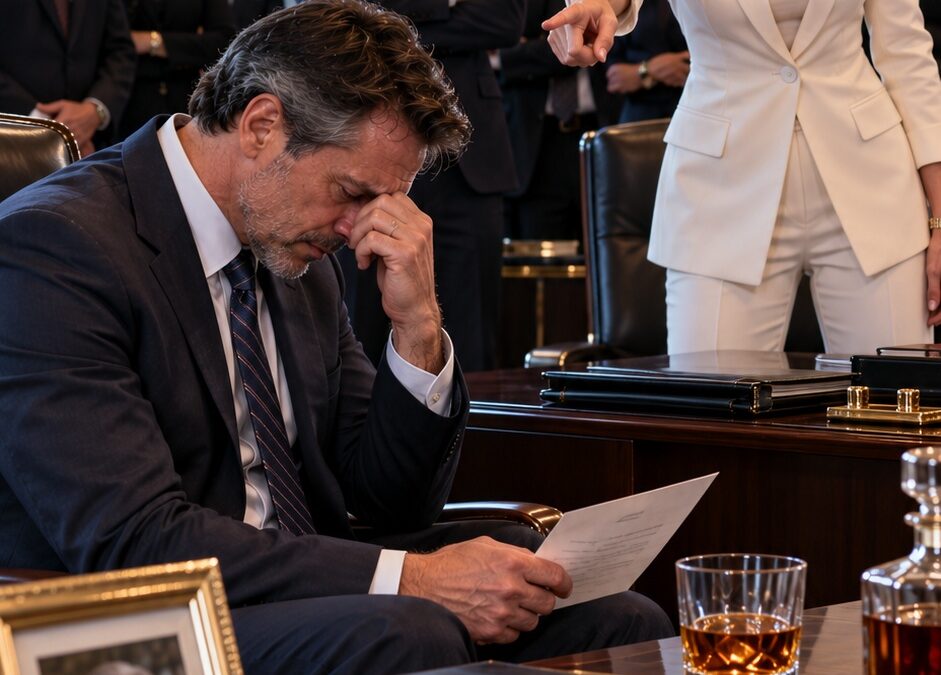
FULL ENDING  Thank you

My name is James Stratton.
I was forty-seven when Richard Hartley died, and by then I had been part of Hartley Medical Systems for nearly half my life.
Richard founded the company in 1981.
Back then, Hartley Medical was a handful of engineers working in rented industrial space, building imaging equipment that larger manufacturers said community hospitals would never be able to afford.
Richard disagreed.
He believed medical technology should solve problems before it impressed investors.
That philosophy built the company.
By the time I entered the picture, Hartley Medical equipment sat in hospitals across forty-eight states.
I met Richard because I married his daughter.
Victoria and I married in 2001.
I was a systems engineer then, fresh out of Stanford, overconfident enough to believe every inefficient process existed only because nobody smart had bothered fixing it yet.
Richard found that attitude amusing.
The first time we really talked, he asked me what I thought of his production system.
I told him.
For twenty straight minutes.
I criticized his inventory controls, supplier redundancy, calibration procedures, and a manufacturing bottleneck that I said was costing him at least six figures a quarter.
Victoria kicked me under the table.
Richard stared at me.
Then he started laughing.
“You always insult your future father-in-law’s company over dinner?”
“Only when he asks.”
Victoria looked horrified.
Richard poured me another drink.
Two weeks later, he hired me.
That was Richard.
He didn’t care whether you made him comfortable.
He cared whether you were right.
Over the years, I learned more from him than from any professor I ever had.
He could be brutal.
Impatient.
Stubborn.
But he respected work.
Actual work.
Not titles.
Not appearances.
Not family names.
Competence.
That word mattered to Richard.
It eventually became the word that divided our family.
In 2007, Hartley Medical nearly collapsed.
Credit tightened.
Hospitals delayed purchases.
Two major clients froze capital spending.
Our suppliers started demanding shorter payment terms just as our cash flow was disappearing.
Everyone was scared.
Victoria was pregnant with Emily.
Brandon was five.
I remember standing in our kitchen at two in the morning with financial statements spread across the island while Victoria begged me to come to bed.
Instead, I called Richard.
“We can save it,” I told him.
He asked one question.
“How?”
I spent the next three hours explaining.
We restructured supplier contracts.
Consolidated facilities.
Rebuilt the manufacturing schedule.
Cut overhead by thirty-eight percent without laying off a single production worker.
I renegotiated with suppliers in Germany, Japan, Ohio, and Texas.
I slept in airports.
I spent nights on factory floors.
I redesigned one production line myself after consultants told us the process could not be made more efficient without cutting quality.
They were wrong.
Hartley Medical survived.
Three competitors didn’t.
Richard called what I had done magic.
I told him it was math.
But there was one part of that year almost nobody knew about.
Hartley needed cash.
Real cash.
Fast.
I had recently sold rights connected to a medical systems patent.
Between that money, savings, and assets I could liquidate, I had roughly twelve million dollars available.
It was money Victoria and I had discussed using for a larger home and long-term investments.
Instead, I put it into Hartley Medical.
I thought I was protecting my wife’s family company.
Richard insisted on treating it differently.
“This is not a loan,” he told me.
“It can be.”
“No.”
“Richard—”
“You put twelve million into my company while everyone else is looking for the exits. You take equity.”
“I married your daughter. I’m not trying to buy your company.”
He looked at me across his desk.
“This has nothing to do with my daughter.”
I should have remembered that sentence more clearly.
He structured my investment as a stock purchase.
Twenty-nine percent equity.
Voting rights included.
Victoria knew I owned shares.
What she didn’t know was what happened afterward.
Neither did I, at least not entirely.
Richard had always preferred complicated protections.
Trusts.
Holding companies.
Silent transfers.
Contingency clauses.
He said family businesses usually died from one of two things: incompetent heirs or competent relatives who stopped speaking honestly to one another.
At the time, I assumed he was talking generally.
Years later, I realized he had been talking about us.
Victoria worked in marketing.
She was good with people.
Excellent, actually.
She knew how to host donors, charm physicians, handle press events, and make a room feel important.
She was beautiful, polished, quick on her feet.
When she wanted something, she could make you feel as though giving it to her had been your idea.
For many years, I loved that about her.
Then, slowly, charm became entitlement.
The first changes were small.
She stopped asking what engineers thought before making product promises.
She began referring to manufacturing employees as “operational resources.”
At board dinners, she talked more about brand positioning than patient outcomes.
When someone disagreed with her, she stopped treating it as a professional difference and started treating it as disloyalty.
Richard noticed.
So did I.
But she was my wife.
People excuse things in people they love that they would recognize instantly in strangers.
We had two children.
Brandon was twenty-two when Richard died.
Emily was nineteen.
Brandon worked in business development at Hartley Medical.
That had been Richard’s idea.
I had objected.
“I don’t want him handed a job because of his name.”
Richard said, “Neither do I.”
“Then why hire him?”
“Because I want to see what he does when he has one.”
Brandon inherited Victoria’s social instincts.
He could read a room before most people had found their seats.
He knew who mattered.
Who had influence.
Who could help him.
That skill wasn’t evil.
Used well, it could make him an exceptional leader.
Used badly, it could make him someone who confused proximity to power with merit.
Emily was different.
She studied journalism at Northwestern.
She asked uncomfortable questions.
She had my habit of staying silent until she had enough information, then asking the one question nobody wanted to answer.
Richard adored her.
He once told me, “That girl is dangerous.”
I laughed.
“She’s nineteen.”
“Exactly. Imagine her at forty.”
Richard’s health declined quickly.
Cancer.
By the time we understood how aggressive it was, the doctors were talking in months, not years.
Even then, he worked.
Not every day.
But enough.
During his final year, Victoria became convinced he was preparing her to inherit control.
He invited her to more board meetings.
Asked her opinions.
Included her in strategic discussions.
I watched her confidence grow.
I assumed Richard was preparing his daughter for leadership.
Apparently, she assumed the same.
Neither of us understood what he was actually doing.
Richard died on a Monday night.
His funeral was Thursday.
Two hundred people attended.
Board members.
Doctors.
Investors.
Politicians.
Former employees.
Competitors.
People who had known him before Hartley Medical mattered and people who only knew him because it did.
Victoria organized everything.
Of course she did.
The service at Riverside Memorial was immaculate.
White flowers.
String quartet.
Perfectly timed speeches.
Printed programs on heavy cream paper.
Victoria wore black with her mother’s Chanel pearls.
She looked devastated in exactly the way newspapers like powerful widows to look devastated.
Controlled.
Elegant.
Photogenic.
I was not seated beside her.
That was the first detail that felt wrong.
The front row had Victoria.
Brandon.
Thomas Reeves, chairman of the board.
Several longtime directors.
I was three rows back.
Emily sat beside me.
She noticed immediately.
“Dad.”
“Not here.”
“Why aren’t you sitting with Mom?”
“It’s fine.”
“No, it isn’t.”
I looked toward the casket.
“Today is about your grandfather.”
She followed my gaze.
Her hand found mine.
During the receiving line after the service, people started approaching Victoria.
“I’m sure Richard prepared you well.”
“Hartley Medical is lucky to have continuity.”
“You’ll make a remarkable CEO.”
Then one board member leaned close and said softly enough that he probably thought only Victoria could hear him.
“Madam CEO.”
Richard’s coffin had not even reached the hearse.
I counted the congratulations after that.
Fourteen.
Fourteen people treating a funeral like an executive transition ceremony.
Victoria accepted every one with the same modest smile.
“Thank you. We’re focused on honoring Dad’s vision.”
Dad’s vision.
That phrase would get used a lot over the next few days.
Usually by people who had no idea what Richard’s vision actually was.
Victoria gave the eulogy.
She spoke about legacy.
Growth.
Innovation.
The future of Hartley Medical.
She talked about her childhood watching her father build the company.
About accompanying him to trade shows.
About the responsibility of carrying his name forward.
She never mentioned me.
Not once.
I told myself it didn’t matter.
A funeral wasn’t an awards ceremony.
Then she described how the family had guided Hartley Medical through the financial crisis.
The family.
Not me.
Not the restructuring.
Not the money.
Not the nights when Richard and I had rebuilt the company line by line.
I glanced at Emily.
She was watching her mother.
Her jaw was tight.
After the burial, Victoria stood at the center of the crowd.
Brandon beside her.
Board members around them.
Emily remained with me.
“Why aren’t you over there?” she asked.
“Because I wasn’t invited.”
She studied me.
“Something’s happening.”
I looked at my wife surrounded by people congratulating her.
“Yes.”
“What?”
“I’m not sure yet.”
Emily squeezed my hand.
“You are sure.”
I smiled faintly.
“Nothing yet.”
Then I looked toward Victoria.
“But it will.”
The first lockout happened Monday morning.
I tried logging into my Hartley Medical email from home.
Invalid password.
I assumed IT had forced a reset after Richard’s death because of security protocols.
I reset it.
By noon, my access to several financial databases disappeared.
Tuesday, meetings I had scheduled were canceled and recreated without me.
Email chains stopped including me.
Wednesday morning, I drove to headquarters in Foster City.
Same route I had taken for twenty-three years.
Same coffee shop.
Same parking garage.
Same lobby.
My badge worked at the main entrance.
At the executive elevator, the reader flashed red.
ACCESS DENIED.
I tried again.
Red.
Janet, the security supervisor, saw me.
Her expression told me everything before she spoke.
“Mr. Stratton…”
“Morning, Janet.”
“I’m sorry.”
“For what?”
“Your executive access is temporarily under review.”
“Under review by whom?”
She looked down at her terminal.
“It just says executive transition.”
“Transition to what?”
“I honestly don’t know.”
I believed her.
Janet had worked there since 1998.
She looked more embarrassed than I felt.
“I can escort you upstairs.”
For twenty-three years, I had helped build the company.
Now I needed a security escort to reach my own office.
“Thank you, Janet.”
The elevator ride was painfully quiet.
The doors opened on five.
My office door was open.
Two people were inside packing boxes.
One was a young HR employee named Derek.
The other was Melissa, Victoria’s executive assistant.
I walked in.
Derek nearly dropped a file.
“Mr. Stratton.”
“What are you doing?”
Melissa answered.
“Centralizing executive records during the transition.”
I looked into one box.
Original supplier agreements.
Old patent documents.
Handwritten research notebooks.
Contracts dating back more than a decade.
“These aren’t duplicate records.”
Melissa’s mouth tightened.
“Mrs. Stratton requested that all executive materials be centralized.”
Not Victoria.
Mrs. Stratton.
Suddenly even the way people referred to my wife had changed.
I looked at my desk.
There was a photograph of Emily at her high school graduation.
I picked it up.
Derek said, “Your personal items aren’t being touched.”
“That’s generous.”
Neither of them responded.
I slipped the photo into my briefcase.
“You can have the rest.”
I left my office and walked toward the main conference room.
Our weekly operations meeting should have been underway.
It was.
Behind the glass wall, Victoria sat at the head of the table.
In my seat.
Brandon sat beside her.
Eight executives surrounded them.
Victoria was presenting one of my slides.
A Q4 projection model I had created less than a month earlier.
She saw me.
Our eyes met through the glass.
Three seconds.
Maybe four.
She kept talking.
Not one person at that table looked toward me.
That was the moment I stopped wondering whether the lockout was accidental.
Thursday, they reassigned my parking space.
I had parked in spot forty-seven for fifteen years.
A new sign had replaced my name.
RESERVED — V. STRATTON.
My new space was on the fifth level near a broken elevator.
I parked there.
Walked down five flights of stairs.
Said nothing.
Friday, my badge stopped working completely.
A security guard I didn’t recognize asked me to sign in.
“Name?”
“James Stratton.”
“Company?”
I looked at him.
“Hartley Medical.”
He checked his screen.
“I’m sorry, sir. You’re listed as a visitor.”
I signed the clipboard.
Visitor.
I almost admired the efficiency.
Victoria wasn’t pushing me out emotionally.
She was removing me systematically.
Credentials.
Meetings.
Office.
Parking.
Identity.
By the following Monday, she was ready for the last step.
I knew what was coming.
I wore my charcoal suit.
Victoria had given it to me for our twentieth anniversary.
Back when anniversaries still felt like celebrations instead of corporate mergers.
At 8:45, I signed the visitor log.
Fifth consecutive day.
At 9:03, Melissa opened the boardroom door.
“Mr. Stratton, they’re ready.”
Nine directors were seated around the table.
Victoria sat at the head.
Brandon beside her.
Thomas Reeves gestured toward the chair across from them.
“James. Please.”
Nobody stood.
Thomas and I had played golf together for fifteen years.
Patricia Vaughn, the CFO, stared at her papers.
The head of R&D, a man I had personally mentored, studied his tablet.
I sat.
Thomas folded his hands.
“James, we appreciate everything you’ve contributed to Hartley Medical over the years.”
Contributed.
Past tense.
Always listen to verb tense when someone is about to fire you.
“Your technical expertise has been invaluable.”
Again.
Has been.
“However, under Victoria’s leadership, the company is undergoing strategic realignment.”
I glanced at Victoria.
She sat perfectly still.
“The board has determined that your current position no longer aligns with Hartley Medical’s future direction.”
“How unfortunate.”
Thomas paused.
“Effective immediately, your employment is terminated.”
Silence.
I counted to five in my head.
One.
Two.
Three.
Four.
Five.
Then I smiled.
Victoria’s expression changed.
She had expected anger.
Maybe humiliation.
Maybe pleading.
Certainly not a smile.
“Of course,” I said.
Thomas blinked.
“You understand?”
“Completely.”
Patricia pushed a folder toward me.
“The severance package includes six months’ salary, twelve months of health coverage, and full retirement vesting.”
I didn’t open it.
“That’s thoughtful.”
Thomas said, “We’ll need your badge, laptop, and company property returned by end of day.”
“By noon.”
Brandon shifted in his chair.
For the first time, I looked directly at my son.
He wouldn’t meet my eyes.
That hurt more than the termination.
My wife had ambition.
I understood ambition.
The board had self-interest.
I understood that too.
But Brandon was my son.
He had watched me work.
Watched me solve crises.
Watched me spend nights at the dining-room table with engineering schematics while his mother slept.
He knew.
Or at least I thought he did.
Victoria leaned back.
“Is there anything you’d like to say?”
Her voice had changed.
It was her CEO voice.
Smooth.
Measured.
Practiced.
I stood.
Buttoned my jacket.
Every face lifted toward me.
“Just one thing.”
Victoria waited.
“Thank you for the opportunity.”
Thomas looked confused.
“It’s been educational.”
Then I walked out.
No slammed doors.
No accusations.
No speech about betrayal.
The elevator arrived.
I stepped inside.
As the doors closed, my phone vibrated.
Emily.
Dad, Brandon just told me. They fired you.
I typed:
Yes.
Are you okay?
Fine.
Three dots.
Then:
What are you going to do?
I thought about Richard.
About the safe.
About something he had said six years earlier that I had never fully understood.
If the day comes when you think you’ve lost everything here, call Arthur before you react.
I typed:
Monday will be interesting.
Emily responded immediately.
What happens Monday?
Justice.
I returned to my office one final time.
I packed one cardboard box.
Emily’s photo.
A titanium paperweight from our first successful prototype.
My diploma.
A few books.
Nothing else mattered.
At 11:47, I placed my badge on the desk.
Left the laptop.
Left the parking pass.
Carried the box downstairs.
Martha at reception had tears in her eyes.
She had worked at Hartley Medical almost as long as I had.
“Mr. Stratton, this isn’t right.”
I stopped.
“It’s exactly right.”
She looked confused.
“Trust me.”
The house was empty when I got home.
Victoria’s Mercedes wasn’t outside.
Flowers from the funeral still sat in the foyer.
I put my box down.
Then I saw the Scotch.
Macallan 25.
Richard’s favorite.
The bottle was open.
Half empty.
I followed the sound of music into the den.
Victoria was sitting in my leather chair.
My chair.
I had bought it at an estate sale in 2008.
She had complained for seventeen years that it was too masculine for the room.
She had never sat in it.
Now she was curled into it barefoot, a crystal tumbler in one hand.
Her father’s Scotch.
My chair.
My company gone.
She looked comfortable.
Victorious.
“This is better for both of us,” she said.
No hello.
No apology.
I set my cardboard box near the stairs.
“Is it?”
“You’ll be happier.”
“Will I?”
“You hate corporate politics.”
“I hate incompetence.”
Her lips tightened.
“There. That attitude.”
I almost smiled.
“What attitude?”
“You always think being the smartest technical person in the room makes you a leader.”
She took a sip.
“It doesn’t.”
I waited.
“You’re brilliant, James.”
That word is often followed by an insult.
“But?”
“But you lack vision.”
There it was.
“Strategy. Leadership presence.”
She swirled Richard’s Scotch.
“My father understood that toward the end.”
“Did he?”
“He started consulting me more.”
“He did.”
“He included me in board discussions.”
“Yes.”
“He was preparing me.”
I studied her.
She believed every word.
That was the strange part.
Victoria wasn’t pretending.
She had rewritten reality so thoroughly that she genuinely believed Richard had chosen her.
“Your father told you I wasn’t leadership material?”
“He didn’t have to.”
I nodded.
Then started upstairs.
Halfway up, I stopped.
“Victoria.”
“What?”
“Did you ever wonder why your father installed that biometric safe in my office?”
Her glass stopped moving.
“What safe?”
“The one behind the panel beside my desk.”
She stared.
“He installed it himself in 2012.”
“I’ve never seen it.”
“I know.”
“What’s in it?”
“Important documents.”
Her posture changed.
Not much.
But enough.
“What documents?”
I continued upstairs.
“James.”
I turned once.
“You should have found out before firing me.”
I went into my study and closed the door.
Then I called Arthur Hastings.
Richard’s personal attorney.
Seventy-one years old.
Forty-three years representing Richard.
Arthur answered after one ring.
“James.”
He already knew.
“It happened.”
A pause.
“She fired you?”
“Yes.”
Arthur exhaled.
“Richard was right.”
“When do we move?”
“Monday?”
“Monday.”
“What time?”
“Nine.”
“I’ll prepare everything.”
Sunday evening, I drove to Arthur’s office in Palo Alto.
He worked out of an old Victorian building surrounded by glass towers.
His office looked unchanged from the first time I had visited twenty years earlier.
Wood shelves.
Legal books.
Old photographs.
A clock that ticked loudly enough to make silence uncomfortable.
Arthur stood when I entered.
“I’ve been expecting this call for six years.”
“That long?”
“Richard told me exactly when to open the vault.”
I sat.
“What did he say?”
Arthur removed his glasses.
“When I’m dead and Victoria fires James, open everything.”
For several seconds, I couldn’t speak.
“He said that?”
“Almost word for word.”
Arthur opened an old leather briefcase.
He removed a thick binder.
Then a sealed envelope.
My initials were pressed into red wax.
J.S.
He pushed both across the desk.
“Richard was meticulous.”
I opened the binder.
Stock transfers.
Trust documents.
Voting agreements.
Purchase records.
Dozens of pages.
Some dated back to 2007.
Arthur tapped the first section.
“Your twelve-million-dollar investment.”
“Twenty-nine percent.”
“At the time.”
I looked up.
“At the time?”
“Richard transferred additional equity over the years.”
“To me?”
“Into structures benefiting you.”
I kept turning pages.
Custodial accounts.
Silent partnerships.
Trust holdings.
Voting proxies.
All signed.
Witnessed.
Notarized.
Legal.
Arthur pushed a spreadsheet toward me.
At the bottom was one number.
62%.
I stared.
“That can’t be right.”
“It is.”
“I own sixty-two percent of Hartley Medical?”
“Voting shares.”
“Since when?”
“The final trust transfer executed in 2019.”
I leaned back.
The clock ticked.
Richard had made me the majority shareholder years earlier.
And never told me.
“Victoria doesn’t know.”
“No.”
“The board?”
“No.”
“Who does?”
“You. Me. The trust administrator. Richard, obviously.”
“Why?”
Arthur looked toward the sealed envelope.
“Read that.”
I broke the wax.
Inside was one sheet of Richard’s personal stationery.
Blue ink.
His handwriting.
James,
If you’re reading this, I’m gone and my daughter has made a terrible mistake.
I’m sorry I couldn’t fix her.
I tried.
What I could fix was the company.
It’s yours now.
Don’t let her destroy what we built.
Richard.
I read it twice.
The second time more slowly.
I had spent days being erased from Richard’s company.
Access revoked.
Office emptied.
Parking taken.
Board seat removed.
Fired.
And all that time, I controlled sixty-two percent of it.
I put the letter down.
Arthur said quietly, “He loved her.”
“I know.”
“That’s why this hurt him.”
I looked at him.
“What happened between them?”
“Nothing dramatic.”
Arthur folded his hands.
“He simply began seeing who she was becoming.”
“Why didn’t he confront her?”
“He did.”
“When?”
“Several times.”
I thought back.
Private lunches.
Closed-door meetings.
Victoria returning home furious and calling her father old-fashioned.
I had never asked enough questions.
Arthur continued.
“Richard believed inheritance without competence was dangerous.”
“And Brandon?”
“Six percent.”
“Emily?”
“Seven.”
“Victoria?”
“Eighteen.”
“The remaining seven?”
“Preferred investors. Nonvoting.”
I stared at the numbers.
Arthur said, “There’s more.”
“Of course there is.”
He turned to another section.
“When you married Victoria, Richard established a spousal protection trust.”
I almost laughed.
“He prepared for our divorce before our wedding?”
“Not specifically divorce.”
“What then?”
“Family misconduct. Corporate malfeasance. Attempts by either spouse to damage protected family interests.”
Arthur looked directly at me.
“Richard believed marriage and business made people irrational. He built walls.”
I thought about Victoria sitting in my chair.
“What’s the plan?”
Arthur smiled for the first time.
“We could simply inform the board.”
“No.”
His eyebrow lifted.
“I want it formal.”
“Extraordinary shareholder meeting?”
“Clause 12C.”
Arthur nodded.
“Majority shareholder can demand immediate leadership review.”
“Exactly.”
“They’ll challenge ownership.”
“Let them.”
“They may file for an injunction.”
“Let them.”
Arthur’s smile widened slightly.
“Richard liked you for a reason.”
We spent two hours reviewing everything.
Not revenge.
Procedure.
That mattered.
Richard had not given me a weapon.
He had given me responsibility.
By midnight, I understood exactly what had to happen.
Monday morning at 9:01, the email landed.
Every director.
Every officer.
Every relevant legal representative.
Subject:
NOTICE OF EXTRAORDINARY SHAREHOLDER MEETING — CLAUSE 12C.
The message identified me as majority shareholder.
Sixty-two percent controlling interest.
The meeting was scheduled for noon.
Mandatory.
Leadership review.
Voting rights review.
Executive restructuring.
Attached were twelve legal documents proving ownership.
At 9:07, Victoria called.
I didn’t answer.
9:12.
Thomas Reeves.
Voicemail.
9:18.
Patricia.
James, we need to talk. This cannot be legitimate.
I responded:
See you at noon.
9:23.
Arthur called.
“The CFO requested verification.”
“And?”
“I sent Wells Fargo trust statements and original transfer documents.”
“What did she say?”
“Nothing. Hung up.”
“Victoria?”
“Called me three times.”
“You answer?”
“No.”
I smiled.
At 9:31, Emily called.
“Dad.”
“Morning.”
“Brandon is at my apartment.”
“How is he?”
“Losing his mind.”
I could hear a voice behind her.
“Mom says you’re stealing the company.”
“I’m not stealing anything.”
“I know.”
“I’m exercising ownership rights that have existed for years.”
“She’s throwing things in her office.”
I almost felt sorry for Victoria.
Almost.
“Emily, I need you to trust me.”
A brief silence.
Then she said, “You’re the only person in this family who has never lied to me.”
That hurt in a different way.
“I’ll call you tonight.”
At 10:15, couriers delivered physical copies to headquarters.
Signed receipts required.
No one could later claim they hadn’t received notice.
Martha told me afterward that Victoria opened hers in the lobby.
Read page one.
Then page two.
Then asked Martha, “Is this legal?”
Martha apparently shrugged.
“Ma’am, I answer phones.”
At 11:47, I walked through Hartley Medical’s front entrance.
Martha looked up.
Her eyes widened.
“Mr. Stratton.”
I smiled.
“No visitor badge today?”
Her face broke into a grin.
“No, sir.”
I took the elevator to five.
No escort.
The boardroom doors were shut.
Through the glass, I could see Victoria pacing.
Thomas had papers spread everywhere.
Patricia was speaking rapidly into her phone.
Brandon sat at the table looking pale.
11:53.
I waited.
At noon exactly, I opened the door.
The room went silent.
Victoria was standing behind the chair at the head of the table.
My old chair.
“This meeting is invalid,” she said before I even sat down.
I removed my jacket button.
“No hello?”
“You were terminated.”
“As an employee.”
“You have no authority to call a board meeting.”
A woman at the far end looked up.
Margaret Vickers.
Administrator of the Hartley Family Trust.
Sixty-seven.
Silver hair.
Reading glasses on a chain.
Margaret had known Richard for years and possessed almost no patience for theatrics.
“Mr. Stratton is majority shareholder,” she said.
Victoria looked at her.
“That’s impossible.”
Margaret returned to the papers.
“No.”
“Our ownership structure is public.”
“Parts of it.”
“My father’s shares transferred according to his estate plan.”
“Yes.”
“To me.”
“No.”
Victoria gripped the chair.
Margaret looked at her directly.
“You own eighteen percent.”
Victoria said nothing.
“Brandon owns six.”
Brandon stopped writing.
“Emily owns seven.”
Margaret continued.
“Seven percent is held as nonvoting preferred equity.”
Then she looked toward me.
“James Stratton controls sixty-two percent of voting shares.”
Brandon’s pen slipped from his fingers.
Thomas cleared his throat.
“James, perhaps we should discuss this privately.”
“No.”
Victoria turned toward me.
“You manipulated my father.”
That was the first truly angry thing she said.
I didn’t raise my voice.
“The documents go back seventeen years.”
“You manipulated him for seventeen years.”
Margaret sighed.
“Mrs. Stratton, every transfer was initiated by Richard Hartley.”
“I’m his daughter.”
Margaret’s expression didn’t change.
“Yes.”
Two letters.
One word.
Enough.
Victoria stared.
“My father would never give control of Hartley Medical to him.”
Margaret removed a document.
“Would you like to see his signature?”
For the first time, Victoria looked afraid.
I hated that part.
I want to be honest about that.
People imagine revenge as satisfying.
Clean.
The villain gets what they deserve and you enjoy watching.
Victoria was my wife.
The woman sitting across from me had slept beside me for more than twenty years.
She had held our children as babies.
We had buried friends together.
Celebrated anniversaries.
Fought.
Made up.
Shared an entire adult life.
Watching her understand that her father had not trusted her with his company did not make me happy.
But sadness did not change responsibility.
Margaret said, “The motion before shareholders is restructuring of executive leadership.”
Nobody moved.
“This is a vote.”
Patricia raised her hand first.
Then R&D.
Then another director.
Another.
Another.
Thomas hesitated the longest.
Finally, his hand rose too.
Every hand.
Unanimous.
Margaret wrote something.
“The motion carries.”
Victoria stared around the table.
Six days earlier, these people had congratulated her.
Now every one of them had voted her out.
“Victoria Stratton is removed as chief executive officer effective immediately.”
Her mouth opened.
“This is insane.”
I spoke quietly.
“It’s corporate governance.”
“You can’t do this.”
“I can.”
Brandon stood.
“Dad, what are you doing?”
I looked at him.
“What your grandfather wanted me to do.”
“You don’t even work here anymore.”
Victoria said it sharply.
I turned toward her.
“I never stopped working here.”
Then I added, “I just stopped pretending you were in charge.”
Margaret slid papers toward me.
“These formalize Mr. Stratton’s appointment as chairman and CEO pending standard governance confirmations.”
I picked up the pen.
Signed three pages.
The scratching of the nib across paper was the loudest sound in the room.
When I finished, I looked at Victoria.
She was staring at me as if the laws of physics had betrayed her.
“We reconvene Wednesday.”
I turned toward Patricia.
“Full financial review.”
Then Thomas.
“Six months of executive decisions.”
To everyone else:
“Current positions remain secure pending review.”
Then Victoria.
“You may attend Wednesday as an eighteen-percent shareholder.”
I paused.
“But you sit in the gallery.”
Brandon touched her arm.
“Mom.”
She pulled away.
Then gathered her portfolio.
Her phone.
Straightened her jacket.
She walked toward the door.
When she reached me, she stopped.
The perfume she wore was the same one she had worn on our wedding day.
“You planned this.”
Her whisper was almost inaudible.
“No.”
I looked at her.
“Your father did.”
Her eyes filled.
“I just followed his instructions.”
She left.
Brandon followed.
By four that afternoon, the story was online.
Founder’s Son-in-Law Takes Control in Hartley Medical Shareholder Revolt.
Apparently, someone leaked details.
By five, financial sites had picked it up.
The quote that spread fastest came from an unnamed source.
Victoria’s decision to fire James Stratton may be the most expensive termination in Bay Area corporate history.
My phone filled with messages.
Congratulations.
Requests for interviews.
People I hadn’t heard from in years suddenly remembering we were friends.
I declined everything.
Then Emily called.
“It’s everywhere.”
“So I’m told.”
“Brandon is furious.”
“At me?”
“At everyone.”
“And you?”
She laughed softly.
“I’m proud of you.”
That stopped me.
“Thank you.”
“Grandpa always said you were the smartest person in the room.”
“He exaggerated.”
“No, he didn’t.”
Then her voice changed.
“There’s something else.”
“What?”
“Brandon found a memo in Mom’s office.”
I stood.
“What memo?”
“Six months old.”
Richard had still been alive then.
“Mom had already planned to remove you.”
I closed my eyes.
“How detailed?”
“Very.”
So the funeral had not changed Victoria.
It had removed the last obstacle.
“She had talking points. Board strategy. Access removal. Everything.”
I looked toward Richard’s old office.
My office now.
Six months.
While her father was dying, my wife had been planning my elimination.
That night, I returned home at 9:30.
Victoria had left.
Half her closet was empty.
A note sat on the kitchen counter.
This isn’t over.
I crumpled it.
Then I saw Richard’s Macallan.
I poured two fingers.
Sat in my leather chair.
The one she had occupied after firing me.
The house was silent.
For a few minutes, victory felt exactly like that.
Silence.
Then Wednesday came.
And the financial review changed everything.
Patricia slid a folder toward me at nine in the morning.
She looked sick.
“What is this?”
“The pension fund.”
I opened it.
Over eight months, 4.2 million dollars had moved out of employee retirement accounts into something labeled Executive Operational Flexibility.
I looked up.
“Explain.”
Patricia swallowed.
“Victoria authorized temporary transfers to address cash-flow requirements.”
“From employee pensions?”
“They were structured as internal loans.”
“When were they supposed to be replaced?”
“Sixty days.”
“It’s been eight months.”
No answer.
“Where is the money?”
Patricia pushed another file toward me.
Shell consulting companies.
Wire transfers.
Invoices for services that had never happened.
Thomas read over my shoulder.
“This is embezzlement.”
“No.”
I looked at the transfer trail.
“This is federal fraud.”
The room went still.
“And anyone who knew about it may share liability.”
Patricia’s face went white.
“I didn’t know the destination.”
“But you authorized transfers.”
“Under CEO instruction.”
“You’re CFO.”
“I was going to report it.”
“When?”
No answer.
“After she replaced the money?”
“I—”
“You’re suspended.”
Patricia stared.
“James.”
“Effective immediately pending full investigation.”
I looked around the table.
“If anyone else knows something, now would be an excellent time to develop a conscience.”
Nobody moved.
“Good.”
I closed the file.
“First, the pension fund is restored by Friday.”
Thomas said, “Cash reserves—”
“I’ll cover the gap personally if necessary.”
He stopped.
“Those employees get every dollar back.”
I held up one finger.
“Second, transfers above fifty thousand dollars require dual authorization.”
Another.
“Third, forensic audit. Two years.”
Another.
“All consulting contracts frozen pending verification.”
The meeting lasted ninety minutes.
At the end, I said, “One more item.”
Brandon.
My son.
Business development.
He had voted to fire me.
Worse, he had participated in a leadership transition built on information he either knew was false or had chosen not to question.
“Brandon Stratton’s employment is terminated.”
Thomas looked uncomfortable.
“James, he’s your son.”
“That’s why the standard matters more.”
Nobody argued.
At 2:15, Brandon came to my office.
He looked twenty-two again.
Not a young executive.
Not Victoria’s ally.
My son.
Eyes red.
Shirt wrinkled.
Hands trembling.
He stood in the doorway.
“Dad.”
“Sit.”
He sat.
“I didn’t know.”
“About?”
“The shares.”
I waited.
“Grandpa’s plan. Mom’s finances. Any of it.”
“And you voted anyway.”
His eyes dropped.
“Mom told me you were basically technical staff.”
“Brandon.”
“I know how that sounds.”
“You worked here three years.”
He wiped his eyes.
“She said Grandpa was preparing me eventually.”
“And you believed her.”
“She’s my mother.”
“So?”
He looked stunned.
“You’re twenty-two.”
I leaned forward.
“Not twelve.”
His face crumpled.
“You sat in meetings where I negotiated contracts.”
He nodded.
“You watched me present product strategy.”
Another nod.
“You saw me solve problems.”
“I know.”
“You knew what I did.”
He started crying.
Not loudly.
That made it worse.
“I’m sorry.”
I looked at my son and felt anger fighting grief.
“Sorry doesn’t restore four-point-two million dollars to employees.”
“I didn’t know about that.”
“Sorry doesn’t undo voting to fire your father.”
“I know.”
“Sorry is often the word people discover when consequences arrive.”
He stared at the floor.
“I know.”
Silence.
Then I saw something.
Not Victoria.
Not ambition.
Richard.
Maybe just a flicker.
Something salvageable.
“You’re still fired.”
Brandon nodded.
“I figured.”
“That’s not negotiable.”
“Okay.”
“What happens next is.”
He looked up.
“You can spend your life blaming me.”
He listened.
“You can decide your mother was a victim and I stole the company.”
His eyes filled again.
“Or you can accept that you made a bad decision.”
I paused.
“And learn.”
“What would Grandpa do?”
I almost smiled.
“He’d tell you character isn’t inherited.”
Brandon stayed still.
“It’s built.”
I pointed toward him.
“One decision at a time.”
He stood.
At the door, he stopped.
“Can I call you?”
“You just did.”
“No.”
His voice broke.
“Later. Not about the company.”
I looked at him.
“As my dad.”
That hurt more than anything else he had said.
“You’ve always been able to.”
He nodded.
“Mom’s planning something.”
“I assumed.”
“Lawyers. Injunctions. She says you haven’t won.”
“Thank you.”
He left.
An hour later, Arthur texted.
Injunction denied. Judge says ownership documentation is too strong for emergency challenge.
I looked through the windows.
Sunset over Foster City.
Orange fading into purple.
Richard used to say sunset was when intelligent people made decisions because the day had finally stopped shouting at them.
For the first time since his death, I felt quiet.
Not triumphant.
Quiet.
A month later, I organized a dinner in Richard’s memory.
Not a gala.
No reporters.
No press releases.
Just sixty people who had actually built Hartley Medical.
Engineers.
Assembly supervisors.
Early salespeople.
The regulatory specialist who had fought for our first FDA approval.
Original investors.
People who remembered when five machines shipped in a month instead of five hundred.
We held it at the Rosewood in Menlo Park.
Simple flowers.
Good food.
Richard would have complained about the price.
Around eight-thirty, I stood.
Nobody needed a speech.
I gave one anyway.
“Richard Hartley did not build this company because he wanted his name on a building.”
People listened.
“He built it because hospitals needed equipment that worked.”
I looked around the room.
“People talk about legacy after someone dies.”
I thought of Victoria’s funeral speech.
“Richard rarely did.”
A few old employees smiled.
“He cared about whether the machine turned on.”
Soft laughter.
“Whether the hospital got the replacement part.”
More smiles.
“Whether the engineer knew why a failure happened.”
I looked toward Richard’s old friends.
“Some people inherit titles.”
The room became quieter.
“Others inherit responsibility.”
I paused.
“Richard knew the difference.”
I didn’t mention Victoria.
I didn’t need to.
“He trusted work.”
I lifted my glass.
“Actual work.”
That was enough.
Later, I stepped into the garden.
Emily found me.
“I thought you were at Northwestern.”
“I drove down.”
“That’s a long drive for dinner.”
“It’s Grandpa.”
Fair.
We stood beside the fountain.
“Mom called.”
I sighed.
“What does she want?”
“A settlement.”
“She already has eighteen percent.”
“She wants a board seat.”
“No.”
“And a consulting position.”
“No.”
Emily smiled.
“That’s what I told her.”
I looked at my daughter.
“What exactly did you say?”
She hesitated.
“That Grandpa didn’t leave her the company because she knew how to take things, not build them.”
I winced.
“That was harsh.”
“That was honest.”
I laughed softly.
“You sound like your grandfather.”
“Good.”
We watched the fountain.
“What happens now?” she asked.
“With what?”
“Everything.”
I thought about it.
“Now we build.”
She looked at me.
“That simple?”
“No.”
I smiled.
“But that clear.”
Eight months later, Hartley Medical reported the most profitable quarter in its history.
Not because I was some miracle CEO.
Because we stopped pretending problems didn’t exist.
We restored every dollar to the employee pension fund.
We renegotiated suppliers.
Eliminated fraudulent contracts.
Rebuilt financial controls.
Won two major hospital networks.
Patricia cooperated fully with investigators.
The forensic audit determined exactly who had known what and when.
I let the legal system handle the rest.
I had spent enough of my life cleaning other people’s messes.
Brandon enrolled in graduate school at Berkeley.
Business ethics.
When Emily told me, I thought she was joking.
She wasn’t.
He called every Sunday.
At first, the conversations lasted five minutes.
Then ten.
Then sometimes an hour.
We were rebuilding.
Slowly.
He never asked for his job back.
That mattered.
Victoria moved to Santa Barbara.
She started consulting for medical startups under her maiden name.
Hartley Consulting.
Apparently, she became moderately successful.
I was glad.
I mean that.
I did not want her destroyed.
For twenty years, I had loved her.
She was still the mother of my children.
I simply no longer wanted her controlling something other people had spent their lives building.
She received dividends from her shares.
She lived comfortably.
She attended shareholder meetings when she chose.
But she never returned to the board.
Never sat in the CEO chair.
Never controlled Hartley Medical again.
Emily completed her journalism degree.
Later, she applied for an opening in corporate communications.
She did not come to me.
She went through HR.
Interviewed with three people.
Submitted writing samples.
Competed with outside candidates.
When she got the offer, she came into my office.
“You knew?”
“I knew the position was open.”
“Did you help?”
“No.”
She smiled.
“Good.”
That single word made me happier than any quarterly report.
Richard would have understood.
Sometimes, late at night, I sat in his old office.
His chair was behind my desk.
His leather portfolio sat on a shelf.
The corners were worn smooth after forty years of meetings.
I often thought about what he had done.
He had trusted his son-in-law over his daughter.
That sounds cruel when you say it simply.
But Richard had not chosen blood.
He had chosen stewardship.
He had not given me the company because he loved me more.
He gave me control because he believed I would protect the work.
That distinction mattered.
One evening, I opened the safe.
The biometric one Victoria had never known existed.
Most of the original documents were now with Arthur.
Only Richard’s letter remained.
I read it again.
James,
If you’re reading this, I’m gone and my daughter has made a terrible mistake.
I’m sorry I couldn’t fix her.
I tried.
What I could fix was the company.
It’s yours now.
Don’t let her destroy what we built.
Richard.
I folded it.
For months, I had interpreted the sentence one way.
Don’t let her destroy what we built.
Hartley Medical.
The company.
The machines.
The employees.
The money.
But sitting there alone, I realized Richard had built more than a corporation.
He had built a standard.
Competence before entitlement.
Responsibility before inheritance.
Work before applause.
That was the part worth protecting.
I put the letter back in the safe.
Then my phone rang.
Brandon.
Sunday.
I checked the clock.
9:12.
He was late.
I answered.
“You missed your scheduled call.”
“By twelve minutes.”
“Standards matter.”
He laughed.
“Hi, Dad.”
“Hi, son.”
That word still felt fragile.
But it was getting stronger.
He told me about school.
A professor he hated.
A case study about governance failures in family corporations that apparently made him deeply uncomfortable for obvious reasons.
I laughed.
He didn’t.
Then eventually he did too.
Before hanging up, he said, “I understand Grandpa now.”
I leaned back.
“What do you understand?”
“Why he did it.”
I waited.
“He wasn’t punishing Mom.”
“No.”
“He was protecting the company from whoever wasn’t ready to lead it.”
“Yes.”
A pause.
“Including me.”
I closed my eyes.
“Yes.”
Another silence.
Then Brandon said, “I think I needed that.”
I looked through the glass walls of the office at employees still moving through the building.
Engineers.
Administrative staff.
People with families and mortgages and retirement accounts.
People who deserved leaders who understood that a company was not a throne.
“Most of us do,” I said.
After we hung up, I turned off the office lights.
For years, I had believed legacy was something you left behind.
Richard taught me it was something you protected while you were still here.
Not a name.
Not a title.
Not a chair at the head of a boardroom table.
The work.
The people.
The standards you refused to compromise even when compromising them would benefit someone you loved.
Victoria thought Richard’s death had finally placed Hartley Medical in her hands.
I thought my firing had ended twenty-three years of my life.
Brandon thought choosing his mother meant choosing the future.
We were all wrong.
Richard had seen the truth long before any of us.
He knew a day might come when family loyalty and responsibility would stop pointing in the same direction.
And when that day came, he had already made his choice.
Not daughter over son-in-law.
Not me over Victoria.
Builders over takers.
Competence over entitlement.
The company survived because when everything finally broke open, the documents did exactly what Richard intended them to do.
But the paper was never the real protection.
The real protection was the principle behind it.
Eight months after being escorted into my own office like a visitor, I walked through Hartley Medical one evening after most employees had gone home.
The production floor was quiet.
A new imaging unit sat ready for shipment.
I ran my hand across the casing.
Twenty-three years earlier, I had come into that building believing I could revolutionize an industry.
I had been arrogant.
Richard knew it.
He hired me anyway.
Maybe he saw something useful underneath the arrogance.
Maybe he saw someone who cared more about whether something worked than whether his name was attached to it.
Or maybe he simply knew his daughter better than I did.
I will never know.
What I do know is this.
Hartley Medical survived.
The pension fund was whole.
Employees kept their jobs.
Brandon was learning how to become a man without borrowing someone else’s power.
Emily was building a career she had earned.
Victoria was building something of her own for the first time.
And me?
I no longer needed to prove that I belonged in the chair.
That was never the point.
Richard’s chair was just furniture.
The company was just paper, steel, software, patents, contracts, and people until someone accepted responsibility for what happened to it.
I turned off the production-floor lights.
Before leaving, I looked back at the machine waiting to be shipped.
Somewhere, a hospital would use it.
Somewhere, a doctor would depend on it.
Somewhere, a patient would never know any of our names.
Richard would have liked that best.
Because in the end, Hartley Medical did not survive because of inheritance.
It did not survive because of revenge.
It did not survive because my wife underestimated me or because I happened to own sixty-two percent of the voting shares.
It survived because when the moment came to choose between protecting appearances and protecting the work, someone finally chose the work.
And that, more than any title, any fortune, or any family name, was the legacy Richard had actually left me.

