I Thought My Wife Was Hiding an Affair Until I Saw What Her Key Had Been Opening at 2 A.M.
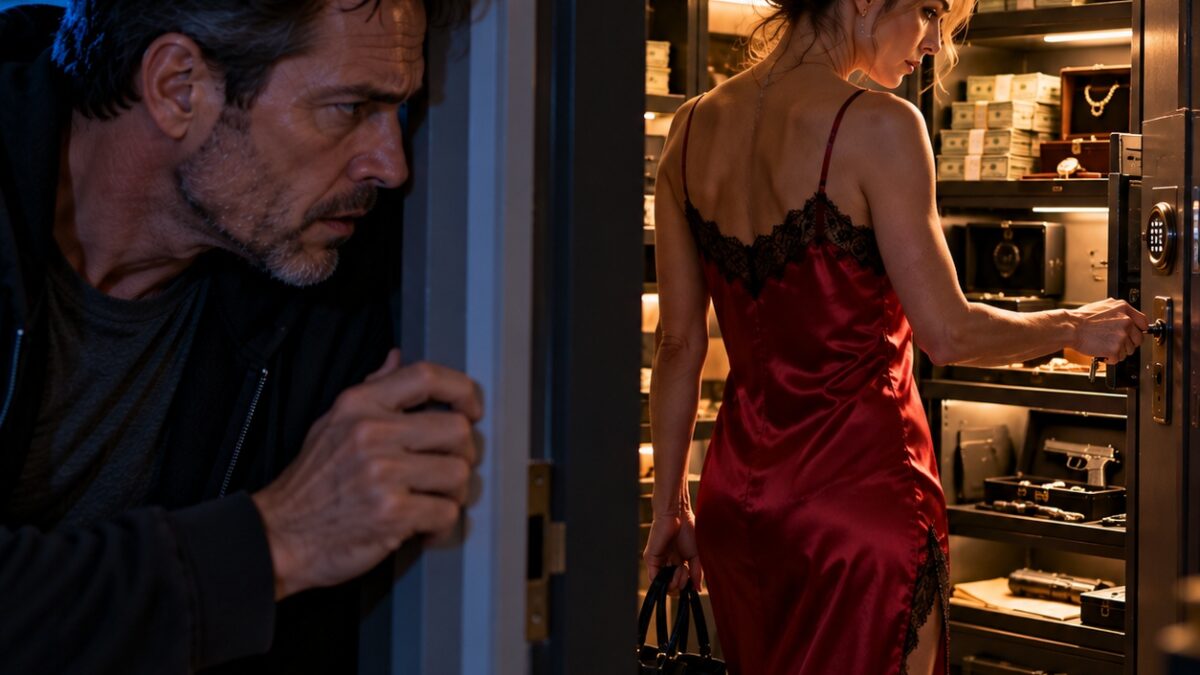


My name is Wade Larkin.
I was forty-six when my life split open.
I owned a computer service shop in Grand Rapids, Michigan.
Larkin Computer Service.
Second floor of an old brick building on Leonard Street above a dry cleaner that smelled like hot fabric and solvent every afternoon around four.
The shop was nothing impressive.
Two repair benches.
A server rack.
Shelves of parts.
A tiny office.
A steel door with an electronic keypad.
People brought me dead laptops, infected desktops, broken networks, failed drives and the occasional printer they had already threatened to throw through a window.
But most of my business did not come from individuals.
I managed systems for thirty-one local companies.
Accounting firms.
Restaurants.
Nonprofits.
Machine shops.
Medical manufacturers.
Small operations without their own full-time IT departments.
I kept their networks alive.
Managed backups.
Recovered failures.
Stored drive images so that when something went wrong, they could call me instead of starting over.
I never planned to own the place.
I spent fourteen years in the systems department of a manufacturing company before some consultant decided fourteen years of loyalty looked expensive on a spreadsheet.
One Friday afternoon, I had a job.
By Monday morning, I had a cardboard box.
I was thirty-eight.
We had a mortgage.
My wife had just cut her hours because our daughter was still little.
And the severance they gave me would barely carry us through winter.
The man who saved me was named Emmett Braddock.
Emmett owned Braddock Medical Components out on the industrial belt.
They manufactured surgical fixtures and spinal hardware.
The kind of equipment nobody thinks about until it is going inside somebody’s body.
My father had worked for Emmett decades earlier.
When Emmett heard I had been laid off, he called me at seven in the morning.
“Your old man ever tell you he almost cost me eleven grand in 1986?”
That was Emmett’s version of hello.
“Probably not.”
“He scrapped four hundred pieces on a bad machine setup.”
“That sounds like Dad.”
“Know what he did?”
“No.”
“He walked into my office before lunch and told me himself.”
Emmett paused.
“Didn’t wait until inspection found it. Didn’t blame the night shift. Told me straight.”
I didn’t know where the conversation was going.
Then he said, “I need somebody to look after my network.”
“Emmett, I don’t have a company.”
“You do now.”
Within a week, Braddock Medical became my first client.
Then Emmett did something even bigger.
He cosigned the loan that allowed me to rent the shop and buy equipment.
No bank in Kent County was excited about lending money to a laid-off systems administrator with a mortgage and an infant daughter.
Emmett put his own name beside mine.
You do not repay something like that with money.
You carry it.
Eight years later, I had thirty-one business clients.
And I still thought of myself as the guy who fixed computers.
That was my first mistake.
Because every one of those businesses had handed me part of its life.
Administrator credentials.
Network images.
Accounting backups.
Client records.
Internal files.
Years of work.
Entire server clones sat inside my rack because I was the person who had told them that was the safest thing to do.
I wasn’t just repairing machines.
I was sitting above a dry cleaner with the keys to thirty-one companies.
And almost nobody understood how valuable that made the room around me.
Including me.
My wife’s name was Danielle.
She was thirty-nine.
Beautiful in a way that had sharpened with age rather than softened.
Fourteen years married.
Our daughter, Piper, was nine.
Piper had long arms, permanent opinions, and absolute faith that her father could repair anything on Earth.
A bicycle chain.
A tablet.
A broken zipper.
A school projector.
Her mother’s phone.
Once she brought me a cracked plastic dinosaur and said, “Dad, this is probably serious.”
I glued it.
She looked at me like I had performed surgery.
That kind of faith can ruin a man if he starts believing it himself.
Danielle had gone back to full-time work two years earlier at Hallbrook Systems, a software company downtown.
At first, I loved what the job did to her.
She came home alive.
She talked about product launches, client strategy, sales pipelines and meetings with people whose names I did not recognize.
She bought new clothes.
She laughed more.
She started waking up before the alarm.
For years, she had been somebody’s wife and somebody’s mother and somebody who worked part-time around everyone else’s schedules.
At Hallbrook, she became Danielle again.
I was proud of her.
I should say that clearly.
Whatever happened later does not erase that.
I was proud when she started succeeding.
Proud when she received more responsibility.
Proud when people began calling her at home because they trusted her opinion.
At the shop, I had recently hired my first employee.
Colby Dunham.
Twenty-four.
He walked in one afternoon carrying a résumé that contained more enthusiasm than experience.
I had never advertised the position.
In fact, I had never really decided to hire anyone.
I was just three weeks behind on every bench in the place when this polite kid appeared and told me he could start Monday.
I hired him.
Sometimes exhaustion makes decisions for you.
Colby learned fast.
I taught him drive imaging.
Network recovery.
Basic server work.
How to talk to clients who believe clicking harder should make a computer respond faster.
During his second month, he built shelving along the back wall.
To make it fit, he moved the security camera mounted above one corner.
He did it neatly.
I remember thinking he had initiative.
He called me boss without irony.
I liked him.
Maybe because teaching him reminded me that I knew things worth teaching.
Danielle’s company party happened on a Tuesday in September.
Hallbrook called it a client appreciation night.
Rooftop of the Ellsworth Hotel.
Glass.
Steel.
City lights.
Expensive drinks poured into glasses too small to justify the price.
Danielle adjusted my collar in the elevator.
“Try not to hide all night.”
“I don’t hide.”
“You stand next to walls.”
“Walls are dependable.”
She laughed.
Then she said something I would remember much later.
“Half these people have no idea I’m married to somebody useful.”
Useful.
At the time, I took it as affection.
On the rooftop, everyone seemed to know everyone except me.
I found another man standing near the edge looking equally misplaced.
His name was Perry Odell.
Developer.
Nice enough.
We were discussing traffic or weather or some other subject invented by strangers when a man approached us.
“Wade, right?”
He did not offer his hand.
Tall.
Well-groomed.
Expensive suit.
The kind of confidence that makes space around itself.
“Adrien Voss,” he said. “Director of Client Solutions.”
Then he looked me over.
“So you’re the husband.”
Not Danielle’s husband.
The husband.
Like I occupied a category.
“Apparently.”
“Danielle’s mentioned you.”
Something about that bothered me.
Not that she talked about me.
That the man had already decided what I was.
“The computer guy.”
He said computer guy the way somebody might say lawn service.
“I run a service company.”
“How many people?”
“Me and one employee.”
His eyebrows lifted almost imperceptibly.
“Thirty-one business accounts.”
“Good for you.”
The tone made me feel twelve years old.
Then he lowered his voice.
“Can I be straight with you?”
“You seem committed to it.”
He ignored that.
“I don’t think you understand the trajectory your wife is on.”
I stared at him.
“I’m very proud of her.”
“Are you?”
That irritated me more than anything he had said yet.
He tilted his head.
“Because careers like Danielle’s require a particular support structure.”
“I support my wife.”
“I’m sure you believe that.”
“What does that mean?”
Voss looked toward the skyline.
“Comfortable. Predictable. Safe.”
He glanced at me again.
“Those aren’t insults.”
“No?”
“They’re measurements.”
I set my beer on the railing.
I had spent twenty-two years working around frustrated people.
Angry clients.
Managers looking for somebody to blame.
Employees trying to save face.
You learn not to swing at the first thing that moves.
“Adrien, you’ve known me about four minutes.”
He smiled.
“And?”
“And you already have me appraised.”
His smile faded slightly.
“That’s either very good instinct or a very old habit.”
For half a second, something moved behind his eyes.
Then Danielle appeared.
She came toward us bright and flushed, carrying a glass of wine.
She stopped beside Voss.
Too close.
Not dramatically.
Three inches too close.
“You two getting along?”
“Fast friends,” Voss said.
“I was telling Wade about the expansion.”
Danielle’s whole expression changed.
Excitement.
“Really?”
Voss nodded.
“Going to require commitment from the right people.”
“What kind?”
“Travel, mostly.”
Danielle smiled.
“The travel is the best part.”
I looked at her.
Travel?
Fourteen years married.
I had never once heard Danielle describe travel as the best part of anything.
She hated airports.
Complained about hotels.
Preferred sleeping in her own bed.
Yet standing beside Adrien Voss, she sounded like somebody else.
He glanced at his watch.
“Well, Wade, meeting you has been enlightening.”
“I’m sure.”
He walked away.
As he did, he looked back at Danielle.
She looked at him.
Quarter of a second.
No smile.
No touch.
Just recognition passing between two people.
I noticed it.
And said nothing.
Later, I found Perry again.
He had moved from sociable to drunk.
“Your wife is good,” he said.
“She is.”
“Voss knew it before anyone.”
“What does that mean?”
Perry waved his drink toward the party.
“Had her résumé on his desk a month before the job posted.”
I turned.
“What?”
“Yeah.”
He grinned.
“Told People Ops to keep the interview short.”
A month before the position existed.
I stored that detail somewhere in the back of my mind.
The same place you store a strange noise in a car that is still running.
One other thing happened that night.
Renata Quinland was there.
Renata had been Danielle’s best friend since college.
Godmother to Piper.
Loudest woman in almost every room.
She hugged waiters.
Started conversations in grocery lines.
Sent six-minute voice messages instead of texts.
She did outside design work for Hallbrook’s marketing division.
That evening, Renata barely spoke.
She stood near the opposite rail with her arms folded.
And every time Adrien Voss drifted toward her side of the rooftop, she moved.
Not once.
Every time.
She left before the speeches.
At the elevator, she hugged me.
Then held my shoulder longer than normal.
“You’re a good one, Wade.”
“Thanks?”
Her face looked almost sad.
The elevator doors closed.
I remember standing there wondering why her compliment sounded like an apology.
Driving home, Danielle rested her head against the passenger window.
She looked happy.
“What do you think of Adrien?” she asked.
“Very sure of himself.”
“He is.”
“You like that.”
“He gets things done.”
I watched the highway.
“You never mentioned the travel.”
A pause.
Maybe a second and a half.
I would become very sensitive to pauses after that.
“It isn’t decided.”
“Where?”
“West Coast, probably.”
“How often?”
“I don’t know.”
I let it go.
That was what I believed a reasonable husband did.
Let things go.
Give space.
Trust.
At home, I checked on Piper.
She was asleep sideways across her bed with one foot outside the blanket.
Danielle went to shower.
At 11:40, I opened the security app for my shop.
I had left in a hurry that afternoon and could not remember whether I armed the system.
The home screen showed one green word.
SECURE.
Normally, I would have closed the app.
That night I did not.
Maybe because of Voss.
Maybe because of Renata.
Maybe because of that quarter-second look.
I opened the access history.
The latest entry stopped me.
Tuesday.
2:41 a.m.
Door opened.
System disarmed.
Door remained open eleven minutes.
System rearmed.
No alarm.
No failed attempt.
No wrong code.
Clean entry.
Three door codes existed.
Mine.
Colby’s.
And Danielle’s.
I had created hers six years earlier.
As far as I knew, she had used it twice.
Both times to bring me lunch.
The log showed which code had opened the door at 2:41 that morning.
Danielle.
I sat in bed staring at the phone.
Beside me, my wife was sleeping.
Breathing evenly.
I could have shaken her awake.
Asked where she had been.
Demanded an explanation.
But a strange instinct stopped me.
I had spent my whole life recovering failed systems.
And the first rule of recovery is simple.
Do not touch anything until you know what you are looking at.
Panic destroys evidence.
So I lay there.
And thought about eleven minutes.
Nobody breaks into a computer shop for eleven minutes.
There was almost nothing physically valuable to steal.
Used towers.
RAM.
Tools.
Monitors.
A burglar would grab what he wanted and disappear.
But eleven minutes was enough time to sit at a workstation.
Connect a drive.
Start a transfer.
Wait.
At 4:30, I got dressed.
Left Danielle a note about an early service call.
And drove to Leonard Street.
Five in the morning downtown is mostly traffic lights changing for nobody.
I entered the shop.
Turned on one lamp.
And investigated myself the way I would investigate a frightened client.
Camera first.
Insurance required one in the back corner.
I rewound to 2:40.
At 2:41 and six seconds, the door opened.
A figure stepped inside.
Dark coat.
Hood up.
Not tall.
Four seconds after the door closed, the figure crossed directly toward the back corner.
One hand reached upward.
The camera rotated.
For the next eleven minutes, I watched a ceiling tile.
Then the frame moved back.
Empty room.
Closing door.
I replayed it.
Again.
Again.
Again.
Four seconds.
The person did not search for the camera.
Did not look around.
Did not hesitate.
They walked directly to a lens you could barely see from the doorway and moved it like somebody turning off a light in their own kitchen.
Danielle had been inside that shop twice.
Whoever entered knew where my camera was.
I checked older footage.
Almost none existed.
The recorder was supposed to retain thirty days.
It held three.
I opened the configuration history.
Retention changed from thirty days to three.
Thirteen weeks earlier.
Thursday afternoon.
2:20 p.m.
Administrator account.
There were only two admin accounts.
Mine.
And Colby’s.
I stared at the screen.
My first thought was not betrayal.
It was that Colby had done something stupid.
Maybe the drive was filling up.
Maybe he reduced retention without thinking.
Young technicians solve the problem in front of them and forget there may be a reason the problem exists.
I wanted that explanation badly enough that I almost stopped.
Instead, I opened the door history from the monitoring company.
That log did not live inside my building.
It lived on somebody else’s server in Ohio.
Thirty-four dollars a month.
Best money I ever spent.
Eleven overnight entries.
Nineteen weeks.
Every one using Danielle’s code.
Every one between one and three in the morning.
Never Friday.
Never Saturday.
Mostly Monday and Wednesday nights.
Shortest visit: six minutes.
Longest: twenty-eight.
Eleven times my wife had gotten out of a bed where I believed she was sleeping, driven eight minutes across town, entered my business and returned before morning.
The first visit had happened nineteen weeks earlier.
The camera retention changed thirteen weeks earlier.
Six weeks after the visits began.
That mattered.
Because for the first month and a half, every visit would have been preserved on thirty-day video.
Then someone inside my shop realized the camera existed.
Someone with daytime access.
Someone using Colby’s account.
Somebody had been brought into the scheme after it started.
My wife was not working alone.
At 8:15, Colby arrived carrying two coffees.
He set mine beside me.
“Morning, boss.”
“Morning.”
“You want me to start on the dentist server?”
“In a minute.”
I watched him remove his jacket.
“Hey, Colby.”
“Yeah?”
“Recorder is only holding three days.”
He did not flinch.
Did not pause.
Did not look away.
“Yeah, that was me.”
My stomach tightened.
“Why?”
“Drive was at ninety-four percent over the summer.”
He opened a drawer.
“I changed retention. Meant to tell you.”
“Put it back to thirty.”
“Sure.”
He turned toward the bench.
Then stopped.
“Actually, you want me to take the overnight backup jobs off you?”
“What?”
“You still run half those manually.”
He shrugged.
“I could script them. Save you some time.”
“I’ll think about it.”
“All right.”
He started working.
Whistling.
I sat there holding coffee purchased by a kid I had trained and realized I no longer knew what was true inside my own building.
At ten, I logged into the imaging server.
Unlike the camera recorder, the imaging server had only one administrator.
Me.
A backup job creates records.
Even when someone deletes files.
I pulled five months of history.
Sorted by time.
Every overnight entry had a corresponding manual backup job.
Started from my main workstation.
Using my account.
That part made sense.
My password had lived on a sticky note beneath the keyboard tray for six years.
I know.
Idiotic.
What happened next cured me of that habit permanently.
I checked the backup destinations.
External USB drive.
Every job.
Plugged into the front port.
Data copied.
Drive removed.
Carried out.
I started listing what had been taken.
Accounting firm.
Two nonprofits.
Restaurant group.
Machine shop.
Then Braddock Medical Components.
Four separate transfers.
Massive.
Engineering archives.
Thirty years of drawings.
Tolerance specifications.
Supplier agreements.
Validation documents.
Regulatory records.
Design history.
Everything Emmett needed to prove how his products were built and approved.
His life’s work.
Sitting on my servers because I had told him it was safe.
I walked outside onto the landing above the dry cleaner.
Cold air hit my face.
For the first time, the affair I suspected became secondary.
My marriage could break.
I could survive that.
But Emmett had trusted me when I had nothing.
And somebody had carried his company out my door.
That evening, I went home and behaved normally.
It was the hardest thing I had ever done.
Piper needed help building a Great Lakes diorama.
Danielle asked whether we had chicken.
I grilled dinner.
At nine, she sat on the couch scrolling through her phone.
I washed dishes.
Without turning around, I asked, “Hey, Monday night, did you come to bed late?”
She did not hesitate.
“I was at Renata’s.”
I dried a plate.
“Something wrong?”
“Her sister’s going through it again.”
“What time did you get back?”
“About one.”
She smiled.
“You were snoring.”
“Sounds like me.”
I smiled back.
And something inside me broke quietly.
Because she lied beautifully.
No stress.
No confusion.
No guilt I could see.
Eleven visits.
This was not somebody making one panicked mistake.
This was practice.
I waited until Thursday.
Then I called Renata from the shop.
We talked about ordinary things for a minute.
Then I asked, “How’s your sister?”
Silence.
“My sister?”
“Danielle said you were helping her Monday.”
Another silence.
Longer.
“My sister is fine.”
Her voice changed.
“Wade, why are you asking me that?”
“Danielle said she was with you.”
“I haven’t seen Danielle outside work in two months.”
I closed my eyes.
“Renata.”
“Listen to me.”
Her voice dropped.
“Whatever you’re doing right now, you’re looking at it from the wrong end.”
“What does that mean?”
“I can’t talk about it.”
“You can’t or won’t?”
“Can’t.”
“What’s the right end?”
Another pause.
“Do not ask me about Adrien Voss.”
I gripped the receiver.
“Why?”
“Not on the phone.”
“Then in person.”
“No.”
“Renata—”
“Not in person. Not at Christmas. Not ever.”
“Why?”
Her breathing shook.
“If you still want to know four years from now, ask me then.”
She hung up.
Renata Quinland had never ended a phone call quickly in her life.
Before I could fully process it, another call came in.
Emmett.
He sounded happier than I had heard him in years.
“You sitting down?”
“No.”
“Sit.”
I sat.
“Sinclair Orthopedics is putting a number on the table.”
I went cold.
Emmett laughed.
“A real one, Wade.”
Sinclair had been circling Braddock Medical for months.
Acquisition.
Retirement.
A chance for Emmett to leave after forty-one years with something for his grandchildren.
“Due diligence starts second week of November.”
“That soon?”
“If the numbers hold, I’m out by spring.”
He laughed again.
“I’m buying a boat.”
“You hate boats.”
“Exactly.”
I forced myself to laugh.
Then Emmett said, “They’ll want everything.”
My stomach tightened.
“Engineering. Validation. Supplier terms. Whole box.”
“Of course.”
“Good thing I’ve got a fellow who keeps my house in order.”
I closed my eyes.
“I’ll have it ready.”
After he hung up, I sat alone for twenty minutes.
Second week of November.
Theft of engineering data makes sense anytime.
But before a company sale?
It becomes priceless.
A competitor with access to Braddock’s designs before due diligence could undercut bids, copy processes, pressure suppliers, poison the acquisition.
Renata’s words returned.
Wrong end.
I had been investigating my wife.
Because a betrayed husband looks at his wife.
That is the shape his pain knows how to understand.
But Danielle was not the center.
So I stopped investigating my marriage.
And started investigating Adrien Voss.
Only public records.
That became my rule.
I knew ways to access private systems.
Phones.
Emails.
Accounts.
I had spent two decades learning how.
I also knew one illegal move could turn me from victim into defendant.
So I touched nothing that was not public.
Corporate filings.
Court dockets.
Employment history.
Adrien Voss had been at Hallbrook two and a half years.
Before that, Charlotte.
Before that, Tulsa.
Always similar jobs.
Mid-sized software companies.
Corporate client access.
Normal career on paper.
What happened around him was not normal.
Months after he left Tulsa, a small managed-services company called Vaughn Technology Group collapsed.
Months after Charlotte, another two-man network firm surrendered its assets to creditors.
I searched federal court records.
Dean Vaughn.
Tulsa.
Charged with unauthorized transfer of protected commercial data and wire fraud.
He had copied client engineering files.
Sold them to a competitor.
Twenty-six months federal prison.
Six-figure restitution.
His house sold during divorce.
I opened the divorce record.
His wife filed first.
Two weeks before the indictment.
The settlement stated she had no knowledge of her husband’s criminal conduct.
She kept the house.
Avoided business debt.
Walked away clean.
I stared at the screen.
That was when I understood.
The divorce was not the prize.
It was the exit.
You separate the wife legally before the theft is discovered.
Then when the client finds stolen drawings somewhere else, investigators see one angry husband.
One set of administrator credentials.
One man with access.
A wife who already left him.
A simple story.
Juries like simple stories.
Dean Vaughn had become the entire crime.
Maybe he was guilty.
Maybe partly.
But schemes involving stolen corporate data rarely end with only one person profiting.
I found his ex-wife.
Marissa Vaughn.
Worked at a dental office in Tulsa.
I called.
That remains one of the mistakes I regret most.
Because I was thinking emotionally.
Here is someone who survived this.
Someone who will understand.
Marissa was warm.
Gentle.
She listened.
When I mentioned Emmett, she made a sad sound.
“I’m so sorry.”
She told me nobody had believed Dean either.
Then she began asking questions.
“Do you still have the door logs?”
“Yes.”
“Where?”
“Monitoring company.”
“Does anyone else know?”
“My attorney? No. I haven’t hired one yet.”
“Your employee?”
“No.”
“Where are your evidence backups?”
I hesitated.
“Why?”
“Because they came for Dean’s copies first.”
That sounded exactly like advice a survivor would give.
So I told her.
Everything.
Where my backups lived.
How many people knew.
Which accounts I controlled.
I actually thanked her.
Two hours and ten minutes later, my phone began exploding.
Failed login.
Cloud storage.
Another.
Password reset request.
Domain administrator account.
Authorization attempt against my off-site backup provider.
I killed sessions.
Rotated credentials.
Pulled an encrypted evidence drive out of the rack and put it inside my coat.
My hands shook so hard I dropped the screwdriver twice.
Two hours and ten minutes.
Long enough for Marissa to make one phone call.
And someone else to make another.
Marissa Vaughn was not a survivor.
She was part of it.
Maybe she always had been.
Suddenly the whole thing became visible.
Voss had not seduced my wife because he wanted my wife.
Danielle was access.
A woman with a keypad code.
A woman whose husband trusted her.
A woman who could leave bed at two in the morning, enter a computer shop and walk out carrying a drive without the owner ever imagining she might.
She was the door.
And doors are valuable only while people need to pass through them.
I drove home slowly.
Danielle was upstairs packing.
“Chicago,” she said.
“Right.”
“Flight at seven.”
“I remember.”
She folded a blouse.
“Back Sunday.”
“Okay.”
“Leftovers downstairs.”
“Thanks.”
She smiled.
“Don’t let Piper stay up past nine.”
Normal.
Everything looked normal.
That night was trash night.
I carried recycling to the curb.
Under school flyers and cardboard was an envelope.
Leland and Pike.
Law office.
Addressed to Danielle.
Postmark twenty weeks earlier.
I stood under the driveway light and counted.
Twenty weeks earlier, Danielle retained a divorce lawyer.
Nineteen weeks earlier, someone used her keypad code at my shop for the first time.
The lawyer came first.
That changed everything.
This was not an affair that accidentally became theft.
The exit had been prepared before the theft began.
Friday morning, Danielle flew to Chicago.
I made Piper waffles.
Drove her to school.
Then I sat alone at our kitchen table.
I needed a lawyer.
My accountant gave me a name instantly.
“Best family attorney in Grand Rapids.”
Grant Leland.
My stomach turned.
Leland.
I looked again at Danielle’s envelope.
Leland and Pike.
I had nearly walked directly into her lawyer’s office carrying every piece of evidence I possessed.
One innocent referral.
That close.
Instead, I found Adele Ror.
Small office on Division.
Her own name on the glass.
Former Assistant United States Attorney.
Eleven years prosecuting federal cases.
She listened to me for almost an hour.
Then she said, “I’m going to tell you three things.”
“All right.”
“You’re not going to like any of them.”
“I’ve had a bad month.”
“First: everything you brought me was obtained legally.”
She pointed at the evidence.
“Keep it that way.”
“I will.”
“You even think about accessing Voss’s private phone or email, and you destroy your own case.”
“I understand.”
“No. You know computers.”
She leaned closer.
“So you are more dangerous to yourself than most clients.”
That shut me up.
“Second: you can prove data was stolen.”
“Yes.”
“You cannot prove who stole it.”
“My wife’s code—”
“A code is not a person.”
“The camera—”
“A hooded figure.”
“Colby changed the retention.”
“Could be innocent.”
“It isn’t.”
“Maybe.”
She sat back.
“But courtrooms run on proof.”
I hated that she was right.
“Third.”
She looked directly at me.
“You are the custodian.”
“What?”
“Read your client contracts.”
I knew what she meant before she finished.
“Thirty-one companies gave Larkin Computer Service responsibility for protecting their data.”
I looked down.
“You failed.”
The words hurt.
“Whatever happens criminally, Braddock Medical may have a civil claim against you.”
“I know.”
“No.”
Adele’s voice softened.
“You don’t know yet.”
She paused.
“But you will when you tell Emmett yourself.”
I felt sick.
“He deserves to hear it from you before Sinclair’s auditors find out.”
That evening, another piece fell into place because of Piper.
My daughter photographed everything.
Food.
The dog.
Her shoes.
Ceilings.
Her own nose.
Her tablet automatically backed up to our family account.
Adele had asked whether any home devices might contain time-stamped evidence.
So I searched.
Hundreds of useless photos.
Then July.
2:19 a.m.
Piper had photographed the microwave clock.
She had gotten up for water and thought being awake after two made her practically an adult.
I remembered laughing when she showed me.
But behind the glowing clock, blurry in the doorway to the mudroom, stood a woman in a dark coat.
Hood already up.
Danielle.
The door log showed my shop opened at 2:31 that same night.
I sat at the table staring at the photograph.
My nine-year-old daughter had accidentally photographed her mother leaving our home to commit a felony.
I thought of Piper getting water.
Danielle standing ten feet away.
Seeing her daughter.
And going anyway.
That photograph gave Adele what she needed.
Identity.
Timeline.
Corroboration.
But I still needed to understand Voss.
Public records gave me one more answer.
Eleven years earlier, a man in Kent County had legally changed his name.
Aaron Puit.
New name:
Adrien Voss.
Seven months before that name change, Aaron Puit had divorced a woman in Tulsa.
Renata Quinland.
I drove to Renata’s house.
When she saw the folder under my arm, she simply opened the door wider.
“You found it.”
“Yes.”
We sat at her kitchen table.
“He was Aaron when I married him,” she said.
Six years together in Oklahoma.
Danielle barely knew him then.
Met him only twice.
Once at our wedding.
Once at Renata’s mother’s funeral.
Back then he was heavier.
Had a beard.
Sold industrial fittings.
Years later, clean-shaven Adrien Voss arrived at Hallbrook.
Danielle never recognized him.
I didn’t either.
“What happens in four years?” I asked.
Renata looked down.
“The payments stop.”
Her divorce settlement required sixteen years of quarterly payments.
And contained a brutal confidentiality clause.
If she voluntarily discussed the marriage, Aaron’s conduct or his business activities with third parties, payments stopped and repayment provisions could be triggered.
She had a daughter in college.
An aging mother.
She had spent eleven years afraid.
“I tried to warn Danielle.”
“When?”
“When Hallbrook offered her the job.”
Renata wiped her eyes.
“She thought I was jealous.”
“What did you tell her?”
“That he wasn’t what he appeared to be.”
“Why not tell her everything?”
“I couldn’t.”
Her voice cracked.
“I had spent years convincing myself he stopped.”
She looked at me.
“He never wants the company, Wade.”
“What?”
“He wants what is inside it.”
Renata pressed both hands against her coffee cup.
“And he always needs somebody left holding the bag.”
She finally told me what happened in Tulsa.
Aaron had targeted the supply company where Renata worked in bookkeeping.
He gained access.
Information disappeared.
Her boss lost thirty years of work and eventually his house.
And Renata had married the man responsible without understanding the full scheme until years later.
Then she told me the detail that explained Braddock Medical.
“He doesn’t move until a company is being sold.”
I stared at her.
“Why?”
“Because drawings sitting in storage are valuable.”
She leaned closer.
“Drawings belonging to a company six weeks before acquisition are priceless to a competitor.”
I understood.
“He wasn’t waiting for Danielle.”
“No.”
Renata shook her head.
“He was waiting for Emmett to get tired.”
I left her house after dark.
Adrien’s address was public.
I drove there.
That part matters.
Because people tell stories like this afterward and make themselves sound calm the entire time.
I wasn’t calm.
I parked two blocks from his house.
Engine running.
There was a tire iron under my passenger seat.
It had been there six years.
Until that night, it was only a tire iron.
I looked at the light above his front door.
And I imagined walking up.
Eighty seconds.
That was all it might take.
Eighty seconds of rage.
Then handcuffs.
Charges.
A defense lawyer telling a jury the whole investigation came from a jealous husband who had driven to Adrien Voss’s home to settle things personally.
Voss would become the victim.
My evidence would become contaminated by my anger.
Emmett would lose his company.
Piper would visit her father in prison.
Eighty seconds.
I put the truck in gear.
Turned around.
And drove back to Leonard Street.
That decision saved me more than anything clever I did afterward.
Because back at the shop, I built them a present.
Adele had already instructed me to move client data.
So I started with Braddock.
The real engineering archive went back to Emmett’s facility.
His building.
His hardware.
His lock.
I removed it from my custody.
Then I created a replacement.
Six gigabytes.
Same folder structure.
Same file names.
Same general appearance.
But the drawings were useless.
Critical tolerances were wrong by thousandths of an inch.
Not enough to look obviously fake.
Enough to make manufactured parts fail inspection.
Old supplier information.
Obsolete terms.
Controlled imperfections.
And embedded across forty-one documents were remote reference elements.
Nothing malicious.
No virus.
No exploit.
My files.
My server.
When the document opened, it requested an image hosted on infrastructure I controlled.
That request recorded time, address and workstation information.
Adele reviewed the entire setup.
Legally.
Carefully.
Then I approached Colby.
“You still want the overnight backups?”
He smiled.
“Absolutely.”
“Take them.”
I showed him the schedule.
“And I’m moving you onto the Braddock share Monday.”
His face did not change.
“Sounds good, boss.”
That left Emmett.
I delayed that conversation longer than I should have.
Not because I feared lawyers.
Because I was ashamed.
I drove to his plant Thursday afternoon.
He sat behind the same desk he had owned since before I could drive.
A framed photograph of the first fixture his company ever shipped hung behind him.
I told him everything.
Eleven nights.
Eleven drives.
Engineering archive copied.
My wife.
My employee.
Voss.
When I finished, Emmett said nothing.
He turned his pen over twice.
Then asked, “Does Sinclair know?”
“No.”
“They will.”
“I was hoping we could contain—”
“Wade.”
He looked at me.
“Your daddy walked through that door in 1986 and told me he had scrapped four hundred pieces before anybody found it.”
I swallowed.
“He didn’t fix it first.”
“No.”
“He told me.”
Emmett leaned back.
“Now tell me what you’re doing about this.”
I explained the decoy archive.
The tracking.
Adele.
The government contact if evidence appeared elsewhere.
When I finished, Emmett picked up his phone.
“Who are you calling?”
“Sinclair.”
“Emmett, you could damage the sale.”
He looked at me.
“I’m giving away a lie.”
“What?”
“You can’t sell a man a company and hand him a fire in the basement.”
That sentence stayed with me.
Sinclair learned everything four weeks before its due diligence team would have discovered the breach.
They did not walk away.
They adjusted their price.
But they stayed.
Colby took over the overnight jobs Monday.
Thursday at 11:04 p.m., one of my decoy documents opened.
Not in Grand Rapids.
Dayton, Ohio.
Calder Precision.
A contract manufacturer that had been competing against Braddock Medical’s spinal product line for almost a decade.
By Sunday, thirty-one of the forty-one tracked documents had opened.
Most inside Calder.
Three from a laptop tied to Voss.
Two from Tulsa.
Adele drove the evidence to the U.S. Attorney’s Office.
After that, the story no longer belonged to me.
Federal agents came to my shop nine days later.
There was another complication.
One stolen archive belonged to a machine shop that subcontracted for defense suppliers.
Nobody had opened those files elsewhere.
Apparently Voss had no buyer for them.
But they had still been taken.
That brought federal attention faster than any of us expected.
Meanwhile, Calder used the Braddock drawings.
They manufactured from them.
Three weeks of shop time.
Tooling.
Fixtures.
Labor.
Then inspection.
Wrong tolerances.
A few thousandths.
Almost invisible on a screen.
Expensive in metal.
They lost around $160,000 discovering the files were poisoned.
Possessing stolen information can be difficult to prove.
Building parts from it is much less ambiguous.
In December, Adrien Voss came to my shop.
Four in the afternoon.
Expensive topcoat.
He walked upstairs alone.
I did not invite him.
He stood in the center of my shop looking around like he was inspecting property he might purchase.
“Wade.”
I did not answer.
“You’ve been busy.”
“Have I?”
“Somebody at Calder has been telling unpleasant stories.”
“I don’t know anyone at Calder.”
“Of course not.”
He smiled.
“I have no connection to any of it either.”
“Then why are you here?”
“Courtesy.”
He walked slowly toward my bench.
“I thought you might prefer friendly advice before somebody less friendly comes asking questions.”
“That’s thoughtful.”
“I’m a thoughtful man.”
For a second, I think he believed it.
Then he said, “You found out about Danielle.”
I stared at him.
“I think you took that badly.”
Silence.
“And I think you did something in this room.”
He looked around.
“Something emotional.”
His eyes returned to me.
“Something you’re going to have trouble explaining.”
I kept my hands on the bench.
“You have a daughter, Wade.”
There it was.
Not an explicit threat.
Better men than Voss go to prison for explicit threats.
He preferred implications.
“So here’s my advice.”
I waited.
“Stop.”
He smiled.
“Take the divorce.”
Another step.
“Keep your house.”
Another.
“Take your kid.”
He lowered his voice.
“Go back to fixing laptops.”
Then the line I would hear again in court.
“You are not equipped for the other thing.”
I wanted to hit him.
I wanted to tell him the FBI already knew.
Wanted to see fear replace arrogance.
Instead, I asked, “Adrien, do you know how wide one thousandth of an inch is?”
He blinked.
“What?”
“About a third the width of a human hair.”
His smile faded.
“You can’t see it with your eye.”
I picked up a small screwdriver.
Set it down again because my hands wanted something.
“You don’t feel it with your thumb.”
He stared.
“It doesn’t look wrong on a drawing.”
Silence.
“But cut steel using the wrong number enough times and eventually the measuring machine tells you.”
His face changed.
Very slightly.
“And by then,” I said, “you’ve already paid for tooling, setup and three weeks of labor.”
Neither of us moved.
“You spent twenty years around people who make things.”
I shook my head.
“And you never got curious enough to understand what they actually do.”
His jaw tightened.
“That’s the part that surprises me.”
Not that he stole.
Not that he manipulated.
That he had such contempt for the people whose expertise he exploited.
He stayed another few seconds.
Then smiled again.
“Have a good Christmas, Wade.”
“You too.”
He walked downstairs.
The camera recorded the entire conversation.
Date.
Time.
Eleven minutes.
Fourteen months later, federal prosecutors played it for a jury.
Colby lasted less than an hour when agents questioned him.
He was twenty-four.
No criminal record.
Terrified.
And the person who had placed him in my shop was his mother.
Marissa Vaughn.
That revelation hit me harder than I expected.
The woman I had called in Tulsa.
The woman who had spoken gently.
The woman I had thanked.
Her son had been inside my business from the beginning.
I had never posted a job opening.
Colby claimed he had seen one.
There never was one.
He had simply appeared when I was exhausted enough to accept help.
He learned imaging because he needed access.
Built shelving partly so he could move the camera and learn its location.
Changed retention when he realized the first thefts might remain on video.
Told Danielle where the camera was.
Eleven nights.
Eleven drives.
Search warrants recovered seven.
Two from a storage unit in Ohio.
Four from a house in Tulsa.
One from a vehicle in Hallbrook’s parking structure.
Four were never found.
Marissa was charged with conspiracy and receipt of stolen trade secrets.
The truth about Tulsa came out too.
She had never been merely the innocent ex-wife who escaped Dean Vaughn’s crimes.
She had remained part of the network.
Whatever Dean did, he went to federal prison while Marissa and their son continued moving the scheme forward.
This time she did not walk away.
She received fifty-one months.
Colby received twenty-eight.
He was permanently barred from positions that gave him administrative access to another company’s systems.
He wrote me a letter.
I read it once.
Did not answer.
Adrien Voss—Aaron Puit—went to trial.
Men like him often do.
They spend their lives surviving because other people hesitate.
Eventually they begin believing hesitation means superiority.
The prosecution showed the jury eleven door entries from the Ohio monitoring server Voss never knew existed.
Video of the hooded figure turning my camera.
Piper’s photograph.
Colby’s testimony.
Marissa’s connections.
The tracked documents opening inside Calder Precision.
My recorded conversation with Voss.
And Renata.
Adele figured out how to free her.
The confidentiality agreement restricted voluntary disclosures.
A subpoena is not voluntary.
The United States compelled her testimony.
She sat in the witness box for two hours.
Eleven years came out of her.
Tulsa.
The theft.
Her marriage.
The threats.
The settlement.
The name change.
The pattern.
Adrien Voss received eighty-seven months in federal prison.
Seven years and three months.
Plus restitution that would follow him long after release.
People later called him brilliant.
I never agreed.
He understood human insecurity.
That is not the same as intelligence.
He knew what Danielle needed to hear.
Knew what Marissa wanted.
Knew how to use Colby’s loyalty.
Knew how to create shame around a victim before the victim understood there was a crime.
But he never bothered to learn where my keypad logs were stored.
Never asked whether my imaging server had another administrator.
Never imagined my daughter’s tablet uploaded photographs automatically.
Never understood machining tolerances.
Never cared about the work itself.
He studied people only enough to exploit them.
And ignored everything he considered beneath him.
That was what destroyed him.
Sinclair Orthopedics completed its purchase of Braddock Medical the following March.
The price was about nine percent below the original number.
Emmett called it “the cheapest honest haircut I ever got.”
His explanation was better.
“A buyer who hears bad news directly argues about price.”
He smiled.
“A buyer who finds bad news himself walks.”
Calder Precision settled instead of facing a civil jury after the criminal trial.
They paid damages I am not permitted to disclose.
They were barred from competing in that spinal product market for six years.
Emmett bought his boat.
Thirty-one feet.
Muskegon Lake.
He is terrible at driving it.
Spectacularly terrible.
Danielle pleaded guilty to unauthorized access to a protected computer.
Three years probation.
Restitution she would be paying for years.
Felony record.
Hallbrook fired her after the indictment.
For months, I tried not to think about the difference between what happened to Voss and what happened to my wife.
He used her.
That was true.
He manipulated her.
Also true.
He recruited her by giving her exactly what she had been missing.
Recognition.
Status.
Ambition.
A future larger than the life she believed she had settled for.
Those facts explained what she did.
They did not erase what she did.
A month after sentencing, Danielle called the shop.
“Can we meet?”
I almost said no.
Instead, we met at a diner on Plainfield where neither of us knew anyone.
Bad coffee.
Vinyl booths.
No memories.
She looked older.
Not because a year had passed.
Because consequences change faces.
She held her cup with both hands.
“I need to say something out loud.”
I waited.
“Not for court.”
“All right.”
“I knew I was taking things from your shop.”
Her voice shook.
“I didn’t know what they were.”
I said nothing.
“And I never asked.”
She looked at me.
“I have spent a long time understanding that not asking was the decision.”
That was the first honest sentence she had given me in years.
“There is no version where I didn’t know I was doing something to you.”
I nodded.
“Okay.”
“But I want you to understand why.”
She swallowed.
“And you’re going to hate it.”
“Say it.”
She turned her coffee cup halfway around.
“It wasn’t Adrien.”
I frowned.
“What?”
“It wasn’t about loving him.”
Her eyes filled.
“He told me I was going to run a division.”
I leaned back.
“He said it in a conference room in front of six people.”
Her voice cracked.
“And for the first time in years, I felt like somebody saw me.”
I stayed quiet.
“You never asked me what I wanted.”
That landed.
“Danielle—”
“No.”
She shook her head.
“Please hear this part.”
So I did.
“You asked how my day was every night.”
She wiped beneath one eye.
“You asked whether I needed anything.”
“You worked so I could stay home with Piper.”
“I wanted that too.”
“But you never asked me what I wanted my life to become.”
I looked down at the table.
Part of me wanted to defend myself.
Tell her about mortgages.
Meals.
School pickups.
Her career.
The years I had supported her.
But truth does not become false because a guilty person says it.
And there was truth in what she said.
I had assumed providing was the same as understanding.
It was not.
“That’s fair.”
She looked surprised.
“I should have asked.”
Her mouth trembled.
“I thought taking care of us answered the question.”
“It didn’t.”
“I know that now.”
For one brief moment, I saw the woman I married.
Not the hooded figure.
Not the defendant.
Just Danielle.
Then I said, “Now you hear me.”
She nodded.
“Adrien didn’t choose you despite me.”
Her expression tightened.
“He chose you because of me.”
“What?”
“Thirty-one clients.”
I put both hands flat on the table.
“Backups.”
“Wade—”
“Administrator passwords. Engineering archives. Door code.”
She looked down.
“You weren’t the prize.”
Her breathing changed.
“You were the door.”
She stared at me.
“He spent two years telling you that you were extraordinary because extraordinary gave him eleven minutes inside a room above a dry cleaner.”
Tears filled her eyes.
“And when those drives stopped coming?”
I shook my head.
“He would have been gone.”
“You don’t know that.”
“Yes.”
My voice remained quiet.
“I do.”
She covered her mouth.
“You would have been divorced.”
I continued.
“Possibly charged.”
“No career.”
“And Adrien Voss would have been in another city telling another woman she was too talented for her life.”
Danielle cried silently.
But the worst part still had to be said.
“There’s something I cannot forgive yet.”
She looked at me.
“Not the eleven nights.”
Her face tightened.
“July.”
She knew immediately.
“What?”
“Piper.”
Danielle froze.
“She got up at 2:19.”
I watched my wife’s face.
“She took a picture of the microwave clock.”
Danielle’s eyes closed.
“You’re behind her.”
Tears rolled down her cheeks.
“Hood up.”
“Wade…”
“You saw our daughter.”
“I know.”
“You were standing in our house with Piper ten feet away.”
“I know.”
“And you still went out the door.”
Her shoulders collapsed.
“That isn’t because I forgot to ask what you wanted.”
She did not answer.
“That choice belongs to you.”
For a long time, all I heard was diner noise.
Dishes.
Coffee machine.
Somebody laughing near the front counter.
Finally, Danielle whispered, “I’m sorry.”
“I know.”
“I mean it.”
“I know.”
“Do you hate me?”
I thought before answering.
“No.”
That surprised both of us.
“But I don’t trust you.”
She looked down.
“And I don’t know whether I ever will.”
I paid for the coffee.
She let me.
I filed for divorce in November.
She did not contest it.
Custody was harder.
Danielle got every other weekend and Wednesday evenings with Piper.
Some people called that severe.
Maybe it was.
But when the court evaluates stability after one parent has repeatedly left a sleeping child in the middle of the night to commit crimes using the other parent’s business, stability begins meaning something more specific.
I never told Piper everything.
Not at nine.
She knew Mom had made serious mistakes.
She knew adults sometimes face legal consequences.
She knew none of it was her fault.
That was enough.
Danielle eventually found work selling insurance for a brokerage on 28th Street.
Piper says she is good at it.
Her apartment is small but nice.
I hope Danielle rebuilds.
That is not the same as wanting her back.
I kept the shop.
That was harder than keeping the house.
Because Larkin Computer Service had failed.
Whatever the reasons, whatever conspiracy existed, thirty-one companies trusted me to protect information.
I had not.
I called every client myself.
Thirty-one calls in four days.
Same opening every time.
“My systems were compromised, and some client data was copied without authorization.”
Eleven companies left.
I did not blame them.
Twenty stayed.
Two sent me new business within a year.
That meant more than forgiveness.
It meant trust rebuilt after truth.
The shop changed completely.
No client’s complete data lives overnight in my building anymore.
Backups stay on hardware the client owns.
Behind doors the client controls.
I maintain systems.
I do not become the single point of failure.
Costs me money.
I sleep fine.
A year after the trial, Emmett invited us onto his boat for the Fourth of July.
Piper stood at the bow taking approximately four hundred photographs of water.
Renata came too.
She was nearing the end of the settlement payments that had kept her silent.
After testifying, she stopped caring much about them.
You could hear freedom in her voice.
Emmett killed the engine in the middle of the lake.
Handed me a beer.
Then he said, “Your old man cost me eleven thousand dollars.”
I laughed.
“You tell this story every year now?”
“I’m old. Repetition is a privilege.”
He looked across the water.
“Four hundred bad parts.”
“I remember.”
“He told me before the shift ended.”
Emmett took a drink.
“I gave his boy a whole network years later because I remembered that.”
I looked at him.
“Turned out to be the best return I ever got on eleven thousand dollars.”
My throat tightened.
“Emmett, I almost lost your company.”
“No.”
He shook his head.
“You made a mistake.”
“A big one.”
“Then you told me before somebody else found it.”
He pointed his beer toward me.
“That’s the difference between a mistake and a character defect.”
Piper shouted from the bow.
“Dad! Come look!”
I stood.
“What is it?”
“I don’t know! Something weird!”
I laughed and walked toward her.
That moment is what I keep.
Not Voss in handcuffs.
Not the verdict.
Not Danielle crying in a diner.
My daughter on the front of an old man’s ridiculous boat, pointing toward something in the water like it was the most important discovery in Michigan.
For a long time, I thought this story was about infidelity.
It wasn’t.
The affair was infrastructure.
A method.
Voss needed access to my business.
Danielle needed someone to tell her she was more than the life she had.
He found the wound.
Then used it as a keyhole.
That does not make her innocent.
It makes the mechanism understandable.
Understanding is important.
Excusing is not.
I also learned something uglier about myself.
I had spent years believing being dependable was the same as being emotionally present.
I worked.
Provided.
Fixed.
Answered.
Solved.
When Danielle said I never asked what she wanted, part of me wanted to reject everything because of what she had done.
That would have been convenient.
It also would have been dishonest.
She was right about that piece.
I had assumed our life was good because the bills were paid, Piper was happy and the roof did not leak.
I never asked whether my wife felt alive inside it.
That was my failure.
Her response to that failure was still hers.
Adults do not earn permission to betray someone because their needs went unspoken.
Both things can be true.
I should have listened better.
She should never have used my trust as access to thirty-one companies.
The older I get, the less interested I am in stories where one person is entirely monster and the other entirely victim.
Real damage is messier.
But responsibility can still be clear.
Adrien Voss chose exploitation.
Marissa chose conspiracy.
Colby chose betrayal.
Danielle chose eleven nights.
And I chose, one night, to turn my truck around instead of walking toward Voss’s house with a tire iron within reach.
Of all the choices in this story, that may have mattered most.
Because anger gives you a very convincing definition of strength.
It tells you strength is confrontation.
Impact.
Making somebody afraid.
Doing something they cannot ignore.
Usually, that version of strength lasts about eighty seconds.
Then everybody else gets to define you by it forever.
The real strength that night was humiliating.
It was turning around.
Driving home.
Calling a lawyer.
Preserving evidence.
Telling Emmett the truth before anybody forced me.
Accepting that my own negligence was part of the damage.
There was nothing satisfying about it.
Until much later.
I still work above the dry cleaner.
The steel door is the same.
The keypad is newer.
No passwords live on sticky notes.
The camera points exactly where I put it.
And every person with access has a separate code.
Sometimes young technicians ask me why I am obsessive about logs.
I tell them something simple.
“Because a key is never just a key.”
A password is a key.
A marriage can be a key.
Trust is a key.
Administrative access is a key.
A person who loves you may still misuse one.
A person who flatters you may be trying to borrow one.
A tired business owner may hand one to a polite kid because he needs help badly enough not to ask where the kid came from.
So I know who holds mine now.
Not because I live suspiciously.
Because responsibility requires knowing.
I cannot protect everything.
No one can.
But I no longer confuse trust with blindness.
Piper is older now.
She still believes I can fix almost anything.
Every once in a while, she hands me something broken and says, “Dad, serious situation.”
I usually tell her the same thing.
“We’ll see.”
Because that is another thing I learned.
Some things can be repaired.
Some need replacement.
Some should be shut down before they damage anything else.
And some cannot be restored at all.
You just recover what is still intact.
Move it somewhere safe.
And build differently from there.
For twenty-two years, I thought my value came from fixing broken things.
Now I think it comes from knowing when to stop trying to make something broken look whole.
I did not save my marriage.
I saved my daughter from losing both parents.
I saved what remained of my business by telling the truth.
I helped save an old man’s life’s work because, eventually, I stopped hiding from my own failure.
And I saved myself the night I drove two blocks toward another man’s house and had enough sense to turn around.
That is the part I would want Piper to understand someday.
Not that her father outsmarted Adrien Voss.
I didn’t.
Not that I never made mistakes.
I made plenty.
Not that I was calm all the time.
I wasn’t.
The thing that saved me was simpler.
When I finally understood what was happening, I stopped reacting like a hurt husband and started behaving like the man I wanted my daughter to remember.
And once I made that choice, the truth did what truth usually does when you give it enough time.
It left a record.

