FULL ENDING: The Christmas Night My Son Left Me Outside, I Finally Saw What My Family Had Been Taking From Me
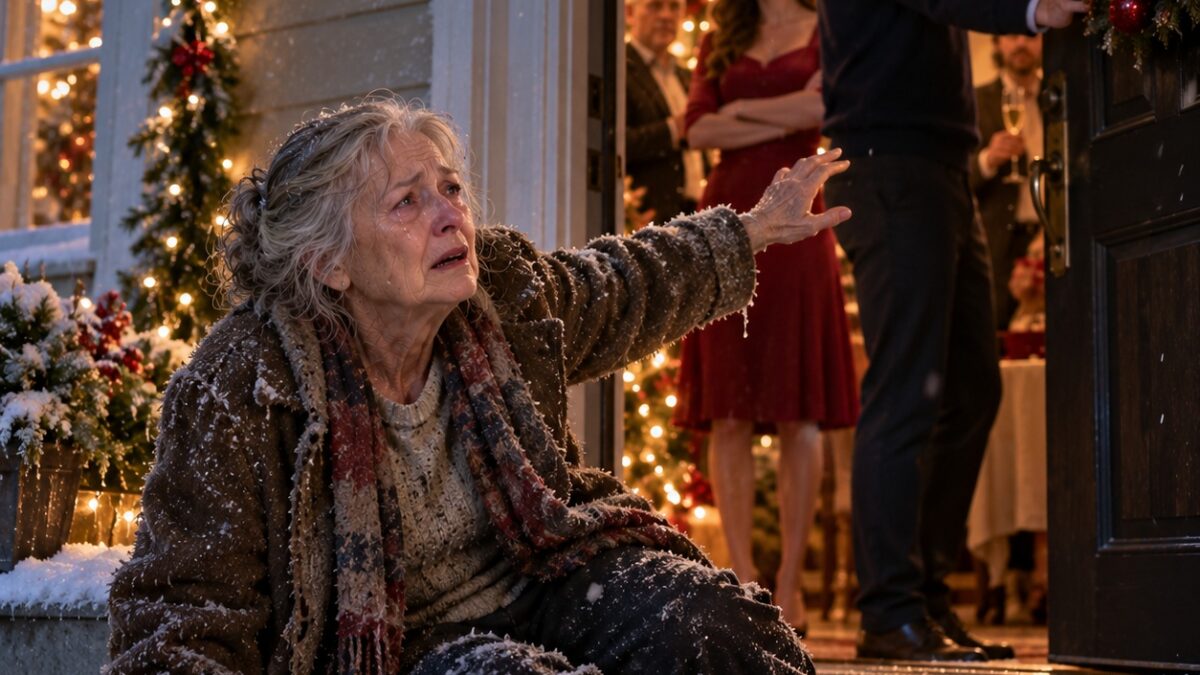
FULL ENDING  Thank you

“You were outside for several hours.”
“How long?”
“Just over three hours, from what we were told.”
I stared at her.
“Three?”
She nodded carefully.
“You had severe hypothermia.”
My breathing changed.
She continued.
“Dehydration. Shock.”
Then:
“You were very lucky.”
Lucky.
I would hear that word several times over the next two days.
Lucky the neighbor came outside early.
Lucky he noticed something near the porch.
Lucky the ambulance arrived quickly.
Lucky my heart tolerated the cold.
Lucky.
People use that word when they want the ending to sound less frightening than the middle.
I turned my face toward the window.
Gray Christmas morning.
For one irrational second, I thought:
Evan must be terrified.
Of course he would be.
He would have realized I never came home.
He would have seen the ambulance.
He would have called every hospital.
Maybe my phone was full of messages.
The nurse had plugged it into a charger on the small table beside the bed.
I reached for it.
My fingers barely worked.
The screen lit.
Christmas morning.
No missed calls.
No voicemail.
No messages.
I refreshed the screen.
Nothing.
My son had not called.
Not once.
That was the moment the cold inside me changed.
Not physically.
Something else.
For years, I had told myself Evan was distracted.
Busy.
Caught between his wife and his mother.
That Rachel simply found me difficult.
That families go through seasons.
That I was perhaps more sensitive since becoming a widow.
That older women sometimes expect too much from adult children.
I had translated hurt into patience so many times that eventually I no longer knew the difference.
But lying in that hospital bed with no missed calls on Christmas morning, there was nothing left to translate.
Whatever happened the night before had not been an accident.
It had been a choice.
And for the first time in years, I stopped asking what I had done to deserve it.
My name is Margaret Hail.
I was seventy-two years old that Christmas.
I had spent nearly forty years making meals for other people.
For most of my working life, I managed a public-school cafeteria in Jacksonville.
Not glamorous work.
But if you have ever fed six hundred children between eleven and one every weekday, you learn a great deal about organization, patience, budgets, human behavior, and the astonishing number of ways a child can lose a lunch card.
I knew allergies.
I knew which children needed an extra piece of fruit because lunch might be their best meal that day.
I knew which teachers forgot to eat until two in the afternoon.
I knew exactly how much macaroni a third grader believed was reasonable.
I spent my life making sure everyone else had enough before I sat down myself.
That pattern did not begin at work.
It began much earlier.
My husband, David, died when Evan was nine.
Heart condition.
We knew something was wrong.
We did not know how little time remained.
He was forty-two.
I was thirty-eight.
One day I was a wife planning a family vacation.
The next I was a widow trying to explain death to a boy who still slept with the hallway light on.
There was life insurance.
Not enough.
There were bills.
Plenty.
So I worked.
Sometimes double shifts.
Sometimes weekend catering through the district.
I packed Evan’s lunch before sunrise.
Left notes beside his cereal.
Attended school meetings in cafeteria shoes.
When he wanted to play baseball, I found the money.
When he needed braces, I found the money.
When he wanted a car at seventeen, I told him no.
Then spent three months quietly saving enough to help him buy one anyway.
Mothers become magicians when there is no one else backstage.
Evan rarely saw the trick.
That was deliberate.
I wanted him to feel secure.
Not responsible for my struggle.
When he graduated, I cried.
When he moved out, I cried again.
When he married Rachel, I told myself I had done what I was supposed to do.
Raised a good man.
Sent him into the world.
Let go.
Rachel and I never fit easily.
I want to be fair about that.
Not every difficult daughter-in-law is cruel.
Not every tension is proof of abuse.
Sometimes two women simply have different temperatures.
Rachel liked things controlled.
Curated.
Her home always looked ready for photographs.
Pillows arranged.
Counters nearly empty.
Candles chosen for seasons.
She worked in corporate administration and had a way of making ordinary decisions sound like policy.
“We’ve decided.”
“We’re setting a boundary.”
“We’re simplifying.”
“We’re trying to protect our energy.”
At first, I admired her confidence.
I had spent most of my life adjusting.
Rachel did not adjust.
She arranged.
When grandchildren arrived, I was thrilled.
Completely.
I had imagined grandmotherhood for years.
I bought too much at first.
Toys.
Clothes.
Holiday decorations.
Rachel corrected me.
“We don’t want a lot of plastic things.”
Fair.
So I switched to books.
Educational gifts.
Clothes only after asking sizes.
I tried.
At family dinners, I learned where to sit.
What not to mention.
Which stories embarrassed Evan.
Which topics made Rachel quiet.
I reduced myself strategically.
That sounds pathetic now.
At the time, I thought it was maturity.
I told myself:
You are the mother-in-law.
Do not compete.
Do not intrude.
Respect their family.
So I did.
Even when “their family” increasingly seemed to mean a circle where I stood just outside the edge.
Christmas Eve that year began with hope.
That is the embarrassing part.
Hope makes humiliation sharper.
Evan called three days earlier.
“We’re hosting Christmas Eve dinner.”
I remember smiling before he finished.
“Rachel thinks it would be nice if you came.”
Rachel thinks.
Not:
I want you here.
I noticed.
Then immediately scolded myself.
Do not dissect every word, Margaret.
He invited you.
Be grateful.
So I prepared.
I woke before sunrise on Christmas Eve in my small apartment on the south side of Jacksonville.
The morning was unusually cold.
I wrapped my robe tighter.
Made coffee.
Turned on a small radio.
Christmas music.
The kind I used to play in the school cafeteria during December until the staff threatened mutiny.
I baked Evan’s pecan loaf.
He had loved it since he was a boy.
Not cake.
Not bread.
Somewhere in between.
Brown sugar.
Pecans.
Cinnamon.
Just sweet enough.
He used to stand beside the oven and ask every four minutes:
“Is it done?”
I still heard nine-year-old Evan in my head whenever I baked it.
I made deviled eggs.
And David’s cranberry relish.
That recipe mattered.
He had written it himself on an index card.
Yellowed now.
Corner bent.
CRANBERRY RELISH — DAVID.
His handwriting leaned slightly to the right.
I still followed it exactly, even though after thirty years I did not need to.
For gifts, I tried to be careful.
Sweater for Evan.
Scented candle for Rachel.
Neutral.
Not too personal.
Not too cheap.
Not something she would have to display.
Books for the grandchildren.
I added the receipts.
My stomach tightened.
Nearly a month of careful savings gone in one afternoon.
I was not poor.
But retirement made every unnecessary expense visible.
I told myself:
“It’s Christmas.”
I had said that sentence my whole life.
It’s Christmas.
It’s his birthday.
It’s for the children.
They’re having a difficult month.
Family helps.
Those sentences can explain almost anything if you repeat them long enough.
Before leaving, I looked at myself in the mirror.
My face had changed.
Not suddenly.
That is what aging does.
It changes you slowly enough that every morning looks normal until one day an old photograph feels like a different person.
My hair had thinned.
My skin was softer around the jaw.
I pinned a silver brooch to my coat.
David gave it to me for our fifteenth anniversary.
Nothing expensive.
Small silver leaves.
I wore it when I needed courage.
The drive to Evan’s house felt peaceful.
Homes glowing.
Cars in driveways.
Christmas lights reflected in wet streets.
Families moving behind windows.
I practiced what I would say.
How proud I was of Evan.
How grateful I was to be invited.
I imagined Rachel greeting me warmly.
Actually warmly.
Not the small smile she used when performing politeness.
When I arrived, cars lined the street.
Laughter came through the walls before I even reached the door.
That should have warned me.
The gathering had already begun.
I rang.
Rachel opened the door wearing a red dress.
Wineglass in hand.
Her smile appeared.
Then flickered.
“Oh.”
Pause.
“Hi, Margaret.”
I held up the containers.
“Merry Christmas.”
“You made it.”
Not:
Come in.
Not:
We’re so glad.
You made it.
I stepped inside.
Warmth hit me.
Heat.
Music.
Conversation.
For one second, I felt relieved.
Rachel looked at my hands.
“Why don’t you put all that in the kitchen?”
“Of course.”
She turned before I finished.
I followed.
The house was crowded.
Coats.
Shoes.
People I did not recognize.
Friends, apparently.
Coworkers.
Couples.
People comfortable enough to hug Rachel when she passed.
The kitchen was bright and spotless.
I set out my dishes.
Loaf.
Eggs.
Relish.
Straightened the serving spoon beside them.
“Can I help?”
Rachel was chopping herbs.
“No.”
“Are you sure?”
“Just sit.”
The word caught me.
Sit.
Not:
Relax.
Not:
Go see Evan.
Just sit.
There was a small table near the kitchen window.
I sat.
From there, I could hear the dining room.
Laughter.
Someone telling a story.
Applause.
Then Evan’s voice.
I smiled instinctively.
My son.
Surely he would come find me.
Any minute.
He knew I was coming.
I waited.
Rachel moved around the kitchen.
Efficient.
Busy.
I offered again.
“Could I bring anything out?”
She sighed.
“It’s fine, Margaret.”
Then:
“You’ll just get tired.”
That sentence told me where she had placed me.
Old.
Fragile.
Inconvenient.
Useful only when specifically assigned.
I folded my hands.
Kept quiet.
I heard my name once from the dining room.
Then a pause.
Then laughter.
I could not hear the sentence.
Only my name and what came after it.
I told myself not to imagine things.
Hosting is stressful.
I had hosted enough dinners to know.
Time stretched.
The smell of roasted meat filled the kitchen.
I had intentionally eaten very little all day because I believed we would be sharing dinner.
Finally chairs scraped.
Voices changed.
Dinner.
I stood.
Smoothed my coat.
Walked toward the dining room.
At the doorway, conversation stopped.
Every face turned.
Rachel froze.
Evan looked at me.
Then away.
That was the first moment I knew.
Not fully.
But enough.
Something was wrong.
“I thought dinner was ready.”
My voice sounded too small.
Rachel gave a tiny laugh.
“Oh.”
She looked around.
“I didn’t realize you were still here.”
Still here.
As if I had wandered in early and overstayed.
I stared.
She set down her glass.
“We’re about to eat.”
Then:
“But this is more of a family thing.”
For several seconds I genuinely could not process the words.
“Family?”
Rachel tilted her head.
“You know what I mean.”
I looked at Evan.
He swallowed.
Nothing.
“I am family.”
I almost hated how weak my voice sounded.
Rachel’s face tightened.
“We just don’t need extra tension tonight.”
“Tension?”
“It’s Christmas.”
Someone shifted.
No one intervened.
I looked at the table.
Places set.
Glasses filled.
Food ready.
No chair for me.
That told me what all the careful words were trying to hide.
I had not been forgotten accidentally.
I had not arrived late.
I had been invited to bring food and gifts without ever actually being intended for the table.
Still, some part of me kept begging reality to become kinder.
“I don’t want to cause trouble.”
My voice rushed now.
“I can sit anywhere.”
Then:
“I just wanted to be with Evan.”
Rachel looked at me.
Calm.
Controlled.
And said:
“We don’t need you this Christmas.”
The room went completely silent.
I felt the sentence physically.
Like something entering my chest.
She continued.
“You bring a heaviness with you.”
Her voice remained measured.
“People feel it.”
Then:
“Tonight is supposed to be joyful.”
Joyful.
A few people looked down.
One woman nodded slightly.
Maybe agreement.
Maybe relief that she had not been chosen as the problem.
I looked at Evan.
Waited.
My son finally spoke.
“Mom.”
Hope moved through me.
“Maybe it’s best if you step outside for a bit.”
I stared.
“Outside?”
“Just cool off.”
That phrase broke something.
I had not shouted.
I had not argued.
I had not made a scene.
Yet somehow I was the person who needed to cool off.
Rachel was already beside me.
Her hand on my arm.
Guiding.
Smiling.
“Let’s not make this a big thing.”
She walked me toward the front door.
“We’ll talk later.”
Later.
Families use later when they want the current discomfort to disappear without addressing what caused it.
The door opened.
Cold air rushed in.
I stepped onto the porch.
For one second, I expected Evan to follow.
Surely.
He would realize.
He would tell Rachel this had gone too far.
He would bring my coat properly around me.
Get my purse.
Car keys.
Something.
Rachel stood inside the doorway.
“Just wait here a minute.”
Then:
“We’ll come get you once things settle.”
The door closed.
Solid.
Final.
I stood there.
At first, I did not understand.
Then I tried the handle.
Locked.
I knocked.
Nothing.
Inside, conversation restarted.
Not slowly.
Immediately.
Laughter.
Music.
A toast.
Glasses.
They did not even wait a minute.
I wrapped my arms around myself.
The night was colder than forecast.
Damp.
Wind pushing mist across the porch.
I had my coat.
Not the keys to my car.
My purse was still inside.
Phone in my pocket.
I told myself someone would open the door.
Five minutes.
Ten.
Surely Evan would notice.
I knocked again.
Harder.
No answer.
I called him.
It rang.
Rang.
Then:
“Mom.”
He sounded irritated.
Relief flooded me anyway.
“Evan, I’m outside.”
“I know.”
“The door is locked.”
Pause.
“It’s cold.”
I heard voices behind him.
Someone laughing.
“I don’t have my car keys.”
“Mom, not now.”
I thought I had misheard.
“What?”
“You’re making this awkward.”
Awkward.
I looked out at the dark street.
“Could you just open the door?”
Silence.
“Please.”
He sighed.
“Rachel’s really upset.”
“I’m outside.”
“I know.”
“In the cold.”
“You should just go home.”
“I don’t have my keys.”
Another pause.
“Evan.”
My voice cracked.
“It’s Christmas Eve.”
He lowered his voice.
“Don’t make a scene.”
The line went dead.
I called again.
Voicemail.
Again.
Voicemail.
The mist became freezing rain.
Small wet points against my face.
My fingers grew stiff.
I walked back and forth along the porch.
Five steps.
Turn.
Five steps.
Turn.
I kept thinking of Evan as a child.
Six years old.
Fever.
Curled against me while I placed a cool cloth on his forehead.
Ten years old.
Thunderstorm.
He climbed into my bed and held my arm until the thunder stopped.
Fourteen.
Heartbroken because a friend betrayed him.
Seventeen.
Terrified before driving alone for the first time.
I had been his safe place.
Now I was ten feet from him on the other side of a locked door.
I knocked again.
“Evan.”
Nothing.
My legs started aching.
Then trembling.
I leaned against the wall.
The siding was cold through my coat.
A car passed at the end of the street.
For one second, I considered waving.
Then it was gone.
Pride is strange.
Even freezing, I did not want a stranger asking why my family had locked me outside.
That should tell you something about how humiliation works.
It protects the people hurting you because you are too ashamed to expose what they are doing.
My hands went numb.
My thoughts slowed.
I remember trying to calculate how long I had been outside.
Could not.
The porch light began to blur.
I knocked once more.
Hard.
“Please.”
My knees gave way.
No warning.
One second standing.
Next on the concrete.
I tried to get up.
My legs did not respond.
Freezing rain had soaked the knees of my pants.
My teeth chattered so hard my jaw hurt.
I leaned back.
The porch light doubled.
Then tripled.
Inside, music.
I whispered Evan’s name.
And disappeared.
The neighbor who saved me was named Tom.
I met him the afternoon after Christmas.
He knocked gently at the hospital room.
Middle-aged.
Worn jacket.
Knit cap twisting in his hands.
“I live two houses down from Evan.”
I looked at him.
He seemed embarrassed to be there.
As though saving a stranger’s life were socially awkward.
“I went out to take trash to the curb.”
He said.
“Early.”
He saw something near the porch.
Thought it was a bag.
Or decoration.
Then realized it was a person.
Me.
“You weren’t moving.”
His voice changed.
“I tried knocking.”
My chest tightened.
“No one answered.”
“Did you see lights?”
“Yes.”
“Cars?”
“Yes.”
He looked uncomfortable.
“I called 911.”
“Thank you.”
He waved it away.
“Anybody would.”
We both knew that was not true.
Anyone inside the house could have.
No one did.
After Tom left, I looked at my phone again.
Still nothing.
That was when I stopped calling what happened misunderstanding.
They had chosen dinner over checking whether I was safe.
Chosen comfort over conscience.
Evan knew I was outside.
He had spoken to me.
He knew I had no car keys.
He still did not open the door.
That truth did not make me angry at first.
It made me calm.
Almost frighteningly calm.
Anger still contains argument.
Clarity does not.
The second day, a hospital social worker came to discuss discharge.
She asked ordinary questions.
Apartment.
Transportation.
Medication.
Support.
“Family?”
I hesitated.
“I manage on my own.”
She nodded.
No judgment.
We reviewed paperwork.
Insurance.
Emergency contacts.
Then she printed a financial summary because some follow-up care costs might need coordination.
That is where I noticed the transfers.
Small amounts.
Regular.
$200.
$250.
Another marked HOME SERVICES.
I frowned.
“What are these?”
She looked.
“Automatic payments.”
“To whom?”
“I can’t tell from this summary.”
“How long?”
“Looks like a couple of years.”
My heart started pounding.
Not from the cold this time.
When she left, I opened my banking app.
Scrolled.
And there they were.
I knew every payment individually.
That was what shocked me.
Nothing had been secretly stolen.
Not exactly.
I had agreed to each piece at some point.
Mortgage assistance to Evan.
Temporary.
Credit-card support.
Temporary.
A payment for repairs.
Temporary.
Utilities during a difficult month.
Temporary.
Rachel had helped “organize” some of my online banking after Evan complained bills were overwhelming.
She created folders.
Scheduled reminders.
Made everything tidy.
I had thanked her.
The monthly assistance became so regular I stopped seeing it.
A few hundred here.
A few hundred there.
Years.
Money flowing from my retirement into a household where I was apparently too heavy to sit at Christmas dinner.
I sat back.
The room seemed to shrink.
I was not simply unwanted.
I was useful.
That realization hurt differently.
For years I had wondered why invitations often arrived right after some problem.
Why Evan’s voice became warm when bills entered the conversation.
Why Rachel could tolerate my presence when they needed childcare or help but found me emotionally exhausting during celebrations.
I had told myself those patterns were coincidence.
Now I saw them together.
My role was not mother.
Not truly.
Resource.
And once the resource became inconvenient as a person, they preferred the money without the woman attached.
I did not cry.
I think I had used all my tears the previous night without actually shedding them.
I asked the nurse for privacy.
Then I opened my bank account.
First transfer.
Cancel.
A confirmation box appeared.
ARE YOU SURE?
“Yes.”
I whispered it.
Second.
Cancel.
Third.
Fourth.
Each click felt clean.
Not revenge.
Separation.
Mortgage assistance.
Canceled.
Utilities.
Canceled.
Credit-card support.
Canceled.
Home-service transfer.
Canceled.
Shared family payment arrangements.
Removed.
I changed passwords.
Revoked access.
Updated security questions.
When the final confirmation appeared, I put the phone down.
I breathed.
For years, I had believed boundaries required speeches.
Arguments.
Explanations.
No.
Sometimes a boundary is a button labeled CANCEL RECURRING PAYMENT.
I did not call Evan.
Did not warn Rachel.
Did not explain.
I simply stopped.
I was discharged two days later.
Still weak.
Neighbor Tom drove me home after insisting.
He refused gas money.
My apartment felt different when I entered.
Small.
Quiet.
Warm.
Mine.
I stood just inside the doorway for several seconds.
No one had ever locked me out of this place.
I made soup.
Sat at my kitchen table.
The phone rang.
Evan.
I let it.
A text appeared.
Hey Mom. We need to talk. There’s been some confusion with the accounts.
Confusion.
Not:
Are you alive?
Not:
I am sorry.
Not:
I went to the hospital.
Accounts.
Then Rachel.
I don’t know why you’re upset, but cutting us off like this is extreme. The kids don’t understand.
There it was.
The grandchildren.
Another lever.
I placed the phone face down.
Finished my soup.
It tasted better than anything had in days.
Simple.
Salty.
Warm.
Honest.
Two days later, Evan left a voicemail.
“Mom, this has gone too far.”
I sat there listening.
Too far.
The irony would have been funny if it were not so revealing.
Nearly freezing to death on his porch apparently had not been too far.
Stopping his automatic financial support was.
Rachel sent another message.
We don’t want to keep living like this. Let’s move past what happened. Come for dinner this weekend for the kids.
Move past.
Not:
I am sorry we locked you outside.
Not:
How are you recovering?
Restoration.
That was what they wanted.
Restore access.
Restore routine.
Restore Grandma.
Restore the financial support.
Restore the arrangement before consequences.
I read the message twice.
Then deleted it.
Not because I hated them.
Because I finally understood what responding too quickly would do.
I had spent my life being the woman who made discomfort disappear.
Someone hurt me?
I reassured them.
Someone forgot me?
I understood.
Someone took too much?
I explained why they needed it.
Someone crossed a line?
I moved the line.
That woman nearly died on a porch.
I was done asking her to keep everyone else comfortable.
The first week home was slow.
My body hurt.
Hands sensitive.
Legs weak.
I tired easily.
I made tea.
Sat near the window.
Watched people walking outside.
Groceries.
Dogs.
Coffee.
Lives.
Nobody knew what happened to me.
For once, I did not feel compelled to tell them.
Pain does not become more legitimate because someone validates it.
That was new for me.
One afternoon, I took my first short walk.
Cold but clear.
I moved carefully.
Passed a park.
A woman sat reading on a bench.
Completely absorbed.
I envied her calm.
Then realized mine felt similar.
That surprised me.
I had expected peace to feel happy.
It did not.
It felt undisturbed.
There is a difference.
The nurse who cared for me sent a letter a few weeks later.
Handwritten.
She wrote that watching me had made her call her own mother.
She thanked me for being kind to the staff even while frightened.
I held that letter longer than I held any message Evan sent.
A stranger had noticed me as a person.
Not a financial function.
Not an obligation.
Person.
That mattered.
The calls from Evan became less frequent.
Then stopped for several weeks.
I did not chase.
That was difficult.
There were nights I picked up the phone.
Opened his contact.
Almost called.
Motherhood creates a reflex.
Your child hurts you and some part of your body still wants to check whether he ate dinner.
I would think about the porch.
Not to keep myself angry.
To keep myself accurate.
Accuracy saved me.
He knew.
He chose not to open the door.
I was allowed to let that fact change the relationship.
People sometimes confuse forgiveness with returning to the same arrangement.
They are not the same.
I did not know yet whether I would forgive Evan.
I knew I would not restore what existed before.
My bank balance changed noticeably within three months.
That embarrassed me too.
Not because I had given.
I do not regret helping my son when he genuinely needed help.
I regretted how long I had stopped looking.
The automatic payments had become so ordinary that I budgeted my own life around what remained.
Cheaper groceries.
Fewer lunches out.
Postponed dental work once.
I had told myself:
Evan has children.
I am one person.
They need it more.
Meanwhile, Rachel bought things I would never have bought for myself.
I knew that.
Ignored it.
Again:
No one had held a weapon to me.
That is important.
Financial exploitation inside families is not always theft.
Sometimes it grows through expectation.
Guilt.
Access.
Habit.
The older person keeps saying yes because saying no feels like rejecting family.
Then eventually everyone forgets the yes was voluntary.
That is what happened to me.
I reopened my budget.
For the first time in years, I created one around my needs first.
Rent.
Food.
Healthcare.
Savings.
Then gifts.
Not the other way around.
It felt selfish for about ten minutes.
Then sensible.
I scheduled dental work.
Bought better shoes.
Replaced a chair in my living room that had been hurting my back for years.
Not luxury.
Care.
Strange how difficult care feels when you have spent a lifetime directing it outward.
I also changed my emergency contacts.
Evan had been first.
I removed him.
That decision hurt.
My friend Dolores became primary.
We had worked together at the school district for twenty-two years.
She called every Tuesday.
Not because I was rich.
Not because she needed something.
Because Tuesday was Tuesday.
When I told her what happened, she did not say:
Cut him off forever.
She said:
“What do you need today?”
That question made me cry harder than any outrage could have.
“Groceries.”
She came.
No speech.
No advice.
Milk.
Bread.
Soup.
Then sat with me.
That became my new measure.
Not who said they loved me.
Who paid attention to what I actually needed.
Evan eventually came to my apartment.
Almost six weeks after Christmas.
He did not call first.
Old habit.
He knocked.
I looked through the peephole.
For a moment, my body reacted as if I were back on the porch.
Cold.
Door.
Knocking.
I breathed.
Opened the door but left the chain fastened.
His face changed when he saw that.
“Mom.”
“What do you need?”
The question startled him.
“I need to talk.”
“About?”
“Everything.”
I waited.
He looked exhausted.
“I went to the hospital.”
“When?”
“The day after you were discharged.”
I said nothing.
“They said you’d gone home.”
“Yes.”
“I didn’t know what to do.”
That sentence almost made me laugh.
“You knew how to find my apartment.”
His eyes dropped.
“I was ashamed.”
Good.
Shame is not repair.
But it can be the beginning of honesty.
“Rachel said…”
I stopped him.
“No.”
“What?”
“This conversation is not about what Rachel said.”
He nodded.
“You were on the phone with me.”
His face tightened.
“You knew I was outside.”
“Yes.”
“You knew I didn’t have my keys.”
“Yes.”
“You told me not to make a scene.”
His eyes filled.
“Yes.”
“And then you went back to dinner.”
Silence.
I did not need anything else.
That was the confession.
Not dramatic.
No excuses available.
Finally:
“I’m sorry.”
My chest hurt.
“I believe you are.”
He looked relieved too quickly.
Then I continued.
“That does not restore anything.”
His face changed.
“I know.”
“Do you?”
“Yes.”
“Because the first thing you called me about afterward was money.”
He closed his eyes.
“That was…”
“Do not explain it.”
“I was panicking.”
“I know.”
“That doesn’t make it better.”
“No.”
He looked at the chain on the door.
“Can I come in?”
I considered.
Then unlatched it.
Not because trust had returned.
Because choice had.
That mattered.
We sat in the living room.
He looked around.
I wondered how many times he had been there without noticing the place.
The photographs.
David’s old chair.
My books.
The blanket I crocheted twenty years earlier.
He stared at his hands.
“Rachel and I have been fighting.”
I said nothing.
“She thinks you’re trying to punish us.”
“I stopped paying your bills.”
“I know.”
“That is not punishment.”
He nodded.
“We built our finances around your help.”
“I know.”
“That was foolish.”
“Yes.”
He looked at me.
“You could have warned us.”
That old anger moved.
Briefly.
Then clarity.
“Evan.”
I leaned forward.
“You left a seventy-two-year-old woman outside in freezing rain for more than three hours.”
His face collapsed.
“You do not get to tell me I should have given you more notice before protecting my money.”
He looked away.
That sentence changed the room.
He nodded.
“You’re right.”
No defense.
Good.
We spoke another hour.
I learned things.
Some useful.
Some not.
Rachel had grown resentful of me.
She believed I brought sadness into the house because I talked about David.
Because I noticed when Evan drank too much coffee and looked stressed.
Because I asked Rachel if she was happy when she had been unusually quiet.
“She thought you were judging her.”
“I was asking.”
“I know.”
“Did you?”
“What?”
“Think I was judging her?”
He hesitated.
“Sometimes.”
Fair.
I have never been perfect.
Grief made me intense for a while.
I may have brought David into too many conversations.
I may have asked questions when silence would have been kinder.
But none of those flaws explained a locked door.
That distinction mattered.
I could examine myself without adopting responsibility for cruelty.
Evan returned to his central point.
“I should have opened the door.”
“Yes.”
“I should have left with you.”
“Yes.”
“I don’t know why I didn’t.”
“I do.”
He looked at me.
“You wanted the discomfort to go away.”
He stayed quiet.
“So you removed the person creating discomfort.”
His eyes filled again.
“I’m sorry.”
“I know.”
No hug.
Not that day.
When he left, he asked:
“Can I call?”
“Yes.”
“Will you answer?”
“Sometimes.”
That hurt him.
Good boundaries are not designed to avoid all hurt.
They are designed to tell the truth.
Rachel took longer.
Months.
At first, her messages remained defensive.
Then stopped.
The grandchildren wrote cards.
I answered them.
Always.
They had done nothing wrong.
I sent birthday gifts.
Books.
I did not use them to pressure their parents.
That was important.
Adult conflict should not recruit children.
One Saturday, my granddaughter called.
“Grandma?”
My heart broke.
“Hi, sweetheart.”
“Are you mad at us?”
“No.”
Immediate.
“Never.”
“Mom said you need space.”
“I need space from some adult things.”
“Did I do something?”
“No.”
I had heard the question before in my school cafeteria from children absorbing adult problems.
I knew how dangerous it was.
“This is not because of you.”
“Can I visit?”
I paused.
“Yes.”
“Really?”
“Really.”
I arranged it through Evan.
Not Rachel.
An afternoon.
Public place first.
Then my apartment.
Gradually.
The children came back into my life without the old financial arrangement returning.
That was proof I needed.
Love did not actually require payment.
Fear had convinced me it did.
Rachel eventually asked to meet.
Coffee shop.
Neutral.
She looked nervous.
I had never seen her nervous around me before.
“Margaret.”
“Yes?”
“I owe you an apology.”
I waited.
“What happened at Christmas was wrong.”
“Yes.”
“We should never have put you outside.”
“No.”
“I told myself you were being dramatic.”
“I wasn’t.”
“I know.”
She looked down.
“I also knew it was cold.”
That confession mattered.
“Why didn’t you open the door?”
Her hands tightened around the cup.
“Because I was angry.”
“At what?”
“You.”
“For?”
She thought.
“Everything.”
I waited.
“You made me feel watched.”
“I didn’t intend to.”
“I know.”
“You noticed things.”
There it was again.
“You asked Evan if he was okay.”
“Yes.”
“You asked me once if I was unhappy.”
“You looked unhappy.”
“I was.”
Silence.
“And I hated that you could see it.”
I understood more then.
Not excuse.
Understanding.
“You wanted the night to feel perfect.”
“Yes.”
“And I reminded you something wasn’t.”
“Yes.”
“So you removed me.”
Her eyes filled.
“Yes.”
I let that sit.
Then:
“And the money?”
She flinched.
“I knew you were helping.”
“How much?”
“Not exactly.”
“But you organized the accounts.”
“Yes.”
“You knew payments were continuing.”
“Yes.”
“Did you ever plan to ask me whether I could afford them?”
“No.”
Honesty again.
Painful.
Useful.
“I’m sorry.”
I believed she was sorry.
That did not mean I restored access.
She asked if I would come for dinner.
“Not yet.”
She nodded.
That was new.
No persuasion.
No:
For the kids.
No:
Let’s move on.
Just:
“Okay.”
That was the first boundary she respected without trying to manage my reaction.
Months passed.
Then a year.
My life changed in ways that had nothing to do with Evan.
That became important.
I joined a senior walking group.
At first, I hated the word senior.
Then I realized half the people were faster than I was.
Humbling.
Dolores convinced me to volunteer two mornings a week at a community food program.
Of course she did.
I had spent my life feeding people.
Apparently retirement had not cured me.
But this time, I volunteered.
No paycheck.
No obligation.
No child waiting at home.
I chose it.
Choice changed the feeling entirely.
I also started cooking for myself more carefully.
Not grand meals.
But actual meals.
Salmon.
Vegetables.
Pasta.
A small pecan loaf once.
I froze half.
For years I had associated cooking with service.
Now I began learning that feeding myself counted.
That sounds almost embarrassingly obvious.
It did not feel obvious.
Women can spend decades putting themselves last until last begins to feel like their natural position.
It isn’t.
It is learned.
Which means, with enough discomfort, it can be unlearned.
Evan called every week for a while.
Not always long.
Sometimes:
“How are you?”
At first, I answered cautiously.
Then more honestly.
If I was tired, I said tired.
If I was angry, I did not soften it.
If I was fine, I said fine.
He learned to stop solving.
That was interesting.
He had inherited something from me.
When another person expressed discomfort, he wanted it gone.
Fast.
I had always done the same.
Maybe that was why Christmas became what it did.
Rachel was uncomfortable with me.
Evan’s solution was removal.
I was uncomfortable with conflict.
My solution had always been self-erasure.
Same instinct.
Different method.
We both had to learn that discomfort can remain in a room without someone being expelled.
That became part of our repair.
One evening Evan said:
“Mom, Rachel thinks you don’t like her.”
Old Margaret would have rushed.
“Oh no, of course I do.”
Instead:
“I don’t trust her yet.”
Silence.
“That’s not the same thing.”
He exhaled.
“Okay.”
“She may not like hearing it.”
“I don’t.”
“I know.”
“But it’s honest.”
“Yes.”
That was progress.
A year earlier, honesty would have been labeled heavy.
Now it could simply be honest.
I saw Rachel again occasionally.
Grandchildren’s events.
Birthdays.
School.
We were polite.
Then kinder.
Never intimate.
I stopped requiring intimacy as proof of family success.
Respect was enough.
The financial side stayed separate.
Completely.
No automatic transfers.
No shared folders.
No online access.
No emergency card.
If I gave something to the grandchildren, I did it directly.
School books.
Clothes.
A contribution to an education account through proper channels.
Not household subsidy disguised as a gift for children.
That distinction protected everyone.
Evan and Rachel had to restructure.
I know it was difficult.
They reduced spending.
Canceled things.
Delayed a renovation.
Rachel took on additional work.
Evan adjusted their mortgage plan.
For a while, he sounded resentful.
Then less.
Eventually he said:
“We should have done this years ago.”
“Yes.”
“We were living above what we actually had.”
“Yes.”
“Because you made up the difference.”
“Yes.”
He sighed.
“I hate how simple you make it sound.”
“It is simple.”
“Not easy.”
“No.”
That became a phrase between us.
Simple is not easy.
Apologies are simple.
Changing behavior is not easy.
Setting a boundary is simple.
Living with someone’s anger is not easy.
Canceling a payment is simple.
Accepting that your child may love you less for a while is not easy.
Still necessary.
The porch remained difficult for me.
For months, cold air triggered something physical.
Even mild winter mornings.
My body remembered.
I began avoiding houses with front steps at night.
I did not tell anyone.
Eventually a therapist at the hospital follow-up clinic asked.
“You almost died.”
She said.
“Your nervous system noticed.”
That helped.
I had been telling myself:
Get over it.
Another old habit.
I began therapy.
Seventy-two.
First time in my life.
There is humor in that.
I had survived widowhood, single motherhood, thirty-plus years in school cafeterias, budget cuts, adolescent boys, food-safety inspections, and one principal who believed pizza counted as a vegetable because tomato sauce existed.
But Christmas Eve sent me to therapy.
Good.
I should have gone earlier.
I learned that boundaries are not only financial or physical.
There are emotional ones.
I did not have to answer every call.
Did not have to explain every choice.
Did not have to attend gatherings where respect was uncertain.
I could leave before discomfort became harm.
That last one was revolutionary.
Women like me were trained to endure.
Stay.
Smooth.
Finish dinner.
Do not embarrass anyone.
The therapist asked:
“Why didn’t you call 911 yourself?”
That question haunted me.
I had my phone.
I called Evan repeatedly.
Why not emergency services?
Because I still believed he would open the door.
Because calling 911 would expose the situation.
Because some part of me was more afraid of embarrassing my son than freezing.
That realization made me sick.
I had prioritized his reputation over my safety.
Never again.
That became one of my clearest rules.
No one’s comfort outranks my physical safety.
Obvious.
Late learning.
Still useful.
The neighbor Tom became a friend.
Not close.
But we spoke when I visited the grandchildren.
He apologized once.
“For what?”
“I wish I’d found you sooner.”
I almost laughed.
“You found me.”
“Still.”
“You did more than anyone inside the house.”
He looked embarrassed.
“I just called an ambulance.”
Exactly.
Sometimes decency is simple too.
See problem.
Respond.
No relationship required.
That humbled me.
A near stranger responded more appropriately than my own son because he had not spent years learning to rationalize my discomfort.
Familiarity can dull empathy if people are not careful.
I learned that with Evan.
He had seen me endure so much throughout his life that perhaps he assumed I always could.
Widowhood.
Work.
Money.
Illness.
Whatever happened, Mom handled it.
Strength becomes dangerous when people interpret it as unlimited capacity.
Strong people still freeze.
Still break.
Still need the door opened.
Evan began understanding that.
One Christmas, two years later, he invited me again.
Not through Rachel.
He called himself.
“Mom.”
“Yes?”
“I want you here.”
I said nothing.
“No pressure.”
Another pause.
“If you don’t want to come, I understand.”
That mattered.
“What time?”
“Four.”
“Who’s coming?”
He told me.
“Will there be a chair for me?”
Silence.
Then a broken little laugh.
“Yes.”
“A real one?”
“Right beside me.”
I agreed.
Driving there was harder than expected.
My hands tightened on the steering wheel as I approached the neighborhood.
I nearly turned around.
Then told myself:
You can leave whenever you want.
That sentence got me to the driveway.
I kept my purse.
My coat.
My car keys.
All with me.
Not from paranoia.
From autonomy.
Rachel opened the door.
No red dress this time.
Sweater.
Bare feet.
She stepped back fully.
“Merry Christmas, Margaret.”
“Merry Christmas.”
Evan came from the dining room immediately.
“Mom.”
He hugged me.
Not too long.
Did not perform it for anyone.
The table had a place card.
MARGARET.
Zoe had made it.
Glitter.
Too much.
Perfect.
We ate.
Nobody asked me to make myself smaller.
At one point Rachel said something I disagreed with.
I answered honestly.
The room did not collapse.
No one sent me outside.
That sounds like a low standard.
After what happened, it felt enormous.
When I got tired, I stood.
“I’m going home.”
Evan said:
“Stay.”
Then caught himself.
“Sorry.”
He smiled.
“Drive safely.”
That repair mattered more than asking me to stay.
He respected the leaving.
At my apartment, I made tea.
No adrenaline.
No cold fear.
Just tiredness.
Normal.
That Christmas did not erase the first.
Nothing could.
But it gave my body new evidence.
A door opening.
A chair.
Keys in my pocket.
The freedom to leave.
Trust is not restored by forgetting evidence.
It is restored by collecting new evidence.
I learned that late too.
Rachel never asked me for financial help again.
Not once.
Evan did, years later, after an unexpected medical expense for one of the children.
He called.
Explained.
Then said:
“It’s okay if the answer is no.”
I heard the difference immediately.
I asked for details.
Offered part of it.
Directly to the provider.
Not to their account.
He thanked me.
No expectation.
That was healthy generosity.
I had not become hard.
That mattered to me.
For a while, I feared boundaries would turn me into someone cold.
No.
They made kindness cleaner.
I could give without resentment.
Say no without rage.
Attend without begging to belong.
Leave without punishment.
That is not cold.
That is adult.
I thought often about David.
What would he have done?
People romanticize dead spouses.
David was not perfect.
He avoided conflict sometimes too.
But he adored Evan.
And he never would have tolerated that porch.
I once imagined telling him the whole story.
He would listen.
Jaw tight.
Then say:
“You paid their mortgage how long?”
That would be his first concern.
I laughed alone in my kitchen imagining it.
Grief eventually gives humor back.
That is one of its kinder surprises.
I still have the cranberry relish card.
David’s handwriting.
I still make it.
Not every Christmas.
Only when I want.
That is the difference now.
I no longer perform tradition simply because others expect the labor while taking the person for granted.
Sometimes I buy prepared food.
Sometimes I cook.
Sometimes I spend Christmas morning alone by choice.
And that alone feels entirely different from being excluded.
Chosen solitude is not rejection.
Silence can be peaceful when no locked door is attached to it.
I discovered friendships I had neglected.
Dolores.
Two women from the walking group.
A retired librarian named June who believed every problem could be improved by soup or a mystery novel.
They called.
Not because I paid anything.
Not because I babysat.
Not because I solved.
One afternoon, June called and said:
“I have nothing to say. Want coffee?”
I nearly cried.
“No reason?”
“No.”
“Perfect.”
That was the relationship I had been craving without knowing how to name it.
Presence without transaction.
Evan became better at that too.
A Wednesday call.
“Mom, I saw a bird you’d know.”
“What did it look like?”
“Small.”
“Excellent start.”
“Yellow.”
We talked ten minutes.
No need.
No crisis.
I wrote it down later.
Not because a bird call was important.
Because it was.
The small ordinary calls became proof that our relationship no longer depended only on utility.
That was what I needed most.
Rachel and I remained complicated.
I am not going to give this story a false ending where she became the daughter I never had.
No.
We became respectful.
She apologized.
More than once.
Behavior changed.
That is enough.
Sometimes people are not meant to become emotionally close.
Peace does not require intimacy.
It requires honesty, limits, and a willingness not to harm one another.
We reached that.
I never again allowed her access to my finances.
She never asked.
Good.
The grandchildren grew.
They learned only an age-appropriate version of what happened.
Grandma got very sick after being outside.
Adults made mistakes.
The family changed.
No villains.
No recruitment.
When my oldest grandchild eventually asked directly:
“Did Dad really leave you outside?”
I told the truth.
“Yes.”
He looked horrified.
“Why?”
“He made a very bad decision.”
“Were you mad?”
“Yes.”
“Are you still?”
“Not the same way.”
“Why do you still see him?”
Good question.
“Because he changed what he did.”
I said.
“And because I wanted a relationship once it became safer.”
“What if he hadn’t changed?”
“Then I would have loved him from farther away.”
The child thought about that.
I hoped the sentence stayed.
Love from farther away.
People need to know that is possible.
Shared blood does not require unlimited access.
Forgiveness does not require proximity.
Family does not excuse cruelty.
I eventually updated my will.
Not dramatically.
Evan remained included.
But I added structure.
Direct gifts to grandchildren.
Independent administration for certain assets.
Clear instructions.
No assumptions.
The old Margaret would have worried:
What if he feels hurt?
The new Margaret asked:
Is this sensible?
Yes.
Then do it.
Estate planning is not a love letter.
It is administration.
Love should happen while we are alive.
Not through financial ambiguity after death.
That lesson cost me enough.
The automatic transfers stayed canceled.
Forever.
I never regretted that.
Once I saw how much money remained each month, I created something I had never allowed myself.
A travel fund.
Small.
Then larger.
At seventy-four, I took a trip to Savannah with Dolores and June.
Three widows.
Two bad knees.
One rental car.
June got us lost repeatedly.
I ate dessert before dinner once.
Bought a ridiculous scarf.
Sat outside drinking coffee while strangers hurried past.
And thought:
I almost froze to death because I believed other people’s comfort mattered more than my own safety.
Now I am eating cake at three in the afternoon because I want to.
Life can change in undramatic ways.
That trip felt like rebellion.
Not against Evan.
Against the version of me who thought everything had to be earned through usefulness.
I began asking myself:
What do I want?
At first, I had no answer.
That frightened me.
For decades, want had been secondary.
What does Evan need?
What do the students need?
What does David need?
What do grandchildren need?
What does the family need?
At seventy-two, stripped of those roles for a moment, I had to meet Margaret.
She liked quiet mornings.
Mystery novels.
Coffee stronger than doctors recommend.
Walking near water.
Fresh flowers even though they die.
Old Motown songs.
Pecan loaf.
But not every Christmas.
That may sound trivial.
It was recovery.
Identity often returns through preferences.
I stopped being afraid of being called selfish.
Selfishness is taking what belongs to someone else.
Taking care of your own body, money, time, and dignity is not theft.
That distinction should be taught early.
Instead, many women learn it when they are already grandmothers.
Better late.
The phrase that stayed with me most from the hospital was not “severe hypothermia.”
Not “lucky.”
It was something the social worker said during a later follow-up.
“You don’t have to make this easier for them to understand.”
I stared at her.
“What?”
“Your boundary.”
She continued.
“They may not like it.”
“They may explain it differently.”
“You are not required to spend your recovery convincing them you were harmed.”
That sentence gave me permission I did not know I needed.
For years, I believed understanding had to precede respect.
It doesn’t.
People can respect a boundary they disagree with.
Evan eventually understood.
Rachel partly understood.
But before that happened, the boundary still stood.
That is important.
Do not wait for the person who hurt you to agree before protecting yourself.
Agreement is not required.
I did not need Evan to admit everything before canceling transfers.
I did not need Rachel to understand before changing passwords.
I did not need the family to vote on whether what happened was cruel.
The door was locked.
I nearly died.
Fact.
From there, action.
That clarity saved me more than outrage would have.
I never became obsessed with revenge.
What would revenge even look like?
Humiliate them?
Expose them publicly?
Take the grandchildren away emotionally?
No.
Revenge would have kept me organized around the same people who had already taken too much space.
I wanted less of them in my mind, not more.
Peace required withdrawing attention from the courtroom I had built internally.
Was Evan wrong?
Yes.
Was Rachel wrong?
Yes.
Did I contribute to the financial dynamic?
Yes.
Did that justify the porch?
No.
Enough.
Case closed.
Live.
That became my work.
Living.
Not proving.
There is freedom in no longer needing everyone to agree with your version of events.
People who were at the Christmas dinner probably remember it differently.
Maybe Rachel told them I became emotional.
Maybe Evan said I misunderstood.
Maybe some never learned I went to the hospital.
I stopped caring.
Truth does not become less true because a room preferred another version.
My body knew.
The medical chart knew.
The neighbor knew.
I knew.
Enough.
Years later, Evan asked me:
“Do you ever think about that night?”
“Yes.”
“How often?”
“Less.”
He looked relieved.
Then guilty for looking relieved.
“I’m glad.”
“I am too.”
He hesitated.
“I wish I could undo it.”
“I know.”
“You know I would.”
“Yes.”
Then I told him something that surprised both of us.
“I don’t need you to.”
He looked at me.
“I needed you to change what you did afterward.”
He swallowed.
“Did I?”
“Yes.”
Not perfectly.
But enough.
That was forgiveness in its mature form.
Not pretending the past could be altered.
Evaluating the present.
Evan called.
He showed up.
He stopped asking for money.
He defended me once when Rachel made a dismissive comment years later.
Not dramatically.
Just:
“Don’t talk to Mom like that.”
Small sentence.
I heard it.
So did Rachel.
That sentence would have meant everything to me on Christmas Eve.
Years later, it still mattered.
Trust came back in pieces.
Never exactly the old trust.
That was good.
Old trust had no edges.
New trust had reality.
He could disappoint me.
I could say so.
Rachel could be uncomfortable.
No one had to leave the house.
I could say no.
Family survived.
That is what healthy relationships need.
Not absence of conflict.
The confidence that conflict will not cost you your basic dignity.
I did eventually return to that porch.
Not ceremonially.
The grandchildren had a birthday gathering.
I walked up.
The weather was warm.
Still, my body remembered.
I stopped near the railing.
Evan noticed.
“Mom?”
“I’m fine.”
Then corrected myself.
“No.”
I looked at him.
“I’m having a moment.”
He came outside.
Did not touch me.
Waited.
“What do you need?”
There it was.
The right question.
“Just stand here.”
So we stood.
Same porch.
Different weather.
Different people.
After a minute, I walked inside.
Nobody applauded.
Nobody needed to.
That was healing.
Quiet.
Specific.
Mine.
I have lived long enough now to understand that love is not proven by endurance.
That was one of the biggest lies of my generation.
Stay.
Forgive.
Understand.
Give.
Family first.
All beautiful ideas under the right conditions.
Dangerous without limits.
Love does require patience sometimes.
It requires sacrifice.
It requires grace.
But love that consistently asks only one person to sacrifice eventually becomes exploitation.
Love that demands silence to preserve harmony is not harmony.
Love that needs you smaller to keep others comfortable is not love at its healthiest.
Love can survive your full size.
That is the test.
The people who truly loved me adjusted when I stopped disappearing.
Dolores.
June.
My grandchildren.
Eventually Evan.
Even Rachel, in her way.
The ones who could not would have lost access.
I was prepared for that.
That willingness changed everything.
The first time I understood real peace, I was sitting at my apartment table after washing dishes.
Phone buzzing.
Evan’s name.
I did not answer.
Not out of spite.
Because I had already decided that evening belonged to me.
I finished the dishes.
Dried my hands.
Turned off the kitchen light.
Went to bed.
No guilt.
That moment mattered as much as canceling the money.
Maybe more.
Because the deepest boundary was not financial.
It was internal.
I was no longer automatically available simply because someone wanted access.
That is freedom.
Today, Christmas looks different.
Some years I spend part of it with Evan’s family.
Some years I do not.
I never again spend the day waiting for an invitation as proof I matter.
If I am invited respectfully and I want to go, I go.
If not, I make plans.
Friends.
Church.
Travel.
A book.
Dinner.
Peace.
The pecan loaf still appears occasionally.
Evan asks for it.
Now he asks differently.
“Mom, would you feel like making the loaf this year?”
Sometimes:
“Yes.”
Once:
“No.”
He bought dessert.
World continued.
That is the beauty of healthy limits.
They reveal which crises were imaginary.
The cranberry relish card remains in my recipe box.
David’s handwriting faded.
I had it laminated.
Probably sacrilege.
Necessary.
My grandchildren know the story of the recipe.
Not the porch story attached to that Christmas.
Different inheritance.
That matters.
I want them to inherit more than family wounds.
I want them to know that Great-Grandpa David made terrible cranberry relish according to Rachel, excellent according to me.
That he danced badly.
That Evan was afraid of thunderstorms.
That Grandma once ran a cafeteria where six hundred children believed Friday pizza was a constitutional right.
Those stories are family too.
Not only conflict.
Healing includes allowing joy back into the archive.
At seventy-six, I wrote something in a notebook.
Not for publication.
Not for anyone.
Just me.
I wrote:
I used to believe peace meant everyone around me was comfortable.
Now I believe peace means I am not required to abandon myself to keep them that way.
I underlined it once.
That is the whole story.
The porch.
Hospital.
Money.
Calls.
Boundaries.
Apologies.
All of it.
I did not win.
There was no dramatic victory.
No courtroom.
No public exposure.
No huge inheritance withdrawn in front of shocked relatives.
I simply stopped.
Stopped funding.
Stopped explaining.
Stopped begging.
Stopped carrying the entire emotional weight of a family that had begun calling my presence heavy.
Then I rebuilt.
Slowly.
Soup.
Walks.
Therapy.
Friends.
Travel.
Grandchildren.
Careful conversations.
New evidence.
I discovered peace is not passive.
You build it.
Decision after decision.
No today.
Maybe later.
Yes, but directly.
I’ll call you tomorrow.
I’m not coming.
I would like to see the children.
That hurt me.
I accept your apology.
No, you cannot have access to that account.
Yes, I still love you.
Those sentences built my life back.
The cold almost took it.
My family almost convinced me love required giving it away.
Neither succeeded.
The last time Evan and I talked about Christmas Eve, we were sitting at my table.
He had come over on an ordinary Sunday.
No holiday.
No problem.
He brought oranges because they were on sale and he remembered I liked them.
We drank coffee.
He looked older.
So did I.
“Mom.”
“Yes?”
“I’m glad Tom found you.”
“So am I.”
“I think about what would have happened if he hadn’t.”
“Don’t.”
“I do.”
“I know.”
He stared at his cup.
“I don’t know how you forgave me.”
I thought before answering.
“I didn’t forgive you all at once.”
He looked up.
“I forgave what had already changed.”
He waited.
“And I kept boundaries around what hadn’t.”
He nodded slowly.
“That sounds like you.”
“No.”
I smiled.
“That sounds like who I became.”
He smiled too.
Then peeled an orange.
We sat there.
Mother.
Son.
No financial arrangement beneath the table.
No daughter-in-law managing the room.
No locked door.
No cold.
Just two people who had survived something they should never have needed to survive.
When he left, he hugged me.
“Call me.”
“I will if I want to.”
He laughed.
“That’s my mother.”
After the door closed, I stood in my apartment.
Warm.
Safe.
Quiet.
I thought about the woman on the porch.
Seventy-two.
Soaked.
Shivering.
Still calling her son instead of emergency services because some part of her believed love would eventually open the door.
I wish I could go back.
Not to change Evan.
To kneel beside her.
Put my coat around her.
Say:
Margaret, stop knocking.
The door has already given you the answer.
Call for help.
Save yourself.
You can decide what relationship remains after you are warm.
That is what I eventually learned.
You do not have to solve love while you are still freezing.
First, get inside somewhere safe.
First, stop the bleeding.
Stop the money.
Change the password.
Call the doctor.
Call the friend.
Eat.
Sleep.
Breathe.
Then decide.
Clarity is much easier when your survival is no longer being negotiated.
That Christmas night almost ended my life.
Instead, it ended a role.
The woman who waited outside every emotional door hoping someone else would decide she belonged.
I do not wait there anymore.
If a door is closed to me, I notice.
If it is locked, I leave.
If love wants me inside, it knows how to open the door.
And if it does not?
I know how to make my own warmth now.
That is enough.

