PART 2: We Found a Blind Dog Dying Alone in the Forest—What Happened After She Heard Our Voices Changed Everything
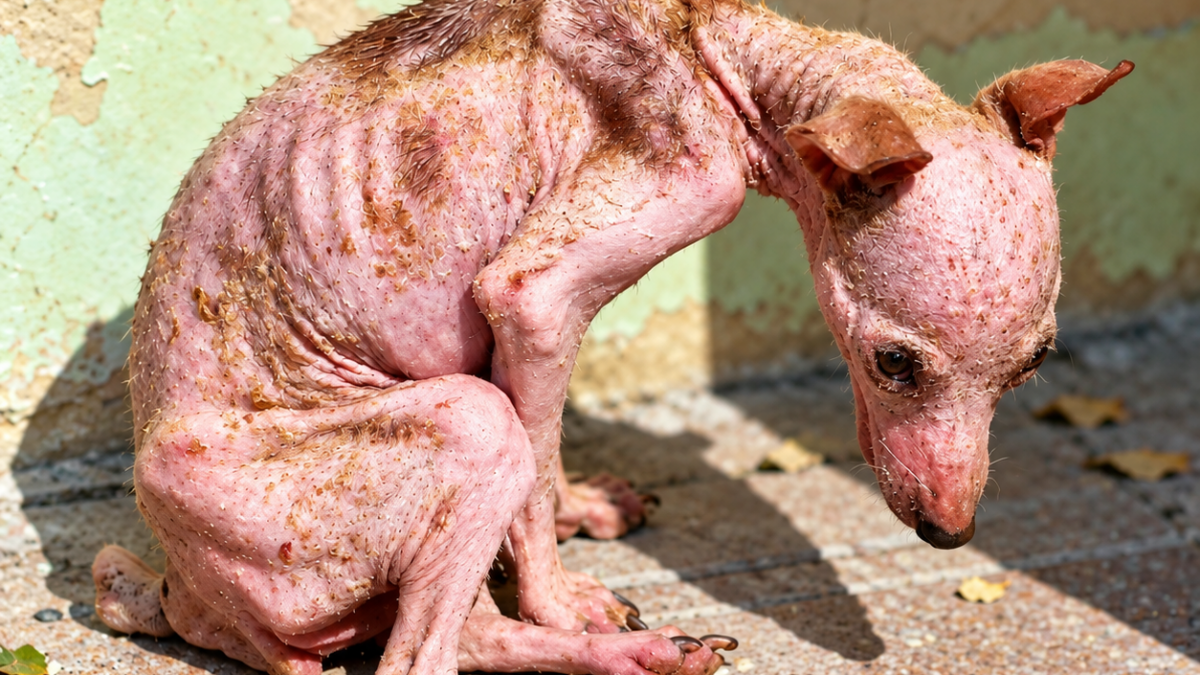
PART 2
Not because Halo suddenly became healthy.
She didn’t.
The next morning, she still looked frighteningly thin.
She still needed help getting onto her feet.
Her eyes were still clouded.
Her legs still trembled.
But now we knew there was something inside her that hadn’t disappeared.
Connection.
Recognition.
Maybe even trust.
When I walked into the recovery room the next morning, Halo’s ears turned before I said anything.
I stopped.
She had heard my footsteps.
“Morning, girl.”
Her head lifted.
There it was again.
Thump.
A tiny tail wag against the blanket.
One of the veterinary technicians looked over.
“She knows you.”
I smiled.
“She knows breakfast is probably following me.”
The technician laughed.
“That too.”
Food quickly became Halo’s most reliable motivation.
We had to feed her several small meals throughout the day.
Every portion was measured.
Every response monitored.
Her body had spent too long without enough nutrition.
The temptation was to feed her until she was full.
But starvation changes the body.
Recovery has to happen carefully.
Halo didn’t understand that.
Every time we removed an empty bowl, she searched for more.
She would sniff the blanket.
The floor.
Our hands.
Anywhere food might be hiding.
It was heartbreaking.
But there was also something hopeful in her hunger.
She wanted to eat.
She wanted something.
In those first days, wanting anything felt important.
At night, Halo slept for hours.
Deeply.
Almost unnaturally deeply.
Her body was exhausted.
We kept the room warm.
Someone always checked on her.
Sometimes, when a door opened, Halo woke suddenly.
Her head came up.
Her ears moved.
For a blind dog, sound was everything.
A door closing could mean danger.
Footsteps could mean danger.
Something falling could mean danger.
But gradually, she began learning the sounds of the clinic.
The refrigerator.
The food containers.
The washing machine.
The technician with heavy shoes.
The volunteer who hummed while cleaning.
My own footsteps.
One morning, I walked in quietly.
Halo lifted her head before I spoke.
I crouched beside her.
“You really do know me.”
Her nose moved toward my hand.
I touched her cheek.
She leaned slightly into my palm.
It was the first time she had done that.
I stayed very still.
Trust from a frightened dog is never something you demand.
Especially from a dog who cannot see what your hands are doing.
You wait for it.
Halo pressed harder.
I scratched gently beneath her chin.
Her eyes closed.
That became our routine.
Voice first.
Touch second.
Always.
I never wanted her to be surprised by a hand suddenly appearing on her body.
“Hi, Halo.”
Then touch.
“Food.”
Then bowl.
“Leash.”
Then movement.
“Step.”
Then guidance.
Words became landmarks.
In the beginning, Halo bumped into everything.
A chair.
A wall.
A water bowl.
The edge of her bed.
Nobody blamed her.
We started arranging her environment carefully.
The bed stayed in the same place.
Water stayed in the same place.
Food came from the same direction.
Furniture wasn’t moved unless necessary.
Halo began building a map inside her mind.
Three steps from the bed to the water.
Turn slightly left.
Open space.
Doorway.
Outside.
It was extraordinary to watch.
People sometimes think blindness means helplessness.
Halo taught us otherwise.
Her nose became her eyes.
Her ears became her warning system.
Her whiskers helped her judge closeness.
Her memory did the rest.
Within days, she could move around her recovery area with fewer collisions.
Within weeks, she rarely bumped into anything at all.
The first time I watched her walk from her bed directly to her water bowl without touching a wall, I almost cheered.
The technician beside me did.
“That’s my girl!”
Halo drank.
Then lifted her head.
Her tail wagged.
She had no idea why we were excited.
She only knew the world was becoming predictable.
Predictability changed everything.
Her body changed too.
The sharp edges of her ribs slowly became less severe.
Her hips began disappearing beneath muscle.
Her coat changed texture.
When we first found Halo, her fur seemed dead.
Dry.
Thin.
Hanging over her frame.
As nutrition returned, so did softness.
New growth appeared.
The change was gradual enough that we almost missed it.
Then one afternoon, someone brought out the original intake photograph.
We placed it beside a new photo.
Nobody spoke for several seconds.
The dog in the first photograph looked like she had already started disappearing.
The dog standing beside us now still had a long recovery ahead, but she was clearly present.
Alive.
Alert.
Waiting for dinner.
“That can’t be the same dog,” a volunteer whispered.
Halo barked.
We all turned.
It was one short sound.
Her first real bark since arriving.
I laughed.
“She disagrees.”
Halo barked again.
Louder.
The room erupted in laughter.
She had found her voice.
And once Halo discovered barking, she used it strategically.
Mostly for food.
Occasionally for attention.
Sometimes because somebody somewhere had made an unexplained sound and Halo believed an investigation was required.
Her personality was emerging.
She was not quiet by nature.
She had simply been too weak to make noise when we found her.
That realization hit me harder than expected.
How many traits had starvation hidden?
How much of Halo had been buried beneath exhaustion?
Once she had strength, we started seeing the real dog.
She was affectionate.
Stubborn.
Food motivated.
Curious.
Occasionally impatient.
She liked her neck scratched.
She hated having her ears cleaned.
She preferred soft beds but often slept half on and half off them for reasons nobody understood.
And she loved hearing familiar voices.
That was perhaps the most beautiful change.
When a person she knew entered the room, Halo’s entire body reacted.
Her head lifted.
Ears forward.
Tail moving.
Sometimes she made a little excited sound.
She could not see the person.
She didn’t need to.
She knew.
One evening, I arrived after being away for several days.
I opened the door.
Before I said anything, Halo’s head shot up.
I stopped.
“Seriously?”
Her tail started moving.
I walked closer.
“Halo.”
She stood.
Then something happened that made everyone nearby laugh.
Halo tried to run toward me.
Tried was the important word.
Her legs were still not fully strong.
She moved too quickly.
Her front paws went one direction.
Her back legs another.
She nearly fell.
I rushed forward.
“Easy!”
Halo recovered.
Then walked straight into my knees.
I crouched.
She buried her head against my chest.
I held her.
“You missed me?”
Her tail hammered the floor.
The answer seemed clear.
For a dog who had once been completely alone, attachment came quickly once she decided someone was safe.
But attachment brought another challenge.
Halo didn’t like being alone.
At first, if the recovery room became quiet, she grew anxious.
She stood.
Listened.
Moved toward the door.
Sometimes she whimpered.
It made sense.
She had spent who knew how long in a forest unable to see.
Silence probably meant isolation.
So we practiced.
Short periods.
A familiar blanket.
A radio playing softly.
Then someone returned.
Again.
And again.
Halo learned that quiet didn’t mean abandonment.
People came back.
That lesson became one of the foundations of her recovery.
Eventually, Halo became healthy enough to leave constant medical supervision.
That meant foster care.
We needed someone experienced.
Someone patient.
Someone who understood that blindness required consistency, not pity.
A foster volunteer named Rachel offered.
Her house was quiet.
No stairs inside the main living area.
A fenced yard.
Experience with special-needs animals.
Perfect.
The first time Halo entered Rachel’s house, she stopped just inside the doorway.
New place.
New smells.
Different floor.
Different acoustics.
She stood completely still.
Rachel crouched a few feet away.
“Hi, Halo.”
Halo’s ears turned.
Rachel tapped the floor gently.
“Come here.”
Halo took one step.
Stopped.
Another.
Her nose moved constantly.
Rachel let her explore.
No pulling.
No carrying her from room to room.
Halo needed to build her own map.
She touched the wall with her nose.
Turned.
Found a chair leg.
Adjusted.
Reached the living room.
Found the rug.
Stopped.
Rachel had placed Halo’s familiar bed there.
Halo smelled it.
Her whole body relaxed.
She stepped onto it.
Turned twice.
Lay down.
Rachel looked at me.
“Okay. That worked.”
“Never move that bed.”
“I won’t.”
For the first week, nothing in the house moved.
Rachel kept every chair exactly where it was.
Water bowl on one mat.
Food bowl in another location.
Bed beside the wall.
Door to the yard straight ahead.
Halo mapped everything.
By the fourth day, she could walk from her bed to the backyard door without touching anything.
By the second week, she moved confidently through three rooms.
Then came the stairs.
Rachel had two steps down into the backyard.
For Halo, they might as well have been a cliff.
The first time she reached them, her front paw felt the edge.
She froze.
Rachel stood beside her.
“Step.”
Halo pulled her paw back.
“Step.”
Rachel guided gently.
Halo lowered one foot.
Found the next level.
Then another.
She made it down.
Her tail wagged.
Going back up was easier.
Within days, the word “step” became enough.
Halo would slow.
Feel with one paw.
Then move.
The first time I saw her navigate the yard alone, I couldn’t believe it.
She walked along the fence.
Turned near a tree.
Crossed the grass.
Stopped at the patio.
Found the door.
Perfectly.
Rachel smiled.
“People keep calling her helpless.”
Halo pushed the door with her nose.
Rachel opened it.
“She disagrees.”
So did I.
Blindness changed how Halo interacted with the world.
It did not remove her ability to have one.
If anything, she became more attentive.
She listened to birds.
Followed scents in the grass.
Recognized vehicles by sound.
Knew Rachel’s car before it entered the driveway.
One afternoon, Rachel called me.
“You need to hear this.”
“What?”
“She knows when I’m coming home.”
“How?”
“I pulled into the driveway. My husband said Halo was asleep. The second my car turned onto the street, she stood up and went to the door.”
“That’s impossible.”
“It happened again yesterday.”
The next time I visited, we tested it.
Rachel drove around the block.
Halo slept on the rug.
We waited.
Nothing.
Then her ears moved.
Head lifted.
Tail started wagging.
Five seconds later, the car appeared outside.
I stared.
Rachel’s husband laughed.
“Told you.”
Halo stood at the door.
She could not see Rachel returning.
She heard her.
Maybe the engine.
Maybe tires.
Maybe something none of us noticed.
But she knew.
When Rachel entered, Halo danced in place.
Blind dog.
Perfect recognition.
That became one of the moments I loved most about her story.
The world had taken Halo’s sight.
Halo simply learned other ways to find the people she loved.
Months passed.
Her body filled out completely.
The trembling in her back leg disappeared.
Her coat became thick and soft.
Her face looked younger somehow.
Health does that.
Pain ages animals.
Safety seems to give some of those years back.
People who saw Halo for the first time no longer reacted with horror.
They reacted with admiration.
“She’s beautiful.”
“She looks so healthy.”
“You’d never know.”
That last sentence always caught my attention.
You’d never know.
We knew.
We remembered.
We remembered the forest floor.
The loose fur.
The ribs.
The trembling leg.
The cloudy eyes staring at nothing.
We remembered how light she felt when we carried her.
Halo didn’t need to remember all of that.
Maybe she did.
Maybe she didn’t.
What mattered was the present.
She was healthy.
But one question remained.
Would Rachel adopt her?
We tried not to ask too quickly.
Foster families need space to make their own decisions.
Halo was becoming increasingly attached to Rachel.
Rachel was becoming increasingly terrible at pretending she wasn’t attached to Halo.
One day I visited and found Halo asleep on the couch.
I looked at Rachel.
“You said dogs weren’t allowed on that couch.”
Rachel didn’t look up.
“She’s blind.”
“That has nothing to do with the couch.”
“She got confused.”
“She is under a blanket.”
“She became confused slowly.”
I stared at her.
Rachel smiled.
“Okay.”
I sat down.
Halo immediately shifted closer.
“So how’s fostering going?”
Rachel sighed.
“You know exactly how it’s going.”
I waited.
“She’s not leaving.”
There it was.
I smiled.
“Are you sure?”
Rachel looked offended.
“She knows the house.”
“That’s not enough.”
“She knows us.”
“Better.”
“She sleeps beside my bed.”
“Okay.”
“She recognizes my car.”
“True.”
“She has three beds.”
“Excessive.”
“She hates rain.”
“Normal.”
Rachel looked toward Halo.
“And when she wakes up scared at night, she comes looking for my voice.”
That ended the joke.
Rachel’s expression changed.
“She spent enough time not knowing where she belonged.”
She scratched Halo’s neck.
“I don’t want her learning another house if she doesn’t have to.”
Halo’s tail moved beneath the blanket.
I smiled.
“I think that’s your answer.”
The adoption was finalized quietly.
No dramatic ceremony.
Paperwork.
Signatures.
A collar.
An official record that Halo had a family.
Rachel cried anyway.
Halo was too busy sniffing the treat bag to appreciate the significance.
After the paperwork was done, Rachel clipped the new tag onto Halo’s collar.
It made a small metallic sound.
Halo tilted her head.
Rachel held it between her fingers.
“This says you belong to us.”
Halo sniffed it.
Rachel laughed through tears.
“I know. You don’t care.”
Halo licked her hand.
Maybe she cared in a different language.
The first year after adoption was full of small victories.
Halo learned every room.
Every doorway.
Every step.
Every sound.
Rachel eventually moved one chair by accident.
Halo walked directly into it.
Rachel felt terrible.
Halo seemed offended for about thirty seconds.
Then she remapped the space.
That became another lesson.
We thought Halo needed the world to remain unchanged forever.
She didn’t.
She needed changes introduced in a way she could understand.
When Rachel added a new piece of furniture, she guided Halo around it several times.
Halo sniffed.
Touched.
Learned.
Then adapted.
She became so confident that visitors sometimes didn’t realize she was blind.
She moved through the house too smoothly.
One guest once held out a hand silently.
Halo walked right past.
The guest whispered:
“Does she not like me?”
Rachel laughed.
“She doesn’t know you’re offering your hand.”
“Oh.”
“Say her name.”
“Halo?”
Halo stopped.
Turned perfectly toward the voice.
Walked over.
The guest’s face changed.
“Oh.”
That second “oh” was different.
Understanding.
Halo taught people things.
Not through speeches.
By existing.
Blind did not mean broken.
Blind did not mean miserable.
Blind did not mean helpless.
Halo ran.
Played.
Barked.
Stole food.
Demanded affection.
Got annoyed.
Got excited.
Loved.
She simply did those things without sight.
Rachel started placing different textured mats near important locations.
One by the back door.
One beneath the water.
Another near the bedroom.
Halo used them like tactile signs.
She learned words too.
“Step.”
“Door.”
“Careful.”
“Left.”
“Right.”
“Bed.”
“Food.”
Food required no training.
Halo understood food in every language.
Her favorite game became scent searching.
Rachel hid treats around a room.
Halo waited outside.
Then entered.
Nose down.
Tail wagging.
She found almost every one.
Sometimes faster than sighted dogs.
Watching her work was incredible.
The forest had once been filled with scents she couldn’t interpret safely.
Now scent became entertainment.
A game.
Something that made her tail move instead of making her afraid.
That transformation mattered.
One summer afternoon, Rachel brought Halo to a quiet park.
Not the forest.
We weren’t ready for that.
Open grass.
Few people.
Soft ground.
Halo wore a long line.
At first, she stayed close.
Then she smelled something.
Her head lifted.
Wind moved through her coat.
She walked forward.
Rachel followed.
Halo began trotting.
“Easy, girl.”
Halo accelerated.
Rachel laughed.
The long line extended.
Halo ran.
Not toward anything she could see.
Into a world she understood through movement, scent, and sound.
Her legs stretched.
Her coat moved in the wind.
She looked completely free.
I was standing nearby.
I took a video.
Later, I watched it beside the clip from the day we found her.
The contrast almost didn’t feel real.
Forest Halo could barely stand.
Park Halo ran.
Forest Halo’s body had been disappearing.
Park Halo was strong.
Forest Halo waited silently beneath trees.
Park Halo barked because Rachel was too slow with a treat.
Same dog.
The difference was care.
That became Halo’s real revenge on the worst days of her life.
She refused to remain the animal those days had created.
Not consciously.
Dogs don’t build revenge narratives the way people do.
But every joyful thing she did contradicted what had happened before.
Every confident step said the forest did not win.
Every full meal answered the hunger.
Every warm blanket answered the cold leaves.
Every familiar voice answered the silence.
Every hand she trusted answered the fear of something approaching unseen.
And every time Rachel left the house and returned, Halo learned once more:
People can come back.
One night, a severe storm rolled through.
Thunder shook the windows.
Halo panicked.
Her blindness made sudden sounds especially frightening.
She started pacing.
Bumped into a chair.
Turned.
Paced again.
Rachel sat on the floor.
“Halo.”
The dog froze.
“Halo, come.”
Halo found the voice.
Rachel kept speaking.
“Here.”
Halo walked forward.
Found Rachel’s knees.
Pressed against her.
Another thunderclap.
Halo trembled.
Rachel wrapped a blanket around her.
“You’re home.”
Halo breathed quickly.
“You’re safe.”
Another clap.
Rachel stayed.
Hours later, Halo fell asleep against her.
The next morning, the storm was gone.
Sunlight filled a house Halo couldn’t see.
But she knew it was morning.
Birds outside.
Rachel moving in the kitchen.
Coffee machine.
Food bowl.
Normal life.
That was enough.
On Halo’s adoption anniversary, Rachel did something I didn’t expect.
She drove with Halo back toward the wooded area where we had found her.
Not into the deepest part.
Just near the trail entrance.
I went with them.
Rachel opened the car door.
Halo stepped out.
Immediately, her nose started moving.
Leaves.
Dirt.
Trees.
Moisture.
Wind.
She stood still.
I wondered if scent could awaken memories the way places do for people.
We would never know.
Halo listened.
Then took a few steps.
Rachel held the leash loosely.
“Okay?”
Halo moved forward.
We followed.
The forest sounded almost exactly as I remembered.
Branches overhead.
Birds.
Wind.
Occasional cracking underfoot.
For me, the memories came instantly.
The shape beneath the trees.
The trembling leg.
The cloudy eyes.
For Halo, maybe it was simply another place.
She walked confidently beside Rachel.
At one point, she stopped.
Raised her head.
Smelled the air.
Then continued.
I felt emotional in a way I hadn’t expected.
This time, Halo wasn’t trapped.
She wasn’t alone.
She wasn’t starving.
There was a leash connecting her to someone.
Food in the car.
Water.
A warm bed waiting.
A home she could return to.
The forest no longer held power over her.
We didn’t stay long.
There was no need.
Rachel knelt before Halo.
“You ready to go home?”
Halo’s ears turned toward her.
Tail wag.
We walked back.
That was enough closure for me.
Not revenge against a person.
Revenge against circumstance.
Against the idea that the place where Halo almost died could define her forever.
It didn’t.
Life moved on.
Halo aged.
Slowly.
Gracefully.
Her muzzle became lighter.
Her energy changed.
She still moved confidently through the house but slept longer.
Rachel added rugs to help with traction.
Then a ramp near the couch.
Halo initially refused to use it because apparently dignity mattered.
She tried jumping.
Missed.
Rachel caught her.
“No.”
Halo protested with a bark.
“You’re using the ramp.”
Halo barked again.
“You’re old.”
Bark.
I laughed from across the room.
“She disagrees.”
Eventually, Halo accepted the ramp.
Mostly because treats were placed on it.
Food solved many philosophical disagreements.
As she aged, people became even more fascinated by her ability to navigate.
Children visiting the house sometimes asked questions.
“How does she know where she is?”
Rachel explained.
“She listens. Smells. Remembers.”
“Is she sad because she can’t see?”
Rachel always answered carefully.
“She can still be happy.”
Halo usually demonstrated by stealing a snack.
One little boy became particularly attached to her.
He was nervous around dogs.
Halo was perfect because she never rushed toward silent strangers.
He learned to speak before touching her.
“Halo?”
Her ears turned.
Then he held out his hand.
Halo sniffed it.
The first time she let him pet her, the boy smiled so widely that Rachel took a photograph.
Months later, he sat on the floor with Halo’s head in his lap.
The frightened child and the blind dog.
Both trusting.
Halo’s life kept creating small circles like that.
The creature who had once needed guidance became a teacher without knowing it.
She taught children not to approach animals silently.
She taught adults that disability was not the same as suffering.
She taught foster volunteers patience.
She taught Rachel how deeply routine could communicate safety.
And she taught me something I had struggled to understand before.
Sometimes an animal’s greatest recovery cannot be photographed.
You can photograph weight gain.
New fur.
Healthy muscles.
Bright posture.
But you cannot easily photograph the moment a dog stops expecting the worst.
Halo changed internally.
The evidence came in ordinary behaviors.
Sleeping deeply.
Walking into another room alone.
Waiting near the door without panic.
Eating normally instead of searching endlessly afterward.
Allowing Rachel to leave.
Knowing she would return.
Those changes were the real transformation.
Several years after adoption, Halo developed a strange habit.
Every evening around 8:00, she walked through the house.
Living room.
Kitchen.
Hallway.
Bedroom.
Then back.
Rachel joked that Halo was doing security rounds.
Maybe she was.
Maybe she simply liked checking where everyone was.
She used sound and smell.
If Rachel was in the kitchen, Halo found her.
If Rachel’s husband was reading in the living room, Halo checked him.
If someone was outside, Halo waited near the door.
Once everyone was accounted for, she returned to her bed.
There was something touching about it.
A dog who had once been alone in a forest now ended every day by confirming that her people were still close.
One evening, I happened to be visiting during Halo’s rounds.
She walked into the room.
Stopped.
Her head turned.
She heard me breathing.
Walked over.
Sniffed my leg.
Tail wag.
“Inspection complete?”
Halo moved away.
Rachel laughed.
“She does that every night.”
“Why?”
“No idea.”
I watched Halo disappear down the hallway.
Maybe there was no deep reason.
Not everything has to symbolize trauma.
Sometimes dogs simply develop routines.
But watching her, I couldn’t help thinking about the forest.
There, Halo must have listened for sounds that meant danger.
Now she listened for sounds that meant family.
Same ears.
Different world.
As Halo grew older, her veterinary care became more frequent.
Arthritis.
Minor digestive issues.
Normal senior-dog problems.
Every appointment made me smile in a strange way.
Senior problems.
There was a time when we weren’t certain Halo would survive long enough to leave emergency care.
Now we were discussing joint supplements.
That was a victory.
Growing old is not tragic when the alternative once looked like dying young and alone.
Halo was lucky enough to become old.
Her back legs became weaker again.
The sight of them trembling for the first time brought back memories.
I hated it.
Rachel noticed my face.
“This isn’t then.”
I looked at her.
“She’s right here.”
Rachel touched Halo’s back.
“She’s eating. Comfortable. Bossy.”
Halo barked from the kitchen.
Rachel smiled.
“Very bossy.”
She was right.
Old-age weakness was not starvation weakness.
Halo was safe.
Her body was simply aging.
We adjusted.
Shorter walks.
More rugs.
Pain management.
Extra bedding.
Halo adapted the way she always had.
When one ability changed, she relied on another.
When stairs became harder, she waited for assistance.
When her hearing became slightly less sharp, Rachel spoke louder.
That scared us more than anything.
Halo had depended on hearing her entire life.
As a senior, she began losing some of it.
Not completely.
But enough that she sometimes failed to notice Rachel entering a room.
We changed communication again.
More floor vibrations.
Gentle touches.
Strong familiar scents.
Halo adapted.
She always adapted.
One afternoon, I watched Rachel wake her.
Instead of calling, Rachel placed her hand on the blanket near Halo’s body first.
A small vibration.
Halo lifted her head.
Then Rachel touched her shoulder.
No fear.
No startle.
Just recognition.
Their relationship had become its own language.
No sight required.
Sometimes not even sound.
Years of trust had shortened everything.
One touch could mean:
It’s me.
You’re safe.
Halo’s last years were quiet.
Beautifully quiet.
She spent afternoons in warm patches of sunlight she couldn’t see but could feel.
She knew exactly where they moved across the floor.
At certain times, she walked to the same spot and lay down.
Rachel once said:
“She can’t see the sun, but she always finds it.”
That sentence stayed with me.
Maybe because it described Halo’s entire life.
She could not see.
But somehow she kept finding warmth.
Eventually, there came a winter when Halo’s health changed more quickly.
Her appetite weakened.
She slept longer.
Standing became difficult.
The veterinarian adjusted medication.
Some days were good.
Others weren’t.
Rachel tracked them.
Good day.
Good day.
Bad morning, good evening.
Good day.
Bad day.
Then more bad days.
We all understood what that meant.
The hardest part of loving animals is that eventually love asks something painful from you.
Not how hard you can hold on.
How carefully you can recognize when holding on stops being for them and becomes only for you.
Rachel struggled.
Of course she did.
One evening, she called me.
“I don’t know how to do this.”
I knew what she meant.
“You don’t have to decide tonight.”
“She barely ate.”
I was quiet.
“She still came to me when I sat down.”
“That matters.”
“She slept with her head on my foot.”
“That matters too.”
Rachel’s voice broke.
“What if I do it too soon?”
Every person who has loved an old animal asks that.
“And what if I wait too long?”
The other question.
There was no perfect answer.
Only responsibility.
The veterinarian helped.
Quality of life.
Pain.
Mobility.
Appetite.
Engagement.
Rest.
The balance.
For a little while, Halo rallied.
She ate better.
Had a few good walks around the yard.
Barked at dinner.
Rachel sent me a message:
“She yelled at me because chicken was late.”
I replied:
“Excellent medical sign.”
We laughed.
But we knew where the road was heading.
Several weeks later, Halo had a difficult night.
She couldn’t settle.
Her legs repeatedly failed.
She stopped eating completely.
Rachel sat beside her until morning.
When the veterinarian examined Halo, the options were clear.
More interventions might extend time.
They would not restore comfort.
Rachel made the decision.
Halo would go home first.
One final day.
Not because Halo understood dates.
Because the family needed time to surround her with everything familiar.
Her bed.
Her blankets.
Her house.
Her smells.
Her people.
I visited that afternoon.
Halo was lying in her favorite spot.
Warm sunlight across her back.
I entered quietly.
Her hearing was poor now.
She didn’t notice.
I tapped the floor near her bed.
Halo lifted her head.
I crouched.
She smelled my hand.
Then her tail moved.
Slow.
Once.
Twice.
I swallowed.
“Still know me?”
Halo pushed her nose into my palm.
I sat beside her.
For a while, nobody spoke.
Rachel sat on the other side.
Her husband nearby.
Everything about the room was ordinary.
That made it harder.
Same couch.
Same rug.
Same water bowl.
The objects of an entire life.
I touched Halo’s face.
“You know where I found you?”
Rachel looked at me.
I continued quietly.
“You were lying under those trees.”
Halo breathed slowly.
“You couldn’t stand.”
Her ear moved.
“You couldn’t see us.”
I ran my fingers through the soft fur on her neck.
“But you heard us.”
I remembered that first moment.
Cloudy eyes.
Trembling leg.
Cold leaves.
“You heard my voice.”
My own voice broke.
“And you trusted it.”
Halo rested her chin against my wrist.
I took a breath.
“You’ve been listening to us ever since.”
Rachel started crying.
I tried to smile.
“You did pretty well.”
Halo’s tail moved against the blanket.
Thump.
The same tiny sound from the first night.
I looked at Rachel.
She heard it too.
We both remembered.
One tail wag.
A whispered beginning.
Years later, the same movement had become goodbye.
Halo spent her final night at home.
Rachel slept on the floor beside her.
Halo’s head rested against her arm.
At some point before dawn, Rachel woke.
Halo was still sleeping peacefully.
She placed a hand gently on Halo’s side.
Breathing.
Warm.
Safe.
Rachel told me later that she lay there for almost an hour without moving.
Not because anything was happening.
Because nothing was.
And she wanted one final ordinary hour.
Morning came.
Halo ate a small piece of chicken.
Not much.
Enough to make everyone smile.
The veterinarian came to the house.
That had been Rachel’s request.
No strange clinic if it could be avoided.
Halo knew every smell in that room.
Every texture.
Every person.
She rested on her own blanket.
Rachel sat beside her.
Her husband held Halo’s paw.
I stayed near her head.
The veterinarian spoke softly.
Halo couldn’t hear much of it.
But she could feel our hands.
Touch had been part of Halo’s language from the beginning.
It would be part of the end too.
Rachel leaned down.
“I’m right here.”
Halo breathed.
“You know that?”
She kissed her forehead.
“You’re home.”
The veterinarian began.
Halo relaxed.
No fear.
No forest.
No cold ground.
No invisible danger moving through trees.
Only familiar hands.
Familiar scent.
Home.
Her breathing became slower.
Then softer.
Rachel continued speaking.
“You’re okay.”
The words were nearly identical to what I had told Halo years earlier when I first touched her.
You’re okay.
Only now they meant something different.
The first time, they meant:
Help has arrived.
This time, they meant:
You don’t have to fight anymore.
Halo’s final breath was quiet.
Rachel kept her hand on her.
Nobody moved.
The room seemed impossibly still.
For years, Halo had located us through sound.
Now we sat in silence around her.
Eventually, Rachel rested her forehead against Halo’s.
“She never saw this house.”
I looked at her.
“No.”
Rachel cried harder.
“But she knew every inch of it.”
That was true.
Halo had never seen the couch.
Never seen the backyard.
Never seen Rachel’s face.
Never seen me.
Never seen her own healthy coat.
Never seen the photographs showing how dramatically she had changed.
She didn’t need to.
She knew the house through memory.
She knew Rachel through voice, scent, and touch.
She knew safety without ever seeing it.
Maybe that was one of the most powerful things about her life.
We often trust our eyes too much.
Halo never had that option.
She trusted consistency.
A bowl that appeared every day.
A voice that returned.
A hand that always touched gently.
A bed that stayed where she remembered it.
A door that led to the same yard.
A person who came home.
Safety was not something Halo saw.
It was something people proved.
Again.
And again.
And again.
After Halo died, Rachel left her bed in place for months.
She could not bring herself to move it.
The textured mat near the water bowl remained too.
The small ramp by the couch.
Everything Halo had used to understand the house.
One day, Rachel called.
“I finally moved the chair.”
I knew which chair.
The chair nobody had moved for years because Halo had memorized its location.
“How does it feel?”
“Wrong.”
Then she laughed softly.
“But also okay.”
Life after an animal is strange.
You regain freedoms you didn’t realize you surrendered.
You move furniture.
Stay out later.
Stop measuring medication.
Remove ramps.
And sometimes every regained freedom feels like betrayal.
It isn’t.
It is simply evidence that someone mattered enough to shape your life while they were there.
Rachel eventually framed two photographs.
One showed Halo shortly after rescue.
Thin.
Weak.
Cloudy eyes.
The other showed her years later.
Healthy.
Soft coat.
Head lifted.
Tail blurred because it was moving.
She placed them together.
I asked why she kept the first one.
“I almost didn’t.”
“Why did you?”
She looked at it.
“Because I want to remember that she survived it.”
Not what happened to her.
What she survived.
There was a difference.
Halo’s story continued after she was gone.
Rachel began helping other blind dogs.
At first, she offered advice.
How to keep furniture consistent.
How to use textured mats.
How to introduce stairs.
How to speak before touching.
How to teach directional words.
How to stop pitying the animal and start communicating with them.
Then she fostered one.
A small blind senior dog named Archie.
When Archie entered the house, he bumped into the wall.
Rachel didn’t panic.
She guided him.
Showed him the water.
The bed.
The door.
The same method Halo had taught her.
Voice.
Touch.
Repetition.
Archie adapted.
Months later, he was adopted.
Then another blind dog came.
Then another.
Halo had spent the first part of her story needing someone to understand blindness.
By the end, her life had created people who understood it.
That was another kind of victory.
One rescue became many.
One frightened dog changed how an entire group cared for animals like her.
I sometimes returned to the forest alone.
Not often.
But enough.
The place looked different each season.
Green in summer.
Brown in winter.
Wet after rain.
Quiet in early morning.
I could never find the exact spot where Halo had been lying.
Maybe that was better.
I didn’t need a monument.
Halo’s monument was elsewhere.
In Rachel’s house.
In every blind dog she later helped.
In the volunteers who learned from her.
In the people who stopped saying “poor thing” and started asking, “How can we help her navigate?”
Halo had changed the language.
She had changed us.
For years, I had thought rescue meant finding an animal and removing it from danger.
Halo complicated that definition.
Getting her out of the forest had taken minutes.
Teaching her that the world could be safe took months.
Teaching us how capable she was took longer.
And loving her lasted years.
That was rescue.
Not one moment.
A sequence of promises kept over time.
We promised food.
Food arrived.
We promised warmth.
Warmth remained.
We promised gentleness.
Hands stayed gentle.
We promised people would return.
They did.
Halo learned the truth of those promises through repetition.
That was how trust was built.
Not through one dramatic save.
Through thousands of ordinary acts afterward.
Years after Halo’s death, someone once asked me which part of her story I considered the happiest.
They expected me to say the moment she was found.
Or her adoption.
Or the first time she ran.
All of those mattered.
But they weren’t my answer.
My favorite memory was one nobody photographed.
I had visited Rachel one evening years into Halo’s life.
Nothing special was happening.
Rachel was making dinner.
Her husband was reading.
Halo was asleep in the living room.
A pan fell in the kitchen.
Years earlier, a sound like that would have startled Halo badly.
That evening, her ear moved.
Just once.
Then she went back to sleep.
That was it.
No running.
No panic.
No searching for danger.
She heard a loud noise and assumed she was safe.
People underestimate how enormous that is.
A dog who once lived in darkness among unknown sounds had learned that not every noise predicted pain.
Home had rewired her expectations.
That was Halo’s greatest transformation.
Not the coat.
Not the weight.
Not even the strength in her legs.
Peace.
She became peaceful.
When I think about justice for Halo, I think about that.
There was no courtroom in the story we knew.
No confirmed villain for us to punish.
No dramatic confrontation.
We never knew exactly how Halo came to be in that forest.
Maybe someone failed her.
Maybe several people did.
Maybe circumstances were more complicated than we would ever understand.
But I stopped needing a villain.
Because the most satisfying part of Halo’s story did not require someone else to lose.
Halo won.
She won every morning she woke in a warm room.
She won every meal.
Every nap.
Every walk.
Every tail wag.
Every night she slept deeply.
Every time Rachel left the house and came back.
Every time Halo navigated a room nobody thought she could navigate.
Every time someone said blindness meant helplessness and Halo proved otherwise.
Every year she grew older.
The forest once made her look small.
Her life afterward made the forest small.
One location.
One chapter.
Not the ending.
The dog we found beneath those trees seemed as though she was waiting to disappear.
Instead, she became impossible for us to forget.
She had once been unable to see the hands reaching toward her.
Later, she learned those hands by touch.
She had once listened to unknown footsteps and feared what they might mean.
Later, she heard familiar footsteps and wagged before the person even reached the room.
She had once searched blindly for food.
Later, she marched confidently toward a bowl she knew would always be waiting.
She had once collapsed after trying to stand.
Later, she ran across grass.
She had once been surrounded by trees she could not navigate.
Later, she mapped an entire home inside her mind.
She had once been alone.
Later, being alone became unusual.
That was enough.
More than enough.
The final photograph I keep of Halo is not the dramatic before-and-after comparison people usually remember.
It was taken on an ordinary afternoon.
Halo is lying in a patch of sunlight.
Her coat is soft.
Her body healthy.
Her eyes are still cloudy.
Beside her is Rachel’s hand resting gently against her shoulder.
Halo’s head is down.
Completely relaxed.
You cannot see anything extraordinary happening.
That is why I love it.
Halo had spent enough of her life in extraordinary danger.
She deserved ordinary peace.
That photograph is the ending.
Not blindness cured.
It wasn’t.
Not the past erased.
It couldn’t be.
Something better.
A dog who understood exactly where she was.
Even without seeing it.
Warm floor beneath her.
Sun on her fur.
A familiar hand nearby.
A house mapped inside her memory.
A person she trusted.
And no reason left to be afraid.
Halo never saw the life we gave her.
But she felt every bit of it.
She smelled breakfast.
Heard footsteps coming home.
Felt blankets beneath her.
Recognized hands.
Knew voices.
Found sunshine.
Learned rooms.
Trusted doors.
Loved people.
And after everything she survived, perhaps that was the most beautiful ending possible.
She didn’t need eyes to know she had finally found home.
She only needed us to keep proving we were there.
And we did.
Until the very end.
By the time Maya had been with Elena for several years, almost nobody who met her for the first time believed the photographs from the landfill were real.
They would look at the tiny dog standing in front of them, then at the picture on Elena’s phone, then back at Maya.
“No way.”
Elena heard that phrase constantly.
“No way that’s the same dog.”
But it was.
The healthy coat.
The bright eyes.
The stubborn little face.
The ridiculous whole-body wiggle that replaced the tail she no longer had.
All of it belonged to the same puppy who had once searched through rotting garbage because there was nothing else to eat.
Maya, of course, had no interest in proving anything to anyone.
She had better things to do.
There were sunbeams to sleep in.
Neighbors to greet.
Blankets to steal.
And, most importantly, meals to supervise.
Elena had once worried that Maya’s obsession with food would never soften.
For the first year, every sound from the kitchen brought her running.
A cabinet opened.
Maya appeared.
A wrapper crinkled.
Maya appeared.
Someone dropped a crumb in another room.
Maya somehow appeared before it reached the floor.
But eventually, something subtle changed.
Maya stopped searching after every meal.
She stopped licking the bowl endlessly.
She stopped circling the kitchen at night.
Most importantly, she stopped looking frightened when her food disappeared.
The bowl could be empty.
And she could walk away.
Because another meal would come.
That trust took years to build.
Elena never rushed it.
She never joked when Maya became protective around food.
Never punished her for scavenging habits that had once kept her alive.
Instead, she made the world predictable.
Breakfast at nearly the same time every morning.
Dinner at nearly the same time every evening.
Fresh water.
Treats during training.
No games with the bowl.
No pretending to take food away to “teach her who was boss.”
Elena understood something many people don’t.
You cannot teach security by creating more insecurity.
So she gave Maya repetition.
Again.
And again.
And again.
Until Maya’s body stopped expecting disaster.
One afternoon I visited and found Maya sleeping in the kitchen while Elena prepared dinner.
The smell of chicken filled the room.
Maya’s eyes opened.
She lifted her head.
I expected her to jump up.
Instead, she sighed and put her head back down.
I stared.
“Is she sick?”
Elena laughed.
“No.”
“There’s chicken.”
“I know.”
“And she’s lying there.”
“She knows dinner is coming.”
That sentence nearly made me cry.
Maya knew dinner was coming.
Such a simple thing.
Most dogs never have to learn it.
They grow up assuming food will appear because it always has.
For Maya, that belief had to be rebuilt from nothing.
I sat on the floor beside her.
“You really figured this out, huh?”
Her eyes opened.
Her whole back end gave one lazy wiggle.
Then she went back to sleep.
She didn’t need to guard the kitchen anymore.
The kitchen belonged to her.
The food belonged to tomorrow.
And tomorrow was something she finally expected to reach.
Maya became especially attached to mornings.
Elena woke early for work.
Before the alarm even finished ringing, Maya usually appeared beside the bed.
She would place two front paws on the mattress and stare.
If Elena ignored her, Maya made a small sound.
If that failed, she barked.
If that still failed, she walked around to the other side of the bed and repeated the process.
“You know,” Elena told her one morning, “some dogs let their owners sleep.”
Maya barked.
“I saved you from a landfill.”
Maya barked again.
“You owe me.”
Maya stared toward the kitchen.
Elena laughed.
“Apparently I owe you breakfast.”
That was Maya.
No tragic music.
No permanent victimhood.
She had become demanding enough to be funny.
And I loved that.
The world had once given her so little that she accepted scraps from garbage.
Now she complained if breakfast was ten minutes late.
Good.
Let her complain.
Let her expect things.
Expectation was one of the greatest gifts recovery had given her.
She expected Elena to come home.
Expected the water bowl to be full.
Expected the front door to open when she scratched.
Expected hands to be gentle.
Expected the bed to be warm.
Expected love.
That change never appeared on a medical chart.
But it was the biggest one.
Maya’s missing tail continued attracting attention.
Children especially noticed.
One little boy stared at her during a neighborhood gathering.
“Where’s her tail?”
Elena answered casually.
“She doesn’t have one.”
“Why?”
“We don’t know.”
The boy thought about this.
“Can she still wag?”
Elena smiled.
“Watch.”
She called:
“Maya!”
Maya turned.
Her entire rear end began swinging.
The boy burst out laughing.
“She wags her whole butt!”
“Exactly.”
Maya ran over.
The boy knelt and scratched her ears.
There was no sadness in the interaction.
No pity.
Just curiosity.
That was how Elena preferred it.
We never knew what happened to Maya’s tail.
There was no evidence that allowed us to honestly accuse anyone.
And eventually, the mystery stopped mattering.
Her missing tail became less a symbol of what had happened before and more simply another feature of Maya.
Like her crooked sleeping position.
Or her obsession with chicken.
Or the way she barked at umbrellas.
Maya did not seem to consider herself incomplete.
So we stopped treating her that way.
The years passed quietly.
And that was exactly what we wanted.
Rescue stories often end right after adoption because adoption feels like the big finish.
But the best part comes afterward.
Nothing happens.
And then nothing happens again.
No emergency.
No hunger.
No infection.
No dramatic rescue.
Monday becomes Tuesday.
Tuesday becomes Wednesday.
Breakfast.
Walk.
Nap.
Dinner.
Bed.
Weeks become months.
Months become years.
That ordinary repetition was Maya’s happy ending.
She had enough uneventful days to become middle-aged.
Then enough to become a senior.
The first gray hairs appeared around her muzzle.
Elena reacted as if she had discovered a national emergency.
She sent me a photograph.
“NO.”
I called her.
“What?”
“She’s going gray.”
“That happens.”
“Not to Maya.”
“Maya is aging.”
“I reject that.”
I laughed.
“You can reject gravity next.”
Elena looked down at Maya.
Maya was asleep with her tongue slightly outside her mouth.
“She was a puppy yesterday.”
“She was a puppy years ago.”
“You’re not helping.”
But beneath the humor, I understood.
Aging rescue animals carry a strange kind of heartbreak.
Every gray hair is a reminder that time is moving.
But for Maya, each one was also proof.
Proof she had been given enough years to grow gray.
Enough meals.
Enough nights in a warm house.
Enough birthdays.
Enough ridiculous fights over couch space.
Enough time for puppyhood to become adulthood and adulthood to become age.
There had been a moment when veterinarians weren’t sure she would survive the week.
Now we were complaining that she was getting old.
That wasn’t tragedy.
That was success.
Her body began slowing.
First, jumping onto Elena’s bed became harder.
Maya would stand beside it, calculate the distance, and sometimes decide the effort was unreasonable.
Elena bought little stairs.
Maya refused to use them.
Of course.
For three days, she continued attempting to jump.
Then she misjudged once and landed awkwardly.
Elena caught her before she fell.
“That’s it.”
Maya stared.
“You’re using the stairs.”
Maya walked away.
“I’m serious.”
The next morning, Elena placed pieces of chicken on each step.
Maya suddenly became an enthusiastic supporter of accessibility equipment.
Within two days, she used the stairs without food.
“Traitor,” Elena told her.
Maya climbed onto the bed and stole Elena’s pillow.
Age also brought arthritis.
Medication helped.
So did shorter walks.
When Maya was young, she wanted to explore everything.
She pulled toward smells.
Chased leaves.
Tried to investigate every trash can until the habit finally faded.
As an older dog, the walks became slower.
She stopped more.
Sniffed longer.
Sometimes she simply stood in the sunlight.
Elena learned not to hurry her.
“Want to go home?”
Maya would decide.
Sometimes yes.
Sometimes no.
The destination mattered less now.
The point was being outside together.
One autumn afternoon, Elena and I walked Maya through the neighborhood.
The trees were changing.
Leaves covered the sidewalk.
Maya moved slowly beside us.
A garbage truck turned onto the street.
Years earlier, those trucks had terrified her.
The grinding machinery.
Metal banging.
The smell.
She once hid behind furniture when one stopped near the house.
This time, the truck passed ten feet away.
Maya barely looked up.
I watched it disappear.
“Remember?”
Elena knew immediately.
“Yeah.”
Maya sniffed a leaf.
“She doesn’t.”
“Maybe she does.”
Elena looked down at her.
“If she does, it doesn’t own her anymore.”
Exactly.
Healing had not required Maya to forget.
It only required the present to become stronger than the past.
That became something I thought about often.
Maybe animals carry memories differently than we do.
Maybe Maya remembered sensations more than scenes.
Hunger.
Fear.
Pain.
The smell of garbage.
The panic of guarding food.
But if those memories remained anywhere inside her, they now existed alongside thousands of new ones.
Elena’s voice.
Chicken cooking.
Clean blankets.
Grass.
Children laughing.
Warm sunlight.
Her favorite bed.
The sound of the key in the front door.
Love had not erased the old world.
It had outnumbered it.
Eventually, Maya’s health began requiring more attention.
Blood tests became more frequent.
A heart issue appeared.
Then kidney values that needed monitoring.
None of it was unusual for a dog her age.
Still, every appointment made Elena nervous.
The veterinary clinic had known Maya since the beginning.
Many of the original staff remembered the one-kilogram puppy.
One afternoon, a younger technician who had never met Maya as a rescue case looked at her chart.
She stared.
“This weight can’t be right.”
The older veterinarian smiled.
“It is.”
The technician looked down at Maya.
“You weighed one kilogram?”
Maya was trying to investigate the treat drawer.
The veterinarian laughed.
“Hard to imagine, isn’t it?”
The technician shook her head.
“What happened?”
I answered.
“Everything happened.”
The landfill.
The infections.
The mange.
The anemia.
The recovery.
Elena.
Years.
The technician listened, then crouched beside Maya.
“She’s amazing.”
Maya sneezed in her face.
The technician laughed.
Maya had absolutely no respect for emotional timing.
That was another thing I loved about her.
As Maya grew older, Elena began fostering more frequently.
She had become skilled at caring for dogs with skin problems and food insecurity.
The first time a severely underweight foster arrived, Elena called me before bringing him home.
“I’m scared.”
“Of what?”
“That it’s going to remind me too much of her.”
I knew which her.
Maya.
The foster dog, Charlie, had ribs showing and thin fur.
Not as severe as Maya once was.
Still enough.
When Charlie entered the house, Maya approached slowly.
She sniffed his face.
His shoulder.
Then his bowl.
Elena immediately moved her away.
“No.”
Maya looked offended.
“That is his.”
Maya stared at the bowl.
“You have your own.”
Maya returned to the bowl.
“You are literally the least empathetic former starving dog alive.”
I laughed so hard I had to sit down.
But over the following days, Maya surprised us.
Charlie was nervous about sleeping in open spaces.
He hid behind a chair.
Maya slept in the center of the room.
Charlie watched.
Maya walked confidently into the kitchen.
Charlie followed from a distance.
Maya approached Elena for affection.
Charlie watched.
Eventually, he copied her.
One evening, Charlie lay down beside Maya.
Not touching.
Close.
Maya opened one eye.
Then closed it.
Two days later, they slept against each other.
Elena sent me a photograph.
I stared at it for a long time.
Maya had once needed people to show her that a home could be safe.
Now another frightened dog was learning it by watching her.
The abandoned puppy had become evidence.
Look at her.
She sleeps here.
She eats here.
She trusts them.
Maybe I can too.
Charlie was adopted months later.
Another foster came.
Then another.
Maya became the quiet center of the process.
As she aged, she played less with them.
But nervous dogs often chose to lie near her.
She didn’t need to do anything special.
Her calmness did the work.
That was one of the most satisfying developments in Maya’s life.
The landfill had taught her fear.
Her recovery taught other dogs safety.
Something cruel had been transformed into something useful.
Not justified.
Never justified.
But transformed.
Years later, Elena admitted something to me.
“I used to think I saved her.”
“You did.”
“No.”
She looked at Maya sleeping beside a foster dog.
“I got her after everyone else had already done the impossible part.”
I understood her point.
The rescuers found Maya.
Veterinarians stabilized her.
Caregivers treated her.
But I disagreed.
“You gave her years.”
Elena looked at me.
“That matters.”
A rescue is not complete when the emergency ends.
Someone has to provide the ordinary years.
The Tuesday mornings.
The vet visits.
The bad weather.
The expensive medications.
The accidents.
The aging.
Elena did that.
She stayed.
And staying was its own kind of rescue.
Maya’s final year arrived quietly.
At first, nobody called it final.
She simply had more appointments.
More medication.
More days when she preferred sleeping to walking.
Her appetite, once legendary, became inconsistent.
That scared Elena.
Maya could refuse almost anything except chicken.
Then one morning, she refused chicken.
Elena called me immediately.
“She won’t eat it.”
“What did the vet say?”
“We’re going in.”
The examination found several problems.
Her kidneys were worse.
Her heart was weaker.
There were treatment options.
Medication adjustments.
Fluids.
Diet changes.
For a while, Maya improved.
She ate.
Walked.
Even barked for food again.
We celebrated every ordinary behavior as if it were a miracle.
But eventually the improvements stopped lasting.
Good days came between bad ones.
Then bad days began coming between good ones.
Elena tracked everything.
Appetite.
Mobility.
Sleep.
Pain.
Interest.
She did not want fear of losing Maya to become a reason Maya suffered.
That promise mattered deeply.
Maya had already spent part of her life suffering because someone failed to act.
Elena would not repeat that in another form.
One evening, I came over and found Maya asleep beneath a blanket.
She looked small again.
Not one-kilogram small.
Not starved.
Just old.
Elena sat beside her.
“She didn’t want to walk today.”
“Did she eat?”
“Half.”
“Chicken?”
“A little.”
Maya opened her eyes when she heard us.
Her body wiggled faintly.
I smiled.
“There she is.”
I sat on the floor.
Maya slowly pushed herself toward me.
I offered my hand.
She licked one finger.
Then placed her chin across my wrist.
For a while, we stayed like that.
I thought about the landfill.
I hated that my mind went there.
Maya deserved to be remembered as more than the worst place she had lived.
So I forced myself to keep moving through the memories.
Clinic.
First meal.
First toy.
Pink skin.
New fur.
Running.
Elena.
The stolen chicken.
The crown.
The couch.
Charlie.
Gray muzzle.
This room.
That was Maya’s actual life.
The landfill was only one part.
A terrible part.
But small compared with everything that followed.
Several weeks later, the veterinarian had the conversation none of us wanted.
Maya’s body was no longer responding well.
More treatment might extend time.
But time by itself wasn’t the goal.
Comfort was.
Elena asked:
“Is she hurting?”
“Some.”
“Can you stop it?”
“For a little while.”
“And after that?”
The veterinarian paused.
“That’s what you need to think about.”
Elena went home with Maya.
She did not make the decision impulsively.
She watched.
That evening, Maya ate a few pieces of chicken.
She slept beside Elena.
The next morning, she struggled to stand.
Elena helped her.
Maya took three steps.
Then lay down.
Elena sat beside her.
“I know.”
Maya breathed heavily.
“I know, baby.”
That afternoon, Elena called me.
Her voice was steady.
Too steady.
“We’re doing it tomorrow.”
I closed my eyes.
“Okay.”
“She’s still comfortable enough to be home tonight.”
“Good.”
“I want her last night here.”
“Good.”
There wasn’t anything else to say.
I went over.
Sophie came too.
The little girl from years earlier was now an adult.
She sat beside Maya on the floor.
“You remember me?”
Maya smelled her hand.
The back end moved.
Sophie laughed through tears.
“I’m taking that as yes.”
Elena cooked chicken.
The smell filled the kitchen.
Maya lifted her head.
Everyone noticed.
“She wants some.”
Elena tore the meat into tiny pieces.
Maya ate slowly.
One piece.
Then another.
Then refused the third.
Nobody pushed.
Elena put the rest away.
“That’s okay.”
Maya settled.
Later, we told stories.
The time she stole the chicken breast.
The first blanket she destroyed.
The crown.
The foster dog whose food she repeatedly tried to steal.
The garbage truck.
The first night under Elena’s kitchen table.
Eventually, Elena said:
“Do you think she knows how much we love her?”
I looked at Maya.
“Yes.”
“How?”
I thought about it.
“Because love is the only life she remembers now.”
Elena started crying.
Maybe that wasn’t literally true.
Maybe Maya remembered the landfill.
Maybe fear never completely disappeared.
But years of care had become the dominant reality.
That mattered more.
Maya spent the night beside Elena.
No crate.
No hospital cage.
No garbage.
Her own bed.
Her own blanket.
Her own person.
The next morning, the veterinarian came to the house.
Maya had always disliked clinic smells.
Elena wanted the final moments to happen in the place Maya knew best.
The living room was quiet.
Sunlight came through the window.
Maya lay on her favorite blanket.
Elena sat against the couch with Maya’s head in her lap.
I sat nearby.
Sophie held one paw.
The veterinarian explained what would happen.
Elena nodded.
Before beginning, she offered Maya one final piece of chicken.
Maya smelled it.
Opened her mouth.
Ate.
We all laughed softly.
“There she is,” I whispered.
Elena stroked her head.
“You never stopped loving chicken.”
Maya’s eyes were tired.
Elena leaned closer.
“You’ll never be hungry again.”
Silence filled the room.
That sentence carried the entire story.
The puppy from the landfill.
The rotten scraps.
The desperate bowl guarding.
The years of scheduled meals.
The kitchen.
The chicken.
The trust.
Never hungry again.
Elena continued.
“You’re home.”
Maya breathed slowly.
“You’re safe.”
Another breath.
“You don’t have to fight anymore.”
The veterinarian gave the medication.
Maya’s muscles relaxed.
Her breathing became soft.
Elena kept one hand against her face.
Sophie cried silently.
I placed my fingers against Maya’s shoulder.
For a few moments, she was still with us.
Then her breathing slowed further.
One final breath.
And she was gone.
No fear.
No pain.
No abandonment.
No loneliness.
Maya left surrounded by people who wanted more time with her but loved her enough not to demand it.
That was the final promise.
And it was kept.
Afterward, Elena remained on the floor.
Her hand stayed on Maya’s head.
Nobody told her to move.
Eventually she whispered:
“She came into this world unwanted.”
I shook my head.
“We don’t know that.”
“You know what I mean.”
I did.
She looked at Maya.
“But she didn’t leave it that way.”
No.
She didn’t.
Maya left behind an empty bed.
A silent kitchen.
A treat jar nobody needed to hide.
Dog stairs beside a bed.
A collar Elena couldn’t bring herself to touch for weeks.
But she also left something larger.
Charlie’s family sent a message when they heard.
Then another family who had adopted one of Elena’s later fosters.
Then another.
Dogs Maya had indirectly helped.
People Maya had changed.
Sophie brought flowers.
The veterinary clinic sent a card signed by nearly everyone.
One line read:
“We will always remember the one-kilogram girl.”
Elena cried when she read it.
Then laughed.
“She became so bossy.”
I smiled.
“That’s how she should be remembered.”
Not helpless.
Not pathetic.
Bossy.
Loved.
Spoiled.
Alive.
Months later, Elena fostered again.
I asked whether she was ready.
“No.”
“Then why?”
She looked toward Maya’s photograph.
“Because she wasn’t ready when somebody helped her.”
Fair answer.
The new foster was a frightened female with severe skin disease.
On the first night, she hid behind furniture.
Wouldn’t eat while anyone watched.
Flinched at touch.
Elena sat several feet away.
She did not force anything.
She placed food nearby.
Spoke softly.
Waited.
It was exactly what had once been done for Maya.
Three days later, the dog came closer.
A week later, she accepted touch.
A month later, fur began growing.
Eventually, she went to a permanent family.
Then came another.
Maya’s influence kept moving.
One dog.
Another.
Another.
That became the answer to everything.
We never learned exactly how Maya reached that landfill.
We never got a perfect villain.
There was no dramatic confession.
No moment when someone stood before us and admitted what they had done.
For years, part of me wanted that.
I wanted somebody to see what Maya became and understand what they had almost destroyed.
But eventually, I stopped caring.
Why should the person who failed her remain important?
Why give them that space?
Maya’s story belonged to the people who stayed.
The rescuers.
Veterinarians.
Caregivers.
Elena.
Sophie.
The families who met her.
The foster dogs who learned from her.
The people who heard her story and looked differently at the next suffering animal they saw.
That was justice.
The person who discarded her—if that was indeed what happened—controlled only a tiny piece of her life.
They did not get the ending.
They did not get the years.
They did not get to define her.
Maya’s life became too big for that.
The landfill had once been everything she knew.
In the end, it became almost irrelevant.
A location.
A photograph.
The place where one story nearly ended and another began.
Years after Maya died, I passed near the landfill again.
I stopped the car for a moment.
From a distance, it looked exactly as I remembered.
Mountains of waste.
Trucks.
Birds circling overhead.
I thought I would feel anger.
Instead, I remembered Maya trying to eat her birthday crown.
I laughed.
Then I remembered Elena yelling because Maya had stolen chicken.
I remembered Sophie reading books to her.
I remembered Charlie sleeping beside her.
I remembered Maya leaving food in a bowl because she finally believed more would come.
That memory was the one that stayed.
Not the garbage.
The food left behind.
Security.
Trust.
Enough.
I drove away.
And I realized something.
Maya’s revenge had never been against a person.
It was against the ending everyone expected for her.
The landfill said she was disposable.
Her family said she was irreplaceable.
Starvation said there would never be enough.
Her home gave her more than she needed.
Disease tried to erase her coat.
Years later, people ran their hands through soft fur.
Fear taught her to flinch from touch.
Love taught her to fall asleep beneath a human hand.
Her missing tail looked like another thing taken from her.
Maya responded by wagging her entire body.
And death itself once waited for her beside piles of garbage.
Maya made it wait for years.
Years filled with meals.
Beds.
Walks.
Chicken.
Laughter.
Friends.
Foster dogs.
Old age.
Home.
That was the ending nobody expected.
The one-kilogram puppy did not merely survive.
She lived long enough for survival to become the least interesting thing about her.
And whenever someone asks me what became of the little dog we carried out of the landfill, I no longer begin with how sick she was.
I tell them this:
She became demanding.
She became spoiled.
She became stubborn.
She stole chicken.
She hated ridiculous birthday hats.
She loved sleeping in sunlight.
She taught frightened dogs how to trust a house.
She became gray around the muzzle.
She grew old beside someone who loved her.
And when her time finally came, she left this world from a warm blanket in her own home, with familiar hands touching her and no fear that she had been forgotten.
That is who Maya became.
Not garbage.
Never garbage.
A dog who was almost thrown out of the world—
and then spent the rest of her life proving she belonged in it.