PART 2: They Left Magnito to Di3 in an Empty House—But His Comeback Exposed Everything
PART 2
For the next hour, the clinic moved around Magnito like a storm.
IV lines. Bloodwork. Temperature checks. Fluids. Careful warming and cooling at the same time, because his body had been trapped in the heat but weakened by starvation. Everyone spoke quickly, but nobody shouted. There was a kind of controlled urgency in the room, the kind that told me the staff had seen bad cases before.
Still, I could see it in their faces.
Magnito was different.
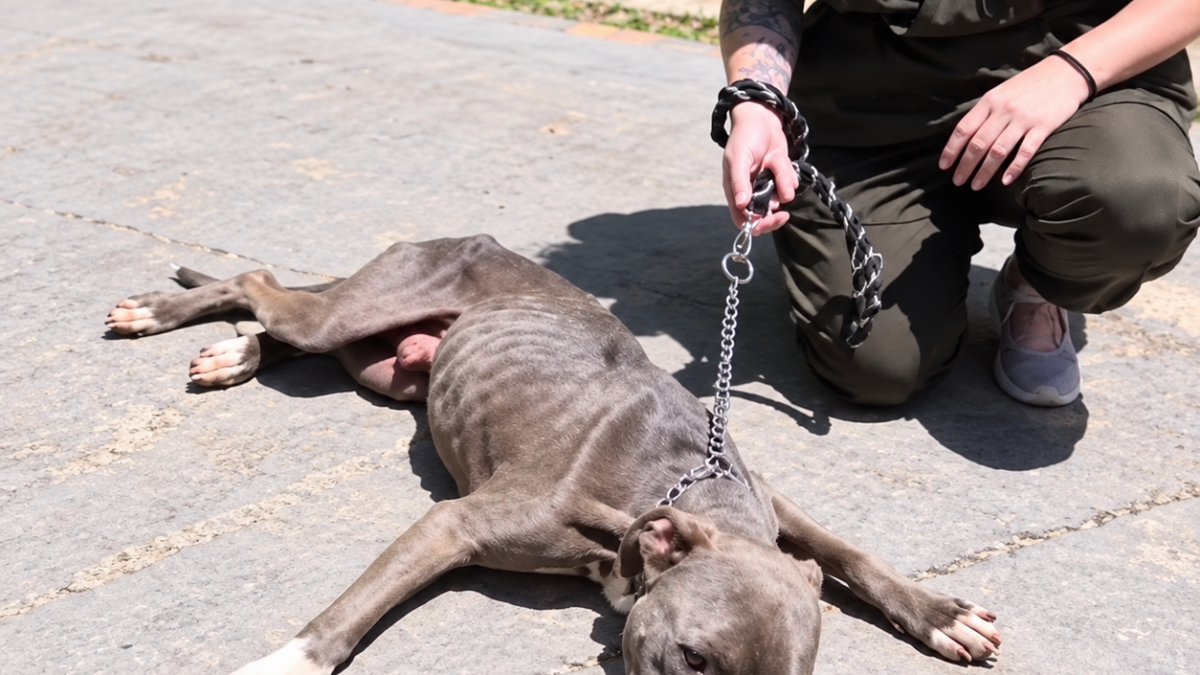
His body looked as if it had been erased piece by piece.
Every rib showed. His spine pressed sharply beneath his skin. His legs were thin and stiff. His gums were pale. His eyes were dull with exhaustion, but every now and then they moved, searching the room as if some part of him still expected the people who had left him to return.
That thought made me sick.
Dr. Patel came out after the first round of tests. His gloves were off, but the seriousness had not left his face.
“He’s severely malnourished,” he said. “Dehydrated. Anemic. Weak pulse when he arrived. We’re running more bloodwork now, but his body has been under extreme stress for a long time.”
“How long?” I asked.
He looked at me.
“Long enough.”
I hated that answer because I understood it.
Neglect does not always leave a timestamp. It leaves signs. A dry bowl. A sunken eye. A body too weak to stand. Skin stretched across bone. The smell of urine and heat in a house where nobody cared enough to open a window.
“Can he make it?” Elena asked.
Dr. Patel paused.
That pause told us everything.
“He has a chance,” he said. “But the next seventy-two hours will be critical.”
A chance.
Sometimes that is all rescue gives you at first.
Not a promise.
Not a miracle.
A chance.
We took it.
Magnito was moved into the emergency ward, where he lay on soft padding under constant observation. His fluids had to be managed carefully. His blood sugar had to be watched. His meals, when he was stable enough to eat, had to be tiny.
That part sounded cruel until Dr. Patel explained it.
“If we feed him too much too fast, we could kill him,” he said. “His body has been starving. Everything has to restart slowly.”
So Magnito, who had been denied food until his body nearly shut down, now had to be protected from the food he desperately wanted.
That felt unbearable.
The first time they offered him a small measured meal, his eyes changed.
Not bright exactly.
But aware.
The smell reached him, and suddenly the body that had barely moved found one last ancient instinct. Hunger pulled his head toward the bowl. His tongue moved quickly, desperately, trying to gather every soft bite before it disappeared.
“Slow,” the vet tech whispered. “Easy, boy.”
Magnito did not understand slow.
Starvation had taught him that food was not guaranteed.
When the bowl was empty, he kept licking the metal. Then he licked the towel beneath it. Then he tried to lift his head higher, searching for more.
I turned away.
Elena placed a hand on my shoulder.
“I know,” she said.
“No,” I whispered. “He doesn’t know there’s more coming.”
That was the cruelty of it.
We knew another meal would come in a few hours. He didn’t.
To Magnito, every bowl might be the last.
I stayed at the clinic until late that night. I sat outside the ward, listening to the steady sounds of machines and footsteps, watching staff move in and out. At some point, Officer Ramirez returned with a folder in her hand.
“I checked the property records,” she said.
“And?”
“The house is rented. Lease under the name Brandon Vale. Another adult listed as Tara Simmons. Neighbors say they were living there together.”
“Where are they?”
“We’re working on that.”
I looked through the glass at Magnito.
His eyes were closed now, his chest rising and falling under a thin blanket.
“They left him,” I said.
Ramirez’s jaw tightened. “That is what it looks like.”
“That is what happened.”
“I know.”
There was no anger in her voice, but there was steel beneath it.
“We photographed the scene,” she continued. “Empty bowls. Bottles. Condition of the home. We’re documenting everything.”
“Will it be enough?”
“To charge them?”
I nodded.
“It may be.”
May be.
Another phrase rescue teaches you to hate.
May be enough.
May survive.
May recover.
May find a home.
May see justice.
Nothing certain.
Everything fragile.
The next morning, Magnito was still alive.
That was the first victory.
Not wagging. Not eating normally. Not standing.
Alive.
I arrived with coffee for the staff and sat near his enclosure. His eyes opened when I said his name.
“Hi, Magnito.”
His gaze moved toward me.
“I know,” I said softly. “You don’t know me yet. But I know you.”
His ear flicked.
“You’re the dog who made it through the night.”
The vet tech, a young woman named Jamie, smiled from across the room.
“That’s right,” she said. “And we expect you to keep going, sir.”
Magnito blinked slowly.
Jamie checked his IV line and adjusted his blanket.
“He likes when people talk to him,” she said.
“Does he?”
“He relaxes a little.”
So I talked.
I told him about the weather. About how Max, my own dog, had once stolen an entire loaf of bread and pretended innocence with crumbs on his face. About how the clinic staff were all secretly obsessed with him already. About how many people online had begun asking for updates after the rescue posted that a starving dog had been pulled from an abandoned house.
I did not tell him what people were saying about his owners.
I did not tell him that the internet had already found Brandon Vale’s name.
I did not tell him strangers were angry.
Magnito did not need anger.
He needed peace.
On the second day, his bloodwork still worried Dr. Patel. His anemia was serious. His organs were stressed but still fighting. His dehydration had improved slightly. He had tolerated small meals through the night.
Small numbers.
Small improvements.
Rescue workers learn to celebrate things most people never notice.
A dog lifting his head for three seconds.
A normal bowel movement.
A temperature holding steady.
A meal staying down.
A tail moving once.
On the third day, Magnito tried to stand.
He failed.
His front legs shook. His paws slid on the padded surface. His body was too weak to obey his will. Jamie rushed to support him, and he leaned into her arms with a soft sound that was almost a sigh.
“Not yet,” she told him. “Soon. Not yet.”
I saw the frustration in his eyes.
That hurt in a different way.
The will had returned before the strength.
“Don’t rush,” I whispered.
He looked at me.
“You already survived the worst part. We’ll help with the rest.”
But even as Magnito fought to live, the people who abandoned him began fighting to escape responsibility.
Officer Ramirez found Brandon first.
He had been staying with a cousin two towns over. Tara was with him. They claimed they had “moved out in a hurry” and thought “someone else was checking on the dog.”
Someone else.
Cruel people love invisible people.
Someone else was supposed to feed him.
Someone else was supposed to check.
Someone else was supposed to care.
When Ramirez told me that, I laughed once. It was not a happy sound.
“Who?” I asked. “Who was someone else?”
“They haven’t given a name.”
“Because there isn’t one.”
Ramirez looked tired. “That’s what we’re trying to prove.”
Brandon’s story changed within a day.
First, he said Magnito had run away before they left.
Then, when confronted with the fact that the dog had been found locked inside the house, he said he had left a window open.
There was no open window.
Then he said Tara was responsible for feeding him.
Tara said Brandon had promised to come back.
Two people who had once shared a home with Magnito now pointed at each other while the dog they abandoned struggled to lift his head.
That was when my sadness turned into something colder.
Not rage exactly.
Purpose.
I asked Ramirez what the rescue could do.
“Keep records,” she said. “Every medical update. Every bill. Every photograph. Every statement from the vet. If this goes forward, documentation matters.”
So we documented everything.
Magnito’s intake weight.
His body condition score.
His lab results.
His medications.
His feeding schedule.
Photographs taken with care and respect, never to exploit him, but to prove what had been done.
The empty bowls.
The torn blankets.
The bottles.
The locked doors.
The neighbors’ statements.
Mrs. Keller gave hers through tears.
“I thought they had taken him,” she said. “I never imagined he was still inside.”
I believed her.
But belief did not erase the guilt she carried.
Guilt is strange. Sometimes the people who deserve it least carry it hardest.
Brandon and Tara, from what Ramirez told me, did not cry.
They complained.
They said the rescue was making them look bad.
They said people were judging without knowing the full story.
They said Magnito had always been thin.
They said vet bills were expensive.
They said life got complicated.
Life does get complicated.
Rent rises.
Jobs disappear.
Addiction destroys routines.
Relationships fall apart.
Cars break down.
People panic.
But a bowl of water is not complicated.
A phone call is not complicated.
Opening a door and asking for help is not complicated.
Leaving a dog to starve in a locked house is not a mistake.
It is a decision repeated every hour you do not return.
By the end of the first week, Magnito was still alive.
Dr. Patel finally allowed himself the smallest smile.
“He’s not out of danger,” he said, “but he is responding.”
Responding.
Another rescue word.
It meant the body had not given up.
Magnito began lifting his head when Jamie entered with food. He began swallowing supplements hidden in soft meals. He began tracking movement with his eyes. When I spoke to him, he looked toward me faster.
On the eighth day, his tail moved.
I almost missed it.
Jamie was cleaning around his bedding, humming softly. Magnito watched her with those tired eyes. When she said, “You’re a handsome old man, aren’t you?” his tail gave one weak thump against the blanket.
Jamie froze.
“Claire,” she whispered.
I looked up from the chair.
“What?”
“His tail.”
We both stared.
For a moment, nothing happened.
Then Jamie said again, “Handsome boy.”
Thump.
My hand flew to my mouth.
It was not a full wag. It was not joy pouring through a healthy body. It was one fragile signal from somewhere deep inside him that he still recognized kindness.
Jamie started crying.
I did too.
Magnito looked confused by our reaction, as if he had not done anything extraordinary.
But he had.
He had answered love.
After that, his progress came in pieces.
A little more appetite.
A little stronger neck.
A little more focus in his eyes.
A little less fear when hands approached.
He still ate as if food might vanish. He still licked the bowl long after every bite was gone. He still watched the door whenever someone left the room.
That part gutted me.
Somewhere inside him, he still understood leaving as danger.
So I began making him promises out loud.
“I’m going to refill my coffee. I’ll come back.”
“I’m going to talk to the doctor. I’ll come back.”
“I’m going home to sleep. Jamie will stay. I’ll come back tomorrow.”
Did he understand the words?
Maybe not.
But dogs understand patterns.
And every time someone left and returned, Magnito learned one more tiny piece of safety.
The rescue posted careful updates.
Not the dramatic kind.
No begging.
No emotional tricks.
Just the truth:
Magnito survived another night.
Magnito tolerated his meals.
Magnito lifted his head today.
Magnito’s tail moved.
People followed his story with an intensity none of us expected. Donations helped cover his emergency care. Children sent drawings. A retired veteran mailed a blanket with a note that said, “For the dog who didn’t quit.”
I placed that blanket near his bed once Dr. Patel said it was safe.
Magnito sniffed it, then rested his chin on the edge.
“Good choice,” I said. “That one came with respect.”
By the second week, he could stand with help.
The first time he managed it, the whole clinic seemed to hold its breath. Jamie supported his chest. Dr. Patel steadied his hips. I knelt in front of him, calling his name softly.
“Come on, Magnito. Just one second.”
His legs shook violently.
His paws spread wide.
His head dipped.
For a terrible instant, I thought he would collapse.
Then he locked his front legs and stood.
One second.
Two.
Three.
Jamie laughed through tears.
“That’s it,” Dr. Patel said. “That’s enough.”
They lowered him gently back down.
Magnito looked exhausted.
But his eyes were brighter.
He had remembered he owned a body.
The next day, he stood for five seconds.
Then ten.
Then he took one step and nearly fell into Jamie’s arms.
She kissed the top of his head before remembering she was supposed to be professional.
“No regrets,” she said.
Dr. Patel pretended not to see.
While Magnito learned how to stand again, the case against Brandon and Tara moved forward.
Animal neglect charges were filed.
Their names became public.
And that was when the drama truly exploded.
Brandon posted a long statement online claiming he had been “slandered by rescue extremists.” He wrote that Magnito had “medical issues” and that they had “done their best.” He claimed they had left food and water and that the dog must have knocked the bowls over.
I read that sentence three times.
The bowls were not knocked over.
They were empty.
Dry.
Crusted.
One had been pushed into a corner as if Magnito had licked it until there was nothing left to find.
Tara posted nothing, but one of her friends commented that “people make mistakes” and “nobody knows what someone is going through.”
I stared at the words until they blurred.
Then I went to the clinic.
Magnito was sleeping with his head on the veteran’s blanket, thin legs tucked awkwardly beneath him, IV line still in place.
I took a photo of his bowl after one of his tiny meals.
Clean.
Licked shining.
I did not post it.
Not yet.
Anger wants speed.
Justice needs timing.
The rescue director, Angela, called an emergency meeting that evening.
“We need to be careful,” she said. “No threats. No harassment. No mob behavior. The case has to stay clean.”
Marcus crossed his arms. “They’re lying.”
“Yes,” Angela said. “And we will answer lies with evidence.”
Evidence.
That became our revenge.
Not insults.
Not violence.
Not cruelty returned for cruelty.
Evidence.
Dr. Patel prepared a medical statement explaining Magnito’s condition in clinical terms. Severe malnutrition. Dehydration. Anemia. Critical condition on intake. Slow refeeding required due to risk of complications. No indication that this happened overnight.
Officer Ramirez submitted photographs from the house.
Mrs. Keller gave her timeline.
The landlord confirmed Brandon and Tara had moved out without proper notice.
A utility record showed the power had been shut off days before Magnito was found.
The heat inside that house during the summer days would have been brutal.
When that detail came out, people stopped arguing about “mistakes.”
Even some of Brandon’s defenders went quiet.
But Brandon did not.
He gave a local interview outside the courthouse after his first hearing.
I watched the clip on my phone in the clinic parking lot.
He wore sunglasses and a clean shirt. He looked annoyed more than ashamed.
“We loved that dog,” he said. “People are acting like we wanted this to happen. Things got out of control.”
I paused the video.
Loved.
That word in his mouth felt obscene.
I looked through the clinic window.
Inside, Jamie was helping Magnito take slow, careful steps across a rubber mat. He wobbled with each movement, but his tail wagged faintly because Jamie had a spoonful of food in her hand.
Loved.
No.
Love does not lock the door and leave.
Love does not let a bowl dry out.
Love does not come back only when the cameras arrive.
The court date was set for six weeks later.
By then, Magnito had moved from emergency care into foster recovery.
With me.
I told myself it was because I already knew his feeding schedule. Because I had experience with medical cases. Because the rescue needed space. Because Magnito trusted me.
All true.
Not the whole truth.
The whole truth was simpler.
I could not leave him behind.
My house changed before he arrived.
I placed rugs over slick floors so his weak legs would not slide. I set up a quiet room with a low orthopedic bed. I stocked measured containers of food, supplements, medications, and feeding charts. I put water bowls in three places because I never wanted him to search for water again.
When I brought him home, Max greeted him through the baby gate with curious sniffs and a wagging tail.
Magnito stood in the doorway, uncertain.
He looked at the bed.
The bowls.
The blankets.
Me.
Then he took two slow steps inside and lowered himself onto the bed with a sigh that sounded older than his years.
“You’re home for now,” I said.
For now.
Another lie people tell themselves at the beginning of love.
The first week in my house was hard.
Magnito woke often. Sometimes he cried softly in his sleep. Sometimes he startled awake and tried to stand too quickly, legs scrambling beneath him until I reached him.
“I’m here,” I would say. “You’re safe.”
He hated closed doors.
If I stepped into another room, he lifted his head and watched until I came back. If I was gone too long, even just to shower, I would hear him whine.
So I began narrating my life like a ridiculous radio host.
“I am walking to the kitchen now.”
“I am opening the refrigerator.”
“I am not leaving forever. I am getting yogurt.”
Max adapted quickly. He followed me, then Magnito, then me again, as if trying to keep track of the entire fragile pack.
Magnito did not know what toys were at first.
I bought him a soft rope, a rubber ball, and a squeaky fox. He sniffed them politely and looked at me as if I had placed strange objects in his room by mistake.
Then, one afternoon, the fox squeaked under Max’s paw.
Magnito’s ears lifted.
Max squeaked it again.
Magnito stared.
I picked up the toy and squeezed it gently.
Squeak.
Magnito’s tail moved.
I tossed it a few inches.
He looked at me.
Then at the toy.
Then, with the seriousness of a dog approaching an important legal document, he placed one paw on it.
Squeak.
He jumped backward.
Max barked with joy.
Magnito froze.
Then his tail wagged.
A real wag.
Slow but unmistakable.
I laughed so hard I scared him, then immediately apologized.
“Sorry, sorry. I know. Very brave. You defeated the fox.”
From that day on, the squeaky fox belonged to him.
He did not chase it at first. He guarded it. Slept beside it. Carried it carefully from bed to rug. Sometimes he placed it in his food area, which felt both sweet and devastating.
Maybe he understood treasures belonged near bowls.
His body continued to change.
Weight returned slowly. Muscle took longer. His coat improved. His eyes cleared. The sharp bones softened beneath new strength. He began walking farther each day, first to the hallway, then to the kitchen, then into the backyard.
The first time sunlight touched him outside my house, he stopped moving.
Just stopped.
He lifted his face toward the warmth, closed his eyes, and stood there.
No locked walls.
No empty bowls.
No heat trapping him in a deserted house.
Just sun.
Grass.
Air.
I stood behind him with the leash loose in my hand and cried silently.
Max wandered over and dropped a tennis ball near Magnito’s feet.
Magnito opened one eye.
Max waited.
Magnito sniffed the ball.
Then he looked away.
Max accepted this as a personal tragedy.
“You’ll get him there,” I told Max.
Max wagged, optimistic as always.
As court approached, I became more anxious than I wanted to admit.
I had given statements before. I had helped with neglect cases. I knew how slow and imperfect the system could be. But Magnito’s case felt personal in a way that scared me.
Every time I prepared myself to speak calmly, I saw him lying in that hallway, unable to lift his head.
Every time I told myself to trust the evidence, I heard Brandon say, “We loved that dog.”
The night before court, Magnito woke from a dream and cried out.
I went to him immediately.
He was on his bed, breathing fast, eyes unfocused.
“Hey,” I whispered. “You’re here. You’re safe.”
He looked around the room.
Then he pressed his head against my hand.
I sat beside him until his breathing slowed.
“I have to talk about what happened tomorrow,” I told him. “I wish I didn’t.”
He sighed.
“I wish you could tell them yourself.”
His tail moved once against the blanket.
Maybe, in a way, he already had.
The courtroom was smaller than I expected.
Brandon sat on one side with his attorney, jaw tight, eyes forward. Tara sat separately, crying quietly into a tissue. I did not know if her tears were guilt, fear, or performance. Maybe all three.
Mrs. Keller sat behind me. Marcus and Elena sat beside her. Officer Ramirez stood near the front with the prosecutor. Dr. Patel had taken time from the clinic to testify.
Magnito was not there.
I refused to bring him.
He had survived enough rooms where people failed him.
He did not need that one.
The prosecutor began with the facts.
The house.
The abandonment.
The condition.
The timeline.
The medical records.
The defense tried to make it sound complicated.
Financial stress.
Substance issues.
Housing instability.
Miscommunication.
They used soft words for hard cruelty.
But Dr. Patel’s testimony cut through all of it.
“This degree of malnutrition does not occur in a healthy adult dog over one missed meal or one bad day,” he said.
Brandon’s attorney asked, “Is it possible the dog had an underlying medical condition that contributed to his weight loss?”
“It is always possible for medical conditions to affect weight,” Dr. Patel replied. “But Magnito also presented with severe dehydration, anemia, and signs consistent with prolonged lack of adequate care. He was found locked in a house with empty food and water bowls. The clinical picture and scene evidence are consistent.”
The attorney tried again.
“But you cannot say exactly who failed to feed him.”
Dr. Patel looked at Brandon and Tara, then back to the attorney.
“I can say the dog was dependent on humans for survival. And the humans responsible for him were not there.”
The courtroom went quiet.
Then came the photographs.
Not many.
Just enough.
Magnito on intake.
The empty bowls.
The torn blanket.
The bottles.
The hallway where he had been found.
Tara began sobbing harder.
Brandon stared at the table.
When it was my turn to speak, my legs felt unsteady, but my voice held.
I described entering the house. The silence. The smell. The moment Magnito looked at me because that was all he could do. I described carrying him out and feeling how light he was. I described his first meals, measured in tiny portions because too much food too quickly could harm him.
Then the prosecutor asked, “How is Magnito now?”
For the first time all morning, I smiled.
“He’s gaining weight. He can walk. He plays with a squeaky fox. He wags his tail when he sees food, and he follows me around the house because he still worries when people leave.”
The judge looked down at his notes.
“Does he show aggression?”
“No,” I said. “He shows fear. He shows trust. He shows more forgiveness than most people deserve.”
Brandon shifted in his seat.
I looked at him then.
Not with hatred.
With the full weight of what he had done.
“He waited in that house for someone to come back,” I said. “And nobody did.”
For once, Brandon had nothing to say.
The sentence did not feel big enough.
It rarely does.
Brandon and Tara were found guilty of animal neglect. They were ordered to pay restitution for a portion of Magnito’s medical care, complete community service with strict restrictions, undergo counseling related to substance abuse and responsibility, and they were banned from owning animals for a set period.
Was it enough?
No sentence could give Magnito back the days he spent starving.
No fine could erase the memory from his body.
No court order could make the empty bowls full in the moment he needed them.
But it was something.
And when the judge said, “An animal is not property to be discarded when life becomes inconvenient,” I felt the air leave my lungs.
Someone had said it officially.
On record.
Where Brandon and Tara had to hear it.
That evening, I came home and found Magnito waiting near the baby gate.
He was stronger by then, but still thin. His fox toy lay at his feet. Max stood behind him with a tennis ball, because Max believed all legal proceedings should end in games.
I knelt.
“It’s over,” I told Magnito.
He wagged his tail.
“They had to answer for it.”
He stepped forward and pressed his forehead into my chest.
I held him carefully.
That was the only verdict that mattered to him.
Not guilty.
Not restitution.
Not community service.
Just this:
Someone came back.
Weeks became months.
Magnito kept healing.
His ribs disappeared beneath healthy weight. His legs grew stronger. He learned to climb the two back steps without help. He discovered that the kitchen was a magical room where carrots sometimes fell from the counter. He learned Max’s schedule and became deeply offended if breakfast was late by more than three minutes.
He also learned joy.
At first, joy confused him.
The first time he ran, he seemed surprised by his own legs. It happened in the backyard on a cool morning. Max chased his tennis ball across the grass, and Magnito watched from beside me. Then, without warning, he bounded after him.
Not fast.
Not graceful.
But running.
His ears bounced. His tail lifted. His thin legs stretched into something like freedom.
Max reached the ball first, of course.
Magnito did not care.
He spun in a clumsy circle, barked once, and looked back at me as if asking, Did you see that?
I saw.
I saw everything.
“You’re doing it!” I shouted.
Magnito ran back to me, breathless and proud, and nearly knocked himself over trying to stop.
I dropped to my knees and wrapped my arms around him.
He smelled like grass and sunshine.
A month earlier, he had been too weak to stand in a deserted house.
Now he was chasing a Labrador across my yard.
That was revenge.
Not because Brandon and Tara had been punished, though they had.
Not because people online had condemned them, though they did.
But because Magnito’s life refused to end where they left him.
The rescue posted his transformation with my permission.
The first photo showed him on intake, carefully cropped and respectful but honest. The second showed him in my backyard, standing with his fox toy in his mouth, tail raised, eyes bright.
The caption was simple:
Magnito was found starving in an abandoned home. Today, he is safe, loved, and learning how good life can be when the bowl is always full.
No call for applause.
No dramatic demand.
Just truth.
The response was overwhelming.
People who had followed his case cried over the photos. Donors wrote that seeing him alive made every dollar worth it. Mrs. Keller sent a message that said, “I can finally sleep.”
I called her that night.
She answered on the second ring.
“I should have checked sooner,” she said before I could speak.
“You called,” I told her. “You saved his life.”
“But I waited.”
“You called,” I repeated. “That matters.”
She cried quietly.
So did I.
Because rescue is never one clean emotion. It is gratitude tangled with grief, relief tangled with guilt, love tangled with rage.
Magnito taught many people that.
He became the face of a campaign about reporting suspected neglect early. The rescue created flyers explaining warning signs: animals left alone in abandoned homes, empty bowls visible through windows, strong odors, constant silence where a dog used to bark, mail piling up, no movement for days.
The city added a hotline reminder to utility shutoff notices and landlord abandonment reports.
Officer Ramirez told me later that two dogs and three cats were found sooner because neighbors remembered Magnito’s story and called instead of waiting.
That knowledge helped.
It did not undo what happened to him.
But it stretched his survival into something bigger.
His suffering became a warning bell.
A loud one.
One nobody could pretend not to hear.
Then came the day I had been avoiding.
Adoption.
From the beginning, I had been listed as Magnito’s foster. The rescue director, Angela, gently reminded me that several families had applied. Good families. Experienced families. People with fenced yards and vet references and soft beds waiting.
“You don’t have to decide today,” she said.
“I know.”
“But you do have to decide eventually.”
I looked across the room.
Magnito was asleep beside Max, his head resting on the squeaky fox. His body was stronger now, his coat healthier, his breathing deep and peaceful.
“He trusts this house,” I said.
Angela smiled softly.
“That’s not what I asked.”
I sighed.
“No. He trusts me.”
“And?”
“And I trust him.”
She waited.
I rubbed my face with both hands.
“I failed foster care, didn’t I?”
“Spectacularly.”
The adoption papers were printed that week.
I sat at my kitchen table with a pen in my hand and Magnito lying near my feet. Max sat beside him, hoping paperwork might somehow involve snacks.
When I signed my name, Magnito lifted his head.
“It’s official,” I told him. “You’re not going anywhere.”
His tail thumped.
“You’re stuck with us.”
Another thump.
Max barked once.
“Yes, you too.”
That night, I cooked plain chicken for both dogs and gave Magnito a new bed for the living room. He sniffed it, circled twice, then chose to sleep on the rug directly against my foot.
Of course.
The bed became Max’s.
Magnito preferred contact.
He liked knowing someone was there.
For months, if I moved, he woke. If I stood, he followed. If I left for work, he watched from the window with worried eyes until the dog sitter arrived.
But slowly, almost invisibly, that changed.
He learned I came back.
Every day.
Morning after morning.
Evening after evening.
Rain, heat, errands, appointments.
I came back.
One evening, I returned from the grocery store and realized he had not been waiting at the window. Panic hit me so fast I dropped my keys.
“Magnito?”
No answer.
I rushed into the living room.
He was asleep.
Deeply asleep.
On his back.
All four paws in the air.
The fox toy beside him.
Max on the stolen bed.
Magnito had not waited at the window because he no longer believed every absence was abandonment.
I sat on the floor and cried so hard Max got up and licked my face.
Magnito woke, saw me crying, and immediately rolled over with great concern.
“I’m okay,” I laughed through tears. “You’re okay. That’s the point.”
He crawled into my lap as much as a dog his size could and rested his head against my chest.
His heartbeat was steady.
Strong.
Real.
The final confrontation came nearly a year after the rescue.
I did not expect it.
The rescue was hosting a public event at the community center: free microchip checks, pet food assistance, information on neglect reporting, and a small celebration for some of the animals whose cases had changed local policies.
Angela asked if I would bring Magnito.
“At his comfort level,” she said. “No pressure.”
Magnito had become calmer around people by then. He enjoyed gentle attention and had developed a charming habit of leaning into anyone who scratched his chest. Still, I worried.
Not about him misbehaving.
About people treating him like a tragedy instead of a dog.
But when we arrived, he stepped out of the car confidently, fox toy in his mouth. Max stayed home that day, because Max believed community events existed solely for stealing snacks and creating chaos.
Inside, people recognized Magnito immediately.
The room changed around him.
Voices softened.
Faces opened.
Some people cried before they even reached us.
A little boy approached with his mother and held out a drawing. It showed a brown dog standing beside a bowl full of food. Above it, in uneven letters, he had written:
“No dog should be hungry.”
I crouched beside Magnito.
“Look at that,” I said.
Magnito sniffed the paper, then licked the corner.
The boy laughed.
“He likes it!”
“He has strong opinions about art,” I said.
For an hour, Magnito greeted people. He accepted treats carefully. He leaned into hands. He wagged when Jamie from the clinic arrived and nearly melted when Dr. Patel knelt to see him.
“You look like a different dog,” Dr. Patel said.
Magnito pressed the fox toy into his knee.
“I think that’s a medical thank-you,” I said.
Dr. Patel smiled. “Best kind.”
Then the room went quiet in a way I felt before I understood.
I turned.
Brandon Vale was standing near the entrance.
For a second, the world narrowed.
I saw him as he had looked in court. Clean shirt. Tight jaw. Annoyed eyes.
Now he looked different.
Thinner. Tired. Nervous.
A community service supervisor stood beside him. I remembered then that part of his sentence involved attending animal welfare education events and assisting with setup under supervision.
I had known that.
I had not known he would be here.
My hand tightened on Magnito’s leash.
Magnito noticed and looked up at me.
Brandon saw him.
Really saw him.
Not as a case.
Not as a headline.
Not as a problem he could explain away.
As a living dog standing strong in front of him with clear eyes, healthy weight, and a toy in his mouth.
Brandon’s face changed.
It was quick, but I saw it.
Shame.
He took one step forward.
I immediately raised my hand.
“No.”
He stopped.
The supervisor looked between us.
“I’m not here to cause trouble,” Brandon said.
His voice was smaller than I remembered.
“You don’t get to approach him.”
He nodded quickly. “Okay.”
Magnito stood calmly beside me, unaware of the history sitting in the air like a storm cloud.
That almost hurt more.
Dogs can remember pain, but they do not understand courtrooms, excuses, or public shame. Magnito did not know this man had been one of the people who left him in that house.
Or maybe some part of him did.
I will never know.
Brandon swallowed.
“I just wanted to say…”
His voice trailed off.
The room remained silent.
Everyone was watching.
I wanted to humiliate him.
I admit that.
For one sharp second, I wanted to describe the hallway. The empty bowls. The smell. The way Magnito could not lift his head. I wanted to force him to stand there while every person in the room saw him as I saw him that day.
But then Magnito leaned against my leg.
Warm.
Alive.
Trusting me to decide what came next.
So I chose carefully.
“You don’t need to say anything to me,” I told Brandon.
His eyes reddened.
“I’m sorry,” he said anyway.
The words landed heavily.
Not enough.
Never enough.
But there they were.
“I was drinking a lot,” he continued. “Everything was falling apart. Tara left first. I thought I’d go back. Then I didn’t. Then I was ashamed. Then it was too late.”
I stared at him.
Every sentence was an explanation.
None was an excuse.
“He waited for you,” I said.
Brandon flinched.
I pointed gently toward Magnito.
“He waited in that house until his body almost stopped working.”
Tears filled Brandon’s eyes.
“I know.”
“No,” I said. “You know now. He knew then.”
The room was so quiet I could hear Magnito breathing.
Brandon covered his mouth with one hand.
“I don’t expect forgiveness,” he said.
“Good.”
He nodded.
“But I’m trying to be different.”
I looked at his community service vest. At the boxes of pet food stacked near the wall. At the people watching him. At Magnito, who had survived him.
“Then keep trying,” I said. “For the rest of your life. And never own another animal until you understand that care is not a feeling. It is an action.”
Brandon lowered his head.
“Yes.”
Then he stepped back.
He did not touch Magnito.
He did not ask for a photo.
He did not try to make himself the center of the story.
For that, at least, I was grateful.
Later, I saw him carrying bags of donated dog food to a storage table. He kept his head down and worked quietly.
Was that redemption?
I do not know.
Redemption is too large a word for one afternoon.
But accountability had brought him into the same room as the dog he abandoned, not as an owner, not as a victim, but as someone required to serve.
That was a kind of justice.
And Magnito?
Magnito spent the rest of the event charming an elderly woman into giving him three treats.
He did not care about Brandon’s shame.
He cared about snacks.
That, too, felt right.
The most beautiful revenge is sometimes the victim’s complete freedom from the person who hurt them.
At the end of the event, Angela asked me to speak.
I had not prepared anything.
I stood at the front of the room with Magnito beside me, his fox toy now damp from being carried for hours.
“I found Magnito in a house where he had been left with empty bowls,” I began. “He was too weak to stand. His body was shutting down. At the clinic, even feeding him had to be done slowly because starvation had made food dangerous.”
Magnito wagged at the word feeding.
A soft laugh moved through the room.
I smiled.
“For a while, all we celebrated were tiny things. A meal staying down. A head lifting. A few seconds standing. One tail wag.”
Jamie wiped her eyes.
“People ask me what justice looks like in a case like this,” I continued. “And I used to think justice meant one thing. Punishment. A sentence. A person being forced to answer for what they did.”
I looked around the room.
“That matters. Accountability matters. But Magnito taught me that justice is also a full bowl. A safe bed. A door that opens when someone comes home, not when someone leaves forever. Justice is a dog sleeping so deeply he no longer wakes up afraid every time I leave the room.”
My voice thickened.
“Justice is him standing here today, alive.”
The applause came gently.
Magnito leaned into me, tail wagging.
I looked down at him.
“This dog was left behind,” I said. “But he was not forgotten. He was starved, but he was not defeated. He was betrayed, but he still chose to trust.”
The room blurred for a moment.
“And that is why his story matters.”
After the event, Dr. Patel walked us to the parking lot.
“I’ll never forget the day he came in,” he said.
“Neither will I.”
“He should not have survived in the condition he was in.”
I looked at Magnito. He was sniffing a patch of grass with great interest, fox toy still in his mouth.
“But he did,” I said.
Dr. Patel smiled. “Yes. He did.”
That night, Magnito slept beside my bed.
Not on the expensive orthopedic bed.
Beside it.
On a blanket he had dragged across the floor himself.
At three in the morning, I woke to the sound of him dreaming. His paws twitched. His tail moved. A soft muffled bark escaped him.
Not a nightmare.
A running dream.
I watched him in the darkness and thought about the deserted house.
The heat.
The silence.
The hallway.
The body too weak to stand.
Then I looked at him now.
Healthy weight.
Strong breath.
Safe sleep.
The contrast felt almost impossible.
I whispered his name.
His tail wagged in his dream.
In the months that followed, Magnito became wonderfully ordinary.
That is the part of rescue people do not always understand until they live it.
The dramatic moments matter. The emergency call. The clinic. The court case. The transformation photos. The public event. The apology. The applause.
But the real miracle is ordinary life afterward.
Magnito waiting by the refrigerator because he learned carrots sometimes happen there.
Magnito grumbling softly when Max stole his blanket.
Magnito carrying his fox toy to the door when I came home.
Magnito discovering that pillows are better when stolen from humans.
Magnito standing in the yard under the summer sun, no longer trapped by heat, but warmed by it.
One afternoon, almost exactly one year after his rescue, I took him back past the old house.
I had avoided that street for months.
The landlord had cleaned the place. New tenants had moved in. The weeds were cut. The porch had been repaired. There were flowerpots near the steps now, bright red and yellow in the sunlight.
The world is strange that way.
Places can change faster than memories.
I parked across the street but did not get out.
Magnito sat in the back seat, looking through the window.
I watched him carefully.
His ears moved.
His nose worked.
For one moment, I wondered if he knew.
Did he remember the smell of that street? The shape of the house? The angle of the sun through the window where he had waited?
His body stayed calm.
No trembling.
No whining.
No panic.
He looked at the house, then at me.
Then he picked up his fox toy and rested his head on the seat.
I let out a breath I did not know I was holding.
“You’re done with this place,” I said.
And he was.
The house no longer owned him.
The people who left him no longer owned him.
The hunger no longer owned him.
We drove away slowly.
This time, Magnito was not inside the house watching someone leave.
He was in the car.
Coming with me.
That evening, I filled his bowl.
Not halfway.
Not carefully measured into tiny emergency portions like those first days.
A normal meal.
A healthy meal.
The sound of kibble hitting metal still made him hurry into the kitchen, but he no longer panicked. He sat because he had learned the routine. He waited because he trusted the bowl would reach the floor.
“Okay,” I said.
He ate.
Still enthusiastic. Still thorough. Still determined no crumb should be left behind.
But not desperate.
When he finished, he looked up at me with a clean bowl at his feet.
I crouched and touched his face.
“Full?” I asked.
His tail wagged.
“Good.”
Later, he climbed onto the couch beside me. Max was already there, occupying far more space than one Labrador should legally be allowed to occupy. Magnito squeezed in anyway, pressed his body against my side, and rested his head on my lap.
I placed my hand on his chest and felt the steady rhythm of his heart.
For a while, I did nothing else.
No phone.
No messages.
No rescue updates.
No court documents.
Just Magnito breathing.
Alive.
Home.
The world often wants rescue stories to end with a perfect bow.
A villain punished.
A hero praised.
A dog transformed.
A community changed.
Magnito’s story had pieces of all that, but the truth was deeper.
The villain was punished, yes, but not enough to erase the pain.
The dog transformed, yes, but not into something new. He became what he should have been allowed to be all along.
Loved.
Fed.
Safe.
The community changed, yes, but only because Magnito paid the price first.
And me?
I did not save him alone.
Mrs. Keller called.
Officer Ramirez opened the door.
Dr. Patel fought for his body.
Jamie fed him spoon by spoon.
Donors paid bills.
Neighbors gave statements.
The court listened.
The rescue stood firm.
Magnito survived because a chain of people finally did what two people in that house had failed to do.
They cared and acted.
Sometimes I still think about the first moment I saw him in the hallway.
How quiet he was.
How close we came to finding only a body.
How his eyes moved toward me when I said his name.
I think some part of me will always be kneeling there, whispering, “Stay with us.”
But Magnito does not live in that moment anymore.
So I try not to either.
He lives in the sound of his bowl being filled.
In the squeak of his fox toy.
In Max’s ridiculous play bows.
In the sunlit patch of grass he claims every afternoon.
In the soft, trusting weight of his head on my knee.
His revenge was never dramatic in the way people imagine revenge.
He did not become vicious.
He did not become bitter.
He did not let starvation turn his heart hard.
His revenge was better.
He lived.
He healed.
He stood in a room full of people as proof that neglect can be exposed, cruelty can be answered, and a dog left to die can become the one everyone is proud to love.
The people who abandoned him will always be remembered for the empty bowls.
Magnito will be remembered for what happened after them.
The first wag.
The first step.
The first run.
The first night he slept without fear.
The first time he walked past the old house and chose not to tremble.
That is the ending I wanted for him.
Not because it makes the beginning less terrible.
It does not.
But because it proves the beginning did not win.
Magnito was not the starving dog in the deserted house anymore.
He was not the silence behind the locked door.
He was not the heat, the bottles, the torn blanket, or the dry bowl.
He was Magnito.
The dog who came back from almost nothing.
The dog whose story made people look harder, call sooner, and care louder.
The dog who taught me that sometimes the most powerful revenge is a full bowl, a safe home, and a heart that still knows how to trust.
And every night, when he curls up beside my bed with his fox toy tucked under his chin, I look at him and remember the promise I made outside the emergency room.
Whoever walked away from that house would not get to walk away from the truth.
They didn’t.
The truth found them.
But more importantly, love found Magnito.
And this time, it stayed.