PART 2: They Left Her to Di3 Between Two Houses—What We Found in Her Wounds Made Even the Firefighters Look Away
PART 2
For half a second, nobody moved.
There are moments during rescue work when your mind seems to separate from your body.
You know what needs to happen.
You know you need to move quickly.
But some primitive part of you freezes because what you are watching feels too terrible to be real.
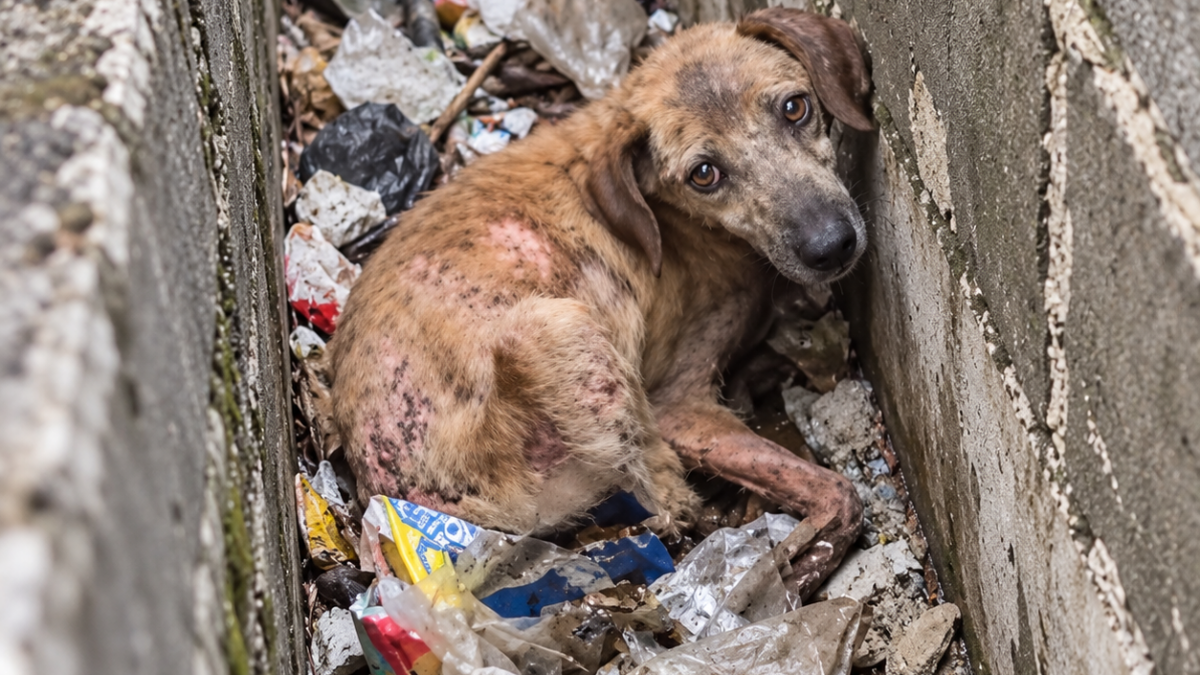
She had survived being trapped between those walls.
She had survived untreated wounds.
She had survived an infestation so severe that we would eventually remove more than a thousand maggots from her body.
And now, just after reaching safety, she was lying motionless in front of us.
“Come on, girl.”
I dropped beside her.
“Stay with me.”
The veterinary staff moved faster than I could process.
Hands reached around me.
Equipment appeared.
Her breathing was checked.
Her gums were examined.
Her temperature was taken.
Someone called for fluids.
Someone else prepared medication.
The room that had been quiet seconds earlier became controlled chaos.
I stepped backward because I knew the best thing I could do was stay out of their way.
That was harder than it sounds.
Rescuers are used to doing something.
Driving.
Lifting.
Searching.
Cleaning.
Comforting.
Holding an animal still while treatment is given.
But sometimes the most important moment comes when you have absolutely no control.
You stand against a wall while someone else fights for the animal you just promised to protect.
And you wait.
I hated waiting.
Every few seconds, my eyes went back to her face.
She looked impossibly small on the treatment table.
Only a short time earlier, she had been hidden between two houses where the world could barely see her.
Now she was surrounded by people.
Yet I couldn’t stop wondering whether we had arrived too late.
“How bad is it?” I finally asked.
The veterinarian didn’t give me the comforting answer I wanted.
“She’s very weak.”
That was all.
Very weak.
Two simple words that could carry a terrifying amount of meaning.
We had to deal with the infestation first.
Her wounds could not begin healing while larvae were still buried inside them.
The staff started removing them.
One by one.
Then dozens at a time.
They cleaned carefully, irrigated damaged tissue, clipped away contaminated fur, treated infection, and checked every wound they could find.
The numbers became difficult to comprehend.
A hundred.
Then several hundred.
Then more.
At some point, someone said we had crossed one thousand.
Nobody celebrated the number.
Nobody wanted to imagine how long she must have been suffering for the infestation to become that severe.
I looked at the dog and tried not to think about it.
There is a strange temptation after seeing neglect to reconstruct every moment that came before.
Where had she slept?
When had the wounds started?
Had someone watched them worsen?
Had anyone heard her cry?
Had she been left intentionally?
Had she tried to follow the person who abandoned her?
Those questions can consume you.
But they do nothing for the animal lying in front of you.
So I forced myself to focus on the only question that mattered now.
What did she need next?
She needed warmth.
Fluids.
Nutrition.
Medication.
Wound care.
Rest.
And time.
More than anything, she needed time.
We placed her in special care where she could be monitored closely.
Her body had been pushed far beyond what should have been survivable.
I prepared myself for the possibility that the next call might bring bad news.
Instead, a few hours later, one of the staff members came toward me with an expression I couldn’t immediately read.
“She ate.”
I stared at her.
“What?”
“She wanted food.”
It seems ridiculous to describe eating as a victory.
But if you’ve ever watched an animal at the edge of survival, you understand.
Eating means interest.
Interest means energy.
Energy means there is still something inside that animal choosing to participate in life.
We gave her a small amount because her body was fragile.
She ate it.
Then she looked for more.
I almost laughed.
“That’s right,” I whispered. “Be greedy.”
For the first time all day, I allowed myself to believe she might actually survive.
Not because the veterinarian promised it.
Nobody did.
Not because her wounds suddenly looked better.
They didn’t.
I believed it because that frightened, exhausted dog had just made a decision.
She wanted another bite.
Sometimes recovery begins with something that small.
The next several days became a routine measured in tiny victories.
Temperature stable.
Good.
A little more food.
Good.
No new areas of infestation.
Good.
Wounds responding.
Good.
Resting comfortably.
Good.
We learned quickly that she was extremely sensitive to sudden movement.
If someone approached too fast, her body tightened.
If a metal instrument dropped, she flinched.
If unfamiliar people entered the room, she watched them carefully.
Whatever had happened before her rescue had taught her that the world was unpredictable.
So we became predictable.
We approached slowly.
We spoke before touching her.
We kept our movements gentle.
When dressings had to be changed, we gave her time.
“It’s me,” I would say whenever I came near.
I don’t know whether she recognized my voice in those first days.
I liked to believe she did.
A week after her rescue, I saw something I had been afraid to hope for.
Her skin was beginning to improve.
The wounds were still serious.
She still looked painfully fragile.
But they were cleaner.
The angry edges were beginning to settle.
New tissue had started forming in places that previously looked almost impossible to heal.
Her body was finally doing what it had been trying to do all along.
Repair itself.
The difference was that now it had help.
Then came the next challenge.
Standing.
For a healthy dog, getting up is automatic.
Four paws beneath the body.
Weight shifts.
Muscles engage.
Done.
For her, it was work.
The first time we encouraged her to rise, she tried to push her front legs underneath herself and stopped.
Her body trembled.
She lowered herself again.
“That’s okay,” I told her.
I meant it.
There is a dangerous human habit of turning recovery into a schedule.
We want improvement today.
Walking tomorrow.
Running next week.
Adoption after that.
Animals don’t care about our schedules.
Their bodies heal when they can.
Their minds heal even more slowly.
So we waited.
Later, she tried again.
Front legs first.
Then one back leg.
Her paws slipped slightly on the surface beneath her.
I instinctively reached toward her but stopped myself from grabbing.
She needed support, not panic.
“Easy.”
Her body shook.
For a moment, I thought she was going down.
Then the second back foot found the floor.
She was standing.
Barely.
But standing.
Nobody in that room made a sound.
We were all afraid to break the moment.
She held herself upright for two seconds.
Maybe three.
Then she lowered herself.
I felt tears in my eyes.
Not because she had walked across a room.
She hadn’t.
Not because she was healed.
She wasn’t.
I was emotional because the same dog we had carried from between two buildings was now fighting gravity with everything she had left.
The next time she stood, she took one step.
The step was clumsy.
Her leg shook.
Then came another.
Two steps.
I crouched a few feet away.
“Come on, sweetheart.”
She looked at me.
Another step.
The distance between us could not have been more than a few feet.
It felt like miles.
When she finally reached me, I put my hand beneath her chin.
She leaned into it.
That nearly broke me.
The dog who had looked at us with terror when she was rescued was beginning to understand that hands could mean something other than danger.
Recovery accelerated after that.
Not dramatically.
Not magically.
Real healing rarely looks like the videos people remember.
There was no single morning when she suddenly woke up transformed.
Instead, there were dozens of quiet improvements.
She stood longer.
She walked farther.
She ate better.
She slept more deeply.
Her wounds began closing.
Her eyes changed.
That last one is difficult to explain medically, but anyone who works around traumatized animals recognizes it.
At first, their eyes follow everything.
Every hand.
Every door.
Every noise.
They are waiting for danger.
Then one day, they stop watching the room.
They sleep while you are standing nearby.
That was the day I knew something inside her was healing too.
A health recheck eventually brought the news we had been waiting for.
She was improving well enough that we could begin thinking beyond survival.
We could begin thinking about a home.
The word felt almost strange.
Home.
Not a cage.
Not a clinic.
Not a gap between buildings.
A home.
We began discussing what kind of family would suit her.
Someone calm.
Someone patient.
A home where she wouldn’t be overwhelmed.
People who understood that a dog who had survived severe neglect might need time to learn ordinary things.
We were finally allowing ourselves to imagine the next chapter.
Then my phone rang.
Another dog.
Same area.
I remember looking at the screen and feeling a strange heaviness before I even answered.
The caller described a female dog wandering through the neighborhood.
She was extremely thin.
Most of her fur was missing.
Residents believed she had been there for about a week.
“Where exactly?” I asked.
The location made me sit upright.
It was close to where we had found the first dog.
Very close.
My mind immediately went somewhere I didn’t want it to go.
Coincidence.
It could be coincidence.
Stray dogs sometimes gather around the same neighborhoods because there is food, shelter, or access to garbage.
Skin conditions are common among dogs living outside.
Starvation is common.
Fear is common.
There was no evidence yet connecting anything.
Still, I could not ignore the feeling in my stomach.
We drove out again.
I saw the second dog before we even stopped completely.
She moved along the side of a building with her body low to the ground.
At first glance, the extent of her hair loss made her appearance almost shocking.
Large areas of skin were completely exposed.
She was painfully thin.
Her hip bones stood out.
Her ribs showed.
Roughly seventy percent of her fur appeared to be gone.
Someone told us she had been wandering there for days.
People had seen her searching around houses.
Looking for food.
Looking for shade.
Looking for somewhere to disappear.
When I approached, she backed away immediately.
“Easy, girl.”
She turned her head toward an opening between buildings.
For one horrible second, I imagined her squeezing into some narrow place like the first dog had.
“No, no, no.”
I moved carefully, trying not to frighten her farther away.
Several neighbors helped block off possible escape routes without crowding her.
She watched us all.
I could almost see the calculation happening in her mind.
Which human was dangerous?
Which direction was safe?
Where could she hide?
When fear has governed an animal’s life long enough, safety itself looks suspicious.
I lowered myself.
I didn’t walk straight at her.
I waited.
Her breathing was rapid.
She took one step.
Stopped.
Another.
Then something happened that I didn’t expect.
Instead of running away, she moved toward me.
Slowly.
Her head remained low.
Her body shook.
I kept still.
She came closer.
And then she pressed herself against me.
Not like an affectionate dog asking for attention.
She pushed into my body as though she were trying to disappear inside me.
She was hiding.
Using me as a wall.
I felt her ribs through what little fur remained.
“It’s okay, girl,” I whispered.
She pushed harder against my legs.
“You’re safe now.”
Those words had become familiar.
I had said almost the same thing to the first dog.
But this time, they felt heavier.
Because now there were two.
Two female dogs.
Found in the same area.
Both severely neglected.
Both frightened.
Both in conditions that could not have developed overnight.
I looked toward the surrounding houses.
People were watching from doorways.
Some looked angry.
Some looked sad.
Some looked uncomfortable.
“Does anybody know who she belonged to?” I asked.
Silence.
A woman finally said she thought she had seen the dog farther down the road several days earlier.
Another resident said two dogs had once been seen around the same property.
That caught my attention.
“Two?”
The resident nodded cautiously.
“Maybe. I can’t be sure.”
We asked more questions.
The answers remained incomplete.
Nobody wanted to accuse the wrong person.
Neither did I.
Suspicion is not proof.
And rescue work teaches you very quickly that rumors spread faster than facts.
But we couldn’t ignore the possibility that the two dogs were connected.
We documented what we could.
Locations.
Conditions.
Statements from residents.
The first dog’s injuries.
The second dog’s condition.
If there had been an owner responsible for both animals, that was something the proper authorities would need to investigate.
I wanted answers.
Of course I did.
When you have spent hours picking parasites from a living animal’s wounds, anger comes easily.
When you hold a starving dog who is trying to hide against your body, anger comes even easier.
But anger could not be allowed to become the story.
The dogs had already spent too much of their lives paying for human choices.
They did not need us wasting their recovery on fantasies of revenge.
They needed care.
So that was where we put our energy.
The second girl was brought into treatment.
Her problems were different from the first dog’s, but the neglect was just as visible.
She had extensive hair loss.
Her skin was irritated and unhealthy.
Her body showed signs consistent with prolonged lack of proper nutrition.
She was dehydrated and exhausted.
Worst of all, she seemed emotionally defeated.
The first dog had been terrified in an active way.
She watched.
She flinched.
She resisted.
The second seemed to fold into herself.
When we placed her in a safe resting area, she curled tightly in the corner.
Food changed things.
Not immediately.
At first she sniffed it and looked around as though she expected someone to take it away.
I sat at a distance.
“You can have it.”
She looked at me.
Then at the bowl.
Then at me again.
Finally she ate.
Slowly at first.
Then faster.
We had to control how much she received because animals suffering from prolonged starvation cannot always be given unlimited food immediately.
Her body needed careful refeeding.
Try explaining that to a hungry dog.
The moment the bowl was removed, she searched for it.
“I know,” I whispered.
“We’ll bring more.”
Her eyes followed the bowl all the way out of the room.
The next meal arrived on schedule.
And the next.
Gradually, she learned something simple but life-changing.
Food always came back.
That is one of the cruelest parts of neglect.
It does not only hurt the body.
It changes expectations.
A dog who has gone hungry does not understand tomorrow.
She understands the bowl in front of her.
She understands the possibility that it may be the last bowl she sees.
For several days, the second dog reacted to every meal as though it might disappear forever.
Then slowly, almost imperceptibly, that urgency softened.
She still ate enthusiastically.
But she stopped looking panicked.
That mattered.
Treatment for her skin began working too.
The exposed areas were cleaned and treated.
We addressed the inflammation and supported her nutrition.
There was no miracle.
The fur did not return overnight.
At first we saw only tiny changes.
A darker shadow across one patch of skin.
Soft fuzz around another.
Then more.
I remember running my fingers gently along one area and feeling the beginnings of new growth.
“Look at you.”
She turned toward my voice.
“You’ve got fur coming back.”
She had no idea why I sounded so excited.
Her tail moved once.
Barely.
The first dog’s recovery continued at the same time.
Whenever I moved between them, the contrast struck me.
One had entered our care with catastrophic wounds and a body overwhelmed by infection and infestation.
The other had arrived thin, nearly hairless, frightened and starving.
They were suffering in different ways.
Yet the emotional pattern was remarkably similar.
Both had expected nothing.
That may have been the saddest thing about them.
They did not demand affection.
They did not bark for toys.
They did not protest when another dog received attention.
They had learned to survive on very little.
So we gave them more than they expected.
Clean bedding.
Medical care.
Meals.
Voices.
Gentle hands.
Routine.
Time outdoors when their bodies were strong enough.
And perhaps most importantly, choice.
If they wanted to approach, we let them.
If they wanted distance, we respected it.
Trust cannot be forced.
You cannot drag an animal out of trauma simply because you have decided she is safe now.
Safety has to become repetitive.
Predictable.
Boring.
It has to happen so many times that fear finally stops arguing.
The first girl became surprisingly curious.
As soon as she could walk more steadily, she wanted to investigate everything.
Doors.
Corners.
Blankets.
Shoes.
Food carts.
One afternoon, I found her standing near the entrance to her room, staring into the hallway.
“Planning an escape?”
Her ears shifted.
I opened the barrier and clipped on a leash.
“All right. Let’s see what you’ve got.”
Her first real walk through the clinic was slow.
Painfully slow.
She stopped every few feet.
Her muscles were still weak.
Her skin remained tender.
But she kept going.
Several staff members noticed and quietly moved aside to give her space.
She reached the end of the hallway.
Stopped.
Looked back at me.
Then turned forward again.
There was something about that moment that stayed with me.
When we rescued her, walls had trapped her.
Now she was walking down a hallway because she chose to.
That may sound like an insignificant distinction.
It wasn’t.
Choice was returning to her life.
At the far end of the corridor, someone crouched and offered a small treat.
She hesitated.
Then took it.
“Good girl.”
Her tail moved.
Not much.
But enough.
I remembered the first day.
The smell.
The moving wounds.
The firefighter’s face.
Her collapse.
The fear that we were watching her die.
Now she was standing in a hallway asking for another treat.
If you want to know what victory looks like in rescue work, sometimes it looks exactly like that.
We eventually let the two dogs see each other.
We didn’t know whether they had ever met.
We didn’t know whether they recognized each other.
And because we had no proof they had belonged to the same person, we refused to force meaning onto the moment.
But I watched carefully.
The second girl noticed the first almost immediately.
Her body became still.
The first dog lifted her head.
For a few seconds, they simply looked at each other.
Then the first girl stepped forward.
The second moved closer.
They sniffed.
No dramatic reunion.
No crying.
No miraculous recognition that could confirm every suspicion we had.
Just two dogs investigating one another.
And strangely, I was grateful for that.
Reality doesn’t always arrange itself into a perfect scene.
Sometimes two survivors simply stand nose to nose for a moment and then move on.
The important thing was that both were alive.
A few weeks earlier, that had not been guaranteed.
Questions about where they had come from continued.
We shared the information available to the people responsible for handling possible neglect and abandonment cases.
Neighbors were encouraged to provide anything concrete they remembered.
There were fragments.
Descriptions.
Possible sightings.
A few conflicting timelines.
But not enough for me to stand there and claim certainty.
That frustrated me more than I expected.
I wanted someone to answer for what we had seen.
I wanted to know how one dog had ended up trapped with wounds full of maggots.
I wanted to know why another was wandering nearby with most of her fur gone and a body that showed the long effects of hunger.
I wanted a neat villain.
A name.
A confession.
A consequence.
Rescue rarely gives you that.
Sometimes accountability happens through the legal system.
Sometimes an investigation produces evidence.
Sometimes people are fined, charged, prohibited from keeping animals, or forced to surrender them.
And sometimes the evidence is incomplete.
Sometimes the only undeniable fact is the animal standing in front of you.
That realization changed the way I thought about revenge.
At first, I imagined revenge as punishment.
I imagined the person responsible being forced to see the injuries.
Forced to understand the pain.
Forced to answer every question we had.
But as the dogs improved, something else began to feel more powerful.
The person who abandoned them—if that was indeed what happened—had reduced them to suffering.
The first dog had been left in a place where she could barely move.
The second had been left to wander while her body deteriorated.
Whether through deliberate cruelty or catastrophic neglect, somebody had treated their lives as disposable.
So what could be more complete than proving they were not disposable?
The first dog’s wounds continued to close.
Fresh skin replaced damaged tissue.
Her steps grew stronger.
She began walking without the uncertainty that had once made every movement a struggle.
Her personality appeared piece by piece.
She liked food.
A lot.
She liked soft bedding.
She disliked being ignored when someone nearby had snacks.
She discovered that gentle scratching near her neck felt good and would tilt her head toward a hand when she wanted more.
The second girl’s transformation was slower visually, but eventually impossible to miss.
Her coat started filling in.
The bare skin that once dominated her appearance became covered in new hair.
Her body gained healthy weight.
Her posture changed.
Instead of crouching and pressing against people to hide, she began approaching because she wanted attention.
One morning, I walked into her area and she came directly toward me.
No trembling.
No hesitation.
She nudged my hand.
I scratched beneath her chin.
“You remember when you tried to disappear inside my legs?”
Her tail wagged.
“I remember.”
A staff member nearby laughed.
“She owns you now.”
“Apparently.”
That was the kind of revenge I began to appreciate.
Not rage.
Not violence.
Not humiliation.
Transformation.
Someone had made her afraid of the world.
Now she was learning to demand affection from it.
Someone had allowed her to starve.
Now she inspected every meal like a restaurant critic.
Someone had left her with exposed, damaged skin.
Now fur was returning across her body.
If suffering had been intended to make her disappear, recovery was making her impossible to ignore.
The first dog’s medical rechecks continued to bring encouraging results.
Eventually, the conversations about adoption became real.
Not someday.
Soon.
That introduced another kind of fear.
Rescuers become attached even when we try not to.
We tell ourselves the goal is always goodbye.
We tell ourselves that a successful rescue ends with an empty kennel.
We repeat those lines because they are true.
They don’t make goodbye easier.
Potential adopters began asking about her.
We explained everything we knew.
Her condition when she arrived.
Her recovery.
Her needs.
Her temperament.
We did not want someone who simply felt sorry for her.
Pity is emotional.
Commitment is practical.
She needed a family who understood that rescue stories do not end when the photographs become beautiful.
There may be follow-up care.
Fear can reappear.
Old injuries can create future needs.
Trauma can surface unexpectedly.
The right home had to accept the whole dog, not just the inspiring ending.
When a promising family came to meet her, I watched more closely than they probably realized.
They didn’t rush toward her.
Good.
They let her approach.
Better.
They asked about her medical history.
They asked what frightened her.
They asked about food.
They asked whether she liked other dogs.
They asked what kind of environment made her comfortable.
Nobody asked whether she was “completely normal now.”
That mattered to me.
One of them sat on the floor.
The dog approached slowly.
She sniffed their hand.
Then she moved closer.
The person did not grab her.
Did not hug her.
Did not force affection.
They waited.
After a moment, she leaned against their knee.
I looked away because my eyes had started burning.
A few days later, she was cleared to leave.
On her final morning at the clinic, I walked into the room and found her standing.
Standing.
That word still carried weight.
I remembered the first time she tried.
The trembling legs.
The few impossible steps.
Now she stood because she heard me enter and expected breakfast.
“Big day.”
She looked at me.
“You have no idea, do you?”
Her belongings were simple.
Medical information.
Food recommendations.
A few things that smelled familiar.
Instructions for continued monitoring.
Nothing about the process looked cinematic.
Paperwork rarely does.
But then the leash was clipped on.
She walked toward the exit.
I stopped.
The image hit me so suddenly that I nearly couldn’t breathe.
The day we found her, firefighters had carried her out because she could not save herself.
Now she was walking out under her own power.
Past the door.
Into daylight.
Toward a car that would take her home.
I crouched before she left.
She sniffed my face.
“Don’t ever scare us like that again.”
She licked the side of my chin.
I laughed.
“Fine. You’re forgiven.”
Then she walked away.
No dramatic backward glance.
No understanding that she was completing some perfect emotional arc.
Dogs live more honestly than we do.
She saw an open door and people she trusted.
So she walked through it.
I watched the car leave.
The space beside me felt strangely empty.
Then I went back inside.
Because the second girl was still waiting.
Her fur had grown significantly by then.
If you compared her with the dog we first found wandering near those houses, the difference seemed almost impossible.
But photographs did not capture the most important change.
Confidence did.
She had discovered toys.
At first, she had no idea what to do with them.
We placed a soft toy nearby.
She sniffed it.
Walked away.
Later we found her sleeping with one paw resting on it.
The next day she carried it several feet.
Then she discovered that toys could be shaken.
This revelation apparently required extensive research.
For several days, every soft object became a scientific experiment.
Pick it up.
Shake it violently.
Drop it.
Stare at it.
Repeat.
The first time she initiated play with me, I almost missed it.
She grabbed the toy and moved away.
Then she looked back.
I reached for it.
She backed away.
I stopped.
She stepped toward me.
I reached again.
She bounced sideways.
“Oh.”
Her tail wagged.
“You want to play.”
The dog who once tried to hide inside my body was teasing me with a toy.
I chased her two steps.
She ran three.
Then stopped and looked back.
Her whole body seemed lighter.
I let her win.
Mostly.
As she continued recovering, we began preparing her for adoption too.
Her medical condition had stabilized.
Her skin had improved.
Her coat continued growing back.
She had gained weight.
And emotionally, she was becoming more comfortable every day.
Still, there were reminders.
A sudden loud sound could make her crouch.
An unfamiliar man entering too quickly once caused her to move behind me.
She recovered within seconds.
That was progress.
Healing does not mean the past disappears.
It means the past stops controlling every decision.
A family interested in her came to visit.
I felt the familiar protective suspicion.
It happens with every dog, especially the difficult cases.
You spend weeks begging the universe to help an animal survive.
Then, once she does, strangers arrive and say they would like to take her home.
Part of you thinks, Absolutely not.
Of course, that’s irrational.
A rescue cannot become a warehouse for animals we love too much to release.
So we talked.
I watched.
The family sat nearby without crowding her.
She approached.
Retreated.
Returned.
One person offered a treat.
She took it carefully.
Then another.
Soon she was standing among them.
Not hiding.
Choosing.
“What happened to her?” one of them asked quietly.
I gave the simplified version.
Found wandering.
Severe hair loss.
Signs of prolonged starvation.
Possible abandonment.
Treatment.
Recovery.
The person looked down at her.
“How does someone let that happen?”
I had asked the same question many times.
“I don’t know.”
And that was the truth.
Cruelty is difficult to understand.
Neglect can be even harder.
Sometimes people imagine animal abuse as one dramatic violent act.
But some of the worst suffering happens slowly.
A missed meal.
Then another.
A skin problem ignored.
A wound untreated.
An animal pushed outside.
An owner deciding tomorrow is soon enough.
Until tomorrow becomes a week.
Until infection becomes agony.
Until hunger becomes starvation.
Until a living creature becomes so damaged that strangers wonder how she is still standing.
Whatever had happened to these two dogs, it had not happened in a moment.
Their recoveries wouldn’t happen in a moment either.
The second family understood that.
When adoption day came, I noticed how different I felt compared with the first dog’s departure.
I was still emotional.
But less afraid.
The second girl had made her decision about people clear.
She wanted them.
All the affection she had been too frightened to seek at first now seemed to pour out of her.
She walked from person to person collecting touches.
Her coat was not yet perfect.
There were still thinner areas.
But compared with the exposed skin we had first seen, she looked transformed.
I ran my hand along her back.
Soft fur covered places that had once been bare.
“You did all this,” I told her.
Of course, medically, that wasn’t entirely true.
Veterinarians had treated her.
Staff had fed her.
Caregivers had monitored her.
Many people had contributed.
But her body had done the healing.
Her mind had taken the risk of trusting again.
We only gave her the opportunity.
The leash was clipped on.
Her new family gathered her things.
She walked toward the exit.
Then something happened that made everyone laugh.
She stopped.
Turned around.
And walked directly back to the staff member holding a container of treats.
“Seriously?” I said.
The staff member handed her one.
She ate it.
Then she went willingly toward her new family.
“That’s it?” I called after her. “Food first, emotional goodbye second?”
Her tail wagged as she walked away.
Perfect.
That was exactly the ending I wanted for her.
Not a frightened dog clinging to us because we were the only safety she knew.
A confident dog taking one last snack and leaving because there was somewhere better to go.
For several weeks after both adoptions, we received updates.
The first girl discovered couches.
This was apparently a major development.
According to her family, she approached the couch cautiously the first few times.
Then she learned it was soft.
After that, ownership transferred immediately.
Humans were permitted to sit there only under her supervision.
She also developed a habit of standing in the kitchen whenever food was being prepared.
Considering how close we came to losing her, nobody had the heart to complain much.
One photograph showed her lying on a blanket in sunlight.
Her eyes were half closed.
Her body looked relaxed.
I stared at that picture for a long time.
The last time she had been squeezed between walls, she had been trapped.
Now she was stretched out because she had more space than she needed.
The second girl’s updates were just as good.
Her coat continued filling in.
Her family sent photographs documenting the growth.
One month.
Two months.
Then eventually, unless you knew what you were looking for, you might never guess how much fur had once been missing.
But my favorite photograph wasn’t the one where she looked healthiest.
It was a blurry picture of her running.
All four paws were off the ground.
Her ears were flying backward.
Her mouth was open.
The image was technically terrible.
Emotionally, it was perfect.
That dog had once walked through a neighborhood searching for somewhere to hide.
Now she was running because she wanted someone to chase her.
We never got every answer about their past.
That bothered me for a long time.
I had imagined that a satisfying ending required complete justice.
A confirmed owner.
Evidence.
A confrontation.
A courtroom.
Some consequence proportional to the suffering.
But life does not always organize itself according to what would make the audience feel satisfied.
Sometimes evidence remains incomplete.
Sometimes there are gaps we cannot fill without inventing facts.
And those animals deserved better than having their real suffering turned into a story built on accusations we could not prove.
So I stopped measuring the ending by whether someone else suffered.
I measured it by whether the dogs did.
They didn’t.
Not anymore.
That became enough.
Months later, I returned to the neighborhood where we had found them.
I had another rescue nearby and happened to drive down the same road.
For a moment, I considered continuing without stopping.
Instead, I pulled over.
The houses looked almost exactly as I remembered.
Same narrow street.
Same walls.
Same passage where the first dog had been trapped.
I stood across from it.
The gap looked smaller than I remembered.
Maybe because the memory had made it enormous.
I could still picture the firefighters working there.
I could still see the dog’s body emerging into daylight.
I could still smell the wounds.
Some rescue memories fade.
That one probably never will.
A woman from one of the houses recognized me.
“How is she?”
I knew immediately which dog she meant.
“She’s good.”
“Really?”
“Really.”
I showed her a recent photograph.
The woman’s hand went to her mouth.
“That’s the same dog?”
“Same dog.”
She smiled.
Then she asked about the second.
I showed her another photograph.
The running one.
She laughed.
People sometimes assume rescue workers get tired of showing before-and-after images.
We don’t.
At least I don’t.
The “before” photograph is evidence of what happened.
The “after” photograph is evidence that what happened did not get the final word.
Before I left, I looked once more toward the narrow gap.
Something unexpected happened.
I realized I was no longer angry at the place.
For months, I had associated those walls with suffering.
But walls don’t abandon dogs.
Alleys don’t neglect wounds.
Streets don’t starve animals.
People make choices.
Other people make different choices.
Someone may have failed those dogs.
Then firefighters chose to crawl into a nearly inaccessible space.
Neighbors chose to call for help.
Veterinary staff chose to fight through the first dog’s critical condition.
Caregivers chose to clean wounds that were difficult to look at.
People chose to feed the second dog carefully until her body became strong again.
Families chose to open their homes.
That was the part I wanted to remember.
Cruelty had started the story.
It didn’t own the ending.
About a year after the first rescue, I received one more photograph.
The first girl was sleeping on her back.
Legs spread comfortably.
Belly exposed.
No defensive posture.
No attempt to hide.
Anyone who has lived with a secure, spoiled dog knows the pose.
It is ridiculous.
And vulnerable.
A dog does not sleep like that when she believes the world is about to hurt her.
Under the photograph, her family had written a short message.
She sleeps like this every night now.
I looked at it for a long time.
Then I thought about the day she collapsed.
I thought about how quickly the medical staff had surrounded her.
I remembered standing against the wall with my hands useless at my sides.
I remembered thinking that we had carried her out only to lose her anyway.
I remembered someone telling me later that she wanted food.
One small meal.
One tiny signal.
She was still choosing life.
People love dramatic turning points.
The exact second everything changes.
But rescue taught me that survival is usually made of ordinary decisions repeated over and over.
Eat.
Rest.
Stand.
Take one step.
Take another.
Trust one hand.
Then another.
Sleep without watching the door.
Walk through it when the time comes.
The second girl’s family sent an update not long afterward.
Her fur had fully returned.
In the photograph, she was sitting between two people on a porch.
One hand rested on her chest.
Her eyes were closed.
Her head leaned backward against someone’s leg.
I remembered how she had pressed against me the first day.
She had used my body to hide from the world.
Now she was leaning against someone because she belonged there.
I once believed the most satisfying revenge would be seeing whoever hurt these dogs punished.
Maybe part of me still believes accountability matters.
It does.
Animals cannot report abuse.
They cannot collect evidence.
They cannot explain where they came from or who abandoned them.
People have to speak for them.
Neglect should be investigated when evidence exists.
Cruelty should have consequences.
But revenge was never going to restore what had been taken from those dogs.
Fear could not be erased by making someone else afraid.
Hunger could not be undone by making someone else suffer.
The only thing that could truly answer what happened to them was a different life.
And they got one.
The first girl went from lying in a dark gap with more than a thousand maggots eating through her wounds to sleeping upside down on a couch in a house where people worried if she skipped a single meal.
The second went from wandering nearly hairless and starving through the same neighborhood to racing across a yard with a full coat and a family waiting for her at the door.
That was the revenge.
Every meal was revenge.
Every clean blanket was revenge.
Every healed patch of skin was revenge.
Every ridiculous toy scattered across a living-room floor was revenge.
Every veterinary check that ended with the words, “She’s doing well,” was revenge.
Every peaceful night was revenge.
Every time one of them heard footsteps and ran toward the sound instead of hiding from it was revenge.
Someone had treated their lives as though they didn’t matter.
They answered by surviving.
And then they did something even better.
They became happy.
Years from now, the details of that first rescue may blur around the edges.
I may forget who stood where.
I may forget exactly how long it took the firefighters to reach her.
I may forget the order in which treatments were given.
But I will never forget her eyes when she came out from between those walls.
I will never forget watching her collapse.
And I will never forget the first time she stood again.
People sometimes describe animals like these as lucky because rescuers found them.
I understand what they mean.
But luck is only one small part of it.
She survived because someone noticed.
Someone reported.
Someone responded.
Firefighters came.
Veterinarians treated her.
Caregivers stayed.
The second dog survived because people did not dismiss another frightened, sick animal wandering through the same neighborhood as “just another stray.”
Someone paid attention again.
That is how rescue works.
Not through one hero.
Through a chain of people who refuse to look away.
One person sees something.
Another person makes a call.
Another drives.
Another lifts.
Another cleans.
Another treats.
Another fosters.
Another adopts.
And somewhere at the end of that chain, an animal who had every reason to expect pain discovers a bowl of food, a warm bed, and a hand that does not hurt.
That is why I still think about these two girls.
Their conditions were extreme.
Their transformations were dramatic.
But the lesson they left me was surprisingly simple.
Being seen can save a life.
The first dog had been hidden in a space most people could barely enter.
The second had been visible in the neighborhood for days but was still, in another way, invisible.
Both needed someone to stop.
Someone did.
That changed everything.
The final update I received about the first girl came with a short video.
She was walking through a yard.
Not cautiously.
Not painfully.
She moved with the slightly impatient confidence of a dog who knew exactly where she wanted to go.
A person behind the camera called her.
She stopped.
Looked back.
Then trotted toward the voice.
I replayed it.
Once.
Twice.
Then again.
Not because anything extraordinary happened.
Because nothing extraordinary happened.
She was just a dog crossing a yard.
That was the miracle.
No firefighters.
No emergency table.
No infestation.
No collapsing body.
No desperate voices telling her to stay with us.
Just grass beneath her feet.
Sunlight.
A familiar voice.
A home.
The second girl’s final update was equally ordinary.
She was asleep.
Her new fur thick across her body.
A toy beside her head.
One paw stretched across someone’s foot.
Ordinary.
Safe.
Loved.
There are rescues where the ending is loud.
Police arrive.
Someone is arrested.
A case goes to court.
Consequences make headlines.
This one ended more quietly.
Two doors opened.
Two dogs walked through them.
And the people who loved them closed those doors behind them—not to trap them, but to keep them safe.
Maybe that is why the ending still feels so complete to me.
Their suffering had been public in the ugliest possible way.
Wounds.
Starvation.
Fear.
Abandonment.
But their happiness became private.
A couch.
A yard.
A food bowl.
A favorite sleeping place.
A hand resting gently on a head.
Things so ordinary that most dogs never have to think about them.
For these two, ordinary was everything.
Sometimes people ask which moment made the entire rescue worthwhile.
They expect me to say the moment the firefighters pulled the first dog free.
Or the moment we realized she had survived her collapse.
Or the first steps she took.
Or seeing the second girl’s fur return.
All of those mattered.
But if I had to choose one, I would choose the moment each dog left us.
Because rescue is not supposed to end with an animal becoming dependent on rescuers.
It is supposed to end with her no longer needing us.
The first dog walked toward a family who would protect her.
The second walked toward hers.
Neither looked back because neither needed to.
That was not rejection.
That was success.
And I would choose that goodbye every time.
Whenever I remember the narrow gap between those two houses, I no longer picture the darkness first.
I picture the dog walking into sunlight.
Whenever I remember the nearly hairless girl hiding against my body, I don’t picture the exposed skin first.
I picture the blur of her running through a yard.
Their past belongs to them.
But it no longer defines them.
The scars may remain.
Some fears may surface from time to time.
Their families know that.
Healing never requires pretending the damage never happened.
Healing means the damage is no longer the most important thing about you.
The first girl is not “the dog with a thousand maggots.”
She is the dog who steals the best spot on the couch.
The second is not “the starving hairless dog.”
She is the dog who hoards toys and runs until someone chases her.
That is who they became.
And maybe that is the ending anyone who abandoned them would least have expected.
They were supposed to disappear.
Instead, they were found.
They were supposed to remain broken.
Instead, they healed.
They were supposed to be forgotten.
Instead, people fought for them.
And after everything the world had taken from them, they received something far more powerful than revenge.
They received the chance to become ordinary dogs.
Safe dogs.
Spoiled dogs.
Loved dogs.
Dogs whose biggest problems were whether dinner was five minutes late or whether somebody else had taken the comfortable side of the couch.
I can live with that kind of justice.
Because the day we found the first girl, I wasn’t sure she would live until morning.
The day we found the second, I wasn’t sure how long she had been surviving on fear and hunger.
Now, somewhere far from that narrow space between two houses, both of them sleep without wondering whether anyone will come back for them.
Someone always comes back now.
Someone fills the bowl.
Someone opens the door.
Someone says their name.
Someone notices when they are tired.
Someone worries when they don’t finish dinner.
Someone laughs when they steal a blanket.
Someone reaches down in the darkness and finds warm fur instead of open wounds.
That is their life now.
And for two dogs who had once been treated as though their lives were worth nothing, I cannot imagine a better ending.
Someone tried to leave them behind.
Life didn’t.
Neither did we.
And in the end, they didn’t just survive what happened to them.
They outlived it.