PART 2: They Kept Driving Past a Puppy With Part of His Leg Missing—Then the Vet Said the Infection Was Still Spreading
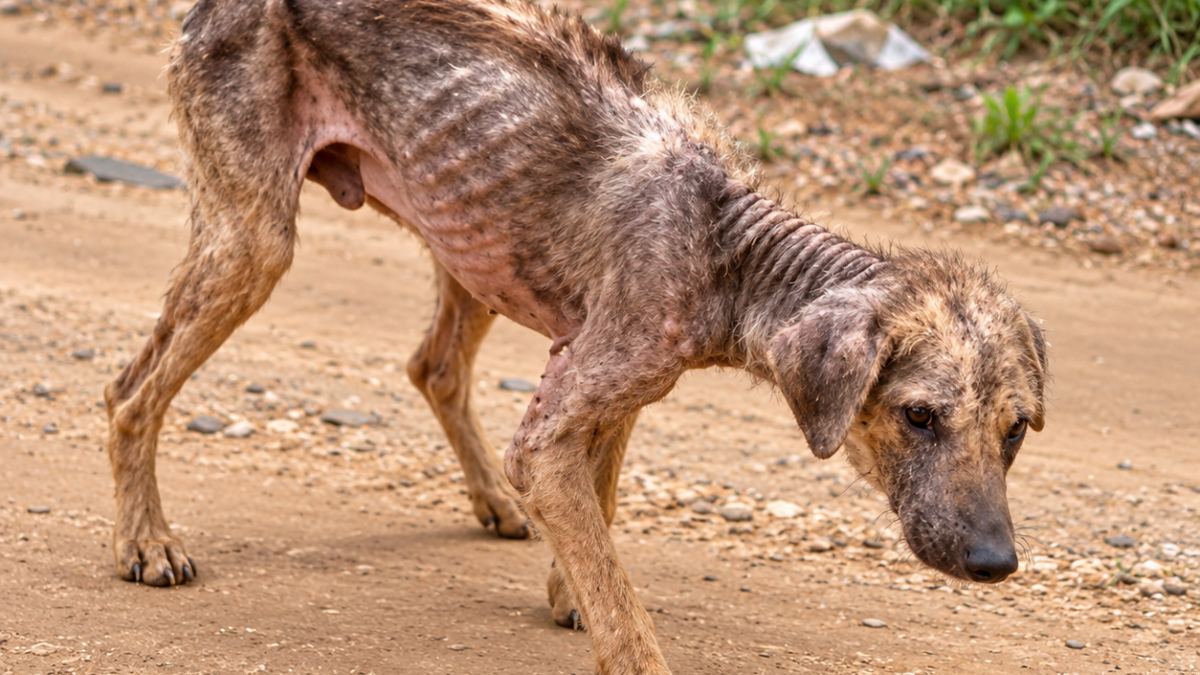
PART 2
Promise.
I didn’t yet know whether I could keep him alive.
But I knew one thing.
He would never search that road for scraps again if I could help it.
During the drive to the veterinary clinic, I kept looking back at him.
He didn’t move much.
Sometimes he raised his head when the vehicle turned.
Then he lowered it again.
I remember thinking about how young he was.
At that age, his biggest problem should have been being told not to chew furniture.
He should have been learning where to sleep.
He should have been following someone around a kitchen waiting for food to fall.
Instead, he had learned how to limp through pain because if he stopped moving, he stopped eating.
When we reached the clinic, the staff took one look at him and moved quickly.
A veterinarian came in.
“How long has he been like this?”
“I don’t know. I just found him.”
“Do you know what happened to the leg?”
“No.”
He bent closer but didn’t touch the wound immediately.
“Has he eaten?”
“Not with me yet. I gave him a little water.”
The veterinarian nodded.
“We need to examine him carefully. He’s very weak.”
I watched while they began checking him.
Temperature.
Hydration.
Weight.
Skin.
Eyes.
Gums.
The leg.
Canarinho tolerated almost everything with a kind of exhausted surrender.
But when the veterinarian examined the damaged limb, his entire body jerked.
A cry came from him so suddenly that I felt it in my chest.
I stepped forward instinctively.
The veterinarian stopped.
“That’s very painful.”
“Can you help him?”
“Yes. But there’s a lot going on.”
That sentence frightened me.
A lot going on.
Not one injury.
Not one simple problem.
A whole body asking for help.
The examination confirmed what we could already see and then added problems we couldn’t.
Severe skin disease.
Dehydration.
Malnutrition.
Multiple infections.
His immune system had been struggling.
The injured leg was infected too.
The veterinarian looked at me.
“We need to start treatment right away.”
“Whatever he needs.”
“We’ll control the pain, begin antibiotics, address the dehydration, start nutritional support, and treat his skin. But we need to monitor that leg closely.”
I looked down at Canarinho.
“What does that mean?”
“The infection there concerns me.”
“Can it heal?”
“We’ll see how he responds.”
That wasn’t the answer I wanted.
But it was the honest one.
Treatment began that day.
Medication.
Fluids.
Food in small, manageable amounts.
Care for the wounds.
Relief for the pain that must have followed him for who knows how long.
Canarinho finally received the things his body had been begging for.
And yet there was no sudden transformation.
He didn’t stand up and start wagging his tail.
He didn’t immediately understand that he was safe.
Mostly, he slept.
Deeply.
The kind of sleep that looks less like rest and more like the body shutting everything else down so it can spend every remaining bit of energy on survival.
I sat near him.
Sometimes his paws twitched.
Sometimes his breathing changed.
Every sound made me look up.
At one point, he opened his eyes and saw me.
“Hi.”
His eyes remained on mine.
“You don’t have to go anywhere.”
I wondered whether he had ever heard words like that before.
Probably not.
For the first few days, our world became very small.
Medication schedules.
Food.
Water.
Cleaning his skin.
Checking the leg.
Watching his temperature.
Watching his breathing.
Watching everything.
His medicated baths were particularly difficult at first.
Water itself didn’t seem to frighten him.
Touch did.
His skin was so irritated that even careful washing had to be done slowly.
I would support his body while the treatment was applied.
“Easy,” I whispered over and over. “Almost finished.”
Sometimes he trembled.
Sometimes he leaned into my hand.
That small difference mattered.
The first time he leaned toward me instead of away, I nearly cried.
Trust doesn’t always arrive dramatically.
Sometimes it is simply an injured puppy deciding that the hand touching him might be trying to help.
His appetite began improving.
That gave us hope.
Food fascinated him.
The first few meals had to be carefully controlled because his body was in no condition to handle too much too quickly.
Canarinho disagreed with this medical logic.
The moment the bowl appeared, his whole expression changed.
For the first time, I saw urgency in him that wasn’t caused by fear.
He ate quickly.
Then looked up.
“That’s enough for now.”
He stared.
“Don’t look at me like that.”
Still staring.
“You’re getting more later.”
He licked the empty bowl.
I smiled despite myself.
“There you are.”
That was the first glimpse I had of the puppy hidden underneath all the illness.
He was still in there.
Hungry.
Curious.
Alive.
But the leg was not improving the way we hoped.
The infection remained.
Then it became worse.
One morning, I noticed the tissue looked different.
Canarinho was quieter too.
He had eaten less.
The moment I saw it, I felt that familiar pressure of fear return.
We took him back for another examination.
The veterinarian studied the limb for a long time.
Then he straightened.
His face told me before his words did.
“The infection is spreading.”
I felt my stomach tighten.
“What do we do?”
“We’ve reached the point where we have to discuss surgery.”
I looked at the puppy on the examination table.
“What kind of surgery?”
The veterinarian paused.
“We need to amputate the remaining part of the damaged leg.”
For several seconds, I couldn’t respond.
Part of the leg was already gone.
Now they were telling me the rest had to be removed.
“There’s no other way?”
“Not one I would recommend if we want to stop this from becoming more dangerous.”
“Can the antibiotics handle it?”
“They aren’t enough.”
He spoke gently but directly.
“If we leave infected tissue, the infection can continue spreading. Canarinho is already weak. His body is dealing with skin disease, malnutrition, and other infections. We don’t want to give this one more opportunity.”
I looked at Canarinho.
He looked back at me.
He had no idea what we were discussing.
He only knew he’d been placed on another cold table.
I touched his head.
The fur there was thin.
“He already lost part of the leg.”
“I know.”
“Will he be able to walk?”
“Most dogs adapt remarkably well to three legs, especially young dogs.”
“Run?”
“Possibly very well once he recovers.”
The word felt impossible.
Run.
This puppy could barely cross a road.
I tried to imagine him running.
I couldn’t.
“Is surgery dangerous?”
“Every surgery has risk. His current condition makes careful management important.”
There it was.
Another impossible choice.
Operate on a weak puppy.
Or leave an infection spreading through his body.
I hated both options.
“What would you do if he were yours?”
The veterinarian didn’t hesitate.
“I’d remove the leg.”
That settled it.
“When?”
“As soon as we’re comfortable proceeding.”
I nodded.
“Do it.”
The words came out harder than I meant them to.
The veterinarian seemed to understand.
“We’ll take care of him.”
I looked down at Canarinho.
“I’m sorry, buddy.”
He sniffed my hand.
I swallowed.
“This is going to hurt before it gets better.”
I wished there were a way to explain it to him.
I wished I could tell him that the people holding him down weren’t trying to injure him.
That the needle was not punishment.
That waking up missing even more of his leg would not mean something had been taken from him for no reason.
It would mean we were trying to give him the rest of his life.
But you can’t explain surgery to a puppy.
You can only hand him to people you trust.
So I did.
When they carried Canarinho away, he looked over the technician’s arm.
His eyes found me.
I lifted my hand.
“I’ll be here.”
Then the door closed.
Waiting during surgery creates a particular kind of helplessness.
There is nothing useful to do.
You cannot hold the instruments.
You cannot control the anesthesia.
You cannot tell the infection to stop.
You sit.
You stare at your phone.
You look at the clock.
You think about every possible outcome.
I remembered the first time I’d seen him limping beside the road.
I wondered how long he’d been suffering before that.
I wondered how the injury happened.
An accident?
A trap?
Another animal?
Something worse?
There was no answer.
Canarinho couldn’t tell us.
In a strange way, I became grateful for that.
Not knowing meant I didn’t have to build a villain in my mind.
The only thing that mattered was what happened next.
Still, anger kept returning.
Not because of whatever caused the original injury.
Because of everything afterward.
He had been visible.
He had been moving through public space.
Thin.
Hairless in places.
Injured.
Hungry.
How many people had seen him and decided someone else would help?
How many times had someone slowed down, noticed him, then continued?
I couldn’t know.
But I knew he’d been alone long enough for his body to deteriorate badly.
That was hard to forgive.
Eventually, the door opened.
I stood so quickly the chair moved behind me.
The veterinarian came toward me.
“The surgery is finished.”
“He’s okay?”
“He’s stable.”
I released a breath I hadn’t realized I’d been holding.
“The infected portion has been removed. We’ll monitor him closely as he wakes.”
“Can I see him?”
“Once he’s settled.”
“Did everything go the way you expected?”
“Yes.”
That was enough.
For the moment, that was everything.
When I finally saw Canarinho again, he looked smaller than before.
Maybe it was the bandaging.
Maybe it was because I knew another piece of him was gone.
He was still groggy.
His eyes opened but didn’t focus properly.
I sat beside him.
“Hey.”
No response.
“You’re still here.”
His nose moved.
I slipped my fingers close enough for him to smell.
After a moment, he rested his head against them.
I stayed that way for a long time.
The surgery ended one crisis.
It didn’t end his recovery.
That became clear quickly.
Canarinho still had skin disease to fight.
His body still needed nutrition.
There were other infections.
Now there was a surgical wound too.
Every treatment had to respect everything else he was going through.
The first days after amputation were rough.
Pain medication helped, but healing still hurt.
Sometimes he became restless because he didn’t understand how to position himself.
He would try to stand and instinctively search for a leg that was no longer there.
Then he would lose balance.
The first time it happened, I caught him before he fell.
“Easy.”
He looked confused.
“You’re okay.”
He tried again.
Wobbled.
Sat down hard.
Then looked at me with what I swear was annoyance.
I almost laughed.
“Yeah. I know. This is unfair.”
He lowered his head.
I stroked the side of his face.
“But you’re going to figure it out.”
At that point, I wasn’t sure whether I was encouraging him or myself.
Probably both.
Recovery became a series of tiny victories nobody outside that room would have understood.
He ate an entire meal.
Victory.
He slept through several hours without waking in discomfort.
Victory.
His temperature remained stable.
Victory.
The surgical site looked clean.
Victory.
A scab loosened from one of the old skin lesions and healthy tissue appeared underneath.
Victory.
He stood for three seconds.
Victory.
Then five.
Then longer.
Some days it felt as though we were moving forward.
Other days, I worried we had gone backward.
That is the frustrating part of healing.
People like clean stories.
Sick.
Treatment.
Healthy.
But bodies aren’t stories.
They don’t care about pacing.
They heal when they heal.
Canarinho taught me that.
One morning, he seemed unusually tired.
Immediately, my mind went to the worst possibilities.
Was another infection spreading?
Was the surgery site compromised?
Was he in more pain?
I checked everything.
Called the veterinarian.
Brought him in.
They examined him.
Nothing catastrophic.
His body was simply exhausted.
“Recovery takes energy,” the veterinarian reminded me.
“I know.”
“You don’t look like you know.”
I gave him a tired smile.
“I’m trying.”
“So is he.”
I looked at Canarinho.
He was lying on a towel, eyes half closed.
The veterinarian added, “Don’t measure him by the hour.”
That stayed with me.
Don’t measure him by the hour.
So I tried not to.
I started looking at weeks instead.
The puppy from the roadside versus the puppy now.
And when I did that, the difference was undeniable.
His body was beginning to fill out.
Slowly.
His ribs were less sharp beneath my hand.
His hydration improved.
His eyes became brighter.
The inflamed skin was changing too.
The angry redness began fading.
There were still bald patches.
Still scabs.
Still places that required treatment.
But underneath, new fur began appearing.
At first, it looked like nothing.
A thin layer of fuzz.
Then enough to notice.
I remember running one finger lightly over a patch that had once been bare.
“Look at you.”
Canarinho looked at me.
“You’re growing clothes.”
He tilted his head.
I laughed.
It was the first time I realized laughter had become part of our routine.
Until then, caring for him had felt almost entirely serious.
Medication.
Pain.
Worry.
Schedules.
But as Canarinho improved, the atmosphere around him changed.
He started noticing things.
A sound in another room.
A person walking past.
A toy placed near his bed.
That toy became an important moment.
It was small and soft, easy for him to grab.
I set it several inches from him.
He looked at it.
Then looked at me.
“It’s yours.”
He sniffed it.
Nothing.
I squeezed it gently.
The toy squeaked.
Canarinho’s ears moved.
There.
Interest.
I squeaked it again.
He lifted his head.
I rolled it toward him.
The toy bumped his front paw.
He sniffed it.
Then opened his mouth and grabbed it.
I smiled immediately.
“Good boy.”
He chewed once.
Twice.
Then seemed to realize he enjoyed it.
Within a minute, he was biting it with real enthusiasm.
That sound—the ridiculous little squeak of a cheap dog toy—felt bigger than any medical report.
Because dogs who think they are dying don’t play.
Dogs overwhelmed by pain don’t care about toys.
Canarinho cared.
Not for long.
He tired quickly and fell asleep beside it.
But he had played.
That was enough.
A few days later, he surprised me again.
I was preparing his food when I heard movement behind me.
Usually I carried the bowl to him.
That morning, I turned around and found Canarinho standing.
On three legs.
Not merely bracing himself.
Standing.
“Hey.”
His tail moved.
I froze.
It moved again.
The first real wag.
“You hungry?”
He took a step.
Then another.
His movement was awkward.
His body leaned differently now.
But he didn’t collapse.
He reached me.
Then the bowl.
And apparently decided his achievement was less important than breakfast.
I laughed.
“Of course.”
He ate.
I watched every bite.
Afterward, he tried to follow me.
Three steps.
Four.
Five.
Then he sat down.
I crouched.
“That’s enough.”
Canarinho had other ideas.
He stood again.
“You’re stubborn.”
Another step.
“You know that?”
He kept coming.
I spread my arms.
“Come on, then.”
He reached me.
I picked him up and held him against my chest.
For the first time since rescuing him, he licked my face.
It caught me completely off guard.
I sat there laughing while tears filled my eyes.
“Okay. Okay. I love you too.”
That was the day I started believing the veterinarian when he said Canarinho might run.
Not someday in an abstract sense.
Actually run.
His body learned quickly.
Young animals can be astonishing that way.
What looked impossible to us became a new normal for him.
He didn’t spend time mourning the leg he’d lost.
He adjusted.
At first, he took careful steps.
Then faster ones.
His remaining legs strengthened.
His balance improved.
He learned how to turn without tipping.
He learned how to stop.
Stopping, oddly enough, was harder than moving.
The first time he became excited and moved too fast, he couldn’t slow himself properly and slid into a blanket.
I gasped.
Canarinho emerged from the blanket looking offended.
“Are you okay?”
He shook himself.
Then tried again.
“You’re unbelievable.”
Again.
Three legs.
Wobble.
Correction.
Forward.
Each attempt taught him something.
I realized I had been wrong about strength.
I thought strength was surviving the surgery.
It wasn’t.
Strength was trying again after falling.
Canarinho did that constantly.
He slipped.
Tried again.
Got tired.
Rested.
Tried again.
He never seemed embarrassed by what he couldn’t do.
That is a human problem.
He only cared about what came next.
Food.
Toy.
Person.
Door.
Smell.
Sound.
Life.
His skin continued improving.
The medicated baths became easier.
In the beginning, he tolerated them.
Later, he relaxed.
Sometimes his eyes actually closed while warm water ran over him.
I would remember that first roadside image and almost fail to recognize him.
The transformation wasn’t complete.
Not yet.
But he no longer looked like a puppy disappearing inside illness.
He looked like a puppy emerging from it.
There was one evening when I understood just how far he’d come.
Rain had started outside.
Canarinho was resting on his bed, which by then he had decided was unquestionably his property.
A soft blanket was tucked around him.
His toy lay nearby.
Food had been eaten.
Medication given.
For once, there was nothing urgent to do.
I sat across the room and watched him sleep.
The silence felt unfamiliar.
No whimpering.
No panicked checking of his temperature.
No wondering whether we’d have to rush back to the clinic.
Just sleep.
Canarinho stretched.
Rolled slightly onto his side.
His body relaxed completely.
I thought about the road.
Hot pavement.
Trash.
Traffic.
Three painful legs carrying him from one possible scrap of food to another.
Now he was asleep on something soft.
That shouldn’t have felt extraordinary.
Every puppy should have somewhere soft to sleep.
But for Canarinho, ordinary comfort had once been impossible.
That made it extraordinary to me.
The next stage of his recovery introduced a new problem.
Canarinho had energy.
A lot of it.
For weeks, our job had been convincing his body to keep going.
Now our job was convincing him not to overdo it.
“Slow down.”
He ignored me.
“Canarinho.”
Faster.
“You’re still recovering.”
Apparently irrelevant.
The first time he attempted to chase a toy across the room, I panicked.
He pushed off with his back legs and launched himself forward in a strange hopping stride.
My heart stopped.
Then he reached the toy.
Turned.
And came back.
Not gracefully.
But quickly.
“You just ran.”
Canarinho dropped the toy.
I stared at him.
He stared at me.
Then he bounced forward again.
I started laughing.
“You ran.”
He had.
Not beautifully.
Not yet.
But the puppy I’d found struggling to take one more step had crossed the room at a run.
I sat down because suddenly my legs felt weak.
Canarinho came over, toy in his mouth.
He dropped it into my lap.
“You want me to throw it?”
Tail wag.
I threw it gently.
He chased it.
That became our game.
Every throw was short at first.
A few feet.
Then a little farther as his strength returned.
The veterinarian approved gradual activity.
Canarinho approved unlimited activity immediately.
We compromised in favor of medical advice.
Mostly.
His personality became clearer every day.
He was affectionate but mischievous.
Gentle but determined.
Food motivated him more powerfully than any sophisticated training strategy.
If there was a treat involved, Canarinho could apparently master advanced mathematics.
Without a treat, even his own name sometimes became negotiable.
“Canarinho.”
Nothing.
“Canarinho.”
No response.
I held up food.
His head appeared instantly.
“I knew you could hear me.”
Tail wag.
He did not appear ashamed.
He also became fascinated by other dogs.
The first introductions were controlled because we didn’t want him overwhelmed.
Canarinho didn’t understand the word controlled.
The moment another friendly dog approached, he lit up.
Tail moving.
Body leaning forward.
He wanted to play.
I kept him close.
“Easy.”
The other dog sniffed him.
Canarinho sniffed back.
Then he attempted a play bow.
With three legs, his version looked slightly different.
It didn’t matter.
The message was clear.
The other dog bounced.
Canarinho bounced back.
That was it.
Friendship established.
Watching him play with another dog hit me harder than I expected.
There was something almost wrong about seeing him happy.
Not because happiness didn’t suit him.
Because misery had been the first version of him I’d known.
My brain still expected the injured puppy.
Instead, Canarinho was hopping sideways, trying to catch another dog’s tail.
At one point, he tripped.
I stepped forward.
He was already back up.
The other dog waited.
Then they continued.
Canarinho didn’t need anyone to pity him.
That became important.
People sometimes looked at him and saw what was missing first.
The leg.
I understood.
It was visible.
But after spending enough time with him, I stopped seeing the absence.
I saw Canarinho.
His impatience at meal times.
His obsession with toys.
The way he pressed his head against you when he wanted affection.
His habit of choosing the softest available place in any room.
His unbelievable determination to follow people everywhere.
If someone stood up, Canarinho stood up.
Bathroom?
Canarinho.
Kitchen?
Canarinho.
Outside?
Definitely Canarinho.
“You know you can stay here.”
No.
He was coming.
Perhaps he had spent too long alone.
Perhaps following us reassured him.
Or perhaps he was simply nosy.
Probably both.
One afternoon, he fell asleep beside my feet while I was working.
I looked down.
His body had changed so much.
The skin that had once been red and exposed was largely covered again.
The surgical site had healed.
His weight was healthy.
There were still traces of his past if you knew where to look.
Scars.
The missing limb.
Small areas where fur had returned differently.
But those things no longer defined the way he looked.
Peace did.
That was new.
Then came a milestone I hadn’t allowed myself to think about in the beginning.
A real run outside.
Not across a room.
Not several quick steps after a toy.
Outside.
Open space.
The veterinarian had cleared him for more activity.
I still felt nervous.
Canarinho did not.
The second he reached the yard, he sniffed everything.
Grass seemed to fascinate him.
Maybe because the world he’d known before had been pavement, dirt, garbage, and survival.
He pressed his nose down.
Moved forward.
Sniffed again.
Then something changed.
Maybe a sound.
Maybe excitement.
Maybe simply the realization that nothing hurt.
Canarinho lifted his head.
And ran.
Really ran.
Three legs hit the ground in rhythm.
Front.
Back.
Push.
Forward.
Faster.
He crossed the yard.
Turned.
For a moment I thought he’d fall.
He didn’t.
He adjusted.
Then came back toward me.
His ears bounced.
His mouth opened.
His tail streamed behind him.
I couldn’t move.
Someone beside me laughed.
“Look at him!”
I was looking.
I couldn’t stop.
Canarinho raced past.
Turned again.
Ran toward a toy.
Grabbed it.
Kept moving.
The same puppy I’d first seen limping down a road because hunger forced him to ignore pain was now running because he wanted to.
There is an enormous difference between those two kinds of movement.
On the road, every step was survival.
Now every step was joy.
I covered my mouth with one hand.
I didn’t want anyone to see me crying.
They saw anyway.
“You’re crying.”
“No, I’m not.”
“You definitely are.”
“Watch the dog.”
We laughed.
Canarinho had no idea he was creating an emotional crisis for everyone around him.
He was busy attacking a toy.
Eventually, he tired.
He came back panting and collapsed in the grass.
I sat beside him.
“You did it.”
He rolled slightly so I could rub his chest.
“You really did.”
His eyes closed.
I thought about the surgeon.
The decision.
The fear.
The infection.
All those days measuring progress in tiny increments.
Standing for three seconds.
One full meal.
A little fur.
A toy.
Five steps.
And now this.
Running.
People often call rescue stories miracles.
I understand why.
From the outside, the transformation can look impossible.
One image shows an animal near death.
The next shows them healthy.
Miracle.
But I had watched every day in between.
There was no magic.
There were antibiotics.
Medicated baths.
Pain medicine.
Surgery.
Wound care.
Food.
Appointments.
Cleaning.
Patience.
Sleep lost to worry.
Professionals doing their jobs.
People refusing to give up.
And one very stubborn puppy.
If there was a miracle, it was that all those ordinary things happened in time.
Canarinho had finally been seen.
That was the turning point.
Not the surgery.
Not the first meal.
Not even the first run.
The most important moment was when somebody stopped.
Because treatment can’t begin for an animal nobody chooses to notice.
That thought stayed with me.
I remembered the road often.
I wondered what Canarinho remembered.
Dogs don’t tell their stories the way we do.
Maybe he remembered hunger.
Maybe certain smells brought it back.
Maybe the sound of traffic meant something to him.
For a while, roads made him hesitate.
When we approached louder areas, he stayed closer.
I never forced him.
“You’re okay.”
He would look up.
“We’re together.”
Sometimes that was enough.
Sometimes we turned back.
Recovery wasn’t only about skin and bone.
Trust needed time too.
Canarinho had learned that the world could ignore him.
Now we had to teach him that the world could also make room for him.
He became braver.
New places.
New people.
Different surfaces.
Grass.
Tile.
Car rides that ended somewhere pleasant instead of at a medical appointment.
That last one took time.
For weeks, putting him in a vehicle produced the same suspicious look.
“Not the vet today.”
Canarinho stared.
“I promise.”
Still suspicious.
“We’re going somewhere fun.”
Nothing.
I started the car.
He sighed and lay down.
When we reached a quiet outdoor area, his expression changed.
Within minutes he was sniffing everything.
After that, car rides became acceptable.
Eventually exciting.
Another normal thing returned to him.
Normal.
I kept coming back to that word.
I didn’t want Canarinho’s entire life to be a rescue story.
Rescue was something that happened to him.
It wasn’t who he was.
He deserved the boring parts too.
Waiting by the food bowl.
Falling asleep after playing.
Getting irritated because a toy rolled beneath furniture.
Learning routines.
Recognizing footsteps.
Choosing a favorite sleeping position.
Expecting breakfast.
Expecting dinner.
Expecting affection.
Expectation itself was part of healing.
When I found him, Canarinho couldn’t expect anything.
Food was uncertain.
Safety was uncertain.
Even the next step was uncertain.
Later, he expected good things.
That is one of the greatest transformations I have ever witnessed in an animal.
Not from sick to healthy.
From uncertain to secure.
Canarinho began waking up excited.
He knew meals came.
He knew people returned.
He knew his bed stayed where he’d left it.
He knew toys belonged to him.
He knew he wasn’t going to be pushed back onto that road.
And because he knew those things, he became mischievous.
Very mischievous.
One morning, I couldn’t find one of my shoes.
I searched.
Nothing.
Then I noticed Canarinho avoiding eye contact.
“What did you do?”
His ears moved.
“Where’s my shoe?”
He turned away.
Suspicious.
I checked his bed.
There it was.
My shoe, half hidden beneath his blanket.
“Canarinho.”
Tail wag.
“That’s mine.”
More wagging.
“You can’t steal people’s shoes.”
He picked it up.
“Don’t you dare.”
He ran.
On three legs.
With my shoe.
I chased him through the room, laughing despite myself.
At one point he turned too quickly and nearly dropped it.
But he recovered.
Kept running.
“Give it back!”
He had no intention of doing so.
Eventually, I traded him for a treat.
A terrible precedent.
He immediately learned that stealing shoes could create food.
My mistake.
From then on, shoe security became part of household management.
I loved every second of it.
How could I not?
This was the same dog I’d once worried might not survive the week.
Now he was conducting organized theft.
Progress.
The medical appointments became less frequent.
At each follow-up, the veterinarian seemed more pleased.
One visit, he stepped back after the examination.
“He’s doing extremely well.”
I smiled.
“I’ve been waiting months to hear you say that.”
“His skin looks good. Weight is good. Surgical site is completely healed.”
Canarinho was sniffing the floor.
“And the infections?”
“Resolved.”
I looked up.
“All of them?”
“Yes.”
The word hit me strangely.
Resolved.
So simple.
One word covering weeks of fear.
“Then he’s healthy?”
The veterinarian smiled.
“He’s healthy.”
I looked at Canarinho.
He had found something interesting beneath a chair.
“Did you hear that?”
No response.
“You’re healthy.”
Canarinho sneezed.
The veterinarian laughed.
“I think he’s moved on from the medical drama.”
“I haven’t.”
“You will.”
Maybe.
Some memories cling to caregivers longer than they cling to the animal.
I still checked his skin more often than necessary.
Still watched his gait.
Still panicked if he skipped part of a meal.
Once he slept later than normal and I touched him just to make sure he was breathing.
His eyes opened.
He looked deeply annoyed.
“Sorry.”
He went back to sleep.
I was learning too.
Learning that safety didn’t require constant fear.
Canarinho had survived.
I needed to start living like I believed that.
His future became the next question.
Recovery had always been the immediate goal.
But once a rescued dog becomes healthy, another question arrives.
Where will he belong?
I hated that question.
Not because Canarinho lacked options.
Because by then he had become part of our everyday life.
His bed was there.
His bowls.
His toys.
His routine.
His stolen-shoe collection, despite repeated confiscations.
He followed me everywhere.
When I left, he waited.
When I returned, his entire body celebrated.
Could he adapt to another loving home?
Of course.
Dogs do.
Would I survive it?
Less certain.
Still, I wanted the decision to be about Canarinho rather than my emotions.
He needed a home that understood three-legged dogs.
A home willing to monitor his remaining limbs as he grew.
A home that wouldn’t treat him as fragile but also wouldn’t ignore his physical needs.
A home where his past inspired responsibility, not pity.
People expressed interest.
Some focused immediately on the missing leg.
“Will he always be like that?”
Like what?
Three-legged?
Yes.
Happy?
Hopefully.
Others asked whether he required constant medical treatment.
No.
Not anymore.
Some saw him run and couldn’t believe it.
“He moves so fast.”
I smiled.
“You should see him when he steals something.”
The right people didn’t look at him and see damage.
They saw a dog.
That mattered.
But something else was becoming obvious too.
Canarinho already believed he’d found his home.
Every night, he chose the same place to sleep.
Every morning, he looked for the same people.
When he was startled, he came to us.
When he was happy, he came to us.
When he found a toy, he brought it to us.
When he stole a shoe, unfortunately, he also brought the consequences to us.
One evening, he climbed onto his bed and rested his head against my foot.
I looked down.
“You’ve made this difficult.”
Tail wag.
“You know that?”
He closed his eyes.
“I was supposed to help you recover.”
No response.
“Nobody said you could become permanent.”
One eye opened.
I laughed.
“Yeah. That’s what I thought.”
The decision eventually became simple.
Canarinho had spent enough of his young life without belonging anywhere.
I wasn’t going to make him start over again if I didn’t have to.
The puppy nobody stopped for had a home.
Not temporary.
Not until treatment ended.
Home.
The first night after that decision, nothing changed.
That was the beautiful part.
Canarinho ate dinner.
Played.
Stole something he wasn’t supposed to have.
Went to bed.
He didn’t understand paperwork or permanence.
He didn’t know there had ever been a question.
As far as he was concerned, he had already made the decision weeks earlier.
We were merely catching up.
Months went by.
Canarinho grew.
The tiny, thin puppy became a strong young dog.
His remaining legs developed muscle.
His chest filled out.
His fur grew healthy.
Those widespread sores became memories hidden beneath a coat that looked nothing like the one he’d had on the road.
Visitors who met him later often couldn’t believe the photographs.
“That’s him?”
“That’s him.”
“No way.”
I understood.
Side by side, the images barely looked connected.
One puppy looked exhausted, thin, hairless in places, and painfully vulnerable.
The other stood confidently on three legs with bright eyes and a toy in his mouth.
But I could always recognize him.
The eyes.
Those never changed completely.
Still gentle.
Still watching.
Except now there was something else in them.
Expectation.
Curiosity.
Confidence.
He no longer looked at people as though asking whether they would hurt him.
He looked at them as though asking whether they had food.
A major improvement.
One day, I returned to the area where we’d first seen him.
I didn’t take Canarinho.
Not that time.
I just stopped.
The road looked ordinary.
That disturbed me.
Places where terrible things happen rarely stay dramatic.
Traffic moves.
Dust settles.
People pass.
Nothing marks the spot.
No sign says a puppy almost disappeared here.
I stood there remembering him.
One painful step.
Stop.
Another.
Search for food.
Stop.
How small he had looked.
How easy it would have been to keep driving.
That thought still makes me uncomfortable.
Because Canarinho’s story could have ended without becoming a story at all.
No rescue.
No clinic.
No surgery.
No recovery photographs.
No toy.
No bed.
No running.
Just one more animal disappearing beside a road while everyone assumed someone else would help.
That possibility changed something in me permanently.
We often imagine cruelty as an action.
Someone hits.
Someone abandons.
Someone injures.
But sometimes suffering grows inside the space created by inaction.
Nobody stops.
Nobody asks.
Nobody carries.
Nobody calls.
Nobody wants the inconvenience.
Canarinho had been surrounded by human life while living completely outside human care.
Until that changed.
One person stopping doesn’t fix every animal’s suffering.
But for the animal you stop for, it changes everything.
Canarinho was proof.
His life became full of things he’d almost never had the chance to discover.
Water that was always available.
Meals that arrived every day.
Toys with no survival value whatsoever.
Soft blankets.
Other dogs.
People who touched him gently.
Walks that weren’t searches for food.
Sleep without danger.
Medical care when something hurt.
A name spoken with affection.
Canarinho.
Little Canary.
A bright name for a dog who had once looked as if all the color had been drained out of his life.
He grew into it.
There were still challenges.
Three-legged dogs adapt well, but adaptation doesn’t mean we ignore their bodies.
We watched his weight carefully.
Extra weight would put more strain on his remaining limbs.
We kept him active but sensible.
Canarinho objected to the sensible part.
He believed every open space was an invitation to run.
Every toy was urgent.
Every dog was a potential friend.
Every meal was late regardless of the actual time.
His enthusiasm became his defining feature.
One morning, he saw another dog across a yard and launched forward so quickly I nearly lost my grip.
“Canarinho!”
He stopped.
Looked back.
Then looked at the dog.
Then at me.
“No.”
He wagged.
“No.”
Another wag.
“You’re not negotiating.”
He sat.
I relaxed.
Then he took advantage of the slack and moved forward again.
“Seriously?”
Someone nearby laughed.
“He’s determined.”
“You have no idea.”
That determination had saved him.
Maybe not literally on its own.
But it had carried him along that road.
Kept him searching.
Kept him eating whatever he could find.
Kept him standing through treatment.
Kept him relearning balance.
Kept him trying after every fall.
Now it mostly caused trouble.
I was grateful for that evolution.
The same stubbornness that once kept him alive now helped him steal socks.
That is what recovery should look like.
Less heroic.
More ridiculous.
Years later, I still sometimes watch him run and feel the old fear rise for half a second.
My mind flashes back.
Missing leg.
Infection.
Surgery.
Then Canarinho barrels toward me at full speed, and the memory loses its grip.
He’s here.
That’s what matters.
Once, during a gathering, someone who hadn’t heard his story asked me, “Was he born with three legs?”
I looked at Canarinho.
He was lying comfortably nearby.
“No.”
“What happened?”
I gave the short version.
Found on the road.
Part of the leg already missing.
Infection.
Amputation.
Recovery.
The person stared at him.
“That’s awful.”
“It was.”
They looked again.
“He doesn’t seem bothered.”
I smiled.
“No. He has more important things to worry about.”
“Like what?”
Right on cue, Canarinho got up and attempted to steal food from a low table.
I pointed.
“That.”
We laughed.
That interaction captured something I’d learned.
Canarinho’s past deserved to be remembered.
But it didn’t deserve to own him.
He was more than the worst thing that happened to him.
More than the missing leg.
More than the skin disease.
More than hunger.
More than neglect.
His story wasn’t meaningful because he suffered.
It was meaningful because suffering stopped.
People sometimes romanticize resilience.
They say an animal is “so strong” after surviving terrible conditions.
Canarinho was strong.
But I don’t want anyone to misunderstand.
He shouldn’t have needed to be.
No puppy should have to become resilient enough to limp through hunger with part of a leg missing.
No puppy should earn safety by surviving long enough for someone to notice.
Strength is admirable.
Preventable suffering is not.
That distinction matters.
The most satisfying part of Canarinho’s life wasn’t that he overcame everything.
It was that eventually he didn’t have to overcome anything at all.
He could simply live.
That became our goal.
Not a dramatic rescue ending.
A boring life.
The good kind.
Breakfast.
Walk.
Nap.
Toy.
Dinner.
Sleep.
Repeat.
And Canarinho embraced boring life enthusiastically.
Especially breakfast.
His internal clock was astonishing.
Five minutes before mealtime, he appeared.
No alarm.
No reminder.
He simply knew.
If I ignored him, he sat directly in my line of sight.
If that failed, he moved closer.
If that failed, he made a tiny sound.
“You’re early.”
Stare.
“Five minutes.”
Stare.
“You’ve survived much worse than waiting five minutes.”
That argument never persuaded him.
Eventually, I gave in.
Canarinho always considered this proof that persistence worked.
He was probably right.
One evening, after he had been with us for a long time, I found the first toy we’d given him during recovery.
It had been washed and stored away because he had almost destroyed it.
The fabric was worn.
The squeaker no longer worked properly.
I held it up.
“Remember this?”
Canarinho looked.
Then came over.
I gave it to him.
He sniffed.
For a moment, nothing happened.
Then he took it gently.
Not the violent toy attack I expected.
He carried it to his bed.
Lay down.
Placed it between his front paws.
I don’t know whether he remembered.
I like to think he did.
But maybe that is a human desire.
We want objects to hold memory.
Dogs may be smarter.
They carry what matters differently.
Canarinho didn’t need to remember the clinic to appreciate the bed.
He didn’t need to remember starvation to enjoy dinner.
He didn’t need to remember pain every time he ran.
Maybe forgetting some of it was its own kind of mercy.
I sat beside him.
He chewed the old toy.
Eventually, the remaining squeaker made one pathetic sound.
Canarinho froze.
Then bit it again.
Squeak.
His tail wagged.
I laughed.
There he was.
Still fascinated by the same simple thing that had first told me he wanted to live beyond survival.
Play.
I think that was the real turning point.
Not medically.
Emotionally.
The first time Canarinho played, I stopped seeing only a patient.
I saw his future.
A puppy who could care about something unnecessary.
Something fun.
When you’re starving, toys mean nothing.
When every step hurts, running for pleasure is absurd.
When your skin burns, comfort consumes everything.
Play arrives when the body finally believes it can spend energy on joy.
Canarinho eventually spent enormous amounts of energy on joy.
Enough to exhaust everyone around him.
He ran after balls.
Chased friendly dogs.
Attacked blankets.
Rolled in grass.
Dug holes nobody authorized.
Learned how to position himself perfectly beside anyone holding food.
Occupied beds built for dogs larger than him and ignored beds specifically purchased for him.
He lived with confidence.
One day, I watched him running with several other dogs.
For a few minutes, I forgot he had three legs.
Not because the missing limb had magically disappeared.
Because it simply wasn’t the most interesting thing about him.
He was fast.
He was happy.
He was competitive.
He was trying to steal a toy.
That was Canarinho.
Another dog outran him briefly.
Canarinho changed direction.
Cut across.
Reached the toy first.
“Cheater,” I said.
He didn’t care.
The other dogs chased him.
He ran harder.
I remembered the vet’s question from months earlier.
Would he run?
Yes.
He ran.
And ran.
And ran.
Until I had to make him stop.
The first time I had met him, I would have given anything to see him take ten painless steps.
Now I was telling him, “That’s enough running.”
Life can be strange that way.
The things you once beg for become ordinary.
I never wanted to take that ordinariness for granted.
So sometimes I stopped and watched.
Really watched.
Canarinho drinking water.
Sleeping.
Stretching.
Scratching carefully with one of his remaining legs.
Walking across a room.
Running outside.
Small things.
But each had once seemed uncertain.
His skin healed so completely that new people rarely asked about it.
The scars became difficult to see beneath his coat.
His body carried one obvious reminder—the missing leg—but his expression carried none of the despair I had seen by the road.
That was the transformation I cared about most.
The eyes.
The day I found him, those eyes had been gentle but tired.
He seemed to look through people rather than toward them, as if he had learned not to expect a response.
Later, his eyes became demanding.
Food?
Walk?
Toy?
Why did you stop petting me?
Where are you going?
Can I come?
That change meant more than fur.
More than weight.
More than any clinical measurement.
Canarinho had developed expectations because experience had taught him expectations were safe.
If I stood up, he expected to follow.
If I went to the kitchen, he expected opportunity.
If I picked up his leash, he expected adventure.
If I sat down, he expected space beside me.
If night came, he expected a warm bed.
No uncertainty.
No road.
No scraps.
That was home.
Sometimes people ask whether rescue changes an animal or the person doing the rescuing more.
I don’t know.
Canarinho certainly changed.
So did I.
Before him, I understood intellectually that stopping mattered.
After him, I understood physically.
I could still feel how little he weighed when I first lifted him.
Could still hear that cry when the veterinarian touched his infected leg.
Could still see him trying to stand after surgery and searching for a limb that wasn’t there.
Could still remember the first tail wag.
The first toy.
The first run.
Those memories made indifference harder for me.
Once you have seen the distance between “left alone” and “given care,” you can’t pretend intervention is small.
Food is not small to a starving animal.
Antibiotics are not small to an infected one.
A bed is not small to a dog that slept wherever exhaustion caught him.
A person stopping is not small to an animal everyone else passed.
Canarinho taught me that.
He also taught me something about pity.
Pity wasn’t useful for very long.
At first, yes.
Seeing him hurt broke my heart.
But sympathy alone couldn’t heal him.
Action did.
Appointments.
Medication.
Surgery.
Consistency.
Later, once he was healthy, pity became almost insulting.
Canarinho didn’t want anyone looking at him sadly.
He wanted the toy.
He wanted the treat.
He wanted to go outside.
He wanted to play.
So I stopped introducing him through tragedy.
If people asked, I told them.
But when Canarinho entered a room, he entered as himself.
Not “the poor puppy.”
Canarinho.
Three legs.
Too much personality.
Terrible boundaries around food.
Excellent at stealing shoes.
Very fast.
That is how he deserved to be known.
On the anniversary of the day we found him, I took him for a long walk in a quiet place.
The weather was warm but not unbearable.
Canarinho trotted ahead.
His gait had become so natural that I barely noticed the three-legged rhythm anymore.
At one point, he stopped.
Turned.
Waited for me.
I caught up.
“What?”
He wagged.
Then kept walking.
I smiled.
Years earlier, I had followed him because I was afraid he’d collapse.
Now he waited for me because apparently I was too slow.
I liked the reversal.
We reached an open patch of grass.
I unclipped him where it was safe.
Canarinho looked at me.
“Go.”
He went.
Full speed.
No hesitation.
His body moved in the rhythm he’d built through months of adaptation.
Three legs did the work four were supposed to do.
Maybe that sounds sad.
It didn’t look sad.
It looked powerful.
Canarinho curved across the field.
Turned.
Ran back.
Passed me.
Turned again.
The sun caught the fur along his back.
For a moment, I saw both versions of him at once.
The puppy beside the road.
The dog in the field.
Same eyes.
Different life.
I remembered thinking, during the early weeks, that losing the rest of his leg was another terrible thing happening to him.
At the time, emotionally, it felt that way.
He had already lost so much.
How could we remove more?
But eventually I understood.
The surgery wasn’t what took something from Canarinho.
The infection was.
The surgery gave something back.
Possibility.
Without that infected limb, he gained the chance to heal.
The chance to stand without constant pain.
The chance to run.
The chance to grow old.
Sometimes saving requires letting go of what can no longer be saved.
That decision had frightened me.
Now, watching him race through grass, I was grateful we’d made it in time.
Canarinho came charging toward me.
I crouched.
He nearly knocked me over.
“Easy!”
He jumped around, excited.
“You have no idea how dramatic you made my life.”
Tail wag.
“None.”
He pushed his head against my chest.
I wrapped my arms around him.
His heart was beating fast from running.
Strong.
Steady.
Alive.
That sound mattered.
I remembered when the question had been whether he had enough strength left to recover.
Now his heart raced because he’d been playing too hard.
A much better problem.
We stayed there until he calmed down.
Then he lay beside me in the grass.
His breathing slowed.
People moved in the distance.
Cars passed farther away.
Ordinary life continued.
Canarinho rested against my leg.
I thought about every person who had once passed him.
For a long time, that memory made me angry.
Part of me still is.
But anger stopped being the ending.
Canarinho deserved something better than a story that ended with resentment.
His life became the answer.
Every day he lived comfortably was an answer.
Every meal.
Every run.
Every nap in a soft bed.
Every toy he ruined.
Every friend he made.
Every time he looked at a person without fear.
The world had shown him indifference.
Then other people showed him care.
Care won.
Not instantly.
Not easily.
But completely enough that eventually the roadside became only the beginning of his story, not the definition of it.
That is the ending I wanted for him.
And that is the ending he got.
Canarinho is no longer the tiny puppy dragging himself forward because hunger left him no choice.
He doesn’t search trash for food.
He doesn’t lie down because standing hurts too much.
He doesn’t sleep exposed beside a road.
He doesn’t tremble while strangers pass.
His skin no longer burns.
The infections are gone.
His surgical wound healed long ago.
His body is strong.
His fur grew back.
His bed is soft.
His bowl is full.
And his three legs?
Those three legs carry him everywhere.
Across rooms.
Through grass.
Toward his friends.
After toys.
Directly toward anyone holding food.
Sometimes faster than anyone expects.
The first day I saw Canarinho, I wondered whether he had enough strength for one more step.
Now I sometimes have to tell him to slow down.
I don’t think I will ever stop appreciating that.
There is one final image of him I carry with me.
Not the road.
Not the clinic.
Not the surgery.
It is Canarinho running toward me.
Mouth open.
Eyes bright.
Three legs moving so quickly that for a moment he seems almost weightless.
Behind him there is no traffic.
No garbage.
No one passing him by.
Ahead of him there is food.
Safety.
People.
Home.
And unlike the puppy I first met, this Canarinho isn’t moving because he has to survive.
He’s running because he knows exactly where he belongs.