PART 2: They Dumped a Pregnant Dog Beside an Abandoned Shed—Three Nights Later, My Phone Rang at 2:13 A.M.
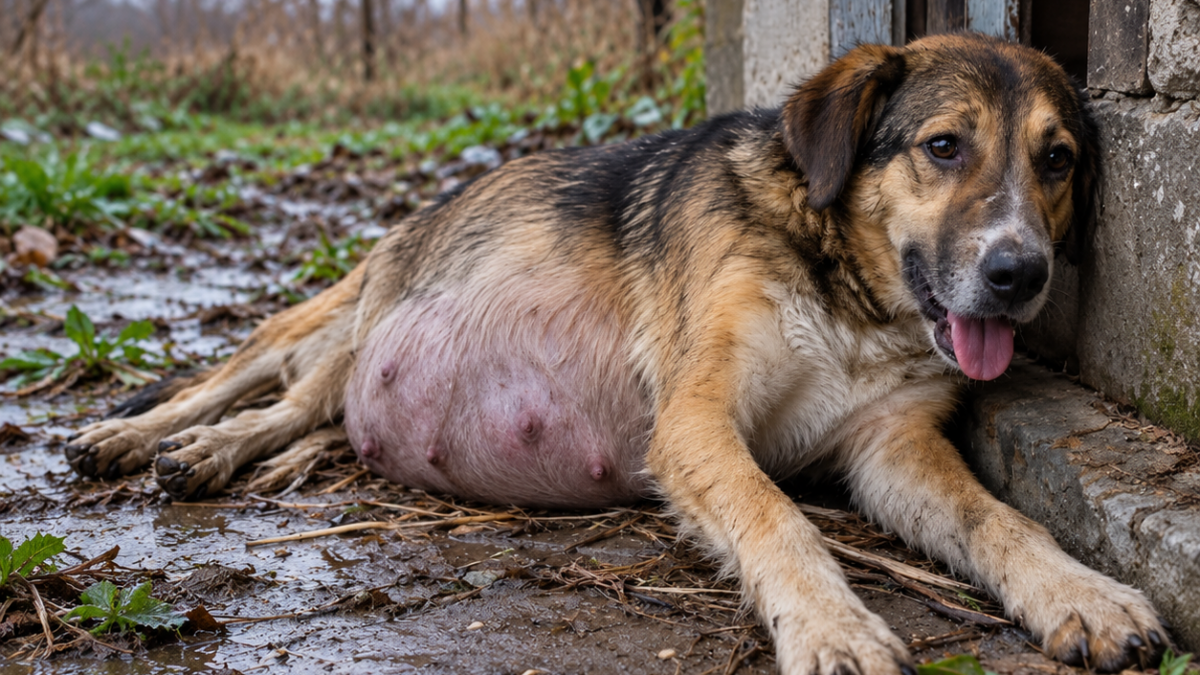
PART 2
I was out the door in less than two minutes.
I don’t remember putting on my shoes.
I don’t remember locking the house.
I remember the cold.
I remember my hands shaking around the steering wheel.
And I remember Helen’s voice repeating inside my head.
Something is wrong.
The road to her house usually took twenty minutes.
That night it felt endless.
I called the veterinary clinic while driving through empty streets.
The overnight technician answered.
“She started labor about an hour ago,” I said. “Heavy pregnancy. Rescue dog. Very weak. Foster says she’s straining and crying.”
“Any puppy delivered?”
“No.”
“Fluid?”
“I don’t know.”
“Get her here as soon as possible. Call again when you’re five minutes out.”
I hung up and called Helen.
“Can you move her?”
“Maybe. She’s frightened.”
“Don’t force anything until I get there.”
“She’s been pushing.”
“For how long?”
“At least thirty-five minutes hard. Maybe longer before I woke up.”
That frightened me.
When I reached Helen’s house, the front door was already open.
I heard Nadia before I saw her.
Not barking.
A low, broken whine.
Helen stood in the hallway in pajamas, barefoot.
“She’s in here.”
The quiet room no longer looked peaceful.
Blankets had been pushed into a pile.
Water was spilled near the wall.
Nadia lay on her side, breathing rapidly.
The moment she saw me, her head lifted.
“Hey.”
Her tail moved once.
That almost broke me.
“What’s happening, girl?”
I knelt beside her.
Her belly tightened beneath my hand.
She cried.
Helen covered her mouth.
“She’s been doing that over and over.”
I looked at the clock.
No puppy.
Too much time.
“We’re going to the clinic.”
Nadia tried to stand.
Couldn’t.
We used the blanket beneath her as a sling and transferred her carefully onto a stretcher we’d kept for emergencies.
She became frightened the moment she felt herself being lifted.
“It’s me.”
Her eyes found mine.
“I’m not leaving.”
Those words had become our entire relationship.
I’m not leaving.
We carried her to my car.
Helen climbed into the back beside her.
Halfway to the clinic, Nadia suddenly pushed hard.
Helen gasped.
“Something’s happening.”
I glanced in the mirror.
“What?”
“I can see something.”
“A puppy?”
“I don’t know.”
The car accelerated.
Five minutes later, the emergency entrance doors opened before we reached them.
The veterinary team was waiting.
Nadia disappeared into the treatment room.
Again.
I stood in a hallway.
Again.
There is something cruel about rescue in that sense.
You find an animal and think action is the hard part.
Then comes waiting.
Waiting while other people decide whether a life continues.
The veterinarian came out after what felt like an hour but was actually eleven minutes.
“There’s a puppy stuck in the birth canal.”
My stomach dropped.
“Alive?”
“We’re detecting a heartbeat, but it’s distressed.”
“And Nadia?”
“She’s exhausted. Her contractions aren’t strong enough.”
“What do you do?”
“We’re going to try to assist delivery. If that fails quickly, we need surgery.”
“Can she survive surgery?”
“She is not an ideal candidate.”
That was veterinary language for what I already knew.
She was weak.
Starved not long ago.
Dehydrated days earlier.
Her body had been trying to build puppies with almost nothing.
“Do what you have to.”
The veterinarian nodded.
“We will.”
I sat with Helen.
She stared at the floor.
“Three days,” she whispered.
“What?”
“She’s been safe three days.”
I knew what she meant.
It felt unfair.
We had imagined rescue as the moment danger ended.
But danger had followed Nadia inside her own body.
Helen wiped her eyes.
“What if we found her too late?”
“We didn’t.”
“You don’t know that.”
“No.”
I looked toward the treatment room.
“But we found her before tonight.”
That distinction mattered.
If Nadia had still been beside the shed, she would have been giving birth alone in cold dirt.
No veterinary team.
No warm room.
No surgery.
No one knowing a puppy was stuck.
Whatever happened now, she had a chance she wouldn’t have had there.
The doors opened suddenly.
A technician hurried through carrying a tiny bundle wrapped in a towel.
I stood.
“Puppy?”
She nodded but didn’t stop.
“Come on, little one.”
She disappeared into another room.
“Alive?” I called.
No answer.
Then another technician emerged.
“First puppy delivered. Very weak.”
“And Nadia?”
“They’re continuing.”
“How many puppies?”
“Ultrasound estimated six, possibly seven. Imaging wasn’t perfect because she was so close to delivery.”
Six.
Maybe seven.
I looked at Helen.
Her eyes widened.
Nadia had been carrying an entire family while surviving alone.
Another fifteen minutes.
Then the veterinarian returned.
“We need to operate.”
I felt my chest tighten.
“What happened?”
“She’s not progressing. Fetal heart rates are dropping.”
Helen whispered, “All of them?”
“Several.”
“And Nadia?”
“She’s becoming exhausted and unstable.”
There was no decision in reality.
Only paperwork pretending there was one.
“Do it.”
“We need authorization from the rescue.”
Helen already had the coordinator on the phone.
Authorization came.
Nadia went into emergency surgery.
The rescue coordinator arrived twenty minutes later wearing sweatpants and a coat over what looked like pajamas.
“How bad?”
“Bad.”
She sat beside me.
Nobody spoke.
At 4:06 a.m., a technician came out.
“Second puppy.”
“Alive?”
“Yes.”
“Strong?”
“Stronger than the first.”
At 4:14.
Third.
At 4:18.
Fourth.
At 4:23.
Fifth.
Then nothing.
4:30.
4:40.
4:51.
I stood and started pacing.
At 5:02, the doors opened.
The veterinarian came out.
His gown was stained.
His face looked tired.
I couldn’t read the expression.
“How many?”
“Seven.”
My breath caught.
“All alive?”
He hesitated.
That tiny hesitation said everything before the words arrived.
“Six.”
Helen made a sound beside me.
One puppy had not survived.
A male.
Severely distressed before surgery.
They had attempted resuscitation.
Nothing.
I sat down.
People sometimes think rescue stories become easier when you save most of them.
Six alive out of seven should have felt like a victory.
It didn’t.
Not at first.
All I could imagine was one puppy who had made it almost all the way into the world and never got to stay.
“And Nadia?”
I asked.
The veterinarian sat across from me.
“She’s alive.”
That was the first answer.
Not stable.
Not fine.
Alive.
“She lost more blood than we’d like. Her body condition makes recovery harder. We’re supporting her aggressively.”
“Can I see her?”
“Later.”
“The puppies?”
“The six are being warmed. Two are weak. One especially.”
The first puppy.
The one stuck.
“Will they be able to nurse?”
“Not immediately. Nadia needs to recover enough first. We’ll supplement.”
The sun rose while we sat inside the clinic.
Outside, people began driving to work.
Buying coffee.
Starting normal mornings.
Inside, six newborn puppies lay under controlled heat while their mother recovered from emergency surgery and one tiny body had already been wrapped separately.
That contrast felt unbearable.
I asked if I could see the puppy we lost.
The technician looked surprised.
“You don’t have to.”
“I know.”
They brought him wrapped in a towel.
He fit in my hands.
Perfect paws.
Closed eyes.
Tiny folded ears.
There was no visible reason the world should have rejected him.
I touched one finger against his head.
“I’m sorry.”
It wasn’t logical.
I hadn’t caused it.
But apology is sometimes what grief reaches for when it has nowhere else to go.
We named him Noah.
Not because names change anything.
Because I didn’t want him remembered as “the one that didn’t make it.”
He had existed.
For however briefly.
He deserved at least that.
The other puppies were placed near Nadia several hours later when she began waking properly.
She was groggy.
Confused.
The first sound of a puppy crying changed her completely.
Her head lifted.
Too quickly.
She winced.
“Easy.”
A technician brought one puppy close.
Nadia sniffed.
Then began licking.
Weakly.
Another puppy.
Another.
Soon all six were arranged near her.
The smallest struggled to latch.
Nadia shifted despite her incision.
“Don’t.”
The technician supported her.
She kept trying to reach the puppy.
Motherhood had apparently survived anesthesia.
The smallest eventually latched.
Nadia relaxed.
For five minutes, the clinic became quiet.
I watched the dog who had been abandoned beside a shed curl herself around six living babies.
Three days earlier, she had been afraid to lie on a soft bed.
Now her body was the safest place those puppies knew.
That was the first moment I believed we might actually get a happy ending.
I was wrong about how quickly.
The first week was brutal.
Nadia developed a fever.
We feared infection.
Antibiotics were adjusted.
Her incision looked acceptable, but her milk supply was inconsistent because her body was still trying to recover from starvation.
Six puppies demanded more than she could produce.
We created a feeding schedule.
Every two hours.
Day.
Night.
No exceptions.
Helen handled one shift.
I handled another.
Two other volunteers rotated.
The clinic showed us how to supplement safely.
The puppies received colored soft bands for identification.
Red.
Blue.
Green.
Yellow.
Purple.
White.
We named them later.
At first, they were colors and weights.
Every gram mattered.
Red gained twelve grams.
Good.
Blue lost eight.
Watch closely.
White wasn’t nursing well.
Supplement.
Green cried constantly.
Check temperature.
Yellow slept too deeply.
Stimulate.
Purple was greedy.
Good.
Nadia watched all of it.
The first time I bottle-fed one of her puppies, she tried to take it from me.
Not aggressively.
She simply put her mouth gently around the puppy’s back and attempted to carry it away.
“Okay.”
I surrendered immediately.
“Message received.”
Helen laughed.
“She trusts you, but not that much.”
Fair.
We fed the puppy while it remained near Nadia.
Over time, she understood.
Hands could hold babies and return them.
That was another lesson.
Everything with Nadia seemed to come down to the same question.
Will what leaves come back?
Food.
People.
Puppies.
Safety.
The answer had historically been no.
We had to change it.
Every time.
Three days after surgery, the smallest puppy—White—began fading.
He stopped gaining.
Then lost weight.
The clinic checked him.
No obvious congenital defect.
No pneumonia.
Possibly just weaker from the difficult birth.
“He’s struggling,” the veterinarian said.
“What do we do?”
“Keep him warm. Feed carefully. Monitor. If he stops nursing entirely, bring him back.”
That night I held White against a warming pad while Helen prepared formula.
His body seemed impossibly fragile.
Nadia watched from the bedding.
I moved close enough for her to sniff him.
She licked his face.
White squeaked.
“That’s right.”
I rubbed his side.
“Complain.”
He tried to root against my fingers.
Good.
We fed him.
A tiny amount.
Then another.
At 3:00 a.m., again.
At 5:00.
Again.
By morning, he had gained two grams.
Two.
I celebrated like he’d won a championship.
Helen stared at the scale.
“We’ve lost perspective.”
“Completely.”
By the end of that week, White had gained fourteen grams.
Then twenty.
He remained smaller.
But alive.
We named him Finn.
The other puppies became Rosie, Bear, Milo, June, and Pepper.
Six survivors.
Nadia recovered slowly.
Her appetite became enormous.
The frightened dog who had once hesitated before touching food now stood waiting before meals with the concentration of a professional athlete.
“You’re getting chicken.”
Tail wag.
“You don’t have to stare through me.”
More wagging.
“Fine.”
We fed her a carefully planned high-quality diet because nursing six puppies while rebuilding her own body demanded enormous energy.
Her ribs gradually became less sharp.
Her coat softened.
The dull patches regained shine.
The old collar mark remained.
That mark bothered me every day.
Whenever I touched near her neck, she flinched.
Not always.
But enough.
We used a harness.
No pressure around the throat.
The veterinarian photographed the scar for her records.
“Chronic friction.”
“From a collar?”
“Most likely prolonged pressure.”
“Too tight?”
“Possibly. Or tethering.”
The word tethering made something in me go cold.
The original story I had built in my head was simple.
Someone had an unwanted pregnant dog.
They drove her to the shed.
Left her.
That was cruel enough.
But the neck scar suggested a longer history.
What if abandonment had been only the last act?
We checked for a microchip again after her condition stabilized.
Nothing.
No tag.
No registration.
No obvious way to identify an owner.
Then a photograph changed everything.
A volunteer posted a non-graphic image of Nadia after surgery, surrounded by her puppies.
The caption only said she had been found abandoned while heavily pregnant and was recovering.
Two days later, a woman named Maria called.
“I think I know that dog.”
The rescue coordinator asked for proof.
Maria sent an old photograph.
A tan-and-white female dog standing near a blue wooden gate.
Same narrow white stripe between the eyes.
Same dark patch near the left hip.
Same slightly bent ear.
Nadia.
Except healthy.
Strong.
Not pregnant.
No visible ribs.
The photograph was dated almost two years earlier.
Maria had lived near the family who owned her.
“What was her name?” I asked.
“Luna.”
Nadia’s head turned.
We all stopped.
“Luna?”
Her ears lifted.
Tail moved once.
I felt cold.
Again.
“Luna?”
She walked toward Maria’s recorded voice when we played a short message.
Not proof by itself.
But compelling.
Maria provided an address.
The property belonged to a man named Victor and his partner at the time.
According to Maria, Luna had spent much of her life chained beside an outbuilding.
“Was she always outside?”
“Almost always.”
“Food?”
“I saw bowls. Sometimes.”
“Pregnancies?”
Maria hesitated.
“She had puppies before.”
“How many times?”
“I know of two litters.”
My stomach tightened.
“Where are those puppies?”
“I don’t know.”
That sentence hit hard.
Maria had moved away eight months earlier.
Before leaving, she’d noticed Luna becoming thinner.
She said she’d argued with the owner once after seeing the dog without water on a hot day.
“What did he say?”
“That she was his dog and I should mind my own business.”
“Did you report him?”
“Yes.”
“What happened?”
“Someone came. He put water out. Nothing else changed.”
The rescue coordinator took over.
“We need to give this to animal welfare.”
Maria agreed.
Before hanging up, she said something I couldn’t stop thinking about.
“He used to breed her.”
“Intentionally?”
“That’s what neighbors believed.”
“So this pregnancy—”
“I don’t know.”
Neither did we.
But the story had changed.
Nadia might not have become a burden because she was pregnant once.
She might have been used repeatedly until she became a burden.
That possibility made my anger feel almost physical.
I looked at her.
She was nursing Finn.
Calm.
Oblivious.
Her body carried a history she couldn’t explain.
The investigation began quietly.
Animal welfare officers checked licensing records.
There was a dog registered years earlier under Victor’s name.
Female.
Mixed breed.
Tan and white.
Name: Luna.
No current registration.
No recent veterinary history.
One vaccination entry three years before.
No spay.
The address matched Maria’s photograph.
Investigators contacted Victor.
His first claim was that Luna had “run away months ago.”
When?
He gave a date.
Maria had a photograph of Luna at his property after that date.
He changed it.
Maybe he had the months wrong.
Then he claimed she’d been given away.
To whom?
A man he knew casually.
Name?
Only a first name.
Phone number?
Lost.
Address?
Unknown.
The investigator apparently asked him why he’d first said she ran away.
He had no good answer.
Still, inconsistent stories are not the same as proof of abandonment.
They needed more.
The location of the shed became important.
It was almost eleven miles from Victor’s property.
Too far for a heavily pregnant, dehydrated dog in Nadia’s condition to have plausibly walked in a short period.
But she’d been missing for some time.
Maybe she’d traveled gradually.
Maybe.
Investigators interviewed people near the shed.
Most knew nothing.
One farmer remembered seeing a dark pickup near the abandoned buildings several nights before I found Nadia.
“Unusual?”
“Very.”
“What time?”
“After ten.”
Description?
Older black pickup.
Victor owned a dark pickup.
Again.
Suggestive.
Not proof.
Then the shed itself gave us something.
I had photographed the area the day I found Nadia.
In one image, near the wall behind her, a torn feed sack was visible.
Nothing unusual.
Except Maria recognized the brand.
Victor worked at a small feed supply company that used those exact sacks.
That almost felt dramatic enough to be fiction.
Unfortunately, the brand was common across the region.
Thousands of people used it.
The investigators remained cautious.
Good.
I had to be too.
Anger wants certainty faster than evidence can provide it.
Meanwhile, Nadia’s puppies started opening their eyes.
That pulled me back to what mattered.
First Rosie.
One tiny dark slit.
Then both.
Bear followed.
Pepper.
Milo.
June.
Finn last.
Of course.
The stubborn smallest puppy did everything on his own schedule.
The day his eyes opened, I held him near Nadia.
“Look.”
Nadia sniffed his face.
Finn sneezed.
“You nearly killed us with worry and that’s your response?”
Helen laughed.
Nadia licked him.
The puppies became chaos.
Their world expanded from Nadia’s belly to the entire whelping area.
Then beyond.
Rosie was fearless.
She climbed over barriers first.
Bear was enormous and lazy.
Pepper attacked everything.
June followed people.
Milo screamed for food.
Finn remained smallest but developed the attitude of a dog ten times his size.
The first time Finn wrestled Bear, Bear simply lay down on him.
Finn disappeared.
I panicked.
“Bear!”
Finn crawled out from under him and immediately attacked again.
Helen shook her head.
“He’s going to be trouble.”
“Good.”
Trouble was survival.
At four weeks, Nadia began spending more time away from the puppies.
At first she seemed guilty.
She’d step out.
Hear one cry.
Rush back.
We encouraged short breaks.
“You don’t have to be on duty every second.”
She didn’t believe us.
Motherhood and fear had fused inside her.
I wondered whether previous litters had been taken from her too early.
There was no way to know.
One afternoon, Nadia followed me into the kitchen while Helen stayed with the puppies.
Halfway down the hall, one of them yelped during play.
Nadia froze.
Looked back.
Then at me.
I sat on the floor.
“Your choice.”
She returned to the puppies.
Five minutes later, she came back by herself.
That mattered.
Choice.
Always choice.
She was learning she could leave because she was allowed to return.
The investigation found stronger evidence a week later.
A former employee of Victor’s feed business heard about the rescue.
He contacted animal welfare.
He said he’d helped Victor transport dogs before.
Not Nadia specifically at first.
Other dogs.
Puppies sold from litters.
He described Luna accurately.
“Big belly last time I saw her.”
“When?”
Roughly two weeks before we found Nadia.
“At Victor’s property?”
“Yes.”
That destroyed the claim that she’d disappeared months earlier.
The former employee said he had quit after disputes over unpaid wages.
That could create bias, investigators warned.
Still, his timeline was independently verifiable through text messages.
One message from Victor mentioned:
**Need to get rid of that pregnant female before the weekend.**
My chest went cold when the coordinator told me.
“What exactly does ‘get rid of’ mean?”
“We don’t know.”
“Come on.”
“We know what it sounds like.”
“Then—”
“We need evidence, not interpretation.”
I hated her for being right.
Another message two days later asked the employee whether he “still knew that empty shed outside Miller’s field.”
That was harder to explain away.
The former employee had replied:
**Why?**
Victor:
**Never mind. Handled it.**
The timestamp was the night before the farmer remembered seeing the dark pickup.
For the first time, the rescue coordinator looked at me and said:
“This is serious.”
I stared at Nadia across the room.
She was lying on her side while six puppies used her as climbing equipment.
“He took her there.”
“We still let investigators make that conclusion.”
“He took her there.”
She didn’t argue.
My first reaction was rage.
Not abstract anger.
Specific.
Hot.
I wanted to drive to Victor’s house.
I knew the address.
That scared me.
I stood.
The coordinator immediately said, “No.”
“I didn’t say anything.”
“Your face did.”
“I just want to see him.”
“No.”
“Why?”
“Because you don’t want to see him. You want him to see what he did.”
Exactly.
I imagined bringing Nadia.
Not close enough for danger.
Just where he could see her.
Healthy.
Puppies alive.
I wanted him to watch the life he’d discarded continue without him.
Then I imagined Nadia recognizing the property.
The chain.
The smell.
The man.
Her fear returning because I needed emotional satisfaction.
That stopped me.
Revenge that requires the victim to relive trauma is not revenge for the victim.
It’s for the audience.
I sat back down.
The coordinator nodded.
“Good choice.”
“Don’t sound pleased.”
“I am.”
The case moved forward.
Victor was interviewed again.
Confronted with the text messages.
He claimed “get rid of” meant rehome.
Why ask about the shed?
He said he was discussing storage.
What had he “handled”?
Work-related problem.
What work problem?
He couldn’t remember.
Investigators obtained security footage from a fuel station along the road.
An old dark pickup matching Victor’s truck passed toward the shed at 10:41 p.m.
It returned at 11:18.
The plate wasn’t completely clear.
But enough characters matched.
A second camera from a farm supply business captured the same vehicle earlier.
Better angle.
Plate readable.
Victor.
Now there was a timeline.
Luna/Nadia seen at his property roughly two weeks earlier.
Message about getting rid of a pregnant female.
Message asking about the abandoned shed.
Victor’s truck traveling toward that exact area the night before Nadia was found.
Returning thirty-seven minutes later.
Nadia discovered the next day too weak and too pregnant to have plausibly traveled far.
The case no longer rested on one clue.
It rested on a chain.
I understood chains differently now.
Some restrain.
Some connect truth.
Charges followed.
Animal abandonment.
Neglect.
Failure to provide adequate veterinary care.
Additional violations related to breeding and registration.
The investigation of his property found two more dogs.
Both alive.
Both thin.
One kept on a chain.
Both removed pending proceedings.
That was the moment my anger changed.
Until then, part of me had wanted Victor punished because of Nadia.
Now two other dogs were safe because Nadia had been found.
The case had reached beyond her.
That mattered more than anything I could say to him.
The puppies grew.
At six weeks, they became impossible.
Six small bodies running in six directions.
Helen’s once-quiet foster room looked like a crime scene made of toys, shredded paper, blankets, and tiny teeth.
Rosie stole slippers.
Pepper learned how to climb onto a low chair.
Milo discovered barking.
Unfortunately.
Bear remained committed to food.
June followed Helen everywhere.
Finn bit everyone’s ankles.
“You fought to save him,” Helen told me after he attacked my shoelace.
“I regret nothing.”
Finn bit the lace harder.
“Mostly.”
Nadia watched them from the doorway.
Her body looked dramatically different now.
She had gained weight.
The hollows around her hips were disappearing.
Her coat had been brushed and cleaned.
The collar scar remained visible if you looked closely, but her posture had changed most.
When I first found her, she tried to make herself smaller.
Now she stood with her head higher.
Still cautious.
But present.
The first time she barked surprised everyone.
Someone knocked on Helen’s front door.
Nadia jumped.
One sharp bark.
Then another.
She stood between the sound and the puppies.
Helen laughed.
“There she is.”
Nadia looked almost embarrassed.
Her bark was deep.
Strong.
Nothing like the silent animal beside the shed.
That sound became symbolic to me.
She had a voice again.
Not legally.
Not literally in court.
But in life.
She occupied space.
She warned.
Asked.
Demanded.
When breakfast was late, she stared at Helen with devastating judgment.
Excellent.
The adoption process for the puppies began around eight weeks after medical clearance.
We screened carefully.
People saw photographs and fell in love instantly.
Puppies do that.
But cute does not equal easy.
We wanted homes prepared for fifteen years, not fifteen days.
Rosie went first.
A couple with an older gentle dog.
They sat on the floor.
Rosie climbed into the man’s lap and fell asleep.
Decision made.
On adoption day, Nadia sniffed Rosie repeatedly.
Rosie tried to nurse.
Nadia stepped away.
I laughed.
“Even your mother says you’re too old for that.”
The family carried Rosie toward the door.
Nadia followed.
My chest tightened.
Would she panic?
The door closed.
Nadia stood looking at it.
Then June jumped onto her tail.
Nadia turned.
Life continued.
Five puppies.
Bear left next.
Then Pepper.
With every departure, we made sure Nadia saw calm transitions.
No puppy simply vanished while she slept.
We didn’t know whether that mattered to her.
It mattered to us.
Milo went to a family with two teenagers.
June went to Helen’s neighbor, meaning Nadia occasionally saw her during controlled visits.
Finn stayed longest.
Of course.
The puppy we’d almost lost had become a dramatic, loud, chaotic little dog who somehow made every visitor laugh.
One family wanted him because of his survival story.
I didn’t like that.
“What if he grows up completely ordinary?” I asked.
They seemed confused.
“What do you mean?”
“What if he isn’t inspirational? What if he’s just expensive, destructive, and steals your socks?”
They laughed too quickly.
We declined.
Animals are not symbols.
They are commitments.
Eventually, a middle-aged man named Daniel visited.
He sat down.
Finn bit his shoelace.
Daniel said, “Good.”
I raised an eyebrow.
“Good?”
“My last dog destroyed three pairs of work boots. I’ve missed having somebody disrespect me.”
That sounded promising.
Finn climbed onto him.
Daniel asked about vaccines.
Training.
Neutering.
Food.
Socialization.
Long-term medical considerations after a difficult neonatal period.
Then he asked:
“What does he hate?”
I smiled.
“Being told no.”
“Perfect.”
Finn went home with Daniel.
That left Nadia.
No puppies.
No nursing.
No body pressed against hers.
The foster room felt huge.
That first evening, Nadia walked around checking the empty bedding.
Helen sat on the floor.
Nadia looked toward the door.
Then at her.
“All safe,” Helen said.
Nadia walked over.
For the first time, she placed her head directly in Helen’s lap without being invited.
Helen cried.
I pretended not to.
Nadia had spent months being a mother under impossible conditions.
Now she had to learn how to be just a dog.
That process was unexpectedly difficult.
She didn’t understand toys.
A ball rolled toward her.
She stepped away.
A stuffed animal squeaked.
She left the room.
Treat puzzles?
Suspicious.
Soft couch?
Absolutely not at first.
She preferred the floor.
Then one day, Helen found her with two front paws on the couch.
“Don’t move,” she whispered to me over video.
Nadia climbed.
Turned.
Lay down.
Helen zoomed in.
“This is a major development.”
It was.
The shed floor.
Then the wall at Helen’s.
Then a blanket.
Now a couch.
Recovery can be measured in furniture.
The legal case reached a preliminary hearing while Nadia adjusted to life without puppies.
I attended only because the prosecution needed a statement from the finder.
Victor sat across the room.
I recognized him immediately from photographs.
He looked ordinary.
That’s always unsettling.
People want cruelty to have a visible face.
Something monstrous.
Usually it doesn’t.
Usually it looks like somebody you might stand behind at a grocery store.
When I described finding Nadia, I kept my eyes on the attorney asking questions.
“Was she able to stand?”
“With extreme difficulty.”
“Did she appear to have access to food or water?”
“No.”
“Was there shelter?”
“Only an abandoned shed.”
“How pregnant was she?”
“She gave birth three days later.”
“Did you see anyone abandon her?”
“No.”
Important question.
Important answer.
I refused to claim what I hadn’t seen.
The evidence had to carry itself.
Victor’s lawyer suggested Nadia might have wandered to the shed.
“Possible?”
“Anything is possible.”
“Then you cannot say my client placed her there.”
“No.”
He looked satisfied.
Then asked:
“How far did she walk when you first encountered her?”
I remembered.
Three steps.
Maybe four.
“Less than ten feet.”
“What happened?”
“She collapsed.”
The attorney stopped.
I added:
“She was trying to follow me because she thought I was leaving.”
Silence.
That wasn’t legal evidence.
But it was truth.
The court heard about the text messages.
The truck footage.
The veterinary records.
The other dogs.
The breeding history.
The chronic collar wound.
Victor’s changing explanations.
Proceedings continued.
No dramatic conviction that afternoon.
Courts are slow.
Nadia was faster.
She discovered toys.
Specifically one ugly yellow stuffed duck.
We don’t know why.
She ignored every other toy.
The duck became sacred.
She carried it room to room.
Slept with it.
Once, Helen washed it.
Nadia stood in front of the washing machine and stared for forty minutes.
“I think she’s filing a complaint,” Helen texted me.
When the duck emerged damp, Nadia tried to steal it.
“Give me that.”
She ran.
Actually ran.
Not far.
Across the living room.
But fast enough that Helen laughed.
That video became more important to me than any courtroom update.
The pregnant dog who could barely take three steps beside the shed was stealing wet toys and running from a woman in pajamas.
That was justice in a form I understood.
We started looking for Nadia’s permanent home.
Applications came.
Fewer than for the puppies.
Adult dogs wait longer.
Pregnant mothers become invisible once the babies are cute enough to adopt.
That truth bothered me.
Nadia had done the hardest work.
Carried them.
Survived abandonment.
Endured emergency surgery.
Fed six.
Accepted strangers handling her babies.
Watched them leave.
Now people wanted younger dogs.
One applicant said:
“She’s beautiful, but do you have anything under a year old?”
I smiled politely.
After they left, I sat beside Nadia.
“People have terrible taste.”
She placed the duck in my lap.
“Except you.”
Weeks passed.
One family seemed promising until we learned they intended to leave her chained outside during work hours.
Application denied.
Immediately.
The phrase chained outside made something in me physically cold.
Another family liked her but wanted a dog “more playful.”
Nadia was still learning play.
Denied by circumstance.
Then a woman named Sarah arrived with her twelve-year-old son, Ethan.
They had read Nadia’s profile.
Not the dramatic case details.
Just enough.
Adult female.
Gentle.
Cautious.
Needs a quiet home.
No pressure around the neck.
Sarah sat on the floor.
Nadia stayed across the room.
Ethan whispered:
“Can I call her?”
“Better not,” I said. “Let her choose.”
He nodded.
For twenty minutes, they mostly talked to us.
Nadia watched.
Then she stood.
Walked toward Ethan.
Stopped four feet away.
He didn’t move.
She sniffed.
Another step.
Her nose touched his knee.
Ethan looked at me.
I shook my head slightly.
Wait.
Nadia sniffed his hand.
Then walked away.
Ethan smiled.
“She touched me.”
“That’s a lot for her.”
Sarah asked:
“What happens if she never becomes cuddly?”
That question again.
The right kind.
I said, “Then she gets to be a dog who isn’t cuddly.”
Sarah nodded.
“Okay.”
They came back three times.
On the second visit, Nadia accepted a treat from Ethan.
On the third, she sat beside Sarah.
On the fourth, she brought the yellow duck to Ethan.
He almost screamed from excitement but caught himself.
Instead he whispered:
“Does this mean she likes me?”
Helen laughed.
“It means you’re approved.”
The home check was excellent.
Secure yard.
No chains.
Quiet neighborhood.
Sarah worked from home several days a week.
Ethan understood boundaries surprisingly well.
They bought a harness before Nadia arrived.
No collar.
That detail nearly made me cry.
Adoption day was scheduled.
Then the legal case exploded into local news.
A reporter connected Nadia’s rescue with Victor’s charges.
Photographs circulated.
Not the worst ones, thankfully.
But enough.
People began sending messages.
Some supportive.
Some angry.
Some demanding to know where Victor lived.
The rescue refused.
Good.
Then Victor made a public statement through his attorney claiming Nadia had been “taken from the property by someone else” and that he was being unfairly blamed.
That reopened everything emotionally.
Maria, the former neighbor, was furious.
The former employee released his own screenshots publicly before investigators wanted him to.
Chaos.
Online outrage.
Threats.
The rescue coordinator called everyone.
“Nobody engages.”
“What about correcting lies?” I asked.
“Through official statements only.”
“But—”
“No.”
Again, she was right.
Mob justice could damage the case.
Worse, it could turn Nadia into ammunition.
She was a dog.
Not a weapon.
The court mattered.
Evidence mattered.
Nadia’s life mattered more.
Adoption day remained scheduled.
Sarah asked if the publicity changed anything.
“No.”
“Could he try to claim her?”
“No. Ownership has been legally surrendered pending the case, and the rescue has authority.”
Sarah nodded.
“Then we’re coming.”
That steadiness mattered.
Nadia left Helen’s house on a rainy Saturday morning.
Not heavy rain.
Cold drizzle.
The kind of weather that made the field where I found her feel close again.
She stopped at the front door.
Looked outside.
Sarah waited beneath the porch.
Ethan held the yellow duck.
“Come on, Nadia.”
She didn’t move.
I crouched.
“Your choice.”
She sniffed the air.
Rain.
Cars in the distance.
Wet ground.
Then she stepped outside.
One paw.
Another.
No collapse.
No following someone in panic.
She walked beside Ethan to the car.
Sarah opened the rear door.
Blankets covered the seat.
A secured harness attachment waited.
Nadia looked back at us.
Helen had tears streaming down her face.
“Go.”
Nadia hesitated.
Then climbed inside.
She sat.
Ethan placed the duck beside her.
Nadia picked it up.
Perfect.
As the car drove away, Helen said:
“I hate happy endings.”
“Same.”
We stood in the rain laughing and crying.
Updates began that evening.
First photograph:
Nadia beside the couch.
Second:
Nadia on the couch.
Third:
Nadia sleeping.
Fourth:
Yellow duck under one paw.
Caption:
**She snores. A lot.**
I replied:
**Return immediately. Defective.**
Ethan sent:
**No refunds.**
Good.
The legal proceedings continued for months.
Victor eventually entered a plea agreement on multiple neglect and abandonment-related charges after motions failed to exclude the text and vehicle evidence.
The exact legal language was less dramatic than social media wanted.
There were fines.
Restitution toward veterinary and rescue costs.
Probation.
A prohibition on owning or breeding animals for a defined period, with additional monitoring conditions.
The two dogs removed from his property were surrendered and later adopted.
His small breeding operation ended.
That mattered.
Some people called the sentence too light.
I understood.
Part of me wanted something emotionally symmetrical.
Leave him in a field.
Make him hungry.
Make him afraid.
Then I would look at Nadia’s latest video.
She was lying upside down between Sarah and Ethan while someone scratched her chest.
What exactly would Victor suffering add to that?
Nothing.
Justice had done the useful things.
Stopped the breeding.
Removed animals.
Created a record.
Imposed restrictions.
Forced financial responsibility.
Revenge would only create more pain.
Nadia already had enough pain in her story.
She didn’t need ours added.
Months later, something unexpected happened.
Ethan’s school asked students to create a community project.
He chose animal abandonment.
Sarah sent me photographs.
Ethan had made a display.
One image of the abandoned shed.
One of Nadia after rescue.
One of her healthy at home.
No graphic pictures.
At the center, he’d written:
**”She wasn’t trash. She was a mother waiting for somebody to stop.”**
I stared at that line.
Twelve years old.
More clarity than many adults.
His class collected blankets and food for the rescue.
Several students convinced parents to foster kittens.
One family adopted an older dog.
Nadia had no idea.
She was probably sleeping.
That’s how impact works sometimes.
The animal never knows.
And doesn’t need to.
The puppies grew.
Rosie’s family sent a photo of her at six months.
Long legs.
Huge ears.
Bear became enormous.
Pepper remained chaos.
Milo learned to swim.
June, living nearby, occasionally met Nadia on walks.
Those reunions were interesting.
The first time June approached as an adolescent, Nadia sniffed her.
June bounced.
Nadia looked at Helen as if asking:
**What am I supposed to do with this?**
No dramatic maternal reunion.
Then they played.
Briefly.
That was enough.
Finn became Daniel’s shadow.
The puppy who almost faded during the first week grew into a compact, confident dog who apparently believed the delivery driver was his personal enemy.
Daniel wrote:
**You saved him from death so he could bark at cardboard boxes.**
I replied:
**Worth it.**
All six were alive.
That sentence still affected me.
Six.
Noah remained the seventh.
We never forgot him.
At the rescue’s annual memorial, Helen placed a small stone with his name beneath a tree.
No dramatic ceremony.
Just:
**NOAH — BORN LOVED**
I liked that.
He had not been abandoned.
Not after birth.
His mother was there.
We were there.
His life was brief, but not unseen.
That’s different.
A year after Nadia’s rescue, Sarah invited us to their house.
Nadia met us at the door.
At first she barked.
Then recognized Helen.
Chaos.
Tail.
Whining.
She pushed against Helen’s legs.
Helen cried instantly.
“Traitor.”
Nadia moved to me.
I held out my hand.
She pressed her nose into my palm.
Same gesture as beside the shed.
Except her nose was warm now.
Healthy.
She leaned her whole body against me.
“You got heavy.”
Ethan appeared.
“Don’t insult my dog.”
“Your dog used to weigh almost nothing.”
“Still.”
Fair.
The house looked lived in.
Dog bed by the window.
Another near Ethan’s desk.
Harness hanging by the door.
Water bowl.
Food container.
Yellow duck—somehow still alive, though missing one wing.
“That toy is disgusting.”
Ethan looked offended.
“She loves it.”
“Exactly why it’s disgusting.”
Nadia carried it away protectively.
Sarah laughed.
“She sleeps with it every night.”
We sat outside later.
Nadia wandered the fenced yard.
No chain.
That detail hit me harder than expected.
She stopped beneath a tree.
Sniffed.
Walked wherever she wanted.
The neck scar was almost hidden beneath healthy fur.
Sarah asked:
“Do you think she remembers where she came from?”
“I don’t know.”
“The shed?”
“Maybe.”
“Victor?”
I watched Nadia roll in grass.
“Probably in whatever way dogs remember fear.”
Sarah was quiet.
Then:
“Do you think we should avoid that area?”
“Yes.”
Not because I knew she’d react.
Because she didn’t need to prove anything.
People love returning survivors to the scene for emotional closure.
Animals don’t owe us that.
Nadia had already left.
That was enough.
A few months later, the abandoned shed was destroyed during a storm.
The roof partially collapsed.
The property owner decided to clear the structure entirely.
When I heard, I felt strange relief.
That place had never deserved symbolic importance.
It was rotting metal and wood.
Still, I went once after demolition.
Alone.
The tall grass remained.
The ground where Nadia had lain was indistinguishable from everywhere else.
I stood there.
Wind moved through the field.
No dog.
No blankets.
No food bowl.
No fear.
I tried to remember exactly where she’d touched my palm.
Couldn’t.
Memory had blurred the geometry.
Good.
Some places should become ordinary again.
The local rescue later worked with the property owner to place a weatherproof emergency animal shelter and water station closer to the village road—not at the old shed, but somewhere visible and accessible.
A small sign listed numbers to call if someone found an abandoned animal.
Ethan helped paint the sign.
At the bottom, in small letters:
**For Nadia.**
I didn’t object.
That felt useful.
Not memorializing suffering.
Building something practical from it.
The second anniversary of Nadia’s rescue brought another surprise.
Sarah called.
“Nadia found kittens.”
I laughed.
“What?”
“Under our porch.”
“You’re joking.”
“No.”
A stray mother cat had given birth beneath part of the deck.
Four kittens.
Nadia had discovered them and refused to leave the area.
“What is she doing?”
“Standing guard.”
Of course.
We helped connect Sarah with cat rescue volunteers.
The mother cat was trapped safely.
Kittens moved into foster care with her.
Nadia watched from the window.
Ethan sent a photo.
Caption:
**She says we’re a rescue now.**
I replied:
**Absolutely not. This is how it starts.**
Too late.
The family fostered two dogs over the next year.
Nadia became surprisingly good with nervous animals.
She did not overwhelm them.
She simply existed nearby.
One foster dog named Benny refused to enter the house.
He stood at the threshold shaking.
Sarah sat inside.
Ethan stayed quiet.
Nadia walked outside.
Sniffed Benny.
Then walked back in.
Benny watched.
Nadia came out again.
Back inside.
The third time, Benny followed.
Sarah filmed it.
I replayed the video over and over.
Nadia, who had once been too afraid to lie on a prepared bed, teaching another frightened dog that a doorway could be safe.
No training certificate.
No special program.
Just example.
That felt almost unbearably poetic.
The former owner’s story faded.
That’s what surprised me most.
At first, Victor had dominated everything.
Who was he?
Why did he do it?
Would he be punished?
Then gradually:
Nadia had a home.
The puppies grew.
Ethan fostered.
Helen took another pregnant dog.
The other two dogs from Victor’s property found families.
The case stopped being the center.
That’s the healthiest kind of revenge.
Irrelevance.
Someone who tried to discard Nadia became a smaller and smaller part of what her life meant.
She kept expanding.
He didn’t.
Years passed.
Nadia aged beautifully.
White fur appeared around her muzzle.
Her body stayed sturdy.
The old pregnancy stretched her belly slightly.
She became calmer.
More confident.
She discovered an intense hatred of vacuum cleaners.
A love of cheese.
An ability to identify the sound of Ethan opening the refrigerator from two floors away.
The yellow duck was replaced twice.
Each time, Ethan secretly transferred a piece of stuffing from the old toy into the new one because he believed Nadia needed the scent.
Ridiculous.
Sweet.
Probably effective.
When Ethan became a teenager, his schedule changed.
School.
Friends.
Sports.
Nadia still waited near the front window each afternoon.
The first time he came home late, Sarah sent me a photograph of Nadia staring at the driveway.
“She thinks he abandoned her,” Sarah joked.
I didn’t laugh immediately.
Then I remembered.
This Nadia had years of evidence.
He comes back.
Sure enough, when Ethan returned, she greeted him violently enough to nearly knock him down.
“I was gone three hours!”
Nadia didn’t care.
She checked.
He returned.
Trust reinforced.
Again.
Again.
Again.
One summer evening, Ethan asked me during a visit:
“Why do you think she followed you that first day?”
“Because she thought I was leaving.”
“How do you know?”
“I don’t.”
He looked at Nadia sleeping nearby.
“Maybe she just wanted the food.”
I laughed.
“Entirely possible.”
He thought for a moment.
“But you stayed anyway.”
“Yes.”
That was enough.
Sometimes stories become too polished with time.
We assign motives.
Symbols.
Meaning.
Maybe Nadia touched my hand because she trusted me.
Maybe she smelled food.
Maybe she followed because she feared abandonment.
Maybe she simply wanted to move.
We can’t ask.
What matters is what we did with the moment.
I interpreted it as a request not to leave.
So I didn’t.
That choice produced everything after.
Years later, Nadia developed arthritis.
Nothing dramatic.
Age.
Her hips stiffened after sleep.
Long walks became shorter.
Sarah installed rugs over slippery floors.
Ethan built a small ramp for the car.
I visited and watched Nadia use it.
“Look at you.”
She wagged.
“The first time I met you, you couldn’t walk four steps.”
Ethan said, “Now she’s just lazy.”
Nadia looked offended.
“Respect your elders.”
He gave her cheese.
Peace restored.
Her veterinarian monitored the old scar tissue.
No problems.
The emergency C-section had left a line along her abdomen.
Another scar.
Two histories.
One from neglect.
One from rescue.
I liked the contrast.
One scar represented what happened when people failed her.
The other what happened when people refused to.
Both healed.
Different meanings.
When Nadia turned approximately ten—we never knew her exact age—Sarah organized a small birthday.
No ridiculous party.
Just family.
Helen.
Me.
Daniel brought Finn.
June’s family came too.
Two of Nadia’s surviving puppies together with their mother.
Would they recognize one another deeply?
Who knows.
They sniffed.
Played briefly.
Then Finn attempted to steal Nadia’s birthday treat.
She corrected him immediately.
Motherhood survived.
Everyone laughed.
We raised glasses.
Ethan, now much taller than when he’d met her, sat on the floor beside Nadia.
“Do dogs know birthdays?”
“No.”
“Good.”
“Why?”
“Then she doesn’t know how old she is.”
Fair.
Nadia rested her head on his thigh.
I watched.
Ten years old.
Maybe.
The dog abandoned while pregnant had lived long enough for the twelve-year-old boy who adopted her to become nearly grown.
Time is the greatest rebuttal to abandonment.
The person who leaves an animal says, in action:
Your future does not matter to me.
Rescue answers:
Then we’ll give you one anyway.
Nadia got years.
The puppies got years.
That mattered more than punishment ever could.
One winter, Helen called me after taking in another pregnant stray.
“You’re cursed.”
“Why me?”
“Because Nadia started this.”
The new dog was terrified.
Not as depleted.
But close to delivery.
We set up the same kind of warm room.
Blankets.
Food.
Quiet.
Helen sat on the floor again.
I remembered Nadia against the wall.
Forty minutes before lying down.
This new dog took almost two hours.
Eventually she slept.
Helen looked at me.
“How many times can we do this?”
“As many as we can afford.”
“Terrible answer.”
“Real answer.”
The dog later delivered five puppies safely.
No emergency surgery.
All healthy.
Helen named the mother Hope.
I objected.
“We already used Hope.”
“Different dog.”
“Still unoriginal.”
She ignored me.
Rescue repeats.
Different animals.
Same human failures.
Same human responses.
That’s both depressing and encouraging.
We cannot save every animal.
But every animal we do save receives an entire life.
Nadia taught me to think in singular terms.
Not “stray dogs.”
This dog.
Not “abandoned mothers.”
This mother.
Not “too many puppies.”
These six.
Statistics make suffering manageable.
Names make action possible.
Nadia.
Rosie.
Bear.
Pepper.
Milo.
June.
Finn.
Noah.
Eight names if you count the life we lost.
I count him.
Always.
Years after the court case, I unexpectedly saw Victor at a hardware store.
No courthouse.
No attorneys.
No rescue coordinator beside me.
Just fluorescent lights and shelves of screws.
I recognized him.
He recognized me too.
For one second, everything old came back.
The field.
The collar mark.
The emergency call.
Noah.
The text messages.
The pickup.
He looked away.
I didn’t.
Then something strange happened.
I felt nothing like the rage I expected.
Not forgiveness.
Definitely not.
More like distance.
He was a man buying hardware.
Nadia was at home with a family.
Six puppies were alive.
Two other dogs had been removed and adopted.
His breeding had ended.
He had already become small.
I walked past him.
No confrontation.
No speech.
Outside, I called Sarah.
“How’s Nadia?”
“Why?”
“Just asking.”
“She’s asleep on Ethan’s laundry.”
I laughed.
“Send proof.”
A photograph arrived.
Nadia lying on a pile of clean clothes.
Excellent.
That image was more satisfying than anything I could have said in the store.
No revenge speech could compete with ordinary happiness.
When Nadia entered her senior years, the world became gentler around her.
Shorter walks.
Softer beds.
More sleeping.
She still hated rain.
Still loved cheese.
Still carried her duck occasionally, though less.
Her hearing weakened slightly.
Her eyes clouded.
Ethan went away to college.
That separation worried all of us.
The first week after he left, Nadia waited near his room.
Sarah sent updates.
“She’s eating?”
“Yes.”
“Sleeping?”
“Yes.”
“Anxious?”
“A little.”
Ethan called by video.
Nadia reacted to his voice.
Head up.
Tail moving.
He came home two weekends later.
Nadia heard the car.
She struggled up faster than her arthritis appreciated.
Sarah opened the door.
Ethan walked in.
Nadia made a sound I had never heard before.
Half bark.
Half cry.
She pushed into him.
He dropped his bag and sat on the floor.
“I’m back.”
Those two words.
I’m back.
The entire answer to Nadia’s oldest fear.
People can leave and return.
Not every departure is abandonment.
It took her a lifetime to learn.
But she learned.
Ethan visited often.
Nadia stopped waiting constantly.
She understood the rhythm.
Maybe.
Again, we interpret.
But her anxiety eased.
The house remained hers.
Sarah remained.
Food remained.
Life remained.
At some point, Nadia’s arthritis progressed enough that medication changed.
She slowed more.
The old veterinarian who had performed the emergency C-section still remembered her.
During one appointment, he listened to her heart.
“Do you know what she did the first night?” I asked Ethan.
He’d heard the story many times.
“Almost died.”
“Technically she tried very hard not to.”
The vet smiled.
“She gave us trouble.”
Nadia wagged weakly.
“Still does.”
The doctor rubbed her ears.
“You gave birth to six nightmares.”
“Seven,” I said.
The room became quiet.
He remembered.
“Noah.”
“Yeah.”
He nodded.
“Seven.”
That mattered to me.
Memory is one form of dignity.
Nadia lived long enough that her rescue story became family history rather than daily identity.
New neighbors didn’t know.
People at the park saw an old dog.
Not “the pregnant dog from the shed.”
Perfect.
Survivors deserve anonymity too.
They don’t have to perform trauma forever.
One afternoon, a stranger told Sarah:
“Your dog looks so peaceful.”
She texted me that sentence.
I read it several times.
Peaceful.
The best word anybody had ever used about Nadia.
Not brave.
Not miraculous.
Not heartbreaking.
Peaceful.
She had earned boring adjectives.
Comfortable.
Sleepy.
Spoiled.
Old.
Those are rescue victories.
The final year of Nadia’s life was quiet.
Not tragedy.
Age.
Kidneys became less efficient.
Her appetite fluctuated.
Some mornings she didn’t want breakfast immediately.
That scared everyone because Nadia had worshiped food for years.
Veterinary care helped.
Diet changed.
Medication.
Fluids occasionally.
She rallied.
Then slowed again.
Ethan came home more often.
Helen visited.
I visited.
Nadia still recognized all of us.
The yellow duck—version three—remained in her bed.
One evening, I sat beside her.
She lifted her nose toward my hand.
Touched my palm.
The exact gesture from the shed.
I smiled.
“You’ve been using that trick for years.”
Her eyes closed.
I kept my hand there.
I no longer needed to know what the first touch meant.
This one meant familiarity.
That’s enough.
A few months later, Sarah called before dawn.
The second middle-of-the-night call of Nadia’s life.
My stomach knew before my mind.
“She’s not doing well.”
I drove there.
No panic this time.
Sadness.
Different.
Nadia lay on her bed.
Ethan had returned overnight.
He sat beside her.
Sarah on the other side.
Her breathing was slow.
Not painful.
Just tired.
The veterinarian had seen her the previous evening.
Her kidneys were failing.
There were no meaningful treatment options left that would restore good quality of life.
I sat on the floor.
Nadia opened her eyes.
Tail moved once.
Even then.
“Hey, girl.”
My voice broke.
“Remember me?”
Her nose moved toward my fingers.
Helen arrived twenty minutes later.
She brought nothing.
Just herself.
We sat together.
The same network of people who had once scrambled to help Nadia deliver puppies now gathered to help her through the only thing rescue can never permanently prevent.
Time.
Ethan whispered:
“I don’t want her to think we’re leaving.”
That sentence destroyed me.
I looked at him.
“We’re not.”
The veterinarian came to the house.
Nadia hated clinics by then.
Home was kinder.
She lay on her blanket.
Yellow duck near one paw.
Sarah held her head.
Ethan stroked her shoulder.
Helen touched one foot.
I sat near her face.
No abandoned shed.
No cold grass.
No fear.
A whole room of people refusing to leave.
Before the veterinarian gave the final medication, Nadia lifted her head.
Barely.
She looked around.
Then placed her nose against my palm.
Again.
One final time.
I whispered:
“You were right to follow me.”
Maybe nonsense.
Maybe everything.
Her head rested down.
She died warm.
Old.
Loved.
Years after someone had decided that a pregnant dog could be left beside a collapsing shed and forgotten.
For weeks afterward, I couldn’t visit Sarah’s house.
The empty dog bed was too much.
The yellow duck was worse.
Ethan took it back to college.
He kept it on a shelf.
“That’s disgusting,” I told him when he showed me.
“I know.”
“Good.”
Grief slowly turned into story.
Not quickly.
People love saying animals leave paw prints on our hearts.
Sometimes grief deserves less polished language.
Nadia left a hole.
Then memory gradually filled parts of it.
Her first touch.
The emergency call.
Six puppies piled against her.
Running after the duck.
Waiting for Ethan.
Cheese.
The couch.
The way she’d stare if dinner was thirty seconds late.
The shed became one memory among hundreds.
That’s the only way rescue truly defeats trauma.
Not by erasing the bad thing.
By overwhelming it with everything that comes later.
On the anniversary of Nadia’s death, all six puppy families sent photographs.
We hadn’t asked.
Rosie gray around the muzzle.
Bear enormous and still food obsessed.
Pepper older but apparently still destructive.
Milo beside a lake.
June asleep in sunlight.
Finn staring suspiciously at a delivery box.
Six lives.
Six branches from one mother who almost delivered alone in dirt.
Daniel wrote:
**Finn turns eleven next month. Still a menace.**
I cried.
Eleven.
The puppy who almost faded after birth.
Eleven years.
That’s what one rescue decision does.
It multiplies time.
Nadia’s life.
Six puppy lives.
The foster dogs Sarah later helped.
The students Ethan influenced.
The two dogs removed from Victor’s property.
The animals helped by the village shelter station.
You cannot calculate the exact impact.
You shouldn’t try.
Compassion isn’t an investment spreadsheet.
But it spreads.
So does neglect.
That is why stopping matters.
A year after Nadia died, the rescue renovated its maternity room.
Helen suggested naming it after her.
I hesitated.
Then agreed on one condition.
No sad rescue photo.
The plaque used a picture of Nadia years later.
Healthy.
Standing in Sarah’s yard.
Yellow duck in her mouth.
Under it:
**NADIA’S ROOM**
**For mothers who need somewhere safe to stay.**
That felt right.
The first dog to use Nadia’s Room was a small black terrier found pregnant beside a highway.
She delivered four puppies.
All survived.
Then another mother.
Five puppies.
Another.
Three.
The room became busy.
Nadia’s name stopped meaning one abandoned dog.
It meant a place where abandoned mothers came inside.
That’s a satisfying ending.
More satisfying than any sentence a judge could give.
The shed had been where somebody tried to end responsibility.
Nadia’s Room became where people accepted it.
Opposites.
Years later, Ethan—now an adult—volunteered there during a visit home.
A terrified pregnant shepherd mix refused to eat.
He sat on the floor several feet away.
No movement.
No pressure.
Just talking softly.
Exactly as Helen had done with Nadia.
I watched from the doorway.
After thirty minutes, the dog approached the bowl.
After forty-five, she lay down.
Ethan looked toward me.
“Forty-five.”
“Nadia took forty.”
“She’s more stubborn.”
“Apparently.”
We laughed quietly.
The method had traveled through time.
One frightened dog taught humans patience.
Humans used it for another.
That’s legacy.
Not mythology.
Practice.
When people ask me now about Nadia, they usually expect the dramatic parts.
“Was she really abandoned while pregnant?”
Yes.
“Did she really need emergency surgery?”
Yes.
“Did six puppies survive?”
Yes.
“Did they catch the person?”
There was accountability, yes.
But those aren’t the questions I think matter most anymore.
I think of smaller questions.
Did she ever learn to sleep deeply?
Yes.
Did she learn food would keep coming?
Yes.
Did she stop fearing every hand?
Mostly.
Did she have a family?
Absolutely.
Did she grow old?
Yes.
That last one is the answer I love most.
She grew old.
Somebody left her beside a shed close to giving birth.
Maybe they expected nature to handle the rest.
Maybe they assumed somebody else would find her.
Maybe they didn’t care.
Whatever the reasoning, abandonment is an attempt to push responsibility into invisibility.
Nadia became visible.
Then unforgettable.
Then ordinary.
And ordinary was her greatest victory.
She had birthdays.
Veterinary checkups.
Arthritis.
A favorite toy.
A boy who grew into a man while loving her.
A family that adjusted furniture when her joints hurt.
A final day surrounded by people.
Nothing about that belongs to the person who left her.
He owns only a few terrible pages.
We own the rest.
More importantly, Nadia did.
Sometimes I drive past the road leading toward the old shed.
The structure is gone now.
The emergency shelter station remains closer to the village.
People refill the water.
Someone usually leaves a bag of food.
The small sign has weathered.
**For Nadia.**
Most drivers probably don’t know who she was.
That’s fine.
A symbol doesn’t require biography to be useful.
If one person sees a scared animal there and stops, the sign has done its job.
I stopped once recently.
Not because there was an animal.
Just because I wanted to.
The field was green.
Nothing like the dry grass from that first afternoon.
Wind moved gently.
I stood where I thought the shed had been.
Could not locate the exact spot.
Again, good.
The worst place in Nadia’s life no longer existed even in geography.
I thought about the first promise.
“I’m not leaving you here.”
At the time, I meant the field.
Later, it became something bigger.
We didn’t leave her in fear.
Didn’t leave her in motherhood.
Didn’t leave her in the foster system.
Didn’t leave her as evidence in a criminal case.
Didn’t leave her alone when she became old.
That’s what rescue is.
Not one pickup.
A series of decisions not to leave.
The first one is physical.
Get the animal out.
The rest are emotional, medical, logistical, legal, financial.
Keep showing up.
Again.
Again.
Again.
Until one day the animal no longer needs rescue.
She just needs family.
Nadia reached that day long before I realized it.
Maybe it happened when she climbed onto Helen’s couch.
Maybe when she handed Ethan the duck.
Maybe when she slept through a storm.
Maybe when she left food in the bowl because she knew breakfast would happen again.
There was no ceremony.
Safety became habit.
That is healing.
And that is why, when people ask me about revenge, I tell them the same thing.
Yes, I wanted revenge.
Of course I did.
I wanted the person who abandoned her to experience one hour of what she had.
Cold.
Fear.
Hunger.
The panic of believing nobody was coming.
I imagined that.
Then Nadia showed me a better version.
The breeding stopped.
Other dogs were removed.
The case followed him.
The court imposed consequences.
And then life did something more devastating to his importance.
It moved on without him.
Nadia became healthy.
Her puppies grew.
Her family loved her.
A maternity room carried her name.
A boy learned compassion because of her.
Pregnant dogs delivered safely where her photograph hung on a wall.
The man who left her became a footnote.
Nadia became the legacy.
That is revenge without cruelty.
Irrelevance for the person who caused harm.
Meaning for the life they tried to discard.
If I could go back to that first afternoon, I wouldn’t tell Nadia everything ahead.
I wouldn’t tell her about surgery.
Noah.
The investigation.
The trial.
Her puppies leaving.
Her adoption.
Old age.
That would be too much even if she could understand.
I’d simply sit beside her again.
Put down the water.
Wait.
Then when she followed me and collapsed, I’d kneel exactly as I did.
Hold out my hand.
And when that cold nose touched my palm, I’d say the same thing.
“I’m not leaving you here.”
Only this time, I would know what the promise eventually meant.
It meant Rosie sleeping in a home of her own.
Bear stealing food.
Pepper destroying furniture.
Milo swimming.
June growing old nearby.
Finn barking at boxes.
Noah remembered beneath a tree.
Helen opening her house to more frightened mothers.
Sarah choosing Nadia without demanding affection.
Ethan sitting on the floor and waiting for trust.
Two neglected dogs removed from a chain.
A breeding operation ending.
A maternity room.
A weathered sign.
Years.
Mostly, it meant years.
Years are what abandonment tries to steal.
We gave them back.
Nadia used every one.
And when her life finally ended, it didn’t end beside an abandoned shed with nobody around.
It ended in a home where four people were touching her because none of us wanted her to spend even one final second wondering whether everyone had left.
That, to me, is the only ending that matters.
They abandoned a pregnant dog in a place where she had nowhere to go.
She answered by becoming the reason dozens of other mothers eventually had somewhere safe to stay.
They left her because she had become inconvenient.
She became indispensable to the people who loved her.
They treated her pregnancy like a problem.
Six of her puppies grew into entire lives.
They tried to make her disappear.
Her name ended up on a door.
And the frightened dog who once collapsed after following me only a few desperate steps spent the rest of her life learning one truth she should never have had to doubt:
Some people leave.
But the right ones come back.
Again.
And again.
And again.
Until you finally believe them.