PART 2: They Chased Him Away Because of His Tumors—309 Days Later, Polito Walked Past Them as Someone’s Beloved Dog
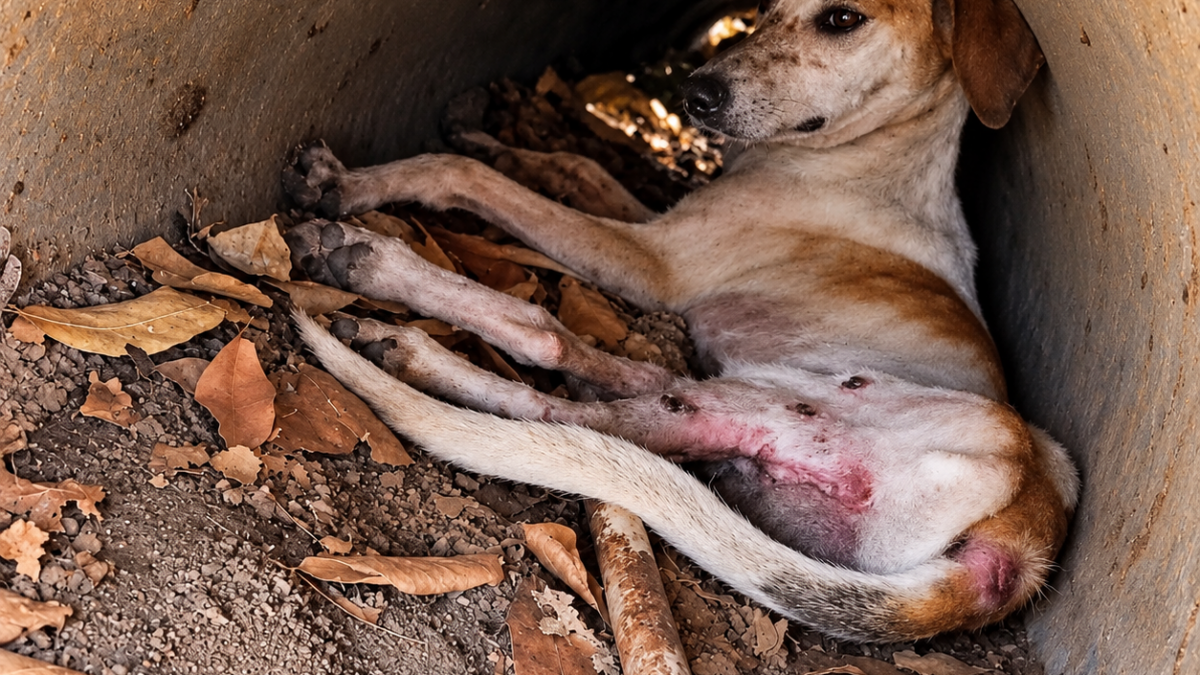
—
PART 2
—
The first night Polito stayed at the clinic, he refused food.
We expected that.
Stress.
Pain.
An unfamiliar place.
Strangers.
But the second day passed.
Then the third.
He sniffed food occasionally, then turned away.
Chicken.
Wet food.
Broth.
Hand feeding.
Bowls left quietly inside the kennel.
Nothing.
The medical team could treat anemia.
They could administer medication.
They could plan chemotherapy.
But they could not force Polito to believe that eating in front of people was safe.
That realization came slowly.
One technician placed food down, stepped away, and watched from behind the doorway.
Polito waited until she disappeared.
Then he sniffed.
Took one bite.
Stopped when he heard footsteps.
“He’s terrified of being watched,” she said.
That was our first clue.
Maybe food had never simply been food.
Maybe every approach to a food stand had ended with shouting.
Maybe every meal had required calculation.
How close?
How fast?
Who was watching?
Would someone chase him?
Hunger was biological.
Eating had become psychological.
### The Diagnosis Nobody Wanted
The veterinarian called me into her office after the complete test results returned.
She didn’t sit.
That was how I knew the news was bad.
“The TVT is extensive.”
“How extensive?”
She showed me the results.
The disease had spread beyond the obvious tumors.
There were lesions we could not see from the outside.
His immune system was exhausted.
His anemia complicated everything.
His body was thin enough that aggressive treatment carried risks.
I stared at the papers.
“Can he survive chemotherapy?”
“He might.”
Not yes.
Might.
“And without it?”
She did not answer immediately.
That answer was worse.
I looked through the office window toward Polito’s kennel.
He was curled in the farthest corner.
“If he were your dog?”
She folded her arms.
“I’d treat.”
That was enough.
“Then we treat.”
### Round One
The first chemotherapy session frightened me more than it frightened Polito.
He didn’t understand what the medication was.
He only understood hands.
Needles.
Restraint.
Voices.
His body became rigid every time anyone approached.
We changed the way we worked.
No one reached suddenly.
No one stood over him if they could kneel instead.
We announced touch before it happened.
“Polito, hand.”
Then a hand.
“Polito, medicine.”
Then medicine.
“Polito, up.”
Then movement.
Predictability became more important than efficiency.
His first chemo infusion finished without complication.
The staff celebrated quietly.
Nobody wanted to overwhelm him.
One nurse crouched outside his kennel.
“That’s one.”
Polito turned his face away.
She smiled.
“You don’t care.”
He didn’t.
But we did.
### The Leg
The fractures in Polito’s leg were old enough that they had already changed the way his body moved.
The bones had healed imperfectly.
Muscles compensated.
His posture shifted.
The orthopedic veterinarian studied the films.
“Someone may have hit him with a vehicle.”
“More than once?”
“I can’t say.”
“Could the fractures have happened at different times?”
“Yes.”
I closed my eyes.
I tried not to build scenes we could not prove.
That mattered.
Rescue can become dangerous when emotion turns uncertainty into certainty.
We knew enough.
Polito had been injured.
He had healed without proper treatment.
He had kept walking.
The rest belonged to possibilities.
And possibilities were painful enough.
### Police Patrol
One officer visited on the fifth day.
He had known Polito from the streets.
When he entered the treatment area, Polito lifted his head.
The officer stopped.
“Polito.”
His ears moved.
I looked at him.
“You know him?”
The officer smiled sadly.
“He used to follow us.”
“Why?”
“I don’t know.”
“You fed him?”
“Sometimes.”
That word again.
Sometimes.
The officer seemed ashamed.
“We tried.”
I believed him.
But trying from a distance had not been enough.
“He’d follow the truck for blocks,” the officer continued. “If we stopped, he stopped. If we walked, he walked.”
“Did he ever let you touch him?”
“No.”
“Never?”
“Once. Maybe.”
The officer crouched.
“Hey, viejo.”
Polito’s tail did not wag.
But he did not turn away either.
That was more trust than most people received.
The officer looked at me.
“He knew our uniforms.”
“He thought you were safe.”
The man’s face changed.
“I wish we’d understood what that meant.”
### The Food Stall
A few days later, a local vendor came to the clinic.
I recognized him from the morning we removed Polito from the tunnel.
He stood awkwardly near reception.
“I brought something.”
He held a bag of cooked chicken.
“For him.”
I almost laughed at the irony.
This was one of the men who had admitted chasing Polito away from the food stands.
“Why?”
He looked uncomfortable.
“My wife saw the pictures.”
I said nothing.
“She said I should come.”
“Did you chase him?”
He exhaled.
“Yes.”
“At the stall?”
“Yes.”
“How often?”
“Many times.”
I could have attacked him with every angry thought inside me.
Instead, I asked, “Why?”
“Customers complained.”
“Because of the tumors?”
He nodded.
“He smelled sometimes.”
Polito had infected, ulcerated masses.
Of course he smelled.
“He was hungry.”
“I know.”
“You knew then.”
Silence.
That was the first time I saw someone from Polito’s past forced to look directly at what convenience had cost.
The vendor held out the bag.
“Can he eat this?”
“Maybe later. His diet is controlled.”
He nodded.
Then asked quietly, “Can I see him?”
I almost said no.
Then I thought about Polito.
Not revenge.
Choice.
“You can stand outside the kennel. Don’t touch him.”
The vendor approached.
Polito recognized his scent before the man spoke.
His body tightened.
He turned his face toward the wall.
The vendor stopped.
He looked at me.
“He remembers.”
“Maybe.”
“That’s bad.”
I didn’t comfort him.
“Yes.”
He left the chicken.
Polito never ate it.
### Round Two
The second round of chemotherapy hit harder.
Nausea.
Fatigue.
No appetite.
He lay with his head low.
His anemia worsened temporarily.
We adjusted supportive care.
The veterinarian warned us that treatment could become a balance between killing tumor cells and protecting the body that carried them.
Polito did not understand balance.
He understood exhaustion.
One morning, the nurse found him standing over the water bowl without drinking.
She called me.
“Come.”
I arrived twenty minutes later.
Polito had returned to his bed.
He refused food again.
We tried everything.
Warm food.
Cold food.
Soft food.
Stronger-smelling food.
Nothing.
By evening, the veterinarian said the sentence we had been avoiding.
“We may need to syringe-feed.”
I hated the idea.
Polito already feared hands.
Now we were going to place food into his mouth by hand.
But survival creates ugly choices.
### Syringe Feeding
The first session went badly.
Polito struggled.
Not violently.
That would have been easier emotionally.
He simply turned away.
Pressed his face against the blanket.
Shut down.
We stopped.
The veterinarian said, “We need another method.”
We changed positions.
Fewer people.
Quiet room.
No forceful restraint.
A tiny amount.
Wait.
Another.
Wait.
Polito swallowed.
Again.
It took almost forty minutes to deliver what a healthy dog would have eaten in two.
Afterward, he lay down and trembled.
I sat beside him.
“I know.”
His ears moved.
“I know.”
I hated that phrase.
It never felt true.
I did not know what it felt like to live years with untreated tumors.
I did not know what it felt like to heal fractures on the street.
I did not know what it felt like to approach food while people chased me away.
I only knew what it felt like to watch.
That was not the same.
### Fear Is a Disease Too
Weeks passed.
The tumors began responding.
That was the good news.
The visible masses became smaller.
Some bleeding decreased.
The veterinary team felt cautiously optimistic.
Yet emotionally, Polito remained locked inside the sewage tunnel.
Not physically.
Inside himself.
Every hand still looked suspicious.
Every person entering the kennel made him retreat.
If someone reached for his neck, he turned his face away.
If two people entered together, he pressed himself against the corner.
His body was improving faster than his trust.
That confused some volunteers.
“He knows we’re helping him, right?”
I shook my head.
“No.”
“But we’ve been here for weeks.”
“So?”
“He should know.”
Dogs do not read medical charts.
Polito did not know chemotherapy was saving him.
He knew needles hurt.
He knew strangers surrounded him.
He knew he could no longer escape.
Trust could not be demanded as payment for treatment.
We had to earn it separately.
### The Same Chair
A volunteer named Sofia changed everything without trying.
She began sitting outside Polito’s kennel every afternoon.
Same chair.
Same time.
She did not touch him.
Did not call repeatedly.
Did not offer food from her hand.
She simply read.
A book.
Out loud sometimes.
Quietly other times.
For the first week, Polito ignored her.
Second week, he began turning his head toward her voice.
Third week, he slept while she was there.
That was enormous.
Sleeping near a person meant he was beginning to believe unconsciousness would not be punished.
One afternoon, Sofia stopped reading.
Polito lifted his head.
She smiled.
“You noticed.”
His ears moved.
She resumed.
That became their relationship.
### Round Three
By the third chemotherapy cycle, the medical team could already see measurable improvement.
The largest tumor had reduced significantly.
Blood values remained fragile but better.
Polito’s weight stopped dropping.
He still needed feeding support on difficult days.
But more often, he sniffed food voluntarily.
One morning, I entered and found him eating.
No coaxing.
No syringe.
No hidden person waiting behind the door.
Eating.
I stopped so suddenly the nurse behind me bumped my shoulder.
“What?”
I pointed.
Polito lifted his head.
For one second, I thought he would stop because we were watching.
He stared at us.
Then lowered his head and kept eating.
The nurse grabbed my arm.
“He doesn’t care we’re here.”
That was bigger than appetite.
He was eating while humans watched.
Safety had entered the room.
### The First Tail Wag
It happened several days later.
Sofia arrived with her book.
She sat.
“Hey, Polito.”
Tail.
One movement.
Sofia froze.
I was down the hallway.
She whispered, “Come here.”
I approached.
“What?”
“Say his name.”
“Polito.”
Nothing.
She frowned.
“Wait.”
She opened the book.
Read one sentence.
Stopped.
“Polito.”
Tail.
Twice.
Sofia covered her mouth.
I laughed.
“He likes you better.”
She started crying.
Polito looked confused.
That day, we probably celebrated two tail movements more than the medical report showing tumor reduction.
Because chemotherapy was treating cancer.
That tail was treating us.
### Round Four
Halfway.
Four rounds.
Polito had more energy.
Not much.
Enough to stand when someone entered.
Enough to walk short distances with support.
Enough to sniff the treatment room.
His damaged leg still gave him trouble.
The old fractures made his gait uneven.
But nobody expected perfect movement.
We wanted comfort.
Function.
Choice.
The rehabilitation team created gentle exercises.
Nothing aggressive.
Polito resisted at first.
Then learned that walking sometimes ended with something pleasant.
A quiet patch of sunlight outside.
He loved sunlight.
That surprised me because he had hidden in darkness.
Maybe the tunnel had never been preference.
Only refuge.
### Outside Again
The first time we took him into the clinic courtyard, Polito froze.
Cars sounded in the distance.
People spoke nearby.
A gate clicked.
His body dropped lower.
I kept the leash loose.
“We can go back.”
He didn’t move.
A minute passed.
Then his nose lifted.
Grass.
Wind.
Sun.
He stepped forward.
One paw.
Then another.
The damaged leg followed awkwardly.
He sniffed a plant.
Then sneezed.
Everyone laughed.
Polito startled at the laughter.
We immediately quieted.
But then he sniffed again.
For five minutes, he was not a cancer patient.
Not a street dog.
Not a rescue.
He was a dog investigating a bush.
That mattered.
### The People Who Remembered Him
As Polito’s story circulated locally, more people admitted they knew him.
A woman from a bakery.
A mechanic.
Two street vendors.
A taxi driver.
An officer.
Everyone had a story.
“He slept near my shop once.”
“He followed my car.”
“I gave him bread.”
“He scared customers.”
“He used to stand outside at night.”
“He wouldn’t let anyone close.”
The pattern bothered me.
An entire neighborhood had known Polito.
Yet he belonged to nobody.
That is the strange cruelty of street familiarity.
A dog can be recognized by hundreds of people and still remain invisible in every way that matters.
### The Mechanic’s Story
One mechanic told us Polito used to sleep near his workshop during storms.
“Why there?”
“Roof overhang.”
“Did you feed him?”
“Sometimes.”
Again.
Always sometimes.
The mechanic looked ashamed.
“I thought he belonged somewhere.”
“Did he have a collar?”
“No.”
“Did anyone ever come looking?”
“No.”
“Then why?”
He had no answer.
People often assume suffering belongs to someone else until proven otherwise.
That assumption had cost Polito years.
### Round Five
The fifth chemotherapy treatment nearly broke our confidence.
Polito developed a fever.
His white blood cell count dropped.
We isolated him more strictly.
Visitors were limited.
Sofia could no longer sit directly outside the kennel for several days.
Polito noticed.
He stopped wagging.
His appetite declined.
Fear returned.
The medical team worried about infection.
For forty-eight hours, everyone moved carefully.
Masks.
Gloves.
Monitoring.
Blood tests.
Antibiotics.
I stood outside isolation and watched through glass.
He looked alone again.
It was unbearable.
### Sofia Records Her Voice
Then Sofia had an idea.
She recorded herself reading.
The same book.
The same chapters.
We placed a small speaker outside the isolation space.
Her voice filled the quiet room.
Polito lifted his head.
I almost laughed.
Then cried instead.
He listened.
Eventually, he slept.
Trust had become portable.
### The Setback Passes
The fever resolved.
Blood values recovered.
The veterinarian allowed normal contact again.
Sofia entered.
Polito stood.
Tail moving before she spoke.
She knelt.
“Hi.”
He stepped forward.
Not far.
Maybe two feet.
But toward her.
Sofia did not reach.
That was the most important part.
Polito closed the remaining distance himself.
His nose touched her hand.
Then he backed away.
Sofia stayed still.
I whispered, “Don’t ruin it.”
She whispered back, “I know.”
The next day, he touched her hand again.
The day after, he stayed.
### The First Scratch
Almost six weeks after rescue, Polito allowed Sofia to scratch the side of his neck.
Three seconds.
Then he moved away.
Sofia stopped immediately.
No chasing.
No “one more.”
Choice.
The next afternoon, he returned.
Five seconds.
Then ten.
Soon he began tilting his head slightly toward her fingers.
The tumors were shrinking.
The scars remained.
But now Polito was discovering something else.
Touch could be requested.
Not endured.
### The Food Vendor Returns
The same food vendor returned to the clinic.
This time he brought nothing.
Better.
He stood at reception.
“I heard he’s getting better.”
“Yes.”
“Can I see him?”
“From a distance.”
He nodded.
Polito was walking slowly in the courtyard.
The vendor watched.
“He looks different.”
“He feels different too.”
The man looked at me.
“Does he still remember me?”
“I don’t know.”
“I think about him.”
“Why?”
“Because I chased him.”
I said nothing.
“He used to come every night.”
“Why did you keep chasing him?”
“Customers complained.”
“Was business really worth more than feeding one sick dog?”
His face tightened.
“I didn’t know how sick.”
“You knew he was sick enough to look frightening.”
Silence.
Then he said, “You’re angry.”
“Yes.”
“Do you want me to apologize?”
“Not to me.”
He looked toward Polito.
“I can’t fix it.”
“No.”
That was another difficult truth.
Some harm cannot be fixed by apology.
It can only inform what you do next.
### Round Six
By the sixth treatment, the tumors had reduced dramatically.
The veterinarian compared photographs.
Day one.
Round three.
Round six.
I stared.
The difference seemed impossible.
The swollen, ulcerated masses had shrunk.
Skin was healing.
Inflammation reduced.
His body was starting to look like a dog instead of a medical emergency.
Polito had gained weight.
His coat improved.
His eyes looked brighter.
The only thing still unmistakably old was his caution.
But even that was changing.
### Kisses
The first kiss surprised everyone.
A nurse leaned near him after checking his IV site.
Polito sniffed her chin.
She froze.
Then he licked once.
One tiny lick.
She looked at me.
“Did that happen?”
“Yes.”
“Polito?”
Another lick.
The nurse started laughing.
Within a week, he was offering small licks to people he trusted.
Sofia received the most.
I was jealous.
### The Police Officer Comes Back
The officer who had known Polito from patrols returned.
This time, Polito stood when he heard the voice.
“Hey, compañero.”
Tail.
The officer crouched.
Polito approached.
Sniffed the uniform.
Something changed in his posture.
Recognition?
Comfort?
Memory?
We couldn’t know.
But he leaned briefly against the man’s knee.
The officer looked away because his eyes filled.
“He used to walk behind us for hours.”
I said, “Maybe he thought you were his pack.”
The officer rubbed Polito’s chest.
“We should’ve done more.”
“Yes.”
Again, no comforting lie.
He nodded.
“I know.”
Then he asked whether the station could contribute food to the rescue.
They did.
### Round Seven
By round seven, the veterinarian began using a word we had been afraid to say.
“Remission.”
Not complete yet.
But possible.
Very possible.
The final treatment plan remained.
One more round.
Then reassessment.
Polito seemed to know nothing about milestones.
He cared about lunch.
Sofia.
Neck scratches.
Sunlight.
And a squeaky toy someone had donated.
At first, squeaking terrified him.
Then irritated him.
Then fascinated him.
Soon he carried the toy in his mouth.
That was when we saw the dog hidden beneath the survival behavior.
Playful.
Gentle.
Oddly affectionate.
### The Tunnel Dog Disappears
Not literally.
Polito still existed.
But the dog from the sewage tunnel became harder to see.
He no longer pressed into corners automatically.
He sometimes slept in the middle of his bed.
He watched doors instead of walls.
When people entered, he occasionally stepped forward.
His tail began to move before familiar voices reached him.
He started expecting kindness.
That may be the most dangerous and beautiful thing rescue can give an abused or neglected animal.
Expectation.
Because expectation means disappointment becomes possible again.
But it also means joy becomes possible.
### Round Eight
The eighth chemotherapy treatment was almost ceremonial.
The staff tried not to make a big deal.
They failed.
Someone had written a small sign.
**ROUND 8 — YOU DID IT, POLITO**
He couldn’t read.
Obviously.
But humans needed the sign.
Sofia sat beside him.
The veterinarian administered the medication.
Polito rested his head against a blanket.
No panic.
No shaking.
No retreat.
When it finished, everyone clapped softly.
Polito lifted his head.
Tail wag.
I laughed.
“That one’s for you.”
### The Tests
We waited for follow-up testing.
Those days felt longer than treatment.
The tumors looked gone.
But appearance is not proof.
The veterinarian repeated exams.
Bloodwork.
Imaging where needed.
Clinical evaluation.
I sat outside the office.
Polito slept at my feet.
Months earlier, he had not allowed my hand near him.
Now his shoulder touched my shoe.
The veterinarian opened the door.
She smiled.
I stood.
“What?”
“Come in.”
“No. Tell me.”
She laughed.
“Polito is in remission.”
For a second, I didn’t understand.
Then I did.
“Cancer?”
“Clinically, no evidence of active TVT.”
I looked down.
Polito remained asleep.
Of course.
We had just received the biggest news of his life.
He was napping.
### More Than Two Months
Polito had spent more than two months in intensive veterinary care.
He entered as a dog covered in tumors and fear.
He left as something almost unrecognizable.
The scars stayed.
The leg remained imperfect.
His gait would never look normal.
But he walked.
Ate.
Played.
Loved.
Trusted.
We prepared to move him into rescue foster care.
I thought leaving the hospital would be easy.
It wasn’t.
The nurses cried.
The veterinarian cried.
Sofia cried before anyone else started.
Polito walked toward the vehicle wearing a harness.
He stopped at the door.
Looked back.
The staff stood behind him.
For once, the dog who had spent years following people because he had nowhere to belong had an entire hallway of people watching him leave.
### Foster Life
The foster home was quieter than the clinic.
At first, Polito seemed confused.
No kennel routine.
No constant medical sounds.
No nurses.
No chemotherapy.
Just rooms.
Beds.
A yard.
Another calm dog.
His foster parent, Ana, understood fear.
She gave him one room first.
Then two.
Then access to the yard.
Polito explored slowly.
Sniffed corners.
Checked exits.
Slept near doors.
Old street habits.
### The First Night in a Home
Ana sent me a photograph around midnight.
Polito was asleep on a dog bed.
But only half of him.
His front legs and chest rested on the cushion.
The rest of his body stayed on the floor.
I laughed.
“He doesn’t know what beds are.”
Ana replied:
**He’ll learn.**
The next night, three-quarters of him was on the bed.
By the end of the week, he occupied the entire thing.
Then he started stealing the other dog’s bed too.
Healing had entered its spoiled phase.
### Walking Through San Martin Again
Months later, after medical clearance, we brought Polito back through a familiar part of San Martin for a controlled walk.
Not because he needed closure.
Because we needed to see how he handled ordinary streets.
He walked beside Ana.
Not behind.
That distinction mattered.
The police patrol passed.
An officer recognized him.
“Polito!”
Tail.
The vehicle stopped.
Two officers stepped out.
People nearby looked.
Someone whispered, “That’s him?”
It was.
The same dog.
Except not.
### The Food Stands
When Polito approached the stretch of food stalls, I watched his body.
He slowed.
Nose lifted.
Food smells.
Old memories.
One vendor recognized him.
The man who had chased him.
He stepped away from his stall.
Polito stopped.
The vendor did not approach.
Good.
He placed a small dog-safe piece of food on the ground several feet away.
Then backed up.
Polito looked at Ana.
She loosened the leash.
His choice.
He walked forward.
Sniffed the food.
Ate it.
The vendor smiled.
I expected satisfaction.
Revenge.
Something.
Instead, I felt sadness.
This was what could have happened years earlier.
Food.
Distance.
No shouting.
So simple.
### The Vendor’s Apology
The man looked at me.
“I was wrong.”
“Yes.”
He nodded toward Polito.
“I thought the tumors meant he was dangerous.”
“You could have asked.”
“I didn’t.”
“No.”
He swallowed.
“He came here hungry.”
“Every day.”
“I know.”
“Now you know.”
Polito had already moved on.
He was sniffing a tree.
That was perhaps the most fitting punishment.
The man was facing his guilt.
Polito was busy living.
### 100 Days Waiting
After recovery, Polito became available for adoption.
We expected interest.
His transformation had moved people.
There were messages.
Comments.
Offers.
But actual adoption is different from admiration.
People asked about his history.
His leg.
The cancer.
Could it return?
Would he need monitoring?
Was he traumatized?
Did he like children?
Other dogs?
Could he be alone?
Questions were fair.
But applications disappeared when responsibility became real.
100 days.
Still waiting.
Ana did not mind.
“I like him.”
“That is the problem.”
“I can foster forever.”
“No.”
Polito sat between us.
Tail moving.
### Adoption Event One
Polito attended his first adoption event cautiously.
Too many voices.
Too many hands.
We created a quiet area.
A sign explained:
**PLEASE LET POLITO APPROACH FIRST**
Some people ignored it.
We intercepted them.
Some respected it.
Polito rewarded those people by sniffing their hands.
One family stayed twenty minutes.
Then asked about the cancer.
When they heard “eight chemotherapy treatments,” their expression changed.
“Could it come back?”
“Anything can happen. He needs normal veterinary monitoring.”
They walked away.
Polito watched.
Then found a treat on the floor.
Dogs are practical.
### 150 Days
By day 150, Polito had become more confident.
He greeted Ana at the door.
Loved neck scratches.
Carried toys.
Barked occasionally.
That last one surprised us.
The dog who had been silent in the tunnel found his voice.
Not often.
Mostly when dinner was late.
Ana sent a video.
Polito standing near the kitchen.
One bark.
Pause.
Another.
She laughed.
“He’s becoming rude.”
I replied:
**Excellent.**
### The Return of the Tumor Fear
Around day 180, Ana found a small lump.
Everything stopped emotionally.
The veterinarian examined it.
We waited.
I remembered the tumors.
The chemotherapy.
The syringe feeding.
All of it.
The pathology came back benign.
A simple cyst.
I sat down when I heard.
Ana laughed.
“You look worse than he does.”
Polito was asleep.
Again.
Apparently, his role in medical crises was to nap while humans collapsed.
### 200 Days
People began asking why nobody had adopted him.
I hated the question.
As though waiting meant something was wrong.
Nothing was wrong with Polito.
He simply needed a specific person.
Patient.
Stable.
Comfortable with medical history.
Willing to let trust grow.
The right home can take time.
Waiting is not failure.
### A Child Changes Him
At one event, a little boy sat near Polito without touching.
The boy’s mother told him, “Let the dog choose.”
Perfect.
The child played with a toy car.
Polito watched.
Eventually, he approached.
Sniffed the boy’s shoulder.
The boy stayed still.
Polito licked his ear.
The child laughed so hard Polito jumped.
Then returned.
That was when we learned he loved gentle children.
A new piece of Polito.
Not street dog.
Not cancer survivor.
Dog who liked kids.
### 250 Days
Ana started calling him “Professor Polito” because he had become extremely opinionated.
Breakfast too late?
Stare.
Walk too short?
Refuse to enter the house.
Wrong blanket?
Move to sofa.
Cancer had not killed him.
Now comfort had made him demanding.
That was the kind of transformation I wanted.
### The Police Bring a Gift
On day 270, several officers visited the rescue.
They brought a new collar.
Blue.
Polito sniffed it.
One officer said, “He followed us for years.”
Ana smiled.
“Now you follow him online.”
Everyone laughed.
The officer knelt.
“Sorry it took us so long to understand you.”
Polito licked his hand.
Forgiveness?
Maybe.
Or maybe the officer smelled like snacks.
Both were acceptable.
### 300 Days
Three hundred days available for adoption.
Ana baked a dog-safe treat.
I said we were not celebrating the number.
She said we were celebrating Polito.
Fair.
He ate the treat in twelve seconds.
No emotional reflection.
Very Polito.
Nine days later, everything changed.
### Day 309
The application did not look dramatic.
A family.
Quiet home.
Fenced yard.
One older dog.
Two adults.
A teenage daughter.
Good veterinary references.
No heroic statement.
No “we want to save him.”
That immediately made me interested.
They wanted to meet Polito because their daughter had seen him at an adoption event and remembered one thing.
“He looked like he wanted to come closer but didn’t know if he was allowed.”
That sentence told me she had actually watched him.
### The Meeting
They sat outside.
Nobody called Polito repeatedly.
Nobody reached.
Ana brought him into the yard.
He sniffed.
Walked around.
Ignored everyone.
Perfect.
The teenage girl sat on the grass.
No eye contact.
No pressure.
Polito approached from behind.
Sniffed her hair.
She smiled without turning.
“Hi.”
His tail moved.
Mother stayed seated.
Father asked practical questions.
“What happens if he gets scared?”
“Give him distance.”
“Does he bite?”
“He has never shown aggression with us.”
“What about his leg?”
“Old fractures. He compensates well.”
“Cancer?”
“In remission. Continue routine veterinary monitoring.”
The father nodded.
Not frightened.
Just listening.
### The Neck Scratch
After almost forty minutes, Polito approached the mother.
She held her hand low.
Polito sniffed.
Then moved his neck beneath her fingers.
I stopped breathing.
She scratched gently.
Polito leaned.
Ana looked at me.
There it was.
The gesture that had taken us weeks in the clinic.
He offered it to a stranger.
Trust no longer took weeks.
Not because he had forgotten fear.
Because enough safe people had taught him that fear was not the only possible outcome.
### Their Dog
The older dog arrived later.
Calm female.
No drama.
Sniff.
Walk away.
Polito followed.
She turned.
Play bow.
Polito froze.
Then tail.
Within minutes, they were walking the yard together.
Ana whispered, “I’m in trouble.”
She knew.
### Home Visit
Their house had quiet rooms.
Soft beds.
Secure yard.
No chaos.
The daughter had already prepared a corner with a blanket.
I noticed a book nearby.
Same coincidence as Sofia.
“What are you reading?”
She showed me.
Not the same book.
Still, I smiled.
“Read near him.”
“Why?”
“He likes it.”
### Trial Weekend
We packed Polito’s things.
Ana overpacked.
Three blankets.
Two beds.
Toys.
Food.
Medication records.
Medical history.
I removed one toy.
She put it back.
“He likes options.”
“He lived in a sewer.”
“That doesn’t mean he lacks taste.”
Polito left.
Ana cried.
I pretended not to.
### First Update
An hour later:
**He found the water.**
Then:
**He ate dinner.**
Then:
**He followed our dog into the bedroom.**
Then a picture.
Polito sleeping beside the teenage girl’s bed while she read.
Ana looked at me.
“I hate them.”
“No, you don’t.”
“I know.”
### The Morning After
The family sent a video.
Backyard.
Polito walking.
Older dog beside him.
The daughter calling.
“Polito.”
He turned.
Trotted toward her.
Tail high.
Not following police.
Not trailing strangers.
Running toward his person.
Ana cried again.
### Adoption
Day 309 ended Polito’s wait.
Paperwork.
Medical instructions.
Emergency contacts.
Veterinary history.
Everything reviewed.
The mother signed.
Father signed.
The daughter held Polito’s leash.
Ana knelt.
“Okay.”
Polito sniffed her face.
“You’re leaving me.”
Tail.
“Rude.”
Polito licked her chin.
Ana laughed through tears.
“Fine.”
She hugged him.
“Go.”
He went.
### The First Month Home
Polito settled faster than expected.
He learned the yard.
Found favorite sleeping spots.
Claimed a couch corner.
Followed the daughter while she studied.
Waited near the kitchen during meals.
Loved the older dog.
Hated the vacuum.
He developed one strange habit.
Whenever the family returned from errands, Polito waited several feet from the door.
Not rushing.
Watching.
As though he still expected people to leave and perhaps not come back.
Over time, the distance shrank.
Eventually, he stood at the door before the key turned.
### The Tunnel Becomes a Memory
Months after adoption, someone asked whether Polito still hid.
Sometimes.
During storms.
When unfamiliar men entered.
At the veterinarian.
But hiding was no longer his default.
It was one coping option among many.
There is a difference.
### The Food Stall Encounter
The family returned to San Martin once for a veterinary event.
Polito walked beside them.
Harness.
Healthy coat.
Strong enough to move confidently.
Several people recognized him.
The food vendor stepped outside.
He froze.
Polito looked.
The man did not call him.
Good.
He simply placed a bowl of water near the edge of the sidewalk.
Then stepped away.
Polito drank.
The man’s eyes filled.
No speech.
No apology.
He had already said it.
This time, he gave without demanding closeness.
That was better.
### The People Who Once Chased Him
Not everyone apologized.
Some avoided us.
Some said they never knew how sick he was.
Some insisted they had only been protecting businesses.
Some claimed they occasionally fed him.
Probably true.
People are complicated.
But Polito’s survival forced one uncomfortable fact into public view.
A dog can be known by an entire neighborhood and still be abandoned by everyone collectively.
Responsibility can dissolve when everyone assumes someone else will act.
That was the real villain.
Indifference shared by many becomes invisible.
Until a dog ends up hiding in a sewage tunnel.
### The “Revenge”
People asked whether I enjoyed bringing Polito back healthy.
They wanted the dramatic moment.
The dog everyone rejected returning beautiful and strong.
Yes, there was satisfaction.
But not because anyone suffered.
Because Polito no longer asked permission to exist.
He walked past stalls where he had once waited for scraps.
Full stomach.
Family beside him.
Collar.
Home.
He didn’t stop.
That was revenge enough.
### The Police Patrol Again
One patrol car passed slowly.
The officer rolled down the window.
“Polito!”
Old instinct.
Polito turned.
For a second, I wondered if he would follow.
He didn’t.
He wagged.
Then looked at his family.
The daughter called.
“Come on.”
Polito continued with her.
That moment broke me.
For years, walking behind police had been the closest thing he had to security.
Now safety was walking beside him.
### The Tunnel
We never took him back to the tunnel entrance.
No reason.
But one rescuer visited later.
The tunnel looked smaller than memory.
Dark.
Wet.
Empty.
I stood outside and thought about the first day.
Polito pressed against the wall.
Silent.
Resigned.
Then I pictured him at home.
Neck scratches.
Couch.
Toys.
Children.
His story had begun changing inside that darkness before he knew it.
### A Year Cancer-Free
At his one-year follow-up, the veterinarian examined him thoroughly.
No recurrence.
Bloodwork improved.
Weight healthy.
Leg stable.
She looked at Polito.
“You’re annoying.”
He wagged.
“That’s medical terminology,” I said.
She laughed.
“He’s doing beautifully.”
Those words meant more because they came from the same clinic where we once syringe-fed him to keep him alive.
### Sofia Visits
Sofia visited after adoption.
The daughter brought Polito outside.
Sofia sat.
Same way as the clinic.
Same posture.
Polito froze when he heard her voice.
Then ran.
Actually ran.
He pushed his head into her hands.
Neck scratch.
Sofia cried instantly.
The daughter looked confused.
“Did he know her?”
I said, “She taught him people could sit nearby without asking for anything.”
That is a strange kind of gift.
Maybe one of the greatest.
### The Book
Sofia brought the old book.
The one she had read beside his kennel.
She opened it.
Read several lines.
Polito lay down beside her.
Eyes closing.
Memory.
Not of pain.
Of safety.
We often focus on traumatic memories.
But animals build good ones too.
Enough safe repetitions can become their own past.
### The Vendor’s Change
Months later, I learned the food vendor had started leaving a water bowl outside his stall.
Then a small container for scraps appropriate for local strays.
He contacted a rescue when an injured dog appeared.
One dog.
Then another.
I did not congratulate him.
That wasn’t the point.
Change mattered more than praise.
Polito had become the dog who taught a man to stop chasing.
### The Officers Start a Program
The local police unit also began carrying basic contact information for animal rescue groups during patrols.
Nothing enormous.
No national reform.
Just phone numbers.
A small bag of food.
Water.
When they saw an injured stray, they had somewhere to call.
One officer told me:
“We should’ve had this when Polito was following us.”
“Yes.”
Again.
Truth without cruelty.
### His Leg
As Polito aged, the old fractures caused arthritis.
No surprise.
His family noticed immediately when he slowed.
Vet visit.
Pain management.
Joint support.
Weight control.
Shorter walks.
Soft bed.
Years earlier, he had walked on broken bones because walking was required for survival.
Now one stiff morning triggered a family discussion.
“Should we shorten his route?”
“Call the vet.”
“Did he eat?”
“Is he comfortable?”
That contrast was almost painful.
Same dog.
Different world.
### The Daughter Grows Up
Polito’s teenage girl became a young adult.
He followed her through high school.
Exams.
Graduation.
College applications.
She once said she wanted to study social work.
“Why?”
She looked at Polito.
“Because everybody knew him and somehow nobody was responsible.”
I understood immediately.
Sometimes animals teach human systems better than textbooks.
### His Cancer Scars
Some scars never disappeared.
Hair remained thinner in places.
People asked.
“What happened?”
His family learned to tell the short version.
“He had cancer on the streets. He survived.”
Not:
Poor dog.
Not:
Broken dog.
Survived.
That word fit.
### The Dog Who Loved Neck Scratches
Polito became ridiculous about neck scratches.
If someone stopped too soon, he leaned harder.
If they moved away, he followed.
The dog who once turned his face from touch now demanded it.
Ana called this “aggressive affection.”
Sofia called it justice.
I called it evidence.
### 309 Days Later Became 1,000
One thousand days after adoption, the family sent us a photograph.
Polito asleep on his back.
Belly exposed.
Legs open.
No defensive posture.
No awareness of danger.
A sleeping dog tells you the truth about safety.
Animals cannot fake deep relaxation.
That picture meant more to me than any before-and-after image.
### The Tunnel Dog Sleeps
Polito used to sleep lightly.
Street sleep.
One ear working.
Body curled.
Ready.
At home, he snored.
Loudly.
His family complained.
Then recorded it because they loved it.
The sound of a dog sleeping without fear may be the best noise in rescue.
### Another Scare
Several years later, bloodwork showed an abnormality.
Everyone panicked.
Cancer?
Recurrence?
The veterinarian repeated tests.
No TVT.
A manageable unrelated condition.
Polito’s family responded immediately.
Treatment.
Monitoring.
No hesitation.
The mother said:
“We’re not losing him because we waited.”
That sentence carried his entire past inside it.
### The Place He Belonged
Polito eventually had a favorite spot near the front window.
He watched people.
Or at least pretended to.
Delivery driver?
One bark.
Neighbor?
Tail.
Police car?
Ears up.
His daughter?
Full-body celebration.
Belonging creates categories.
Not all humans are strangers anymore.
### What Cancer Took
Cancer took months.
Strength.
Blood.
Comfort.
It left scars.
But it failed to take his appetite forever.
Failed to take movement.
Failed to take trust.
Failed to take his future.
That mattered more.
### What Abandonment Took
Fear stole more slowly.
It stole expectation.
Polito expected rejection.
Expected raised voices.
Expected hands to hurt.
Expected food to disappear.
That took longer to treat than cancer.
There was no chemotherapy for distrust.
Only time.
Consistency.
Choice.
That is why the emotional recovery mattered so much.
### The Most Important Treatment
People ask which treatment saved Polito.
Chemotherapy.
Obviously.
Medical care.
Nutrition.
Support.
But if you ask which treatment gave him a life instead of merely survival?
Predictable kindness.
Every day.
Same people.
Same voices.
Hands that stopped when he moved away.
Food that returned tomorrow.
That is rehabilitation too.
### Five Years Later
Five years after rescue, Polito returned to the clinic for a routine checkup.
A new receptionist didn’t recognize him.
An older nurse did.
She came around the desk.
“No.”
I smiled.
“Yes.”
“That’s Polito?”
He wagged.
She knelt.
“You were horrible.”
Everyone laughed.
She meant medically.
Mostly.
“You wouldn’t eat.”
Tail.
“You made us syringe-feed you.”
Tail.
“You hated everyone.”
Polito licked her cheek.
She cried.
### The Original X-Rays
The veterinarian showed the family the old X-rays.
The leg fractures.
They stared.
“How was he walking?”
The veterinarian gave the same answer from years before.
“Because he had to.”
His daughter looked at Polito.
“You don’t have to anymore.”
Exactly.
### The Last Patrol
One older police officer who knew Polito eventually retired.
Before his last shift, he asked to see him.
The family agreed.
The officer arrived in uniform.
Polito recognized something.
Maybe scent.
Maybe memory.
He walked toward him.
The officer knelt.
“You followed me for years.”
Polito wagged.
“I should’ve followed you.”
That sentence hit everyone.
The officer hugged him gently.
“Sorry, buddy.”
Polito sneezed.
Perfect dog response to human guilt.
### No Hero Needed
Polito’s story often got told as if rescuers were heroes.
I disliked that.
We were late.
Everyone was late.
Years late.
Polito had already survived the hardest part alone.
We simply arrived before the ending became permanent.
### The People Who Chased Him
Were they cruel?
Some were.
Some were scared.
Some were ignorant.
Some were busy.
Some thought someone else would help.
None of those explanations fed Polito.
Intent matters.
Outcome matters too.
That became the lesson the neighborhood could not avoid.
### Polito’s Revenge Was Ordinary
People expected something dramatic.
Polito’s revenge was breakfast every morning.
A family checking his leg.
A clean bed.
A full water bowl.
Chemotherapy appointments becoming memories.
A child becoming an adult beside him.
A former street dog refusing cheap treats because he preferred chicken.
That last one especially pleased me.
The dog once begging for scraps developed standards.
Beautiful.
### The Day He Refused Food Again
Years later, Polito refused breakfast.
His family panicked.
Clinic within hours.
Diagnosis:
Upset stomach.
Nothing serious.
The veterinarian laughed.
“Healthy dogs skip meals sometimes.”
His family did not laugh until later.
I did.
Because ordinary illness had become possible.
Not every refusal meant death.
That was progress.
### Growing Gray
Gray appeared around Polito’s muzzle.
His walk slowed.
The damaged leg stiffened.
Neck scratches remained essential.
He slept more.
His family adjusted.
No one complained about cost.
No one chased him.
Old age became another thing he was allowed to experience.
That is a privilege.
### The Sewer Tunnel in the Rain
One rainy day, water flooded the same tunnel where we had found him years earlier.
Someone sent me a photograph.
Dark water.
Mud.
Trash.
I stared at it.
That could have been Polito’s grave.
Instead, he was sleeping on a couch.
Distance measured in miles?
Not much.
Distance measured in life?
Infinite.
### The Final Meeting With the Vendor
I saw the food vendor one more time.
Older.
His stall had changed.
Water bowl outside.
A small sign with rescue contact information.
He asked:
“Polito still alive?”
“Yes.”
He smiled.
“Good.”
Then he said:
“I think he hated me.”
“I don’t know.”
“He should’ve.”
I looked at him.
“Dogs don’t waste much time on revenge.”
The man nodded.
“Maybe humans should learn that.”
Maybe.
### The Family Visits San Martin
Polito’s family visited one final time while he was still strong enough.
He walked slowly.
No crowd.
No dramatic reunion.
Just familiar streets.
Some people recognized him.
An old officer.
A bakery worker.
A vendor.
They watched him pass.
His daughter held the leash loosely.
He didn’t look for scraps.
Didn’t trail patrol cars.
Didn’t avoid hands.
He simply walked.
The neighborhood that once treated him as belonging nowhere now saw him clearly belonging to someone.
That was the scene I had waited years to witness.
### The Difference in His Body
On the street, Polito’s body had been a record of survival.
Tumors.
Fractures.
Anemia.
Weight loss.
Scars.
At home, his body became ordinary.
Warm.
Fed.
Tired after walks.
Sore with age.
Relaxed in sleep.
No longer evidence.
Just his body.
That is dignity.
### His Favorite Person
Everyone assumed Sofia remained his favorite.
Wrong.
His daughter won eventually.
Polito followed her everywhere.
Bathroom door?
Wait outside.
Homework?
Lie nearby.
Kitchen?
Obviously.
She joked that she had never chosen to have a shadow.
Polito had spent years following police.
Now he followed someone who always came back.
### When She Left for College
The first week after she left for college, Polito waited near her room.
That broke everyone.
She called on video.
Polito heard her voice.
Tail.
Searched.
Confused.
Eventually, he adjusted.
She came home every weekend she could.
Polito learned another important truth.
Leaving does not always mean abandonment.
Sometimes people come back.
### The Greatest Healing
That may have been the final emotional milestone.
Polito stopped treating absence as permanent.
The daughter left.
Returned.
Left.
Returned.
Each cycle taught something years of street life had denied him.
Relationships can survive distance.
### The Scars Nobody Saw
Polito had visible scars.
But the deepest one had always been expectation.
He expected to be rejected.
That scar became almost invisible by old age.
When visitors arrived, he sometimes approached first.
Think about that.
The tunnel dog.
Approaching first.
### The Final Years
Polito’s final years were not dramatic.
That is exactly what I wanted.
Veterinary appointments.
Medication for arthritis.
Soft beds.
Slow walks.
Birthday photographs.
Naps.
Family dinners where he waited beneath the table.
Holiday blankets.
Children visiting.
Ordinary time.
Rescue stories often rush toward adoption.
But adoption is not the ending.
The years after are.
### The Last Reunion With Sofia
Sofia visited when Polito was old.
She brought no book this time.
She sat on the floor.
“Polito.”
He lifted his head slowly.
Tail.
She cried immediately.
“You still remember.”
He walked toward her.
Slow.
Placed his head against her knee.
She scratched his neck.
Exactly the place where he once pulled away.
Neither moved for a long time.
### What She Told Him
Sofia whispered:
“You taught us patience.”
Polito’s eyes closed.
“He taught us everything,” I said.
She smiled.
He taught us that a dog can survive cancer and still need permission to trust.
He taught us that rescue is not extraction.
Not medicine alone.
Not adoption paperwork.
Rescue is rebuilding expectation.
### The Ending People Wanted
People wanted to know whether the people who rejected Polito paid for it.
There were no courtrooms.
No fines.
No villain dragged away.
Life is not always structured that neatly.
But there were consequences.
The neighborhood had to see itself in Polito’s transformation.
The officers admitted they could have done more.
The vendor changed how he treated strays.
People learned rescue numbers.
Water bowls appeared.
Injured dogs were reported sooner.
No single punishment would have helped the next dog as much as that.
### But There Was Satisfaction
And yes.
There was satisfaction.
The people who once waved Polito away because his tumors frightened customers watched him return healthy, clean, wearing a collar, walking beside a family.
He didn’t beg.
Didn’t stop.
Didn’t need them.
That reversal mattered.
Not because he humiliated anyone.
Because he no longer depended on their mercy.
### The Dog They Wouldn’t Feed
The dog once chased from food stands became picky.
His family offered one brand of food.
Polito sniffed.
Walked away.
His mother said, “You survived starvation and now this?”
He returned ten minutes later.
Still refused.
They bought another flavor.
He ate.
When I heard, I laughed for several minutes.
That’s the ending hunger deserved.
Choice.
### 309 Days Became Years
Three hundred nine days once sounded endless.
Later it became a tiny fraction of Polito’s life.
Years with family surpassed months waiting.
That is what time can do when the ending is good enough.
### His Name
People in San Martin had called him Polito casually.
At first, it was just a way to identify the stray.
Eventually, the name became his.
At the clinic:
“Polito ate.”
“Polito’s bloodwork.”
“Polito wagged.”
At home:
“Polito, dinner.”
“Polito, walk.”
“Polito, come here.”
A name can begin as identification.
Then become belonging.
### The Dog Who Followed Police
I still think about that image.
A sick dog walking several yards behind patrol officers.
Never close.
Never leaving.
Trying to borrow safety.
If you understand Polito, that behavior is almost unbearable.
He wanted proximity without vulnerability.
Near enough to feel protected.
Far enough not to be touched.
Years later, he slept pressed against his daughter’s legs.
No distance.
That is the whole story.
### One More Walk
On one of his last visits to San Martin, Polito walked slower.
His family shortened the route.
They passed the police station.
An officer came outside.
Then another.
Someone recognized him.
“Polito!”
He wagged.
They clapped.
He did not care about applause.
His daughter scratched his neck.
He leaned into her.
That was home.
### The Tunnel Was Never Home
People said Polito “lived” in the sewage tunnel.
No.
He hid there.
There is a difference.
A hiding place protects you from danger.
A home gives you something to return to.
Polito did not have a home until after rescue.
### The Most Important Word
Safe.
Not cured.
Not adopted.
Safe.
Cancer could be cured.
A family could adopt.
But safety had to become something Polito felt internally.
That took longest.
### If Polito Could Speak
I don’t imagine him thanking us.
Dogs do not owe gratitude for receiving what should have been basic care.
If Polito could speak, maybe he would say:
You took too long.
Fair.
Then maybe:
You finally came.
Also fair.
### The Real Villain
Cancer was terrible.
Street neglect was terrible.
But the real enemy in Polito’s story was normalization.
Everyone knew the sick dog.
So seeing him became ordinary.
A tumor that would shock a stranger became background scenery to neighbors.
That is how suffering hides in public.
Not because nobody sees.
Because everyone gets used to seeing.
### Why One Call Mattered
The person who finally called did something small.
Phone.
Description.
Location.
That action broke years of normalization.
One call.
Then hours in a tunnel.
Then months of treatment.
Then 309 days.
Then home.
Large endings often begin with small interruptions.
### The Final Lesson From San Martin
After Polito, people called earlier.
Not always.
But more often.
A limping dog.
A bleeding cat.
A dog with a skin condition.
The community had seen what “waiting” looked like.
Sometimes stories change behavior better than lectures.
### Aging With Cancer Behind Him
Every anniversary of remission mattered less over time.
At first:
One month cancer-free.
Six months.
One year.
Two.
Eventually, cancer stopped being the first thing anyone thought about.
That was victory.
### His Family’s Answer
When people asked why they adopted a dog with such a medical history, the father said:
“Because he needed a family, not an insurance policy.”
Not medically precise.
Emotionally perfect.
### The Last Time I Scratched His Neck
Polito was old.
His fur softer than the first day.
Scars faint.
Leg stiff.
I sat beside him.
He pushed his neck beneath my hand automatically.
I scratched.
He closed his eyes.
I remembered the first touch.
His head turning away.
The sewage wall.
Fear.
Years compressed into one movement.
Lean in.
Not away.
### The Kind of Victory I Prefer
No one went to jail.
No one lost everything.
No dramatic revenge.
Instead:
A vendor changed.
Police changed procedure.
Neighbors paid attention.
Rescuers learned patience.
A family gained Polito.
And Polito gained years.
That is better than destruction.
### The Final Image
If you want to understand Polito, do not picture the tumors.
Do not picture the tunnel.
Do not picture chemotherapy.
Picture an old dog lying on a blanket while a young woman reads nearby.
Same pattern as Sofia years earlier.
Voice.
Safety.
Sleep.
His body relaxed.
His stomach full.
His family home.
That is Polito.
### Epilogue
The first time I reached toward him inside that sewage tunnel, Polito turned his face away.
He expected touch to mean danger.
Months later, he pushed his neck into our hands.
Years later, he demanded scratches.
The first time we offered food, fear defeated hunger.
Later, he became picky.
The first time we took him outside, every sound frightened him.
Later, he walked through the same streets beside people who belonged to him.
The first time someone called his name, there was no response.
Later, his tail moved before the second syllable.
That is how healing happens.
Not as one miracle.
As thousands of contradictions to the past.
### Eight Rounds
Eight chemotherapy treatments.
People remember the number.
I remember the spaces between them.
The day he ate.
The day he slept while Sofia read.
The first wag.
The first kiss.
The first neck scratch.
Medicine saved his body.
Those moments saved his life.
### Three Hundred Nine Days
Three hundred nine days waiting.
People remember that number too.
But waiting was not empty.
During those 309 days, Polito learned how to be chosen.
More importantly, he learned that not being chosen immediately did not mean being discarded.
He had Ana.
The rescue.
The clinic.
Sofia.
A growing circle.
Home arrived later.
Safety had already begun.
### The Revenge He Never Needed
Polito never went looking for revenge.
Dogs rarely do.
He did not recognize the vendors’ guilt.
Did not understand apologies.
Did not care whether police officers felt regret.
He wanted simpler things.
Food.
Rest.
Touch.
Company.
A safe place.
Humans needed justice.
Polito needed life.
We gave him the second one.
The first followed in quieter ways.
### The People Who Said He Was Scary
Years earlier, the tumors made people recoil.
Later, strangers called him beautiful.
That irony could make you bitter.
I tried not to let it.
Polito had always been the same soul.
The surface changed.
The worth did not.
### The People Who Said He Was Too Much
Potential adopters worried about history.
Medical care.
Fear.
Leg damage.
Understandable.
Then one family stopped asking whether Polito was too much and started asking whether they could be enough.
That changed everything.
### The Family That Saw Him
They did not adopt a cancer story.
They adopted Polito.
That is why it worked.
### A Dog Is Not a Lesson
I hesitate to turn Polito into a moral.
He was a dog.
He deserved to exist without becoming educational material.
But because his life touched so many people, lessons came anyway.
Do not wait because suffering looks familiar.
Do not confuse fear with aggression.
Do not demand trust from an animal you just rescued.
Do not assume someone else will help.
And do not measure a life by how damaged it looks when you first find it.
### San Martin Remembers
Years after his rescue, people still asked about him.
“The tunnel dog.”
“The police dog who wasn’t a police dog.”
“The cancer dog.”
I corrected them when I could.
“Polito.”
Just Polito.
### Home Means You Stop Searching
For years, Polito wandered.
Food stands.
Police patrols.
Shelter under awnings.
Sewage tunnel.
Always moving because safety was temporary.
At home, that stopped.
He no longer searched.
That may be the simplest definition of adoption.
The search ends.
### The Ending
Polito began as a dog the neighborhood recognized but nobody claimed.
Painful tumors covered his body.
Old fractures twisted his gait.
Anemia drained his strength.
Fear drove him underground.
Rescuers spent hours earning enough trust to bring him out.
Veterinarians spent months treating what years of neglect had allowed to grow.
Eight rounds of chemotherapy attacked the cancer.
Syringe feeding carried him through days when he refused food.
Patience treated the part medicine could not reach.
Then the tumors disappeared.
His appetite returned.
His tail moved.
His body leaned into touch.
He kissed the hands he once feared.
And after 309 days, a family looked at everything Polito carried and still said:
Him.
We want him.
### And About Revenge
If you need a revenge ending, here it is.
The food stands that chased him away later watched him pass with a full stomach.
The officers he followed for borrowed safety later watched him choose to walk beside his own family.
The people frightened by his tumors eventually saw him healthy.
The streets that never gave him a home lost him forever.
Indifference lost.
Cancer lost.
Fear lost most of its power.
And Polito—the dog nobody wanted to touch—became a dog people lined up to hug.
### The Best Part
But none of that is my favorite part.
My favorite part happened at home.
His daughter was reading on the couch.
Polito climbed up beside her.
Turned three times.
Lay down.
She placed one hand on his neck.
He pushed closer.
No flinch.
No wall.
No tunnel.
No fear.
He closed his eyes.
Outside, the world remained complicated.
People still made mistakes.
Stray dogs still needed help.
But Polito wasn’t a stray anymore.
For the first time in his life, he could stop watching the door.
Someone else was watching over him.
### Final Words
The dog who once followed police because borrowed safety was better than none eventually had people who rearranged their lives around his comfort.
The dog who once begged for scraps became picky about dinner.
The dog who hid from hands learned to ask for touch.
The dog whose body carried cancer, anemia, fractures, and scars lived long enough for those things to become history instead of identity.
And the dog who once disappeared into a sewage tunnel because he believed the world had no place for him finally found a place where nobody had to convince him to stay.
Polito stayed because it was home.
That was the victory.
That was the revenge.
And after everything he survived, it was exactly the ending he deserved.