PART 2: I Found Santa Dying Beside a Pile of Trash—Then the Vet Discovered Her Ruined Leg Wasn’t the Greatest Threat to Her Life
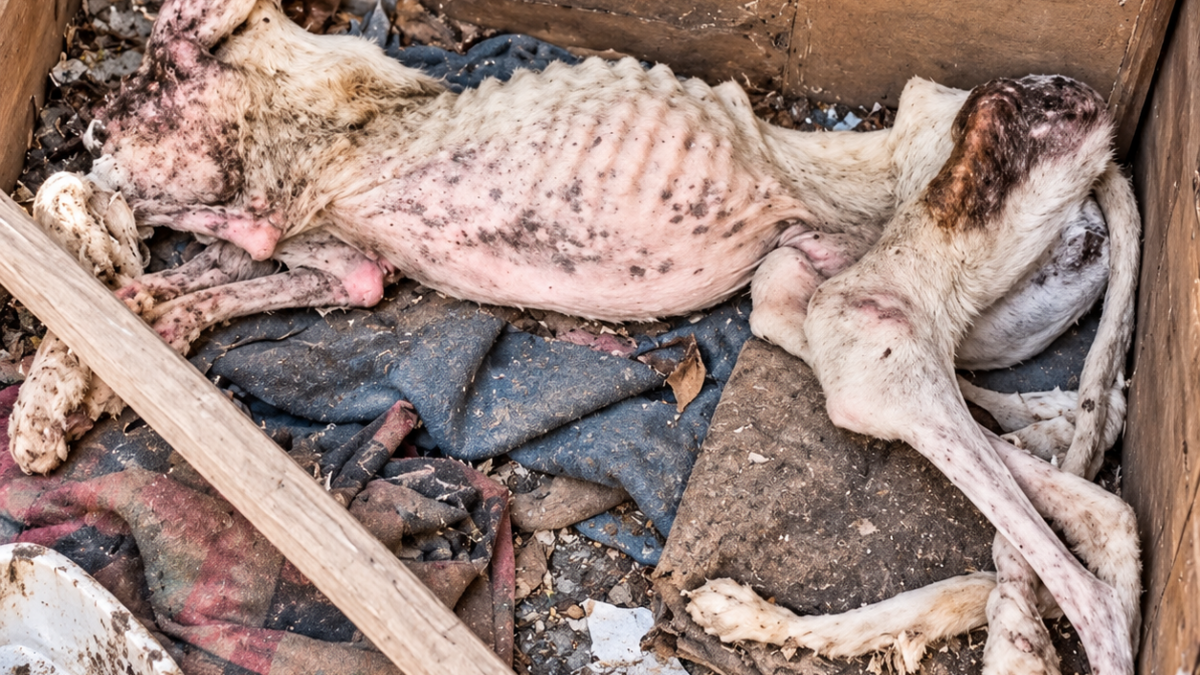
PART 2
The veterinarian dimmed one of the lights and rolled the ultrasound machine closer.
A technician carefully repositioned Santa on the padded table.
Even that small movement seemed to exhaust her.
Her eyes opened for a moment, unfocused and dull, then closed again.
I stood near her head and kept one hand beside her cheek.
The veterinarian applied gel to her abdomen and moved the probe slowly.
Gray shapes appeared across the monitor.
I tried to understand what I was seeing.
I couldn’t.
He stopped.
Moved the probe again.
Stopped a second time.
His jaw tightened.
“What is it?” I asked.
He pointed toward a dark, enlarged structure on the screen.
“This is her uterus.”
I looked at him.
“What’s wrong with it?”
“It’s badly enlarged.”
He changed the angle.
The image shifted.
“There’s infected material inside.”
My stomach dropped.
“What does that mean?”
“She has pyometra.”
I had heard the word through rescue work, but hearing it beside Santa’s table made it sound different.
Dangerous.
Immediate.
The veterinarian placed the probe down.
“Pyometra is a serious uterine infection. In her condition, it’s extremely dangerous. Her uterus is filled with infection. If it ruptures, or if the infection overwhelms her system, we can lose her very quickly.”
I looked from the monitor to Santa.
“So the leg isn’t the biggest problem?”
“They’re both serious.”
He paused.
“But this could kill her even if the leg wasn’t injured.”
For a few seconds, nobody said anything.
I had arrived believing we were trying to save a starving dog with a destroyed leg.
Now we were dealing with two major sources of infection in a body that barely had enough strength to breathe normally.
“What do you need to do?” I asked.
“She needs surgery to remove the infected uterus and ovaries.”
“When?”
“As soon as we can stabilize her.”
“And the leg?”
“That also needs surgery.”
I stared at him.
“Two surgeries?”
“Possibly during the same anesthetic event, depending on how she tolerates the first procedure.”
I looked at Santa again.
She weighed almost nothing.
Her gums were pale.
Her breathing was shallow.
“How is she supposed to survive that?”
The veterinarian didn’t pretend the question had an easy answer.
“We support her aggressively first.”
He picked up the lab report.
“She’s severely anemic. Her blood values are concerning. She’s dehydrated, malnourished, and fighting significant infection.”
He pointed toward several numbers.
I didn’t understand the details.
His expression was enough.
“She needs a transfusion.”
I rubbed my forehead.
“So before surgery, blood transfusion.”
“Yes.”
“Antibiotics?”
“Immediately.”
“Fluids?”
“She’s already receiving them.”
“And pain medication?”
“Yes.”
I swallowed.
“What are her chances?”
He looked directly at me.
“I can’t give you a reliable percentage.”
That answer hurt more than a number would have.
“What would you do?”
“If she were mine?”
“Yes.”
“I’d give her the chance.”
I looked down.
Santa’s nose was dry.
Her eyelids barely moved when I stroked between them.
“Then give her the chance.”
The veterinary staff started working.
A technician adjusted the fluids.
Another prepared medication.
The veterinarian went to arrange the blood transfusion.
Suddenly everyone in the room seemed to be moving except Santa.
I bent closer.
“You hear all that?”
Her ear moved slightly.
“You’re making everybody work today.”
Nothing.
I smiled even though my throat felt tight.
“You just have one job.”
I touched the side of her face.
“Stay.”
They transferred Santa into the treatment area.
I was allowed to remain nearby for a while, but eventually the staff needed room.
Before I stepped away, a nurse stopped me.
“She’s responding to the fluids.”
“Is that good?”
“It’s a start.”
I nodded.
A start.
That became the way I thought for the next several days.
Not recovery.
Not survival.
Just the next start.
The next breath.
The next hour.
The next treatment.
I sat in the waiting room with my phone in my hands.
Other people came and went.
A man carried in a terrier with a bandaged paw.
A family left with a cat in a plastic carrier.
Someone laughed at the front desk.
Someone else cried in the corner.
Normal veterinary life continued around me while Santa fought behind a closed treatment-room door.
After a while, one of the technicians came out.
“She’s starting the transfusion.”
“How is she tolerating it?”
“So far, okay.”
“Is she awake?”
“Barely. She’s exhausted.”
I nodded.
“Can I see her?”
“Give us a little time.”
I thanked her.
Then I sat again.
My phone showed several messages from other rescuers.
HOW IS SHE?
ANY UPDATE?
DID THEY SAVE THE LEG?
I typed back:
LEG CAN’T BE SAVED.
SHE ALSO HAS PYOMETRA.
NEEDS TRANSFUSION AND SURGERY.
For a moment, nobody replied.
Then messages began arriving one after another.
Oh God.
Poor girl.
Keep us updated.
We’ll help however we can.
I put the phone face down.
I didn’t want to read anymore.
My mind kept returning to the backyard.
To the woman who had built that small shelter over Santa.
She hadn’t had medicine.
She hadn’t had surgical equipment.
She hadn’t known what was happening inside Santa’s body.
She had simply seen an animal suffering in the sun and done the one thing available to her.
She had created shade.
Then she had called for help.
That simple decision might have been the only reason Santa was still alive.
A nurse eventually brought me back.
Santa was lying beneath a blanket.
The transfusion line ran into her vein.
Her injured leg had been cleaned enough that the wound looked even more shocking than before.
I hated seeing it.
Not because it was ugly.
Because it represented pain she must have carried long before anyone found her.
“How long do you think the leg was like that?” I asked.
The nurse shook her head.
“Hard to know.”
“Days?”
“Possibly longer.”
I looked at Santa.
“How does a dog keep walking around with that?”
“Animals compensate until they can’t.”
That sentence stayed with me.
Until they can’t.
Maybe Santa had been surviving that way for weeks.
Finding scraps.
Dragging the damaged leg.
Resting when she could.
Pushing forward when instinct told her to move.
Then one day her body had simply run out.
I rested my fingers near her neck.
“You don’t have to drag yourself anywhere anymore.”
Her eyes opened slightly.
I leaned closer.
“You’ve got people now.”
I don’t know whether dogs understand words in moments like that.
Maybe they only understand tone.
Maybe they understand touch.
Maybe they understand nothing except whether pain is getting worse or better.
Still, I wanted her to hear a human voice that wasn’t asking anything from her.
That evening, the veterinarian told me she would need to remain hospitalized overnight.
“We need to see how she responds to the transfusion and treatment.”
“Could she crash?”
“Yes.”
The word came quickly.
Honestly.
I appreciated that even though I hated hearing it.
“If something happens, call me.”
“We will.”
“Any time.”
“We will.”
I left the clinic feeling like I was abandoning her.
Logically, I knew that was ridiculous.
She was surrounded by medical professionals.
At my house, I could have done nothing for her.
But when the treatment-room door closed behind me, the image of Santa alone beside that trash pile returned.
I drove home in silence.
That night, I put my phone beside my plate while I tried to eat.
I managed a few bites.
Then stopped.
Every vibration made me reach for it.
Most were messages.
None were the clinic.
At 8:30, I called.
“She’s stable,” the nurse told me.
Stable.
It sounded wonderful until I remembered stable did not mean safe.
“Any reaction to the transfusion?”
“No concerning reaction.”
“Temperature?”
“Better.”
“Blood pressure?”
“We’re monitoring it closely.”
“Has she eaten?”
“Not yet.”
I stared at the untouched food in front of me.
“Okay.”
“She’s resting.”
“Can you tell her I said goodnight?”
The nurse paused.
Then her voice softened.
“I can.”
I felt embarrassed immediately.
“Sorry. That probably sounds stupid.”
“No,” she said. “It doesn’t.”
After the call, I sat in the dark kitchen for almost an hour.
I kept thinking about Santa’s age.
About three years old.
Three.
She should have had years of ordinary life behind her already.
Someone throwing a ball.
Someone complaining because she jumped on furniture.
Someone taking her for walks.
Someone telling her to stop begging at dinner.
Instead, when I met her, insects were crawling over her body.
I stopped myself before anger took over.
I didn’t know her history.
I didn’t know whether someone had deliberately abandoned her.
I didn’t know whether she had escaped somewhere.
I didn’t know whether she had ever belonged to anyone at all.
Rescue teaches you to live with missing pieces.
Animals arrive carrying injuries without explanations.
Sometimes there are witnesses.
Sometimes there are records.
Sometimes there is a clear owner.
And sometimes there is just a dog on a blanket and a question nobody can answer.
Who let this happen?
I went to bed after midnight.
At 2:17 a.m., I woke convinced my phone had rung.
It hadn’t.
At 3:40, I checked again.
No missed calls.
At five, I stopped trying to sleep.
The clinic called after sunrise.
I answered immediately.
“This is me.”
The veterinarian’s voice came through.
“She made it through the night.”
I closed my eyes.
I leaned against the kitchen counter.
“Okay.”
My voice cracked.
“Okay. Good.”
“She’s still critical.”
There it was.
The unfinished part.
“But she responded reasonably well to the transfusion. Her numbers improved enough that we believe surgery gives her the best chance.”
“When?”
“This morning.”
I looked at the clock.
“I’m coming.”
When I reached the hospital, Santa was awake.
Not fully alert.
But awake.
I stepped beside her kennel.
“Hey.”
Her eyes moved toward me.
Then, slowly, she lifted her head.
Only a few inches.
It lasted maybe two seconds.
But she did it.
I smiled.
“There you are.”
A technician standing behind me said, “She’s been a little more responsive this morning.”
“Did she eat?”
“No.”
My smile faded slightly.
“But she sniffed food.”
“I’ll take it.”
The technician nodded.
“At this point, so will we.”
I crouched beside the kennel.
Santa’s nose pressed weakly toward my fingers.
I held still.
She sniffed once.
Then rested her chin again.
The surgeon came over a few minutes later.
He carried Santa’s chart.
“We’re going to start with the ovariohysterectomy.”
“The pyometra surgery.”
“Yes.”
“And if she handles that?”
“We proceed with the amputation.”
“What if she doesn’t?”
“If her blood pressure, oxygenation, heart rhythm, or other vital signs become too unstable, we stop and focus on getting her through the first procedure.”
I nodded.
“What if you only remove the uterus and not the leg?”
“Then we reassess when she recovers enough for another anesthetic event.”
I looked toward Santa.
“That leg hurts.”
“I know.”
“So either way she has another problem waiting.”
“Yes.”
I hated the entire situation.
There was no clean option.
No risk-free path.
Only different forms of danger.
“Can I ask you something?”
“Of course.”
“Are we doing too much to her?”
He didn’t answer instantly.
That mattered to me.
He considered it.
“If I believed surgery was only prolonging suffering with no reasonable chance of recovery, I’d tell you.”
I looked at him.
“You think she has a chance.”
“Yes.”
“Not a guarantee.”
“No.”
“A chance.”
“A real one.”
I nodded.
“Then go.”
Before they took Santa back, I opened the kennel door.
A technician kept one hand on her line.
I touched her cheek.
Her skin felt warmer than it had behind that backyard.
“You remember your job?”
Santa’s eyelids moved.
“Keep breathing.”
They transferred her onto a gurney.
As the doors swung closed behind them, I caught one last glimpse of the blanket covering her thin body.
Then she disappeared.
I sat in the waiting room.
For the first twenty minutes, I tried reading.
I read the same paragraph four times.
I gave up.
I walked outside.
Bought coffee.
Forgot about it until it was cold.
I checked messages.
I answered none.
Time became strange.
Every ten minutes felt like an hour.
Then an hour would pass and I would be surprised.
At one point, a receptionist came toward me.
I stood.
She smiled gently.
“No emergency. I just wanted you to know they’re still working.”
I sat down again.
“Thank you.”
The fact that she felt the need to say “no emergency” told me I must have looked terrified.
Eventually, a technician appeared.
“The first procedure is complete.”
I stood again.
“She’s okay?”
“They’ve removed the infected uterus and ovaries.”
“And?”
“She’s still under anesthesia.”
My stomach tightened.
“Are they doing the leg?”
“Yes.”
That one word meant Santa was stable enough for them to continue.
I pressed both hands together.
“Okay.”
Then the waiting started again.
The amputation felt different.
I knew she needed it.
Still, I kept imagining what would be missing when she woke.
A limb she had been born with.
A part of her body.
I reminded myself that the leg had already stopped serving her.
It was infected.
Destroyed.
Painful.
Removing it was not taking something healthy away.
It was removing something hurting her.
That logic helped.
A little.
Finally, the surgeon came through the doors.
He looked tired.
My heart started pounding.
I stood.
“How is she?”
“The surgeries are finished.”
I waited.
“She survived both procedures.”
For several seconds, I couldn’t speak.
“Both?”
“Both.”
“The uterus?”
“Removed.”
“The leg?”
“Removed.”
“She’s alive?”
“Yes.”
I sat down before my knees decided for me.
The surgeon took the chair across from me.
“She’s not out of danger yet.”
“I know.”
“We need to watch her closely during recovery from anesthesia. Her condition going into surgery was poor.”
“I know.”
“But she handled it better than I expected.”
I covered my face with both hands for a moment.
Then I looked at him.
“Thank you.”
He nodded.
“You can see her once she’s more stable in recovery.”
When they finally let me into the treatment area, Santa was wrapped in blankets.
Machines monitored her.
Her eyes were partly open but unfocused.
I saw the bandaged surgical area on her abdomen.
Then the place where her left front leg had been.
Even prepared, I wasn’t ready.
The outline of her body had changed.
I stared too long.
A technician beside me said quietly, “It’s a shock at first.”
I nodded.
“I knew.”
“Knowing and seeing are different.”
“Yes.”
Santa’s chest rose.
Fell.
Rose.
For the first time since I found her, I watched her breathe without counting every second between breaths.
I touched the blanket.
“You did it.”
Her eyes didn’t focus on me.
I didn’t care.
“You did both.”
The technician adjusted one of the lines.
“She’s tough.”
I laughed softly.
“She had to be.”
I stayed as long as they allowed.
Before leaving, I looked back.
Santa was asleep.
No maggots.
No ants.
No ruined limb dragging from her shoulder.
No infected uterus poisoning her from inside.
Her body had taken an enormous hit.
But for the first time, the things killing her were gone.
Now she had to survive recovery.
That night was another long one.
I slept with my phone beside my pillow.
When it rang in the morning, I was awake before the first sound finished.
“She’s stable,” the nurse said.
“Stable stable?”
The nurse laughed softly.
“Stable enough that I’m comfortable saying it.”
“Has she eaten?”
“Actually, yes.”
I sat up.
“What?”
“A small amount.”
“She ate?”
“She did.”
I laughed.
It came out louder than I expected.
“She ate.”
“Yes.”
I don’t think the nurse understood why that hit me so hard.
Maybe she did.
Santa had spent the previous day under anesthesia while surgeons removed an infected reproductive tract and an entire limb.
Now her body wanted food.
That meant something inside her had started choosing life again.
When I arrived later, Santa was lying upright enough to watch the door.
I walked toward her.
Her eyes followed me.
“Hi.”
Her nose lifted slightly.
The technician handed me a small piece of approved food.
“Try.”
I held it near Santa.
She sniffed.
Then gently took it.
I smiled so hard my face hurt.
“Another?”
Santa watched my fingers.
“Oh, now you’re interested.”
She took the second piece more quickly.
A nurse laughed.
“That appetite may become a problem.”
“I will happily deal with that problem.”
Over the next two days, Santa continued improving.
Not dramatically.
Not perfectly.
But steadily.
She ate.
She drank.
Her temperature stayed controlled.
Her surgical wounds remained clean.
Her bloodwork began moving in the right direction.
She became more aware of the people around her.
She even gave one technician an irritated look during a bandage check.
The technician told me proudly.
“She was annoyed with me.”
“Good.”
“That’s what we said.”
A dog with enough energy to be annoyed had more life in her than the dog I had carried into the hospital.
On the third day after surgery, the veterinarian came into the room holding a folder.
“I have some news.”
I immediately tensed.
He noticed.
“Good news.”
“Okay.”
“She can leave.”
I stared at him.
“Leave the hospital?”
“Yes.”
“Today?”
“If you’re ready to take her into a controlled foster environment.”
I looked at Santa.
She was lying on a blanket chewing slowly on a small piece of food.
“You’re serious?”
“She still needs close monitoring. Medication. Restricted activity. Wound care. Follow-ups.”
“I can do that.”
“I thought you might say that.”
I smiled.
“When?”
“A few hours.”
He went through the discharge instructions in detail.
I wrote everything down.
Medication schedule.
Food amounts.
Signs of infection.
Changes in breathing.
Swelling.
Bleeding.
Lethargy beyond what would be expected.
Vomiting.
Refusal to eat.
How to keep her from licking the incisions.
How to support her body during bathroom breaks.
How to create nonslip surfaces.
When she could begin controlled rehabilitation.
I interrupted constantly.
“What if the incision looks slightly red?”
“A small amount of inflammation can be normal. If it increases, call.”
“What if she falls?”
“She will probably stumble. Prevent hard falls.”
“What if she won’t stand?”
“Give her time, but if you’re concerned, call.”
“What if she sleeps most of the day?”
“She probably will.”
“What if—”
He smiled.
“You can call us.”
I stopped.
“Right.”
“You don’t have to solve everything yourself.”
I looked down at the instructions.
“That’s difficult for rescue people.”
“I know.”
Getting Santa into my vehicle felt completely different from getting her out of the trash.
The first time, I had carried a body that felt like it might stop breathing in my arms.
Now I carried a patient.
A fragile patient.
A three-legged patient.
But a living one.
I settled her onto a thick bed in the vehicle.
She raised her head and looked through the open door.
Sunlight touched her face.
I stood there longer than necessary.
Then I closed the door carefully.
“Let’s go.”
My house already had other rescued dogs.
Before bringing Santa home, I had created a separate recovery area with baby gates, blankets, pads, water, medications, and nonslip surfaces.
The moment we entered, the other dogs became curious.
Noses appeared around corners.
Tails moved.
One dog whined.
“No.”
I pointed toward the hallway.
“Give her space.”
Santa watched them from her bed.
Her eyes widened slightly when one dog came too close.
I blocked him gently.
“Not yet.”
I carried Santa into the recovery area.
She lay still for several minutes.
Then she sniffed.
The house probably smelled overwhelming.
Other dogs.
Food.
Fabric.
Cleaning products.
Humans.
A thousand normal household scents after a hospital and a garbage pile.
I sat beside her.
“This is temporary.”
I meant the recovery area.
At the time, I also meant my home.
She was supposed to be a foster.
I had fostered dogs before.
That was the plan.
Help Santa recover.
Teach her to function on three legs.
Get her medically stable.
Then find her the right permanent home.
Simple.
At least it sounded simple then.
The first evening, she slept deeply.
I checked her so often that I probably woke her more than necessary.
At one point, I leaned over just to confirm her chest was moving.
Her eyes opened.
She stared at me.
“Sorry.”
She blinked.
“I’m still getting used to you breathing normally.”
She closed her eyes again.
Later, she tried to stand.
That moment changed the atmosphere completely.
Until then, everything had been about keeping her comfortable.
Now Santa needed to understand her new body.
Her back legs pushed.
Her remaining front leg straightened.
Then her weight shifted toward the side where the missing leg should have been.
Her body tipped.
I caught her under the chest.
“Easy.”
She froze.
Her heart was beating fast.
“You’re okay.”
She tried to put weight onto a leg that wasn’t there.
For a second, she seemed confused.
She looked down.
Then shifted again.
My throat tightened.
This was the cost of saving her life.
She was alive.
But she had woken into a body that no longer worked the way she remembered.
I wrapped a support towel beneath her chest.
“Try again.”
She pushed herself up.
This time, I helped stabilize her.
One step with the remaining front leg.
One movement from the back.
Then another.
Her balance failed.
I lowered her.
“That’s enough.”
Santa looked toward the food bowl.
I laughed.
“You have priorities.”
I moved the bowl closer.
She ate.
That was our first night.
Sleep.
Medication.
Food.
A few supported steps.
More sleep.
At sunrise, I woke to the sound of movement.
Santa was sitting.
Not perfectly.
Her body leaned slightly.
But she was upright by herself.
I stopped in the doorway.
“Look at you.”
Her ears lifted.
Then her tail moved.
Once.
I stared.
“Was that a wag?”
Nothing.
I crouched.
“Santa?”
Tap.
Her tail hit the blanket.
Then again.
Tap.
I laughed.
One of my dogs barked from another room.
Santa’s ears moved toward the sound.
Her tail tapped again.
That tiny movement meant more to me than it should have.
Behind that backyard, Santa had barely responded when I touched her.
Now she was wagging.
Not much.
But enough.
Recovery became a collection of small milestones.
The first time she finished an entire meal.
The first time she drank without assistance.
The first time she stood with less support.
The first time she went outside after surgery.
The first time she protested when I cleaned near the incision.
The first time she barked.
That bark startled me.
I had been preparing medication when one of the other dogs ran past the baby gate.
Santa lifted her head.
The dog disappeared.
Santa barked once.
I turned.
She looked almost surprised by her own voice.
“Was that you?”
Her ears lifted.
The dog passed again.
Santa barked twice.
I laughed.
“There she is.”
As her surgical wounds healed, the biggest challenge became mobility.
Santa had been a four-legged dog for three years.
Now every movement had to be recalculated.
Standing.
Turning.
Stopping.
Walking downhill.
Stepping onto a different surface.
Even leaning forward to drink could throw her balance off.
At first, she fell often.
Usually small controlled falls.
A shoulder touching the rug.
Her back end sliding sideways.
A misjudged turn.
Every time it happened, my body reacted before my mind.
I would jump up.
Reach.
Catch.
Correct.
Eventually, a rehabilitation therapist told me I was helping too much.
“She needs to learn where her balance is.”
“I don’t want her getting hurt.”
“She shouldn’t be allowed to crash onto hard surfaces. But safe mistakes are part of learning.”
I looked at Santa standing on a rubber mat.
Her remaining front leg trembled.
“So I let her wobble?”
“Sometimes.”
“I hate that.”
The therapist smiled.
“Most caregivers do.”
Santa shifted her weight.
Her body leaned.
My hands twitched.
“Wait,” the therapist said.
Santa corrected herself.
Her front paw moved slightly toward the center.
Her back legs adjusted.
She stood.
I exhaled.
“See?”
I nodded.
“That correction was hers.”
It was.
Santa had saved herself from falling.
The therapist gave her a treat.
Santa immediately forgot the difficulty and focused entirely on getting another one.
“That’s useful,” the therapist said.
“What?”
“Food motivation.”
I laughed.
“She’s developed a lot of that.”
Santa had gone from nearly starving to treating every meal like a major event.
The moment I touched a food container, she became alert.
The moment a bag crinkled, her head appeared.
One afternoon, I opened a package in the kitchen.
Santa was asleep in the next room.
Or so I thought.
Three seconds later, I heard the distinctive rhythm of her new gait.
Hop-step.
Hop-step.
Hop-step.
She appeared in the doorway.
I stared at her.
“That wasn’t even dog food.”
She looked at the package.
“No.”
Her tail moved.
“No.”
Another wag.
“You’re shameless.”
She sat.
Badly, but deliberately.
I laughed.
“Fine. You get something appropriate.”
Her personality was beginning to surface.
That was one of the most beautiful parts of recovery.
At the hospital, Santa had been almost empty.
Not emotionally empty.
Physically.
There was no spare energy for curiosity.
No strength for mischief.
No reason to argue.
Once her body started receiving food, sleep, medication, and safety, the real dog underneath began appearing.
Santa was stubborn.
Extremely stubborn.
If she wanted to go outside, she planted her three feet at the gate.
If she wanted more food, she stared at me with intense concentration.
If I tried to guide her away from something interesting in the yard, she resisted.
One day, I took her out for a short controlled bathroom break.
Afterward, I turned toward the door.
“Inside.”
Santa looked toward a patch of grass.
“Come on.”
She hopped away from the door.
“Santa.”
She sniffed.
“You need rest.”
Nothing.
I walked closer.
“Doctor’s orders.”
She looked at me.
Then deliberately turned her head away.
I laughed.
“Oh, so we’re doing this now.”
Her tail wagged.
“You were almost dead two weeks ago.”
Wag.
“And now you’re ignoring me.”
Wag.
“That’s progress, I guess.”
Eventually, I carried her inside.
She looked offended.
By the time her stitches were ready to come out, Santa had gained noticeable weight.
Not enough to call her filled out.
But enough that her spine no longer felt quite as sharp under my fingers.
At the clinic, the veterinarian examined the abdominal incision first.
“Good.”
Then the amputation site.
“Also good.”
I leaned closer.
“No infection?”
“No signs of one.”
“No fluid?”
“Nothing concerning.”
He checked her gums.
Listened to her heart.
Felt along her abdomen.
Santa tried to pull away when he touched near one sensitive area.
He smiled.
“I like that.”
I looked at him.
“You like her being difficult?”
“I like her having enough energy to complain.”
“Fair.”
He reviewed new bloodwork.
Her anemia was improving.
Her infection markers were better.
Her hydration was normal.
The danger that had dominated every conversation at the beginning was slowly disappearing.
“What happens now?” I asked.
“Now she becomes a rehabilitation patient instead of an emergency patient.”
The difference between those two descriptions nearly made me emotional.
Emergency patient.
Rehabilitation patient.
One meant we were trying to stop her from dying.
The other meant we were teaching her how to live.
Her formal rehabilitation began after the veterinarian cleared her.
At the first session, the therapist put Santa on a nonslip surface and watched her move.
Santa took several awkward steps.
Her remaining front leg landed too far to one side.
Her back legs compensated.
Her body swayed.
The therapist observed without touching.
“She’s doing better than I expected.”
“Really?”
“Yes.”
“She falls sometimes.”
“She will.”
Santa stopped and looked at us.
The therapist offered a treat.
Santa immediately walked toward her.
The therapist laughed.
“And she’s highly motivated.”
“That part is new.”
The exercises were simple at first.
Controlled standing.
Gentle weight shifting.
Slow turns.
Short straight-line movement.
Helping her place the remaining front foot more effectively.
Strengthening the muscles around her shoulders and chest.
Nothing looked dramatic.
There were no miraculous leaps.
No instant running.
But every movement had a purpose.
The therapist explained how three-legged dogs redistribute weight.
Because Santa was missing a front limb, her remaining front leg would carry more stress.
That meant building strength carefully without overloading it.
Keeping her lean would matter for the rest of her life.
So would watching for joint strain.
“She can have a very good life,” the therapist said.
I looked at Santa eating another treat.
“What kind of life?”
“Normal in most ways.”
“She can run?”
“Eventually, probably.”
“Play?”
“Yes.”
“Go outside with other dogs?”
“Yes.”
I watched Santa.
Those possibilities sounded enormous.
A few weeks earlier, I had been afraid to imagine her surviving one night.
Now someone was talking about running.
The road there was not smooth.
Some days Santa looked stronger.
Other days she tired quickly.
One morning, after a particularly active previous day, she seemed clumsier.
She stumbled twice in the hallway.
I immediately panicked.
I called the rehabilitation therapist.
“She’s worse.”
“How much activity did she have yesterday?”
I told her.
There was a pause.
“That’s probably your answer.”
“You think she’s just tired?”
“I think you need to let her rest and see how she looks later.”
“What if it’s something with the remaining leg?”
“Any swelling?”
“No.”
“Pain when you touch it?”
“No.”
“Refusing to bear weight?”
“No.”
“Then rest her.”
I hated waiting.
By evening, Santa was moving better.
The next morning, she was back to normal.
The therapist was right.
Recovery was not a straight line.
That was difficult for me.
I wanted every day to prove we were moving forward.
Santa didn’t care about my need for a perfect progression.
Her body healed on its own schedule.
The other dogs gradually became part of that healing.
At first, I kept them separated.
Then I allowed calm introductions through a gate.
One older dog, Milo, became particularly interested in her.
He would lie outside Santa’s recovery area and watch her.
Santa watched him back.
For several days, they existed on opposite sides of the barrier.
Then one afternoon, I opened the gate while sitting between them.
Milo stood.
Santa stiffened.
“Easy.”
Milo approached.
He sniffed the air.
Santa lowered her head slightly.
He sniffed near her shoulder.
Then turned away.
That was it.
No dramatic friendship.
No instant bond.
Just acceptance.
Ten minutes later, Milo lay down.
Santa lay several feet away.
The next day, they rested closer.
Then Santa began following him.
At first, following another dog was difficult.
Milo walked normally.
Santa had to hop quickly to keep up.
If he turned suddenly, she sometimes lost balance.
Once, he stopped without warning.
Santa bumped directly into his side.
Milo turned and looked at her.
Santa looked at him.
I laughed.
“Traffic accident.”
Milo walked away.
Santa followed.
They became companions without either of them seeming to decide it.
He showed her routines.
Where everyone waited before going outside.
Where water bowls were.
Which beds were usually occupied.
Where I kept treats.
That last lesson, unfortunately, she learned extremely well.
Santa also began showing interest in play.
The first time happened so quietly I almost missed it.
Milo stood several feet away.
Santa lowered her chest awkwardly while keeping her back end up.
A three-legged play bow.
Her tail wagged.
Milo stared.
Santa bounced sideways.
He bounced back.
I sat forward.
“Easy.”
They ignored me.
Milo moved left.
Santa tried to follow.
She stumbled.
I started to rise.
Before I could reach her, Santa corrected herself and bounced again.
I slowly sat back down.
The game lasted less than a minute.
Santa became tired and lay down.
Milo stood beside her for a moment, then walked away.
Santa panted.
Her eyes were bright.
That look stopped me.
I realized I had spent weeks watching for medical signs.
Temperature.
Incision appearance.
Appetite.
Hydration.
Gait.
Pain.
Fatigue.
But this was a different sign.
Joy.
Santa had played.
For no purpose.
No survival need.
No food reward.
No therapist asking her to move.
She had played because she felt like playing.
That night, I wrote the date down.
I didn’t need to.
I knew I would remember it.
The dog I had carried away from a pile of trash had decided life contained something fun.
From there, Santa’s progress became easier to see.
Her coat improved.
Her ribs became less visible.
Her eyes looked clearer.
She began moving around the house without constantly needing support.
We added nonslip rugs wherever she tended to lose traction.
The house slowly reorganized itself around her.
One runner in the hallway.
Another by the kitchen.
A lower bed.
A gate moved three feet.
A water bowl placed where she didn’t have to lean awkwardly.
I told myself all of it was temporary.
Santa was still a foster.
One afternoon, a friend from the rescue visited.
She stepped into the hallway and looked down.
“New rug?”
“Yes.”
She looked toward the living room.
Santa was asleep on a dog bed.
Then my friend looked at another rug near the doorway.
“And that one?”
“Traction.”
She nodded.
“You moved the water bowl.”
“It’s easier for her.”
“And the furniture?”
“She needs more turning space.”
My friend folded her arms.
I looked at her.
“What?”
“You know she’s not leaving.”
I laughed.
“She’s a foster.”
“Sure.”
“She is.”
My friend nodded seriously.
“Absolutely.”
I pointed toward Santa.
“She needs rehab.”
“Yes.”
“And follow-ups.”
“Obviously.”
“And eventually we’ll evaluate potential adopters.”
My friend waited.
I stopped.
She raised one eyebrow.
“What?”
“You’ve redesigned half your house.”
“That’s what fosters do.”
“No. That’s what people do when they’re pretending they haven’t already adopted the dog.”
I looked at Santa.
She was sleeping on her side.
The missing front leg made her body look unbalanced even at rest.
Milo was asleep nearby.
I sat down.
“This wasn’t the plan.”
My friend’s expression softened.
“It usually isn’t.”
For the rest of the afternoon, I thought about it.
The truth was uncomfortable only because it was obvious.
At the beginning, I had believed Santa needed a temporary landing place.
Somewhere safe between hospital and permanent home.
But home had happened quietly.
Not in one dramatic moment.
It happened when I learned her medication schedule without looking.
When I knew which food she preferred.
When I recognized the sound of her three-legged gait from another room.
When I woke automatically if she moved at night.
When I rearranged my hallway.
When Milo started waiting for her before going outside.
When Santa began looking for me whenever she entered a room.
She was already home.
The paperwork simply hadn’t caught up.
I didn’t make anything official that day.
But mentally, something shifted.
I stopped imagining strangers taking her leash.
Santa kept working.
At rehabilitation, the therapist began increasing difficulty.
Short obstacle changes.
Different surfaces.
Controlled turns.
Gentle strengthening.
Santa approached every exercise with exactly two questions:
Is there food?
How quickly can I get it?
One session involved getting her to shift weight without overloading the remaining front leg.
The therapist held a treat to one side.
Santa leaned.
Adjusted.
Corrected.
“Good.”
Treat.
Again.
“Good.”
Treat.
After several repetitions, Santa started anticipating the movement.
“Look at that,” the therapist said.
“What?”
“She’s organizing her body before she moves.”
I watched more carefully.
She was right.
At the beginning, Santa moved first and corrected afterward.
Now she planned.
Small changes invisible to most people became huge to us.
A more centered paw placement.
A smoother turn.
Less hesitation.
Fewer falls.
Longer standing.
Better endurance.
Then came a moment I had been waiting for without admitting it.
Santa moved quickly.
Not running.
Not yet.
But quickly.
The therapist set a short straight path.
A food reward waited at the end.
Santa saw it.
Her ears lifted.
“Ready?” I asked.
She launched before anyone released her.
Hop-step.
Hop-step.
Hop-step.
Fast.
Controlled.
She reached the treat.
Turned around.
Looked back toward me.
I laughed.
“I think she wants another.”
The therapist reset.
Santa came back even faster.
My eyes burned.
The therapist noticed.
“You okay?”
“Yeah.”
I wiped beneath one eye.
“I just remember when she couldn’t lift her head.”
The therapist looked at Santa.
“She’s come a long way.”
I nodded.
But the image in my mind was sharper than those words.
A trash pile.
Ants.
A cold body.
A breath I could barely feel.
Now Santa was racing toward food because walking slowly was apparently beneath her.
At home, she became more independent.
She learned to navigate the doorway to the yard.
She learned which surfaces were slippery.
She learned how to turn her body before sitting.
She learned to stop without falling forward.
She learned to position herself beside the other dogs when waiting for meals.
And she learned that I had a weakness for her face.
That caused problems.
“Dinner is in an hour.”
Santa stared.
“No.”
Stare.
“You ate.”
Stare.
“I was there.”
Tail wag.
“That is manipulation.”
Milo walked into the kitchen.
Santa looked at him.
Then back at me.
“No coalition building.”
My household had begun revolving around the fact that Santa was alive.
Not in a sad way.
In a normal way.
She became another personality in the house.
Another set of preferences.
Another dog blocking a doorway.
Another reason to sweep.
Another face appearing whenever food existed.
The extraordinary circumstances of her arrival faded into ordinary routines.
That was exactly what I wanted.
There was one thing I still worried about constantly.
Her remaining front leg.
The rehabilitation team had warned me that a front-leg amputee places substantial weight on the remaining limb.
Santa was young, which helped.
But protecting that leg mattered.
I kept her weight controlled.
Monitored activity.
Checked paws.
Watched for limping.
Probably too much.
One afternoon, she ran—almost ran—after Milo inside the house and slipped slightly.
I immediately examined her paw.
Santa pulled it away.
I checked again.
She looked annoyed.
“Let me see.”
She tried to stand.
“Wait.”
She licked my wrist.
Then pulled away again.
My friend watched from the doorway.
“You know she’s allowed to be a dog.”
“I know.”
“Do you?”
I looked at Santa.
“She only has one front leg.”
“She knows.”
“What if something happens to it?”
“What if nothing happens and you spend her whole life stopping her from living because you’re afraid?”
That irritated me because it was true.
I sat back.
Santa immediately stood and went after Milo.
I watched.
My friend sat beside me.
“You saved her so she could live.”
“I know.”
“Not so she could become a museum exhibit.”
I laughed.
“Fine.”
It took time for me to learn that.
Santa adapted faster than I did.
She understood her limitations physically.
I carried them emotionally.
Every fall reminded me of how fragile she had once been.
Every fast movement made me imagine disaster.
Every moment she disappeared around a corner made me listen for a crash.
Eventually, I had to trust her.
That became another stage of her recovery.
Not Santa learning to walk.
Me learning to stop hovering.
The first true run happened in the yard.
It was an ordinary afternoon.
No rehabilitation appointment.
No planned exercise.
No camera ready.
Milo suddenly sprinted across the grass because another dog had started chasing him.
Santa’s ears lifted.
I knew what she was thinking.
“Easy.”
She watched them.
Her body leaned forward.
“Santa.”
Too late.
She launched.
Her movement looked awkward for the first stride.
Then faster.
Her back legs drove forward.
Her remaining front paw landed.
Her body lifted.
Again.
Again.
Again.
She was running.
Not perfectly.
Not like a four-legged dog.
But unquestionably running.
I froze.
Milo curved around the yard.
Santa followed.
Another dog joined.
Santa accelerated.
“Careful!”
Nobody listened.
She crossed the grass.
Turned.
Nearly lost balance.
Corrected.
Continued.
I stood with both hands over my mouth.
Then she stopped.
Panting.
Her tongue hung sideways.
Her entire face looked different.
Alive in a way I had never seen.
“Santa!”
She looked toward me.
Then ran in my direction.
I crouched.
She reached me too fast and bumped my knees.
I wrapped both arms around her chest.
“You did it.”
She licked my chin.
I laughed.
“You actually ran.”
Her tail moved wildly.
Behind us, the other dogs took off again.
Santa twisted in my arms.
“Oh no.”
I held her for another second.
“You need a break.”
She stared at them.
“Break.”
She whined.
I stared.
“You’re complaining?”
Whine.
“You ran for the first time and now you’re already arguing?”
Her tail wagged.
I released her after a few minutes.
She went again.
Shorter this time.
Slower.
But she went.
That evening, Santa slept harder than usual.
Her body lay sprawled across her bed.
I sat beside her and looked at the shape of her missing limb.
For months, that empty space had dominated how I saw her body.
That day, it had disappeared while she ran.
Not literally.
But emotionally.
I hadn’t watched a dog missing a leg.
I had watched Santa chase her friends.
That difference mattered.
The next rehabilitation appointment felt like graduation even though nobody called it that.
Santa entered the clinic under her own power.
The reception staff recognized her immediately.
“Santa!”
Her tail started.
One nurse came around the desk.
“Look at you.”
Santa went directly to her.
Not because of loyalty.
Because the nurse had treats.
“She remembers me,” the nurse said.
“She remembers your pockets.”
“Still counts.”
The veterinarian examined her.
He listened to her heart.
Checked her remaining limbs.
Palpated her abdomen.
Looked at the healed surgical sites.
Then he stood.
“She looks excellent.”
I blinked.
“Excellent?”
“Excellent.”
Not stable.
Not improving.
Excellent.
I looked at Santa.
She was trying to investigate the trash can.
“Did you hear that?”
The veterinarian laughed.
“She’s moved on.”
We repeated bloodwork.
The results came back good.
The infection was gone.
Her anemia had resolved enough that nobody was concerned.
Her weight had improved.
Her wounds were fully healed.
The dog who had once required a blood transfusion just to make surgery possible was now standing impatiently beside the exam-room door because she wanted to leave.
I thanked everyone again.
Probably too many times.
The veterinarian waved it off.
“You did the hard part after discharge.”
“No. You kept her alive.”
“We all did part of it.”
That was true.
The woman who built the shelter.
The rescue team.
The driver.
The technicians.
The blood donor.
The surgeons.
The nurses.
The rehabilitation therapist.
The people who helped with supplies.
No one person saved Santa.
She survived because a chain of people kept choosing the next helpful thing.
On the drive home, I made a decision I had already made weeks earlier.
Santa was staying.
I called the rescue coordinator.
“I want to make Santa’s adoption official.”
There was silence.
Then laughter.
“What?”
“We were wondering how long you’d keep pretending.”
“Apparently everyone knew except me.”
“Pretty much.”
I looked at Santa in the rearview mirror.
She was sitting in her bed watching the window.
“So what do I need to do?”
“We’ll send the paperwork.”
“That’s it?”
“That’s it.”
I waited for the moment to feel dramatic.
It didn’t.
It felt obvious.
Santa had already chosen the house.
Maybe not consciously.
But every part of her life was there.
Her bed.
Her bowls.
Her routes through the hallway.
Her friends.
Her favorite place near the kitchen.
The patch of yard where she liked to lie in sunlight.
And me.
The adoption paperwork arrived.
I signed it.
Her status changed from foster to adopted.
Nothing else changed.
That evening, Santa stole Milo’s bed.
He stood beside it looking offended.
Santa pretended not to notice.
I looked at her.
“You’re officially family for three hours and already taking property.”
Milo sighed and lay on another bed.
Santa stretched.
I laughed.
“Successful integration.”
The months after that were quieter.
There were no emergency calls.
No blood transfusions.
No surgeons.
No overnight panic.
That quiet was the greatest gift.
Santa became healthier.
Stronger.
Faster.
She learned exactly how hard she could push herself.
Most of the time.
Sometimes excitement overruled judgment.
One morning, she chased another dog too aggressively around the yard, turned too sharply, and rolled.
My heart stopped.
Santa popped up instantly.
I ran over.
“You okay?”
She looked at me.
Then at the dog.
Then ran away again.
I stood there.
“Apparently.”
Another time, she tried to jump onto furniture she had no business jumping onto.
She failed.
I caught her halfway.
“What are you doing?”
Her expression suggested the problem was my lack of faith.
“We have ramps.”
She ignored the ramp.
Of course.
Santa had become confident enough to be inconvenient.
That was beautiful.
I still thought about the woman who found her.
I sent updates.
Photos.
Short videos.
Santa walking.
Santa playing.
Santa sleeping beside Milo.
Santa standing in the sun.
Eventually, I invited her to visit.
When she arrived, I brought Santa into the yard.
The woman stopped at the gate.
Her hands rose toward her mouth.
“Oh my God.”
Santa looked at her.
For a second, I wondered whether there would be recognition.
I had no idea how much Santa remembered from that day.
The woman crouched.
“Santa?”
Santa took a few steps.
Then more.
She approached.
The woman’s eyes filled.
“You’re so different.”
Santa sniffed her hands.
Then leaned closer.
The woman stroked her neck.
“I thought you were going to die.”
Santa licked her chin.
The woman laughed through tears.
I stood nearby.
“She almost did.”
The woman looked at me.
“I didn’t know how bad it was.”
“None of us did until the clinic.”
“I just saw her lying there.”
She looked down.
“I almost walked past.”
I felt something twist inside me.
“What?”
“I thought she was a blanket or a bag.”
Her hand stayed on Santa’s shoulder.
“I saw something beside the trash. I looked once and kept walking. Then I thought I saw movement.”
She took a breath.
“So I went back.”
Santa sat beside her.
The woman wiped her face.
“What if I hadn’t?”
I understood the question.
I had asked versions of it myself.
What if the call came one day later?
What if Santa’s uterus ruptured?
What if the infection spread further?
What if the leg wound caused septic shock?
What if the transfusion didn’t help enough?
What if her heart stopped under anesthesia?
There were dozens of places where Santa’s story could have ended.
But I didn’t want the woman carrying responsibility for a life that had nearly been lost before she even arrived.
“You did go back,” I said.
She looked at me.
“That’s the part that matters.”
Santa suddenly noticed Milo running across the yard.
Her ears lifted.
The woman released her.
Santa took off.
The woman gasped.
“She runs?”
I smiled.
“Watch.”
Santa accelerated.
Three legs.
Full speed.
Milo curved left.
Santa followed.
Another dog joined.
The woman started laughing.
Not polite laughter.
Real laughter.
The kind that comes after crying.
“She’s fast!”
“She thinks she is.”
Santa passed us.
Her tongue hanging out.
Tail high.
Eyes bright.
The woman turned to me.
“That’s the same dog?”
“Same Santa.”
She shook her head.
“I never would have believed it.”
Neither would I.
I remembered lifting Santa.
The coldness of her body.
The insects.
The way her damaged leg hung.
How light she felt.
How I watched every breath during the drive.
That image still existed inside me.
But it no longer hurt in the same way.
Because now every time it appeared, another image followed.
Santa running.
Life after rescue is often described as transformation.
Before.
After.
A terrible photograph beside a happy photograph.
But living through it taught me that the space between those images matters more than either one.
Santa didn’t go from trash pile to running dog in one beautiful jump.
She went through blood tests.
Needles.
A transfusion.
An ultrasound.
Anesthesia.
Two operations.
Pain medication.
Wound checks.
Hospital nights.
Stitches.
Fear.
Confusion.
Falls.
Rehabilitation.
Muscle-building.
Bad days.
Good days.
Exhaustion.
Tiny improvements nobody outside the room would notice.
And hundreds of ordinary decisions by people who refused to give up on her.
That was the real transformation.
Not magic.
Work.
Time.
Care.
Santa herself did more than any of us.
We could provide treatment.
We could remove infection.
We could feed her.
We could support her while she stood.
But eventually, she had to take the step.
Then another.
Then another.
She had to fall.
Correct.
Try again.
She had to learn where her body ended.
She had to rebuild trust in movement.
And she did.
One evening several months after her adoption, I sat outside while the dogs wandered through the yard.
Santa was lying in the grass.
The sun was low.
Milo brought a stick near her.
Santa immediately grabbed one end.
Milo pulled.
Santa pulled back.
It became a tug-of-war.
“Don’t overdo it,” I called.
Nobody listened.
Milo pulled harder.
Santa dug in.
Her remaining front paw slipped.
She rolled onto her side.
My body tensed automatically.
Then I stopped myself.
Santa scrambled upright.
Grabbed the stick again.
Continued.
I sat back.
That was one of the final things she taught me.
The goal was never to prevent every fall.
The goal was to make sure falling no longer meant disaster.
Behind that backyard, one collapse had nearly been the end.
Now Santa could tumble in the grass, stand up, and continue arguing over a stick.
That was recovery.
Not perfection.
Resilience.
The years ahead would still require care.
We had to protect her remaining joints.
Keep her weight healthy.
Watch for strain.
Adapt as she aged.
Being a three-legged dog would always shape her physical life.
But it would not define its emotional boundaries.
Santa still ran.
Still played.
Still demanded food.
Still stole beds.
Still followed me through the house.
Still behaved as though every closed door concealed an event she had personally been excluded from.
One morning, I found her standing outside the bathroom door.
I opened it.
“What?”
She entered.
Sniffed.
Turned around.
Left.
I stared after her.
“You needed to verify?”
Her tail wagged as she disappeared.
Ordinary.
That word became precious.
Nothing about the day I found Santa was ordinary.
Nothing about the surgery was ordinary.
But after enough time, Santa earned something better than a dramatic rescue story.
She earned boring mornings.
Meals at predictable times.
Naps.
Arguments over toys.
Grass under her feet.
Friends.
A home.
One afternoon, I watched her sleeping near the same friend who had first waited outside her recovery gate.
Milo’s body was pressed lightly against hers.
Santa’s remaining front paw twitched in sleep.
Maybe she was dreaming.
I wondered whether dogs dream about the worst things that happened to them.
I hoped not.
Then I realized it didn’t matter.
Whatever Santa remembered, she woke in a safe place.
That was something we could control.
When she opened her eyes, she saw home.
I stopped needing to know every detail of her past.
For a long time, I had wanted answers.
Where had she come from?
Who had allowed her condition to become so severe?
How had her leg been injured?
How long had she been suffering?
Why was she behind that backyard?
Was she abandoned?
Lost?
Ignored?
Some questions never received answers.
At first, that frustrated me.
Eventually, I accepted that Santa didn’t need a complete investigation of yesterday in order to have tomorrow.
The veterinary facts were enough.
Severe malnutrition.
Destroyed left front leg.
Maggot infestation.
Serious uterine infection.
Anemia.
Blood transfusion.
Emergency surgery.
Amputation.
Rehabilitation.
Survival.
Everything beyond that belonged to the mystery of her life before us.
What came after was ours to help build.
On the anniversary of the day she came home from the hospital, I didn’t plan anything.
I’m not someone who celebrates every rescue date.
But that morning, my phone surfaced an old photograph.
Santa on the blanket.
Thin.
Eyes half closed.
My stomach tightened.
Then I looked across the room.
Santa was standing beside the kitchen counter staring at me because breakfast was thirty seconds late.
I looked at the photo.
Then at her.
“You have no idea how dramatic you used to be.”
Her tail moved.
“Yes, yes. Breakfast.”
I put the phone down.
There was something almost impossible about holding those two versions of her at once.
The photograph was real.
The dog in front of me was real.
Same animal.
Same body, minus one leg.
Completely different relationship with the world.
I filled her bowl.
Santa ate with ridiculous enthusiasm.
Milo tried to investigate.
Santa gave him a look.
He backed away.
I laughed.
The dog who once did not have the strength to protect herself now guarded breakfast like a federal asset.
Later that day, we went outside.
The dogs started playing.
Santa joined them.
She had a specific running rhythm by then.
Back legs pushing together.
Front leg catching.
Body rising.
A small bounce at speed.
I could identify her movement without seeing her face.
She crossed the yard.
Turned.
Came back.
Sunlight caught the fur along her neck.
For a moment, I remembered the tiny wooden shelter behind that backyard.
The woman had built it because she could not move Santa alone and did not know when help would arrive.
A few pieces of wood.
A patch of shade.
Such a small thing.
Yet rescue is often made of small things.
A person notices.
Someone calls.
Someone drives.
Someone donates blood.
Someone cleans a wound.
Someone stays overnight.
Someone prepares food.
Someone exercises a recovering leg.
Someone opens their home.
One action connects to the next until a dog who should have died is running through a yard.
Santa stopped near me.
I crouched.
She approached.
I ran my hand over her shoulder, across the smooth place where the front leg ended.
She didn’t care.
That area had once represented everything we feared she had lost.
Now it was simply part of her.
“You tired?”
Santa looked toward the others.
Clearly not.
“Of course.”
She turned.
Before she moved away, I scratched behind her ear.
She leaned into my hand for one second.
Then the other dogs ran.
Santa launched after them.
I watched her go.
The first day, I had spent an hour watching every breath because I was afraid one of them would be her last.
Now I had trouble keeping her in sight.
She reached the far end of the yard.
Curved around.
Passed Milo.
For a moment, she was actually ahead.
I laughed.
“Go, Santa!”
She kept running.
Three legs striking the earth in the rhythm she had taught herself.
Nothing graceful about it.
Nothing perfect.
Nothing fragile either.
Just Santa.
The cold dog from the garbage pile had become the loudest presence in my house, the most demanding face at mealtime, the stubborn patient who argued with rehabilitation, the foster who quietly turned herself into family, and the three-legged runner who never seemed to notice when people expected her to slow down.
She circled back toward me.
This time I didn’t reach out to catch her.
I didn’t warn her.
I didn’t tell her to be careful.
I simply stood there while she raced past, close enough for the wind from her movement to brush my legs.
Then she chased her friends across the yard again.
And I watched the dog I once begged simply to keep breathing disappear into the sunlight at a full three-legged run.
[END OF STORY]