PART 2: I Found Her Dying in a Hole Behind an Old Hut—Then the Truth About Who Left Her There Finally Came Out The first time I saw Kristin, she was lying in a dirt hole beneath an old hut, so weak she didn’t even lift her head when my shadow fell across her. Her skin was raw, her fur had fallen out in patches, and her eyes looked at me like she had already learned that people could walk away from suffering. I thought carrying her out of that hole would be the hardest part, but I had no idea her rescue would lead me back to the person who had left her there. The hut stood at the far edge of a weed-choked property outside town, behind a rusted fence and a line of dead trees that scratched at the sky. I had been told there was “a sick little dog” hiding there, but people say things like that all the time. Sick can mean a limp. Sick can mean fleas. Sick can mean hungry, scared, dirty, or simply unwanted. Then I stepped through the broken doorway and saw the hole. It had been dug into the dry earth beneath a rotting wooden platform, as if some animal had once tried to make itself a hiding place. The smell inside that hut was heavy with mold, old straw, damp wood, and neglect. Sunlight came through cracks in the boards in thin dusty lines, just enough for me to see a small body curled at the bottom. For a second, I thought she was gone. Then her side moved. Barely. I dropped to my knees. “Hey, sweetheart,” I whispered. “I see you.” She opened her eyes. That was all. No bark. No growl. No attempt to crawl away. She simply looked at me from that hole with a kind of quiet exhaustion that made my throat close. Her body was painfully thin. Her ribs showed beneath irritated skin. Much of her fur was missing, and the little that remained looked brittle and dirty. Mange had chewed through her coat and left her scratching even in her weakness. One back paw twitched as if she wanted to relieve the itch but didn’t have enough strength. I reached down slowly. She didn’t resist. When I lifted her, I expected panic. I expected a bite, a cry, anything. Instead, she folded into my arms like she had been waiting for someone to decide she was worth the effort. She weighed almost nothing. I could feel every bone. Outside, my friend Marcy stood near the gate with a towel in her hands. The moment she saw my face, she stopped moving. “How bad?” she asked. I looked down at the little dog pressed against my chest. “Bad.” Kristin’s head rested against my arm. Her eyes stayed open, watching nothing and everything at once. I couldn’t know what she understood. Maybe she only knew warmth. Maybe she only knew hands that weren’t hurting her. Maybe she didn’t know anything at all except that the hole was behind her now. I wrapped her in the towel and carried her to the truck. On the way to the vet, she started scratching again, slow and desperate, her little nails dragging weakly against her skin. “I know,” I said, though I didn’t. Not really. “We’re going to help you.” At the clinic, Dr. Elaine Porter took one look at her and moved fast. “How long has she been like this?” she asked. “I don’t know.” “Where was she found?” “Old hut off County Road 16.” Dr. Porter’s jaw tightened, but she didn’t say what both of us were thinking. Kristin was dehydrated, underweight, full of fleas, and suffering from severe mange. Her skin was inflamed and scabbed. Her stomach was empty enough that Dr. Porter warned me not to let her eat too fast. But when the food came, Kristin ate like hunger was chasing her. She lowered her face into the bowl and didn’t lift it until every bit was gone. Marcy turned away. I knew why. There are some sights that make anger rise so hot it almost feels like grief. A dog eating like she hasn’t believed in tomorrow for a long time is one of them. That first night, we didn’t know if Kristin would be strong enough to fight. Dr. Porter shaved a few areas so treatment could begin. We gave her medication, clean bedding, water, and the first gentle touch she may have had in weeks. Before I left the clinic, I stood outside her kennel. She was curled on a blanket, eyes half-closed, still scratching now and then even through exhaustion. “I’ll come back,” I told her. She lifted her head slightly. That small movement ruined me. Because I had said those words to rescued dogs before. But with Kristin, it felt like a promise I could not break. **PART 2** I came back the next morning before work. Then again after work. Then the day after that. And the day after that. At first, Kristin didn’t do much when she saw me. She was too weak to celebrate anything. She would lift her head, blink slowly, and let her tail move once beneath the blanket as if joy was still too heavy to carry. But that was enough. To me, that tiny movement felt like thunder. Dr. Porter warned me that recovery would be slow. “She has a long road,” she said. “Mange treatment takes time. Her immune system is worn down. She needs nutrition, medication, baths, and consistency. This won’t be pretty for a while.” “She doesn’t need pretty,” I said. “She needs alive.” Dr. Porter looked at me over the chart. “That, we can work with.” We named her Kristin that afternoon. The name came from one of our volunteers, an older woman named Rose who had spent twenty years fostering animals no one else wanted. She had a way of naming broken things like they were already whole. “She looks like a Kristin,” Rose said. I looked into the kennel at the small dog with swollen skin, patchy fur, and tired eyes. “Why Kristin?” Rose smiled faintly. “Because one day she’ll walk into a room like she knows she belongs there.” At the time, I couldn’t imagine it. Kristin was still the dog from the hole. The dog who slept curled tightly, as if the world might strike from any direction. The dog who flinched when a metal bowl scraped the floor. The dog who scratched until we gently stopped her. The dog who ate every meal as though someone might take it away before she finished. But Rose had been right about animals before. So Kristin she became. The clinic became our little world. Every morning, Dr. Porter checked her skin. Every afternoon, a tech named Amber cleaned her bedding. Every evening, I sat beside the kennel and talked to her. I told her about ordinary things because I wanted her to learn ordinary life existed. I told her about my old pickup that rattled at stoplights. I told her about the coffee shop on Main Street that always burned the first pot. I told her about my mother, who believed every stray animal was “just one kind hand away from remembering the world wasn’t all bad.” Kristin listened. At least, I liked to think she did. After a week, she stood when I came in. Her legs shook, but she stood. “Look at you,” I whispered. Her tail wagged twice. Amber clapped one hand over her mouth. “She’s greeting you.” I crouched in front of the kennel, and Kristin pressed her nose to the bars. That was the first time I cried in front of her. Not the day I found her. Not during the first vet exam. Not when I saw how fast she ate. But there, with her little nose touching the metal bars, trying to reach me because some part of her had decided I meant comfort. “Hi, baby,” I said, wiping my face with my sleeve. “I missed you too.” As her strength returned, Kristin began showing us who she was beneath the suffering. She was funny. That surprised me. The first time she tried to play, she had no idea what to do with the toy. Amber rolled a soft blue ball into her kennel. Kristin stared at it like it had insulted her. Then she pawed at it once, startled herself when it moved, and jumped backward so dramatically that everyone in the room laughed. Kristin looked offended. Then she barked. One small, raspy bark. After that, the ball became her enemy. Then her obsession. She would slap it with one paw, chase it two steps, forget why she was chasing it, then bring it back to the blanket and guard it with deep seriousness. “She’s ridiculous,” Amber said. “She’s perfect,” I said. Kristin also became attached to me in a way I had not prepared for. Whenever I entered the clinic, she knew my footsteps before I reached the kennel room. Her head would pop up. Her tail would start thumping. If I took too long saying hello to other dogs, she would bark once, sharply, as if reminding me of my responsibilities. “You’ve created a monster,” Dr. Porter told me. “She was already a monster. I just gave her an audience.” But every playful moment made the memory of that hut harder to bear. Because once you see life return to a neglected animal, you understand more clearly what someone tried to erase. Kristin had not been an empty, hopeless little body in a hole. She had been this. A dog who wanted toys. A dog who wanted company. A dog who leaned into hands. A dog who wagged her tail so hard her whole body twisted when she saw someone she trusted. Someone had looked at all of that and left her anyway. That thought began to sit in my chest like a stone. The property where I found Kristin belonged to a man named Dale Mercer. Dale was known around town for collecting junk, trading scrap metal, and saying every bad thing that happened on his land was “not his problem.” The old hut was behind one of his abandoned storage sheds. When animal control contacted him, he denied knowing anything about a dog. “People dump things out there all the time,” he said. “Mattresses. tires. old TVs. Maybe somebody dumped her too.” At first, there was no reason not to believe that. People did dump animals. I had seen it too often. But something about the hole bothered me. It wasn’t near the road. It wasn’t near the gate. It was tucked behind the hut, on a property where strangers would have to climb a fence and carry a sick dog through weeds and debris. That was not impossible, but it didn’t feel right. Then Marcy remembered something. “The towel,” she said one afternoon. “What towel?” “The one under her. In the hole. There was a piece of fabric beneath her.” I had forgotten in the chaos. We went back the next morning with animal control officer Ben Alvarez. The hut looked even worse in daylight. Flies gathered near old cans. The ground was littered with rusted wire, broken boards, and plastic buckets filled with rainwater. Inside the hole, half-buried in dirt, was a faded piece of towel. Ben lifted it with gloves. There was writing on one corner. MERCER AUTO & SCRAP. Dale’s business. Ben said what we were all thinking. “Well, that makes this harder for him to explain.” Dale still tried. He claimed old towels from his scrap shop were everywhere. He claimed anyone could have taken one. He claimed the dog was never his. He claimed he had not been inside that hut in months. But then we found the water bowl. It was behind the hut, turned upside down beneath a pile of boards. It had the same red paint splattered along the rim as the paint cans stacked behind Dale’s shop. Still not enough. Enough to anger us. Not enough to prove. Justice in animal neglect cases can be painfully slow because animals cannot tell you who hurt them. Their bodies testify, but people who do cruel things know how to hide behind doubt. Then Kristin gave us the next piece without knowing it. Two weeks after her rescue, I carried her to Dale’s side of town because Dr. Porter wanted a special medicated shampoo from a supply store near the scrap yard. Kristin was stronger by then, wrapped in a clean towel, her shaved skin already less angry in places. She sat in my passenger seat inside a small travel crate, watching me with those wide, trusting eyes. I parked near the supply store. Across the street was Mercer Auto & Scrap. The second Dale stepped out of the garage, Kristin changed. She had been relaxed. Curious. Almost sleepy. Then her whole body went stiff. A low whine came from her throat. I looked at her. Her eyes were fixed through the windshield. Dale was shouting at one of his workers, waving a wrench in one hand. Kristin began trembling. Not ordinary fear. Recognition. My stomach turned cold. I took out my phone and recorded quietly. Not Dale hurting anyone. Not proof of what happened. Just Kristin’s reaction. Her body pressed to the back of the crate, shaking so hard the towel slid off her shoulders. “It’s okay,” I whispered. “He can’t touch you.” She kept staring at Dale. When he slammed the garage door, Kristin yelped and ducked her head. I drove away without buying the shampoo. My hands shook all the way back to the clinic. Ben watched the video twice. “It helps,” he said carefully. “But not enough.” “Not by itself.” Of course not. Never by itself. That night, I sat beside Kristin’s kennel long after the clinic closed. She had recovered from the scare, at least outwardly. She chewed her blue ball and shoved it against my shoe every few minutes. I should have been happy. She was alive. She was improving. Her skin was healing. But all I could think was that Dale Mercer might go on pretending she had never been his responsibility. Kristin dropped the ball against my shoe again. I picked it up and rolled it back. “You don’t care about revenge, do you?” I asked. She pounced awkwardly. “No. You just want the ball.” That should have taught me something. Instead, my anger kept burning. The breakthrough came from a woman named Lorna Price. She called the rescue after seeing a photo of Kristin online. “I know that dog,” she said. I nearly dropped the phone. “Are you sure?” “She used to be tied behind Dale Mercer’s shop. Little tan dog. Patch of white on the chest. Sweet thing. My grandson used to call her Cricket.” “Can you give a statement?” There was a long pause. “I don’t want trouble.” I closed my eyes. People always said that. As if trouble had not already arrived and crawled into a hole to suffer. “Mrs. Price,” I said carefully, “she almost died.” Silence. Then a small breath. “I know.” “Then please help us make sure no other animal ends up there.” The next day, Lorna came to the clinic. She was in her seventies, with silver hair pinned back and hands that twisted together while she talked. She had seen Kristin several times behind Dale’s shop over the previous months. At first, the dog looked healthy enough, just dirty and underfed. Later, she noticed hair loss. Scratching. Weight dropping. Once, she brought dog food and left it near the fence, but Dale yelled at her to stay off his property. “He said she wasn’t mine to fuss over,” Lorna said. Ben leaned forward. “Those were his words?” “Yes.” That mattered. If she “wasn’t his,” why would he say she wasn’t Lorna’s to fuss over? Lorna also had a photograph. It showed Kristin behind the chain-link fence at Mercer Auto & Scrap, months before I found her. She was thin but still had more fur. Her ears were up. Her expression was wary but gentle. I stared at the photo until it blurred. “That’s her,” I said. Kristin was asleep in her kennel across the room, her blue ball tucked beneath her chin. Ben took the photo as evidence. The case began to move. Slowly. Dale was cited first for failure to provide adequate care. Then, after the vet report and Lorna’s statement were added, the charges became more serious. Neglect. Abandonment. Cruel confinement. Failure to obtain medical treatment. Dale reacted exactly the way men like Dale react when something helpless survives long enough to become a problem. He got loud. He showed up at the clinic two days later in a stained work shirt and muddy boots, demanding to see “the mutt everybody’s lying about.” Dr. Porter met him in the lobby with Ben beside her. “You are not allowed in the treatment area,” she said. “That dog was dumped on my property.” “Then you can explain that to the court.” Dale pointed at me. “You did this. You and your little rescue friends. Trying to ruin a man over a stray.” I felt Kristin’s fear in my bones before I saw her. Behind the closed kennel room door, she started barking. Not her playful bark. Not her sharp little demand for attention. This bark was frantic. She knew his voice. The lobby went still. Dr. Porter’s face hardened. Dale heard it too. For one second, just one, his expression slipped. Ben noticed. So did I. Dale recovered quickly. “Could be barking at anything,” he snapped. “Then you won’t mind standing here while Officer Alvarez documents it,” Dr. Porter said. Dale swore and stormed out. But by then, he had given us something he could not take back. Kristin’s reaction was added to the report. The court date was set for early spring. By then, Kristin looked like a different dog. Her fur had begun to grow back in soft patches, first along her head and shoulders, then down her sides. The skin that had once looked raw and angry faded into healthy pink beneath new hair. She gained weight. Her eyes brightened. Her walk changed. At first, she moved like she expected the ground to disappear. Then she began trotting. Then running. The first time she ran across my living room, she slid on the rug, crashed gently into a laundry basket, and looked so surprised that I laughed until I cried. She was offended for three full minutes. Then she did it again. I had started taking her home on weekends with Dr. Porter’s approval. The first time I brought her inside, she stood in my hallway and sniffed every inch of the floor as if mapping a new country. She found the dog bed in the living room but chose my old sweatshirt instead. She carried her blue ball from room to room, dropping it in places I nearly stepped on it. At night, she slept curled beside my bed. Sometimes she woke scratching from habit, even when the itch had faded. I would reach down and place a hand near her. “You’re okay,” I’d whisper. Eventually, she would sigh and settle again. That was when I became afraid of losing her. Not to sickness. Not to Dale. To adoption. That sounds selfish, and it was. The goal of rescue is goodbye. Every foster, every volunteer, every rescuer knows that. We heal them so they can leave. We love them so they can belong somewhere else. We become the bridge, not the destination. But Kristin had become part of my days. I looked forward to clinic visits because of her. I bought toys I pretended were “for enrichment.” I learned which treats made her dance in place. I knew the exact spot behind her ear that made her eyes close. And somewhere along the way, the little dog from the hole had stopped being a case. She had become Kristin. My Kristin, some dangerous part of my heart whispered. Then Sarah Whitman came to meet her. Sarah was a quiet woman in her mid-fifties who lived alone in a small yellow house near the river. She had lost her senior dog six months earlier and was not looking for a puppy, a perfect dog, or an easy story. She worked from home as a bookkeeper. She had a fenced yard, a calm routine, and references so good Delilah joked she wished Sarah would adopt her too. Still, I wanted not to like her. That would have made things easier. But Sarah walked into the clinic and did everything right. She did not rush toward Kristin. She sat on the floor. She let Kristin approach. She spoke softly. “Well, hello there,” Sarah said. “I hear you’ve had quite a time.” Kristin sniffed her shoe. Then her hand. Then, to my complete betrayal, Kristin climbed into her lap. I stared. Dr. Porter smirked beside me. “Traitor,” I muttered. “I assume you mean the dog.” “I’m not speaking to either of you.” Sarah didn’t try to perform emotion. She didn’t cry loudly or say Kristin was meant to be hers after thirty seconds. She simply rested one hand gently along Kristin’s back and let the little dog settle. “She’s still healing,” I said, too quickly. “Her skin needs monitoring. She has food anxiety sometimes. Loud male voices scare her. She may scratch when stressed. She needs routine.” Sarah looked up. “Then we’ll build one.” Not I can handle it. Not That’s fine. We’ll build one. I hated how much I liked that answer. Over the next two weeks, Sarah visited four times. Then Kristin spent an afternoon at her house. Then an overnight. I barely slept that night. At seven in the morning, Sarah sent a photo. Kristin was asleep on a soft green blanket near a sunny window, blue ball beside her paw. The message said: She ate breakfast, explored the yard, and is currently supervising my invoices. I sat on the edge of my bed staring at the photo. Happy. She looked happy. That should have made goodbye easier. It didn’t. The court hearing happened two days before Kristin’s adoption became official. Dale Mercer arrived in a clean shirt that did not fit his character. His lawyer tried to make him look like a victim of rescue hysteria, a hardworking business owner blamed for a stray dog’s condition because people online loved a sad animal story. Then Dr. Porter testified. She spoke calmly about Kristin’s condition when she arrived. Severe mange. Malnutrition. Dehydration. Untreated suffering over time. Not a sudden illness. Not a one-day accident. Neglect. Lorna testified next. Her voice shook, but she did it. She identified Kristin from the photo behind Dale’s fence. She repeated Dale’s words: “She isn’t yours to fuss over.” Ben presented the towel from the hut, the bowl, the property report, and the video of Kristin reacting to Dale outside the scrap yard. Then I testified. I told the court about finding her in the hole. I told them how light she felt in my arms. I told them how she ate at the clinic. I told them how she scratched skin already inflamed because no one had treated her. Dale’s lawyer tried to push me. “You are emotionally attached to this dog, correct?” “Yes.” “So your testimony is biased.” “My testimony is based on what I saw.” “But you want my client punished.” I looked at Dale. He stared back with flat, annoyed eyes. “Yes,” I said. The lawyer lifted his brows as if I had fallen into his trap. I continued, “I want him punished because a living creature was left sick and starving in a hole on his property after witnesses saw her in his care. Wanting consequences doesn’t make the truth less true.” The judge looked down at his notes. Dale’s lawyer sat down. In the end, Dale pled no contest when it became clear the evidence was not going away. He was fined, ordered to pay restitution for Kristin’s medical care, banned from owning animals during probation, and required to allow inspections of his property. Animal control also removed two underfed dogs from a back enclosure at his shop the following week. That was the real justice. Not watching Dale pay money. Not seeing him embarrassed in court. It was knowing the next animals behind that fence were found before they ended up in holes. When I told Sarah, she said, “Good.” Just that. Good. Then she asked, “How is Kristin today?” That told me everything about her priorities. Kristin’s adoption became official on a Friday afternoon. I brought her to Sarah’s house myself. Her fur had grown back enough that someone who had not seen her at the beginning might only notice a few thin patches. She wore a soft pink harness Sarah had bought after measuring her three times because she worried about rubbing the healing skin. Her blue ball rode in the passenger seat between us. Kristin stood with her paws on the window ledge, nose lifted, ears fluttering in the breeze. “You’re excited,” I said. Her tail wagged. “Rude.” At Sarah’s house, everything was ready. A bed near the window. Food bowls in the kitchen. Medication chart on the fridge. A basket of toys in the living room. A baby gate blocking the stairs until Kristin learned the house. A green blanket in the same sunny spot from the photo. Sarah stood on the porch with tears already in her eyes. “Well,” she said, smiling, “welcome home, little girl.” Kristin pulled toward her. Not hard. Just enough to tell me she knew where she was. I walked her inside and unclipped the leash. For a second, Kristin stood between us. Then she trotted straight to the green blanket, dropped her blue ball on it, and sat down like she had made a decision. Sarah laughed through tears. I turned away because my own eyes were burning. Dr. Porter had warned me that adoption day would hurt. She was right. Sarah signed the final paper at the kitchen table. My hand hovered over Kristin’s head. I wanted to say something important. Something memorable. Something worthy of the dog who had survived the hut, the hole, the itching, the fear, the medicine, the shaving, the baths, the long recovery, and my clumsy heart. But when the moment came, all I could manage was, “Be happy.” Kristin licked my fingers. That broke me. I crouched and hugged her gently, careful of the places where her skin was still tender. “You’re going to be so loved,” I whispered. “You hear me? So loved.” Sarah stood nearby, crying quietly. “I’ll send updates,” she said. “I know.” “You can visit.” “I know.” “You saved her.” I shook my head and wiped my face. “No. She kept living until we caught up.” I left before I changed my mind. In the truck, I sat in Sarah’s driveway for almost five minutes with both hands on the wheel. Through the front window, I could see Kristin exploring the living room. Sarah followed a few steps behind, giving her space. Kristin found the toy basket, pulled out a stuffed duck, and shook it with sudden confidence. I laughed and cried at the same time. Then I drove away. For two days, the clinic felt wrong without her. No bark when I entered. No blue ball against my shoe. No little face watching through the kennel door. Amber said, “You did the right thing.” “I know.” “You look miserable.” “I’m allowed to know and be miserable.” She nodded. “That’s rescue.” Sarah kept her promise. The first update came that night. Kristin asleep on the green blanket. Then one of her eating breakfast. Then one of her in the yard, standing in sunlight, looking healthier than I had ever seen her. Weeks passed. Her fur thickened. Her skin healed. Her eyes grew brighter. She learned Sarah’s routine and made herself part of it. Morning coffee by the window. Afternoon walk by the river. Evening nap beside Sarah’s desk while invoices were handled. Blue ball carried from room to room like an official duty. One month after adoption, Sarah invited me over. I was nervous, which was ridiculous. I had faced Dale in court without shaking but found myself sweating outside a yellow house because a fifteen-pound dog might not remember me the way I wanted. Sarah opened the door. Kristin stood behind her. For half a second, she froze. Then her whole body exploded into movement. She ran to me, tail whipping, paws skidding on the floor, and jumped against my legs. I dropped to my knees. “There she is,” I said, laughing. “There’s my girl.” She climbed into my lap as if no time had passed. Sarah leaned against the doorway, smiling. “I think she remembers.” “She better.” Kristin licked my chin. I spent an hour there. Kristin showed me her yard, her bed, her toy basket, her favorite window, and the spot under Sarah’s desk where she supervised bookkeeping. She looked different now—not just healthier, but settled. Her body no longer waited for the next bad thing. She still startled at sudden noises, but she recovered quickly. She still scratched now and then from habit, but Sarah knew how to redirect her gently. When I left, Kristin followed me to the door. My heart squeezed. But this time, she did not panic. Sarah called her name softly. Kristin turned. She went back inside. That was when I knew she was truly home. Not because she loved me less. Because she trusted someone else enough to stay. Months later, the old hut was torn down. Animal control pushed Dale to clear several unsafe structures as part of the property inspection. Ben called me when the crew arrived. “You want to be here?” he asked. I didn’t know if I did. But I went. The hut looked smaller than I remembered. Less like a monster, more like rotten wood and bad memories. The doorway sagged. The platform had collapsed further. The hole where Kristin had lain was still visible in the dirt, though weeds had begun growing around it. I stood there while the crew pulled the boards down. No ceremony. No speech. Just hammers, dust, and sunlight entering a place that had once held suffering. When it was over, Ben stood beside me. “You okay?” I looked at the empty patch of ground. “Yes.” And I was. Not because the hut coming down erased what happened. It didn’t. But because Kristin would never see it again. Because Dale no longer had the protection of silence. Because two other dogs were alive because her case opened the gate. Because a little dog once left in a hole now had a green blanket, a blue ball, and a woman who measured harness straps so nothing would rub her healing skin. That was the revenge. Not cruelty returned. Not violence. Not hate. The revenge was Kristin alive. Kristin loved. Kristin sleeping without scratching herself bloody. Kristin running in Sarah’s yard with fur shining in the sun. Kristin walking into a room like Rose said she would, knowing she belonged there. On the anniversary of her rescue, Sarah brought Kristin to the clinic. Everyone came out to see her. Dr. Porter crouched first. “Well, look at you,” she said. Kristin wagged so hard her back end nearly tipped over. Amber cried. Rose clapped her hands once and said, “I told you she was a Kristin.” Kristin wore her pink harness and carried the blue ball in her mouth like an honored guest bringing proof of her success. We took a photo in the lobby. Not the kind people use to make suffering look dramatic. A real one. Kristin standing between me and Sarah, fur grown back, eyes bright, tail blurred from motion. Dr. Porter behind us. Amber wiping tears. Rose looking proud. A dog who had every reason to disappear from the world and refused. Later that evening, Sarah sent me one more picture. Kristin asleep on her green blanket, blue ball tucked beneath her chin, one paw stretched toward the sunbeam on the floor. The message read: She had a big day. She came home tired and happy. I saved the photo. I still look at it sometimes. Especially on days when rescue feels too heavy. When another call comes in. Another abandoned dog. Another excuse. Another person saying they “didn’t know it was that bad” when anyone with eyes could have seen. I look at Kristin and remember the hole. Then I remember what came after. The vet table. The first meal. The first tail wag. The blue ball. The court hearing. The adoption. The yellow house. The green blanket. The door closing behind her not to trap her, but to keep her safe. And I remind myself that saving one life does not fix the whole world. But for that one life, it fixes everything. Kristin began as a small, broken body in a dirt hole beneath an old hut. She became proof that neglect does not get the final word. Love does. Care does. Justice does. And sometimes, the happiest ending is not loud at all. It is a little dog with new fur sleeping in a warm home, no longer scratching, no longer starving, no longer waiting for someone to notice she is still alive. Because someone did notice. Someone lifted her out. And this time, nobody put her back.
I Found Her Dying in a Hole Behind an Old Hut—Then the Truth About Who Left Her There Finally Came Out
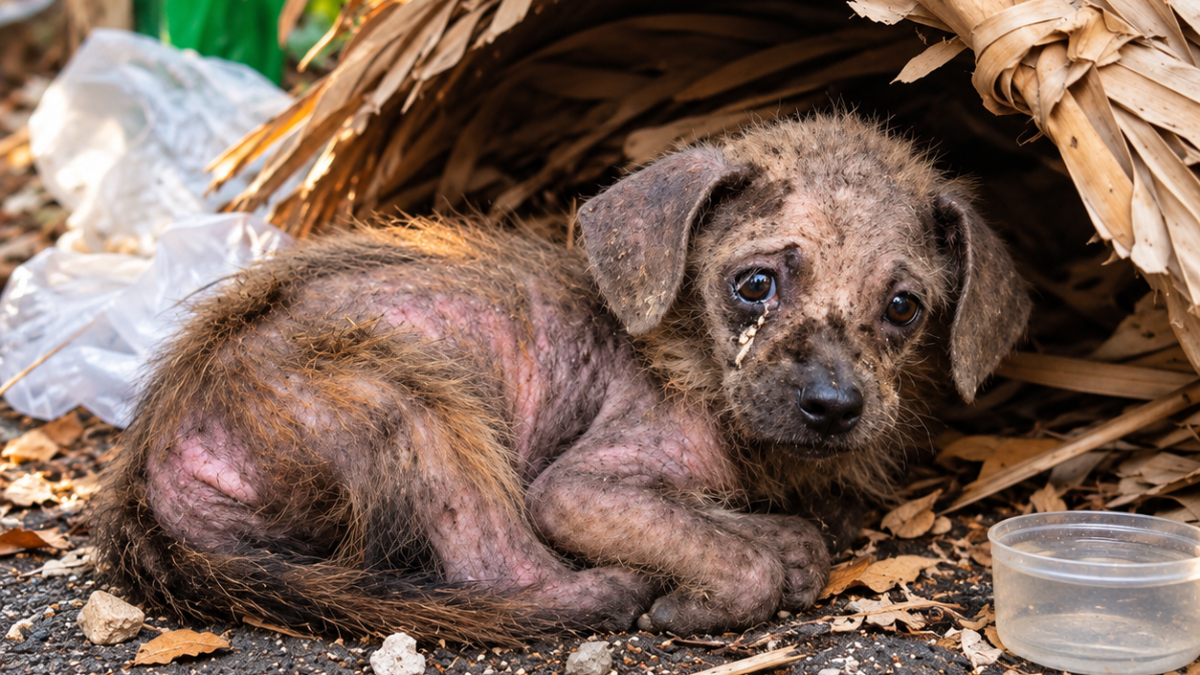
The first time I saw Kristin, she was lying in a dirt hole beneath an old hut, so weak she didn’t even lift her head when my shadow fell across her.
Her skin was raw, her fur had fallen out in patches, and her eyes looked at me like she had already learned that people could walk away from suffering.
I thought carrying her out of that hole would be the hardest part, but I had no idea her rescue would lead me back to the person who had left her there.
The hut stood at the far edge of a weed-choked property outside town, behind a rusted fence and a line of dead trees that scratched at the sky. I had been told there was “a sick little dog” hiding there, but people say things like that all the time. Sick can mean a limp. Sick can mean fleas. Sick can mean hungry, scared, dirty, or simply unwanted.
Then I stepped through the broken doorway and saw the hole.
It had been dug into the dry earth beneath a rotting wooden platform, as if some animal had once tried to make itself a hiding place. The smell inside that hut was heavy with mold, old straw, damp wood, and neglect. Sunlight came through cracks in the boards in thin dusty lines, just enough for me to see a small body curled at the bottom.
For a second, I thought she was gone.
Then her side moved.
Barely.
I dropped to my knees.
“Hey, sweetheart,” I whispered. “I see you.”
She opened her eyes.
That was all.
No bark. No growl. No attempt to crawl away. She simply looked at me from that hole with a kind of quiet exhaustion that made my throat close.
Her body was painfully thin. Her ribs showed beneath irritated skin. Much of her fur was missing, and the little that remained looked brittle and dirty. Mange had chewed through her coat and left her scratching even in her weakness. One back paw twitched as if she wanted to relieve the itch but didn’t have enough strength.
I reached down slowly.
She didn’t resist.
When I lifted her, I expected panic. I expected a bite, a cry, anything.
Instead, she folded into my arms like she had been waiting for someone to decide she was worth the effort.
She weighed almost nothing.
I could feel every bone.
Outside, my friend Marcy stood near the gate with a towel in her hands. The moment she saw my face, she stopped moving.
“How bad?” she asked.
I looked down at the little dog pressed against my chest.
“Bad.”
Kristin’s head rested against my arm. Her eyes stayed open, watching nothing and everything at once. I couldn’t know what she understood. Maybe she only knew warmth. Maybe she only knew hands that weren’t hurting her. Maybe she didn’t know anything at all except that the hole was behind her now.
I wrapped her in the towel and carried her to the truck.
On the way to the vet, she started scratching again, slow and desperate, her little nails dragging weakly against her skin.
“I know,” I said, though I didn’t. Not really. “We’re going to help you.”
At the clinic, Dr. Elaine Porter took one look at her and moved fast.
“How long has she been like this?” she asked.
“I don’t know.”
“Where was she found?”
“Old hut off County Road 16.”
Dr. Porter’s jaw tightened, but she didn’t say what both of us were thinking.
Kristin was dehydrated, underweight, full of fleas, and suffering from severe mange. Her skin was inflamed and scabbed. Her stomach was empty enough that Dr. Porter warned me not to let her eat too fast.
But when the food came, Kristin ate like hunger was chasing her.
She lowered her face into the bowl and didn’t lift it until every bit was gone.
Marcy turned away.
I knew why.
There are some sights that make anger rise so hot it almost feels like grief.
A dog eating like she hasn’t believed in tomorrow for a long time is one of them.
That first night, we didn’t know if Kristin would be strong enough to fight. Dr. Porter shaved a few areas so treatment could begin. We gave her medication, clean bedding, water, and the first gentle touch she may have had in weeks.
Before I left the clinic, I stood outside her kennel.
PART 2
She was curled on a blanket, eyes half-closed, still scratching now and then even through exhaustion.
“I’ll come back,” I told her.
She lifted her head slightly.
That small movement ruined me.
Because I had said those words to rescued dogs before.
But with Kristin, it felt like a promise I could not break.
**PART 2**
I came back the next morning before work.
Then again after work.
Then the day after that.
And the day after that.
At first, Kristin didn’t do much when she saw me. She was too weak to celebrate anything. She would lift her head, blink slowly, and let her tail move once beneath the blanket as if joy was still too heavy to carry.
But that was enough.
To me, that tiny movement felt like thunder.
Dr. Porter warned me that recovery would be slow.
“She has a long road,” she said. “Mange treatment takes time. Her immune system is worn down. She needs nutrition, medication, baths, and consistency. This won’t be pretty for a while.”
“She doesn’t need pretty,” I said. “She needs alive.”
Dr. Porter looked at me over the chart.
“That, we can work with.”
We named her Kristin that afternoon.
The name came from one of our volunteers, an older woman named Rose who had spent twenty years fostering animals no one else wanted. She had a way of naming broken things like they were already whole.
“She looks like a Kristin,” Rose said.
I looked into the kennel at the small dog with swollen skin, patchy fur, and tired eyes.
“Why Kristin?”
Rose smiled faintly.
“Because one day she’ll walk into a room like she knows she belongs there.”
At the time, I couldn’t imagine it.
Kristin was still the dog from the hole.
The dog who slept curled tightly, as if the world might strike from any direction. The dog who flinched when a metal bowl scraped the floor. The dog who scratched until we gently stopped her. The dog who ate every meal as though someone might take it away before she finished.
But Rose had been right about animals before.
So Kristin she became.
The clinic became our little world.
Every morning, Dr. Porter checked her skin. Every afternoon, a tech named Amber cleaned her bedding. Every evening, I sat beside the kennel and talked to her. I told her about ordinary things because I wanted her to learn ordinary life existed.
I told her about my old pickup that rattled at stoplights.
I told her about the coffee shop on Main Street that always burned the first pot.
I told her about my mother, who believed every stray animal was “just one kind hand away from remembering the world wasn’t all bad.”
Kristin listened.
At least, I liked to think she did.
After a week, she stood when I came in.
Her legs shook, but she stood.
“Look at you,” I whispered.
Her tail wagged twice.
Amber clapped one hand over her mouth.
“She’s greeting you.”
I crouched in front of the kennel, and Kristin pressed her nose to the bars.
That was the first time I cried in front of her.
Not the day I found her.
Not during the first vet exam.
Not when I saw how fast she ate.
But there, with her little nose touching the metal bars, trying to reach me because some part of her had decided I meant comfort.
“Hi, baby,” I said, wiping my face with my sleeve. “I missed you too.”
As her strength returned, Kristin began showing us who she was beneath the suffering.
She was funny.
That surprised me.
The first time she tried to play, she had no idea what to do with the toy. Amber rolled a soft blue ball into her kennel. Kristin stared at it like it had insulted her. Then she pawed at it once, startled herself when it moved, and jumped backward so dramatically that everyone in the room laughed.
Kristin looked offended.
Then she barked.
One small, raspy bark.
After that, the ball became her enemy.
Then her obsession.
She would slap it with one paw, chase it two steps, forget why she was chasing it, then bring it back to the blanket and guard it with deep seriousness.
“She’s ridiculous,” Amber said.
“She’s perfect,” I said.
Kristin also became attached to me in a way I had not prepared for.
Whenever I entered the clinic, she knew my footsteps before I reached the kennel room. Her head would pop up. Her tail would start thumping. If I took too long saying hello to other dogs, she would bark once, sharply, as if reminding me of my responsibilities.
“You’ve created a monster,” Dr. Porter told me.
“She was already a monster. I just gave her an audience.”
But every playful moment made the memory of that hut harder to bear.
Because once you see life return to a neglected animal, you understand more clearly what someone tried to erase.
Kristin had not been an empty, hopeless little body in a hole.
She had been this.
A dog who wanted toys.
A dog who wanted company.
A dog who leaned into hands.
A dog who wagged her tail so hard her whole body twisted when she saw someone she trusted.
Someone had looked at all of that and left her anyway.
That thought began to sit in my chest like a stone.
The property where I found Kristin belonged to a man named Dale Mercer.
Dale was known around town for collecting junk, trading scrap metal, and saying every bad thing that happened on his land was “not his problem.” The old hut was behind one of his abandoned storage sheds. When animal control contacted him, he denied knowing anything about a dog.
“People dump things out there all the time,” he said. “Mattresses. tires. old TVs. Maybe somebody dumped her too.”
At first, there was no reason not to believe that.
People did dump animals.
I had seen it too often.
But something about the hole bothered me.
It wasn’t near the road.
It wasn’t near the gate.
It was tucked behind the hut, on a property where strangers would have to climb a fence and carry a sick dog through weeds and debris. That was not impossible, but it didn’t feel right.
Then Marcy remembered something.
“The towel,” she said one afternoon.
“What towel?”
“The one under her. In the hole. There was a piece of fabric beneath her.”
I had forgotten in the chaos.
We went back the next morning with animal control officer Ben Alvarez. The hut looked even worse in daylight. Flies gathered near old cans. The ground was littered with rusted wire, broken boards, and plastic buckets filled with rainwater.
Inside the hole, half-buried in dirt, was a faded piece of towel.
Ben lifted it with gloves.
There was writing on one corner.
MERCER AUTO & SCRAP.
Dale’s business.
Ben said what we were all thinking.
“Well, that makes this harder for him to explain.”
Dale still tried.
He claimed old towels from his scrap shop were everywhere. He claimed anyone could have taken one. He claimed the dog was never his. He claimed he had not been inside that hut in months.
But then we found the water bowl.
It was behind the hut, turned upside down beneath a pile of boards. It had the same red paint splattered along the rim as the paint cans stacked behind Dale’s shop.
Still not enough.
Enough to anger us.
Not enough to prove.
Justice in animal neglect cases can be painfully slow because animals cannot tell you who hurt them. Their bodies testify, but people who do cruel things know how to hide behind doubt.
Then Kristin gave us the next piece without knowing it.
Two weeks after her rescue, I carried her to Dale’s side of town because Dr. Porter wanted a special medicated shampoo from a supply store near the scrap yard. Kristin was stronger by then, wrapped in a clean towel, her shaved skin already less angry in places. She sat in my passenger seat inside a small travel crate, watching me with those wide, trusting eyes.
I parked near the supply store.
Across the street was Mercer Auto & Scrap.
The second Dale stepped out of the garage, Kristin changed.
She had been relaxed.
Curious.
Almost sleepy.
Then her whole body went stiff.
A low whine came from her throat.
I looked at her.
Her eyes were fixed through the windshield.
Dale was shouting at one of his workers, waving a wrench in one hand.
Kristin began trembling.
Not ordinary fear.
Recognition.
My stomach turned cold.
I took out my phone and recorded quietly. Not Dale hurting anyone. Not proof of what happened. Just Kristin’s reaction. Her body pressed to the back of the crate, shaking so hard the towel slid off her shoulders.
“It’s okay,” I whispered. “He can’t touch you.”
She kept staring at Dale.
When he slammed the garage door, Kristin yelped and ducked her head.
I drove away without buying the shampoo.
My hands shook all the way back to the clinic.
Ben watched the video twice.
“It helps,” he said carefully.
“But not enough.”
“Not by itself.”
Of course not.
Never by itself.
That night, I sat beside Kristin’s kennel long after the clinic closed. She had recovered from the scare, at least outwardly. She chewed her blue ball and shoved it against my shoe every few minutes.
I should have been happy.
She was alive.
She was improving.
Her skin was healing.
But all I could think was that Dale Mercer might go on pretending she had never been his responsibility.
Kristin dropped the ball against my shoe again.
I picked it up and rolled it back.
“You don’t care about revenge, do you?” I asked.
She pounced awkwardly.
“No. You just want the ball.”
That should have taught me something.
Instead, my anger kept burning.
The breakthrough came from a woman named Lorna Price.
She called the rescue after seeing a photo of Kristin online.
“I know that dog,” she said.
I nearly dropped the phone.
“Are you sure?”
“She used to be tied behind Dale Mercer’s shop. Little tan dog. Patch of white on the chest. Sweet thing. My grandson used to call her Cricket.”
“Can you give a statement?”
There was a long pause.
“I don’t want trouble.”
I closed my eyes.
People always said that.
As if trouble had not already arrived and crawled into a hole to suffer.
“Mrs. Price,” I said carefully, “she almost died.”
Silence.
Then a small breath.
“I know.”
“Then please help us make sure no other animal ends up there.”
The next day, Lorna came to the clinic.
She was in her seventies, with silver hair pinned back and hands that twisted together while she talked. She had seen Kristin several times behind Dale’s shop over the previous months. At first, the dog looked healthy enough, just dirty and underfed. Later, she noticed hair loss. Scratching. Weight dropping. Once, she brought dog food and left it near the fence, but Dale yelled at her to stay off his property.
“He said she wasn’t mine to fuss over,” Lorna said.
Ben leaned forward.
“Those were his words?”
“Yes.”
That mattered.
If she “wasn’t his,” why would he say she wasn’t Lorna’s to fuss over?
Lorna also had a photograph.
It showed Kristin behind the chain-link fence at Mercer Auto & Scrap, months before I found her. She was thin but still had more fur. Her ears were up. Her expression was wary but gentle.
I stared at the photo until it blurred.
“That’s her,” I said.
Kristin was asleep in her kennel across the room, her blue ball tucked beneath her chin.
Ben took the photo as evidence.
The case began to move.
Slowly.
Dale was cited first for failure to provide adequate care. Then, after the vet report and Lorna’s statement were added, the charges became more serious. Neglect. Abandonment. Cruel confinement. Failure to obtain medical treatment.
Dale reacted exactly the way men like Dale react when something helpless survives long enough to become a problem.
He got loud.
He showed up at the clinic two days later in a stained work shirt and muddy boots, demanding to see “the mutt everybody’s lying about.”
Dr. Porter met him in the lobby with Ben beside her.
“You are not allowed in the treatment area,” she said.
“That dog was dumped on my property.”
“Then you can explain that to the court.”
Dale pointed at me.
“You did this. You and your little rescue friends. Trying to ruin a man over a stray.”
I felt Kristin’s fear in my bones before I saw her.
Behind the closed kennel room door, she started barking.
Not her playful bark.
Not her sharp little demand for attention.
This bark was frantic.
She knew his voice.
The lobby went still.
Dr. Porter’s face hardened.
Dale heard it too.
For one second, just one, his expression slipped.
Ben noticed.
So did I.
Dale recovered quickly.
“Could be barking at anything,” he snapped.
“Then you won’t mind standing here while Officer Alvarez documents it,” Dr. Porter said.
Dale swore and stormed out.
But by then, he had given us something he could not take back.
Kristin’s reaction was added to the report.
The court date was set for early spring.
By then, Kristin looked like a different dog.
Her fur had begun to grow back in soft patches, first along her head and shoulders, then down her sides. The skin that had once looked raw and angry faded into healthy pink beneath new hair. She gained weight. Her eyes brightened. Her walk changed.
At first, she moved like she expected the ground to disappear.
Then she began trotting.
Then running.
The first time she ran across my living room, she slid on the rug, crashed gently into a laundry basket, and looked so surprised that I laughed until I cried.
She was offended for three full minutes.
Then she did it again.
I had started taking her home on weekends with Dr. Porter’s approval. The first time I brought her inside, she stood in my hallway and sniffed every inch of the floor as if mapping a new country. She found the dog bed in the living room but chose my old sweatshirt instead. She carried her blue ball from room to room, dropping it in places I nearly stepped on it.
At night, she slept curled beside my bed.
Sometimes she woke scratching from habit, even when the itch had faded.
I would reach down and place a hand near her.
“You’re okay,” I’d whisper.
Eventually, she would sigh and settle again.
That was when I became afraid of losing her.
Not to sickness.
Not to Dale.
To adoption.
That sounds selfish, and it was.
The goal of rescue is goodbye. Every foster, every volunteer, every rescuer knows that. We heal them so they can leave. We love them so they can belong somewhere else. We become the bridge, not the destination.
But Kristin had become part of my days.
I looked forward to clinic visits because of her.
I bought toys I pretended were “for enrichment.”
I learned which treats made her dance in place.
I knew the exact spot behind her ear that made her eyes close.
And somewhere along the way, the little dog from the hole had stopped being a case.
She had become Kristin.
My Kristin, some dangerous part of my heart whispered.
Then Sarah Whitman came to meet her.
Sarah was a quiet woman in her mid-fifties who lived alone in a small yellow house near the river. She had lost her senior dog six months earlier and was not looking for a puppy, a perfect dog, or an easy story. She worked from home as a bookkeeper. She had a fenced yard, a calm routine, and references so good Delilah joked she wished Sarah would adopt her too.
Still, I wanted not to like her.
That would have made things easier.
But Sarah walked into the clinic and did everything right.
She did not rush toward Kristin.
She sat on the floor.
She let Kristin approach.
She spoke softly.
“Well, hello there,” Sarah said. “I hear you’ve had quite a time.”
Kristin sniffed her shoe.
Then her hand.
Then, to my complete betrayal, Kristin climbed into her lap.
I stared.
Dr. Porter smirked beside me.
“Traitor,” I muttered.
“I assume you mean the dog.”
“I’m not speaking to either of you.”
Sarah didn’t try to perform emotion. She didn’t cry loudly or say Kristin was meant to be hers after thirty seconds. She simply rested one hand gently along Kristin’s back and let the little dog settle.
“She’s still healing,” I said, too quickly. “Her skin needs monitoring. She has food anxiety sometimes. Loud male voices scare her. She may scratch when stressed. She needs routine.”
Sarah looked up.
“Then we’ll build one.”
Not I can handle it.
Not That’s fine.
We’ll build one.
I hated how much I liked that answer.
Over the next two weeks, Sarah visited four times. Then Kristin spent an afternoon at her house. Then an overnight.
I barely slept that night.
At seven in the morning, Sarah sent a photo.
Kristin was asleep on a soft green blanket near a sunny window, blue ball beside her paw.
The message said: She ate breakfast, explored the yard, and is currently supervising my invoices.
I sat on the edge of my bed staring at the photo.
Happy.
She looked happy.
That should have made goodbye easier.
It didn’t.
The court hearing happened two days before Kristin’s adoption became official.
Dale Mercer arrived in a clean shirt that did not fit his character. His lawyer tried to make him look like a victim of rescue hysteria, a hardworking business owner blamed for a stray dog’s condition because people online loved a sad animal story.
Then Dr. Porter testified.
She spoke calmly about Kristin’s condition when she arrived. Severe mange. Malnutrition. Dehydration. Untreated suffering over time. Not a sudden illness. Not a one-day accident. Neglect.
Lorna testified next.
Her voice shook, but she did it.
She identified Kristin from the photo behind Dale’s fence. She repeated Dale’s words: “She isn’t yours to fuss over.”
Ben presented the towel from the hut, the bowl, the property report, and the video of Kristin reacting to Dale outside the scrap yard.
Then I testified.
I told the court about finding her in the hole.
I told them how light she felt in my arms.
I told them how she ate at the clinic.
I told them how she scratched skin already inflamed because no one had treated her.
Dale’s lawyer tried to push me.
“You are emotionally attached to this dog, correct?”
“Yes.”
“So your testimony is biased.”
“My testimony is based on what I saw.”
“But you want my client punished.”
I looked at Dale.
He stared back with flat, annoyed eyes.
“Yes,” I said.
The lawyer lifted his brows as if I had fallen into his trap.
I continued, “I want him punished because a living creature was left sick and starving in a hole on his property after witnesses saw her in his care. Wanting consequences doesn’t make the truth less true.”
The judge looked down at his notes.
Dale’s lawyer sat down.
In the end, Dale pled no contest when it became clear the evidence was not going away. He was fined, ordered to pay restitution for Kristin’s medical care, banned from owning animals during probation, and required to allow inspections of his property. Animal control also removed two underfed dogs from a back enclosure at his shop the following week.
That was the real justice.
Not watching Dale pay money.
Not seeing him embarrassed in court.
It was knowing the next animals behind that fence were found before they ended up in holes.
When I told Sarah, she said, “Good.”
Just that.
Good.
Then she asked, “How is Kristin today?”
That told me everything about her priorities.
Kristin’s adoption became official on a Friday afternoon.
I brought her to Sarah’s house myself.
Her fur had grown back enough that someone who had not seen her at the beginning might only notice a few thin patches. She wore a soft pink harness Sarah had bought after measuring her three times because she worried about rubbing the healing skin. Her blue ball rode in the passenger seat between us.
Kristin stood with her paws on the window ledge, nose lifted, ears fluttering in the breeze.
“You’re excited,” I said.
Her tail wagged.
“Rude.”
At Sarah’s house, everything was ready.
A bed near the window.
Food bowls in the kitchen.
Medication chart on the fridge.
A basket of toys in the living room.
A baby gate blocking the stairs until Kristin learned the house.
A green blanket in the same sunny spot from the photo.
Sarah stood on the porch with tears already in her eyes.
“Well,” she said, smiling, “welcome home, little girl.”
Kristin pulled toward her.
Not hard.
Just enough to tell me she knew where she was.
I walked her inside and unclipped the leash.
For a second, Kristin stood between us.
Then she trotted straight to the green blanket, dropped her blue ball on it, and sat down like she had made a decision.
Sarah laughed through tears.
I turned away because my own eyes were burning.
Dr. Porter had warned me that adoption day would hurt.
She was right.
Sarah signed the final paper at the kitchen table.
My hand hovered over Kristin’s head.
I wanted to say something important.
Something memorable.
Something worthy of the dog who had survived the hut, the hole, the itching, the fear, the medicine, the shaving, the baths, the long recovery, and my clumsy heart.
But when the moment came, all I could manage was, “Be happy.”
Kristin licked my fingers.
That broke me.
I crouched and hugged her gently, careful of the places where her skin was still tender.
“You’re going to be so loved,” I whispered. “You hear me? So loved.”
Sarah stood nearby, crying quietly.
“I’ll send updates,” she said.
“I know.”
“You can visit.”
“I know.”
“You saved her.”
I shook my head and wiped my face.
“No. She kept living until we caught up.”
I left before I changed my mind.
In the truck, I sat in Sarah’s driveway for almost five minutes with both hands on the wheel.
Through the front window, I could see Kristin exploring the living room. Sarah followed a few steps behind, giving her space. Kristin found the toy basket, pulled out a stuffed duck, and shook it with sudden confidence.
I laughed and cried at the same time.
Then I drove away.
For two days, the clinic felt wrong without her.
No bark when I entered.
No blue ball against my shoe.
No little face watching through the kennel door.
Amber said, “You did the right thing.”
“I know.”
“You look miserable.”
“I’m allowed to know and be miserable.”
She nodded.
“That’s rescue.”
Sarah kept her promise.
The first update came that night.
Kristin asleep on the green blanket.
Then one of her eating breakfast.
Then one of her in the yard, standing in sunlight, looking healthier than I had ever seen her.
Weeks passed.
Her fur thickened.
Her skin healed.
Her eyes grew brighter.
She learned Sarah’s routine and made herself part of it. Morning coffee by the window. Afternoon walk by the river. Evening nap beside Sarah’s desk while invoices were handled. Blue ball carried from room to room like an official duty.
One month after adoption, Sarah invited me over.
I was nervous, which was ridiculous. I had faced Dale in court without shaking but found myself sweating outside a yellow house because a fifteen-pound dog might not remember me the way I wanted.
Sarah opened the door.
Kristin stood behind her.
For half a second, she froze.
Then her whole body exploded into movement.
She ran to me, tail whipping, paws skidding on the floor, and jumped against my legs.
I dropped to my knees.
“There she is,” I said, laughing. “There’s my girl.”
She climbed into my lap as if no time had passed.
Sarah leaned against the doorway, smiling.
“I think she remembers.”
“She better.”
Kristin licked my chin.
I spent an hour there.
Kristin showed me her yard, her bed, her toy basket, her favorite window, and the spot under Sarah’s desk where she supervised bookkeeping. She looked different now—not just healthier, but settled. Her body no longer waited for the next bad thing. She still startled at sudden noises, but she recovered quickly. She still scratched now and then from habit, but Sarah knew how to redirect her gently.
When I left, Kristin followed me to the door.
My heart squeezed.
But this time, she did not panic.
Sarah called her name softly.
Kristin turned.
She went back inside.
That was when I knew she was truly home.
Not because she loved me less.
Because she trusted someone else enough to stay.
Months later, the old hut was torn down.
Animal control pushed Dale to clear several unsafe structures as part of the property inspection. Ben called me when the crew arrived.
“You want to be here?” he asked.
I didn’t know if I did.
But I went.
The hut looked smaller than I remembered. Less like a monster, more like rotten wood and bad memories. The doorway sagged. The platform had collapsed further. The hole where Kristin had lain was still visible in the dirt, though weeds had begun growing around it.
I stood there while the crew pulled the boards down.
No ceremony.
No speech.
Just hammers, dust, and sunlight entering a place that had once held suffering.
When it was over, Ben stood beside me.
“You okay?”
I looked at the empty patch of ground.
“Yes.”
And I was.
Not because the hut coming down erased what happened.
It didn’t.
But because Kristin would never see it again.
Because Dale no longer had the protection of silence.
Because two other dogs were alive because her case opened the gate.
Because a little dog once left in a hole now had a green blanket, a blue ball, and a woman who measured harness straps so nothing would rub her healing skin.
That was the revenge.
Not cruelty returned.
Not violence.
Not hate.
The revenge was Kristin alive.
Kristin loved.
Kristin sleeping without scratching herself bloody.
Kristin running in Sarah’s yard with fur shining in the sun.
Kristin walking into a room like Rose said she would, knowing she belonged there.
On the anniversary of her rescue, Sarah brought Kristin to the clinic.
Everyone came out to see her.
Dr. Porter crouched first.
“Well, look at you,” she said.
Kristin wagged so hard her back end nearly tipped over.
Amber cried.
Rose clapped her hands once and said, “I told you she was a Kristin.”
Kristin wore her pink harness and carried the blue ball in her mouth like an honored guest bringing proof of her success.
We took a photo in the lobby.
Not the kind people use to make suffering look dramatic.
A real one.
Kristin standing between me and Sarah, fur grown back, eyes bright, tail blurred from motion. Dr. Porter behind us. Amber wiping tears. Rose looking proud. A dog who had every reason to disappear from the world and refused.
Later that evening, Sarah sent me one more picture.
Kristin asleep on her green blanket, blue ball tucked beneath her chin, one paw stretched toward the sunbeam on the floor.
The message read: She had a big day. She came home tired and happy.
I saved the photo.
I still look at it sometimes.
Especially on days when rescue feels too heavy. When another call comes in. Another abandoned dog. Another excuse. Another person saying they “didn’t know it was that bad” when anyone with eyes could have seen.
I look at Kristin and remember the hole.
Then I remember what came after.
The vet table.
The first meal.
The first tail wag.
The blue ball.
The court hearing.
The adoption.
The yellow house.
The green blanket.
The door closing behind her not to trap her, but to keep her safe.
And I remind myself that saving one life does not fix the whole world.
But for that one life, it fixes everything.
Kristin began as a small, broken body in a dirt hole beneath an old hut.
She became proof that neglect does not get the final word.
Love does.
Care does.
Justice does.
And sometimes, the happiest ending is not loud at all.
It is a little dog with new fur sleeping in a warm home, no longer scratching, no longer starving, no longer waiting for someone to notice she is still alive.
Because someone did notice.
Someone lifted her out.
And this time, nobody put her back.