PART 2: I Found a One-Month-Old Puppy Barely Holding On—Then Someone Came Back to Claim Her
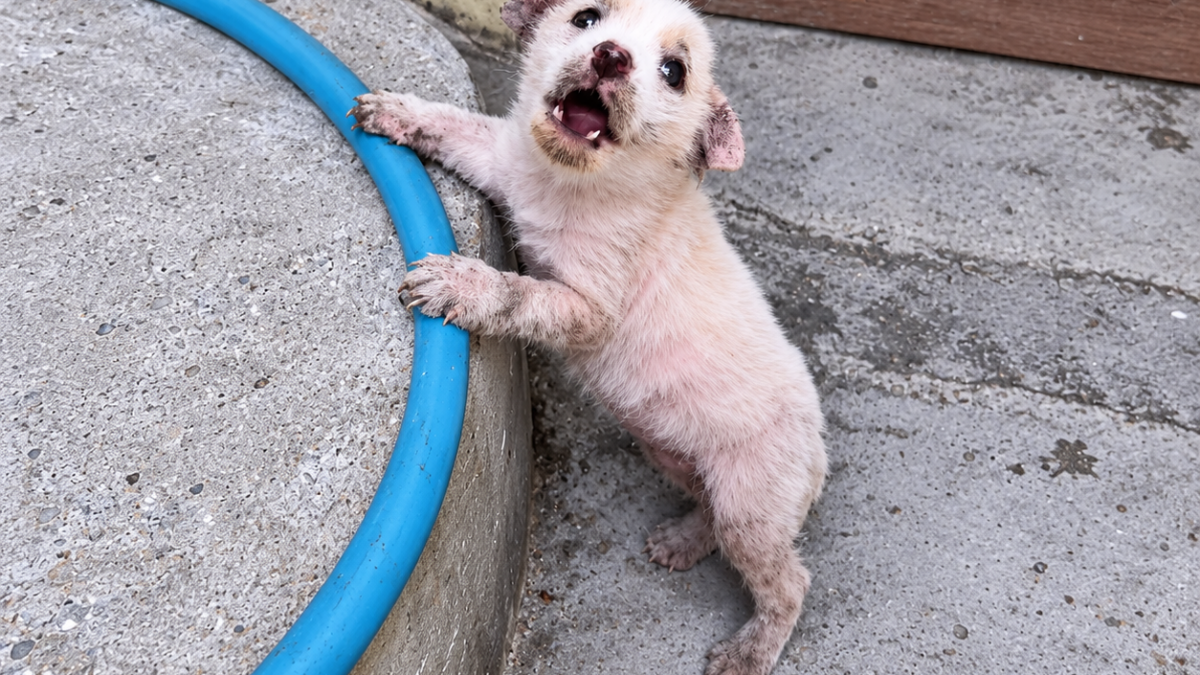
PART 2
For one frozen second, I couldn’t breathe.
“Willow.”
No response.
“Willow!”
I lifted her carefully from the bed. Her body was frighteningly hot, yet her paws felt strangely cool. I pressed my fingers against her chest, terrified that I wouldn’t feel anything.
There.
A heartbeat.
Too fast.
But there.
I wrapped her loosely in a towel and rushed out.
I don’t remember locking the door.
I don’t remember most of the drive.
I remember every red light feeling personal.
I remember looking over at the passenger seat again and again, watching the towel for movement.
“Stay with me,” I kept saying. “Please stay with me.”
At the veterinary clinic, I was out of the car before I’d properly parked.
A technician saw what I was carrying and immediately came around the counter.
“How old?”
“About a month. I found her yesterday. She’s burning up, and she just passed out.”
They took her from my arms.
That was when I noticed how badly my hands were shaking.
The veterinarian examined her quickly and then began asking questions.
How long had I had her?
Had she eaten?
Vomiting?
Diarrhea?
Had she been hit by a vehicle?
Had she fallen?
Did I know where she came from?
Most of my answers were the same.
“I don’t know.”
He checked her temperature.
His expression changed.
“Her fever is very high.”
“How high?”
He told me.
My stomach dropped.
Then he examined the leg I’d noticed earlier.
Willow cried out.
It was the first loud sound I’d heard her make.
I instinctively stepped forward.
“Is it broken?”
“We need imaging to know exactly what’s going on. She’s also severely uncomfortable, and with a puppy this young, we have to be careful. She’s dehydrated. She’s weak. Her skin is infected in several places. Right now, there are multiple things happening at once.”
He paused.
“She can recover, but she’s fragile.”
I hated that word.
Fragile.
It was accurate, but I hated hearing it.
“What do you need to do?”
“We stabilize her first.”
“Do it.”
There wasn’t anything else to discuss.
They began treatment immediately.
I sat outside the treatment area while people came and went around me.
There are moments when time moves differently.
That morning was one of them.
Five minutes felt like an hour.
An hour disappeared without meaning anything.
Every time the door opened, I looked up.
Finally, the veterinarian returned.
Her fever was being brought under control.
She had received medication for pain.
They were treating the skin infection and dehydration.
The leg appeared injured rather than catastrophically broken, though it would need rest and monitoring.
“But there is something else you should understand,” he said.
“What?”
“The episodes where she loses consciousness may be from severe pain, fever, weakness, or a combination of factors. She’s extremely young. Her body doesn’t have much reserve.”
I swallowed.
“So what happens now?”
“We watch her very closely.”
He didn’t promise me she would be fine.
I respected him for that.
I also hated him for it a little.
Not personally.
I hated anyone who couldn’t give me the answer I wanted.
I wanted someone to say, “She’s safe now. That’s it. You got her here. Everything will be okay.”
Instead, I received instructions.
Medication times.
Temperature checks.
Food.
Hydration.
Signs that meant I needed to bring her back immediately.
The vet looked directly at me before handing Willow over.
“If she becomes unresponsive again, don’t wait.”
“I won’t.”
Willow opened her eyes when I held her.
Barely.
I touched my forehead gently to the towel around her.
“You scared me,” I whispered.
Her eyes closed again.
That night, I didn’t sleep.
I set alarms for medication, but I didn’t really need them because I was awake for every one.
Willow lay beside me in her small bed.
Every few minutes, I leaned close enough to hear her breathing.
At around two in the morning, she began whimpering again.
I touched her.
Her muscles tightened.
The pain had returned.
I followed the veterinarian’s instructions, but there was no miracle. Nothing transformed instantly.
I sat on the floor with her for nearly an hour while she struggled to settle.
“I’m right here,” I told her.
She couldn’t understand the words.
But eventually she crawled forward until her nose touched my hand.
Then she stayed there.
That tiny gesture destroyed whatever emotional distance I had been trying to maintain.
I had told myself that I was helping a puppy.
That was all.
I would get her healthy.
Then I would find her a good home.
That was the sensible plan.
But sometime around three in the morning, with Willow sleeping against my fingers because apparently that was the only position she found comforting, I realized the situation had already become more complicated.
She had begun trusting me.
And I had begun loving her.
The next several days were exhausting.
Willow’s recovery didn’t happen in a straight line.
One morning she ate eagerly, and I celebrated as though she’d won an award.
That afternoon, she refused food and slept for hours.
The next day, she stood up and tried to take several steps.
Her injured leg gave way.
She cried.
I felt guilty for being excited too soon.
Her skin remained painful.
The veterinarian had explained that the damaged areas needed time. Medication would help control infection and irritation, but her body had to repair itself.
So I created routines.
Morning medicine.
Food.
Cleaning.
Rest.
Short periods outside where she could feel sunlight without being overwhelmed.
More food.
More medicine.
Another check of her temperature.
And through all of it, Willow watched me.
She had enormous dark eyes that looked far too serious for such a young puppy.
At first, any sudden movement frightened her.
If I stood too quickly, she ducked.
If something fell in another room, she scrambled toward the nearest hiding place.
The first time I accidentally dropped a metal bowl, Willow flattened herself against the floor.
I froze.
“Hey. It’s okay.”
She trembled.
I sat down several feet away instead of approaching.
“It’s just the bowl.”
Of course she didn’t know that.
She had no way to separate harmless noises from dangerous ones.
So I waited.
Eventually, Willow lifted her head.
Then she took one uncertain step toward me.
And another.
She reached my knee and pressed her little body against it.
That became our pattern.
I stopped trying to force bravery out of her.
Instead, I gave her somewhere safe to retreat.
Over time, she began choosing not to retreat.
A week passed.
Then another.
One morning while I was preparing her breakfast, I felt something touch the back of my ankle.
I looked down.
Willow was standing there.
Her injured leg still bothered her, but she was balancing.
“How did you get out of your bed?”
Her tail moved.
It wasn’t much of a wag.
More like a cautious question.
I smiled.
“Was that for me?”
The tail moved again.
That was the first time I saw Willow wag.
I sat on the floor immediately.
She toddled toward me, lost her balance, recovered, and then climbed awkwardly into my lap as if she’d been doing it her entire life.
I laughed.
It came out strangely because I was crying at the same time.
“You don’t even know how difficult you are, do you?”
Willow licked my thumb.
That was her answer.
As her strength improved, her personality appeared.
And what a personality it was.
The quiet, frightened puppy I’d found beside that wall began turning into a tiny criminal.
She stole socks.
She attacked blanket corners.
She carried pieces of paper around as though she’d hunted them herself.
She discovered that if she pushed a food bowl hard enough with her nose, she could slide it across the floor and create a noise loud enough to summon me from another room.
One afternoon I found her attempting to drag a slipper almost twice her size into her bed.
“What are you doing?”
Willow froze with the slipper in her mouth.
We stared at each other.
“That’s mine.”
She pulled harder.
“Willow.”
Another pull.
I reached for it.
She made the smallest growl I’d ever heard.
I laughed so hard I had to sit down.
“You’re four pounds of trouble.”
She abandoned the slipper and climbed onto my leg.
Her fur was beginning to return.
First came soft fuzz across places that had been nearly bald.
Then darker patches appeared.
The raw redness faded.
The sores healed.
Every few days, I took pictures so I could compare.
Looking at them side by side felt almost unreal.
In the first photographs, she looked painfully thin and exhausted.
In the newer ones, her eyes were brighter.
Her ears stood differently.
Her body no longer seemed folded inward.
She was beginning to occupy space confidently.
She was beginning to behave like she expected tomorrow to exist.
That mattered more than I can explain.
But even as Willow improved, one question bothered me.
Where had she come from?
A puppy that young shouldn’t have been alone.
Somewhere there might have been a mother dog.
There might have been littermates.
There might have been other animals in the same condition.
I returned to the area where I’d found her and asked around.
At first, nobody knew much.
Or nobody wanted to say much.
One man told me he’d seen a small dog near the alley several days earlier.
A woman from a nearby house said she’d heard puppies crying at night some weeks before.
“Where?”
She pointed toward a property farther down.
“That house used to have dogs behind it. I haven’t seen them lately.”
I looked at the house.
The gate was closed.
There were no dogs visible.
“Do you know who lives there?”
She gave me a name.
It meant nothing to me.
Then she added, “People have complained before.”
“About what?”
She hesitated.
“The animals.”
My stomach tightened.
“What kind of complaints?”
“Barking. Too many dogs. Sometimes puppies. Then suddenly there wouldn’t be any puppies anymore.”
I looked back toward the property.
“Did anyone report it?”
“I don’t know.”
That answer followed me home.
I didn’t immediately assume Willow came from that house.
There wasn’t enough evidence.
But I started asking more questions.
I also contacted a local rescue volunteer I’d met through the clinic and explained where Willow had been found.
She listened carefully.
“Send me the location.”
I did.
There was a long pause.
Then she said, “I know that street.”
Something in her voice changed.
“Why?”
“We’ve had reports from that area before.”
“About dogs?”
“Yes.”
“What happened?”
“Nothing we could prove at the time.”
She asked me for photographs of Willow from the day I found her.
I sent them.
When she called back, she sounded angry.
“Keep every vet record.”
“I already am.”
“Keep every receipt too.”
“Why?”
“Because if someone tries to claim her, you’re going to want documentation of exactly what condition she was in.”
That possibility hadn’t occurred to me.
“Who would claim a puppy they left like that?”
The volunteer gave a humorless laugh.
“You’d be surprised.”
I looked across the room.
Willow was asleep on her blanket, one paw resting over her nose.
I felt something hard settle in my chest.
“Nobody is taking her back to somewhere unsafe.”
“I know,” the volunteer said. “But do this properly. Don’t argue with anyone. Don’t threaten anyone. Document everything.”
So I did.
Every veterinary report went into a folder.
Every medication.
Every photograph.
Dates.
Times.
The location where Willow had been found.
Notes about her condition.
I didn’t know then how important that folder would become.
Weeks passed.
Willow’s leg improved steadily.
Her follow-up examination brought the first genuinely good news I’d received without some warning attached.
“She’s doing very well,” the veterinarian said.
“Really?”
He smiled.
“Really.”
I must have looked ridiculous because he laughed.
“You’re allowed to be happy.”
“I’ve been waiting for you to say that.”
“Her skin looks much better. Weight is improving. Her leg is healing. Continue what you’re doing.”
I looked down at Willow.
She was trying to chew the edge of my shoelace.
“So she’s becoming a normal puppy?”
He looked at the shoelace.
“I’d say unfortunately, yes.”
For the first time, I left the clinic laughing.
Life settled into something ordinary.
Beautifully ordinary.
Willow woke me too early.
She wanted breakfast immediately.
She followed me into rooms where she had no business being.
She fell asleep in inconvenient places.
She discovered toys.
At first she didn’t understand them.
I rolled a small ball toward her.
Willow watched it pass.
Then she looked at me as if I had done something very stupid.
I rolled it again.
This time she chased it.
She pounced too early, tumbled over the ball, stood up, and looked offended.
Five minutes later, she was obsessed.
That afternoon, I watched Willow race clumsily across the room, legs moving faster than her body knew how to control.
I remembered carrying her into the veterinary clinic while she lay unconscious in a towel.
It didn’t feel like the same puppy.
Sometimes happiness is louder because you remember the silence that came before it.
Then, just when I thought our crisis had finally passed, someone knocked on my gate.
Willow barked.
It was a new sound she’d recently discovered.
Not intimidating.
More like a squeaky toy with strong opinions.
I walked outside.
A man stood there.
I had never seen him before.
He looked toward Willow, who was behind me.
“That dog yours?”
The question immediately put me on edge.
“Why?”
He pointed.
“That’s one of mine.”
My hand tightened around the gate.
“What did you say?”
“The puppy. She’s mine.”
Willow moved closer to my ankle.
I studied him.
“Where did you lose her?”
He hesitated for just a second.
“She got out.”
“When?”
“A while ago.”
“How long is a while?”
His expression changed.
“Why does that matter?”
“Because I found her severely sick, covered in fleas, missing fur, injured and alone.”
He looked past me again.
“She’s fine now.”
I almost couldn’t believe what I had heard.
“She’s fine now because she received veterinary treatment.”
“So?”
“So if you’re claiming she’s yours, I’d like to know how she ended up in that condition.”
His jaw tightened.
“I don’t have to explain my dog to you.”
I felt heat rising through me.
Every night I’d stayed awake beside Willow.
Every time she’d cried.
Every medication.
Every frightening trip to the clinic.
Every raw patch of skin.
Every moment she’d flinched at sudden movement.
And this man was standing outside my gate talking about ownership as though Willow were a misplaced object.
I remembered what the rescue volunteer had told me.
Do not argue.
Document everything.
So I kept my voice steady.
“If you believe she’s legally yours, you can provide proof and we can handle this through the appropriate authorities.”
He stared at me.
“Appropriate authorities?”
“Yes.”
“I came here to get my dog.”
“No. You came here claiming a dog I found abandoned and seriously ill. Those are not the same thing.”
His face hardened.
“You’re stealing her.”
Willow pressed closer to my leg.
That was the moment I stopped being afraid of confrontation.
I didn’t shout.
I didn’t threaten him.
I simply said, “Then report me.”
He blinked.
“What?”
“Report me. Tell them exactly where you say she lived. Tell them when she disappeared. Tell them what condition she was in. I’ll provide the veterinarian’s reports, photographs, treatment history and the place where she was found.”
Silence.
For the first time, he looked uncertain.
I continued.
“And while we’re doing that, maybe someone can also check whether there are other dogs on your property.”
His expression changed completely.
That told me more than anything else could have.
“You don’t know anything about my property.”
“You’re right. I don’t.”
I held his gaze.
“But I know what happened to this puppy.”
He pointed at me.
“You’d better watch yourself.”
Then he walked away.
I stood at the gate until he disappeared.
Only after I went inside did I realize my hands were shaking.
Willow looked up at me.
“Well,” I said, trying to sound calm, “apparently your life wasn’t dramatic enough.”
She wagged her tail.
I called the rescue volunteer.
She listened without interrupting.
When I finished, she said, “We’re reporting it.”
“Do you think he’ll come back?”
“Maybe.”
I looked at the gate.
“What do I do if he does?”
“Do exactly what you did. Don’t hand her over. Don’t get into a fight. Keep records.”
That evening, I checked the lock twice.
Then three times.
Willow slept in my room.
At around midnight, she woke, climbed out of her bed, walked across the floor and curled up beside my foot.
I looked down at her.
She had no idea someone had tried to claim her.
She didn’t know anything about ownership disputes, reports or evidence.
She just knew where she felt safe.
I leaned down.
“You’re not going back.”
The next morning, I received a call.
An animal welfare officer wanted to speak with me.
I explained everything again.
He asked for Willow’s records.
I sent them.
He asked where I’d found her.
I provided the location.
Then he asked about the man.
“Did he identify himself?”
“Yes.”
The officer was quiet for a moment.
“That name is familiar.”
My stomach tightened.
“Why?”
“I can’t discuss previous reports in detail, but this isn’t the first time concerns have been raised.”
That sentence changed everything.
This was no longer only about Willow.
The officer asked whether I would be willing to provide a written statement.
“Absolutely.”
Two days later, he visited and photographed Willow.
By then she looked dramatically healthier than when I’d found her, so I showed him the original pictures.
He stared at one image for a long time.
“This is the same puppy?”
“Yes.”
“And this was taken the day you found her?”
“Within an hour.”
He looked at Willow again.
She was trying to chew his boot lace.
“Quite a difference.”
“You should have seen her that first night.”
I gave him the medical documentation.
He read portions carefully.
“High fever. Skin infection. Parasite infestation. Leg trauma.”
“Yes.”
“Loss of consciousness?”
“Several times when her condition was at its worst.”
His expression hardened.
“Did the man who came here offer any explanation?”
“No.”
“Did he offer to reimburse treatment?”
I almost laughed.
“No.”
“Did he ask whether she’d recovered?”
That question caught me.
I replayed the conversation.
“No.”
He had asked whether she was mine.
He had said she was his.
He had said she was fine now.
But he hadn’t asked what had happened.
He hadn’t asked whether she was still sick.
He hadn’t asked whether she had suffered.
“No,” I repeated.
The officer nodded as though that answer mattered.
Before leaving, he told me not to contact the man.
“I wasn’t planning to.”
“If he contacts you, document it.”
“What happens now?”
“We look into it.”
That was all he could tell me.
The following days felt uneasy.
Every vehicle slowing outside made me look up.
Every sound at the gate caught my attention.
Willow, meanwhile, continued becoming increasingly fearless.
Her fur grew thicker.
She gained weight.
She learned to climb onto the couch even though she was not invited.
She also discovered that the older dog belonging to a friend of mine had no interest in enforcing personal boundaries.
The first time they met, I was nervous.
The older dog, Max, was calm and patient, but compared with Willow he looked enormous.
Willow stared at him.
Max stared back.
Then Willow walked directly underneath him and attempted to bite his tail.
“Willow!”
Max turned slowly.
She froze.
I expected her to run.
Instead, she slapped one paw against his front leg.
Max sighed.
Ten minutes later, Willow was following him everywhere.
The next time he visited, she ran toward him as if seeing an old friend.
Watching them play became one of my favorite things.
Willow would charge forward with complete confidence, forget how small she was, and bounce away when Max gently nudged her.
Sometimes she would hide beneath a chair and attack his paws from underneath.
Other times she would collapse beside him after exhausting herself.
Those moments were exactly what I had wanted for her.
Not merely survival.
A childhood.
A chance to be ridiculous.
A chance to play.
A chance to believe that hands brought food and comfort instead of fear.
Then the man returned.
This time he wasn’t alone.
A woman stood beside him.
I saw them through the window and immediately called the rescue volunteer.
“They’re here.”
“Don’t go outside alone.”
“They’re at the gate.”
“Call the officer who gave you his number.”
I did.
Then I stepped outside but stayed behind the locked gate.
The man raised a phone.
“You’ve had enough time.”
“For what?”
“To give back the dog.”
The woman crossed her arms.
“She belongs to us.”
I looked at both of them.
“If that’s your position, speak to animal welfare.”
The woman scoffed.
“We don’t need permission to take our property.”
There was that word again.
Property.
I could feel anger trying to drag me into an argument.
I refused.
“The authorities have already been contacted.”
The man’s expression changed.
“You reported us?”
“I reported the condition Willow was found in.”
“You had no right.”
“I had every right.”
“You don’t know what happened.”
“Then explain it.”
He said nothing.
The woman stepped closer to the gate.
“She was sick.”
“I know.”
“We were treating her.”
“What treatment?”
Silence.
“Which veterinarian?”
Neither answered.
“What medication?”
The woman’s face reddened.
“We were handling it.”
“She was a month old, covered in fleas and barely conscious.”
“She got out.”
“With an injured leg?”
“Maybe she hurt it after she got out.”
“Then why didn’t you search for her?”
“We did.”
I almost laughed.
I had spoken to people on that street.
I had asked neighbors.
Nobody mentioned a desperate search for a missing month-old puppy.
The woman pointed toward Willow, who had appeared behind the screen door.
“Look at her. She’s healthy.”
I stared at her.
“Yes.”
She didn’t understand.
That was the entire point.
“She’s healthy because she was treated.”
The woman rolled her eyes.
“You people always make everything dramatic.”
Something inside me went cold.
Not hot.
Cold.
Because suddenly I understood that there was no explanation coming.
No apology.
No moment where they admitted they’d failed her.
Willow’s suffering was an inconvenience to them.
I looked at the puppy behind me.
She was watching my face.
Then I looked at the two people outside.
“You aren’t taking her.”
The man rattled the gate.
“Open this.”
“No.”
“Open the gate.”
“No.”
The woman lifted her phone.
“We’re recording you stealing our dog.”
“Good.”
That stopped her.
“Keep recording.”
“What?”
“Record everything. Record yourselves identifying Willow as your dog. Record yourselves confirming she came from your property. Record yourselves demanding her back after veterinary records documented the condition she was in.”
The man lowered his phone slightly.
I continued.
“Actually, make sure the audio is clear.”
Neither spoke.
A vehicle turned onto the street.
The animal welfare officer stepped out.
The man swore quietly.
I didn’t smile.
But I won’t pretend I wasn’t relieved.
The officer approached.
“I understand there’s a dispute.”
The man immediately began talking.
“She took our puppy and won’t give her back.”
The officer looked at him.
“You’ve identified this puppy as an animal previously in your care?”
“Yes.”
The woman touched his arm.
He pulled away.
The officer repeated the question.
“You’re saying this specific puppy belonged to you?”
“Yes.”
The officer took out a notebook.
“All right.”
I watched the man’s face.
For the first time, he seemed to understand that claiming Willow might not help him.
It might connect him directly to every photograph in my folder.
The officer asked where Willow had been kept.
How she disappeared.
When they noticed.
What efforts they’d made to find her.
Whether she’d already been ill.
Whether they’d obtained veterinary care.
Their answers changed.
First she’d been completely healthy.
Then she’d had “a little rash.”
First she’d escaped through a gate.
Then somebody must have taken her.
First they’d searched for days.
Then they admitted they’d assumed someone would find her.
The officer didn’t argue.
He simply wrote.
Finally he said, “We’re going to continue this conversation elsewhere.”
The woman became defensive.
“Are we in trouble?”
“I didn’t say that.”
“Then give us the dog.”
“No animal is being transferred today.”
I exhaled.
The man looked at me.
“This isn’t over.”
The officer turned toward him.
“Actually, I’d recommend that you stop contacting her directly.”
That was the first moment I felt the balance shift.
Not because I’d won anything.
Because Willow was being treated as a living animal whose welfare mattered.
The officer eventually left with them.
I closed the gate.
Then I walked inside and sat on the floor.
Willow came running.
She climbed onto my lap, circled twice and settled down as if nothing unusual had happened.
I buried my face gently against her fur.
“I’m sorry,” I whispered.
I wasn’t sure what I was apologizing for.
For not finding her sooner.
For the people who had failed her.
For the fact that safety sometimes had to be defended instead of simply given.
Willow licked my chin.
Then she tried to bite the drawstring on my shirt.
I laughed.
That helped.
The investigation didn’t end overnight.
And that was important.
Real consequences rarely arrive like they do in dramatic stories.
Nobody was instantly led away in handcuffs.
There was paperwork.
Interviews.
Photographs.
Follow-up visits.
Waiting.
More waiting.
The rescue volunteer stayed involved.
So did the veterinarian.
He provided documentation confirming Willow’s condition when she first came in.
The officer eventually inspected the property connected to the people who had claimed her.
I wasn’t there.
I didn’t know exactly what he found until later.
What I learned was enough.
There were other dogs.
Too many for the space.
Several needed veterinary attention.
None were in Willow’s exact condition, thankfully, but there were problems that could no longer be ignored.
The animals were evaluated.
Some were removed.
The owners faced citations and restrictions.
And because they had voluntarily identified Willow as having been in their care, the record of her condition became part of the case.
The thing they thought would help them take her back became evidence of how badly she’d been failed.
I wish I could say I felt triumphant.
I didn’t.
Mostly, I felt tired.
Because revenge sounds satisfying when you imagine it.
In reality, there was no pleasure in knowing other animals had also needed help.
There was no joy in being right about neglect.
The satisfying part came later.
It came when I learned those dogs were receiving proper care.
It came when I heard that oversight would continue.
It came when I realized Willow would never again be treated like something disposable.
The man never came to my gate again.
Eventually, I received confirmation that he would not be taking Willow.
I read the message twice.
Then three times.
The rescue volunteer called me.
“So,” she said, “now you have another problem.”
My heart jumped.
“What problem?”
“You’ve spent all this time saying you’re fostering her.”
I looked across the room.
Willow was asleep upside down on the couch, all four paws pointing in different directions.
“I am fostering her.”
“Sure.”
“I am.”
“Okay.”
“Why are you saying it like that?”
“Because I know what you’re going to do.”
I tried to sound offended.
“You don’t know that.”
She laughed.
“Do you want me to send you the adoption paperwork or not?”
I looked at Willow again.
Her fur had grown back enough that most people meeting her for the first time would never have guessed what she’d looked like weeks earlier.
Her body was stronger.
Her leg no longer collapsed beneath her.
She had gained weight.
She had toys scattered across the floor.
She had a favorite blanket.
She had a bowl.
She had a bed she rarely used because apparently my couch, my shoes and my lap were better options.
Most importantly, she had stopped looking toward every doorway as though someone might remove her.
“Send it,” I said.
The rescue volunteer was quiet for half a second.
Then she laughed again.
“I knew it.”
“You knew nothing.”
“Of course.”
“I was considering all options responsibly.”
“Naturally.”
“This is a serious decision.”
“You’re currently arguing with me while the dog has already taken over your house.”
I looked at Willow.
“That’s unrelated.”
Willow opened one eye.
The paperwork arrived that afternoon.
I filled it out immediately.
There are moments in life that should probably feel more ceremonial than they do.
Willow’s adoption became official while I was sitting at my kitchen table with a cup of coffee going cold beside me.
No music played.
No one applauded.
There was no dramatic speech.
I signed my name.
And the puppy who had once been lying alone beside a wall officially had a home.
I picked her up afterward.
She squirmed because she wanted to get back to a toy.
“Do you understand what just happened?”
She bit my sleeve.
“I’ll take that as a yes.”
Months passed.
Willow grew.
Her tiny puppy body stretched into awkward proportions.
For a while, her ears seemed too big for her head.
Then her legs grew.
Then everything else caught up.
She became fast.
Very fast.
The puppy who once couldn’t walk without pain began racing through the yard as if she had been personally challenged by the wind.
The first time I watched her sprint at full speed, I had to look away for a second.
Not because I was sad.
Because I remembered carrying her.
The contrast was overwhelming.
Max remained one of her favorite friends.
Their games became louder as Willow grew.
She would hide behind furniture, launch herself dramatically, then race away before Max could respond.
He developed the patience of a saint.
Sometimes he would pin her gently with one paw when she’d become especially annoying.
Willow would lie completely still for about two seconds.
Then she’d start again.
Her confidence changed around people too.
At first, strangers made her nervous.
She stayed behind me.
Then she began approaching carefully.
A sniff.
A step backward.
Another sniff.
Eventually, if someone sat quietly and allowed her to choose, Willow would come closer.
Watching her learn that new people didn’t automatically mean danger became another kind of healing.
Not only for her.
For me too.
I had carried a strange anger since finding her.
Every time I remembered her raw skin, I felt it.
Every time I remembered her collapsing, it returned.
But Willow didn’t live in that memory.
She lived in whatever moment she was currently experiencing.
A ball.
A meal.
A patch of sunlight.
A friend arriving.
A new smell.
A nap.
She didn’t spend her afternoons wondering why somebody had failed her.
She spent them looking for shoes to steal.
There was something humbling about that.
One afternoon, almost a year after I found her, I drove through the neighborhood where it had happened.
I hadn’t planned to stop.
Then I saw the old wall.
The weeds had been cut back.
The broken cardboard was gone.
I parked.
Willow was with me.
She stood on the back seat, curious about why we’d stopped.
I put on her leash.
“Come on.”
We walked toward the place where she’d been lying.
Willow sniffed the ground.
Nothing in her behavior suggested recognition.
I don’t know whether dogs remember places from that age.
Maybe she did.
Maybe she didn’t.
Part of me hoped she didn’t.
I stood there remembering the first time I’d seen her.
Tiny.
Hair missing.
Covered with fleas.
Too exhausted to run.
Willow tugged at the leash.
I looked down.
She wanted to investigate a butterfly.
I laughed.
“Of course you do.”
She hopped after it.
The butterfly lifted higher.
Willow jumped.
Missed.
Tried again.
For several minutes I simply watched her.
A year earlier, I’d thought success meant keeping her alive until morning.
Then success meant controlling her fever.
Then getting her to eat.
Then helping her stand.
Then helping her leg heal.
Then growing fur.
Then playing.
Then trusting.
I had kept moving the definition because she kept giving me more.
Now success was this.
A healthy dog chasing a butterfly in the exact place where she once couldn’t stand.
I felt tears burning behind my eyes.
Willow stopped and looked at me.
“What?”
Her tail wagged.
I crouched.
She immediately came over.
I ran both hands through her thick fur.
There was no raw skin anymore.
No fleas.
No sores.
I could touch her without worrying that I would hurt her.
“You really did it,” I said.
But that wasn’t exactly true.
We did it.
Willow had fought.
The veterinarians had treated her.
The rescue volunteer had helped protect her.
The officer had taken the reports seriously.
People had stepped in when it mattered.
Sometimes rescue is described as one person saving one animal.
It rarely works that way.
It is a chain of people deciding not to look away.
One person finds.
Another treats.
Another documents.
Another investigates.
Another protects.
And eventually, if everything goes right, an animal who once belonged nowhere falls asleep without fear.
Willow had become very good at that last part.
She slept everywhere.
On the couch.
Under the table.
Against my leg.
Across my feet.
Once, I found her asleep with her head inside an empty laundry basket.
I took a photograph before waking her.
She looked ridiculous.
I treasured it.
There were other photographs too.
I kept the original ones.
For a long time, I couldn’t look at them without feeling angry.
Eventually, they began meaning something different.
They didn’t show what Willow was.
They showed how far she’d traveled.
In one image, she was curled into herself after her first bath, wrapped in a towel almost larger than her body.
In another, she was lying at the clinic with exhausted eyes.
Then came the pictures where soft fur started appearing.
The first toy.
The first time she played with Max.
The first time she slept completely on her back.
The first birthday.
By then, Willow looked nothing like the frightened puppy in those early photographs.
People who met her often said the same thing.
“She looks so happy.”
And she was.
She was not perfectly fearless.
Certain noises still bothered her.
A metal bowl hitting the floor could make her jump.
Sometimes a sudden raised voice made her move toward me.
Those moments reminded me that recovery doesn’t erase everything.
Healing isn’t the same as forgetting.
But Willow had learned something more important than forgetting.
She had learned what happened after she got scared.
She would look for me.
And I would still be there.
One evening during a storm, thunder cracked so loudly that the windows rattled.
Willow shot out of her bed.
She ran across the room and jumped onto the couch beside me.
I opened the blanket.
She crawled underneath.
“You’re supposed to be brave now,” I whispered.
Her nose appeared.
Another thunderclap sounded.
The nose disappeared.
I smiled and rested my hand over her.
“I was kidding.”
We stayed that way through the storm.
It reminded me of the first night I’d watched her struggle through pain.
Back then, I’d believed I needed to promise her something enormous.
That nothing bad would ever happen again.
That she would never be afraid.
That life would become completely gentle.
Those promises aren’t realistic.
Storms happen.
Pain happens.
People disappoint us.
What I could promise was simpler.
She wouldn’t face those things alone.
That was enough.
Nearly two years after her rescue, I ran into the animal welfare officer again.
He recognized Willow before he recognized me.
“Is that the same puppy?”
I smiled.
“The notorious Willow.”
He crouched.
Willow sniffed his hand, then allowed him to scratch her chest.
“Wow.”
“That’s what everyone says.”
He looked her over.
“You did good.”
“So did you.”
He shook his head.
“You were the one who kept records.”
“You told me to.”
“No, the rescue volunteer told you to.”
I laughed.
“Fair.”
His expression became more serious.
“The situation at that property changed significantly afterward.”
I waited.
He couldn’t tell me everything.
He didn’t need to.
The important part was that the animals they’d found had been addressed properly and the people involved could no longer keep dogs under the same circumstances.
I looked at Willow.
She was leaning against the officer’s leg now, shamelessly requesting attention.
“Good,” I said.
That was all.
I had imagined, during the angriest part of the ordeal, that there might be some satisfying confrontation at the end.
Some perfect sentence I could say to the people who had failed Willow.
Some moment where they would finally understand what they’d done.
That moment never happened.
And eventually I realized I didn’t need it.
Their opinion no longer mattered.
They had looked at Willow when she was vulnerable and apparently decided she was expendable.
I looked at her and saw a life worth protecting.
Time had answered which of us was right.
The best revenge wasn’t their embarrassment.
It wasn’t the citations.
It wasn’t losing the right to take Willow back.
It wasn’t even the investigation.
The best revenge was Willow herself.
Every pound she gained.
Every patch of fur that returned.
Every toy she destroyed.
Every mile she ran.
Every person she learned to trust.
Every peaceful night she slept inside a warm home.
Everything she became was an answer to what had been done to her.
Years later, Willow still follows me from room to room.
She is no longer the tiny puppy I could hold easily in one hand.
She has opinions now.
Strong ones.
Breakfast should occur earlier.
Walks should last longer.
Doors should remain open if she is interested in what’s behind them.
Any food I am eating should legally belong to her.
She still steals socks.
She has refined the technique.
Now she waits until I’m distracted.
I’ve learned not to leave shoes where she can reach them.
Mostly.
One morning, I woke and found Willow sitting beside the bed staring at me.
“What?”
Tail wag.
“It’s too early.”
More wagging.
I closed my eyes.
She placed one paw on the mattress.
“No.”
Another paw.
“Willow.”
Her head appeared beside mine.
“You were much quieter when I rescued you.”
She licked my face.
I groaned.
“Terrible decision. I should have rescued a goldfish.”
She barked.
I started laughing.
That sound—my laughter, her paws racing toward the door, the ordinary chaos of another morning—was something I could never have imagined during that first terrible night.
Back then, Willow’s future had been measured in hours.
Now we measured it in birthdays.
On the anniversary of the day I found her, I started a small tradition.
Nothing dramatic.
A special meal.
A new toy.
A long walk.
And one photograph in the same place in the yard.
Every year, Willow looks different.
Older.
Stronger.
More settled.
In the first anniversary picture, she still had the lanky shape of a young dog.
In the second, she’d filled out.
By the third, there were no visible traces of the damaged puppy coat she’d once had.
But I could still see her.
Not physically.
In the way she rested one paw on my foot when strangers visited.
In the way she sometimes checked where I was before settling down.
In the way she slept more deeply when she was touching someone she trusted.
One year, as I looked through the pictures, I stopped at the photograph I’d taken shortly after her bath on the day I rescued her.
Tiny.
Exhausted.
Wrapped in that oversized towel.
I studied her eyes.
I remembered thinking she looked defeated.
Now I wasn’t sure.
Maybe she had simply been tired.
Maybe somewhere inside that weak little body was the same stubborn dog who later stole my slippers, challenged dogs five times her size to play, and once escaped from a puppy pen by climbing a stack of folded blankets like a mountaineer.
Maybe the Willow I knew had been there all along.
She just needed enough safety to emerge.
That thought changed the way I remembered the beginning.
I used to think I had found a broken puppy.
I hadn’t.
I found a sick puppy.
An injured puppy.
A frightened puppy.
But not a broken one.
There was a difference.
Illness could be treated.
Wounds could heal.
Fear could soften.
Trust could grow.
And Willow proved all of it.
There is one memory I return to more than any other.
It isn’t the moment I found her.
It isn’t the terrifying drive to the veterinarian.
It isn’t the confrontation at my gate.
It isn’t even the day the adoption became official.
It happened quietly.
Willow had been recovering for several weeks.
Her fur was only beginning to return.
Her leg was stronger but not completely healed.
I was sitting on the floor sorting medication when she woke from a nap.
She stood.
Stretched.
Looked at me.
And then, without hesitation, she ran.
Only a few feet.
But she ran directly toward me.
Her ears bounced.
Her tail wagged.
She stumbled at the end and crashed against my legs.
I caught her.
For a second, she stared up at me.
Then she licked my hand.
That was the moment I knew.
Willow wasn’t merely surviving anymore.
She was coming back to life.
And years later, I understand something else about that moment.
She wasn’t running because she was afraid.
She wasn’t running from pain.
She wasn’t running away from someone.
She was running toward someone.
Toward me.
Toward safety.
Toward home.
The puppy I’d found had spent the first weeks of her life with almost nothing.
No stable home.
No protection.
No medical care when she desperately needed it.
And yet somehow she had survived long enough for our paths to cross.
I often wonder what would have happened if I’d arrived a day later.
I don’t let myself think about it for long.
Because I arrived when I did.
The veterinarian treated her when he did.
The rescue volunteer answered the phone when she did.
The officer took the reports seriously.
One decision after another changed the direction of one small life.
Willow doesn’t know any of that.
She doesn’t need to.
As I write this, she is asleep a few feet away.
Her paws twitch sometimes because she’s dreaming.
Her coat is thick and healthy.
Her breathing is slow and peaceful.
Every now and then she makes a tiny sound in her sleep.
Years ago, that sound would have sent me rushing across the room because I was terrified she was in pain again.
Now I know she’s probably dreaming about running.
Maybe she’s chasing Max.
Maybe she’s chasing a ball.
Maybe she’s chasing the butterfly she never caught.
I hope so.
Because if anyone ever deserved ordinary dreams, it was Willow.
I once believed her story was about how close I came to losing her.
It isn’t.
It’s about everything she gained after that.
Strength.
Health.
Trust.
Friends.
A home.
A family.
And the absolute certainty that when she wakes up, someone will still be there.
Sometimes people talk about rescue as though the animal should spend the rest of its life grateful to the person who helped.
I’ve never felt that way.
If anything, I’m grateful to Willow.
She taught me that healing can look ridiculous.
Sometimes healing is a dog sprinting across a room with a stolen sock.
Sometimes it’s a puppy finally barking because she isn’t afraid to be heard.
Sometimes it’s a formerly starving animal becoming extremely offended when dinner is five minutes late.
Sometimes it’s fur growing over an old wound.
Sometimes it’s choosing to sleep with your belly exposed because you finally believe nothing will hurt you there.
And sometimes healing is simply becoming so comfortable with love that you stop realizing how extraordinary it once was.
That’s where Willow is now.
Love isn’t extraordinary to her anymore.
It’s normal.
She expects breakfast.
She expects walks.
She expects me to return when I leave.
She expects a warm place to sleep.
She expects hands to be gentle.
She expects tomorrow.
That may be my favorite thing about her entire story.
The one-month-old puppy I found had no reason to expect anything from the world.
The dog sleeping beside me now expects everything a dog should.
Food.
Safety.
Kindness.
Play.
Comfort.
Home.
And she gets them.
Every single day.
That is how Willow’s story ends.
Not with the people who abandoned her.
Not with anger.
Not with punishment.
Not even with me.
It ends with Willow racing across the yard on four strong legs, healthy fur shining in the sunlight, a toy in her mouth and another dog chasing behind her.
It ends with her running toward the door when I call her name.
It ends with her jumping onto the couch beside me even though she knows perfectly well she’s supposed to wait for permission.
It ends with me pretending to be annoyed.
It ends with Willow resting her head against my leg.
Safe.
Wanted.
Home.
And when I think back to that first day—the fleas, the raw skin, the injured leg, the fever, the night I was terrified she wouldn’t wake up—I sometimes wish I could somehow reach back through time and tell that tiny puppy what she couldn’t possibly have known.
I would tell her to hold on.
Just a little longer.
I would tell her that warm baths wouldn’t always be followed by pain.
That hands could be gentle.
That food would come every day.
That she would have blankets she could destroy without permission.
That she would have friends.
That one day she would run so fast I’d worry she’d crash into the fence.
That her fur would grow back.
That her leg would become strong.
That no one would ever be allowed to treat her like she didn’t matter again.
Most of all, I would tell her one thing.
“You don’t have to keep looking for somewhere to belong.”
Because she found it.
And this time, nobody could take it away.