PART 2: I Found a Blind Dog Waiting to Die in a Dark Shed—What Happened After We Carried Her Out Still Stays With Me
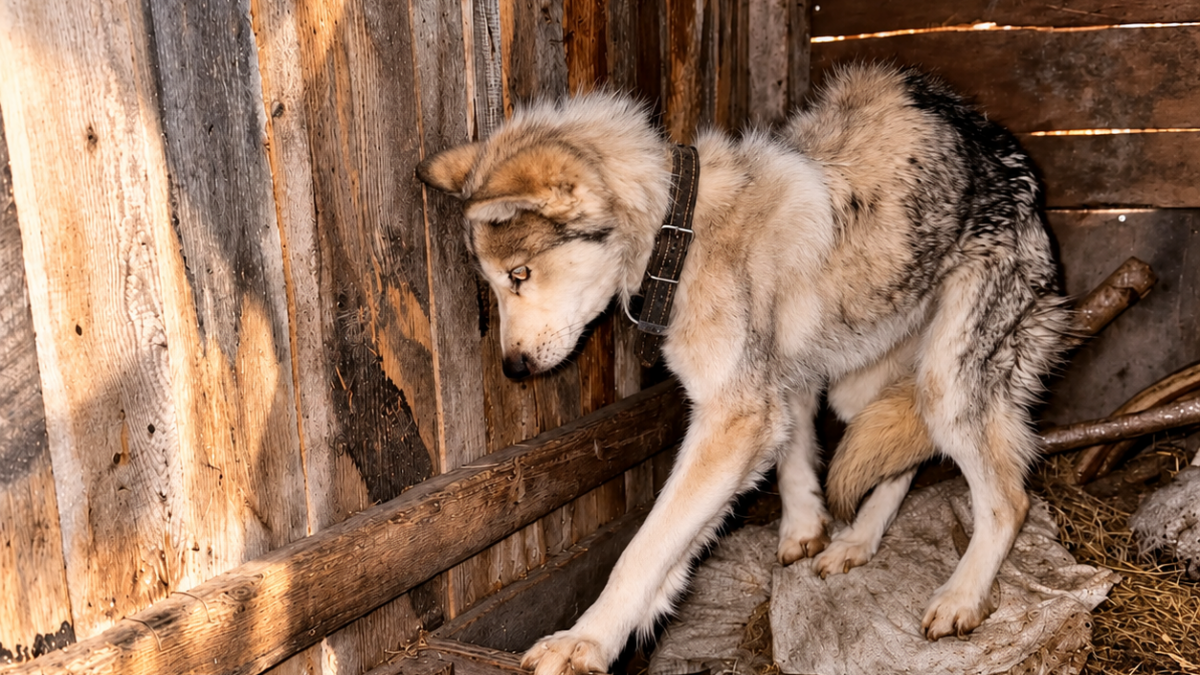
When I stepped into that storage shed and saw Marty curled against the wall, I honestly thought we had arrived at the end of her story, because her body had been reduced to seven kilograms of bone and paper-thin skin, most of her fur was gone, and she didn’t even turn her head when the door opened.
She was blind, covered in fleas and parasites, too weak to stand without trembling, and so quiet that for several seconds I found myself watching her chest just to make sure it was still moving.
I had rescued starving dogs before, but something about the way Marty simply lay there in the darkness made me realize this wasn’t going to be a story about getting food into an empty stomach—it was going to be about convincing a dog who had stopped expecting anything from the world that she was still worth saving.
It was Women’s Day when we got the call.
Someone had reported a severely neglected dog inside a small storage structure. There were few details, only that she was alive and in terrible condition.
I remember thinking the word “alive” sounded strangely fragile.
When we reached the property, the shed looked ordinary from outside.
Small.
Closed.
Quiet.
Nothing about it suggested that a life was disappearing inside.
One of the rescuers reached for the door.
“Ready?”
“No,” I said.
He opened it anyway.
The smell hit first.
Stale air.
Waste.
Dirty fur.
The unmistakable odor of an animal who had been living without proper care for far too long.
Then my eyes adjusted to the darkness.
Marty was against the back wall.
She did not bark.
Did not growl.
Did not try to hide.
She simply remained where she was.
“Oh my God.”
I crouched.
Her body seemed impossibly thin.
Her ribs and spine pressed beneath skin that looked too delicate to cover them. Large sections of fur were missing, and fleas moved through what remained.
“Hey, sweetheart.”
Nothing.
I moved closer.
Her eyes were open.
But they did not follow me.
I waved one hand gently in front of her face.
No response.
My stomach tightened.
“She can’t see.”
The rescuer beside me leaned closer.
“Are you sure?”
I made another slow movement.
Nothing.
Marty’s ears twitched when I spoke.
That was when I understood.
She heard me.
She just couldn’t see where I was.
I announced every movement before touching her.
“I’m right here.”
My fingers reached her shoulder.
Marty flinched.
Then froze.
No attempt to bite.
No energy to escape.
I could feel individual bones beneath my hand.
“How long has she been in here?”
Nobody knew.
That was the problem.
Nobody could tell us how many meals she had missed.
How long parasites had been draining what little strength she had.
How many nights she had spent alone in that darkness.
I slid a blanket beside her.
“We need to get her out.”
The moment we tried to lift her, Marty’s legs moved weakly as though she still believed she was supposed to stand on her own.
“You don’t have to.”
I supported her chest.
“You can let us do this part.”
She weighed almost nothing.
Seven kilograms, we would learn at the clinic.
When I carried her outside, sunlight touched her face.
Marty blinked, but her eyes still did not track anything.
I don’t know why that moment hurt so much.
Maybe because after all that darkness, the sun had finally reached her, and she couldn’t see it.
We placed her carefully in the vehicle.
During the drive, I kept one hand beside her.
Not holding her.
Just close.
Every few minutes, Marty shifted until part of her body touched my fingers.
At the veterinary clinic, the team moved quickly.
They checked her temperature.
Hydration.
Bloodwork.
Skin.
Parasites.
Weight.
One veterinarian ran his hands carefully along her ribs, then looked at me.
“She’s severely malnourished.”
“I know.”
“She’s going to need controlled feeding. We can’t just give her everything she wants immediately.”
“What about her eyes?”
“We’ll examine them.”
“And the skin?”
“Treatable, but she’s very compromised.”
He paused.
“Her body has almost no reserve left.”
I looked at Marty lying beneath a blanket.
“Can she make it?”
The veterinarian didn’t answer immediately.
Then he said, “She can. But right now, I can’t promise that she will.”
A technician set a small amount of carefully prepared food near her.
Marty lifted her nose.
For the first time since we entered the shed, she moved with purpose.
She found the bowl.
Took one bite.
Then another.
I felt something loosen in my chest.
The veterinarian watched too.
“That’s good.”
Marty kept eating.
I touched the blanket near her paw.
“Come on, girl.”
Then the veterinarian looked back at her first test results, and the relief on his face disappeared.
He turned the page toward us.
“There’s something else we need to talk about before anyone assumes food alone is going to save her.”
PART 2
I looked down at the page even though most of the numbers meant nothing to me.
“What is it?”
The veterinarian pointed to several values.
“She’s anemic. Her protein levels are poor. She’s significantly dehydrated, and given the condition of her skin and the parasite burden, I’m concerned about how depleted she really is.”
I looked back at Marty.
She had finished the tiny amount of food and was searching the edge of the dish for more.
“So what do we do?”
“Slowly.”
That word became the foundation of everything.
“Slowly?”
“She’s been starving for a long time. Her body has adapted to scarcity. If we suddenly overload her system with food, we can create another medical problem.”
I knew enough about severe malnutrition to understand what he meant.
“You’re worried about refeeding complications.”
“Yes.”
I swallowed.
It felt cruel.
A starving dog finally had food in front of her, and we had to tell ourselves not to give her too much.
Marty did not understand that.
She only understood that the bowl had gone empty.
Her nose moved along the metal edge.
Then she looked toward the sound of my voice.
Not with her eyes.
With her head.
She was already learning where I was through hearing.
“You’re getting more.”
Her ears lifted slightly.
“Just not all at once.”
The veterinarian continued explaining the plan.
Small, carefully measured meals.
Fluids.
Parasite treatment.
Medication for her skin.
Bloodwork monitoring.
Temperature support.
Clean bedding.
Frequent reassessment.
And rest.
A great deal of rest.
“Her blindness?” I asked again.
“We’ll evaluate it more thoroughly once she’s stabilized.”
“Could it be from the malnutrition?”
“Possibly related to several causes. I don’t want to speculate yet.”
I nodded.
That became another rule.
No inventing answers just because uncertainty was uncomfortable.
Marty had enough real problems.
We didn’t need imaginary ones.
The first twenty-four hours were about keeping her body from giving up.
She ate small portions.
Then slept.
Drank.
Slept again.
Every time someone entered, Marty’s ears moved before anything else did.
She did not know who was approaching.
Her body became tense until someone spoke.
So we started announcing ourselves.
“It’s me.”
“Coming to your left.”
“Touching your shoulder.”
“Food.”
That last word became the one she learned fastest.
By the second meal, her head lifted when she heard the bowl.
By the third, she tried to stand.
Her front legs pushed beneath her.
Her back end shook.
I reached toward her instinctively.
The technician beside me stopped my hand.
“Wait.”
Marty swayed.
Corrected.
Stayed upright.
Only for a few seconds.
Then sat.
The technician smiled.
“She did it.”
I stared.
“She stood.”
Marty was already searching for food.
I laughed.
“She doesn’t care.”
“That’s probably a good sign.”
It was.
The dog from the shed had not stood because there had been no reason.
Now there was food.
A voice.
Movement.
Something happening.
Purpose can be surprisingly physical.
The next morning, the flea treatment had begun working.
The sheer number of parasites we found horrified me.
I remember looking at the bedding and thinking about all the time Marty had spent in that shed while those tiny things fed from a body that had nothing to spare.
Anger came easily.
But I had nowhere useful to put it.
We still did not know enough about how she ended up there.
We knew neglect.
We knew isolation.
We knew starvation.
We knew parasites had been allowed to overwhelm her.
Beyond that, anything else would have been guessing.
“What matters now?” the veterinarian asked when I voiced my anger.
I looked at him.
“Marty.”
“Exactly.”
So I put the anger into work.
Fresh bedding.
Food records.
Medication times.
Weight checks.
Bathing plans.
Follow-up bloodwork.
Anything measurable.
Anything useful.
Marty’s first medicated bath was difficult.
Her skin was fragile.
Large patches were bare.
The remaining coat was dirty and thin.
Some areas were crusted.
Others inflamed.
The water had to be warm but not hot.
Handling had to be gentle.
We softened dirt and debris without scrubbing already damaged tissue.
The moment her paws touched the basin, Marty stiffened.
“It’s okay.”
Her head turned toward my voice.
“Right here.”
She tried to step toward me and nearly slipped.
I supported her.
“No, no. I’ve got you.”
Marty froze.
The technician slowly wet her back.
Her entire body trembled.
Whether from weakness, fear, or discomfort, I couldn’t tell.
Probably all three.
“You hate this.”
Her ear twitched.
“I know.”
We worked carefully.
Every section of her body told a different part of the same story.
Hunger.
Parasites.
Neglect.
Skin disease.
Time.
Too much time.
When the bath ended, we wrapped Marty in towels.
She was so thin that the towels seemed larger than she was.
I held her.
At first, her body remained rigid.
Then, very slowly, she stopped bracing.
Her head rested against my arm.
I stopped speaking.
Sometimes silence means fear.
Sometimes it means trust.
I wasn’t sure which this was yet.
I only knew Marty had chosen not to move away.
That was enough.
The first week was not dramatic.
That is the truth about recovery.
There was no single morning when Marty woke transformed.
We saw tiny changes.
Her temperature stabilized.
Her hydration improved.
She tolerated the measured feeding plan.
Her digestion remained functional.
Bloodwork moved slightly in the right direction.
She spent more time sitting upright.
Then standing.
Then taking a few careful steps.
She still tired quickly.
Her blindness made movement more complicated.
At the clinic, unfamiliar spaces were frightening.
She could not see walls.
Did not know where tables were.
Did not understand open doorways.
We learned to use touch and sound.
A light tap on the floor.
A voice.
A hand resting against her side.
Marty used her nose too, but hearing became her strongest guide.
One afternoon, I sat several feet away from her bed.
“Marty.”
Her head lifted.
“Come here.”
She stood.
I didn’t actually expect her to walk.
Marty stepped forward.
Stopped.
Listened.
“Marty.”
Another step.
Then another.
She reached the edge of the blanket.
Her front paw touched the smoother floor.
She froze.
“That’s okay.”
Her paw tested again.
She moved onto the floor.
Five steps later, her nose touched my knee.
I covered my mouth.
Marty sniffed.
Then leaned slightly against me.
A volunteer standing behind us whispered, “She found you.”
I nodded.
I couldn’t answer.
Marty had been blind when we found her.
Maybe for a long time.
Maybe forever.
But she had found me.
Not with her eyes.
With sound.
Memory.
Trust.
That small walk across the room became one of the moments I remembered most.
Not because it was impressive.
Because it showed us what Marty could build even if her vision never returned.
The eye examination eventually confirmed what we had feared.
Her blindness appeared permanent.
I had prepared myself.
At least I thought I had.
The veterinarian spoke gently.
“We’re not seeing evidence that she has useful vision.”
“Any?”
“Not enough to rely on.”
“Can anything be done?”
“Not based on what we’re seeing.”
I looked toward Marty.
She was sleeping.
“So this is her life.”
“It’s part of her life.”
I looked at him.
He corrected himself deliberately.
“Not all of it.”
That distinction mattered.
Blindness was going to change how Marty moved through the world.
It did not have to become the definition of that world.
Still, I grieved for her.
I imagined everything she would never see.
The face of the person speaking to her.
Sunlight.
A toy moving.
Another dog approaching.
A home.
Then, over the next several months, Marty taught me how little she cared about the list of things I had decided she was missing.
She cared about whether the food bowl was full.
Whether the floor felt familiar.
Whether a voice belonged to someone safe.
Whether a bed was soft.
Whether the next room smelled interesting.
Whether someone was nearby.
She cared about life in ways available to her.
Not in ways unavailable.
That was the beginning of a lesson I needed much more than Marty did.
Around the second week, she started recognizing individual footsteps.
At least that was what it seemed like.
When one particular technician entered, Marty’s tail moved before she spoke.
We tested it.
The technician walked in silently.
Marty’s ears rose.
Tail.
I laughed.
“She knows you.”
The technician crouched.
“Hi, Marty.”
The tail moved harder.
Marty stood.
Walked toward her voice.
Bumped gently into her knee.
The technician stroked her neck.
“There she is.”
That tail wag felt like a declaration.
The shed was losing its hold on her.
At first, every new sound made Marty freeze.
A metal bowl dropping in another room.
A barking dog.
A door closing.
Footsteps too fast.
She had no visual confirmation that the sound was harmless.
So we taught through repetition.
Sound.
Nothing bad happens.
Sound again.
Nothing bad.
A hand.
Gentle.
A voice.
Food.
A door.
Fresh air.
A leash clip.
Walk.
Little by little, the world became predictable.
Predictability is one of the purest forms of kindness for a blind animal.
If furniture stays where it belongs, the room keeps its promise.
If the water bowl remains in one place, the floor becomes a map.
If voices announce movement, hands stop appearing from nowhere.
Marty was brilliant at building maps.
That surprised me.
Within days of moving into a larger recovery space, she knew where the bed was.
Water.
Food.
The door.
One wall she liked to follow.
A mat with a different texture.
She counted steps without anyone teaching her.
At least that is what it felt like.
Bed to water.
Turn.
Three steps.
Water.
Water to door.
More steps.
Turn.
Door.
If someone moved something, she noticed.
A volunteer once left a bucket where it didn’t belong.
Marty walked into it gently.
She stopped.
Backed up.
Turned her head.
I watched her process what had happened.
Then she walked around it.
The volunteer rushed over.
“Sorry.”
I stopped her from moving the bucket immediately.
“Wait.”
She looked at me.
“Marty needs to solve it.”
Marty touched the edge with her nose.
Moved around.
Continued.
Then we removed the bucket.
The volunteer smiled.
“She figured it out.”
“Yes.”
That became another important lesson.
Helping did not mean preventing every small mistake.
Marty needed a safe world, not a world where nobody allowed her to learn.
Her weight became our easiest visible measure of progress.
Seven kilograms.
That number haunted me.
Seven.
Far too little.
At every weigh-in, I held my breath.
First gain.
Small.
Then another.
The veterinarian warned us not to chase the scale too aggressively.
Healthy weight restoration takes time.
Muscle matters.
Hydration matters.
Digestion matters.
We needed quality, not simply numbers.
Still, I celebrated every increase.
“Seven point four.”
“Seven point nine.”
“Eight point five.”
Marty didn’t care.
She stood on the scale listening for the food reward.
By the time she crossed nine kilograms, she had learned that standing still could produce snacks.
That was useful.
Her skin changed more slowly.
For weeks, bare patches remained.
The flea problem resolved.
The parasite burden was treated.
Inflammation improved.
But fur takes time to return.
At first, there was only peach-fuzz softness across previously naked areas.
I ran my fingers gently over one patch.
“Hair.”
A technician leaned closer.
“Yes.”
“You see it?”
“She’s growing.”
I laughed.
Marty heard my voice and leaned into my hand.
The new coat looked uneven.
Different lengths.
Different textures.
None of that mattered.
After seeing paper-thin skin stretched over bone, every little piece of fur looked beautiful.
By month two, Marty no longer looked as if a strong breeze could knock her down.
Her muscles were rebuilding.
She walked longer distances.
Her appetite remained excellent.
Very excellent.
Too excellent.
Marty had discovered the sound of a food container.
It did not matter where she was.
Open the container.
Head lifts.
Tail moves.
Body appears.
One morning, I was preparing medication for another dog.
Marty heard a plastic packet.
She came into the room.
“No.”
She sat.
“This isn’t yours.”
Tail.
“Marty.”
More tail.
“You cannot see what I’m holding.”
She remained absolutely convinced.
I laughed.
“You’re a scam artist.”
She stayed.
I gave her an appropriate treat afterward.
That was probably why she kept doing it.
The dog who once had no reliable food now behaved as if all food in the building was part of a complex legal dispute.
I loved that.
Hunger had changed.
At the beginning, eating had been frantic.
A survival act.
Marty would finish and immediately search for more.
By the third month, she ate confidently.
Then stopped.
Sometimes left a few bites.
The first time she did that, I stared.
“You’re finished?”
Marty walked away.
I looked at the bowl.
There was food left.
A volunteer shrugged.
“She’s full.”
The word nearly broke me.
Full.
Such an ordinary word.
Marty had once spent unknown days without a proper meal.
Now she could decide she had eaten enough and trust another meal would come.
That was deeper healing than weight gain.
Scarcity lives in the mind after it leaves the stomach.
Marty was beginning to believe tomorrow had food too.
Her personality emerged more clearly each week.
She was gentle.
That part had been obvious early.
But she was also stubborn.
Very stubborn.
If Marty decided she wanted to walk one direction and I wanted another, blindness did not reduce her confidence.
“Marty, this way.”
She turned the opposite direction.
“No.”
Continued.
“Wrong way.”
Tail wag.
“That isn’t charming.”
It was.
She also loved soft things.
Blankets.
Beds.
Laundry.
Anything with padding.
One afternoon, we placed a new orthopedic bed in her area.
Marty approached.
Touched it with one paw.
Stopped.
Sniffed.
Stepped onto it.
Turned twice.
Lay down.
Within thirty seconds, she was asleep.
A volunteer watched.
“That’s it?”
“What?”
“She accepts luxury quickly.”
I smiled.
“She’s making up for lost time.”
Marty’s relationship with people changed more slowly than her relationship with beds.
She accepted care.
Then sought it.
But full trust came in stages.
At first, she stiffened when touched unexpectedly.
Even with warnings.
Later, her body relaxed.
Then she began moving toward hands.
One evening, I sat on the floor after a long day.
Marty was nearby.
I said her name.
She turned toward me.
“Come here.”
She walked carefully.
Her nose reached my hand.
I scratched beneath her chin.
Marty remained standing.
Then stepped closer.
Her shoulder touched my leg.
I continued.
She lowered herself.
Not in her bed.
Against me.
Her head rested on my thigh.
I stopped moving for a second.
Marty sighed.
It was one of the deepest, most relaxed breaths I had heard from her.
I looked down.
“I guess I’m furniture now.”
Her tail tapped once.
I stayed there until my leg went numb.
That became our evening ritual.
Marty did not always want affection.
Blindness did not make her permanently dependent.
Some days she wanted space.
Other days she followed voices from room to room.
I learned to respect both.
The more secure she became, the more independent she became.
That was another reversal I loved.
At the beginning, she had been alone because nobody cared for her.
Later, she chose moments of solitude because she knew she wasn’t abandoned.
Those are not the same thing.
Safe solitude is a privilege.
Marty finally had it.
By month four, photographs no longer needed explanation.
People who remembered the first images struggled to believe the transformation.
Her body had filled out.
Fur covered most of the bare skin.
Her ears looked healthier.
Her face had softened.
She walked with confidence through familiar areas.
Her eyes still did not focus on anything.
But the rest of her body communicated awareness.
Ears.
Nose.
Tail.
Feet.
Memory.
Visitors sometimes forgot she was blind until she approached a new object cautiously.
One person asked me, “Does she understand that she can’t see?”
I smiled.
“What would that mean?”
“I don’t know.”
“Neither does she.”
Marty did not have a reference point for how another dog experienced the world.
She simply had her world.
We were the ones comparing.
That helped me stop pitying her.
Pity can become another kind of limitation if you let it.
Marty needed accommodation.
Not sadness.
We started controlled outdoor walks.
The first was short.
A harness.
A familiar voice.
A quiet area.
I stood beside her.
“Step.”
Marty moved from the doorway onto grass.
She froze.
The texture changed completely beneath her paws.
Her nose lifted.
A hundred smells arrived at once.
Wind touched her coat.
I watched.
She stood still for nearly twenty seconds.
Then stepped forward.
Grass.
Another step.
Her body relaxed.
Tail moved.
I laughed.
“Do you like that?”
Marty sniffed.
Walked.
Sniffed again.
The blindness mattered less outdoors in some ways because smell and sound provided so much information.
We kept everything safe.
No traffic.
No unknown dogs rushing toward her.
No obstacles we couldn’t guide around.
Marty explored.
Every few steps, she checked my location by turning toward my voice.
“I’m here.”
Walk.
“I’m here.”
More steps.
She began associating the harness with outside.
Soon, the sound of the clip made her excited.
I would pick it up.
Click.
Marty appeared.
“You want to go?”
Tail.
Click again.
More tail.
One day, she became so excited she walked directly into my leg.
I caught her.
“Easy.”
Marty recovered instantly.
“Very dignified.”
She did not care.
Walking became one of her favorite things.
Not long walks at first.
Her muscles still needed building.
But enough to let her world expand.
A blind dog does not need a small life.
That became something I repeated to every potential caregiver we eventually considered.
Safe does not mean confined.
Safe means structured freedom.
Marty learned routes.
Textures.
Sounds.
If we walked the same pathway regularly, she remembered turns.
She knew where a patch of grass changed to pavement.
Where a slight slope began.
Where a fence reflected sound differently.
Her mental map grew.
The dog we found waiting in darkness now carried an entire world inside her memory.
Around month five, we introduced her more deliberately to calm dogs.
She had smelled and heard others already.
But direct interaction required care.
A blind dog cannot read visual warnings.
A stiff body.
A hard stare.
Raised hackles.
We chose gentle companions.
The first dog approached slowly.
Marty froze.
Nose working.
The other dog sniffed.
Marty sniffed back.
I held my breath.
Nothing dramatic happened.
The other dog turned away.
Marty followed the sound.
A minute later, they were walking together.
I laughed.
“That’s it?”
The handler smiled.
“That’s the best kind.”
Over time, Marty developed friendships.
She loved following another dog outdoors.
The other dog became a moving sound map.
Paws.
Tags.
Breathing.
Marty tracked easily.
She even tried to play.
The first time she bounced awkwardly toward another dog, I almost cried.
Not because it was graceful.
It wasn’t.
Marty misjudged the distance.
The other dog moved.
Marty pounced where he had been.
Stopped.
Listened.
He bounced from the side.
Marty turned.
Then both tails went wild.
Soon they were circling.
Marty used sound and contact.
The other dog naturally adjusted.
No instructions.
No pity.
Just play.
That afternoon, Marty slept for hours.
When she woke, she immediately listened for her friend.
By month six, adoption conversations began.
I hated them.
That surprised nobody except me.
Marty was medically stable.
Healthy weight was within reach.
Her skin had healed impressively.
The coat had returned.
The parasite issues were resolved.
The feeding schedule was normal.
Her blindness was permanent, but manageable.
She needed a family prepared to maintain consistency and understand her needs.
That family could exist.
I knew that.
I still hated discussing it.
One coordinator sat with me.
“We need to start thinking about home.”
“This is home.”
“For now.”
I looked toward Marty.
She was sleeping.
“She knows this place.”
“Yes.”
“She knows us.”
“Yes.”
“She knows the furniture.”
“Yes.”
“She’s blind.”
“I am aware.”
I sighed.
The coordinator smiled gently.
“You’re worried moving her will undo everything.”
“Yes.”
“It won’t if we do it correctly.”
“How do you know?”
“Because Marty learned this place.”
I looked at her.
“She can learn another.”
I hated that logic because it was good.
A blind dog can adapt.
Marty had proven it repeatedly.
Keeping her somewhere temporary forever simply because change frightened me would not necessarily serve her.
The right permanent home would offer something rescue care could not.
A family built around her.
Years of consistency.
A smaller circle.
A true home.
Still, we were not going to rush.
We developed criteria.
Predictable environment.
Patient family.
Understanding of blindness.
Commitment to keeping furniture relatively consistent.
Safe outdoor setup.
No expectation that Marty would navigate chaos instantly.
Willingness to introduce rooms gradually.
Veterinary follow-up.
Weight management.
Parasite prevention.
Normal dog life.
That last one mattered.
No treating Marty like a porcelain object because she was blind.
She needed walks.
Play.
Exploration.
Rules.
Routine.
Affection.
Rest.
A life.
Several people expressed interest.
Some focused heavily on her rescue story.
That made me cautious.
A sad story can attract people for the wrong reason.
They fall in love with saving.
Then six months later, the animal is simply a dog.
A dog who sheds.
Needs vet appointments.
Has accidents.
Wakes early.
Takes up space.
We needed someone who wanted Marty after the story stopped feeling dramatic.
One potential adopter asked, “Will she ever see?”
“No.”
“Oh.”
That “oh” told me everything.
Another asked, “Does she need someone home constantly?”
“No.”
“Can she learn stairs?”
“Possibly, depending on the setup, but we’d want careful training and safety.”
“Can she play with other dogs?”
“Yes.”
“Can she go for walks?”
“Yes.”
“Can she travel?”
“With planning.”
The questions were better.
Then came a family several months later.
Nine months after rescue, although at that first meeting we didn’t yet know they would become the ending.
A couple arrived with a calm energy I noticed immediately.
They did not rush toward Marty.
That mattered.
One sat on the floor.
The other remained several feet away.
“Should we call her?”
“Yes.”
“Marty?”
Her ears lifted.
“Marty.”
She stood.
I watched.
Marty walked toward the voice.
Stopped halfway.
Sniffed.
The woman spoke again.
“Hi.”
Marty continued.
Her nose touched the woman’s hand.
She did not grab.
She let Marty investigate.
Marty stepped closer.
The man smiled.
“She’s beautiful.”
I looked at him.
Not brave.
Not tragic.
Beautiful.
Something in me relaxed.
They asked about routine.
Food.
Walks.
How we cue her around obstacles.
How she finds water.
What happens if furniture needs to move.
How she reacts to unfamiliar people.
How to introduce a new room.
Her medical history.
Parasite prevention.
Skin.
Weight.
Everything.
Then the woman asked the question I had been waiting to hear.
“What does she enjoy?”
I looked at her.
“What?”
“Not what she needs.”
She smiled.
“What does Marty like?”
I felt my throat tighten.
“Soft beds.”
The woman laughed.
“Good.”
“Food.”
“Expected.”
“Walks.”
“Okay.”
“She likes people who speak before touching her.”
“Of course.”
“She likes calm dogs.”
They listened.
“She follows familiar voices. She likes being near people in the evening. She’s stubborn.”
The man smiled.
“How stubborn?”
I looked toward Marty.
“Marty, come here.”
She turned away.
They laughed.
“About that stubborn.”
The meeting lasted a long time.
Marty eventually lay near the woman’s feet.
Not on them.
Near.
That was enough.
Afterward, I sat alone.
The coordinator came in.
“You know.”
I looked at her.
“No.”
“You do.”
“I hate them.”
She laughed.
“No, you don’t.”
“They’re too good.”
“That’s usually the goal.”
“I know.”
“You’re allowed to be sad.”
I looked at Marty’s bed.
“I rescued her from a dark shed.”
“And?”
“What if she thinks we abandon her?”
The coordinator became serious.
“Then we make sure the transition tells her the opposite.”
That sentence became our plan.
We did not simply place Marty in a car and wave goodbye.
There were more visits.
The family learned her cues.
Marty learned their voices.
They brought a blanket that smelled like their home.
We sent one of her familiar blankets with them.
They learned the feeding sounds.
The harness routine.
The words we used.
“Step.”
“Careful.”
“Wait.”
“Come.”
“Bed.”
“Outside.”
Same vocabulary.
Same expectations.
We visited their home before moving her.
Quiet.
Safe.
Furniture arranged thoughtfully.
Rugs marking pathways.
Water in predictable places.
A low bed in a corner.
No cluttered obstacle course.
The woman asked, “Should we show her the whole house?”
“No.”
“Too much?”
“At first. Start small.”
One room.
Then another.
Build the map.
Marty had taught us that already.
Adoption day arrived almost exactly nine months after the day we found her.
She looked nothing like the seven-kilogram dog from the shed.
Her body had filled out.
Fur covered her.
She moved confidently.
Her tail responded to familiar voices.
The blindness remained.
That was the one thing outsiders noticed first.
We barely did anymore.
I packed her belongings.
Food.
Medical records.
Harness.
Medication she still used as directed.
Blankets.
Toys.
A brush.
That brush turned out to be extremely important later.
At the time, I cried over it.
Every object felt like proof she was leaving.
Marty heard me moving things.
She approached.
“What?”
She stood beside the bag.
“You’re going.”
Tail.
“You have no idea.”
She sniffed the blanket.
I sat.
Marty walked toward me.
Her head touched my hand.
I scratched her neck.
“I’m supposed to be happy.”
Marty leaned.
“I am.”
That was true.
I just hated it.
The family arrived.
Marty recognized the woman’s voice immediately.
“Marty?”
Tail.
There it was.
I looked down.
“Traitor.”
The woman laughed.
“She knows me?”
“She does.”
That helped.
Marty went toward them voluntarily.
No pulling.
No fear.
When it was time, I placed her harness on.
Click.
Marty became excited.
She thought we were going for a walk.
In a way, we were.
Just farther than usual.
I walked with them to the vehicle.
My hand stayed on Marty’s back.
At the door, I stopped.
I crouched.
Marty turned toward my breathing.
“Hey.”
Her ears moved.
I touched her face gently.
“You remember the shed?”
Of course she didn’t answer.
“Good.”
I smiled through tears.
“Forget it.”
Marty leaned into my hand.
“You remember food?”
Tail.
“Of course.”
The family waited quietly.
I continued.
“You’re going somewhere with better furniture.”
The man laughed.
“Definitely.”
“You have a bed.”
The woman said, “Two.”
I looked at her.
“That’s excessive.”
She smiled.
“We’ve been warned.”
I looked back at Marty.
“You have people.”
That was the sentence that mattered.
“You have people now.”
I kissed the top of her head.
Then I stood.
Marty entered the vehicle.
For one awful second, my body wanted to stop everything.
Take her back.
Cancel the adoption.
Keep the familiar.
But rescue is not about preserving our comfort.
It is about building theirs.
I closed the door.
The vehicle pulled away.
Marty did not look back.
She couldn’t.
That nearly destroyed me and healed me at the same time.
I stood there crying like an idiot.
The coordinator handed me a tissue.
“I hate successful days.”
“I know.”
The first update came within an hour.
Marty had arrived.
She had explored the first room.
Found water.
Found the bed.
Ate.
Then slept.
I read the message repeatedly.
The next morning, another update.
She had learned the route from bed to door.
By day three, she knew where the kitchen began.
By the end of the week, she had mapped the primary rooms.
Of course she had.
I had spent months worrying that Marty would not be able to adjust.
Marty had been adjusting since the day we carried her out of darkness.
The family followed every instruction.
They spoke before touching her.
Kept the layout consistent.
Expanded her territory gradually.
Walked predictable routes.
Used the same words.
And loved her without making her blindness the center of every interaction.
That was exactly what she needed.
Then came the first photograph.
Marty asleep on a large bed.
Not a dog bed.
Their bed.
I stared.
I called the woman.
“Already?”
She laughed.
“She made the decision.”
“You had rules.”
“We still have rules.”
“She’s on the bed.”
“That rule changed.”
I looked at the photo again.
Marty stretched across clean blankets.
Completely relaxed.
My chest hurt.
In the shed, there had been no soft place.
No known person.
No guaranteed meal.
Now she had apparently taken over a human mattress in less than a week.
Good.
Very good.
Updates continued.
Marty learned the yard.
The first time they let her explore it on a long safety line, she moved slowly.
Nose down.
Ears active.
Then she found the grass.
Walked.
Sniffed.
Turned.
Learned the fence.
The family never left her unsupervised in unsafe conditions.
But they gave her freedom.
She built another map.
Within weeks, Marty could walk from the back door to her favorite patch of sun.
She could not see the sun.
But she could feel it.
That image stayed with me.
A dog found in a dark shed choosing sunlight she would never visually experience.
People like to say blindness means darkness.
I stopped using that language after Marty.
Her world wasn’t dark to her.
It was sound.
Smell.
Texture.
Temperature.
Memory.
Voice.
Touch.
Calling her life darkness felt like describing everything by the one sense she did not have.
Marty’s life was full.
The funniest update arrived about two months after adoption.
A photograph of a sofa covered in fur.
The message said:
WE HAVE DISCOVERED MARTY’S ONLY REAL PROBLEM.
I stared.
Another photograph.
A brush full of hair.
Then:
SHE SHEDS LIKE IT’S A CAREER.
I laughed so hard I called immediately.
“You’re complaining about fur?”
The man answered.
“It’s everywhere.”
“You wanted a dog.”
“We did not realize we were adopting three additional dogs worth of loose hair.”
I laughed.
In the background, I heard the woman say, “Don’t listen to him.”
Then:
“She’s perfect.”
The man replied, “She’s perfect and she sheds.”
That became the family joke.
Marty had spent months growing her coat back.
Now there was too much of it.
If anyone wanted an image of triumph, that was mine.
Not Marty standing heroically.
Not a dramatic before-and-after photograph.
A family complaining because the dog who once had almost no fur was now leaving it on everything they owned.
That was justice.
The first time I visited after adoption, I worried Marty might not recognize me.
I knocked.
The woman opened the door.
Marty was several feet behind her.
Her ears moved.
I didn’t speak immediately.
I wanted to see.
Marty listened.
I said, “Hey, girl.”
She froze.
Then the tail started.
Fast.
Marty walked toward me.
Then faster.
Her nose hit my leg.
I crouched.
She pushed her head into my chest.
I laughed.
“You remember.”
Tail.
She leaned harder.
“You absolute traitor.”
The family laughed.
I held her.
She felt solid.
Healthy.
Heavy.
I remembered lifting seven kilograms of bones out of the shed.
This dog pressed against me with enough weight to nearly knock me backward.
“You got fat.”
The woman gasped.
“She did not.”
I smiled.
“I mean healthy.”
“Better.”
Marty moved away from me and went toward the woman’s voice.
I watched.
No hesitation.
No divided loyalty.
No confusion.
She had space in her heart for both histories.
The people who saved her.
The people who became home.
That felt perfect.
We sat in the living room.
Marty navigated easily.
Bed.
Sofa.
Water.
Door.
People.
She knew every distance.
At one point, the man moved a chair several inches.
Marty approached.
Touched the leg.
Stopped.
He immediately said, “Sorry, Marty.”
I laughed.
“You have been trained.”
“Completely.”
He moved the chair back.
Marty continued.
“She owns the floor plan,” he said.
“She earned it.”
That afternoon, we took her outside.
The family showed me her favorite route.
Marty walked confidently along the path.
At a turn, the woman said, “Left.”
Marty adjusted.
“Step.”
A small change in level.
Marty stepped.
“Good girl.”
No drama.
No pity.
Communication.
I watched them and realized this family had done more than adopt Marty.
They had learned her language.
That was love.
Not expecting her to become less blind.
Becoming better at living with her blindness.
Marty reached the sunny patch.
Lay down.
Her face lifted.
Warmth across the coat that had once barely existed.
I sat nearby.
The woman smiled.
“She does this every day.”
“Even when it’s cold?”
“If there’s sun.”
I looked at Marty.
“Of course.”
For several minutes, nobody talked.
The dog in front of us bore almost no visible resemblance to the animal from the shed.
But I could still see both.
I suppose rescuers always do.
The world sees the healthy dog.
We see the first day underneath.
Not constantly.
But sometimes.
Marty rolled onto her side.
The woman scratched her chest.
“She’s changed us.”
“How?”
“We notice things differently.”
I smiled.
“That sounds familiar.”
“She doesn’t need vision to know everything happening in the house.”
“That’s true.”
“She knows when I open the refrigerator from two rooms away.”
“Also true.”
“She knows when he gets home before I do.”
The man shrugged.
“She likes me more.”
“She likes your treat pocket more.”
Marty’s tail moved at his voice.
We laughed.
Then the woman became quieter.
“I used to feel sorry for her.”
I looked at her.
“When?”
“Before she came home. During the application.”
“What changed?”
“Marty.”
I understood.
“You can’t live with her and pity her.”
“No.”
“She doesn’t cooperate.”
The woman laughed.
“She’s too busy.”
Exactly.
Marty’s blindness mattered.
But it did not make every moment sad.
She bumped into things sometimes.
Misjudged an unfamiliar space.
Needed guidance.
Those were practical realities.
Not tragedies.
One evening, months later, I received a video.
The family had taken Marty on a familiar walking route.
Her leash was loose.
The woman’s voice guided her.
“Step.”
Marty stepped over a small curb.
“Good.”
They continued.
Marty’s tail wagged.
The video ended.
I watched it five times.
Then I found an old video from the veterinary clinic.
Marty barely standing.
The difference was difficult to process.
I thought about the people who had seen her in that shed and believed she might be beyond saving.
Some of us had feared it too.
That was the closest Marty’s story ever came to revenge.
There was no villain I could honestly drag into the ending.
No dramatic courtroom.
No person we could prove had caused everything and punish in a satisfying scene.
The truth was less cinematic and more powerful.
Marty outlived every prediction that reduced her to a dying dog.
She gained the weight back.
She grew the fur back.
She built strength.
She learned rooms without sight.
She learned voices.
Learned walks.
Learned play.
Learned home.
The world had put her in a shed and treated her life as if it could disappear unnoticed.
Marty answered by becoming impossible to overlook.
That was enough revenge for me.
Months became years.
Marty settled completely.
The family stopped sending only “updates” and started sending ordinary photographs.
Those were my favorites.
Marty asleep near shoes.
Marty under a blanket.
Marty waiting beside the kitchen.
Marty covered in bits of grass.
Marty sitting in a patch of sunlight.
Marty looking toward a voice.
Marty shedding on a black sweater.
One picture came with the caption:
WE HAVE ACCEPTED THAT ALL OUR CLOTHES BELONG TO MARTY.
I replied:
GOOD.
Another:
WE BOUGHT A ROBOT VACUUM.
I replied:
MARTY WILL WIN.
A week later:
YOU WERE RIGHT.
I laughed.
The coat became legendary.
The dog who had once lost most of her fur now produced enough hair to become a household management issue.
The family brushed her regularly.
Marty loved it.
That surprised me.
Early in rescue, touching her skin required such care.
Now she would lean into the brush.
If they stopped too soon, she nudged the hand.
More.
The woman told me, “She complains when I stop.”
I smiled.
“Excellent.”
“What?”
“That’s one problem I hoped she’d have.”
The shedding became the perfect ending detail because it was so ordinary.
Rescue stories often chase dramatic closure.
Marty’s closure was fur on furniture.
A dog surviving long enough to become mildly inconvenient.
That was everything.
Years later, the shed existed only in photographs and memory.
I sometimes wondered whether Marty remembered it.
Dogs remember through associations.
Smells.
Sounds.
Fear.
Places.
Maybe some part of her body remembered confinement.
Maybe not.
She never told us.
What mattered was that no current part of her life resembled it.
Doors opened.
Voices answered.
Food arrived.
Beds stayed.
People returned.
Every repetition rewrote expectation.
The shed had taught Marty nothing was guaranteed.
Home taught her almost everything was.
That is what trust became.
Not blind faith.
Evidence accumulated over time.
Breakfast.
Every day.
Walk.
Every day.
Family leaves.
Family returns.
Night comes.
Bed remains.
Morning comes.
People remain.
Again.
Again.
Again.
That repetition heals things medicine cannot reach.
On an anniversary of her rescue, the family invited me over.
They did not celebrate the shed.
We celebrated Marty.
There was a new toy.
A special meal.
A walk.
Nothing dramatic.
At one point, Marty lay in the living room while we talked.
Her family brushed her.
Hair floated everywhere.
I laughed.
“This is ridiculous.”
The man looked at me.
“You think?”
“You could build another dog.”
“We’ve considered it.”
Marty sighed happily.
The woman pulled another handful from the brush.
“Remember when she didn’t have fur?”
The room went quiet.
I nodded.
“Yes.”
She looked down at Marty.
“I can’t imagine her that way.”
“I can.”
That was the difference between us.
I could still remember every bone.
The thin skin.
The fleas.
The smell of the shed.
Marty’s eyes open but unfocused.
The way she barely moved when the door opened.
I could remember carrying her.
Seven kilograms.
I could remember thinking she felt like almost nothing.
Now the woman struggled to move Marty slightly so she could vacuum beneath her.
Marty refused.
We laughed.
The past lost power every time the present became ridiculous.
That was healing for me too.
There had been a time when Marty’s story made me angry.
How could anyone let a dog reach that condition?
How could starvation become so advanced?
How could parasites cover her?
How could she be left alone?
Those questions never fully disappeared.
But outrage could not be the last chapter.
Marty deserved a story bigger than what was done to her.
So I stopped giving the shed more space than it deserved.
The shed was where we found her.
It was not where she belonged.
The family home was where she belonged.
The difference mattered.
One afternoon, years after her adoption, Marty became briefly disoriented when a piece of furniture was moved.
She bumped lightly into a table.
The man immediately apologized.
“Marty, sorry.”
She stopped.
Listened.
He tapped the floor.
“This way.”
Marty turned.
Found him.
Tail.
That scene would have devastated me during the first months.
Now it didn’t.
Blindness was part of her practical life.
Sometimes mistakes happened.
She recovered.
That was normal.
The family rearranged the furniture more carefully afterward.
Life continued.
Marty did not need perfection.
She needed people willing to adjust.
That is true for most of us.
As Marty aged, her pace slowed.
The family noticed before anyone else.
Her walks became shorter.
She slept more.
They added better bedding.
Made slippery areas easier.
Watched her joints.
Kept her weight healthy.
Veterinary visits became more frequent as normal aging required.
None of that felt tragic.
A dog once expected to die in a shed had become old enough for age to matter.
What a privilege.
The first time I noticed gray around her muzzle, I touched it.
“You’re getting old.”
Marty leaned toward my voice.
The woman smiled.
“We don’t say that.”
“Why?”
“She’s sensitive.”
Marty wagged.
“She has no idea.”
“She hears your tone.”
I laughed.
“Fine. Distinguished.”
Marty stepped closer.
“Very distinguished.”
The gray hairs meant time.
That was all I saw.
Years she had nearly lost.
Christmases.
Women’s Days.
Summers.
Rain.
Walks.
Meals.
Naps.
Visits.
Fur on furniture.
Years.
On one visit, I brought the old photograph from the shed.
I had debated whether to show the family.
They had seen copies before, but not this particular one.
The woman stared.
Her eyes filled immediately.
“That’s her?”
“Yes.”
Marty was nearby.
She heard her name and walked toward us.
The woman put the photograph down.
Marty stepped on it.
We both laughed through tears.
“She has opinions about the past.”
“Apparently.”
Marty stood directly over the image of her starving body.
Healthy paws covering thin ribs frozen in the photograph.
I couldn’t have staged a better scene.
The woman said quietly, “She won.”
I looked at Marty.
“Yes.”
That was the revenge the story had been building toward all along.
Not punishment.
Victory.
The shed said nobody was coming.
Someone came.
Starvation said her body had nothing left.
She rebuilt it.
Parasites consumed what little strength remained.
Treatment cleared them.
Her skin lost its coat.
The fur returned so aggressively her family bought better vacuum equipment.
Blindness said her world would always be limited.
Marty memorized a home, a yard, and walking routes.
Loneliness said she had nobody.
She became the center of a family.
Everything that once seemed final became temporary except the blindness.
And even that stopped feeling like defeat.
Marty was still blind.
Marty was also happy.
Those statements existed together without contradiction.
One of the last long afternoons I spent with her, we sat outside.
Marty was older then.
Slower.
She walked to the same sunny area she had loved since adoption.
Her family had placed a soft mat there.
She found it.
Turned.
Lay down.
I sat beside her.
The woman brought drinks.
We talked quietly.
Marty lifted her face toward the warmth.
Her eyes reflected sunlight she could not see.
I used to think that image was sad.
It wasn’t.
Sight is not required for warmth.
She knew exactly what the sun was giving her.
Maybe that was Marty’s entire story.
People saw what she lacked.
Marty learned what remained.
No sight.
But sound.
No visual map.
But memory.
A terrible beginning.
But time.
A body almost gone.
But appetite.
Loneliness.
Then voices.
A dark shed.
Then home.
The family brushed her outside.
Fur drifted across the mat.
I laughed.
“Still?”
The man looked offended.
“You think age slowed the shedding?”
“Apparently not.”
Marty sighed.
The woman smiled.
“She leaves part of herself everywhere.”
I looked around.
Couch.
Clothes.
Car.
Beds.
Probably true.
I ran my hand down Marty’s side.
A full coat.
Warm.
Healthy.
Real.
Years earlier, my fingers had traced bones beneath bare skin.
Now my hand disappeared into fur.
I thought about the first time the veterinarian told me her body had almost no reserve left.
He had been right.
Marty had almost nothing.
But almost nothing was not nothing.
There had been one heartbeat.
One appetite.
One response to a voice.
One ability to stand for a few seconds.
One body still trying.
That had been enough to begin.
The rest was built.
Meal after meal.
Treatment after treatment.
Day after day.
Marty did not become a miracle in one moment.
She became one through repetition.
The word “miracle” sometimes makes recovery sound easy.
It wasn’t.
It was measured food when giving her everything would have felt kinder.
It was medication.
Baths.
Parasite treatment.
Blood tests.
Slow weight gain.
Learning routes.
Bumping into obstacles.
Trying again.
Introducing a new home carefully.
A family learning how to communicate.
Vacuuming fur.
Routine veterinary care.
Years of ordinary commitment.
That was the miracle.
Work continuing after emotion faded.
Marty’s story taught me not to look for one heroic moment.
Yes, carrying her out of the shed mattered.
But that alone would not have saved her.
What saved her was everything afterward.
The next meal.
The next check.
The next day.
The next person showing up.
The next safe touch.
The next sunrise.
And eventually, there were so many sunrises that nobody counted anymore.
That was the goal.
Years later, when someone asked me which part of Marty’s rescue I remembered most, they expected me to say the shed.
I didn’t.
I said the fur.
They laughed.
I explained.
“When we found her, most of her coat was gone.”
Then I described her family complaining about hair everywhere.
Sofa.
Clothes.
Bed.
Floor.
Car.
I told them about brushes filling up.
The robot vacuum losing the battle.
Marty leaving hair on every visitor.
People laughed.
That was exactly why I loved the detail.
The best transformation stories do not always end with applause.
Sometimes they end with somebody saying, “This dog sheds too much.”
Because to complain about the fur, she first had to grow it.
To spread fur across a home, she first had to have one.
To annoy a family, she first had to belong to one.
That was the whole story hidden inside one joke.
On another Women’s Day, years after we opened the shed, I received a photograph.
Marty asleep in sunlight.
The message beneath it said:
SHE HAS NO IDEA WHAT DAY IT IS, BUT WE DO.
I looked at the photo for a long time.
Then another message arrived.
ALSO SHE SHED ALL OVER THE CLEAN BLANKET.
I laughed.
Perfect.
I saved both messages.
There was no need for a dramatic anniversary.
Marty did not care about the calendar.
The day that had once marked her rescue had become simply another day in her life.
That felt right.
She had escaped being defined by the worst moment.
Eventually, Marty’s family stopped referring to themselves as her adopters.
They were simply her family.
I stopped saying “her new home.”
It was home.
Language catches up slowly.
But eventually even the words forgot there had been another version.
Marty.
Home.
Family.
Those became the only terms that mattered.
The storage shed still existed somewhere.
Maybe someone used it for boxes.
Tools.
Old furniture.
I never went back.
I had no desire to.
Some places belong to the part of a story you have already finished reading.
Marty never needed to return either.
She had nothing there.
Everything worth keeping had moved forward with her.
The final time I sat beside Marty in that warm patch of yard, she rested her head near my shoe.
I spoke.
Her ears turned.
“You remember my voice?”
Tail.
I smiled.
“Good.”
I looked toward her family.
The woman was holding a brush.
The man was carrying water.
Normal.
Domestic.
Safe.
I thought about the promise I had made in the clinic without realizing it.
We would keep showing up.
That promise had changed form.
At first, it meant rescue workers.
Then veterinarians.
Then foster care.
Then adopters.
Eventually, it simply meant family.
Someone would show up.
For breakfast.
For walks.
For appointments.
For old age.
For difficult days.
For ordinary ones.
Marty had spent unknown days in a shed where nobody came.
The rest of her life became defined by people who did.
I scratched behind her ear.
Marty leaned closer.
Her coat released another ridiculous cloud of hair onto my pants.
I looked down.
“You’re still doing that.”
The woman laughed.
“I warned you.”
“No, I warned you.”
“Fair.”
Marty’s tail tapped the ground.
I did not brush the hair away immediately.
For some reason, I wanted it there.
A small nuisance.
A tiny piece of evidence.
Proof of abundance.
The dog who once had almost no fur had more than enough to leave behind.
The dog who once had almost no body left had grown old surrounded by people.
The dog who could not see had learned exactly where she belonged.
And the little animal we found waiting quietly for death in a dark storage shed had spent the rest of her life proving that the darkest room she ever knew was never going to be the place that defined her.
She had a bed.
She had a yard.
She had familiar voices.
She had meals she sometimes didn’t even finish.
She had people who laughed about the fur on their clothes.
She had years.
Most of all, Marty had something she never had to search for again.
Someone always came when she listened for them.
[END OF STORY]