PART 2: HOA Karen Stole My Trail Camera—She Didn’t Know It Had Already Uploaded the $190,000 Secret That Ended Her Reign
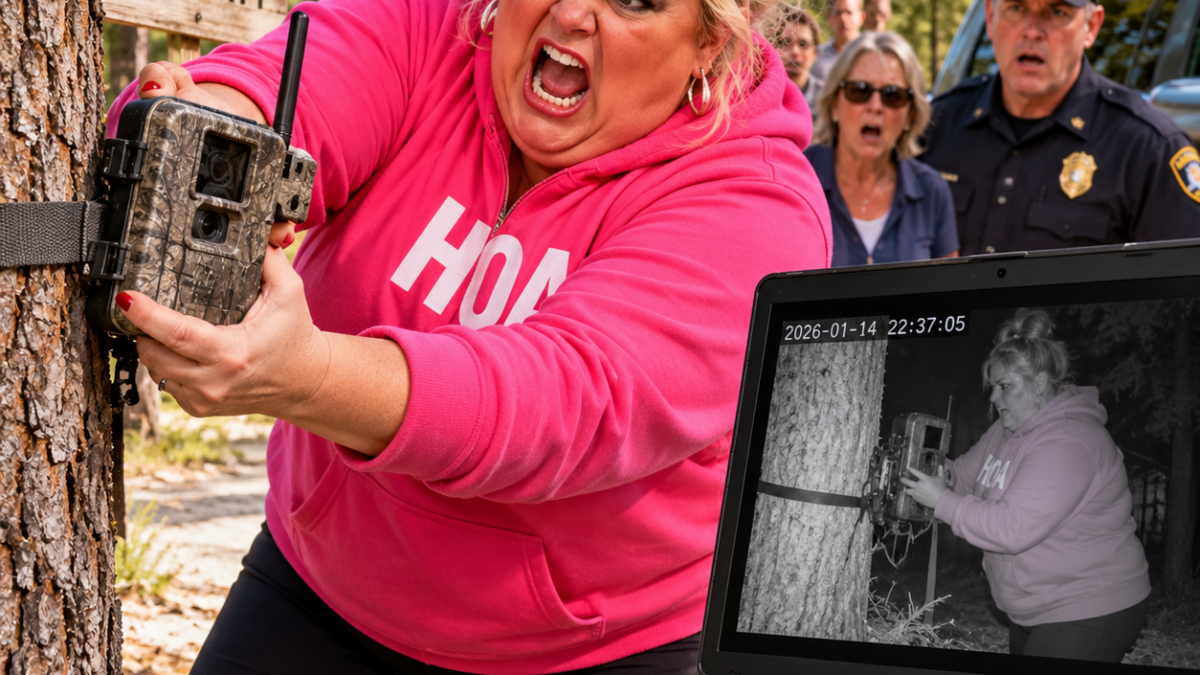
PART 2
I bought those ten acres because I wanted distance.
That was the whole point.
After twenty years in uniform, I had grown tired of hearing someone else’s schedule through a wall.
Tired of traffic.
Tired of temporary quarters.
Tired of moving every few years.
Tired of waking up already responsible for problems hundreds of other people had created.
I wanted trees between myself and the world.
The property was long and rectangular, heavily wooded toward the back with oak, cedar, and pine.
My house sat near the western third, far enough from the county road that headlights never reached my windows.
There was a narrow gravel drive, a workshop, a small pond, and enough wildlife that I sometimes went two days without seeing another person but saw twenty deer.
That was exactly how I liked it.
Whispering Pines had been built after my parcel was established.
The developer approached the original owner about purchasing part of it, but he refused.
When I bought the land years later, the survey made the boundary unmistakable.
Steel pins.
Coordinates.
Recorded plat.
Whispering Pines ended at its landscaped common path.
My woods began ten feet beyond it.
I maintained a mowed strip along the line because I believed clear boundaries prevented stupid arguments.
For a while, I was right.
Most Whispering Pines residents barely noticed me.
Some jogged along the path.
Some walked dogs.
People waved.
I waved back.
Then Karen became HOA president.
My first communication from her arrived on cream-colored stationery.
The envelope carried an embossed pine tree.
Inside, I found a request that I clear underbrush near the property line because residents found it “visually inconsistent with the cultivated character of the community.”
I read it twice.
Then threw it away.
Two weeks later, another arrived.
This one mentioned fire safety.
That was almost intelligent.
Except the section she complained about had been professionally thinned the previous year.
I wrote back politely.
**My property is not subject to Whispering Pines covenants. Vegetation management on my parcel complies with county fire regulations. Please remove my address from your enforcement system.**
That should have ended it.
Instead, it created a hobby for her.
Brush.
Fence stain.
One stack of split firewood.
The color of the metal roof on my workshop.
Every letter referred to “community standards.”
Every answer from me contained some version of:
**I am not part of your community association.**
Karen apparently interpreted repetition as resistance.
Then I installed the trail camera.
Again, not for her.
I found three beer cans near a game trail.
Then a chip bag.
Then a cigarette pack.
Wild deer are many things.
They are not usually Bud Light drinkers.
I mounted a cellular camera to an oak approximately thirty yards inside my property.
Its lens faced deeper into my own woods at a diagonal.
The far edge of the frame occasionally caught a slice of HOA common lawn beyond the trees.
Nothing more.
Motion activated.
Infrared at night.
Cloud upload.
I chose cellular backup because trail cameras disappear.
Hunters know that.
Thieves know that.
Ironically, Karen proved the point.
That night after she stole it, I began watching the files.
First clip.
Doe.
Two fawns.
I smiled.
Second.
Raccoon.
Third.
Nothing but branches moving in wind.
Fourth.
A coyote.
I watched for almost an hour.
Then something different appeared.
Karen.
Daylight.
Walking her little white poodle along the common path.
The dog’s name was Princess Fluffybutt.
I wish I were inventing that.
Karen stopped near a corner lot.
Looked around.
Then unclipped the leash.
Princess Fluffybutt trotted onto the lawn belonging to the Henderson family.
I knew them only by sight.
The Hendersons maintained their grass like Augusta National.
Karen’s dog wandered to the middle of it.
Squatted.
Karen waited.
Then called the dog back.
She did not pick anything up.
I stared at the screen.
Petty.
Hypocritical.
Funny, considering Karen had reportedly fined residents for failing to clean after pets in common areas.
I saved it anyway.
**Henderson Incident.**
Continued.
More animals.
Then a nighttime clip.
Infrared.
Timestamp 11:47 p.m.
A person appeared.
Dark tracksuit.
Karen.
She carried a spray can.
She walked toward a campaign sign visible at the edge of HOA common space.
**VOTE DAVID FLETCHER — WHISPERING PINES BOARD**
Karen shook the can.
Sprayed black paint across Fletcher’s name.
Then across his face printed on the sign.
Looked around.
Walked away.
I leaned back.
That was not petty anymore.
I saved it.
**Fletcher Sign Vandalism.**
The camera had unintentionally become a witness.
I should have felt excited.
Instead, I felt uneasy.
People who vandalize election signs at midnight and steal cameras in daylight usually do not respond well when challenged.
I kept watching.
Clip after clip.
Around one in the morning, my eyes hurt.
I considered stopping.
Then I noticed a thumbnail showing two people.
Daylight.
One was Karen.
The other wore a collared work shirt.
I clicked.
Prestige Landscaping.
I recognized the logo.
Their trucks were constantly inside Whispering Pines.
The man stood near the edge of the common area.
Karen faced him.
Because the camera was designed to capture animal sounds, its microphone was better than expected.
Birds.
Wind.
Then his voice.
“Everything set for renewal?”
Karen answered.
“The board’s nervous about the increase.”
“You can handle them?”
She laughed.
“I always handle them.”
The man looked around.
Then held up a thick manila envelope.
“Quarterly appreciation bonus.”
My hand stopped on the mouse.
Karen glanced both directions.
“Fifteen?”
“Just like we discussed.”
He handed over the envelope.
She opened her purse.
Tucked it inside.
“Pleasure doing business with you, Bill.”
He smiled.
“Same.”
Then they talked about flowerbeds.
Petunias.
Mulch.
Entrance landscaping.
Ordinary conversation immediately following something that looked extraordinarily improper.
I replayed it.
Once.
Twice.
Three times.
Maybe “bonus” meant something legitimate.
Maybe it was documentation.
Maybe the envelope contained receipts.
I was an engineer, not a prosecutor.
Assumptions are dangerous.
But one phrase kept bothering me.
**Fifteen.**
Fifteen what?
Percent?
Hundred?
Thousand?
The next line answered it.
Bill said:
“Same fifteen percent arrangement as before.”
There it was.
My stomach tightened.
Karen had stolen the camera because she believed it threatened her authority.
She had no idea the device had already uploaded a conversation that could threaten much more.
I saved the original.
Then downloaded another copy.
External hard drive.
Encrypted cloud folder.
USB.
I did not edit it.
Did not post it.
Did not send it through neighborhood Facebook groups.
Evidence becomes weaker when people treat it like entertainment.
I needed context.
Records.
Corroboration.
And before any of that, I needed my stolen property formally documented.
I waited exactly twenty-four hours.
That was deliberate.
Karen had been given one clear opportunity to return the camera.
She did not.
The next morning, I called the sheriff’s non-emergency line.
Deputy Aaron Miller arrived around ten.
No relation to Karen.
Young.
Professional.
Tired expression.
I showed him the survey.
Boundary pin.
No-trespassing signs.
Security footage.
Karen walking onto my property.
Taking the camera.
Her own words:
**I confiscated it.**
Miller watched twice.
“Pretty clear she took it.”
“Correct.”
“Value?”
“About four hundred fifty dollars.”
He exhaled.
“I’ll be straight with you.”
I already knew what was coming.
“For that value, if she claims she believed it was HOA property or evidence of a privacy violation, the DA may treat this as civil unless there’s more.”
“She says on video she took it.”
“I agree.”
“She’s standing beside the survey marker.”
“I agree.”
“Then how is it ambiguous?”
“I didn’t say it is.”
He handed the phone back.
“I’m saying the criminal system may not prioritize a four-hundred-dollar camera dispute between neighbors.”
I hated that answer.
But he wasn’t wrong about how systems operate.
“What can you do?”
“I’ll speak with her. Tell her to return it.”
“Police report?”
“Yes.”
“I want the report number.”
“You’ll get one.”
“Good.”
He almost smiled.
“You’re very organized.”
“Occupational damage.”
He drove to Karen’s house.
From my front window, I watched his cruiser pass through the subdivision entrance.
Twenty minutes later, it came back.
No camera.
Fifteen minutes after that, an email arrived.
**WHISPERING PINES ESTATES HOMEOWNERS ASSOCIATION**
Subject:
**FORMAL CITATION AND NOTICE OF LEGAL ENFORCEMENT**
I opened it.
Karen fined me five hundred dollars for “unauthorized electronic surveillance.”
Another two hundred fifty for “creating a nuisance affecting association privacy.”
Then came the threat.
Failure to pay within seven days could result in legal action, collection costs, and a lien.
I laughed.
Actually laughed.
She had just committed her mistake in writing.
My land was not inside Whispering Pines.
Her board had no lien rights over it through their covenants.
She knew that.
I had already told her.
More than once.
Yet after a sheriff’s deputy visited her about taking my camera, her response was to create fake fines and threaten my title.
That email became evidence number whatever-we-were-up-to.
Then another arrived two days later.
Karen claimed my trail camera had been retained by the HOA’s “Security and Covenants Committee.”
Apparently it was now evidence.
She demanded an additional “administrative storage and disposal fee.”
I called David Fletcher.
His address was in an HOA directory posted publicly for election purposes.
I almost called first.
Decided face-to-face was better.
David was in his garage organizing tools.
Pegboard.
Labels.
Straight rows.
My kind of person.
“Mr. Fletcher?”
“Yes?”
“I’m Ethan Thorne. I own the woods behind Whispering Pines.”
He smiled.
“The wild man.”
“Is that what people call me?”
“Only Karen.”
“Promising start.”
He invited me inside the garage.
I explained the camera.
Trespass.
Theft.
Fake fines.
He listened.
No interruption.
When I mentioned Karen’s name, nothing surprised him.
“She’s been itching to control your parcel since before you bought it.”
“Why?”
“Because she can see it.”
“That’s enough?”
“For Karen.”
He told me how the HOA operated.
Five-person board.
Karen plus two reliable allies.
Meetings poorly attended.
Residents apathetic until something directly affected them.
Karen understood procedure.
More importantly, she understood exhaustion.
Send enough letters.
Schedule enough inconvenient hearings.
Quote enough rules.
Most people give up.
“She’s not stupid,” David said.
“I didn’t think she was.”
“She knows exactly how far most people are willing to fight.”
“Why are you running?”
He leaned against his bench.
“Prestige Landscaping.”
There it was.
I kept my expression neutral.
“What about them?”
“Contract exploded in price.”
“How much?”
“Forty percent increase three years ago. Then annual escalators.”
“Competitive bids?”
“Karen says Prestige provides superior service.”
“Do they?”
He laughed.
“No.”
“Why challenge her now?”
“Because dues keep rising and nobody sees itemized expenses.”
I took out my phone.
“David, I’m going to show you something.”
First, the vandalism clip.
His face changed.
He watched Karen spray his campaign sign.
Then asked:
“Can you send me that?”
“Eventually. Preserve original first.”
“You sound like a lawyer.”
“Engineer.”
“Worse.”
He replayed it.
“That sign cost me forty bucks.”
“This isn’t about forty bucks.”
“No.”
His voice hardened.
“It’s about her thinking no one can stop her.”
I did not show him the kickback clip yet.
I needed one more person.
“Do you know Maria Sanchez?”
David’s expression changed again.
“Yes.”
“Former treasurer?”
“Best treasurer we ever had.”
“Why former?”
“She started asking about contracts.”
There it was.
Maria lived two streets over.
Small house.
Beautiful garden.
She answered behind a screen door.
David had called ahead.
Even so, she was cautious.
“What exactly do you want?”
“Information.”
“About Karen?”
“About Prestige Landscaping.”
Her eyes sharpened.
I explained enough.
Then asked:
“When you were treasurer, did the Prestige invoices concern you?”
“Yes.”
“Why?”
“No itemization. General descriptions. Prices inconsistent with scope.”
“Did you raise it?”
“Yes.”
“What happened?”
“I was told I was creating unnecessary hostility with a trusted vendor.”
“By Karen?”
“Yes.”
“Then?”
“She accused me of mishandling another account.”
“Did you?”
“No.”
Her voice went cold.
“I have spent forty years in accounting. I have testified in fraud cases. I do not lose track of reserve transfers.”
“What happened?”
“Karen convinced two board members I was unstable. I resigned.”
“Do you still have records?”
“Some.”
I made the decision.
Showed her the kickback video.
Maria didn’t react immediately.
That worried me.
She watched again.
Then asked:
“Can I hear the fifteen-percent line one more time?”
I replayed.
She closed her eyes.
When she opened them, fear had been replaced by something else.
Professional anger.
“That explains the numbers.”
“What numbers?”
She invited me inside.
Kitchen table.
Boxes came out.
Old budgets.
Board packets.
Invoices.
Prestige’s cost had risen dramatically after Karen took greater control of vendor negotiations.
Maria had compared local commercial landscaping rates.
Whispering Pines was paying far above market.
“How much above?”
“Without invoices, I can’t prove exact overpayment.”
“Estimate?”
She hesitated.
“Possibly sixty thousand a year in excess cost depending on scope.”
Three years.
My mind did the multiplication.
“But that doesn’t mean theft.”
“No.”
She pointed toward my phone.
“That might.”
We called David.
Two hours later, the three of us sat around Maria’s table.
No dramatic vows.
No talk of destroying Karen.
A plan.
Step one.
Obtain financial records.
The bylaws gave association members inspection rights.
Maria drafted a formal request for three years of:
Vendor contracts.
Invoices.
Canceled checks.
Bid records.
Board approvals.
Bank statements.
Conflict disclosures.
Step two.
David would organize homeowners.
Not around allegations of theft.
Around transparency.
“Why not show everyone the video?” he asked.
“Because then Karen knows everything we have.”
Maria nodded.
“And she starts explaining numbers before we see the numbers.”
“Exactly.”
Step three.
I needed a lawyer.
Not because I wanted revenge.
Because Karen had already threatened a lien and was holding property she had taken from my land.
A veterans’ network led me to Anne Devereux.
Former JAG.
Property litigation.
Association disputes.
Sharp enough that people lowered their voice around her without knowing why.
Her office was downtown.
Bookshelves.
Whiteboard.
No decorative nonsense.
I laid out my case.
Security video.
Survey.
HOA emails.
Vandalism video.
Kickback conversation.
Anne watched everything.
Then stared at the paused frame showing Karen receiving the envelope.
“Do you understand what you have?”
“Potential evidence.”
She smiled.
“Good answer.”
“I’m not a prosecutor.”
“Excellent second answer.”
She stood.
Whiteboard.
“Let’s separate issues.”
She wrote:
**THORNE PROPERTY CLAIM**
Trespass.
Conversion of camera.
Potential defamation depending on publication.
Harassment.
Improper threats.
Then:
**HOA GOVERNANCE**
Financial records.
Vendor contracts.
Fiduciary duties.
Member rights.
Then:
**POTENTIAL CRIMINAL CONDUCT**
She underlined **potential**.
“We do not call this embezzlement yet.”
“Why?”
“Because we don’t know what the envelope contained beyond their conversation.”
“Fifteen percent.”
“Yes.”
“Sounds like a kickback.”
“It does.”
“But?”
“We prove things.”
I liked her immediately.
“Maria gets records,” I said.
“Good.”
“David organizes.”
“Good.”
“What do I do?”
Anne looked at me.
“Nothing stupid.”
“That’s vague.”
“Do not contact Karen. Do not post footage. Do not threaten her. Preserve originals. Let her communicate in writing.”
“She does that enthusiastically.”
“Perfect.”
“Police report?”
“Keep it.”
“Civil lawsuit?”
“Soon.”
“Criminal referral?”
“When corroborated.”
I nodded.
“She stole the wrong camera.”
Anne almost smiled.
“She stole the wrong camera from the wrong engineer.”
Maria sent the records request.
Karen responded forty-eight hours later.
Denied.
Not exactly.
She called it “overly broad.”
Demanded Maria specify individual invoices.
Demanded a stated purpose.
Claimed copying could impose administrative fees.
Maria replied by quoting the bylaw.
All financial records available to members upon reasonable notice.
Ten business days.
Karen ignored it.
Meanwhile, David talked.
Mailbox.
Coffee.
Dog walks.
He did not accuse.
He asked questions.
“Have you noticed dues?”
“Do you know why landscaping costs increased?”
“Would you support an independent audit?”
People listened because everyone had stories.
Wrong welcome mat.
Basketball hoop.
Bird feeder.
Holiday lights.
Trash cans.
Children’s chalk.
Most petty.
A few ridiculous.
More important was the atmosphere.
People feared being targeted.
Karen had turned normal disagreement into personal risk.
I understood that mentality.
Not because an HOA resembled combat.
It didn’t.
But power works through perception.
If people believe resistance will cost more than surrender, most surrender.
Karen had cultivated that calculation.
Then she sent another email to me.
My stolen trail camera, she announced, had been deemed “hazardous surveillance equipment.”
The HOA would charge me for disposal.
Anne replied to my forwarded message with:
**Please never stop this woman from writing.**
David gathered signatures for a special meeting.
HOA rules required fifteen percent.
He got forty-two percent in three days.
Topic:
**Independent forensic audit of HOA finances and vendor contracts.**
Certified petition submitted.
That finally scared Karen.
Mass email.
Every homeowner.
Subject in capital letters:
**URGENT WARNING REGARDING OUTSIDE INTERFERENCE**
I was “a hostile nonresident.”
David and Maria were “serial disruptors.”
The petition threatened “community stability.”
Then she wrote the sentence Anne had predicted she would eventually write.
Residents supporting the petition could be subject to sanctions for conduct detrimental to the association.
I forwarded it.
Anne called immediately.
“She threatened homeowners for exercising a bylaw right.”
“Looks that way.”
“Beautiful.”
“You lawyers worry me.”
“I am adding it to our complaint.”
Civil suit was ready.
Anne named Karen personally for my claims.
She was more cautious than the source version about pretending we could magically pierce every form of association protection, but the facts supported direct claims based on Karen’s own conduct.
Trespass.
Conversion.
False statements.
Harassment.
Punitive relief where permitted.
Replacement cost was trivial.
The camera itself barely mattered financially.
The conduct did.
We waited to serve.
Karen scheduled the special meeting reluctantly.
Two days before it, the process server approached her at the community mail kiosk.
Public.
Calm.
“Karen Miller?”
“Yes?”
“You’ve been served.”
David heard within fifteen minutes.
Whispering Pines probably knew within thirty.
Meeting night felt like pressure before a thunderstorm.
The clubhouse held maybe eighty comfortably.
More than a hundred came.
Standing along walls.
Hallway.
Door.
I sat at the back.
Not my association.
Their fight.
Karen sat at the front.
Four other board members.
Her two allies close.
Two others physically angled away.
Body language often votes before people do.
She struck a gavel.
“Order.”
Nobody cared.
Karen read a statement about unity.
Outside agitators.
Responsible governance.
False accusations.
David stood.
“Point of order.”
Karen’s face tightened.
“The petition contains more than double the required signatures. Tonight’s purpose is a vote on an independent forensic audit.”
“We will follow the agenda.”
“That is the agenda.”
Applause.
She tried technical objections.
Illegible signatures.
Improper notice.
Questionable eligibility.
Maria had verified every signature.
That was the danger of fighting accountants.
They enjoy receipts.
Public comment began.
An elderly woman:
Bird feeder violation.
Young father:
Chalk drawings.
Retired couple:
Mailbox dispute.
Woman with a garden:
Decorative edging.
These were not evidence of corruption.
But they were evidence Karen had exhausted people.
Then Maria stood.
Quiet.
No theatrics.
“My name is Maria Sanchez. I am a certified forensic accountant. I previously served as treasurer of this association.”
The room settled.
She displayed budgets.
Prestige Landscaping spending.
Three-year trend.
Comparable local bids.
Visible scope.
Numbers.
“Whispering Pines has paid approximately one hundred ninety thousand dollars more to Prestige Landscaping over three years than competitive market comparisons suggest for similar services.”
Murmurs.
Karen shouted:
“That is false.”
Maria did not look at her.
“I am not stating that one hundred ninety thousand dollars was stolen.”
Important distinction.
“I am stating that the variance is large enough that every homeowner in this room deserves an independent audit.”
Someone asked:
“Why won’t the board show invoices?”
Karen answered:
“They are available under proper procedure.”
Maria lifted the certified request.
“I followed proper procedure.”
Silence.
Karen’s face changed.
“This woman has a vendetta.”
Maria looked directly at her.
“No. I have arithmetic.”
The room erupted.
Even I smiled.
Karen lost control.
Called Maria incompetent.
Called David ambitious.
Called me a voyeur.
Then pointed toward the back.
“He started this!”
Everyone turned.
I stood slowly.
“I installed a camera on my property to photograph wildlife.”
Karen laughed.
“You were recording this community.”
“It caught some activity near my boundary.”
“You see?”
I looked at David.
He nodded.
Time.
I had discussed it with Anne.
We were not going to show the kickback footage publicly before referral.
But the vandalism clip was David’s call.
He stepped forward.
“Karen, did you destroy my campaign sign?”
“No.”
“Never?”
“No.”
“Are you sure?”
“This is ridiculous.”
He connected his phone to the meeting screen.
Video.
Infrared.
Karen.
Spray can.
Fletcher sign.
Twenty seconds.
The room became silent.
Karen stared at herself vandalizing a candidate’s sign.
Then screamed:
“That footage is illegal!”
Nobody answered.
Not:
“That isn’t me.”
Not:
“It’s fake.”
Her first response was:
Illegal.
David stopped the video.
“I think everyone understands why we need independent oversight.”
The vote happened.
Audit approved overwhelmingly.
Karen’s allies voted no.
Two independent members voted yes.
Karen abstained after attempting to postpone.
Motion passed.
People applauded.
Karen slumped.
But the audit was only the surface layer.
The real file had not been shown.
Anne and Maria compiled the referral package.
Kickback video.
Maria’s financial comparison.
Sworn statement from me describing the camera’s installation and cloud upload.
David’s statement regarding vandalism and governance concerns.
Relevant vendor records available publicly.
Anne delivered it to the district attorney’s economic-crimes division.
Then we waited.
This is the part stories compress.
They make legal consequences appear instant.
Real investigations are paperwork.
Verification.
Authentication.
Subpoenas.
Interviews.
Records.
The DA did not raid Karen the next morning because a lawyer delivered a USB stick.
But the video was strong enough to justify serious review.
Investigators verified the recording.
Confirmed the service provider.
Identified the man as William Preston, owner of Prestige Landscaping.
Financial subpoenas followed.
The audit created internal records access.
Things aligned.
Prestige invoices.
No meaningful competitive bidding.
Regular increases.
Bank withdrawals.
Quarterly timing.
The “fifteen percent arrangement.”
Investigators eventually obtained warrants.
The morning it became public, two unmarked vehicles arrived outside Karen’s house.
I saw them through the trees.
Did not use binoculars.
Didn’t need to.
Several investigators entered.
Hours later, evidence boxes came out.
At Prestige Landscaping, records were collected too.
Whispering Pines stopped pretending nothing was wrong.
Local news reported an investigation into alleged kickbacks connected to HOA vendor contracts.
Karen’s name appeared.
Prestige’s did too.
Then Bill Preston cooperated.
That changed everything.
According to the later court record summarized for the community, Prestige had inflated landscaping costs, with a portion routed back to Karen as undeclared payments connected to contract renewals and increases.
The landscaping overpayment figure that became symbolic was roughly:
$190,000.
My trail camera had not recorded $190,000 changing hands.
It had recorded the conversation that told investigators where to look.
That distinction mattered.
Maria later said it best.
“The camera caught the loose thread. The audit pulled the sweater apart.”
The full forensic review found additional financial irregularities beyond landscaping.
Other vendor relationships.
Questionable expenses.
Poor controls.
Not every suspicious payment became a criminal charge.
But the system Karen built was far dirtier than residents imagined.
Prestige’s owner reached a cooperation agreement.
Karen was charged.
The moment was less joyful than people expected.
Seeing someone arrested does not feel like television.
It feels heavy.
A person’s life changing.
Family involved.
Neighbors staring.
Consequences becoming physical.
I didn’t celebrate.
I also did not feel sorry enough to question the evidence.
She made choices.
Repeated choices.
My civil case remained.
Karen’s lawyer requested settlement.
Anne called me.
“We have leverage.”
“I know.”
“What do you want?”
“My camera replaced.”
She laughed.
“Ethan.”
“What?”
“You paid me more in the first week than the camera cost.”
“It’s the principle.”
“Fine. Camera.”
“And legal fees.”
“Obviously.”
“And the fake fines withdrawn.”
“They were never enforceable.”
“I want written withdrawal.”
“Good.”
“What else?”
Anne paused.
“Punitive damages.”
I looked through my office window.
The oak where the camera once hung stood thirty yards into the woods.
For months, Karen had taken space in my head.
Every alert.
Every email.
Every legal bill.
Every time I walked the boundary.
I didn’t need to ruin her financially.
Her criminal case already dwarfed anything I could do.
“I want enough that she understands taking someone’s property and threatening their home has a cost.”
Anne negotiated.
Replacement.
Fees.
Damages.
Written retraction.
Apology.
Confidential portions stayed confidential.
I will not pretend the civil settlement itself was $190,000.
It wasn’t.
The $190,000 number belonged to the landscaping overpayment/kickback scheme uncovered after the camera clip triggered scrutiny.
My personal settlement was substantial but far smaller.
That made the story more truthful.
The larger cost to Karen came elsewhere.
Restitution.
Criminal consequences.
Lost position.
Legal expenses.
Reputation.
The HOA removed her before trial.
Her two closest board allies resigned.
David and Maria became interim members.
Prestige Landscaping was terminated.
New bids came in.
The winning contract was dramatically cheaper.
Same grass.
Same entrance flowers.
Same common areas.
Almost half the old cost.
Residents were furious.
Not because petunias mattered.
Because numbers made betrayal understandable.
Someone had looked at their monthly dues and treated them as a private opportunity.
The new audit was presented at a packed meeting.
This time I sat with David rather than the back wall.
Maria stood at the front.
Graphs.
Records.
Vendor comparisons.
Money.
At one point she displayed a simple number.
**$190,000**
“That,” she said, “is approximately how much Whispering Pines overpaid Prestige Landscaping relative to supported competitive benchmarks across the period under review, tied to the contracting arrangement now under criminal investigation.”
Nobody spoke.
A woman near the middle began crying.
Not dramatically.
Quietly.
Her husband asked what was wrong.
She said:
“We almost lost our house over dues.”
That hit differently.
For Karen, fifteen percent had been an envelope.
For homeowners, inflated contracts had been increased dues.
Late fees.
Arguments between spouses.
People putting expenses on credit cards.
Retirees cutting budgets.
Corruption is always cleaner from the receiving end.
Maria understood.
She lowered her voice.
“Numbers represent people.”
That became her guiding principle as treasurer.
The criminal case took time.
Karen ultimately entered a plea rather than force a trial.
The final charges and sentence were less theatrical than neighborhood rumor had predicted, but serious.
Felony conviction.
Custodial sentence.
Probation.
Restitution obligations.
Her days as HOA president were finished permanently.
The community imposed governance changes that mattered more to me than seeing her punished.
Competitive bids above a threshold.
Conflict-of-interest disclosures.
Dual signatures.
Treasurer access.
Quarterly financial reports.
Member inspection rights.
Independent annual review.
No president with unilateral vendor authority.
David became president after a special election.
Maria became treasurer.
I called to congratulate them.
David answered.
“You caused this.”
“No.”
“You did.”
“Karen caused it.”
Maria’s voice came through in the background.
“Correct.”
I smiled.
“Thank you, Maria.”
“Evidence matters.”
Accountants and engineers.
Natural allies.
The HOA reimbursed some of my initial expenses voluntarily.
I tried refusing.
David insisted.
“You protected your land.”
“Yes.”
“And accidentally protected ours.”
“Accidentally is carrying a lot of weight.”
“Take the check.”
I did.
Then David, Maria, and George walked to my property line one evening.
They stopped before the survey marker.
That mattered.
David called:
“Ethan?”
I walked over.
“You can cross.”
He shook his head.
“We wanted to ask.”
Three adults standing ten feet away from the exact place Karen had crossed without permission.
Small moment.
Huge difference.
They stepped onto my land.
Maria handed me an envelope.
Board letter.
Formal apology.
It acknowledged:
My property was outside HOA jurisdiction.
The trail camera had been lawfully installed on my land.
The fines were rescinded.
Any suggestion the HOA could lien my property was withdrawn.
They apologized for Karen’s conduct.
I read it.
Then folded it.
“Thank you.”
George looked toward the oak.
“You putting another camera up?”
“Eventually.”
David laughed.
“Please do.”
Maria looked at him.
“No.”
“I mean for wildlife.”
“Careful.”
We stood talking.
Not about Karen.
About normal things.
Deer population.
Property taxes.
A damaged drainage culvert.
George’s bad knee.
That was the first moment I felt the conflict ending.
Not sentencing.
Not settlement.
Not Karen losing office.
Three neighbors asking permission before crossing a boundary.
That is how civilization works.
The new camera arrived two weeks later.
Better model.
Higher resolution.
Improved night vision.
Faster upload.
I mounted it to the same oak.
Same height.
Same direction.
David came along the common path while I worked.
“Recording me?”
“Only if you grow antlers.”
“Give me time.”
He waved.
Kept walking.
First alert came at 2:14 a.m.
I woke.
Saw the notification.
For a second, adrenaline hit.
Some part of me expected Karen.
Trespass.
Spray paint.
Envelope.
I opened the app.
Raccoon.
Fat.
Sitting directly in front of the lens.
I laughed in bed.
That was what the camera was supposed to be.
A camera.
Not evidence.
Not a weapon.
Not a witness.
Just a silent box watching animals live their lives.
The next night:
Doe.
Then twin fawns.
Then a red fox.
Peace returned gradually.
Whispering Pines changed faster.
Fines dropped.
Not because every rule vanished.
The new board kept reasonable standards.
Common property needed maintenance.
Dues needed collection.
Parking rules still existed.
But enforcement shifted.
Warning first.
Conversation.
Actual hearing.
Transparent appeal.
No retaliation.
David’s first newsletter contained one line Maria wrote:
**Rules exist to serve a community. A community does not exist to serve its rules.**
I framed that.
Right beside Karen’s fake lien threat.
Sometimes symmetry matters.
Months passed.
Karen’s house remained dark during the criminal proceedings.
Eventually it sold.
Young couple.
Two children.
The first summer after they moved in, I heard laughter through the trees.
Kids playing.
Somebody bouncing a basketball.
Dog barking.
Normal life.
Karen had treated noise as evidence of disorder.
I had begun hearing it as evidence of freedom.
One afternoon, the new owner knocked at my door.
“Mr. Thorne?”
“Ethan.”
“I’m Mike.”
We shook hands.
“We bought the Miller place.”
“I know.”
He looked embarrassed.
“Everybody tells us stories.”
“Most are exaggerated.”
“Did she really steal your camera?”
“Yes.”
“Okay, that one wasn’t.”
“No.”
“Did it really catch her taking a bribe?”
“It captured a conversation and cash-envelope exchange that helped start an investigation.”
He smiled.
“You answer like a lawyer.”
“Engineers are worse.”
He laughed.
Then became serious.
“We wanted to let you know we’re replacing part of the fence.”
“Your fence?”
“Yes.”
“No problem.”
“We might have contractors briefly near the boundary.”
“Thanks for asking.”
“That’s all.”
He walked away.
I stood in the doorway thinking about how simple respect is.
Ask.
Explain.
Coordinate.
Karen turned every boundary into a contest because she believed asking meant surrendering power.
Mike asked one question and prevented conflict entirely.
People like Karen confuse cooperation with submission.
They are not the same.
A year after everything, David invited me to the Whispering Pines annual meeting.
“No.”
“You haven’t heard why.”
“Still no.”
“We’re presenting Maria with an award.”
“Tempting.”
“And cutting dues.”
I paused.
“How much?”
“Twelve percent.”
I attended.
The room looked different.
Same tables.
Same walls.
Different temperature.
People talked.
Laughed.
No one looked over their shoulder before criticizing a proposal.
Maria presented financials line by line.
Questions welcomed.
Prestige’s replacement contract had saved tens of thousands.
Other vendors had been rebid.
Reserve accounts clearer.
Insurance reviewed.
At the end, dues reduction approved.
Applause.
A retired woman came to me afterward.
“You’re the camera man.”
Apparently that was my identity now.
“Yes.”
“My husband says you saved us.”
“No.”
“He says dues would’ve kept increasing.”
“Maria saved you.”
Maria overheard.
“Camera first.”
David joined.
“Karen stole it.”
George added:
“So Karen saved us.”
All three stared at him.
“What?”
He shrugged.
“She created the evidence.”
Maria shook her head.
“No credit for criminals.”
I laughed.
The retired woman looked confused.
“Are all meetings like this now?”
“Unfortunately,” David said.
Whispering Pines learned to laugh at itself.
That was healthy.
Karen had treated titles as sacred.
David mocked his own constantly.
When someone introduced him as HOA president at a barbecue, he replied:
“Temporary unpaid complaint receiver.”
Maria preferred:
“Guardian of the spreadsheet.”
People teased them.
They survived.
Authority that cannot survive humor is usually insecure authority.
My relationship with the woods changed too.
For months, every trail-camera alert made me suspicious.
Then eventually the alert sound became pleasant again.
Buck.
Coyote.
Bobcat once.
That one made my week.
Then something unexpected appeared.
Teenagers.
Two boys crossed from the common area.
Backpacks.
They stopped near my no-trespassing sign.
One pointed.
They argued.
Then turned around.
I watched the clip twice.
Old me might have marched to the HOA.
Instead, I did nothing.
They saw the line.
Respected it.
System working.
Another month later, one boy returned with his father.
They knocked.
“Mr. Thorne?”
“Yes.”
“My son is doing a wildlife photography project.”
The teenager looked nervous.
“He says you have deer back here.”
“Several.”
“He wanted to ask if you’d let him photograph from your property.”
Ask.
That word again.
I said yes.
Saturday morning, we walked trails.
I showed him sign.
Tracks.
Camera placement.
Wind direction.
The kid took pictures.
No trespassing.
No conflict.
Permission.
By afternoon, he had a beautiful photograph of a six-point buck moving through cedar.
His father emailed it later.
I printed it.
Hung it near my desk.
The stolen camera story started as a violation of sanctuary.
It ended with me choosing when to share it.
That mattered.
Three years later, Maria called.
“Ethan.”
“What happened?”
“Why do you assume something happened?”
“You only call before nine if someone stole money.”
“Fair.”
“What?”
“We found an old box.”
Dangerous sentence.
“From archive storage.”
“Worse.”
“Your original camera is in it.”
I went silent.
“What?”
“The Reconyx.”
“No.”
“Yes.”
“Karen never disposed of it?”
“Apparently not.”
“Where?”
“Locked cabinet in the old HOA office.”
I drove over.
Maria placed it on a table.
Camouflage case scratched.
Strap damaged.
Mud dried into one corner.
My name still written inside battery compartment.
I picked it up.
Four years.
A $450 object.
Tiny compared with everything that followed.
“You want it?”
“It’s mine.”
“Obviously.”
I turned it over.
Strange feeling.
This little machine had changed dozens of lives without doing anything more sophisticated than being turned on at the right time.
Maria smiled.
“You going to use it?”
“Probably not.”
“What will you do?”
I thought.
“Keep it.”
Back home, I cleaned it.
Removed dead batteries.
The SD card had been taken long ago, but I had cloud originals.
I placed the old camera on a shelf above my desk.
Not a trophy of Karen’s destruction.
A reminder of something more useful.
Always preserve evidence before confronting someone who thinks they control the narrative.
The new camera stayed outside.
The old one rested inside.
One watched the future.
One remembered the past.
Years passed.
David stepped down after three terms.
Voluntarily.
Karen would have considered that insanity.
Maria stayed treasurer one more year, then retired.
The board instituted term limits.
Another idea Karen would have hated.
A younger mother named Rachel became president.
Her first action was to ask residents whether meetings should move from Tuesday afternoons to evenings so working families could attend.
Attendance doubled.
That mattered.
Karen’s power had partly come from empty rooms.
Governance changes when people show up.
David once told me:
“We blamed her for everything.”
“Wasn’t everything her fault?”
“Most.”
“But?”
“We let her.”
That was uncomfortable.
Correct.
She had three reliable votes because almost nobody challenged appointments.
Budgets passed because meetings were empty.
Vendor renewals slid through because residents trusted summaries.
Karen exploited that.
But systems should be built expecting imperfect people.
Good governance doesn’t depend on everyone being honest.
It creates enough visibility that dishonesty becomes difficult.
That is what Maria changed.
No single officer controlled vendor selection.
Competitive bids.
Written scoring.
Meeting disclosure.
Financial review.
Bank access separated.
Audit trails.
Boring.
Powerful.
I respected it.
Engineering works the same way.
You don’t build a bridge assuming nobody will make a mistake.
You design redundancy.
Fail-safes.
Inspection.
Drainage.
Load limits.
Governance is infrastructure made of people.
Whispering Pines had no redundancy.
Karen became a single point of failure.
The camera exposed it.
One night, nearly six years after the theft, I received a wildlife alert.
Opened it.
Black bear.
Young male.
Walking directly beneath the oak.
I watched him sniff the camera.
Stand.
Put both paws on the tree.
For one terrifying second, I thought he would rip the new camera down.
Then he dropped.
Walked away.
I laughed.
“Better judgment than Karen.”
No one heard.
Perfect.
I still occasionally received messages from people who had heard the story.
They wanted advice.
“How do I destroy my HOA president?”
Wrong question.
I usually answered:
“Know whether the HOA actually has authority over you. Keep communication in writing. Preserve evidence. Don’t trespass. Don’t threaten. Don’t exaggerate. Get qualified legal advice if money or title is at risk.”
Boring advice.
That is because real success often looks boring.
Karen lost because she believed drama was power.
Threats.
Titles.
Fines.
Emails.
Gavels.
I won because of quieter things.
Survey pins.
Original files.
Timestamp metadata.
Certified letters.
Financial records.
Witnesses.
Procedure.
One afternoon, the teenager I had helped with wildlife photography returned.
Older.
College student now.
He brought a framed photograph.
The buck.
Same picture.
On the bottom:
**THANKS FOR LETTING ME CROSS THE LINE THE RIGHT WAY.**
I read it twice.
That line almost broke me.
Not because of the deer.
Because it captured everything.
Crossing a boundary is not inherently wrong.
People cross boundaries every day.
Physical.
Social.
Professional.
The difference is permission.
Karen crossed mine because she believed her title erased my right to say no.
The boy crossed because he asked.
One created a legal war.
The other created a memory.
I hung his photograph beside the old camera.
Eventually Karen completed her sentence and moved away.
I never contacted her.
Never wanted to.
Someone told me she sold the house through relatives.
Someone else said she moved several counties away.
Neighborhood rumor claimed ten different things.
I stopped asking.
That may have been the final stage of victory.
Indifference.
Hatred ties you to someone almost as effectively as love.
I did not want Karen occupying retirement years she had already disrupted enough.
She became irrelevant.
The forest remained.
I grew older.
My knees reminded me every winter.
The gravel drive seemed longer.
I hired help for heavier work.
But mornings stayed mine.
Coffee.
Porch.
Fog through trees.
Trail-camera notifications.
Sometimes deer.
Sometimes nothing.
Once a skunk so close to the lens that the frame became mostly fur.
Life.
Ordinary.
That was what I bought the acreage for.
One fall morning, I walked to the old oak.
The original strap marks had disappeared beneath bark growth.
Trees heal differently.
They don’t erase damage.
They grow around it.
I touched the trunk.
Thought about Karen struggling with the strap years earlier.
Breathing into the microphone.
Triumphant.
Certain she was confiscating evidence against me.
Instead, she carried away a dead shell after the important files had already escaped into the cloud.
The irony still made me smile.
Technology mattered.
But timing mattered more.
Had I confronted her earlier about the clips?
She might have destroyed records.
Warned Prestige.
Coordinated stories.
Had I posted the kickback video online immediately?
Maybe it would have gone viral.
Maybe it also would have contaminated witness accounts, created defamation risk, and turned investigation into spectacle.
Instead, we preserved.
Corroborated.
Audited.
Referred.
That patience was the part nobody found exciting.
It was also the part that worked.
My military career taught me that most successful operations are boring from the inside.
Planning.
Waiting.
Checking.
Backup plans.
Then a short moment when everything aligns.
That was this case.
Karen created years of wrongdoing.
The camera captured seconds.
Those seconds pointed people toward years.
$190,000 became the number everyone remembered.
But I remembered other numbers.
Five feet.
How far she stepped inside my property.
$450.
Approximate camera value.
Twenty-four hours.
The chance I gave her to return it.
Forty-two percent.
Homeowners who signed the audit petition.
Fifteen percent.
The phrase on the recording.
Those smaller numbers built the larger one.
And the largest consequence could not be measured in dollars.
Whispering Pines stopped being afraid.
Maria once told me something after a meeting.
She said:
“The first time Karen threatened me with a lawyer, I stopped asking questions.”
“Why?”
“I had grandchildren. Retirement savings. I didn’t want trouble.”
“Understandable.”
“No.”
She shook her head.
“I’m an accountant. Questions were my job.”
“You were intimidated.”
“That’s my point.”
She looked toward the community center.
“People think courage means not being afraid. Sometimes it means being embarrassed that you stayed quiet and deciding you’re done.”
I remembered that.
Maria became one of the most respected people in Whispering Pines.
Not because she had never been afraid.
Because she returned.
That was a better story than mine.
I already lived outside Karen’s jurisdiction.
My deed protected me.
Maria lived inside it.
She risked social isolation.
Threats.
Reputation.
She came back anyway.
David too.
The Henderson family.
The elderly woman with the bird feeder.
Parents with chalk drawings.
Dozens.
One person with evidence can start change.
But a community changes only when people participate.
The camera did not save Whispering Pines.
It opened a door.
They walked through.
That is why, when David once thanked me publicly, I corrected him.
“You removed Karen.”
“Because of your camera.”
“No.”
I pointed around the room.
“Because people voted.”
Maria nodded.
“Finally.”
Today, Whispering Pines is still an HOA.
That surprises people.
They expect the ending to be the association dissolved.
It wasn’t.
The roads still need maintenance.
Common areas still need insurance.
Entrance landscaping still exists.
People still argue about budgets.
One year they fought over whether to replace decorative streetlights.
Three meetings.
I heard about all three.
Democracy is exhausting.
Better than corruption.
The association became what it should have been from the beginning.
A boring administrative structure accountable to the people who pay for it.
No kingdom.
No queen.
No fear.
My land remained outside.
Exactly as before.
Except now, nobody sends me barn-color suggestions.
I once considered repainting the workshop bright purple just to test them.
Decided peace was worth more.
Age brings wisdom.
Or fatigue.
Hard to tell.
One winter afternoon, snow—rare for our part of the state—dusty and light, covered the woods.
The camera alerted.
A fox moved through white grass.
I watched the ten-second clip three times.
Nothing illegal.
No people.
No money.
No vandalism.
Just a fox.
I realized I had not thought about Karen in months.
That felt better than any settlement check.
People tell stories about revenge as if the reward is seeing an enemy suffer.
Sometimes that feels satisfying.
I won’t pretend otherwise.
Watching the fake fines disappear felt good.
Watching Prestige lose the contract felt good.
Hearing that restitution had been ordered felt good.
Seeing Maria present real financial statements while homeowners applauded felt very good.
But suffering is not a durable reward.
Peace is.
The night Karen stole my camera, I believed my sanctuary had been invaded.
For a while, I responded by making the conflict central.
Necessary.
Temporary.
Then the legal pieces moved.
Governance changed.
Karen disappeared.
At some point, I had to reclaim the woods from the story.
The oak tree was not “where Karen stole my camera.”
It was an oak tree.
The game trail was not “where corruption was exposed.”
It was where deer walked.
The common path beyond my boundary was not enemy territory.
It was where neighbors exercised.
That mental change mattered.
If every place remains attached to what hurt you there, eventually your whole world becomes a map of injuries.
I did not retire for that.
So I let the woods become woods again.
One evening, Rachel—the newer HOA president—walked the common path with her daughter.
They stopped at the survey marker.
Rachel waved.
“Ethan?”
“Yes?”
“Can Mia see the trail camera?”
The little girl looked about eight.
“Sure.”
They waited.
I walked over.
“Come on.”
Mia stared at the camouflage case.
“Does it take pictures of bears?”
“One so far.”
“Can I see?”
I opened the app.
Bear.
Deer.
Fox.
Raccoon.
She loved the raccoon.
“Does it take pictures of people?”
“If they walk in front of it.”
Her mother looked at me.
Awkward half-second.
Then I said:
“That’s how cameras work.”
Rachel laughed.
“Fair.”
Mia asked:
“Did someone steal your old one?”
Kids hear everything.
“Yes.”
“Why?”
“Bad decision.”
“Did she go to jail because she stole it?”
“No.”
Important.
“The camera helped uncover something much bigger.”
“What?”
Rachel intervened.
“Adult stuff.”
Mia looked disappointed.
“Boring.”
“Very.”
She returned to the raccoon.
Good.
That was how I wanted the next generation to know the camera.
Animals first.
Karen trivia second.
As they left, Rachel stopped at the boundary.
“Thanks.”
“For what?”
“Not treating all of us like her.”
I knew who she meant.
“That wouldn’t be fair.”
“No.”
She smiled.
“But people do unfair things when they’re angry.”
She walked away.
I stood there longer than necessary.
That may have been the most meaningful compliment anyone gave me.
Not that I fought well.
That I stopped.
Karen tried to turn boundaries into weapons.
I tried not to.
There is a line between protecting your rights and enjoying punishment.
I came close to it.
Anne kept me disciplined.
Maria kept facts central.
David kept the homeowners focused.
Without them, maybe I would have posted the clip in rage.
Maybe things would have become uglier.
Justice is rarely a solo performance.
Years later, Anne retired.
At her retirement dinner, she introduced me to another lawyer.
“This is Ethan.”
The lawyer smiled.
“Trail camera case?”
I sighed.
“Yes.”
Anne laughed.
“Legendary.”
“You exaggerate.”
“I have never exaggerated in my life.”
“You billed in six-minute increments.”
“Precision.”
Engineer and lawyer.
Same disease.
Before leaving, she handed me a small package.
Inside was a plaque.
**PRESERVE THE ORIGINAL FILE.**
I laughed.
“Seriously?”
“Best legal advice I ever gave you.”
True.
I put it near the old camera.
The shelf now held:
Original camera.
Survey copy.
HOA apology.
Buck photograph.
Plaque.
Not a shrine.
A record.
Objects become stories because people attach memory to them.
The original camera was scratched plastic.
Value maybe nothing now.
Still, I kept it.
Because every time I saw it, I remembered the moment Karen held it against her chest and told me she had confiscated evidence.
She believed possession meant control.
That was her deepest misunderstanding.
She took the hardware.
The information was already gone.
She controlled meetings.
Residents still had votes.
She controlled contracts.
Records still existed.
She controlled the newsletter.
Facts still circulated.
She controlled fear.
Until people stopped being afraid.
Power based on possession is fragile.
Information moves.
Trust moves.
People move.
Eventually consequences move too.
One afternoon, David and Maria visited after both had left the board.
We sat on my porch.
Coffee.
Maria complained the new treasurer used different spreadsheet formatting.
“You retired.”
“That does not excuse ugly columns.”
David smiled.
“She still reviews every report.”
“I read.”
“You annotate.”
“Errors should not survive.”
I looked at them.
“You miss it.”
“No,” they said simultaneously.
We laughed.
David stared toward the oak.
“Can I ask something?”
“Sure.”
“What would’ve happened if Karen never stole the camera?”
I thought.
“I probably would’ve reviewed footage eventually.”
“But not right then.”
“No.”
“The kickback clip might’ve sat in your cloud account.”
“Yes.”
“For months?”
“Maybe.”
Maria shook her head.
“So the theft accelerated her own downfall.”
“Basically.”
David leaned back.
“That woman had extraordinary instincts.”
“For self-destruction.”
We sat quietly.
He continued.
“If she had just ignored you…”
“Possibly nothing happens.”
“If she returned the camera…”
“Still could have discovered the clip.”
“If she apologized…”
“Civil dispute probably ends.”
“If she hadn’t sent fake fines…”
“Less evidence of harassment.”
“If she had turned over records when Maria asked…”
“Maybe audit without war.”
Maria sipped coffee.
“If she had not taken kickbacks, none of this mattered.”
There.
The simplest answer.
People focus on tactical mistakes.
Stolen camera.
Threatening emails.
Vandalism.
Stonewalling.
Those accelerated consequences.
The original wrongdoing remained the core.
Without corruption, a camera recording an envelope would be explainable.
Without inflated contracts, audit would clear her.
Without secret arrangements, records would protect her.
Transparency is terrifying only when there is something to hide.
That is why Maria insisted every new board member learn the same rule:
“If you would be embarrassed to explain a transaction to a room full of homeowners, do not make the transaction.”
Simple governance.
Hard for Karen.
The trees grew.
The oak thickened.
My ten acres remained mostly unchanged.
That was what I wanted.
One spring, a storm brought down a large limb near the camera.
Missed it by inches.
I moved the camera temporarily.
The empty strap space on the trunk looked strange.
For two days, no alerts.
I missed them.
So I mounted a different bracket.
Adjusted angle.
Turned it back on.
First clip:
Squirrel.
Absolutely nothing happened.
Perfect.
That night, I sat on my porch.
Fireflies.
Warm air.
Distant laughter from Whispering Pines.
Somewhere a lawn sprinkler hissed.
My phone buzzed.
Camera alert.
Doe.
Two fawns.
Almost identical to the footage I had seen the night Karen stole the original.
I smiled.
Full circle.
There was a time when every alert represented vigilance.
Now it meant curiosity again.
That is healing.
Not forgetting.
Not pretending.
Returning ordinary things to their ordinary purpose.
Karen stole my trail camera because she wanted to control what could be seen.
Instead, that theft forced me to look more closely at what the camera had already seen.
What I found helped expose a contracting scheme whose landscaping component carried a figure of roughly $190,000 in excess payments and alleged kickbacks.
But even that number is not why I remember the story.
I remember the survey marker.
Five feet.
Karen standing on the wrong side.
I remember saying:
“Put it down.”
And her refusing.
That was the moment everything began.
One person believed a title entitled her to ignore a boundary.
Years later, three board members stood at that same marker and asked:
“May we come across?”
That was the ending.
Not prison.
Not money.
Not a mug shot.
Respect returning to the place where arrogance had crossed first.
If you want the satisfying version, yes:
Karen lost the presidency.
Prestige lost the contract.
The audit exposed serious financial misconduct.
Criminal investigators followed the money.
Restitution was ordered.
My civil claim was settled.
My stolen camera eventually came home.
Whispering Pines rewrote its financial controls.
HOA fees fell.
Neighbors stopped living under constant threat of retaliation.
All of that happened.
But the moment I knew I had truly won came much later.
Two in the morning.
Phone buzzed.
I opened the trail-camera app.
A raccoon sat beneath the oak.
No trespasser.
No envelope.
No corruption.
Just a ridiculous fat raccoon washing something in a puddle.
I laughed quietly.
Closed the app.
Went back to sleep.
My woods were boring again.
And after everything Karen Miller had dragged into them, boring was the most beautiful thing I could imagine.