PART 2: HOA Karen Shut Off Water to My 2,000-Tree Orchard—She Had No Idea the Irrigation District Answered to Me
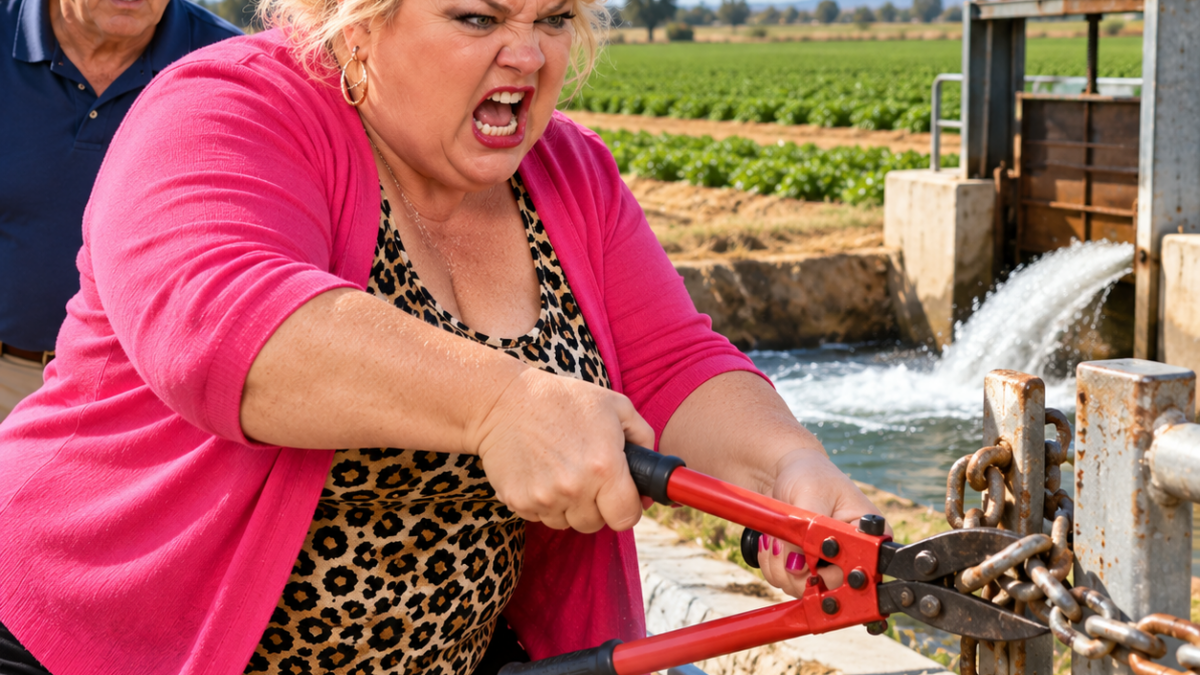
PART 2
The irony was that I had moved to that valley because I was tired of managing other people’s problems.
For twenty years, I had served in the Army Corps of Engineers. My world had revolved around infrastructure, systems, logistics, redundancy, flood control, road construction, field water supply, emergency repairs, and the thousand invisible things people rarely notice until they stop working.
A functioning system is usually silent.
Turn a faucet and water appears.
Flip a switch and power arrives.
Drive across a bridge and nobody thinks about the load calculations beneath the concrete.
But when a system fails, suddenly everybody discovers how much of civilization rests on bolts, valves, maps, maintenance schedules, legal rights-of-way, and people willing to pay attention.
By the time I retired, I wanted something smaller.
I wanted land.
Something I could touch.
Something that grew instead of being deployed.
I found thirty acres of old farmland at the western edge of Oakhaven Estates.
The subdivision surrounded most of it like a beige ocean around an island.
Perfect roofs.
Perfect lawns.
Identical streetlights.
Entry monuments.
Decorative ponds.
Landscaping crews.
My land was different.
There was an old farmhouse with a sagging porch, a weathered red barn, remnants of split-rail fencing, and enough open ground for what I had been dreaming about for years.
An orchard.
Not generic supermarket apples.
Heirloom varieties.
Northern Spy.
Arkansas Black.
Winesap.
Ashmead’s Kernel.
Esopus Spitzenburg.
Trees with history.
Trees people had almost forgotten.
My retirement plan sounded ridiculous to some of my old Army friends.
Grow apples.
Make cider.
Repair old equipment.
Watch seasons instead of deployment calendars.
To me, it sounded perfect.
The key to everything was water.
The property had senior irrigation rights from the Tri-County Canal, rights recorded long before Oakhaven Estates existed.
That canal had been moving water through the valley for nearly a century.
Farmers depended on it.
Ranchers depended on it.
The county depended indirectly on it.
Even Oakhaven’s expensive emerald-green common areas depended on it, though most of the residents probably had no idea.
Before closing on the farm, I attended a meeting of the Tri-County Irrigation District.
I wanted to understand my allocation.
That was all.
The district office was a squat concrete building near the maintenance yard with old maps covering the walls and a coffee maker that looked old enough to vote.
Maybe twelve people attended.
Mostly farmers.
A few ranchers.
Two board members.
The existing district manager announced his retirement.
Nobody applauded.
Not because they disliked him.
Because everyone understood what the job involved.
Inspect gates.
Document allocations.
Handle disputes.
Monitor flows.
Coordinate maintenance.
Drive forty miles because somebody’s turnout valve jammed.
Argue with property developers who believed infrastructure laws were optional if enough money had been spent on landscaping.
The stipend was modest.
The headaches were not.
Someone joked that the district would have trouble finding a replacement.
I looked at the wall map.
Then at the canal running along the edge of the property I was about to buy.
Then at the giant new subdivision spreading toward older farms.
I raised my hand.
Three weeks later, after background checks, interviews, and a unanimous board vote, I became manager of the Tri-County Irrigation District.
I hadn’t planned on returning to infrastructure work.
But I understood the reason almost immediately.
Agricultural valleys change.
Old land gets divided.
Developments arrive.
People move in who believe irrigation canals are decorative streams.
Then somebody plants trees too close to an easement, dumps yard waste into a drainage ditch, blocks an access road, or decides water should flow according to landscaping schedules instead of recorded allocations.
The district manager existed to prevent small acts of ignorance from becoming expensive disasters.
For the first year, the job was quiet.
So was my life.
I repaired the farmhouse.
I milled boards from a fallen oak and used them on the kitchen floor.
I rebuilt fences.
I cleaned the barn.
Then came the orchard.
Two thousand saplings represented nearly everything I had saved for the project.
Trees.
Posts.
Wire.
Drip tubing.
Filters.
Valves.
Fertilizer.
Mulch.
Labor.
The irrigation system alone took weeks to install.
I designed it myself.
There was something deeply satisfying about watching all those small lines fill for the first time.
A system working exactly as intended.
Then Karen discovered me.
She arrived in a golf cart.
Of course she did.
White body.
Tan roof.
Small Oakhaven Estates emblem on the front.
Karen herself wore cream-colored slacks, a bright coral blouse, oversized sunglasses, and an expression that made it clear she considered herself on an official inspection.
She stopped near my barn while I was unloading orchard stakes.
“You’re Alex Travers?”
I set down the bundle.
“That depends.”
She blinked.
“Excuse me?”
“Who’s asking?”
Her lips tightened.
“Karen Miller. President of the Oakhaven Estates Homeowners Association.”
She said president the way some people said governor.
I wiped my hands on my jeans.
“Nice to meet you.”
She did not offer a hand.
Instead she looked over my property.
Barn.
Truck.
Stacks of irrigation pipe.
Rows of freshly planted trees.
Her face gradually hardened.
“What exactly are you doing here?”
I almost laughed.
“Living.”
“I mean with all this.”
She gestured broadly.
“The trees?”
“The agricultural activity.”
“That would be the orchard.”
Karen removed her sunglasses.
“Oakhaven is a residential community.”
“My property isn’t in Oakhaven.”
“It is surrounded by Oakhaven.”
“That’s true.”
“So what happens here affects our homeowners.”
“I’m sure weather does too.”
She ignored that.
“We maintain strict visual and community standards.”
“I’ve seen the entrance sign.”
Her expression told me sarcasm was not welcome.
“The board has received questions.”
“I’ve owned the place three months.”
“People are concerned about tractors, chemical use, odors, commercial traffic, insects, noise—”
“I don’t use commercial pesticides.”
She paused.
“That isn’t the point.”
“It sounded like one.”
She stepped closer.
“You need to understand this is not a traditional farming area anymore.”
I looked past her toward the canal.
“It was long before those houses arrived.”
Her eyes narrowed.
“We don’t have agriculture here.”
“You do now.”
She stared at me for several seconds.
Then she gave the smile I would eventually learn meant she was angry but believed paperwork could solve the problem.
“Water is a privilege here, Mr. Travers. Not a right.”
I remember looking at her and thinking that was an odd thing to say.
I answered calmly.
“My water right is recorded with the district.”
“We’ll see.”
She put her sunglasses back on.
Then she drove away.
That should have warned me.
Instead, I dismissed her as one of those neighborhood politicians who liked being taken more seriously than their actual authority justified.
A week later, the first letter arrived.
Oakhaven Estates HOA.
Formal stationery.
Violation notice.
My barn was painted an unapproved shade of red.
I read it twice.
Then checked the parcel number.
Mine.
I called the management office.
A young woman answered.
“This is Alex Travers. You sent me a violation notice.”
“Yes, sir.”
“My property is not part of your association.”
Silence.
“Let me check.”
Typing.
More silence.
“I see that you’re listed as an adjacent parcel.”
“Correct.”
“But the president noted that your property visually impacts—”
“Stop there.”
“Sir?”
“You have no authority over my barn.”
“I’m only reading the notes.”
“I understand. Please make a note of mine. My parcel is not subject to Oakhaven covenants. Any future enforcement notice should be withdrawn.”
The woman sounded relieved.
“I’ll pass that along.”
Two days later came another.
Tractor visible from residential property.
Five hundred dollars.
Then another.
Unapproved landscaping.
The “landscaping” was my orchard.
One thousand dollars.
I began a file.
Not because I was worried.
Because files were habits.
Then came the morning the water stopped.
Once I restored the headgate, I returned to the house and opened that file again.
I added photographs.
Gate position.
Footprints.
Pen.
Dry soil.
Timestamp.
Then I wrote a formal incident report as district manager.
I did not write, Karen Miller sabotaged my orchard.
I did not yet have video.
The pen was powerful evidence.
So were her statements.
But suspicion and proof were not the same thing.
I wrote exactly what I could establish.
At approximately 0615 hours, manager observed loss of irrigation flow to Parcel 17A.
Inspection of District Headgate 4-B revealed gate fully closed despite documented operating position of 7.5 turns open.
Evidence of recent pedestrian presence was observed.
A decorative writing instrument believed to be associated with an Oakhaven HOA officer was recovered adjacent to the structure.
Potential crop damage estimated as significant if interruption had continued.
Flow restored at 0643.
Photographs attached.
Then I called Frank.
Frank Weller was seventy-two, a third-generation cattle rancher, and the longest-serving board member in the district.
“Morning,” he answered.
“Frank, we have a tampering incident.”
His voice changed.
“Where?”
“Headgate 4-B.”
“Your place?”
“Yes.”
“Accidental?”
“No.”
I explained.
The gate.
Footprints.
Pen.
Karen.
Frank went silent.
Then:
“She touch district infrastructure?”
“Looks that way.”
“Jesus Christ.”
“I want the board informed before I send notice.”
“You have it documented?”
“Everything.”
“Good.”
Another pause.
“Alex, my grandfather had a theory about people who touched another man’s irrigation gate.”
“I suspect I don’t want to hear it.”
“His solution involved a shotgun.”
“I’m going with certified mail.”
“That’s probably why they hired you instead of him.”
I almost smiled.
“Board backs enforcement?”
“One hundred percent.”
“Even against Oakhaven?”
“Especially against Oakhaven if they’re dumb enough to mess with the canal.”
That was all I needed.
The notice went out that afternoon.
It was addressed to:
Oakhaven Estates Homeowners Association
Attention: Board of Directors
Care of President Karen Miller
The language was intentionally dry.
A serious infrastructure tampering incident had occurred.
An investigation had been opened.
Interference with district water control structures was prohibited.
Potential damages to agricultural users could result in substantial civil liability.
Evidence had been collected.
The district expected immediate preservation of any relevant records, communications, access logs, landscaping schedules, or board correspondence concerning Parcel 17A and its water allocation.
I also notified them that because Oakhaven itself received canal water for common-area landscaping, the district would begin an immediate compliance review of its usage records.
That part was important.
I wasn’t punishing them.
I was doing exactly what any responsible manager should do after someone associated with a major water user appeared connected to infrastructure tampering.
If Karen wanted to turn water into a weapon, the district needed to know whether she had respected water law elsewhere.
I signed:
Alex Travers
District Manager
Tri-County Irrigation District
Then sent it certified.
Two days later, Karen answered.
Not to the district office.
To my mailbox.
Three HOA fines.
Barn.
Tractor.
Orchard.
Total: two thousand dollars.
I stood at my kitchen counter reading them.
Then laughed.
Not because it was funny.
Because it was so revealing.
She had received an official notice concerning possible criminal tampering with water infrastructure, and her response was to invent fines against property she did not control.
Karen had only one tool.
HOA enforcement.
And because it had worked for years, she believed every problem could be beaten with it.
I scanned each notice.
Added it to the file.
Then called Frank again.
“She escalated.”
“How?”
“Fined my orchard.”
Frank was quiet for a second.
Then he laughed so hard he started coughing.
When he recovered, he said, “How much for the apples offending her?”
“Thousand dollars.”
“Damn. Expensive fruit.”
“She also fined the barn and tractor.”
“Property still outside the HOA?”
“Last I checked.”
“She’s stupid.”
“Maybe.”
“No maybe, son. Keep everything.”
“I am.”
“Board meeting Thursday. I’m putting this on the agenda.”
The next phase was less dramatic.
Which meant it was more dangerous to Karen.
I began pulling records.
First, Oakhaven’s original subdivision plat.
Then amendments.
Then easements.
Water-use agreements.
Common-area allocation contracts.
Their annual reported consumption.
The district had decades of data.
Dusty paper files for older years.
Digital meters for newer ones.
The pattern emerged after several hours.
Oakhaven had a generous allocation for common landscaping.
The boulevard medians.
Clubhouse lawn.
Entrance fountain.
Tennis area.
Decorative planting beds.
For years they stayed within the limit.
Then, roughly two years earlier, water use started climbing.
Eight percent above.
Then twelve.
Last year: fifteen percent beyond their recorded allotment.
This year was trending closer to twenty.
I checked meter calibration.
Correct.
Maintenance logs.
No leak large enough to explain it.
I pulled irrigation schedules from district inspection records.
Nothing.
Then I drove along Oakhaven’s perimeter.
It was July.
The surrounding hills were beginning to fade from spring green toward summer gold.
My orchard survived because I irrigated precisely.
Nearby ranchers were conserving.
Oakhaven looked like Ireland.
Emerald lawns.
Wet curb lines.
Sprinklers misting sidewalks.
Decorative fountain throwing water six feet into hot air.
I parked near the clubhouse.
One sprinkler head had been adjusted badly and was spraying directly across the pavement.
Water ran into the gutter.
I photographed it.
Not for revenge.
For records.
Then I noticed Karen’s golf cart.
She came around the clubhouse corner.
Stopped when she saw my truck.
Her face hardened.
“What are you doing?”
“Working.”
“You’re photographing private property.”
“I’m photographing district-supplied common irrigation.”
“You have no right to be here.”
“I’m on a public street.”
She drove closer.
“You’ve been harassing this association.”
“I sent a compliance notice.”
“You threatened us.”
“No. I informed you of the law.”
“You’re abusing your position because of a personal dispute.”
That was interesting.
I took out my phone.
“Would you repeat that?”
“What are you doing?”
“Documenting our conversation.”
Her face changed.
She looked around.
“I don’t consent to being recorded.”
“Then you should stop talking.”
“You think you’re clever.”
“No, Karen.”
I put the phone away.
“I think you’re in more trouble than you understand.”
She leaned toward me.
“You’re the one in trouble. We are already speaking with counsel about your illegal agricultural nuisance.”
“My land is county-zoned agricultural.”
“Zoning can be challenged.”
“Water records can’t.”
Her eyes narrowed.
That landed.
I saw it.
A brief flicker.
Then she recovered.
“You have no proof I touched anything.”
Interesting again.
I hadn’t accused her.
Not directly.
I smiled slightly.
“I didn’t say you did.”
For the first time since I had known her, Karen looked uncertain.
Then angry.
She hit the accelerator.
The golf cart shot forward.
I watched her disappear between two rows of identical houses.
That afternoon, I received a letter from an attorney.
Cease and desist.
Oakhaven Estates accused me of harassment, intimidation, abuse of official authority, and interference with HOA governance.
They also alleged my farm might constitute a nuisance.
I read the letter once.
Then called Maria Delgado.
Maria was counsel for the irrigation district.
Former county attorney.
Late forties.
Sharp enough that most people who tried bluffing her only did it once.
She listened while I explained everything.
Then she said, “Send me the file.”
“How much of it?”
“All.”
“You’re going to regret saying that.”
“Why?”
“It’s large.”
“How large?”
“Growing.”
I emailed the index first.
Then the documents.
An hour later she called back.
“Alex.”
“Yes?”
“You numbered exhibits?”
“Of course.”
“You are such an engineer.”
“Thank you.”
“That wasn’t entirely a compliment.”
She became serious.
“The headgate issue is significant. We need better proof of identity before making any criminal accusation, but the circumstances justify investigation.”
“Agreed.”
“The water overages are cleaner.”
“How bad?”
“Bad enough to enforce. Worse if intentional.”
“I don’t have proof Karen ordered excess use.”
“You don’t need that to enforce the allocation against the HOA. The association is the account holder.”
“What about the threat letter?”
“Noise.”
“Should I respond?”
“I will.”
That was one of the more satisfying sentences I had heard all month.
Maria’s response to the HOA lawyer was four pages.
It calmly reminded counsel that my property was outside Oakhaven’s covenants, was lawfully zoned for agriculture, held recorded senior irrigation rights, and was managed in accordance with county requirements.
Then she shifted.
She requested that Oakhaven preserve all records related to water usage, irrigation schedules, landscaping expenditures, communications about my property, board discussions about the headgate, and any directives involving me personally.
Finally:
The District takes no position at this time regarding the identity of the individual responsible for the tampering incident. However, any effort to obstruct, conceal, alter, destroy, or fabricate evidence relevant to this investigation will be treated with appropriate seriousness.
Karen stopped contacting me directly after that.
For six days.
Then she made a different mistake.
She believed the residents of Oakhaven belonged to her.
I started with George Stanton.
He lived across from my main gate.
Retired electrical engineer.
Neat house.
Neat garage.
Neat lawn.
The kind of person Karen should have loved.
I found him pulling weeds from a flower bed.
“George?”
He stood slowly.
“Yes?”
“Alex Travers.”
“I know.”
That didn’t sound welcoming.
“I’m having some problems with your board president.”
George glanced toward the clubhouse.
Then back at me.
“You and everybody else.”
Quiet words.
But there it was.
I walked closer.
“Can we talk?”
He hesitated.
Then nodded toward his garage.
Inside, every tool had a place.
Labels.
Shelves.
Pegboard.
I felt immediately comfortable.
George opened a filing cabinet and dropped a thick accordion folder onto the workbench.
“Two years.”
He opened it.
Violation notice after violation notice.
Satellite dish.
Garden hose.
Trash can.
Door color.
Driveway staining.
Christmas lights displayed two days too long.
A small utility box visible from the street.
One fine was fifty dollars.
Another two hundred.
Another five hundred.
Total exposure over four thousand.
“Why didn’t you fight?”
“I did.”
George pulled out photographs.
“Hedge blocks the satellite dish.”
It did.
“I submitted these.”
“What happened?”
“Fine dismissed.”
“Good.”
“Then three days later she cited the hose.”
I understood.
“It’s not enforcement.”
“No.”
His voice hardened.
“It’s punishment.”
He sat on a stool.
“I like rules, Alex. I spent thirty-eight years designing electrical systems. Rules keep people alive.”
“Agreed.”
“This isn’t rules.”
“No.”
“It’s a woman using procedure to hurt anyone who questions her.”
I told him about the water gate.
Not Karen’s name.
Just facts.
He listened.
When I mentioned the pen, his face changed.
“Pink stones?”
“You’ve seen it?”
“She signs every fine with it.”
“Do you know whether she walks near the canal?”
“She power-walks every morning.”
“Which route?”
George pointed.
“Trail behind the clubhouse. Runs straight toward your gate.”
Another data point.
Then he asked, “What are you going to do?”
“Depends.”
“On what?”
“Whether I’m dealing with one person or an organization protecting her.”
George gave me a humorless smile.
“You’re dealing with both.”
He told me about HOA spending.
Entrance fountain.
Italian marble in the clubhouse kitchen.
New landscaping projects.
A proposed tennis-court resurfacing.
All during a period of increasingly aggressive fines.
“People think the fines fund improvements?”
“They don’t explain it that directly. But revenues are revenues.”
“Records?”
“Members can request them.”
“Have you?”
“No.”
“Why?”
He looked embarrassed.
“Same reason everybody keeps their heads down.”
“Because she’ll target you.”
“Yes.”
I tapped his folder.
“She already does.”
George stared at the papers.
Then at me.
“What do you need?”
“People.”
“For what?”
“To stop being isolated.”
That took two days.
George called on the second evening.
“The barn.”
“What?”
“Your barn. Eight o’clock. We need space.”
“How many?”
“Enough.”
At 7:50, the first car parked along the road.
Then another.
People came one at a time.
A nurse still wearing scrubs.
A young couple with a stroller.
An older veteran walking with a cane.
A middle-aged woman carrying three folders.
A teacher.
A contractor.
A widower.
By eight fifteen, nearly thirty residents were inside my barn.
Some sat on folding chairs.
Others stood.
The atmosphere was nervous.
Nobody quite knew whether attending a secret meeting about an HOA president was brave or ridiculous.
George stood beside me.
He held up his accordion file.
“This is why we’re here.”
He told his story.
Then asked if anyone else had one.
Almost every hand rose.
The nurse spoke first.
“My son has a plastic playhouse.”
She showed a picture.
Small.
Blue.
Backyard.
“My fence is six feet high, but the roof sticks maybe eight inches above it.”
Karen fined her one thousand dollars.
She worked night shifts.
Single mother.
“I paid because I couldn’t keep taking time off to argue.”
Her voice cracked.
“I hated myself for paying.”
The room went quiet.
I said, “You shouldn’t.”
She looked at me.
“She made you tired. That was the strategy.”
The young couple stood next.
They had replaced part of their front lawn with native drought-resistant plants.
Lavender.
Penstemon.
Sage.
Decorative grasses.
Low-water landscaping.
Karen ordered them to remove it because the species weren’t on the approved list.
“What did the approved list require?” I asked.
“Mostly turf, roses, hydrangeas, boxwood.”
“High water.”
“Exactly.”
That mattered.
The veteran with the cane went next.
His wheelchair-accessible ramp had been cited because the paint was not an approved beige.
He laughed when he told it.
But his eyes did not.
“I lost part of my left leg overseas.”
He tapped the cane.
“I thought the hard part was learning to walk again. Turns out the hard part was matching Sherwin-Williams codes.”
People laughed.
Not because it was funny.
Because sometimes anger needs somewhere to go.
Story after story.
Then George turned to me.
“Your turn.”
I looked around the barn.
Thirty people.
For months Karen had tried to define me as an outsider.
A farmer ruining property values.
A nuisance.
A man who refused to follow rules.
Now I told them the part she didn’t know.
“My orchard lost water last week because someone manually shut the district headgate supplying my property.”
Murmurs.
“One hot day could have cost me a significant percentage of those trees.”
The nurse shook her head.
“Who?”
“I’m not naming anyone yet.”
I held up a photograph of the jeweled pen.
Several people reacted immediately.
“That’s Karen’s.”
“I’ve seen that.”
“She uses it at meetings.”
George said, “Everyone knows that pen.”
I continued.
“The incident is under investigation.”
Then I let the next sentence land.
“I am the manager of the Tri-County Irrigation District.”
Silence.
The young husband in the back frowned.
“The water district?”
“Yes.”
“The canal?”
“Yes.”
The veteran with the cane began smiling.
I nodded toward him.
“You understand.”
“Oh, I understand.”
Laughter rippled through the room.
I lifted one hand.
“Don’t celebrate yet.”
They quieted.
“This isn’t about me getting revenge.”
Somebody muttered, “Could be.”
A few people laughed again.
I continued.
“If Karen committed the tampering, there are serious legal consequences available. But removing Karen alone doesn’t fix what you’ve described tonight.”
I pointed toward the folders.
“The system let this happen.”
George nodded.
“The board.”
“The board. Procedures. Fear. People paying because fighting costs more energy than surrendering.”
The nurse looked down.
“So what can we do?”
“Use the rules.”
Someone groaned.
I smiled.
“Not her version.”
I had spent the previous two days reading the Oakhaven bylaws.
Every word.
Petition thresholds.
Audit rights.
Member questions.
Special meetings.
Recall procedures.
Conflict disclosures.
Records requirements.
Board elections.
Karen worshipped the rulebook because most residents had never opened it.
That was about to change.
I laid out the plan.
George would request an independent audit.
Not accuse anyone of stealing.
Request verification.
The nurse would challenge selective enforcement.
The young couple would present water-consumption data comparing native landscaping with approved species.
The veteran would ask why accommodation-related modifications were treated as aesthetic violations.
Other residents would raise legal expenditures.
Fine revenue.
Meeting minutes.
Board conflicts.
Every question would reference the bylaws.
No shouting.
No insults.
No chants.
No social-media pile-on.
Discipline.
Karen had spent years training homeowners to react emotionally.
We would deny her that advantage.
“She’ll interrupt,” I warned.
George smiled.
“She always does.”
“She’ll call you out of order.”
The veteran shrugged.
“Been called worse.”
“She may threaten fines.”
The nurse said, “At this point, she can get in line with everybody else I owe money to.”
More laughter.
The tension began to break.
Then George asked, “What are you going to do?”
I looked at the photograph of the headgate.
“I’m going to give the board a choice.”
The next morning, I returned to the district office.
I pulled Oakhaven’s water records again.
Then I compared dates.
The highest consumption increases aligned with the installation of the fountain and expansion of common landscaping.
I pulled aerial photographs.
Meter readings.
Maintenance records.
No unexplained breaks.
No major leaks.
Oakhaven had simply been using more water than it was allocated.
Maria came by after lunch.
She spread the documents across the conference table.
“This is stronger than I expected.”
“How strong?”
“Strong enough for an enforcement action regardless of your personal dispute.”
She traced one column with a pen.
“Fifteen percent over last year. Potentially twenty this year.”
“I know.”
“Why wasn’t it caught?”
“Previous manager was retiring. Oakhaven’s usage climbed gradually.”
She nodded.
“Happens.”
“Not anymore.”
“No.”
She leaned back.
“So what’s your endgame?”
“Fix the HOA.”
“That isn’t district business.”
“I know.”
“Then separate the roles.”
“I have.”
“Good.”
I showed her the barn-meeting plan.
She read quietly.
“This part is homeowners acting under their bylaws.”
“Yes.”
“This part is district enforcement.”
“Yes.”
“And this?”
The proposed settlement framework.
“Leverage.”
Maria studied it.
“You’re asking the responsible HOA officers to resign, agree to audit, reimburse improper punitive fines, and accept district penalties in exchange for the district considering closure without criminal referral if all terms are met.”
“Yes.”
“That’s aggressive.”
“They tried to kill two thousand trees.”
“I didn’t say unjustified.”
She read further.
“Permanent bar from future board service?”
“For the officers directly responsible.”
“You really don’t like her.”
“I don’t care whether I like her.”
Maria looked up.
“I believe you.”
“What I care about is never having to think about her again.”
“That I believe more.”
She tapped the page.
“We cannot promise a prosecutor won’t act independently if crimes are reported elsewhere.”
“Understood.”
“And we cannot suppress evidence.”
“Of course.”
“But the district can choose an administrative resolution regarding district violations if legally appropriate.”
“Exactly.”
Maria smiled slightly.
“Engineer revenge.”
“Justice.”
“Engineers always rename revenge as process improvement.”
I ignored that.
She drafted the final document.
It was colder than anything I would have written.
No anger.
No accusations beyond what evidence supported.
Incident.
Evidence.
Allocation violation.
Potential agricultural damages.
Potential civil exposure.
Administrative consequences.
Required corrective actions.
The final paragraph was devastating because it wasn’t dramatic.
Failure to accept the corrective framework would result in immediate initiation of all available district enforcement remedies and referral of relevant evidence to appropriate authorities.
No exclamation point.
No threat.
Just procedure.
The day before the HOA meeting, Karen finally came to my property.
This time she stopped at the gate.
I was checking orchard lines when I saw her.
No golf cart.
Mercedes SUV.
She got out.
Stayed on the public side.
Smart.
“Alex.”
First-name basis suddenly.
I walked toward her.
“Karen.”
“We need to resolve this.”
“Agreed.”
Her expression relaxed slightly.
“You withdraw your water complaint. I’ll have your HOA fines waived.”
I stared at her.
“That’s your offer?”
“You’re not even technically a member, so I’m willing to concede there may have been some administrative confusion.”
“Administrative confusion.”
“Yes.”
“You fined an orchard.”
She sighed.
“Must we be childish?”
I almost admired it.
“Karen, someone shut my water off.”
“I don’t know anything about that.”
“Then you have nothing to worry about.”
Her jaw tightened.
“This has gone too far.”
“I agree.”
“People are organizing because of you.”
“No. They’re organizing because of you.”
“I have spent eight years protecting that neighborhood.”
“From garden hoses?”
“You have no idea what community leadership requires.”
“And you have no idea what water law requires.”
We stared at each other.
Then she said:
“People like you think because you worked for the government you can bully civilians.”
I actually laughed.
“Karen, you came here to offer me forgiveness for fines you had no authority to issue in exchange for dropping an infrastructure investigation.”
Her face changed.
“That isn’t what I said.”
“It’s very close.”
“You twist everything.”
“No.”
I looked back toward the orchard.
“The problem is that nobody twisted your gate for you.”
Her eyes flashed.
“I’m leaving.”
“Good.”
She opened the Mercedes door.
Then looked back.
“You’re going to regret humiliating me.”
“I haven’t humiliated you.”
“Not yet.”
“That’s not what I meant.”
She got in.
Drove away.
I stood at the gate watching dust settle behind her.
The next evening, the Oakhaven clubhouse parking lot overflowed.
Cars lined both sides of the street.
Residents walked in carrying folders.
Karen misread the turnout completely.
She stood at the front of the room in a dark blue suit, greeting people as though they had assembled to honor her.
“Wonderful to see community engagement.”
“Thank you for coming.”
“We have exciting improvements to discuss.”
George caught my eye from across the room.
I sat near the back.
Maria wasn’t there.
That was deliberate.
This was still, at first, an HOA meeting.
The residents needed to take their own community back.
Karen called the meeting to order.
She praised Oakhaven.
Property values.
Beauty.
Standards.
Commitment.
She congratulated the landscaping committee.
Mentioned the fountain.
Praised “responsible stewardship.”
George almost smiled at that one.
Then came new business.
He stood.
“Madam President.”
Karen’s expression barely changed.
“George.”
“Pursuant to Article Eleven, Section Four, I move for an independent forensic audit of association finances covering the preceding twenty-four months.”
The room went silent.
Karen blinked.
“Why?”
“The motion does not require me to establish cause before making it.”
Her eyes narrowed.
“Our books are audited internally.”
George held up a petition.
“Forty-seven homeowners support an independent review.”
Karen looked toward Bob.
Bob was the treasurer.
His face had gone slightly pale.
She recovered quickly.
“There is no reason to waste association funds satisfying conspiracy theories.”
George remained calm.
“Then the audit should be reassuring.”
Someone said, “Exactly.”
Karen’s jaw tightened.
“I’m ruling the motion unnecessary.”
George opened a binder.
“Article Eleven, Section Four does not give the chair authority to refuse a qualifying member motion.”
That landed.
People shifted.
Karen glanced toward the association attorney seated near the front.
He looked down at the bylaws.
Then reluctantly nodded.
The motion had to be heard.
Karen hated that.
You could see it.
Next came the nurse.
“Point of order.”
Karen exhaled sharply.
“Yes?”
“I’m requesting clarification of enforcement standards.”
“This is not a hearing on individual violations.”
“I’m not discussing an individual violation.”
The nurse held up papers.
“I have twelve examples of similar structures treated differently depending on the homeowner.”
Whispers.
Karen interrupted.
“These matters have unique circumstances.”
“Then I’d like those circumstances documented.”
“Sit down.”
“Is that a ruling?”
Karen hesitated.
The nurse smiled.
George had trained them well.
“Is that an official ruling under the bylaws?”
Karen banged the gavel.
“Sit down.”
A man near the middle stood.
“How much have we spent on HOA legal fees this year?”
Karen snapped toward him.
“That information is in the budget.”
“No, it isn’t itemized.”
Bob leaned toward his microphone.
“Legal expenditures are confidential.”
“Amounts aren’t.”
Another resident:
“How much?”
Another:
“Is the lawyer working on the dispute with the farm?”
Karen struck the gavel.
“This is not relevant.”
Someone shouted:
“It’s our money!”
There it was.
The first crack.
Then the young couple stood.
They presented water-use information.
Native plants.
Turf consumption.
Drought conditions.
They asked why the HOA required high-water landscaping.
Karen said aesthetics.
The husband answered:
“Who pays when aesthetics violate water restrictions?”
Her face changed.
She knew where the conversation was moving.
For twenty minutes, the residents kept coming.
Questions.
Motions.
Records.
Fines.
Appeals.
Selective enforcement.
Conflicts.
Meeting minutes.
Every time Karen shut one person down, someone else stood.
Her gavel grew louder.
Her voice grew sharper.
Her face reddened.
At one point she shouted:
“This meeting will not be hijacked by a small group of malcontents!”
George looked around the packed room.
“Small?”
Laughter.
Karen slammed the gavel again.
“Order!”
But the fear was gone.
That was the real change.
Not the audit.
Not the water case.
The fear.
People laughed at her.
Questioned her.
Asked her to cite rules.
Karen’s power had always depended on everybody believing resistance was too expensive.
Now there were too many people resisting at once.
Then I stood.
No announcement.
No raised hand.
I simply stood.
The room noticed.
Gradually, voices faded.
Karen saw me.
Her face transformed.
“You.”
I walked slowly down the aisle carrying one manila folder.
“You are not a member of this association.”
“That is correct.”
“You have no standing to speak.”
I stopped near the front row.
“I am not here as an HOA member.”
“Then leave.”
“I am here as manager of the Tri-County Irrigation District.”
The room became very quiet.
Several residents already knew.
Most did not.
Karen’s two closest board allies, Bob and Linda, looked confused.
The other board members looked alarmed.
I continued.
“The district supplies water to multiple agricultural users in this valley, including my property. It also supplies the common-area irrigation allocation used by Oakhaven Estates.”
Karen gripped the gavel.
“This has nothing to do with our meeting.”
“It has everything to do with your budget.”
Heads turned.
I looked toward Bob.
“Your association has exceeded its authorized water allotment for the past two years.”
Bob’s mouth opened.
“What?”
“Approximately fifteen percent last year. Current use was trending toward twenty percent above allocation.”
He looked at Karen.
She didn’t look back.
I continued.
“That water does not belong to Oakhaven.”
People began whispering.
“It is part of a managed system shared by farms, ranches, public users, and other lawful account holders. Taking more than your allocation reduces what remains available downstream.”
The young couple looked furious.
They had been forced to rip out drought-tolerant plants while the HOA consumed excess water maintaining lawns.
The irony landed hard.
The husband shouted:
“You made us replace low-water landscaping while the HOA was overusing water?”
Karen struck the gavel.
“Quiet!”
I kept going.
“There is also the matter of the headgate supplying my orchard.”
Her eyes locked on mine.
“A district-controlled gate was deliberately shut, cutting irrigation to approximately two thousand young apple trees.”
The room went completely still.
“That action created a serious risk of agricultural loss.”
I took one photograph from the folder.
Not the pen.
The closed gate.
I held it up.
“The incident was documented.”
Karen’s face had gone white around the mouth.
I placed the photograph on the table.
“The district collected physical evidence from the scene.”
Then another photograph.
Footprints.
Another.
The jeweled pen.
The reaction was immediate.
Several residents spoke at once.
“That’s hers.”
“That’s Karen’s pen.”
“She uses that every meeting.”
Bob looked from the photograph to Karen.
“What is this?”
She stood.
“This is ridiculous.”
I said nothing.
“That pen could belong to anyone.”
George called from behind me:
“No, Karen. It really couldn’t.”
Laughter broke through the tension.
She pointed at him.
“Shut up.”
That was the wrong thing to say.
The room erupted.
People were done being ordered into silence.
I raised one hand.
Gradually they settled.
I looked at Karen.
“I have not publicly accused anyone of a crime tonight.”
Her breathing was heavy.
“I am presenting evidence from a district investigation.”
Then I turned toward the rest of the board.
“The investigation has reached a point where the district must determine how to proceed.”
I opened the folder.
Removed the settlement framework Maria had prepared.
Placed copies in front of the board members.
Karen stared at them.
“What is that?”
“A choice.”
Bob grabbed the first copy.
Started reading.
Linda leaned over.
Two other directors picked up theirs.
I continued.
“The district has grounds for significant administrative enforcement regarding excess water use. The infrastructure tampering creates additional potential civil and criminal exposure. Agricultural damages could have been substantial.”
Karen interrupted.
“But there weren’t damages.”
I looked at her.
“You’re arguing that because I found the closed gate in time, whoever shut it should face no consequences?”
“I didn’t say that.”
“No?”
“No.”
Her lawyer touched her arm.
She jerked away.
I addressed the board.
“The district is not interested in bankrupting Oakhaven.”
A few homeowners muttered.
“We are not interested in punishing innocent residents for the conduct of individual officers.”
That got their attention.
“This agreement provides a path to administrative resolution.”
Bob read faster.
His face changed.
Linda whispered:
“Jesus.”
The terms were simple.
Board officers involved in the misconduct would resign.
They would be permanently barred from holding district-related liaison authority or HOA board positions under the settlement’s governance provisions.
An independent audit would review the previous two years.
Punitive and improperly imposed fines would be reviewed and refunded.
Oakhaven would pay a substantial district penalty for excess use and infrastructure interference.
The HOA would adopt water-conservation standards consistent with district allocations.
The association would formally acknowledge that my farm lay outside HOA jurisdiction.
And all further contact regarding my lawful agricultural activities would cease.
Karen grabbed a copy.
Her eyes raced down the page.
Then she laughed.
It sounded brittle.
“You cannot possibly believe we’ll agree to this.”
I looked at my watch.
“You have five minutes.”
Her head snapped up.
“What?”
“If the board rejects the administrative resolution, district counsel will proceed tomorrow morning with all available enforcement actions and appropriate referrals.”
“You’re threatening us!”
“No.”
I pointed to the document.
“I’m giving you an option.”
“This is blackmail.”
Her lawyer finally spoke.
“Karen.”
She wheeled on him.
“What?”
“Stop talking.”
The room gasped.
Even I hadn’t expected that.
Karen stared at him.
He leaned toward her and whispered urgently.
I couldn’t hear everything.
I caught:
“…water records…”
“…individual exposure…”
“…criminal investigation…”
Her expression shifted.
Then rage returned.
She stood so quickly her chair slammed backward.
“This is insane!”
Nobody spoke.
She pointed at me.
“This farmer has manipulated all of you!”
George said:
“He’s not in our HOA.”
“That’s the point!”
She turned toward the crowd.
“I built this community! I protected your investments! I kept standards high! I stopped this place from becoming a collection of trashy yards, broken-down vehicles, ugly gardens, plastic toys, and—”
The nurse stood.
“You fined my kid’s playhouse.”
Karen ignored her.
The veteran lifted his cane slightly.
“You fined my accessibility ramp.”
Karen ignored him too.
The young couple:
“You made us destroy a garden because it used less water.”
“Those were rules!”
George said:
“No. They were your preferences.”
Karen’s face twisted.
“You are nothing without standards!”
A woman near the back answered:
“We’re homeowners, Karen. Not your employees.”
Applause.
Karen slammed the gavel.
Nobody stopped.
She struck it again.
Nothing.
Again.
The applause grew.
For years, that small piece of wood had ended arguments.
Now it sounded pathetic.
Bang.
Bang.
Bang.
No authority.
Just noise.
One of the quieter board members, David, had been reading the agreement.
He looked up.
“Karen.”
She ignored him.
“Karen.”
“What?”
His voice shook slightly.
But he continued.
“We need to accept this.”
The room settled.
Karen stared at him.
“What did you say?”
“We need to accept.”
“Absolutely not.”
“They have the records.”
“You don’t know what they have.”
David tapped the document.
“Usage reports. Photographs. Witness statements. Physical evidence.”
“They’re bluffing.”
I said quietly:
“We’re not.”
Bob looked toward me.
Then toward Karen.
“Did you go to his gate?”
She stared at him.
“I will not be interrogated by my own treasurer.”
“That’s not an answer.”
“Bob!”
“Did you?”
She said nothing.
That silence was louder than a confession.
Linda moved her chair several inches away from Karen.
George saw it.
So did everyone else.
Karen looked around.
For years those people had looked away first.
This time no one did.
Bob whispered:
“My God.”
Then Karen exploded.
“You cowards!”
She pointed at the board.
“All of you!”
Then at the residents.
“You beg me to keep values up! You complain about neighbors! You demand enforcement! But the second enforcement affects you, suddenly I’m a tyrant!”
George answered calmly.
“We asked for management. Not punishment.”
“You paid me nothing for eight years!”
“And apparently that still wasn’t cheap enough.”
Someone laughed.
Karen’s eyes filled with fury.
“You think this is funny?”
“No,” George said. “I think it’s over.”
David took a pen.
He signed the agreement.
The sound was tiny.
Scratch of ink across paper.
But Karen reacted as though a gunshot had gone off.
“What are you doing?”
“Saving the association.”
“You cannot sign without me.”
“The board can vote.”
Another director raised his hand.
“I vote to accept.”
George called:
“Member vote!”
The room erupted in support.
Karen’s attorney whispered urgently to her.
Bob read another page.
Then signed.
Linda followed.
Karen stared.
Her two closest allies had abandoned her.
Not from courage.
From self-preservation.
It didn’t matter.
Her power depended on loyalty.
And liability had finally become heavier than loyalty.
“You did this.”
She looked at me.
Her voice was no longer loud.
Almost a whisper.
“You came here and destroyed everything.”
I shook my head.
“I came here and planted apples.”
Her face crumpled.
For one second, beneath the anger, I saw something like genuine confusion.
A person who could not understand how a world she controlled had suddenly stopped obeying.
“You could have just cooperated,” she said.
The absurdity of it silenced me.
Then George spoke.
“So could you.”
Karen looked toward him.
He continued.
“When he told you his land wasn’t under our HOA, you could have left him alone.”
The nurse:
“When I explained I worked nights and couldn’t keep taking time off over my son’s playhouse, you could have listened.”
The veteran:
“When I told you the ramp was medically necessary, you could have listened.”
The young woman with the native garden:
“When we showed you our landscaping used less water, you could have listened.”
George looked at her.
“You never listened.”
Karen’s mouth trembled.
Then hardened again.
She grabbed her purse.
“You’ll regret this.”
Nobody answered.
She walked toward the aisle.
People moved aside.
Not because they were afraid.
Because they wanted her gone.
At the doors she stopped.
Turned.
“I made Oakhaven what it is.”
George said:
“That’s why we’re fixing it.”
Karen left.
The doors closed.
No cheers.
Not immediately.
Just a strange silence.
The kind after a storm.
Then the nurse started crying.
Quietly.
George looked around the room.
“Well.”
Someone laughed nervously.
Then another.
The laughter spread.
Not mocking.
Relief.
The meeting continued.
Karen’s closest board allies submitted resignations.
David stayed temporarily to help with transition.
George was nominated as interim president.
He tried to refuse.
Everyone voted for him anyway.
His first words after election were:
“I already hate this job.”
That got the biggest laugh of the night.
Then he became serious.
“First motion.”
The room quieted.
“A full independent audit.”
Seconded.
Passed.
“Second motion. Suspension and review of all punitive fines issued during the previous twenty-four months.”
Passed.
“Third motion. Immediate recognition that Mr. Travers’s property is outside HOA jurisdiction and withdrawal of every notice sent to him.”
Passed unanimously.
George looked at me.
“Happy?”
“I’ll be happy when nobody mails me anything.”
He smiled.
“We can arrange that.”
I collected the signed district agreement.
Then walked outside.
The storm that had been threatening all evening finally broke.
Rain began falling in large heavy drops.
I stood in the clubhouse parking lot for a moment.
People were still inside.
Talking.
Laughing.
Arguing.
Normal community sounds.
I drove home.
When I reached the orchard, I stopped the truck.
Rain fell across the rows.
Natural irrigation.
Free.
Unallocated.
I laughed.
Actually laughed.
Then walked to the headgate.
Water moved steadily through the canal.
I checked the lock.
Checked the new district seal I had installed.
Everything was exactly where it should be.
The following weeks were far less dramatic than the meeting.
They were also more important.
The audit started.
A real accounting firm.
Independent.
No Karen.
No Bob controlling what numbers were shown.
The findings were ugly.
Not spectacular embezzlement.
Something more ordinary and, in some ways, more revealing.
Poor controls.
Preferential enforcement.
Fine revenues used to support discretionary projects.
Legal expenses tied to Karen’s personal disputes.
Landscaping contracts approved with minimal oversight.
Questionable reimbursements.
Selective waivers for board allies.
Residents who challenged leadership were fined more often and more aggressively than those who did not.
George called me after receiving the preliminary report.
“You were right.”
“About?”
“It was a system.”
“I wish I wasn’t.”
He sighed.
“Refunds are going to hurt the reserve fund.”
“Better than stealing from homeowners.”
“That’s what I told them.”
“How much?”
“Still calculating.”
Residents began receiving letters.
Not violation notices.
Refund notices.
The nurse received nearly a thousand dollars back.
She brought her son to my orchard one afternoon.
He was maybe eight.
He asked whether he could help.
I gave him a small bucket.
We were thinning damaged fruit buds on a few stressed young trees.
His mother watched.
“He hasn’t stopped talking about putting the playhouse back.”
“Do it.”
She smiled.
“We are.”
The young couple replanted their native garden.
This time, the HOA photographed it.
Not for enforcement.
For the community newsletter.
“Water-smart landscaping feature of the month.”
When George showed me, I nearly choked on my coffee.
“That’s cruel.”
“What?”
“You’re becoming a bureaucrat.”
He looked horrified.
“Take that back.”
The veteran painted his ramp blue.
Bright blue.
George drove past it with me one afternoon.
“Technically, that blue still violates the old palette.”
“What are you going to do?”
“Admire it.”
The irrigation district imposed a substantial financial penalty on Oakhaven for excess water use.
The money went into system improvements.
Meter upgrades.
Gate security.
Telemetry.
Remote flow sensors.
And better controls at vulnerable turnouts.
No special punishment.
No personal vendetta.
Infrastructure improvement.
Exactly what the district existed to do.
Oakhaven also cut consumption.
The entrance fountain stopped running during the hottest afternoon hours.
Some turf was replaced with drought-tolerant plants.
Irrigation moved to night schedules.
Leaks were repaired.
Their usage dropped below allocation within three months.
Maria called me after the first compliant report.
“Look at that.”
“What?”
“Civilization survived reduced lawn watering.”
“Barely.”
“No riots?”
“None reported.”
“Property values?”
“Still standing.”
“Miraculous.”
The biggest question remained Karen.
We had evidence.
The pen.
Witness familiarity.
Her statements.
Circumstantial opportunity.
And later, when district investigators reviewed trail-camera data from an unrelated camera positioned farther along the canal access, they found a distant image of Karen’s golf cart on the maintenance road near the approximate time of the tampering.
Not a perfect close-up.
But enough.
Combined with everything else, it strengthened the case considerably.
Maria asked whether I wanted to proceed with referral.
I thought about it.
A part of me did.
A large part.
I remembered the dry soil.
Leaves curling.
The panic.
Two thousand trees.
Years of work.
Money.
My future.
Karen had not merely insulted me.
She had tried to destroy something alive because I refused to obey her.
But the agreement had conditions.
She had resigned.
The board changed.
Refunds began.
Oakhaven accepted penalties.
Water use came into compliance.
The district’s goals were being met.
“What happens if we refer?” I asked.
“Potential investigation by the DA. No guarantee of charging.”
“Could take months.”
“Yes.”
“Or years.”
“Possibly.”
“And it keeps everybody tied to her.”
Maria understood.
“You’re leaning toward administrative closure.”
“If every term is satisfied.”
“That was the deal.”
“Yes.”
“Then honor it.”
I looked out the district-office window toward the canal.
“Feels too easy.”
Maria shook her head.
“She lost the board.”
“She lost a lot.”
“House?”
“Rumor says it’s going on the market.”
“She lost the thing she valued most.”
“What?”
“Control.”
That was true.
A month later, Karen’s house was listed.
Nobody told me.
I saw the sign while driving through Oakhaven to inspect a district meter.
FOR SALE.
Her landscaping was still perfect.
Shrubs trimmed.
Windows clean.
Driveway spotless.
Golf cart gone.
I slowed.
Not intentionally.
Then I saw Karen carrying a cardboard box from the garage.
She noticed my district truck.
Our eyes met.
I considered driving on.
Then she stepped toward the curb.
I stopped.
She stood several feet away.
No clipboard.
No jeweled pen.
No sunglasses.
Just Karen.
“You happy?”
Her voice sounded exhausted.
“No.”
She seemed surprised.
“You got what you wanted.”
“I wanted water for my trees.”
“Don’t do that.”
“Do what?”
“Pretend this wasn’t personal.”
“It became personal when somebody closed my gate.”
Her eyes flashed.
“You ruined my reputation.”
“I never made you a promise about your reputation.”
“You turned everyone against me.”
“No.”
I looked toward the houses.
“They talked to each other.”
She laughed bitterly.
“George thinks he can run that place?”
“I think he’d rather not.”
“He’ll learn.”
“Maybe.”
“They all will. People complained constantly. They wanted rules. They wanted enforcement. They wanted me to be the bad guy until being the bad guy became unpopular.”
There was probably some truth in that.
Communities love strong enforcement until strength points in their direction.
But truth did not excuse what Karen had done.
“You know what your problem was?” I asked.
She folded her arms.
“I’m sure you’re going to tell me.”
“You stopped seeing people.”
Her face tightened.
“You saw violations.”
“That’s ridiculous.”
“George wasn’t a neighbor. He was a satellite dish.”
She opened her mouth.
“The nurse wasn’t a mother working nights. She was a playhouse.”
“Rules—”
“The veteran wasn’t a man who needed a ramp. He was the wrong beige.”
She looked away.
“And I wasn’t a farmer trying to grow an orchard.”
“No. You were a threat.”
There it was.
She said it before she could stop herself.
I waited.
“A threat to what?”
Karen looked at me again.
Her eyes were wet.
Not with remorse.
With humiliation.
“To order.”
“No.”
I shook my head.
“To your control.”
She said nothing.
I put the truck in gear.
Before leaving, I said:
“The district will honor the agreement as long as every term is completed.”
“So no charges?”
“If the terms are met and no new evidence requires action beyond the district’s discretion, we’ll close our administrative investigation consistent with counsel’s advice.”
She laughed again.
“Still talking like a government manual.”
“Works for me.”
I drove away.
That was the last conversation we ever had.
Karen moved out two weeks later.
George sent me a message.
She’s gone.
I replied:
Water meter inspection is Tuesday.
He called immediately.
“You miserable bastard.”
“What?”
“I send you history and you send me infrastructure.”
“Priorities.”
He laughed.
“Come over Saturday.”
“Why?”
“Cookout.”
“I thought HOA rules prohibited outdoor gatherings creating excessive noise.”
“New board.”
“So?”
“We voted to allow fun.”
That Saturday, I walked into Oakhaven for the first time without feeling like I was entering enemy territory.
Kids were outside.
Music played.
The nurse’s son had his playhouse back.
The native garden had bees all over it.
The veteran sat on his blue ramp drinking lemonade.
George was burning hamburgers.
I looked at the grill.
“Electrical engineers can’t cook?”
“I design systems.”
“That burger is a system failure.”
“Get out.”
People laughed.
That was what Karen never understood.
A community wasn’t beautiful because everybody’s door matched.
It was beautiful because people felt safe enough to be different.
The audit took several more months.
Final refund checks went out.
Some were small.
Fifty dollars.
A hundred.
Others reached thousands.
Not every fine was overturned.
Some were legitimate.
People had actually broken reasonable rules.
The new board didn’t abolish standards.
They abolished weaponized standards.
That distinction mattered.
George made sure appeals had real hearings.
Board members had to disclose conflicts.
Enforcement required documentation.
Fine escalation had limits.
Accommodation requests got priority review.
Financial reports became available online.
Meeting minutes were posted.
No president could unilaterally direct enforcement without board oversight.
Boring.
Transparent.
Predictable.
Exactly how governance should feel.
The district closed the Oakhaven matter after confirming full compliance with the settlement.
No criminal referral from us.
No dramatic courtroom.
No handcuffs.
Some people thought that disappointed me.
It didn’t.
Justice isn’t always a person behind bars.
Sometimes justice is a system that works better after someone tried to break it.
Sometimes the most effective punishment for a tyrant is to build a structure where another tyrant cannot easily replace them.
That mattered more to me.
My orchard survived.
Not all the trees.
Twenty-three never fully recovered from the water stress.
Most had already been weak.
A few died later that season.
I replaced them.
For a while, I resented even those twenty-three losses.
Each dead sapling felt like proof that Karen had taken something.
Then Frank came by during winter pruning.
He looked at one of the replacements.
“You’re staring at that tree like it owes you money.”
“Lost twenty-three.”
“Out of two thousand.”
“Twenty-three more than I wanted.”
Frank spat into the grass.
“You ever farm before?”
“No.”
“Then here’s lesson one. Something always dies.”
“Comforting.”
“Drought. Frost. Deer. fungus. bad luck. Stupidity.”
He glanced toward Oakhaven.
“Occasionally HOA presidents.”
I laughed.
He continued.
“You don’t measure an orchard by what died.”
“What do you measure it by?”
“What grows back.”
That stayed with me.
Spring came.
The trees budded.
Rows of green returned.
The replacements took hold.
I spent mornings walking irrigation lines.
Not because I was afraid anymore.
Because I liked it.
The district installed a locked gate enclosure and remote sensor at my headgate.
Any unauthorized change triggered an alert.
Overkill?
Possibly.
But engineers have never been famous for under-designing systems after a failure.
One afternoon, George walked down the gravel drive carrying a bottle of whiskey and two glasses.
“You know it’s three in the afternoon?”
“I’m retired.”
“You’re HOA president.”
“Temporary condition.”
He handed me a glass.
We walked between the rows.
The trees were taller now.
Some nearly reached my shoulder.
George touched a leaf.
“Hard to believe somebody tried to kill these.”
“Don’t remind them.”
“Trees hold grudges?”
“Apples do. Very emotional fruit.”
He poured the whiskey.
For a while we walked without talking.
Then he said:
“You saved us.”
“No.”
“Don’t start.”
“You did it yourselves.”
“We were scared.”
“You were isolated.”
“Same thing sometimes.”
He looked toward Oakhaven.
“I had four thousand dollars in fines sitting in that cabinet. Four thousand.”
“I remember.”
“My wife wanted to move.”
“You never told me that.”
“Didn’t want Karen to win.”
He laughed quietly.
“Funny thing is, staying didn’t feel like winning either.”
“And now?”
“Now I spend Tuesday nights arguing about dog-waste stations.”
“Living the dream.”
“You joke. I would kiss the ground for another argument about dog-waste stations.”
I raised my glass.
“To boring problems.”
He touched his glass to mine.
“To boring problems.”
We kept walking.
At the end of one row, the canal shimmered between the trees.
Water moved steadily through the concrete channel.
Same water.
Same headgate.
Different world.
George stopped.
“You ever wonder what would have happened if you weren’t district manager?”
I had.
Often.
“I probably would have called the district.”
“And?”
“Eventually someone would have investigated.”
“Would Karen have won?”
I thought about it.
“Maybe for a while.”
“That’s the scary part.”
He was right.
Karen’s greatest advantage hadn’t been law.
It had been exhaustion.
Every person she targeted faced the same calculation.
Is this worth fighting?
Fifty dollars.
A hundred.
Five hundred.
A hearing.
A letter.
An attorney.
A day off work.
Most people surrendered because the issue itself seemed too small to justify the cost.
Karen understood that.
Maybe not consciously.
But she used it.
She created conflicts that were individually petty and collectively suffocating.
What broke her system wasn’t my job title.
The title gave me leverage.
What broke it was when people discovered their experiences were connected.
Isolation protects bullies.
Comparison destroys them.
The nurse thought she was the only person paying ridiculous fines.
George thought he was the only person being targeted repeatedly.
The veteran thought arguing about his ramp would just create more trouble.
The young couple thought nobody else cared about the water wasted on lawns.
Once they sat in my barn and put the paperwork together, Karen stopped being thirty separate problems.
She became one pattern.
Patterns can be documented.
Patterns can be challenged.
Patterns can be changed.
The following year, Oakhaven invited me to speak at an annual community meeting.
I almost declined.
George insisted.
“Come explain water.”
“They don’t want to hear me explain water.”
“Correct.”
“So why?”
“Because they need to hear it anyway.”
I stood in the same clubhouse where Karen had fallen.
Different board table.
No oversized gavel.
George had replaced it with a tiny wooden one as a joke.
I spent twenty minutes explaining allocations.
Canal history.
Drought planning.
Why native plants matter.
Why lawn irrigation at two in the afternoon is idiotic.
Someone asked whether the fountain was wasteful.
“Yes.”
George shouted:
“Turn it off!”
People laughed.
A woman asked whether the district planned to reduce residential allocations.
I explained that Oakhaven’s common-area contract was stable if they remained compliant.
Another asked whether agricultural rights meant farmers could take unlimited water.
“No.”
That surprised people.
“Senior rights give priority under certain conditions. They do not create magic water.”
George whispered loudly:
“Put that on a sign.”
Afterward, the veteran approached me.
His name was Michael.
We had spoken many times since the barn meeting but never deeply about service.
He pointed toward my orchard.
“You ever miss the Army?”
“Parts.”
“Me too.”
“Not the good parts while you’re in.”
“Of course not.”
We stood outside the clubhouse.
He said:
“That night you told us you were district manager, I thought you were about to destroy her.”
“So did Karen.”
“Why didn’t you?”
I considered the question.
“Because destruction is easy.”
Michael nodded slowly.
“Rebuilding is harder.”
“Exactly.”
He looked back toward the meeting room.
“You rebuilt this place.”
“No.”
I smiled.
“George did.”
From inside we heard George shouting:
“Who approved five hundred dollars for decorative mulch?”
Michael laughed.
“God help them.”
Years passed.
The orchard matured.
The first serious harvest came later than I hoped and sooner than I feared.
Apples hung heavy among green leaves.
Deep red Winesaps.
Dark Arkansas Blacks.
Russeted Ashmead’s Kernels.
I picked the first one early one morning.
Turned it in my hand.
For several seconds I thought about the dry soil from that morning years earlier.
The closed gate.
The pen.
Karen’s sentence.
Water is a privilege.
I took a bite.
Crisp.
Sharp.
Sweet.
Tart.
Perfect.
That autumn I made my first real batch of cider.
George came over.
Frank too.
Maria stopped by after work because she claimed professional curiosity required verifying whether all that litigation-adjacent drama had produced drinkable results.
We sat outside the barn.
Frank tasted the cider.
Made a face.
I looked at him.
“That bad?”
He took another sip.
“Need more.”
Maria rolled her eyes.
George raised his glass.
“To water rights.”
Frank said:
“To shutting gates on people who deserve it.”
Maria pointed at him.
“No.”
“What?”
“That is exactly the wrong lesson.”
We laughed.
Then George became serious.
“To the trees.”
That felt right.
We raised our glasses.
The orchard stretched downhill toward the canal.
Beyond it, Oakhaven no longer looked like an enemy.
Just houses.
People.
Families.
Different gardens.
Different front doors.
A few lawns not quite perfect.
Somebody had installed a bright yellow bench near the walking trail.
Karen would have hated it.
I loved it.
By then George was no longer HOA president.
He kept his promise and stepped down after two terms.
The new president was the nurse.
Her son had outgrown the plastic playhouse.
She kept it anyway.
Moved it near the community garden.
Kids used it during neighborhood events.
Someone painted a little sign over the door.
OAKHAVEN CITY HALL.
George thought that was the funniest thing he had ever seen.
The district itself changed because of what happened too.
We installed tamper alarms at high-risk gates.
Updated signage.
Improved access controls.
Created clearer reporting procedures.
Held community education sessions for suburban developments.
Not because every HOA president was Karen.
Most weren’t.
But infrastructure needs protection from ignorance almost as much as malice.
The headgate on my property became part of the training material.
Not my personal story.
Just the lesson.
Unauthorized closure of agricultural turnout.
Potential crop damage.
Importance of detection.
Documentation.
Response.
Systems improve when failures become information.
That was another Army lesson I carried into retirement.
Don’t waste pain.
Learn from it.
Sometimes new residents would move into Oakhaven and hear fragments of the story.
They’d ask George.
Then me.
“Is it true the old HOA president tried to shut off your farm?”
“Orchard.”
“Is it true you were secretly in charge of all the water?”
“Not secretly.”
“Did she really leave a jeweled pen?”
“Yes.”
“Did you threaten to send her to prison?”
“No.”
“Did the HOA almost go bankrupt?”
“No.”
Stories grow.
People like cleaner drama than reality.
Villain.
Hero.
Revenge.
Explosion.
The truth was messier.
Karen did something cruel and dangerous.
I had authority she didn’t understand.
Residents had years of grievances.
The HOA had governance failures.
The district found water violations.
Everybody reached a point where continuing the old system became more expensive than changing it.
That was the real ending.
Not one man crushing one woman.
A group of people deciding they were done living under fear.
I occasionally wondered what happened to Karen.
I heard she moved two counties away.
Someone told George she joined a neighborhood committee there.
He called me immediately.
“You’re kidding.”
“No.”
“What committee?”
“Beautification.”
I laughed so hard I had to sit down.
George said:
“Should we warn them?”
“No.”
“Why?”
“Everybody deserves one chance.”
He thought about it.
“She had about thirty here.”
“Then maybe send an anonymous note.”
We never did.
Maybe she changed.
Maybe she didn’t.
Not my problem anymore.
That might have been the greatest victory.
Karen stopped occupying space in my head.
For months, I woke thinking about her.
What would she send?
What would she do?
Would she target the farm?
The canal?
My water rights?
Would there be lawyers?
Fines?
Court?
After she left, that vigilance slowly disappeared.
I went back to worrying about normal things.
Late frost.
Codling moth.
Pruning.
Equipment.
Market prices.
Cider fermentation.
Whether deer considered electric fences a philosophical challenge.
Real problems.
Good problems.
Boring problems.
One morning many years later, I stood on the same porch where the story had begun.
Coffee in my hand.
I listened.
Birds.
Wind.
A tractor far away.
Then the irrigation system.
Hiss.
Tick.
Drip.
Hiss.
Tick.
Drip.
Same sound.
But it meant something different now.
Back then, it had been the sound of my dream surviving.
Now it was simply part of home.
I walked down the hill.
The saplings were no longer saplings.
Some were fifteen feet tall.
Branches heavy.
Trunks thick.
Shade beneath them.
I stopped beside one of the original trees from the lower block.
One that had nearly died during the shutoff.
There was a small scar low on the trunk where heat stress and early damage had weakened the bark.
The tree had grown around it.
I ran my hand over the scar.
Frank’s voice returned to me.
You don’t measure an orchard by what died.
You measure it by what grows back.
He had died the previous winter.
Eighty-one years old.
Heart gave out in his sleep.
The district named a maintenance road after him.
He would have hated that.
I smiled.
Then heard footsteps.
George.
Older.
Slower.
Still complaining.
“You’re drinking coffee without me?”
“You don’t live here.”
“Details.”
He carried two glasses.
And a bottle.
I looked at my watch.
“Eight thirty in the morning.”
“Apple harvest.”
“That’s not a defense.”
“I’m retired again.”
“You never stopped being retired.”
He poured anyway.
We walked between the trees.
At the canal, the headgate stood inside its protective enclosure.
Sensor blinking green.
Seven and a half turns.
Correct.
George leaned on the rail.
“Remember the pen?”
“I still have it.”
“No.”
“Evidence storage.”
“You should frame it.”
“I thought about putting it in the cider room.”
“With a plaque.”
“What would it say?”
He thought.
Then smiled.
“World’s Most Expensive Pen.”
I laughed.
“Not bad.”
“Or: Please Do Not Touch Other People’s Water.”
“Too subtle.”
We drank.
The sun climbed.
Water moved.
Apples hung in the rows behind us.
George became quiet.
Then said:
“You know what bothered me most?”
“About Karen?”
“Yeah.”
“What?”
“I liked her at first.”
I looked at him.
“When we moved in, she was helpful. Organized. Knew everybody. If somebody’s trash pickup got missed, she called. If a storm knocked branches down, she organized cleanup.”
“What changed?”
“I don’t know.”
He stared at the water.
“Maybe nothing. Maybe people kept giving her more authority because she was willing to do the work.”
“That happens.”
“Then nobody wanted the job.”
“That happens too.”
“So she became the job.”
That was a good way to put it.
People rarely wake up one morning and decide to become tyrants.
Small authority.
No challenge.
More authority.
Less challenge.
Eventually criticism feels like an attack on identity.
Karen had not merely been president of Oakhaven.
She believed she was Oakhaven.
That was why the meeting destroyed her.
Not because she lost an election.
Because the community continued existing after rejecting her.
The lawns stayed green enough.
Homes sold.
Kids played.
Meetings happened.
Budgets balanced.
The world didn’t end.
For someone who believes she is indispensable, nothing is more brutal than discovering life improves after she leaves.
George finished his drink.
“So if you had to do it again?”
“No.”
“That’s not an answer.”
“If I knew everything?”
“Yeah.”
I thought about the orchard.
The dead saplings.
The fear in the barn meeting.
The nurse crying.
The veteran’s ramp.
The young couple’s garden.
Karen loading boxes.
“No.”
George raised an eyebrow.
“You wouldn’t fight?”
“I’d fight.”
“Then what do you mean?”
“I wouldn’t want to do it again.”
He nodded.
“Fair.”
People confuse willingness with desire.
I was willing to defend the land.
I never wanted the war.
That difference mattered.
If the story has any lesson, it isn’t that every annoying HOA deserves destruction.
Most HOAs are ordinary organizations doing dull work no one else wants.
Budgets.
Roads.
Pools.
Trees.
Shared roofs.
Lighting.
Some rules exist for good reasons.
And most disputes should end with conversation.
But authority has a boundary.
Karen crossed hers when she decided rules she controlled mattered more than property she did not.
Then she crossed a much more serious boundary when she touched the water.
Water does not care about ego.
Close the wrong gate and livestock suffer.
Crops die.
Families lose income.
Downstream users go dry.
Infrastructure may look simple from the outside.
Wheel.
Valve.
Ditch.
Pipe.
But behind it sit recorded rights, engineering, allocation schedules, maintenance obligations, environmental limits, and generations of dependence.
Karen saw a wheel.
She thought turning it would punish me.
She never saw the system connected to it.
That was her fatal mistake.
She mistook something quiet for something weak.
She made the same mistake with the residents.
George was quiet.
The nurse was tired.
Michael didn’t want trouble.
The young couple took their plants out instead of fighting.
One by one, they seemed weak.
Together?
They were the whole neighborhood.
Water works the same way.
One drop is nothing.
Enough drops carve canyons.
That afternoon, after George left, I returned to the barn.
On a shelf in my office sat the original Oak Haven Infrastructure Tampering file.
Thicker now.
Closed.
Inside were photographs.
Letters.
Water reports.
Meeting notes.
The jeweled pen.
I took it out.
The pink stones still looked ridiculous.
I turned it between my fingers.
Such a small object.
Karen probably bought it because she liked the way it sparkled when she signed things.
To her, it had been a symbol of authority.
Fines.
Notices.
Rules.
Signatures.
The thing she dropped while trying to exert control over my farm became evidence of how far that need for control had pushed her.
I placed it back in the bag.
Closed the file.
Then put it in the cabinet.
Not framed.
Not displayed.
I didn’t need a trophy.
Outside, the irrigation emitters kept working.
The trees kept growing.
Oakhaven went on without her.
That was enough.
At sunset I took a glass of cider to the porch.
The hills turned gold.
Beyond the orchard, the roofs of Oakhaven caught the last light.
Somewhere inside the subdivision, children shouted.
A dog barked.
A lawn mower stopped.
Then quiet returned.
The right kind.
Not the dead silence of an irrigation system someone had shut down.
Living quiet.
Water moving where it was supposed to move.
Leaves shifting.
Insects.
Distant voices.
A place functioning without anyone forcing every part to look the same.
I thought about the first morning.
Coffee abandoned on the railing.
Dry soil.
Closed headgate.
Fear.
Then Karen’s pen.
At the time, I thought the battle was about saving my orchard.
It wasn’t.
Not entirely.
The orchard became the trigger.
The real fight was over who gets to decide where authority ends.
Karen believed her title followed her everywhere.
Across property lines.
Into gardens.
Onto ramps.
Into people’s bank accounts.
Eventually all the way to an irrigation headgate she had no legal right to touch.
She believed saying “community standards” transformed control into virtue.
It didn’t.
Standards without limits become domination.
Rules without due process become weapons.
Leadership without accountability becomes fear.
And fear works only until people compare notes.
I lifted the glass.
No audience.
No toast.
Just me.
The cider tasted better that year.
Maybe because the trees were older.
Maybe because I was.
Maybe because every bottle carried a little of the water Karen had once tried to stop.
I looked across the rows.
Two thousand trees had once been thin sticks depending on a system I built.
Now they were an orchard.
Roots deep.
Branches strong.
Harder to threaten.
Harder to kill.
A lot like Oakhaven.
Karen had tried to dry my fields because she believed she could make me submit.
Instead, she watered something else without realizing it.
Resistance.
Community.
Accountability.
She closed one gate.
Thirty people opened their mouths.
And once they did, there was no valve in the world strong enough to stop what followed.
People sometimes call what happened revenge.
I don’t.
Revenge would have been using my position to hurt Oakhaven because Karen hurt me.
I didn’t.
I enforced the allocation.
I documented the tampering.
I gave the association a lawful path to fix what it had allowed.
I honored the agreement when they did.
That distinction still matters to me.
Because Karen’s mistake was believing authority existed to serve the person holding it.
Mine didn’t.
The district didn’t belong to me.
The water didn’t belong to me.
The law didn’t belong to me.
My responsibility was simply to make sure the system worked fairly.
Karen had a responsibility too.
She forgot it.
And in the end, that was why she lost everything that mattered to her.
Not because I was more powerful.
Because I understood power was supposed to have limits.
Years after she disappeared, I was still on my porch.
Still drinking coffee.
Still listening to water.
The orchard was still there.
George still complained.
Oakhaven still had meetings.
Children still left toys in backyards.
People still argued about budgets.
Farmers still argued about water.
Everything ordinary.
Everything imperfect.
Everything alive.
That was the ending I wanted.
Not Karen in prison.
Not a ruined neighborhood.
Not families losing homes because of a lawsuit.
I wanted the gate open.
The trees alive.
The residents free to govern themselves without fear.
I wanted quiet.
And eventually, after all the letters, threats, fines, meetings, lawyers, water reports, signatures, resignations, audits, refunds, and one unforgettable jeweled pen, I finally got it.
I sat there as the evening settled over the valley and listened to the irrigation system pulse through the orchard.
Hiss.
Tick.
Drip.
Hiss.
Tick.
Drip.
The sound of water going exactly where it belonged.
The sound of two thousand trees growing stronger.
The sound of a community no longer afraid of one woman with a binder.
The sound of justice doing what water always does when nobody tries to stop it.
Finding a way through.
And for the first time since the morning Karen shut that gate, I didn’t hear a battle.
I heard home.