PART 2: HOA Karen Gated Off the Only Road to My Family Cabin—She Didn’t Know the Entire Two-Mile Road Was Still Mine
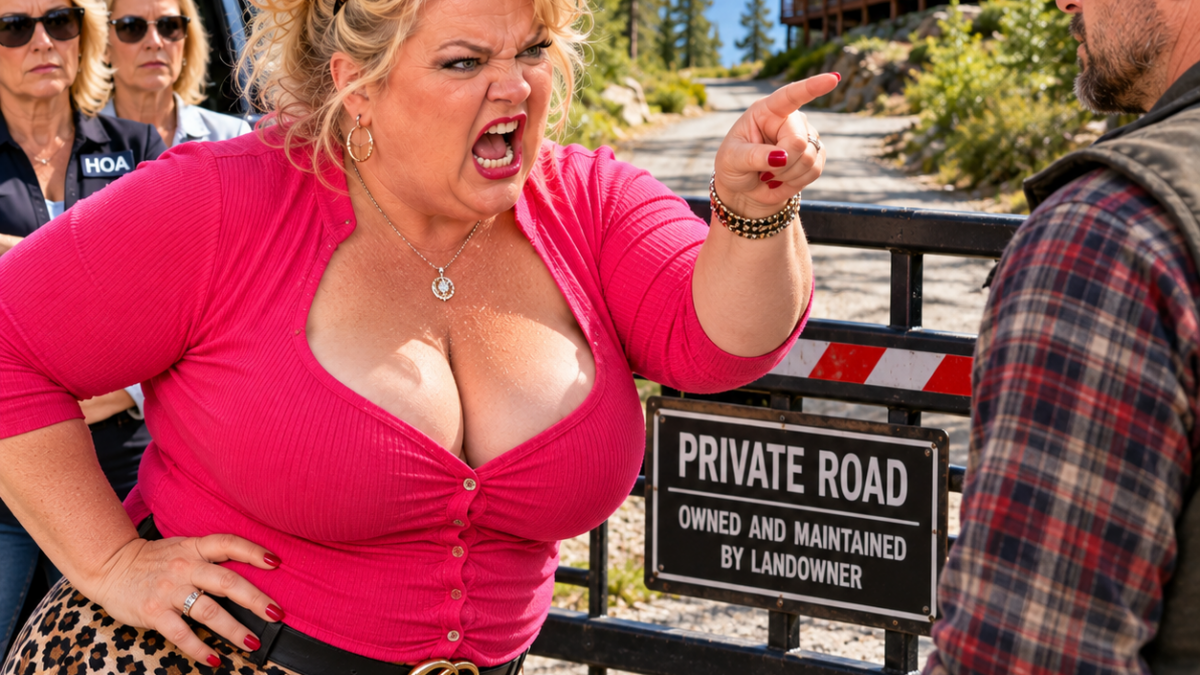
PART 2
I did not tell Karen any of that.
Not yet.
That surprises people when they hear the story.
They imagine that if you know you possess the winning document, you immediately wave it in the other person’s face.
Sometimes that is satisfying.
It is rarely strategic.
I wanted to know exactly what she had done before I showed her exactly how badly she had done it.
So I looked at the gate one last time.
Then at Karen.
“I’ll be in touch.”
She gave me a smug little smile.
“I suggest you direct any further communication through the board.”
“That sounds reasonable.”
I turned toward my truck.
Behind me, she called:
“And Mr. Callahan?”
I stopped.
“Do not attempt to remove or damage HOA property. We will prosecute trespass and vandalism.”
That almost made me laugh.
Almost.
Instead, I looked back.
“Understood.”
Then I got into my Ford.
Started the engine.
And drove away.
The thirty-minute trip back into town was the longest drive I had made in years.
Not because of distance.
Because every mile gave my anger room to grow.
My grandfather’s voice kept returning to me.
Never sell the path to your own front door.
He had said it often enough when I was younger that I stopped hearing it.
He had been a surveyor before starting a small lumber operation after the war. He could look at a property and see things ordinary people missed.
Drainage.
Grade.
Boundary.
Access.
Water.
Rights-of-way.
He believed land was not simply acreage.
Land was a collection of rights.
Ownership.
Use.
Entry.
Water.
Timber.
Minerals.
Passage.
And of all those rights, he thought access was the one foolish people underestimated most.
In the late 1980s, the developer that later created Aspen Creek Estates approached him about buying a hundred acres of meadowland below the cabin.
At the time, I was young.
I barely paid attention.
All I remembered was my grandfather complaining that “men in shiny shoes” kept coming to the house.
Eventually he sold.
It was good money.
Enough to secure my grandparents’ retirement and preserve the remaining mountain property.
But he refused to sell one thing.
The road.
The developer wanted it included because it was already graded and offered the easiest access from the county highway.
Granddad refused.
Instead, he retained ownership and granted the development a right to pass over it.
I knew that much.
What I did not yet know was how carefully he had written the details.
That was why my first stop the next morning was not a lawyer’s office.
It was the county records department.
The building was exactly the kind of place you expect government property records to live.
Beige walls.
Fluorescent lights.
Metal cabinets.
Printers that sounded tired.
Behind the counter sat a woman named Ruth who looked to be in her late sixties.
“I need historical plats for Aspen Creek Estates.”
“How historical?”
“Original development.”
She raised an eyebrow.
“Late eighties?”
“That’s the one.”
“Parcel?”
I gave her mine.
“Callahan?”
“Yes.”
She typed.
Then stopped.
“You’re the cabin parcel.”
“I am.”
“I’ve seen this before.”
That got my attention.
“Why?”
“Odd configuration.”
She turned her screen slightly.
The digital map loaded.
There it was.
Aspen Creek Estates spread across the lower meadow.
Neatly divided lots.
Roads.
Common areas.
Utility strips.
Then a narrow strip running along the western boundary.
Parcel 7B.
Private Access Road.
Owner:
Callahan Family Trust, later transferred to me through inheritance and conveyance.
I stared.
Ruth enlarged it.
The road did not run through Aspen Creek property.
Aspen Creek had been built beside my road.
At several points, their internal streets connected to it.
But the road itself remained a separate parcel.
My parcel.
“Can I get a certified copy?”
“Of course.”
“And the original recorded development plat?”
“Yes.”
“Anything showing easements?”
She clicked through.
“There’s one recorded with the original sale.”
My heartbeat changed.
“Print that too.”
Ten minutes later, she handed me the documents.
Official seal.
Certification.
I stood at the counter reading.
Grantee received an easement for ingress and egress over Parcel 7B for access serving residential lots within the development.
Not ownership.
Not control.
Use.
I paid.
Then went to the bank.
My grandfather had kept his original property documents in a safe deposit box.
When the land eventually passed to me, the box came with it.
I rarely opened it.
Inside were birth certificates.
Death certificates.
Old insurance policies.
Photographs.
My grandfather’s survey tools receipt.
My father’s military papers.
Mine.
And one thick manila envelope labeled:
ASPEN CREEK SALE / ROAD.
I carried it into the viewing room.
Closed the door.
Opened the envelope.
Original deed.
Survey.
Signed easement agreement.
Notary stamps.
Developer signatures.
My grandfather’s handwriting in the margin of one photocopy:
NEVER TRANSFER ROAD.
I sat down.
The easement agreement was longer than the recorded summary.
I read every sentence.
Then read it again.
Aspen Creek and its successors could use the road to enter and exit the development.
Residential purposes.
Maintenance responsibilities allocated proportionately.
No transfer of ownership.
No exclusive possession.
No right to obstruct the grantor’s access.
And then I reached the section where the fragment you gave me had ended.
The easement was contingent.
Not on aesthetics.
Not on annual fees.
Not on HOA preference.
On continued use in a manner consistent with the access rights of the road owner and the prohibition against substantial obstruction or exclusion.
I leaned back.
Granddad.
You magnificent stubborn old man.
He had anticipated this.
Not Karen specifically.
But someone like her.
Someone who would eventually forget that permission and ownership were different things.
The easement gave Aspen Creek something valuable.
Access over my road.
But it also imposed limits.
They could use it.
They could not take it.
And they could not exclude the owner who had granted them access in the first place.
Karen had not merely overreached.
She had attacked the foundation of the HOA’s own access rights.
I photographed every page.
Then put the originals away.
Only after that did I call an attorney.
His name was Daniel Price.
Real-estate and land-use lawyer.
Recommended by a former Corps colleague who now worked for the county.
Daniel listened to my story without interrupting.
When I finished, he said:
“Do you have the original easement?”
“Yes.”
“Recorded?”
“Yes.”
“Road separate parcel?”
“Yes.”
“Gate installed on that parcel?”
“Yes.”
“HOA claims ownership?”
“In writing? Not yet. Verbally, yes.”
“Did they revoke your access in writing?”
“Not yet.”
“Good.”
“Why is that good?”
“Because I want them to.”
I paused.
“You want more evidence.”
“I want them to commit.”
I smiled despite myself.
I liked Daniel.
“What do I do?”
“Send a simple written request.”
“For what?”
“Clarification.”
He dictated.
Dear Aspen Creek Estates Board:
On October 14, I was informed by President Karen Whitmore that Parcel 7B, the access road leading to my property, is now HOA-owned property and that my access has been revoked.
Please confirm in writing:
1. That the HOA claims ownership or exclusive control of Parcel 7B.
2. That the newly installed gate was authorized by the board.
3. That the board intends to deny me vehicular access to my property.
4. The recorded instrument upon which the HOA bases its ownership claim.
“Don’t send your deed,” Daniel said.
“Don’t send the easement.”
“Why?”
“Because if their attorney is competent, he’ll stop them.”
“That sounds useful.”
“Later.”
I understood.
First determine whether Karen was speaking for Karen—
or for the board.
I sent the letter certified.
Three days later, the response arrived.
Aspen Creek Estates letterhead.
Signed by Karen.
Copied to the other four board members.
The HOA asserted “exclusive administrative control” over the access road.
It confirmed the gate had been approved by unanimous board vote.
It stated my access privileges were suspended because I was “not an association member and had failed to enter into an access-use agreement.”
No deed.
No recorded instrument.
No ownership document.
Just confidence.
Daniel read it.
Then called me.
“She gave us everything.”
“Meaning?”
“She confirmed board action.”
“Yes.”
“She confirmed exclusion.”
“Yes.”
“She confirmed they acted without citing title.”
“Yes.”
“And the gate is definitely on your parcel?”
“I had a surveyor there yesterday.”
“Already?”
“Engineer.”
He sighed.
“You people are exhausting.”
The surveyor had set temporary flags.
The gate posts were several feet inside Parcel 7B.
Not close.
Not ambiguous.
Inside.
Even better—or worse, depending on perspective—the new barbed-wire fencing followed my property for hundreds of feet.
Karen had literally fenced my land as if it belonged to the HOA.
Daniel sent the first legal letter the next morning.
Not a lawsuit.
A demand.
Remove the gate.
Remove fencing attached to my trees.
Cease claiming ownership.
Restore my unrestricted access.
Preserve all board records relating to acquisition, construction, installation, and legal review.
Deadline:
Five business days.
Attached:
Certified plat.
Survey.
Title report.
Not the original easement yet.
Karen responded personally.
Two pages.
She accused me of intimidation.
Claimed longstanding use gave the HOA rights.
Claimed residents had “invested in road maintenance for decades.”
Claimed community expectations created equitable control.
Then the line that made Daniel laugh:
Mr. Callahan cannot expect Aspen Creek residents to subsidize a private road while retaining unilateral ownership rights.
Daniel looked at me across his conference table.
“You pay road maintenance?”
“Yes.”
“How much?”
“Historically half major maintenance. Aspen Creek paid the other half because most traffic is theirs.”
“Receipts?”
“Years.”
“Who pays property tax on Parcel 7B?”
“I do.”
“Insurance?”
“Me.”
“Excellent.”
“You keep saying excellent about things that irritate me.”
“That’s because evidence is cheerful.”
Then he asked:
“Do Aspen Creek residents have any other road to the county highway?”
I hesitated.
“No.”
He looked up.
“None?”
“The development was designed around this access.”
“There’s no secondary public outlet?”
“Emergency trail at the south boundary, but it’s not designed as normal residential access.”
“So the HOA depends on your road.”
“Yes.”
Daniel leaned back slowly.
“And the easement is conditional on them not materially obstructing your access.”
“Yes.”
He stared at the ceiling.
Then smiled.
“What?”
“You have enormous leverage.”
I did not want leverage over 300 innocent families.
That was the difference Karen never understood.
Power itself is not the goal.
You use exactly enough to restore the boundary.
No more.
So our next letter was almost generous.
We gave the board seven additional days.
Daniel explained their legal exposure.
Trespass.
Interference with access.
Potential damages.
Unauthorized improvements on another owner’s property.
Tree damage from fencing.
Potential easement consequences.
The letter warned that continued exclusion could force me to seek judicial clarification concerning whether Aspen Creek had materially violated the conditions of its right-of-way.
That should have terrified any rational board.
Apparently Karen controlled the inbox.
She scheduled an emergency HOA meeting instead.
I learned about it because a resident named Peter Lewis called me.
I did not know Peter.
“Mr. Callahan?”
“Yes.”
“I live in Aspen Creek.”
“All right.”
“Are you really trying to shut our road down?”
There it was.
Karen’s narrative.
“No.”
“She says you’re threatening to revoke our access unless the HOA gives you permanent control of the road.”
“That is not accurate.”
Silence.
“Then what is accurate?”
“Your board installed a gate on my land and told me I could no longer use my own road.”
Another silence.
“What?”
“That’s the dispute.”
“That’s not what we were told.”
“I suspected.”
Peter lowered his voice.
“Can I see the documents?”
I thought.
“Yes.”
The next afternoon he came to Daniel’s office.
We showed him copies.
Parcel map.
Easement.
Karen’s written statement.
Survey.
Peter read quietly.
Then:
“The road is yours.”
“Yes.”
“Our HOA has an easement.”
“Yes.”
“And Karen gated you out.”
“Yes.”
He rubbed his face.
“She told us you were a hostile landowner trying to close the community road.”
“I’ve never attempted to stop residents using it.”
“Could you?”
Daniel answered carefully.
“That is a legal question depending on breach, remedy, court interpretation, and other factors. Nobody here is threatening residents casually.”
Peter nodded.
“But Karen’s actions could jeopardize the easement.”
“Yes.”
His face went pale.
“Jesus.”
He left.
Two days later, five residents called.
Then twelve.
Then twenty.
The story was moving inside Aspen Creek.
Karen responded the way insecure leaders often do when facts start circulating.
She escalated.
A notice appeared on the gate.
NO TRESPASSING
ASPEN CREEK HOA MEMBERS ONLY
VIOLATORS WILL BE PROSECUTED
My name was handwritten beneath it.
CALLAHAN ACCESS REVOKED.
I photographed it.
Daniel stared at the photo.
“She handwritten your name?”
“Yes.”
“This woman is a gift.”
I didn’t feel gifted.
I wanted my cabin.
That cabin mattered more than Karen understood.
Granddad built it in 1951.
One room first.
Then an addition.
My father was born before the second room existed.
My parents spent summers there.
I learned to split wood there.
Shot my first deer nearby.
Brought Sarah there after we got married.
After she died, the cabin became the place I went when grief made town feel too loud.
That was supposed to be my retirement.
Coffee before sunrise.
Pine smoke.
Books.
Fishing.
No meetings.
No gates.
Instead, my cabin sat two miles behind a steel barrier installed by strangers who believed organizational stationery altered land titles.
I was angry enough to want to cut it down.
I could have.
It was on my land.
Daniel told me not to.
“Why?”
“Because Karen wants you angry.”
“I’m already angry.”
“She wants you visibly angry.”
I knew he was right.
“So what?”
“We file.”
The complaint asked the court for declaratory and injunctive relief.
Ownership confirmation.
Removal of the gate.
Restoration of access.
Damages for unauthorized installation.
And clarification of easement obligations.
We did not initially ask to terminate the entire neighborhood’s access.
That mattered.
Karen told residents we had.
We hadn’t.
I wanted the gate gone.
I wanted my land recognized.
I wanted to get to my cabin.
That was all.
The board was served on a Thursday.
By Friday afternoon, Karen sent an HOA-wide email.
URGENT THREAT TO COMMUNITY ACCESS.
According to Peter, it was spectacular.
She claimed I was attempting to “seize the roadway.”
It was already mine.
She claimed I sought “financial extortion.”
We had not requested any settlement payment beyond damage and legal relief.
She claimed I was trying to “strand hundreds of families.”
The irony was extraordinary.
She had stranded me.
That same evening, another resident called.
Then another.
A retired title examiner named Evelyn Harper eventually asked to meet.
She arrived at my apartment carrying a folder.
“I spent thirty-two years reviewing deeds.”
“That sounds useful.”
“It ruined parties.”
She sat.
“May I see the original chain?”
I showed her copies.
She read for forty minutes.
Then removed her glasses.
“This is obvious.”
“Thank you.”
“No, I mean embarrassingly obvious.”
She tapped the road parcel.
“Why did the board think it owned this?”
“That’s what I want to know.”
“Who gave them the legal opinion?”
“Karen says counsel.”
“Which counsel?”
That became important.
The HOA’s regular attorney eventually entered the case.
His name was Robert Lane.
Unlike Karen, he was careful.
His first call to Daniel lasted almost an hour.
Afterward Daniel called me.
“Interesting.”
“What?”
“Lane says his firm never approved ownership.”
I sat up.
“What did they approve?”
“Apparently Karen asked whether an HOA can install controlled-access gates on HOA-owned private roads.”
“That’s a completely different question.”
“Yes.”
“She told the attorney the road was HOA-owned.”
“According to Lane.”
I laughed once.
Not because it was funny.
Because the shape of the disaster was becoming clear.
Karen had asked a general question.
Received a general answer.
Then treated it as legal approval for a factual assumption she never verified.
Maybe she knew better.
Maybe she didn’t.
Either way, the board voted.
Money was spent.
Gate installed.
And nobody checked title.
The installation invoice eventually surfaced.
$38,700.
Gate.
Keypad.
Trenching.
Electrical.
Fencing.
Concrete.
Engineering.
Thirty-eight thousand seven hundred dollars of homeowner money spent improving my land without permission.
When residents learned that number, the mood changed.
Karen had spent nearly forty thousand dollars to block a road the HOA did not own.
Peter began circulating the documents privately.
Not propaganda.
Copies.
That was enough.
A special HOA meeting was demanded.
Karen resisted.
Residents collected the required signatures.
Meeting scheduled.
I was invited.
At first I did not want to go.
“I’m not a member.”
Daniel said:
“Go.”
“Why?”
“Because these people are being told you want to trap them.”
“I don’t.”
“Then tell them.”
The clubhouse sat near the Aspen Creek entrance.
I had driven past it for decades but never entered.
The night of the meeting, cars filled the parking lot.
I parked outside.
Walked in carrying one folder.
The room quieted when people noticed me.
Some looked angry.
Some nervous.
Some curious.
Karen sat at the front beside four board members.
Clipboard gone.
Now she had a gavel.
Of course.
Her first twenty minutes were dedicated to explaining how she had “secured community infrastructure.”
Then she described me.
Hostile adjoining landowner.
Unreasonable.
Uncooperative.
Threatening generations of residents.
I listened.
Daniel sat beside me.
Eventually Peter stood.
“We want Mr. Callahan to speak.”
Karen snapped:
“He is not a member.”
Someone shouted:
“He owns the road.”
Murmurs.
Karen struck the gavel.
“Order.”
Peter persisted.
“This meeting is about his road.”
“Our road,” Karen corrected.
That was the moment.
Evelyn Harper stood in the second row.
“No.”
Karen stared.
Evelyn held up the certified plat.
“It is not our road.”
The room erupted.
Karen hit the gavel.
“Mrs. Harper, sit down.”
“I reviewed titles for thirty-two years.”
“That does not make you association counsel.”
“No.”
Evelyn smiled.
“But it does make me capable of reading Parcel 7B.”
Applause.
Karen’s face tightened.
Peter motioned toward me.
“Let him speak.”
Eventually a majority demanded it.
Karen had no practical choice.
I walked to the front.
No slideshow.
No speech prepared.
I laid three documents on the podium.
“My name is Michael Callahan.”
I paused.
“My family has owned the mountain property above Aspen Creek for roughly a century.”
A few heads nodded.
“Thirty years ago my grandfather sold the meadow acreage that became your development.”
I held up the original plat.
“He did not sell the access road.”
Murmurs.
“Your association has a legal right to use it.”
I held up the easement.
“That right has existed for decades.”
I looked around.
“I have never tried to stop you.”
Then I looked at Karen.
“Your president stopped me.”
Silence.
I displayed the photograph of the gate.
“Your board spent roughly thirty-eight thousand seven hundred dollars installing this on my parcel.”
Louder murmurs.
Karen interrupted.
“That is misleading.”
I ignored her.
“Your board then told me, in writing, that I was no longer permitted to use the road I own.”
I held up their letter.
A man in the back shouted:
“Is that true?”
I turned.
“Yes.”
Karen banged the gavel.
“The board acted on legal advice.”
Daniel stood.
“May I clarify that?”
Karen pointed.
“No.”
Residents started shouting.
“Let him.”
“We paid for this.”
“Who checked the deed?”
Karen’s control began slipping.
I raised a hand.
The room gradually settled.
“I want to make something clear.”
I looked at every face I could.
“I am not trying to trap you.”
Quiet.
“I am not trying to stop families from reaching their homes.”
More quiet.
“I am asking your HOA to remove a gate placed on my land and to stop claiming ownership of property it does not own.”
Someone asked:
“What happens to our easement?”
I answered honestly.
“That depends on whether the agreement is respected.”
People shifted.
“My grandfather gave Aspen Creek a right of passage.”
I held up the easement.
“He also protected his own right of access.”
I looked toward Karen.
“Your board cannot use permission to exclude the person who granted it.”
Karen stood.
“This is legal intimidation.”
I finally addressed her directly.
“No.”
My voice was calm.
“You blocked my only practical route to my cabin.”
“You refused to join a reasonable access agreement.”
“Because I already own the road.”
“That is your interpretation.”
Evelyn laughed out loud.
“No, Karen. That’s the county recorder’s interpretation.”
Laughter broke tension.
Karen flushed.
Then a board member named Martin Greene leaned toward his microphone.
“Karen.”
She ignored him.
“Karen.”
“What?”
“Did we verify title before approving the gate?”
Her face changed.
“We relied upon established community usage.”
“That wasn’t my question.”
The room went still.
Martin repeated:
“Did we verify ownership?”
Karen looked at him.
Then toward the other directors.
Nobody rescued her.
“Our counsel advised that controlled entry was permissible.”
Robert Lane, the HOA attorney, was sitting along the wall.
He stood.
Every head turned.
“Madam President.”
Karen’s face went pale.
Lane spoke carefully.
“My office advised generally on gate controls for privately owned HOA roads.”
He paused.
“We were not provided a title report indicating Parcel 7B was owned by Mr. Callahan.”
The room detonated.
People shouted.
Karen turned toward him.
“You knew the situation.”
“I knew what was represented to us.”
“What are you saying?”
“I am saying our opinion was based upon the factual assumption presented by the board.”
Martin stared at Karen.
“Who told him the HOA owned it?”
Silence.
A woman beside Karen whispered:
“Oh my God.”
Karen raised the gavel.
Nobody cared anymore.
Martin asked again.
“Who told counsel?”
Karen snapped:
“I did, based on decades of exclusive use.”
I spoke.
“Not exclusive.”
She turned.
“You barely use that cabin.”
There it was.
Her logic.
Because I did not use something often enough, she had decided I no longer deserved it.
“My frequency of use doesn’t transfer title.”
“You were creating a security vulnerability.”
“I’m the owner.”
“Your presence created uncertainty.”
“My presence?”
Her anger had finally outrun her caution.
“Yes. Residents saw an unaffiliated vehicle using our private road.”
“My truck has used that road longer than Aspen Creek has existed.”
She pointed at me.
“And that is exactly the problem. We are a controlled community now. Times have changed.”
The room went silent for a completely different reason.
People finally heard it.
Not security.
Not liability.
Control.
Martin leaned back.
Peter shook his head.
Evelyn folded her arms.
Then an older man asked:
“So she spent forty thousand dollars because she didn’t like seeing his truck?”
Karen yelled:
“That is a gross simplification.”
Nobody believed her anymore.
A motion came from the floor.
Immediate suspension of the gate policy.
Second.
Then another.
Independent legal review.
Second.
Then another.
Review of board spending.
Second.
Karen hammered the gavel.
“We are not voting on unscheduled motions!”
Residents demanded a special meeting.
The petition began that night.
I left before the shouting ended.
Not my HOA.
Not my government.
I had told the truth.
They had to decide what to do with it.
The next morning something unexpected happened.
The gate opened.
Not removed.
But open.
Karen did not call.
Martin did.
“Mr. Callahan?”
“Yes.”
“I’m a board member.”
“I know.”
“We have instructed the management company to disable the lock pending review.”
“Thank you.”
“I want to apologize.”
I waited.
“I should have checked.”
“Yes.”
“I trusted the president.”
“Yes.”
He sounded surprised I was not making it easier for him.
Then:
“We want to resolve this.”
“So do I.”
“Would you meet?”
“With counsel.”
“Of course.”
That afternoon I drove the road.
For the first time in weeks.
Passed through the open gate.
Up two miles of gravel.
Past Aspen Creek.
Into the pines.
When the cabin appeared between trees, something in my chest loosened.
I parked.
Shut off the Ford.
Walked to the porch.
Granddad’s rocking chair was still there.
I sat.
For twenty minutes I did nothing.
No lawyer.
No HOA.
No gate.
Wind through pine needles.
That was what Karen had taken.
Not simply access.
Peace.
It would take longer to get that back.
Negotiations began the following week.
Aspen Creek’s board had split.
Karen and one ally wanted to fight.
Three others wanted settlement.
Residents were furious about legal costs.
The gate invoice.
Potential damages.
Risk to easement rights.
Daniel remained careful.
“We do not threaten termination casually.”
“I agree.”
“But we make clear that future obstruction cannot continue.”
“Yes.”
Our settlement proposal required:
Gate removal or conversion to a system that could never impede my unrestricted passage and that I expressly approved.
Removal of fencing from my property.
Repair of tree damage.
Written recognition of my ownership.
Withdrawal of no-trespassing claims.
Reimbursement of my legal and survey costs.
A formal maintenance agreement consistent with the historic easement.
And most importantly:
No future alteration of Parcel 7B without written consent of the owner.
Karen rejected it.
Of course.
She sent an email to residents accusing the board majority of “capitulating to extortion.”
That email finished her.
Residents had already collected enough signatures for a recall meeting.
Now signatures flooded in.
People were not defending me because they loved me.
Most barely knew me.
They were protecting themselves from a president who had gambled community access on assumptions.
A week later the recall meeting filled the clubhouse again.
I did not attend.
Didn’t need to.
Peter called afterward.
“She’s out.”
I sat in my apartment holding the phone.
“What was the vote?”
“Not close.”
“Board too?”
“Karen removed. Her ally resigned. Martin staying temporarily.”
“And the gate?”
“Next vote was removal.”
I closed my eyes.
“Good.”
Peter laughed.
“You sound disappointed.”
“No.”
“What then?”
“Tired.”
“I understand.”
Two days later, contractors arrived.
This time with my permission.
The steel gate was dismantled.
Posts cut.
Concrete excavated.
Barbed wire removed.
Damaged bark treated where possible.
I stood beside the road watching.
Martin came.
So did Peter.
Evelyn.
Several residents.
Nobody celebrated.
It felt more like repairing flood damage.
At one point the contractor lifted the main gate section onto a flatbed.
Peter asked:
“You want it?”
“Why would I want it?”
“Souvenir.”
“No.”
Evelyn said:
“Sell it back to the HOA.”
We laughed.
First genuine laugh I had managed in weeks.
The new board signed the settlement.
Ownership recognized.
Legal costs reimbursed.
Maintenance responsibilities clarified.
Aspen Creek retained its passage rights.
Residents kept access.
I kept ownership.
Exactly the relationship my grandfather intended.
Nothing revolutionary.
Nothing unfair.
Just boundaries restored.
Then came the financial review.
The gate had not been the only issue.
Under Karen, security spending had increased dramatically.
Consultants.
Camera systems.
Private patrol proposals.
Legal retainers.
Architectural enforcement.
Several projects approved with minimal competitive bidding.
Nothing initially proved criminal misconduct.
That distinction mattered.
Bad judgment is not automatically theft.
But homeowners discovered something more disturbing in its own way.
A culture in which nobody questioned Karen.
Board packets arrived late.
Votes rushed.
Legal assumptions presented as conclusions.
Residents told objections were “anti-community.”
The gate was the most visible result.
Not the first.
The new board changed procedure.
Title verification before property projects.
Two legal reviews for significant land issues.
Competitive bids.
Published meeting packets.
Recorded votes.
Resident comment.
Boring reforms.
Excellent reforms.
Martin eventually became interim president.
He hated the job.
That made me trust him more.
Six months after the gate came down, he drove to my cabin.
First time an Aspen Creek president had visited.
He parked respectfully beside the old shed.
Brought coffee.
We sat on the porch.
“I owe you something.”
“What?”
He handed me a folder.
Inside was a photograph of the gate.
Across the front somebody had stamped:
REMOVED — INSTALLED ON WRONG PARCEL.
I laughed.
“That’s cruel.”
“Evelyn made it.”
“Of course.”
Martin sipped coffee.
Then looked toward the road.
“Do you hate us?”
“No.”
“A lot of people think you do.”
“I hated the gate.”
“Karen?”
I thought.
“For a while.”
“And now?”
“Not worth the energy.”
He nodded.
“We almost lost everything.”
“No.”
He looked at me.
“You could have revoked the easement.”
“Maybe.”
“You didn’t.”
“Why would I punish three hundred families for one board’s stupidity?”
Martin stared toward the trees.
“Karen told us you would.”
“I know.”
“That’s why people supported the gate at first.”
“Fear works.”
“Yes.”
“For a while.”
He nodded.
Then said:
“I met your grandfather once.”
That surprised me.
“When?”
“I was twenty-three. My parents were one of the first families here.”
I looked at him.
“He came down after a storm. Cleared a tree off the road with that old tractor.”
“Farmall?”
“Red one.”
I smiled.
“He told my father, ‘Road’s mine. Mud’s everybody’s.’”
That sounded exactly like him.
Martin laughed.
“I didn’t understand what he meant.”
“I’m not sure anyone did.”
We sat quietly.
Months turned into years.
The road stayed gravel.
We improved drainage.
Aspen Creek paid its agreed share.
I paid mine.
No gates.
No armed guard shack.
No fake private-property notices.
Just a small sign near the highway:
PRIVATE ROAD
AUTHORIZED ACCESS ONLY
CALLAHAN PARCEL 7B / ASPEN CREEK EASEMENT
Accurate.
Boring.
Beautiful.
I moved into the cabin permanently the next spring.
That had been my plan before Karen interrupted it.
Town apartment ended.
Furniture hauled up.
Books.
Coffee grinder.
Fishing rods.
Tools.
Sarah had died years earlier, and some of her things came with me too.
A photograph on the mantel.
Her blue mug.
The wool blanket she loved.
First morning after the move, I woke before dawn.
Made coffee.
Sat on porch.
No traffic.
Pines black against a gray sky.
Then the sun reached the ridge.
For a moment, I thought about the first day.
Karen.
Gate.
Clipboard.
“You’ll have to find another route.”
I smiled.
There never was another route.
There didn’t need to be.
My grandfather had protected this one.
A month later, Peter came hiking up.
“Coffee?”
“Depends. You bring anything?”
“Donuts.”
“Accepted.”
He sat.
“Karen sold.”
I didn’t immediately understand.
“House.”
“Oh.”
“Moved out.”
“All right.”
“You’re not curious?”
“Not really.”
He stared.
“After everything?”
“Especially after everything.”
He laughed.
“She told people she was leaving because Aspen Creek had lost its standards.”
“Maybe she believes that.”
“You don’t?”
“No.”
“What did it lose?”
I looked down toward the road.
“A gate.”
Peter laughed.
Karen disappeared from my life.
Exactly where I wanted her.
Some residents hated her after she left.
Others defended her.
Some said she had always meant well but became obsessed with security.
Others said power simply revealed who she had always been.
I had no interest in deciding.
People are complicated.
Documents are easier.
She claimed road.
Document said no.
She blocked owner.
Easement said no.
Board spent money based on unverified assumption.
Residents corrected board.
That was enough.
Years later, Aspen Creek held its thirtieth anniversary picnic.
Martin invited me.
I said no.
Peter called.
I said no again.
Evelyn came to my cabin personally.
“You’re attending.”
“That sounds like an order.”
“Yes.”
“You’re becoming Karen.”
She pointed at me.
“Don’t you dare.”
I went.
The picnic was held near the lower meadow.
Kids.
Grills.
Tables.
Music.
Some residents I recognized.
Most I didn’t.
A new generation.
At one point Martin asked for attention.
I became suspicious immediately.
He spoke briefly about the development’s history.
Then about the road.
Not the conflict.
History.
How my grandfather had retained Parcel 7B.
How he had given the development access when the first homes were built.
How the easement still worked.
How shared responsibility kept the road usable.
Then he pointed toward me.
“This neighborhood exists partly because the Callahan family allowed us to reach it.”
Applause.
I hated every second.
Afterward, a little boy asked:
“Do you own the road?”
“Yes.”
“Can you close it?”
His mother looked horrified.
I crouched.
“Why would I?”
He shrugged.
“If it’s yours.”
I smiled.
“That’s not what ownership is for.”
He frowned.
“What’s it for?”
Big question from a seven-year-old.
“To take care of something.”
He seemed disappointed.
Probably wanted a better answer.
Then:
“Can I ride my bike on it?”
“With your parents.”
“Cool.”
He ran away.
That conversation stayed with me.
Karen believed ownership—or what she imagined was ownership—meant exclusion.
Control.
Permission.
I came to think of it differently.
The road was mine.
Yes.
That gave me rights.
It also gave me responsibility.
Drainage.
Surface.
Trees.
Safety.
And because my grandfather had granted access, it gave me a long relationship with people who lived beside it.
Rights and obligations.
That balance is what keeps property law from becoming merely territorial aggression.
My grandfather understood that instinctively.
He kept the road because he never wanted someone else locking his descendants out.
But he gave Aspen Creek passage because he knew families needed to get home.
Both could be true.
Karen only saw one side.
Control.
That was why she failed.
One winter, a major storm came through.
Heavy snow.
Trees down.
Power out.
Aspen Creek’s main internal street was blocked near the entrance.
I heard chainsaws around dawn.
Took the Farmall down with a blade.
Yes.
The same old tractor Martin remembered.
Residents were clearing branches.
I helped.
A teenager asked:
“Isn’t this your road?”
“Yes.”
“Why are you helping us?”
I looked at him.
“Because you’re stuck.”
He shrugged.
Fair enough.
We cleared trees.
County plow eventually reached us.
By afternoon access restored.
That night Martin texted:
ROAD’S YOURS. SNOW’S EVERYBODY’S.
I laughed.
Granddad’s phrase.
It had become neighborhood folklore.
Good.
Years passed.
The scars where barbed wire had been stapled into some of the pines remained.
Trees grew around them.
One especially old pine near the former gate site carried a long dark scar.
I considered cutting it.
Never did.
Not because I wanted a monument to Karen.
Because scars are part of landscapes too.
You don’t always remove evidence of damage.
Sometimes you let living things grow around it.
The old concrete footing holes disappeared beneath grass.
You would never know a gate had stood there unless someone told you.
That became satisfying.
Powerful structures can feel permanent when they are new.
Steel.
Concrete.
Signs.
Authority.
Then time happens.
Concrete gets pulled.
Grass returns.
People forget.
The mountain remained.
Granddad would have liked that.
One evening, my nephew David visited.
He would eventually inherit much of the property.
We walked the road.
I showed him markers.
Parcel corners.
Drainage.
Easement.
Original deed.
Everything.
He groaned.
“Uncle Mike, I know.”
“No.”
“You know until somebody tells you something different.”
“I’m not Karen.”
“I didn’t say you were.”
“You implied it.”
“I’m teaching.”
“You’re lecturing.”
“Same thing with experience.”
We stopped near the old gate location.
I pointed toward the buried survey marker.
“Never lose this.”
“I won’t.”
“Never sign anything about road rights without a land attorney.”
“I know.”
“Never assume a neighbor’s use creates ownership.”
“I know.”
“Never let an HOA president—”
He laughed.
“I definitely know.”
Then he became serious.
“Would you ever sell the road?”
I heard Granddad.
Never sell the path to your own front door.
“No.”
David nodded.
“Good.”
“Why?”
“Because Granddad was right.”
“Which Granddad?”
“Yours.”
I smiled.
Family history survives in strange ways.
Not through photographs alone.
Through rules.
Habits.
Stories.
Warnings.
The gate conflict became one of those stories.
Not told as revenge.
At least not by me.
Other people liked the revenge version.
HOA steals road.
Owner destroys easement.
Hundreds trapped.
Karen ruined.
Great headline.
Not what happened.
I never shut residents out.
That would have made me exactly what I hated.
I used the easement conditions as leverage to force recognition of the boundary.
Then we repaired the relationship.
That ending mattered more than humiliation.
There was still plenty of satisfaction.
I’m not a saint.
Watching the gate come down felt excellent.
Watching Karen’s ownership claim collapse felt excellent.
Receiving the reimbursement check for legal fees?
Also excellent.
But the lasting satisfaction was quieter.
Driving to the cabin without asking anyone.
Passing Aspen Creek residents who waved.
No tension.
No confrontation.
Normal access.
Normal relationships.
That was the victory.
One summer afternoon Evelyn came up to the cabin with a folder.
She was eighty by then.
Still sharper than most attorneys.
“What’s this?”
“Updated title abstract.”
“I didn’t ask for one.”
“You’re old.”
“So are you.”
“Exactly. We should make things easy for the next generation.”
I opened it.
Every relevant document indexed.
Parcel.
Easement.
Maintenance agreement.
Settlement.
Survey.
“What do I owe you?”
“Coffee.”
“Cheap.”
“Your coffee is terrible.”
“Then why ask?”
“Principle.”
We sat on the porch.
She looked down the mountain.
“You know what bothered me most about Karen?”
“Gate?”
“No.”
“Money?”
“No.”
“What?”
“She never looked.”
I understood immediately.
Karen had access to county records.
Title company.
Lawyer.
Survey.
Everything.
All she needed to do was ask:
Who owns the road?
Instead she began with the answer she wanted.
Then searched for authority to support it.
That is a dangerous way to think.
In engineering.
Law.
Leadership.
Anything.
Evelyn sipped coffee.
“If she had pulled one plat…”
“No gate.”
“No lawsuit.”
“No recall.”
“No legal fees.”
“No story.”
I smiled.
“She created a lot of paperwork by refusing to read one piece of paper.”
Evelyn laughed.
“Human civilization.”
Eventually Martin stepped down.
Aspen Creek elected younger leadership.
A woman named Rachel became president.
First thing she did was call me.
“Hi, Mr. Callahan. I’m the new HOA president.”
“My condolences.”
She laughed.
“I was told you would say that.”
“Peter?”
“Everyone.”
“What can I do for you?”
“Nothing.”
Pause.
“I just wanted you to have my number.”
That was it.
Perfect.
Years earlier, Karen introduced herself by telling me what she could control.
Rachel introduced herself by offering communication.
Leadership difference in one phone call.
The road needed grading that fall.
Rachel sent an email.
Quote attached.
HOA share calculated under agreement.
Would this contractor work for you?
I reviewed.
Called.
Approved.
Road graded.
No drama.
Nobody wrote “community asset.”
Nobody threatened anyone.
Boring competence.
I loved it.
One autumn morning, I was drinking coffee when a white SUV stopped near the road bend.
For half a second my body remembered Karen before my brain caught up.
Not her.
Tourists lost.
Man rolled down window.
“Is this the way to Aspen Creek?”
“Yes.”
“Private road?”
“Yes.”
“Can we go through?”
“Visiting someone?”
He gave address.
“Go ahead.”
He thanked me.
Drove on.
I sat again.
That tiny moment showed me how deeply the gate conflict had once entered my nervous system.
Even years later, certain things could trigger the old readiness.
Conflict ends legally before it always ends physically.
That takes time.
But it passes.
Eventually even white SUVs become vehicles again.
Not threats.
I had moved to the cabin seeking peace.
Karen delayed it.
She didn’t destroy it.
That distinction became important.
Nobody can permanently take the life you are building unless you hand them permanent ownership of your attention.
For months she had mine.
Then less.
Then none.
I fished.
Read.
Worked timber.
Helped maintain the road.
Visited family.
Drank coffee.
Got older.
Normal life reclaimed the space conflict occupied.
That was healing.
The cabin changed too.
New roof.
Solar panels.
Updated plumbing.
I kept the original stone fireplace.
Granddad’s chair.
His survey compass framed on the wall.
Next to it I hung a copy of Parcel 7B.
Not as a trophy.
As family history.
Below the map, David added a brass plaque for my seventieth birthday.
NEVER SELL THE PATH TO YOUR OWN FRONT DOOR.
I pretended to hate it.
I didn’t.
One evening David asked:
“If Karen had apologized immediately, what would you have done?”
“Taken the gate down.”
“That’s it?”
“Probably.”
“No revenge?”
“No.”
“What if they offered to buy the road?”
“No.”
“What if it was a lot?”
“No.”
“Million?”
“No.”
“Five?”
“Still no.”
He shook his head.
“That’s insane.”
“Maybe.”
“You could build another road.”
“Maybe.”
“Then why?”
I looked toward Granddad’s compass.
“Because some assets are valuable precisely because nobody else can price them for you.”
David was quiet.
Then:
“That was annoyingly wise.”
“Age.”
“Or stubbornness.”
“Same thing after seventy.”
He laughed.
The Aspen Creek conflict eventually became part of county land-use seminars.
Daniel told me.
“Your case is discussed.”
“My case?”
“Not by name.”
“Why?”
“Classic example of confusing easement rights with fee ownership.”
“That seems basic.”
“It is.”
“So why teach it?”
“Because people repeatedly make basic mistakes with expensive consequences.”
Fair.
He explained the lesson:
An easement holder can possess real rights.
Substantial rights.
But use is not always ownership.
And the servient estate owner retains rights too, subject to the terms.
I told him:
“Granddad could’ve taught the seminar in ten words.”
“Never sell the path?”
“Exactly.”
Daniel smiled.
“Law school would lose revenue.”
I remained in the cabin until age made winters harder.
Eventually I spent January and February in town.
Then more months.
But I never sold.
David and his wife started using it.
Their children learned the road.
At first I worried Aspen Creek’s next generation might forget again.
Rachel prevented that.
Every new-owner packet included a plain-language explanation:
ASPEN CREEK ACCESS ROAD — PARCEL 7B
Privately owned by Callahan family successors.
Aspen Creek Estates holds recorded access rights subject to easement agreement.
Road maintenance is shared according to agreement.
The HOA does not own Parcel 7B.
Clear.
One page.
That may have been the most satisfying document produced by the entire war.
Truth institutionalized.
No future Karen could plausibly claim ignorance.
That is how you fix systems.
Not by winning once.
By making the same failure harder to repeat.
I thought about that the day Rachel showed me the packet.
“You wrote this?”
“Evelyn did.”
“Of course.”
“She said if lawyers need twenty pages to explain it, homeowners need one.”
“She’s right.”
Rachel pointed toward the sentence:
THE HOA DOES NOT OWN PARCEL 7B.
“Bold enough?”
“Make it bigger.”
She laughed.
They did.
Years after Karen left, I heard she had moved to another state.
That was all.
No dramatic downfall that I know of.
No prison.
No bankruptcy.
No cinematic punishment.
She lost the office.
Lost the fight.
Moved.
And honestly?
That felt right.
Real life does not need every antagonist destroyed.
Sometimes the consequence is simply losing the authority you abused and becoming irrelevant to the person you tried to control.
That was enough.
One late autumn afternoon, I drove the Ford up the road.
Same truck.
Older.
Rust around wheel wells.
Suspension complaining.
I passed the spot where the steel gate once stood.
Nothing there now but grass and two faint depressions.
I stopped.
Got out.
Walked toward the old pine.
Ran my hand across the scar where barbed wire had once bitten into the bark.
Tree had grown around it.
Almost closed.
I thought of Karen standing there.
Clipboard.
Confidence.
“This road is now private HOA property.”
No.
It had always been private property.
She simply never asked whose.
That was her whole mistake.
She thought power created facts.
It doesn’t.
Facts exist first.
Good leadership learns them.
Bad leadership tries to overwrite them.
Sooner or later, the map wins.
I returned to the truck.
Drove toward the cabin.
Gravel cracked beneath tires.
Pines opened.
Cabin appeared.
Smoke from chimney.
David had arrived earlier.
His children were outside.
My grandniece waved.
“Uncle Mike!”
I parked.
She ran over.
“Dad says this whole road is ours.”
“Your family’s.”
“So we can do anything?”
There it was again.
The seven-year-old question.
“No.”
She looked disappointed.
“Why?”
“Because other people have rights too.”
She frowned.
“But it’s ours.”
“Yes.”
“And they can use it?”
“Yes.”
“How?”
“Because your great-great-grandfather promised.”
She thought about that.
“Do promises stay after people die?”
I looked toward the road.
Some do.
“The important ones can.”
She accepted that.
Then ran away.
I stood there longer than necessary.
My grandfather had been dead for decades.
His promise still allowed hundreds of people to reach home.
His caution still allowed me to reach mine.
Ownership.
Obligation.
Memory.
All running through two miles of gravel.
That was bigger than Karen.
Bigger than me.
Later we sat around the fireplace.
David asked the children if they wanted the gate story.
I groaned.
They cheered.
He told it dramatically.
Made Karen louder than she was.
Made the gate bigger.
Made me calmer.
Heroic nonsense.
I interrupted.
“That’s not what happened.”
“Let me tell it.”
“You’re ruining accuracy.”
“You’re ruining pacing.”
The kids laughed.
He reached the part where Karen declared road ownership.
Then paused.
“What did Uncle Mike do?”
My grandniece shouted:
“HE CHECKED THE MAP!”
Everyone laughed.
I did too.
That might be the best summary anyone ever gave the whole thing.
I checked the map.
No shouting.
No chainsaw.
No smashing gate.
No dramatic charge.
Just records.
Deed.
Survey.
Easement.
Facts.
People expect power to be defeated by bigger power.
Sometimes it is.
But sometimes the strongest weapon in the room is an old document sitting quietly in a bank vault.
Karen had a board.
Lawyer.
Budget.
Gate.
Signs.
Votes.
I had my grandfather’s signature.
Turns out he had planned farther ahead.
The next morning I woke early.
Made coffee.
Stepped onto the porch.
Cold air.
Pine.
Dawn.
Exactly the retirement I had imagined before any of this began.
I listened.
Nothing mechanical.
No gate motor.
No argument.
No truck idling while somebody told me I couldn’t go home.
Just wind moving through needles.
Down below, somewhere past the trees, Aspen Creek residents began their mornings.
Cars would use my road.
School buses.
Workers.
Families.
Exactly as the easement intended.
They had access.
I had access.
Nobody needed to dominate anybody else.
That was the proper ending.
Not victory through exclusion.
Victory through restoration.
Karen had tried to turn the road into a weapon.
I turned it back into a road.
And eventually, that was all I wanted it to be.
Two miles of gravel.
From the county highway to my grandfather’s cabin.
Past Aspen Creek.
Through the pines.
Mine to own.
Theirs to use.
Everyone’s responsibility to respect.
The first time Karen told me my access was revoked, I thought she had declared war.
Maybe she had.
But looking back, the war did not end when she lost her presidency.
It ended when nobody needed to fight over the road anymore.
When the gate disappeared.
When the legal letters stopped.
When new residents were told the truth before rumors could replace it.
When I could drive past Aspen Creek and see neighbors instead of adversaries.
And when I finally sat on my porch with a cup of coffee and stopped wondering what Karen might do next.
That was peace.
Granddad had understood something I spent years learning.
A road is more than dirt.
It connects places.
It connects people.
It carries promises.
And if you are careless, it can carry conflict too.
He had protected the path to our front door.
Not so he could keep everyone else out.
So nobody could ever keep his family out.
Karen mistook restraint for weakness.
Permission for ownership.
Silence for surrender.
She installed steel and concrete because she thought those things made her claim real.
They didn’t.
The land records were still there.
The survey markers were still there.
The deed was still there.
The truth had been sitting quietly beneath every tire that crossed that road for thirty years.
She just never bothered to look down.
So whenever people ask me what I did when an HOA president tried to steal the only road to my family cabin, I tell them the truth.
I didn’t ram the gate.
I didn’t cut the lock.
I didn’t threaten anybody.
I didn’t lock three hundred families out in return.
I went to the county records office.
I opened my grandfather’s old deed.
I read the promise he had protected for decades.
Then I let Karen’s own paperwork prove how badly she had misunderstood it.
She had the gate.
I had the road.
And in the end, that made all the difference.