PART 2: He Left Three Dogs to Starve for Over a Month—When We Opened the Door, One Couldn’t Even Stand
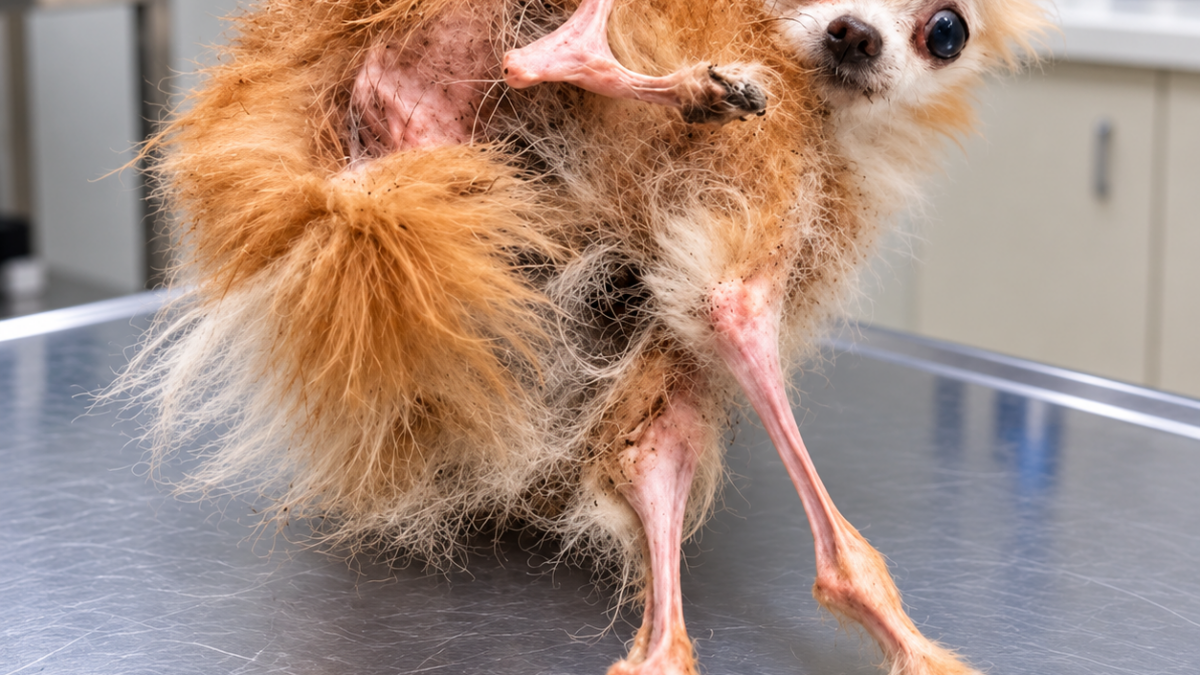
The first thing that frightened me wasn’t how thin the dogs were—it was how quiet one of them had become.
Two were still strong enough to cry when we opened the door, but the third only lifted his eyes from the floor as if even making a sound required strength he no longer had.
And before that day was over, I realized the worst part of what happened inside that house had not yet revealed itself.
The call came from a neighbor.
She sounded exhausted before she even finished explaining.
“There are dogs inside that house,” she told us. “I’ve been hearing them for days.”
“How many?”
“At least three.”
“Have you seen the owner?”
“No. Not for weeks.”
That answer changed everything.
We had responded to abandoned animals before, but there is a difference between a dog wandering outside and animals trapped behind a locked door.
Outside, at least there is some possibility of finding water.
Some possibility of finding trash.
Some possibility of being seen.
Behind a locked door, there is only what was left inside with them.
And according to the neighbor, nobody had been entering that house for more than a month.
When we arrived, the smell reached us before we were even fully inside.
The house was hot and stale.
There were scratches near one of the doors.
Empty containers lay on the floor.
No food.
No water worth drinking.
Then we heard movement.
Two dogs appeared first.
Borboja and Belota.
They were frighteningly thin.
Their hips stood out sharply.
Their stomachs were tucked beneath their ribs.
Both looked at us with that desperate intensity animals sometimes have when hunger has replaced almost every other thought.
One tried to rush forward.
The other hesitated.
Then we saw Bombom.
He was lying farther inside the room.
At first, I thought he was dead.
He wasn’t moving.
His body was so thin that every bone seemed visible beneath his skin.
I called softly.
“Hey, buddy.”
His eyes shifted toward me.
That was all.
I moved closer.
“Bombom?”
His front leg trembled.
He tried to lift himself.
Nothing happened.
He tried again.
His chest rose.
His head came up perhaps an inch.
Then dropped back to the floor.
One of the rescuers beside me whispered something I will never forget.
“He can’t stand.”
I crouched beside him.
Bombom’s eyes followed my hand.
I touched his shoulder.
There was almost nothing beneath my fingers.
No healthy layer of muscle.
No strength.
Just bone, skin and a body that had been consuming itself to stay alive.
The neighbor stood at the doorway behind us.
“Oh my God.”
Her voice broke.
She covered her mouth.
“I heard them crying.”
I looked back.
“How long?”
“I don’t know exactly. At first I thought the owner would come back.”
She wiped her face.
“Then the barking got worse.”
Her eyes moved toward Bombom.
“And then a few days ago, one of them stopped.”
I looked down at him.
The quiet one.
Bombom.
Maybe he had been the loudest before.
Maybe he had cried until his throat hurt.
Maybe he had scratched at the door.
Maybe he had waited every time he heard footsteps outside.
Then eventually, his body had forced him to stop.
Belota moved near us, sniffing desperately at a rescue bag.
Borboja paced between the doorway and the empty feeding area.
Food had become the center of their world.
But we couldn’t simply feed them everything they wanted.
When an animal is severely starved, too much food too quickly can become dangerous.
So instead of giving them a giant meal, we prepared to transport all three immediately.
Bombom couldn’t walk.
We lifted him carefully onto a blanket.
His body felt impossibly light.
He didn’t resist.
He didn’t even have the strength.
As we carried him toward the vehicle, his head rolled slightly toward my arm.
I remember thinking that this dog had been locked inside a house waiting for someone who never came.
He had probably listened to Borboja and Belota crying beside him.
He had probably felt his own body getting weaker every day.
And somehow, against every reason he had to stop fighting, he was still breathing.
We placed him in the vehicle.
Borboja and Belota were loaded beside him.
The neighbor stood in the driveway watching.
“Are they going to live?”
I wanted to reassure her.
I wanted to say yes.
Instead, I looked at Bombom.
“I don’t know.”
Then we closed the doors and drove.
At the veterinary hospital, the staff rushed all three inside.
Borboja and Belota could still stand.
Bombom could not.
The veterinarian examined him silently for a long moment.
Then he looked at us.
“How long was he without food?”
“Possibly more than a month.”
The veterinarian stared back at Bombom.
His expression changed.
“I don’t understand how this dog is still alive.”
Neither did I.
But Bombom was.
Barely.
And from that moment forward, none of us intended to let his fight end because somebody else had decided his life wasn’t worth coming home for.
—
PART 2
—
The first twenty-four hours were terrifying.
Borboja and Belota were severely malnourished, but compared with Bombom, they still had something precious.
Strength.
Not much.
But enough to stand.
Enough to walk.
Enough to show excitement when food appeared.
Bombom had almost nothing left.
When the veterinary team placed him on the examination table, he lay on his side without struggling.
Normally even frightened dogs react.
They stiffen.
Pull away.
Turn their heads.
Try to understand what strange hands are doing to them.
Bombom simply breathed.
The veterinarian listened to his heart.
Checked his gums.
Ran his hands carefully along Bombom’s abdomen.
His face grew increasingly serious.
“He’s dangerously depleted.”
“How dangerous?”
He looked at me.
“Right now, everything matters.”
His temperature.
His blood sugar.
His hydration.
His electrolytes.
His kidney function.
His heart.
Even feeding him had to be treated carefully.
We all wanted the same thing emotionally.
Food.
A huge bowl.
As much as Bombom could eat.
But the veterinarian warned us immediately.
“No large meals.”
One of the younger volunteers frowned.
“But he’s starving.”
“Exactly.”
The veterinarian turned toward her.
“A body this starved can’t simply switch back to normal overnight. We have to go slowly.”
Bombom’s first meal was almost painfully small.
He smelled it.
His eyes changed.
For the first time since we carried him from the house, I saw something sharp inside them.
Hunger.
His head lifted slightly.
I supported his chest while a technician moved the food closer.
Bombom tried to push himself forward.
His legs failed.
So we helped him.
He ate.
Not quickly.
Not with the frantic speed of Borboja and Belota.
Bombom’s body didn’t even have energy for that.
But he swallowed.
A little.
Then more.
When the bowl was removed, he followed it with his eyes.
“I know,” I whispered.
“We’re giving you more later.”
His eyes stayed on the empty space where the bowl had been.
I hated that we couldn’t explain.
I hated imagining what food meant to him after so many days without it.
But recovery had rules.
And if we wanted Bombom to survive, we had to follow them.
Borboja was already showing more energy by the second day.
He paced whenever meals were prepared.
Belota learned the sound of the food container and would stand immediately.
Bombom remained lying down.
Every few hours, someone checked him.
Medication.
Fluids.
Small meals.
Cleaning.
Repositioning.
More monitoring.
His body needed constant care because he was too weak to do ordinary things for himself.
At night, one of us stayed near him.
Then another took over.
Nobody wanted him alone for long.
I remember one night especially.
It was after midnight.
The clinic was quieter.
Borboja and Belota were sleeping.
Bombom lay on his blanket.
His breathing was slow.
I sat beside him on the floor.
There wasn’t much to do except watch.
So I talked.
People do that with animals when silence becomes too heavy.
“You know,” I said, “you’re causing a lot of trouble.”
One of Bombom’s ears moved slightly.
I smiled.
“Yeah. You.”
His eyes opened.
“Everybody keeps asking about you.”
I adjusted his blanket.
“You’d better make all this work worth it.”
His eyes stayed on mine.
Then he closed them again.
I leaned against the wall.
“You don’t have to forgive anybody.”
The words came out before I really thought about them.
Maybe I was talking to him.
Maybe I was talking to myself.
“You don’t have to understand why you were left there.”
Bombom slept.
“But you do have to keep breathing.”
That was the deal.
And for those first days, that was enough.
Keep breathing.
The third day brought a scare.
Bombom had finished one of his small meals earlier.
A few hours later, he became unusually weak.
The staff moved quickly.
Tests were repeated.
The veterinarian adjusted his treatment.
I stood outside the treatment area with my arms folded so tightly across my chest that my hands hurt.
A volunteer beside me whispered:
“Is he crashing?”
“I don’t know.”
That was the worst answer in rescue.
I don’t know.
Sometimes you spend hours doing everything correctly and still don’t know whether the animal in front of you will be alive by morning.
The veterinarian eventually came out.
“He’s stable again.”
I exhaled.
“What happened?”
“His body is under enormous stress. There will probably be setbacks.”
“How many?”
He looked tired.
“As many as it takes.”
That became our mentality.
However many.
However long.
Bombom had already survived the impossible part alone.
Now he had us.
Borboja and Belota, meanwhile, began improving more quickly.
Within days, their steps became stronger.
Their eyes brightened.
Their tails moved more often.
Belota discovered toys.
The first time someone rolled a soft ball across the floor, she stared at it as if she had never seen anything so confusing.
The ball stopped near her front paws.
She sniffed it.
Moved away.
Then came back.
Borboja tried to steal it.
Belota grabbed it first.
For about thirty seconds, both dogs forgot food existed.
I stood watching them.
It was one of the first moments inside that clinic that made me smile without forcing it.
“They’re coming back,” one of the technicians said.
She was right.
Their personalities were returning.
Starvation reduces life to biology.
Eat.
Drink.
Survive.
When an animal begins to play again, it means there is finally room inside their mind for something beyond survival.
Bombom still wasn’t there.
When Borboja and Belota played, he watched.
Sometimes his eyes followed them.
Sometimes he slept.
His world was still measured in teaspoons of food and tiny changes.
But then, one morning, a technician called me.
“Come here.”
I hurried over.
Bombom was lying on his chest instead of his side.
That alone was progress.
“What?”
“Watch.”
She placed a little food several inches from his nose.
Bombom sniffed.
Then something happened.
His front legs moved.
Not much.
He pushed.
His chest lifted.
He trembled violently.
Then collapsed.
I put my hand over my mouth.
“Again,” the technician whispered.
Bombom tried.
He lifted himself.
For perhaps two seconds, his body was partially supported by his own legs.
Then he went down.
The technician smiled.
“He’s trying.”
That morning, Bombom tried six times.
He failed six times.
We celebrated every one.
Because failure meant effort.
Effort meant strength.
Strength meant possibility.
By the end of that week, Bombom could hold his head up for longer periods.
Then he began shifting himself across the blanket.
A few inches.
Nothing impressive to someone who hadn’t met him before.
To us, it felt monumental.
His body slowly began filling out.
Not enough to make him look healthy.
But enough that touching him no longer felt like touching a skeleton wrapped in skin.
His eyes changed too.
They became more alert.
He began noticing who entered the room.
Food remained his greatest motivation.
Whenever a meal arrived, Bombom suddenly discovered energy we didn’t know he possessed.
One afternoon, I walked in carrying his bowl.
His tail moved.
Once.
I froze.
“Did you see that?”
A technician looked over.
“What?”
I put the bowl down.
“Bombom.”
His eyes locked onto the food.
His tail moved again.
Tiny.
Barely noticeable.
But real.
I laughed.
“You little liar.”
The technician smiled.
“He’s been holding out on us.”
Bombom ate.
Then licked every trace from the bowl.
Afterward, he looked up at me.
For the first time, he made a sound.
Not a bark.
More like a weak complaint.
A rough little noise from the back of his throat.
Everyone in the room stopped.
Bombom made it again.
The technician laughed.
“He has opinions now.”
I crouched beside him.
“There you are.”
His voice was terrible.
Weak.
Scratchy.
Perfect.
The dog who had been too weak to bark was making noise again.
For me, that was the first moment I truly believed he might survive.
Not merely last another night.
Survive.
Outside the clinic, another part of the story had begun.
The neighbor who called us had agreed to give a formal statement.
She described when she last saw the owner.
The first days she heard barking.
The worsening cries.
The silence that eventually replaced one of the dogs’ voices.
Photographs were taken inside the house.
Empty bowls.
Locked doors.
The conditions.
Investigators documented everything.
I tried not to think about the owner during Bombom’s early recovery.
It made me too angry.
Anger can be useful for getting through a rescue.
It can push you.
But it can also take energy away from the animal who needs it.
Bombom didn’t need my rage.
He needed clean bedding.
Medication.
Measured meals.
Physical support.
So I focused on him.
But the investigation continued without us.
Several days after the rescue, an animal-control officer came to the clinic.
He stood in front of Bombom’s enclosure.
Bombom was awake.
The officer looked at him for a long time.
“This is the one who couldn’t stand?”
“Yes.”
“And the owner knew there were three dogs in the house?”
“As far as we know.”
He looked at Bombom again.
“Can you give me copies of the medical records?”
“We’ll get whatever you need.”
He nodded.
Before leaving, he reached toward Bombom.
Then stopped.
“Can I?”
“Slowly.”
He offered his hand.
Bombom sniffed his fingers.
The officer gently touched the top of his head.
His jaw tightened.
“I’ve seen neglect cases.”
He looked back at me.
“This is bad.”
I didn’t answer.
Nothing needed to be said.
A week later, Bombom tried standing again.
This time, we prepared for it.
A towel under his abdomen.
One person supporting his chest.
Another steadying his hips.
“Ready?”
Bombom was more interested in the food waiting several feet away.
“Let him see the bowl.”
The technician lifted it.
Bombom’s ears moved.
“Okay, buddy.”
We helped him up.
His legs shook immediately.
Every muscle looked unsure of what it was being asked to do.
For weeks, his body had been breaking down muscle to survive.
Standing was no longer automatic.
It was work.
Bombom leaned into the support.
One second.
Two.
Three.
His back legs buckled.
We caught him.
“Good.”
Someone kissed the top of his head.
“So good.”
Bombom looked toward the food.
Again.
We lifted.
He stood.
Four seconds.
Then five.
That became therapy.
Standing.
Rest.
Food.
Standing.
Rest.
Food.
At first, every attempt required multiple people.
Then less support.
One afternoon, Bombom stood with only the towel beneath his abdomen.
I loosened my grip slightly.
He stayed up.
Nobody spoke.
I loosened more.
Bombom’s legs trembled.
His front paw moved.
Forward.
He almost fell.
Then another paw moved.
One step.
He stopped.
His entire body shook.
“Come on.”
The food was waiting.
Bombom moved again.
Second step.
Then collapsed.
I dropped beside him.
“You walked.”
Bombom was panting.
“You walked.”
He probably thought I had lost my mind.
We gave him his meal.
The next day, he managed three steps.
Then five.
Then across the room.
His gait was awkward.
His legs were thin.
His balance poor.
But Bombom was walking.
Borboja and Belota were now healthy enough to leave the clinic environment.
They entered foster care first.
Watching the three dogs separate was emotional.
They had survived the house together.
But recovery was taking them in different directions.
Borboja went to a foster family with another playful dog.
Within days, videos arrived of him running around the living room.
The first time I saw him sprint after a toy, I almost couldn’t reconcile that dog with the skeleton we had pulled from the house.
Belota went to a quieter foster home.
She became obsessed with blankets.
Not sleeping on them.
Collecting them.
Her foster mother sent us a photograph of Belota lying on a pile of three blankets she had dragged into the corner.
The message said:
“I think she’s making up for lost comfort.”
Good.
Let her.
Both dogs gained weight.
Both learned routines.
Both began receiving adoption interest.
Bombom remained with us.
People asked about him constantly.
Some offered to adopt him immediately.
Others sent messages saying they had fallen in love with his face.
We appreciated every application.
But Bombom wasn’t ready.
He was still undergoing treatment.
His body remained vulnerable.
He needed frequent veterinary monitoring.
He tired quickly.
Certain blood values had not fully stabilized.
His recovery was no longer an emergency every hour, but it was complicated.
Whenever someone asked, “Why can’t he go home yet?” I wanted to say:
Because surviving isn’t the same as being healed.
Bombom had passed the critical stage.
That was enormous.
But recovery had only begun.
His strength came back unevenly.
One day he walked confidently across the room.
The next he seemed exhausted.
Sometimes he ate eagerly.
Sometimes we had to encourage him.
His skin improved.
His coat began looking healthier.
But his caregivers remained cautious.
Bombom, meanwhile, had developed a personality none of us expected.
He was demanding.
Extremely demanding.
The dog who once couldn’t bark discovered that barking was useful.
Especially around meal times.
The first real bark happened one morning when breakfast was apparently two minutes late.
I was preparing food when I heard:
“Woof.”
I turned.
Bombom stood behind a baby gate.
“Was that you?”
“Woof.”
I stared.
A volunteer laughed.
“He’s been practicing.”
Bombom barked again.
Louder.
I carried the bowl toward him.
“So now you’re yelling at us?”
His tail wagged.
He had no shame.
We loved it.
Every bark felt like defiance.
Every complaint felt like proof that starvation had failed to silence him permanently.
Weeks passed.
Borboja received his first serious adoption application.
A couple came to meet him.
They had a fenced yard.
No small children.
One other dog.
They sat on the floor instead of calling him over.
Borboja approached when he was ready.
Within fifteen minutes, he was leaning against the man’s leg.
His foster mother wiped at her eyes.
“I think he picked them.”
The trial went beautifully.
Borboja learned the couch within hours.
He slept in a bed that night.
A real one.
Not a clinic blanket.
Not a hard floor.
Not somewhere beside an empty food bowl.
His new family sent a photograph the next morning.
Borboja was upside down, legs spread in every direction, taking up far more space than seemed physically possible.
Caption:
“First night home. Apparently he owns the place.”
I saved the photo.
Belota’s adoption happened a few weeks later.
Her new family had two teenagers who had spent months convincing their parents they were ready for a dog.
When they met Belota, both children sat quietly.
No screaming.
No grabbing.
They let her approach.
Belota sniffed the younger girl.
Then rested her chin on her knee.
The girl looked at her mother.
“Can we please be her family?”
Her mother started crying before answering.
The adoption paperwork was completed after a successful transition period.
Belota left with her favorite blanket.
And then there was one.
Bombom.
The dog most people had been afraid would die was now the last of the three still in rescue care.
I wondered whether he noticed.
His friends disappeared one by one.
The kennel beside him stayed empty.
The room became quieter.
One evening, I sat beside him.
“Borboja has a family.”
Bombom looked at me.
“Belota too.”
He leaned against my leg.
“You’re the difficult one.”
His tail tapped the floor.
“Of course you are.”
I scratched beneath his chin.
“You nearly die, scare everyone half to death, and now you’re making us wait.”
Bombom closed his eyes.
I smiled.
“Fine.”
We would wait.
We had waited when he couldn’t stand.
We could wait until he was truly ready.
Around that time, the legal investigation began moving forward.
The owner had been located.
When an investigator called to update us, I stepped outside.
“What did he say?”
There was a pause.
“He claims he intended to return sooner.”
I looked through the clinic window at Bombom.
“He intended?”
“That’s what he said.”
“For more than a month?”
“He says circumstances changed.”
I felt anger rising.
“So his circumstances changed and the dogs were supposed to what? Open the refrigerator?”
The investigator didn’t respond immediately.
“He also says someone was supposed to check on them.”
“Who?”
“That part is unclear.”
I laughed once.
There was nothing funny about it.
“Of course it is.”
The investigator continued.
“We’re documenting the veterinary findings. The neighbor’s timeline is important. The condition of the dogs is important.”
“What happens now?”
“That depends on the evidence and what prosecutors decide.”
I stared at Bombom.
He was standing by himself now.
Thin but upright.
“What I care about,” I said, “is that he never gets them back.”
“He won’t be taking these dogs from you while the case is pending.”
I closed my eyes.
That was something.
Not enough.
But something.
The owner’s explanation circulated among the rescue team.
Nobody liked it.
He meant to return.
Someone else was supposed to check.
He didn’t realize things were that bad.
The phrases sounded empty beside Bombom’s medical photographs.
There is a point where excuses stop being explanations.
A dog does not become unable to stand because dinner is late.
Three dogs do not become severely malnourished because someone forgot for a day.
Their bodies were the timeline.
The missing muscle.
The visible ribs.
The dehydration.
The weakness.
The silence.
You could argue with people.
You could not argue with what starvation had written across those animals.
Bombom kept recovering.
Months after the rescue, he finally reached a milestone none of us had dared imagine in the beginning.
He ran.
Not well.
Not far.
But he ran.
We had taken him outside into a fenced area.
His walks were already stronger.
He could move without support.
Still thin, but improving.
A volunteer tossed a toy gently.
Bombom watched it bounce.
Something inside him switched on.
He lunged.
Two fast steps.
Then four.
Then suddenly his pace changed.
Bombom ran after it.
His ears moved backward.
His legs stretched.
His tail rose.
I started shouting.
“Look at him!”
Everyone nearby turned.
Bombom reached the toy.
Ignored it completely.
Then kept running.
A crooked circle across the grass.
Back toward us.
Away again.
He looked ridiculous.
Uncoordinated.
Happy.
Alive.
When he finally stopped, he came toward me panting.
I crouched.
He nearly knocked me over.
“You remember when you couldn’t lift your head?”
Bombom licked my face.
“I do.”
That video spread among everyone who had followed his recovery.
Some people cried watching it.
Others immediately asked again:
“When can we adopt him?”
Soon.
For the first time, we could say that.
Soon.
Then the legal case reached another stage.
We were asked to provide statements.
Veterinary documentation had been collected.
The owner faced allegations related to neglect and abandonment.
In this dramatized version of the story, the process moved slowly, as legal cases often do.
There was no dramatic police raid.
No movie-style confession.
Mostly paperwork.
Interviews.
Photographs.
Medical records.
Timelines.
But what happened in the hearing room mattered.
I attended because I wanted to hear what would be said.
The neighbor who had called us sat several rows away.
She looked nervous.
I sat near one of the rescue representatives.
The owner entered without looking toward us.
I had never met him before.
For months, he had existed in my imagination as the person responsible for the house.
Seeing him as an ordinary human being was strangely unsettling.
He didn’t look like a monster.
That was almost worse.
People who cause suffering rarely walk around looking like villains.
Sometimes they look completely ordinary.
The case was discussed.
His representative argued that he had not intended for the dogs to suffer.
Circumstances had become complicated.
He had been away longer than expected.
He believed someone else would check on them.
I sat still.
Then photographs were introduced.
Borboja.
Belota.
Bombom.
The first images from the house.
The owner looked away.
The veterinarian’s report described Bombom’s condition.
Severe malnutrition.
Profound weakness.
Inability to stand.
Need for intensive supportive care.
Carefully controlled feeding.
Risk of death.
The words sounded clinical.
They were supposed to.
But I remembered what each one looked like in real life.
Profound weakness was Bombom’s head falling back onto the floor.
Inability to stand was his legs trembling uselessly beneath him.
Risk of death was sitting beside him at midnight wondering whether his chest would still be moving by morning.
The neighbor gave her account.
She had heard them crying.
She had waited initially because she assumed the owner would return.
Then days passed.
The crying became desperate.
Eventually one dog stopped making noise.
Her voice broke when she said that.
I knew exactly which dog she meant.
Bombom.
The owner remained quiet.
At one point, the argument returned to intention.
He never intended to harm them.
I found myself gripping the edge of the bench.
Intent.
That word bothered me.
Because the dogs did not experience intention.
They experienced hunger.
Bombom’s body did not care what someone meant to do.
His body only knew food had stopped coming.
Water had stopped coming.
The door remained closed.
Nobody returned.
When the decision finally came, it was not the fantasy revenge people imagine.
Nobody dragged the owner away screaming.
There was no dramatic applause.
Instead, there was accountability.
The dogs would not be returned.
Financial penalties and restitution were imposed.
Restrictions were placed on future animal ownership.
The neglect was formally recognized.
And the record would show what happened.
For me, the most important sentence was the simplest:
He would not get Bombom, Borboja or Belota back.
Outside, the neighbor stood near the courthouse steps.
She looked at me.
“Is that enough?”
I thought about it.
“No.”
She looked surprised.
I continued.
“Nothing is enough to give Bombom those weeks back.”
She nodded.
“But they’re safe.”
“Yes.”
“And he can’t take them.”
“No.”
She exhaled.
“Then maybe that has to be enough.”
I looked toward the parking lot.
“No.”
She frowned again.
“What?”
I thought about Borboja asleep on his new couch.
Belota buried in blankets.
Bombom running across grass.
“That’s not the revenge.”
“What is?”
“The dogs getting everything they were denied.”
She stared at me.
Then smiled faintly.
I meant it.
Punishment mattered because accountability matters.
But Bombom’s real victory wasn’t happening in a courtroom.
It was happening every morning when a bowl appeared exactly when expected.
It happened when Borboja fell asleep without worrying whether he would wake up hungry.
It happened when Belota dragged blankets around a home that belonged to her.
It happened every time Bombom barked because breakfast was late by thirty seconds.
Their new lives were louder than any sentence handed down to the person who left them.
Bombom was finally cleared to begin serious adoption meetings several weeks later.
We had dozens of interested people.
Choosing became difficult.
Some applications looked wonderful on paper.
But Bombom needed more than affection.
He needed people who understood his medical history.
People who wouldn’t overfeed him simply because they felt sorry for what happened.
People willing to continue checkups.
People patient enough to let him settle without expecting a perfect rescue dog.
Then one application stood out.
A woman and her husband had recently lost an older rescue dog.
They had experience with medical care.
One worked partly from home.
Their veterinarian spoke highly of them.
They had no interest in Bombom as a symbol.
They wanted to know who he was now.
“What does he like?” the woman asked.
“Food.”
She laughed.
“Okay.”
“No, I mean food is approximately seventy percent of his personality.”
Her husband smiled.
“What’s the other thirty?”
“Attention, barking about food, and pretending he hasn’t already eaten.”
“That sounds manageable.”
I liked them immediately.
But I had learned not to decide too quickly.
They came to meet him.
Bombom walked into the room.
The woman didn’t rush him.
She sat down.
Bombom sniffed her.
Then checked her pockets.
She laughed.
“He’s searching me.”
“He assumes all humans are food-delivery systems.”
“Smart.”
Her husband offered his hand.
Bombom sniffed him.
Then moved away.
Nobody forced anything.
After a few minutes, Bombom returned.
He stood between them.
The woman scratched his chest.
Bombom leaned slightly into her hand.
I watched.
“Try calling him.”
She looked at him.
“Bombom.”
His ears moved.
“Come here.”
He looked at her.
Then at me.
Then back at her.
She reached into a treat pouch.
Bombom made his decision immediately.
He walked over.
Her husband laughed.
“Love at first snack.”
Bombom took the treat gently.
The woman looked down at him.
“You’ve had enough bad days, huh?”
Bombom licked her fingers.
She looked at me.
Her eyes were wet.
I knew that look.
People sometimes see a rescue animal’s history and immediately begin imagining how they can compensate for it.
I wanted to be sure she understood something.
“Don’t adopt him because you feel sorry for him.”
She nodded.
“I know.”
“I mean it.”
“I don’t feel sorry for him.”
She looked at Bombom.
“I think he’s stubborn.”
Bombom was trying to push his nose into the treat pouch.
“And manipulative.”
She pulled the pouch away.
Bombom followed.
“And probably going to run my house.”
I smiled.
“Better.”
She scratched his ears.
“I want him because I like him.”
That was what Bombom needed.
Not pity.
Family.
We arranged additional meetings.
Then a home visit.
Bombom explored every room.
Kitchen first.
Of course.
Then living room.
Backyard.
Bedroom.
He discovered a large dog bed.
Sniffed it.
Stepped onto it.
Turned in a circle.
Lay down.
The woman whispered:
“Can he stay?”
I laughed.
“That’s what we’re deciding.”
Bombom closed his eyes.
Her husband said:
“I think he decided.”
The trial period began.
For the first night, I expected problems.
Maybe anxiety.
Maybe pacing.
Maybe refusal to sleep.
Instead, at 9:12 p.m., I received a photograph.
Bombom was asleep under a blanket.
Message:
“He ate dinner, inspected every corner of the house, barked at the refrigerator and passed out.”
I laughed aloud.
The next morning:
“He woke us up at 5:40 because apparently breakfast is urgent.”
Later:
“He stole one sock.”
Then:
“He has discovered the couch.”
By the fourth day:
“I think he’s staying.”
By the seventh:
“We know he is.”
Bombom came back for a scheduled veterinary check before the adoption was finalized.
His new family brought him.
When he walked through the clinic door, several staff members cheered.
Bombom looked startled.
Then recognized the room.
His tail started moving.
A technician dropped to her knees.
“My boy!”
Bombom ran toward her.
Ran.
That word still felt incredible.
She wrapped her arms around his neck.
“You’re fat.”
He was not fat.
He was finally close to a healthy weight.
But compared with the animal we had carried through those doors, he looked almost enormous.
The veterinarian examined him.
Listened to his heart.
Checked his weight.
Reviewed the latest tests.
Then he smiled.
“I remember when I didn’t think you’d survive the week.”
Bombom attempted to lick his hand.
The veterinarian looked at me.
“He’s ready.”
I knew what he meant.
Not merely medically stable.
Ready for the next part.
We finalized the adoption.
Bombom’s new family signed every page.
When the pen reached the final line, the woman paused.
“This feels bigger than buying a house.”
Her husband laughed.
“More expensive emotionally.”
I pointed at Bombom.
“He’s going to bankrupt you in snacks.”
Bombom barked.
Everyone laughed.
The woman signed.
And just like that, Bombom belonged somewhere again.
Not to the person who left him.
To people who had already rearranged their lives around him.
His leash passed into their hands.
I thought saying goodbye would hurt.
It did.
But not the way I expected.
When Bombom walked toward their car, he didn’t look back immediately.
He was too busy sniffing.
Then his new owner opened the rear door.
Bombom climbed inside.
He turned around.
Saw me.
His tail moved.
I approached the open door.
“You know something?”
Bombom stared.
“You were a terrible patient.”
His tail wagged harder.
“You scared everybody.”
He leaned toward me.
I kissed the top of his head.
“And you were worth every second.”
Bombom licked my cheek.
I stepped away.
His new owner closed the door.
As they drove off, Bombom stood with his paws near the window, watching.
I stood in the parking lot until the car disappeared.
A volunteer beside me asked:
“You okay?”
“No.”
She smiled.
“Good no or bad no?”
I looked toward the empty road.
“The best kind.”
Updates came constantly at first.
Bombom asleep on the couch.
Bombom standing in the kitchen.
Bombom carrying a toy.
Bombom trying to convince someone he hadn’t been fed.
Bombom sunbathing.
Bombom barking at a vacuum cleaner.
Bombom sitting beside the dinner table with an expression suggesting starvation had once again returned to his life because nobody had shared their chicken.
His new family learned quickly.
“He acts like he’s never eaten.”
I replied:
“There was a time when that was true.”
After that, they never joked about his hunger in quite the same way.
They kept his meals structured.
Healthy.
Regular.
Predictable.
Bombom learned something new.
Food always came back.
That mattered more than quantity.
Breakfast happened.
Dinner happened.
Treats happened.
Nobody forgot.
Nobody disappeared for a month.
Nobody locked the door and left him waiting.
At first, he became anxious whenever his family prepared to leave.
Keys made him nervous.
Shoes.
Bags.
The front door opening.
He followed them closely.
His new family understood.
They practiced departures.
Short ones.
Thirty seconds.
Two minutes.
Five minutes.
They always returned.
Bombom waited near the door.
Then eventually farther away.
Then on the couch.
One day his owner sent us a message:
“He didn’t get up when I left.”
I understood exactly why she was celebrating.
She added:
“He was asleep when I came back.”
That was huge.
Bombom had learned that an opening door did not mean abandonment.
Weeks became months.
His coat improved.
His muscles developed.
The sharp angles disappeared.
He looked like a completely different dog.
One day the rescue team organized a reunion.
Borboja.
Belota.
Bombom.
All three families agreed to come.
I worried the dogs might not recognize one another.
So much had changed.
We met in a fenced outdoor area.
Borboja arrived first.
Healthy.
Energetic.
Wearing a blue harness.
Belota came next.
She had filled out beautifully.
Her tail wagged when she saw people.
Then Bombom arrived.
He jumped from the car.
The three dogs noticed each other.
Everything stopped.
Borboja stared.
Belota lifted her head.
Bombom froze.
Then Borboja ran.
Belota followed.
Bombom charged toward them.
The three dogs met in the middle of the field.
Sniffing.
Circling.
Tails moving.
Then running.
All three.
Running.
I couldn’t speak.
The neighbor who had made the original call had been invited too.
She stood beside me.
Her hands covered her mouth.
“I can’t believe that’s them.”
I nodded.
Borboja sprinted past us.
Belota chased him.
Bombom followed.
Healthy legs.
Strong body.
Loud bark.
The neighbor began crying.
“I heard them in that house.”
I put an arm around her shoulder.
“You also made the call that got them out.”
“I should’ve called sooner.”
She had carried that guilt for months.
I turned toward her.
“You called.”
“But—”
“You called.”
She looked at me.
“That matters.”
Bombom came running toward us.
He stopped in front of the neighbor.
She crouched.
“Hi, baby.”
Bombom sniffed her face.
Then licked her.
She laughed through tears.
“That’s not fair.”
Bombom wagged.
She scratched his chest.
“You don’t even know.”
Maybe he didn’t.
Maybe that was okay.
He didn’t need to know every detail.
He just needed to know the present.
That afternoon, the three dogs played until they were exhausted.
Then something happened that became one of my favorite photographs.
They lay down near each other in the grass.
Borboja on one side.
Belota in the middle.
Bombom on the other.
Three healthy dogs.
Three collars.
Three families standing nearby.
I took the picture.
Later, I compared it with the rescue photo.
Same three dogs.
Entirely different world.
The contrast made me angry all over again.
Then something else replaced the anger.
Satisfaction.
The owner who left them had once controlled everything they had.
Food.
Water.
Freedom.
Whether a door opened.
Whether someone came home.
Now he controlled nothing.
Borboja had a family.
Belota had a family.
Bombom had a family.
They slept in different homes.
Ate from full bowls.
Ran in different yards.
Had veterinary care.
Toys.
Blankets.
People who knew their routines.
People who worried when they sneezed.
People who celebrated adoption anniversaries.
People who would never surrender them back into the life they escaped.
That was justice.
The law had delivered consequences.
Life delivered something better.
The owner had abandoned three starving dogs.
The dogs answered by surviving long enough to become deeply loved.
Bombom’s first adoption anniversary was treated like a holiday.
His family called it his “second birthday.”
They bought him a dog-safe cake.
The decoration was shaped like a food bowl.
Appropriate.
Bombom stared at it while everyone sang.
He had no idea why humans were making noise when edible material was clearly available.
When he was finally allowed to eat, he attacked the cake with complete commitment.
His owner sent us the video.
Caption:
“One year of never missing a meal.”
I watched it twice.
Then three times.
One year.
Three hundred sixty-five breakfasts.
Three hundred sixty-five dinners.
Hundreds of treats.
Thousands of moments when Bombom’s body received the message:
There will be food tomorrow.
There will be water tomorrow.
There will be people tomorrow.
That consistency repaired something medicine couldn’t.
Trust.
Bombom became famous among the rescue volunteers for one habit.
Whenever he visited the clinic, he went directly toward the room where food was stored.
Every time.
His family joked that he had memorized the architecture.
I suspected they were right.
During one checkup, the veterinarian looked at Bombom’s chart.
Then at him.
Then back at the chart.
“Do you realize what this dog weighed when he came in?”
Bombom’s owner shook her head.
“I know it was bad.”
The veterinarian told her.
She stared.
Then looked at Bombom.
Bombom was trying to open a cabinet with his nose.
Her eyes filled.
“I knew he was thin.”
The veterinarian nodded.
“You didn’t see him at the worst point.”
She knelt beside Bombom.
He turned toward her.
She held his face gently.
“You’re never going to be that hungry again.”
Bombom licked her nose.
She laughed.
“Promise.”
Years passed.
Borboja remained energetic.
Belota became the queen of blankets.
Bombom became increasingly spoiled.
We received updates from all three families.
Not every week anymore.
Eventually, rescue stories become ordinary lives.
That is the goal.
You stop getting dramatic messages because nothing dramatic is happening.
The dog ate breakfast.
The dog went on a walk.
The dog slept.
The dog barked at a delivery truck.
The dog stole a sock.
Perfect.
Ordinary is the prize.
On the second anniversary of their rescue, all three families reunited again.
This time Bombom was the strongest-looking dog of the three.
I laughed when I saw him.
“You’ve been eating well.”
His owner pointed at me.
“Don’t encourage him.”
Bombom barked.
“He says he’s starving.”
“He ate twenty minutes ago.”
“Tragic.”
She rolled her eyes.
Borboja ran over.
Belota followed.
The three dogs greeted each other.
They played less intensely than the first reunion.
Maybe adulthood.
Maybe comfort.
Maybe they no longer felt the same urgent energy.
Eventually, Bombom wandered toward a picnic table.
Of course he did.
There was food on it.
The neighbor joined us again.
She watched all three dogs.
“Do you ever think about that house?”
I did.
“Yes.”
“I drive past it sometimes.”
“So do I.”
She looked at Bombom.
“He was so quiet.”
I remembered.
The silence.
That silence would probably stay with me forever.
Then Bombom barked loudly at somebody holding a sandwich.
Everyone turned.
I smiled.
“Not anymore.”
The neighbor laughed.
“No.”
Definitely not.
Bombom had found his voice.
And he used it constantly.
In the years that followed, his family learned everything about him.
He hated thunderstorms.
Loved sunshine.
Preferred soft toys over hard ones.
Would eat almost anything but strangely disliked one particular brand of biscuit.
Slept curled tightly when cold.
Stretched across the entire couch when warm.
Loved older people.
Was suspicious of umbrellas.
Wanted affection on his terms.
And could somehow hear a cheese wrapper from three rooms away.
He became more than “the starving dog.”
That mattered to me.
Rescue stories can trap animals inside their worst moment.
Bombom deserved better.
Yes, he had survived starvation.
But that was not his personality.
He was funny.
Bossy.
Food-obsessed.
Affectionate.
Stubborn.
Curious.
Occasionally ridiculous.
His suffering was something that happened to him.
It was not who he was.
The same was true for Borboja.
The same for Belota.
The house where they were abandoned was the beginning of the story we knew.
It was not the definition of their lives.
Years after the rescue, Bombom’s family contacted me about something unexpected.
They wanted to adopt another dog.
“Are you sure?”
His owner laughed.
“That’s what you asked when we adopted Bombom.”
“And I was right to worry.”
Bombom barked somewhere in the background.
She covered the phone.
“You already ate!”
I laughed.
“What kind of dog?”
“One who needs Bombom.”
That sentence caught me.
They eventually fostered a frightened younger dog named Milo.
Milo had not been starved.
His story was different.
But he was terrified of new environments.
For the first days, he hid behind furniture.
Bombom was fascinated.
He kept trying to investigate.
His family redirected him.
“Give him space.”
Bombom reluctantly obeyed.
Then something beautiful happened.
Milo began watching Bombom.
Bombom ate.
Milo watched.
Bombom slept in the middle of the room.
Milo watched.
Bombom ran toward the door when his family returned.
Milo watched.
Bombom accepted affection.
Milo watched.
Little by little, Milo came out.
One afternoon, Bombom lay on the couch.
Milo approached.
He sniffed Bombom’s paw.
Bombom lifted his head.
Milo froze.
Bombom did nothing.
He put his head back down.
Milo climbed onto the couch.
Eventually, he lay beside him.
Bombom’s owner sent me a photograph.
Two dogs.
One confident.
One afraid.
Caption:
“Bombom has a little brother.”
I stared at that picture.
Once, Bombom had needed other people to teach him safety.
Now his ordinary confidence was teaching another dog.
The rescued had become reassurance.
Milo was eventually adopted by another family.
Bombom’s owners cried when he left.
Then fostered again.
And again.
Bombom became the resident uncle.
Not always a polite one.
Sometimes he stole foster dogs’ treats.
Sometimes he occupied their beds.
But he also gave them something humans couldn’t.
An example.
Life here is safe.
Food arrives.
People come back.
Beds are for sleeping.
Doors open again.
Bombom’s survival had begun changing other dogs’ lives.
That felt like a form of justice I could never have written into a court order.
The person who abandoned him had nearly reduced Bombom to nothing.
Bombom responded by becoming part of a home that saved others.
One life multiplied.
Years continued passing.
Bombom’s face began changing.
A little gray around the muzzle.
His running slowed slightly.
The first time his owner called him a senior dog, I refused to accept it.
“He is not old.”
“He has gray hair.”
“So do people.”
“He sleeps fourteen hours.”
“He always did.”
“He groans when he gets off the couch.”
I paused.
“Okay. Maybe slightly old.”
Bombom barked in the background.
She laughed.
“He heard you.”
His veterinary visits became more focused on aging.
Joints.
Teeth.
Bloodwork.
Weight management.
Yes, Bombom eventually had the opposite problem.
He loved food so much that his family had to be careful not to let him become overweight.
The irony was almost painful.
The dog once dying of starvation now had a veterinarian telling his family:
“He needs slightly fewer calories.”
When I heard, I laughed until I cried.
Bombom, apparently, did not find it funny.
His owner sent a photograph of him staring accusingly at his reduced dinner portion.
Caption:
“Abuse, according to Bombom.”
I replied:
“Call the authorities.”
She wrote:
“He already has.”
Bombom barked throughout dinner.
That was his revenge on us.
Noise.
So much noise.
And I loved every second of it.
One winter, Bombom developed arthritis.
Nothing unexpected for his age.
His family added rugs so he wouldn’t slip.
They bought a ramp for the car.
His walks became shorter.
Milo had been gone for years by then, but several foster dogs had passed through the house.
Bombom no longer played much with them.
Instead, he supervised.
He lay in the living room and watched.
Sometimes a young dog bounced around him.
Bombom responded with the patient irritation of an old man watching children run through his yard.
His family called him Grandpa Bombom.
He hated nothing about this because it often came with treats.
On one visit, I sat beside him.
Bombom lifted his head slowly.
His eyes recognized me.
His tail moved.
Not the wild wag from his younger years.
A steady thump against the bed.
I sat on the floor.
“There you are.”
Bombom placed his head on my knee.
I ran a hand down his side.
His body was strong.
Older now.
But strong.
I remembered how my hand once passed over every rib.
“I used to be able to count all of these.”
Bombom sighed.
“You looked terrible.”
He closed his eyes.
“Really terrible.”
His owner walked in.
“Are you insulting my dog?”
“Yes.”
Bombom’s tail moved.
She sat beside us.
“Can you believe how old he is?”
I looked down.
“No.”
Neither of us said what we were thinking.
Old age is heartbreaking.
But for Bombom, it was also victory.
A dog whose body had almost shut down from hunger had been given enough years to become gray.
Enough years for arthritis.
Enough years to prefer naps.
Enough years for his family to complain that he stole too much couch space.
He had received time.
That is one of the greatest gifts rescue can give.
Not immortality.
Time.
Bombom had it.
Borboja and Belota were aging too.
Their families stayed in touch.
Borboja had slowed.
Belota still loved blankets and now required extra steps to climb onto the couch.
All three dogs had grown old in homes.
Sometimes I thought about the mathematical improbability of it.
One neighbor.
One phone call.
One rescue team arriving when they did.
A little later, and perhaps Bombom would not have survived.
A few more days.
Maybe less.
But he did.
Years after the court case, I was asked once whether I still felt angry at the owner.
The question surprised me.
I thought about it.
There had been a time when the anger was immediate.
Hot.
Every time I saw Bombom struggle to stand, I wanted someone to pay for it.
Every medical bill.
Every trembling leg.
Every hungry look.
I wanted consequences.
And consequences came.
But years later?
“No,” I said.
The person asking looked surprised.
“You forgave him?”
“That’s not what I said.”
“Then what?”
I thought about Bombom asleep in his home.
“I stopped letting him have space in the story.”
That was the truth.
The owner mattered because his choices caused suffering.
The legal system had dealt with that.
But Bombom’s life had become too large to keep centering the person who failed him.
Why should the worst person in his story remain the most important?
Bombom had a family.
Veterinarians.
Foster dogs.
Rescue volunteers.
People who celebrated him.
People who stayed.
Those were the people who deserved space.
The owner became smaller.
Bombom became larger.
That was another kind of victory.
Eventually, Bombom’s health began declining.
Slowly at first.
More stiffness.
Less appetite some mornings.
Longer naps.
His family adjusted everything.
Medication.
Diet.
Ramps.
More frequent checkups.
Nobody panicked.
He was old.
Age is not an emergency.
It is a privilege until it becomes painful.
His family promised the same thing they had promised from the beginning.
They would pay attention.
No suffering in silence.
No waiting too long because letting go felt unbearable.
Bombom had already experienced a life where his needs were ignored.
That would never happen again.
One evening, his owner called me.
Her voice was quiet.
“Can you come tomorrow?”
I knew.
I didn’t ask many questions.
“How is he?”
“Comfortable tonight.”
I closed my eyes.
“I’ll come.”
The next morning, Bombom was lying in his favorite bed.
Sunlight came through the window.
He was thinner than the last time I had seen him.
Not starvation thin.
Old thin.
There is a difference.
His owner sat beside him.
Her husband was on the other side.
Bombom lifted his head when I entered.
His tail moved once.
Then again.
I crouched.
“Hey, trouble.”
He looked at me.
I touched his face.
Gray.
Soft.
Warm.
“You got old.”
His owner started crying.
I kept my eyes on Bombom.
“You know what you did?”
Bombom breathed slowly.
“You made everybody work very hard.”
His tail moved.
“You terrified an entire veterinary clinic.”
Another thump.
“You yelled about breakfast for years.”
His owner laughed through tears.
“He still does.”
“Good.”
I scratched beneath Bombom’s chin.
Then my voice failed.
I tried again.
“You had a good run.”
Bombom rested his head against my hand.
For a moment, I saw every version of him at once.
The silent dog on the floor.
The patient who couldn’t stand.
The first weak tail wag.
The first bark.
The first step.
The first run.
The demanding young dog staring at a food bowl.
The adopted dog sleeping under blankets.
The older dog teaching foster animals how to trust.
The gray face in front of me.
Same dog.
One continuous life.
His family had spoken with the veterinarian.
Bombom’s body was failing in ways treatment could no longer reverse comfortably.
There were options that might buy a little time.
Not good time.
That distinction made the decision.
His owner whispered:
“I promised him I’d never let him suffer because somebody didn’t want to do the hard thing.”
I nodded.
“You’re keeping the promise.”
That afternoon, Bombom was surrounded by people who loved him.
His favorite blanket beneath him.
His family touching him.
Voices he knew.
No locked door.
No empty food bowl.
No waiting.
The veterinarian gave him a final treat.
Bombom ate it.
Of course he did.
Everyone laughed.
His owner kissed his head.
“Still hungry.”
Bombom licked her fingers.
Then he relaxed.
His breathing became slower.
His family told him they loved him.
I kept one hand against his shoulder.
The veterinarian worked quietly.
Bombom’s eyes closed.
And the dog who had once been abandoned to die in an empty house left this world inside a home full of people who would have done anything to keep him—if keeping him had still been kind.
That difference meant everything.
Afterward, nobody spoke for several minutes.
His owner finally whispered:
“He never missed another meal.”
I looked at her.
She was crying.
I nodded.
“No.”
“Not once.”
That was the promise.
And they kept it.
Bombom’s bowl remained in the kitchen for weeks.
His bed stayed where it was.
His collar was placed beside a framed photograph.
Not his rescue photograph.
His family didn’t want the worst day of his life to become the picture that represented him.
They chose one from his first year at home.
Bombom was standing in the yard.
Mouth open.
Tail high.
Healthy.
Behind him was grass.
Sunlight.
Nothing dramatic.
That was the point.
His rescue organization posted a tribute.
Messages arrived from people who remembered him.
Some had followed his recovery from the beginning.
Some had once applied to adopt him.
Some had donated food or veterinary funds.
Borboja’s family sent a photograph.
Belota’s family did too.
Both dogs were elderly by then.
Bombom’s two surviving companions from that locked house had spent their lives loved.
Three dogs entered that story starving.
None of them ended it abandoned.
That was the victory.
Months after Bombom died, his family called the rescue again.
I almost laughed when I saw the number.
“No.”
His owner laughed.
“I haven’t said anything.”
“You want another foster.”
Silence.
Then:
“Maybe.”
“You people never learn.”
“We blame Bombom.”
Fair.
They fostered again.
A thin dog this time.
Not as severe as Bombom had been.
But underweight.
Scared.
Food obsessed.
When the dog first arrived, he inhaled every meal and searched the empty bowl repeatedly.
Bombom’s owner sat on the kitchen floor nearby.
She knew that behavior.
She didn’t overfeed.
Didn’t panic.
Didn’t punish him for guarding food.
She followed the plan.
Measured meals.
Routine.
Patience.
Every bowl arrived when expected.
Within weeks, the dog slowed down.
Within months, he stopped acting as if every meal might be his last.
Bombom was gone.
But what his family had learned because of him was still saving animals.
I visited one afternoon.
The foster dog was asleep near the window.
Bombom’s photograph remained on the shelf.
His collar beside it.
His owner handed me coffee.
“You know what’s strange?”
“What?”
“The house doesn’t feel like he left.”
I understood.
Bombom had changed too much.
A life like his leaves fingerprints everywhere.
Not physical ones.
Habits.
Values.
Decisions.
The family fostered because of him.
They understood frightened dogs because of him.
They noticed hunger differently because of him.
They cared about animal cruelty enforcement because of him.
His absence had become a form of presence.
Years earlier, someone had locked Bombom behind a door and treated his life as disposable.
That person probably imagined the story ended when he walked away.
It didn’t.
The story followed Bombom out of that house.
Into a clinic.
Across a treatment table.
Onto trembling legs.
Through adoption paperwork.
Into a family.
Across years.
Into other rescue dogs.
Into people who would never again ignore an animal crying behind a wall.
The abandonment lasted more than a month.
The consequences of Bombom surviving lasted a lifetime.
That was his revenge.
Not violence.
Not hatred.
Not watching someone else suffer.
Something far more complete.
He became everything the abandonment had tried to take from him.
Strong.
Loud.
Hungry in the ordinary way.
Spoiled.
Loved.
Old.
Remembered.
Borboja and Belota received the same victory in their own homes.
They never again had to cry behind a locked door wondering whether anyone would come.
They learned that footsteps in a hallway could mean family.
That a bowl could be empty because dinner was finished, not because food was gone forever.
That doors could close and reopen.
That humans could leave and return.
That a house could be a home instead of a trap.
And Bombom—the dog who had been too weak even to bark—spent years making enough noise to ensure nobody around him ever forgot what he wanted.
Usually food.
Sometimes attention.
Always both.
When I remember him now, I refuse to picture only the skeleton we lifted from that floor.
That was one moment.
Important.
Terrible.
But temporary.
I picture him standing in the yard at his new home.
I picture him barking at the refrigerator.
I picture him running for the first time after treatment.
I picture the reunion with Borboja and Belota.
I picture three dogs asleep in grass while their families stood nearby.
I picture Bombom older, gray around the muzzle, watching a frightened foster dog learn that people could be trusted.
Most of all, I picture his final home.
A bowl in the kitchen.
A bed near the couch.
A collar hanging by the door.
A family that never once forgot he depended on them.
That house answered the first one.
The locked house had taught Bombom that people could disappear.
His real home taught him they came back.
The locked house offered empty bowls.
His home offered thousands of meals.
The locked house became quieter as his body failed.
His home was filled with his barking.
The locked house nearly became his grave.
His home became the place where he grew old.
And there is no punishment more complete for neglect than watching the life you treated as worthless become precious to everyone who came after you.
Bombom did not need the person who abandoned him to understand what he had lost.
Bombom did not need an apology to become happy.
He did not need revenge in the way humans imagine revenge.
He needed time.
Care.
Food.
Medicine.
Patience.
A family.
And once he received those things, the person who left him stopped mattering.
Bombom’s life became the final answer.
He had once been too weak to stand.
Then he stood.
He had once been too weak to walk.
Then he walked.
He had once been too weak to bark.
Then he spent years barking whenever dinner was late.
He had once been left inside a house to disappear.
Instead, he became impossible to forget.
And in the end, the dog who had been abandoned for more than a month spent the rest of his life learning the most important thing anyone could have taught him:
The door might close.
But this time, someone was always coming back.