PART 2: Everyone Walked Past This Dying Street Dog—Until One Person Stopped, and Her New Life Became the Perfect Revenge
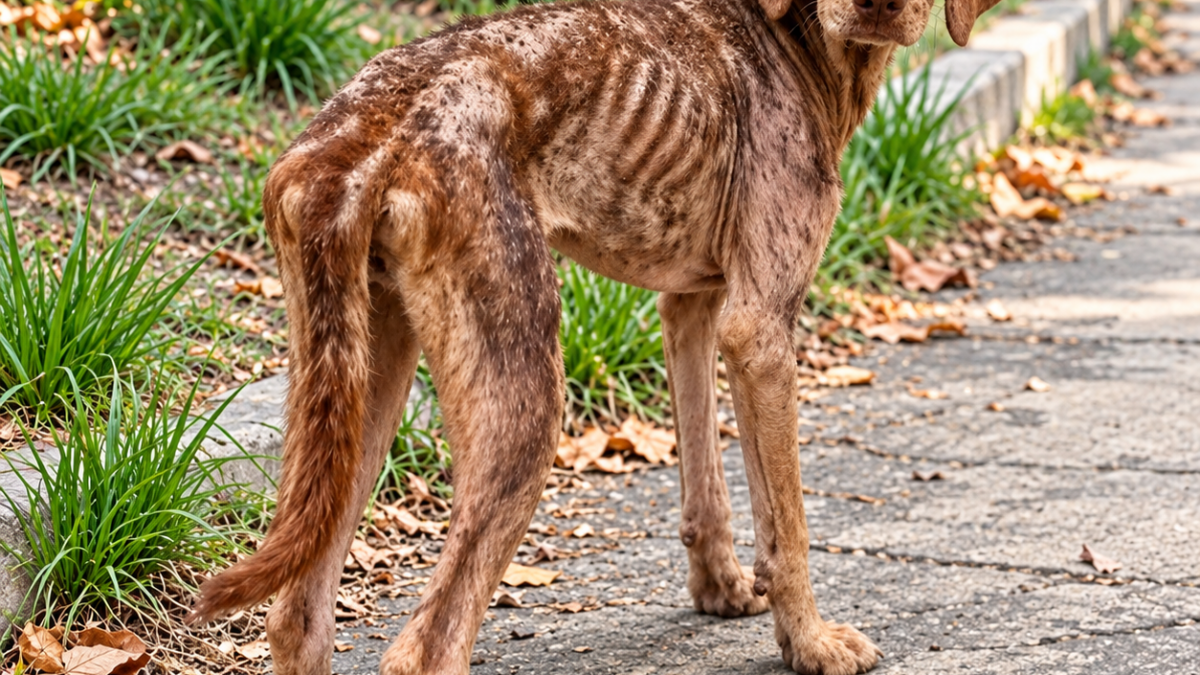
PART 2
—
The first night Fiona spent in the emergency hospital, none of us celebrated.
Rescue teaches you not to celebrate too early.
Getting an animal off the street can feel like victory, but sometimes it is only the beginning of the hardest part.
Fiona’s body had survived by adapting to scarcity.
That meant we couldn’t simply place a giant bowl of food in front of her and let her eat until she was full.
Her meals had to be controlled.
Her hydration had to be monitored.
Her skin required medication.
Her bloodwork had to be repeated.
Her body needed time to remember what stability felt like.
When I returned the next morning, I found her lying in almost the same position.
Her eyes opened when she heard my voice.
“Morning, Fiona.”
Her tail didn’t move.
But she looked at me.
I crouched beside the kennel.
“You made it through your first night.”
A technician smiled from behind me.
“She ate.”
I turned around.
“All of it?”
“Everything we gave her.”
That was the first good news.
The meal itself was tiny.
Fiona probably would have eaten five times as much if we had allowed it.
But we couldn’t.
Her stomach had been empty too often.
Her entire system needed patience.
Fiona, unfortunately, did not understand patience.
The second a food tray appeared, her head came up.
Her nose started moving.
For the first time, I saw something stronger than exhaustion in her eyes.
Hunger.
Real, desperate hunger.
A technician placed the dish inside the kennel.
Fiona stood so quickly that her legs almost slipped beneath her.
“Easy, girl.”
She devoured the portion in seconds.
Then she licked the bowl.
Then the edges.
Then the floor beneath it.
She looked up as if asking where the rest was.
“I know,” the technician whispered. “I know you want more.”
Watching a starving animal eat a medically controlled portion is harder than it sounds.
Your instincts tell you to fill the bowl.
You want to compensate for every meal they missed.
But recovery isn’t about making up for the past in one afternoon.
Sometimes love looks like restraint.
Sometimes the kindest thing you can do is say, “Not yet.”
The second day was harder.
Fiona’s skin seemed to bother her even more once treatment began.
She scratched.
She shifted.
She stood.
She lay down.
Then she stood again.
There were moments when nothing seemed comfortable.
I sat beside her kennel and watched her fight the urge to tear at her own skin.
“That has to feel awful.”
She turned her head toward me.
“You’re probably wondering why we’re not fixing everything faster.”
I smiled sadly.
“I wish we could.”
Over the next few days, the hospital staff began learning Fiona’s small habits.
She liked to press her nose toward the front of the kennel when breakfast was coming.
She disliked having her paws handled.
She would accept medicine more easily if someone scratched gently beneath her chin.
And she had one habit that broke my heart every time.
Whenever someone opened the kennel door, Fiona would shrink backward first.
Every time.
Even after several days.
The movement was automatic.
A hand came toward her, and her body expected something unpleasant.
Nobody knew why.
Maybe it came from being chased.
Maybe from rough handling.
Maybe from simply having to protect herself for too long.
We didn’t create a history we couldn’t prove.
We just respected what her body was telling us.
So we slowed everything down.
“Fiona, I’m touching your shoulder.”
Pause.
“Good girl.”
“Fiona, I’m checking your skin.”
Pause.
“You’re okay.”
“Fiona, leash.”
Pause.
“Good.”
By day four, something changed.
It was almost invisible.
I walked into the treatment area and said her name.
“Fiona?”
From inside the kennel came a soft thump.
I stopped.
Thump.
Thump.
Her tail.
I stared at the technician.
“Did she just—”
The technician grinned.
“She started doing that this morning.”
I crouched beside the door.
“Fiona.”
Thump.
That sound was tiny.
But after everything we had seen, it felt enormous.
For the first time, Fiona wasn’t merely reacting to food or fear.
She was reacting to us.
She was starting to recognize that some people came into her life without taking anything away.
On day five, she walked willingly toward the front of her kennel.
On day six, she leaned slightly into a technician’s hand.
On day seven, she rested her chin on my knee.
Every change was small enough that someone unfamiliar with Fiona might have missed it.
We noticed everything.
When she slept deeply instead of waking at every sound.
When she stopped guarding the food bowl after finishing.
When she allowed the leash to be clipped without shrinking backward.
When she sniffed another dog passing the treatment room and looked curious instead of terrified.
Her recovery wasn’t dramatic in the way movies make recovery dramatic.
There was no single moment when everything became perfect.
Healing happened in inches.
A pound gained.
A wound drying.
A patch of skin becoming less angry.
A tail moving.
A deeper sleep.
A softer expression.
On the eighth day, the veterinarian called me over.
“She’s improving enough that we can start talking about discharge.”
I almost laughed from relief.
“Really?”
“We’re not finished. Her skin will take time. Her weight will take time. But she doesn’t need emergency hospitalization forever.”
For eight days, the ER had been Fiona’s entire world.
The next step sounded simple.
Foster care.
For Fiona, it was enormous.
She would be entering a house.
Sleeping in a real bed.
Learning a routine.
Hearing cabinets open.
Watching people cook.
Seeing doors close without being abandoned outside them.
Discovering that food could appear every morning and every evening without a desperate search through trash.
Those things sound ordinary until you imagine never having them.
On the ninth day, I went to help with her discharge.
Fiona stepped out of the hospital wearing a clean harness.
She was still thin.
Still patchy.
Still visibly recovering.
But she walked differently.
There was more strength in her legs.
More awareness in her eyes.
When she reached the parking lot, she stopped and lifted her nose.
Cars.
Wind.
Grass.
Sunlight.
She smelled all of it.
Then she looked back at us.
“Well,” I said, “you’re not going back to the street.”
She didn’t understand the words.
But she followed us into the car.
That was enough.
Her foster home belonged to a woman named Claire.
Claire had fostered difficult medical cases before, which made her perfect for Fiona.
The first thing Claire did when Fiona entered the house was almost nothing.
No crowding.
No excited hugging.
No demanding affection.
She showed Fiona the water bowl.
The quiet room.
The bed.
Then she sat on the floor several feet away.
Fiona stood in the doorway.
She looked at the bed.
Then at Claire.
Then at me.
“You can go in,” I whispered.
She stepped forward.
One paw.
Then another.
The bed was thick and soft, much softer than anything Fiona seemed accustomed to.
She sniffed it.
Circled once.
Then lowered herself carefully onto the cushion.
Her entire body seemed to sink.
Claire and I watched silently.
Fiona exhaled.
A long breath.
Her eyes closed.
Claire looked at me.
“That might be the first comfortable bed she’s ever had.”
We couldn’t know that.
But neither of us said anything for a moment.
Because it felt possible.
The first week in foster care revealed something else about Fiona.
She loved routine.
Not merely enjoyed it.
Loved it.
At 6:30 every morning, Claire came downstairs.
Within days, Fiona learned the sound of her steps.
At 6:35, breakfast.
At 7:00, medication.
At 7:30, a short walk.
Lunch.
Rest.
Dinner.
Evening walk.
Bedtime.
The predictability changed Fiona.
Dogs who have lived with instability often become students of routine.
They watch everything.
Fiona began learning exactly what every household sound meant.
The refrigerator door meant possibility.
The leash clip meant outside.
The medicine bottle meant she might want to pretend she was sleeping.
The front door meant Claire had come home.
And Claire coming home quickly became Fiona’s favorite sound in the world.
One afternoon, Claire sent me a video.
The camera was aimed toward the living room.
A key turned in the front door.
Before Claire was fully inside, Fiona appeared from around the corner.
Her entire body changed.
Tail swinging.
Head raised.
Feet dancing in place.
Not the frightened dog who had once stood beside a road waiting for us to decide whether we were dangerous.
This Fiona looked happy.
Claire laughed behind the camera.
“Hi, sweetheart!”
Fiona’s tail moved faster.
She stepped toward Claire, then bounced backward.
Forward.
Backward.
Playful.
I replayed the video six times.
Then I compared it to the first photograph we had taken.
The difference hurt.
Not because Fiona was still suffering.
Because suddenly I could see how much personality had been buried beneath survival.
The dog on the street hadn’t been dull.
She hadn’t been withdrawn by nature.
She had been exhausted.
There is a difference.
We often judge frightened animals by the behavior they show during the worst moment of their lives.
Fiona was teaching us not to.
By the third week, new fur had started growing in.
At first it looked like a dark shadow across areas that had been nearly bare.
Then the texture changed.
Fine hair.
Soft hair.
Real fur.
Claire ran her fingers gently along Fiona’s side.
“Look at you.”
Fiona rolled slightly onto her back.
Claire froze.
It was the first time Fiona had voluntarily exposed her belly.
For a dog, that position can represent enormous vulnerability.
Claire kept her hand still.
“You want belly rubs?”
Fiona moved one paw.
Claire scratched gently.
Fiona’s eyes closed.
That became another ritual.
The dog who once scratched herself until she was exhausted now stretched across a clean rug asking someone else to scratch the healthy skin growing beneath her new coat.
Her appetite remained legendary.
Meals were still carefully measured, but Fiona was gaining weight steadily.
Her ribs became less visible.
Her hips stopped looking so sharp.
Her face changed.
Even her eyes seemed different.
There was softness there now.
Expectation.
One Saturday, Claire took Fiona outside into the backyard after rain.
The ground smelled fresh.
Fiona sniffed every inch of the fence line.
Then something remarkable happened.
She ran.
Not far.
Not gracefully.
Just a few awkward circles across the grass.
Claire laughed.
“Go, Fiona!”
Fiona accelerated.
Her back legs stretched fully.
Her ears bounced.
She made another circle.
Then she stopped beside Claire, panting.
That thirty-second burst probably meant nothing to anyone passing outside the fence.
To us, it meant everything.
Fiona had spent so much of her life conserving energy.
Now she had energy to waste.
That is one of the great luxuries of safety.
You can spend energy on joy.
Weeks passed.
Fiona’s medical appointments became less frightening.
At first, every visit made her nervous.
She recognized the smell of the clinic.
The tables.
The gloves.
The handling.
But the staff who had treated her during those nine days always greeted her like a celebrity.
“There’s our girl.”
“Look at that coat!”
“Fiona, are you getting chunky?”
She was not chunky.
But compared with the skeleton that had first arrived, the joke felt wonderful.
Her test results improved.
Her skin healed.
The infections cleared.
Her coat thickened.
She kept gaining healthy weight.
Then came the question that eventually comes with every foster dog.
Was Fiona ready for adoption?
Claire hated the question.
I could see it immediately.
We were standing in her kitchen while Fiona slept in the living room.
“She’s ready medically,” I said.
Claire stared at her coffee.
“I know.”
“That’s a good thing.”
“I know.”
“You don’t sound convinced.”
Claire looked through the doorway at Fiona.
“She trusts me now.”
“That means you did your job.”
“What if the next person doesn’t understand her?”
“We’ll find someone who does.”
“What if they expect too much too fast?”
“We won’t choose them.”
“What if—”
“Claire.”
She stopped.
I smiled.
“This is the part that hurts.”
Fostering is strange.
You take a broken animal into your home.
You teach them they are safe.
You learn every fear.
Every favorite toy.
Every sleeping position.
Every look.
And then, if everything goes right, your reward is saying goodbye.
Fiona was listed for adoption.
The photographs almost looked like a different dog.
We included one older photograph because her transformation mattered.
In the first image, she stood thin and nearly hairless.
In the newer photographs, her coat was soft and growing fuller every week.
Her body looked strong.
Her eyes were bright.
She was sitting beside Claire with one paw resting on Claire’s leg.
Applications arrived.
Some were immediately wrong.
One person wanted an outdoor dog.
No.
Another wanted a dog primarily as a guard animal.
No.
Someone else seemed interested in Fiona because they thought her rescue story would make her automatically grateful and obedient.
That answer bothered Claire.
“She’s a dog,” Claire said. “Not a motivational poster.”
Exactly.
We weren’t looking for someone who wanted the story of Fiona.
We needed someone who wanted Fiona herself.
The food obsession.
The occasional nervousness.
The medical history.
The tendency to follow people from room to room.
The fact that sudden movements could still make her flinch.
The need for patience.
Then an application arrived from a family who already had a large, gentle dog.
His name was Bear.
Bear was exactly what his name suggested.
Huge.
Fluffy.
Calm.
The family had experience with rescue animals.
They had a fenced yard.
Someone worked from home.
Their veterinarian gave them an excellent reference.
And when we spoke to them, they didn’t begin by asking whether Fiona was house-trained.
They asked something else.
“What scares her?”
Claire looked at me.
That was a good question.
We explained.
The family listened.
Then they asked:
“What makes her happy?”
Even better.
Food.
Soft blankets.
Gentle voices.
Walks.
Being near people.
Belly rubs.
And increasingly, other friendly dogs.
We arranged a meeting.
Claire was nervous the entire drive.
“You okay?”
“No.”
I smiled.
“Fair.”
Fiona sat in the back seat wearing a little bandana.
She watched the road through the window.
When we arrived, Bear was waiting in the yard with his family.
He looked enormous beside her.
Fiona stopped.
Bear stopped.
Nobody forced anything.
We walked them parallel to each other first.
Bear sniffed the ground.
Fiona kept glancing at him.
Then Bear sneezed.
Fiona jumped.
Everyone laughed quietly.
Bear seemed offended that his sneeze had caused a scene.
After several minutes, Fiona relaxed enough to approach.
Nose to nose.
Then nose to shoulder.
Bear remained perfectly still.
Fiona circled him.
He turned slowly.
She play-bowed.
Claire covered her mouth.
Bear looked at Fiona for about two seconds before lumbering into the clumsiest play bow I had ever seen.
Fiona darted away.
Bear followed.
The two dogs ran through the yard.
Claire’s eyes filled with tears.
“Don’t,” I warned.
“I’m not doing anything.”
“You’re crying.”
“I have allergies.”
“In October?”
“Severe ones.”
The family laughed.
Fiona ran past us with Bear behind her.
For the first time, I began imagining her living there.
Not visiting.
Living.
Her bed in that house.
Her leash by that door.
Her paws on that grass.
Her face waiting beside Bear’s when the family came home.
It felt right.
And that made it harder.
The adoption wasn’t finalized immediately.
We arranged another meeting.
Then a trial period.
Fiona entered the home cautiously.
Bear seemed to understand from the beginning that she needed space.
He never crowded her food.
Never shoved her away from attention.
Never overwhelmed her with play.
He simply existed beside her.
There is something powerful about a confident dog showing a nervous dog that the world is safe.
Bear heard a pan fall in the kitchen and barely lifted his head.
Fiona jumped.
Then she looked at Bear.
Bear went back to sleep.
A few seconds later, Fiona lay down again.
The doorbell rang.
Fiona barked.
Bear walked toward the door calmly.
Fiona followed.
A delivery truck stopped outside.
Fiona watched Bear.
Bear didn’t care.
So Fiona gradually learned not to care either.
The family sent updates every day.
Fiona sleeping near Bear.
Fiona following their daughter through the kitchen.
Fiona carrying a stuffed toy into the bedroom.
Fiona sprawled across a couch that she had apparently decided belonged to her.
Then came the message we had been hoping for.
“She feels like she’s always been here.”
Claire read it silently.
Then she set her phone down.
“That’s it, isn’t it?”
I nodded.
“That’s it.”
The adoption papers were prepared.
Before signing them, the family asked whether we minded if they gave Fiona a new name.
Some rescuers have strong feelings about changing names.
In Fiona’s case, I understood.
A new chapter deserved the possibility of a new name.
“What are you thinking?” I asked.
“Rosie.”
Claire looked at Fiona.
“Rosie.”
Fiona’s ears lifted.
The family smiled.
“See?”
Claire laughed through tears.
“I think she approves.”
And just like that, Fiona became Rosie.
Not because Fiona had been a bad name.
Not because we wanted to erase what happened to her.
But because the family wanted a name that belonged to the life ahead.
Rosie.
It suited her.
Warm.
Soft.
Happy.
The adoption day arrived.
Claire packed Fiona’s things slowly.
Her favorite blanket.
Medications.
Medical records.
Food.
The stuffed toy she had recently started carrying around.
I watched Claire place everything into a bag.
“You know they have blankets.”
“I know.”
“They have toys.”
“I know.”
“You’re packing half your house.”
Claire glared at me.
“She likes this blanket.”
“Understood.”
When the family arrived, Bear came too.
The moment Rosie saw him, her tail started moving.
That helped.
Paperwork was signed.
Instructions reviewed.
Numbers exchanged.
Then came the moment every foster parent dreads.
The leash changed hands.
Rosie looked at Claire.
Claire crouched immediately.
“Hi, baby.”
Rosie stepped forward.
Claire wrapped both arms around her carefully.
“You be good.”
Rosie licked her face.
Claire started crying.
Everyone pretended not to notice.
“I mean it,” Claire whispered. “You have a good life.”
Rosie wagged.
“You eat your dinner. You listen to Bear.”
Bear was sniffing the bag of dog food and clearly had no interest in becoming anyone’s moral example.
Claire laughed.
“Okay, maybe don’t listen to Bear about everything.”
Rosie licked her again.
Then she stepped away.
The family walked toward the car.
Rosie followed.
Halfway there, she looked back.
Claire raised a hand.
For a few seconds, Rosie simply watched her.
Then Bear jumped into the car.
Rosie looked at him.
Looked at Claire.
And climbed in beside Bear.
Claire cried harder.
I put an arm around her shoulder.
“She chose to go.”
“I know.”
“That’s good.”
“I know.”
We watched the car disappear.
Then Claire looked at the empty driveway.
“I hate fostering.”
“You’re going to do it again.”
“Absolutely.”
A week later, Rosie’s family sent a photograph.
She and Bear were sleeping side by side.
Rosie’s head rested against Bear’s thick fur.
Her body looked completely relaxed.
The dog who once slept on the street had found a brother who was basically a living pillow.
Another photograph came a month later.
Rosie standing in the backyard after her coat had almost completely filled in.
I stared at it for several seconds.
If I hadn’t known, I might not have recognized her.
Her fur covered the inflamed skin.
Her body was healthy.
Her chest was strong.
Her eyes were clear.
Her tail curved happily behind her.
I pulled up the first photo we had taken on the street.
Then I placed the two pictures side by side.
Street Fiona.
Family Rosie.
Same dog.
Different world.
People sometimes call transformations like Rosie’s miracles.
I understand why.
But I also think that word can hide something important.
A miracle sounds mysterious.
Rosie’s recovery wasn’t mysterious.
Someone noticed.
Someone made a call.
Rescuers showed up.
Veterinary professionals treated her.
People donated resources.
A foster parent opened her home.
A family chose patience.
None of those things were supernatural.
They were decisions.
And together, those decisions changed one dog’s entire life.
Months passed.
Rosie became fully settled.
She learned that Bear’s bed was more comfortable than her own.
She learned that someone opening a cheese wrapper anywhere in the house required immediate investigation.
She learned that rain was much more enjoyable when you knew you could go back inside afterward.
She learned to bark at squirrels.
She learned that the couch was technically off-limits until everyone quietly accepted that it wasn’t.
She learned family routines.
Saturday walks.
Evening television.
Morning coffee.
Dinner smells.
Car rides.
She learned that when someone left the house, they usually returned.
That last lesson took the longest.
During her first weeks, Rosie became anxious whenever the family prepared to leave.
Shoes.
Keys.
Coats.
Those signals changed her.
She followed closely.
Her breathing increased.
Sometimes she stood directly in front of the door.
Not aggressively.
Desperately.
As if she had learned long ago that people disappearing might mean they never came back.
Her family never punished her.
They practiced short departures.
Thirty seconds.
One minute.
Five minutes.
Always returning calmly.
Bear helped again.
When the family left, Bear usually walked to his favorite spot and went to sleep.
Rosie paced.
Bear slept.
Rosie stared at the door.
Bear snored.
Eventually Rosie would lie down nearby.
The family returned.
Again.
And again.
And again.
Over time, leaving stopped meaning abandonment.
It simply meant waiting.
One evening I visited.
Rosie greeted me at the door.
For half a second, I saw Fiona.
Not physically.
Something in the eyes.
Recognition.
I knelt.
“Do you remember me?”
Her tail exploded into motion.
She pushed her head against my chest.
I laughed.
“Oh, I’ll take that as yes.”
Her family smiled.
“She does that with people she really loves.”
Rosie leaned harder.
My eyes burned.
I thought about the first time I had touched her.
How she had flinched.
Now she was pressing herself against me so firmly that I nearly lost my balance.
Bear appeared beside us.
I scratched his enormous head.
“You took good care of her?”
Bear looked at me as though the answer were obvious.
Rosie’s owner handed me a photograph.
“We wanted you to have this.”
It showed Rosie and Bear sitting together on the front porch.
Rosie wore a red collar.
Her coat was thick and healthy.
She looked directly into the camera.
There was no fear.
I held the picture beside an old image on my phone.
“I wish she understood.”
“Understood what?”
“How far she came.”
Her owner looked down at Rosie.
“Maybe she doesn’t need to.”
That stayed with me.
Humans carry stories differently.
We revisit old pain.
We compare past and present.
We build identities from what happened years ago.
Dogs seem more capable of living inside what is happening now.
Maybe Rosie didn’t wake up thinking:
I used to be starving.
Maybe she woke up thinking:
Breakfast.
Bear.
My people.
Backyard.
Safe.
Perhaps that was better.
Her past mattered because it taught us something.
But it didn’t need to define every day of her future.
There was one moment, though, that felt almost unreal.
Several months after Rosie’s adoption, her family brought her to an outdoor community event where our rescue organization had a booth.
Claire was volunteering.
I was there too.
Rosie arrived with Bear.
People immediately noticed them.
Bear because he was enormous.
Rosie because she was beautiful.
A woman walking past stopped.
“What kind of dog is she?”
Rosie’s owner smiled.
“Mostly mystery.”
The woman crouched.
“She has such a gorgeous coat.”
Claire and I looked at each other.
Gorgeous coat.
The phrase would have been unimaginable when Fiona came to us.
The woman scratched Rosie beneath the chin.
“She looks so healthy.”
Again, Claire looked at me.
There were things we didn’t need to say anymore.
Then another person approached our booth.
He was looking at the before-and-after photographs displayed on a board.
Rosie’s photograph was there.
The street image.
The hospital image.
The foster image.
The adoption image.
He pointed toward the first one.
“Poor dog. Did she survive?”
Claire turned slowly.
Then she pointed beside him.
Rosie was standing three feet away.
“That’s her.”
The man stared.
“No.”
“Yes.”
He looked at the photograph.
Then Rosie.
Then the photograph again.
“You’re kidding.”
Rosie wagged at him.
The man crouched.
“This is the same dog?”
“The same dog.”
He shook his head.
“I never would have known.”
That sentence felt like the closest thing to revenge Rosie would ever need.
Not revenge against a person.
Not cruelty answered with cruelty.
Something better.
The world had once treated her as invisible.
Now people stopped to admire her.
The body that had once made strangers look away now made strangers kneel beside her.
The dog who once searched sidewalks for food now had a family carrying treats in their pockets because they knew she liked the chicken ones best.
The dog who had no one now had too many people arguing over who she loved most.
Claire scratched Rosie’s neck.
“You’re showing off.”
Rosie leaned against her.
I laughed.
“She earned it.”
Later that afternoon, I watched Rosie and Bear lying beneath a tree.
Children passed.
Music played.
People talked around them.
Rosie slept.
Completely.
Deeply.
Her body loose.
Her head resting against Bear.
I thought about the first days in the hospital, when she woke at every sound.
I thought about the street.
The scratching.
The ribs.
The inflamed skin.
The way she had stood at a distance when we arrived.
And I realized something.
The most satisfying part of Rosie’s story wasn’t that she had survived.
Animals survive terrible things every day.
The satisfying part was that eventually she no longer had to survive.
She could simply live.
There is a huge difference.
Survival asks:
Where is my next meal?
Living asks:
Are we going for a walk?
Survival asks:
Where can I sleep without being hurt?
Living asks:
Which bed is softer, mine or Bear’s?
Survival asks:
Can I trust this hand?
Living shoves its head beneath that hand and demands more scratches.
Rosie had crossed that invisible line.
Her family later told me that she had developed a bedtime ritual.
Every night, Bear went to the bedroom first.
Rosie followed.
Bear slept on one side of the room.
Rosie had her own bed on the other.
But before settling down, Rosie walked through the house.
Kitchen.
Living room.
Hallway.
Front door.
Then back to the bedroom.
At first, her family thought she was restless.
Then they realized she was checking where everyone was.
Once she saw that the family was home, she climbed into bed.
Safe.
Accounted for.
Complete.
One night, her owner sent me a short video.
Rosie walked into the bedroom.
Bear was already asleep.
She circled her bed twice.
Then, instead of lying down immediately, she looked toward the camera.
Her owner said softly:
“Good night, Rosie.”
Her tail tapped against the bed.
Thump.
Thump.
I remembered day four in the emergency hospital.
The first tail wag.
Thump.
Thump.
Same sound.
Different life.
That was when Rosie’s story finally felt complete to me.
Not because nothing bad could ever happen again.
Life doesn’t promise that.
Not because her past had disappeared.
It hadn’t.
The scars beneath her coat existed whether anyone could see them or not.
Her story felt complete because Fiona, the dog who once seemed to expect nothing from anybody, had learned expectation again.
She expected breakfast.
She expected walks.
She expected Bear to be waiting.
She expected the door to open.
She expected hands to be gentle.
She expected people to come home.
She expected love.
That might be one of the greatest transformations rescue can offer.
Not simply turning a sick dog into a healthy dog.
Turning fear into expectation.
Turning uncertainty into routine.
Turning isolation into belonging.
There were still moments when Rosie reminded us how deeply the old life had shaped her.
During one storm, thunder shook the house.
Rosie panicked.
She squeezed herself behind a chair and trembled.
Her family sat on the floor nearby.
Nobody dragged her out.
Bear walked over, looked behind the chair, and lay down outside her hiding place.
Rosie stayed there for nearly an hour.
Eventually, her nose appeared.
Then her head.
She saw Bear.
Saw her family.
Nothing bad had happened.
She crawled out.
Her owner wrapped a blanket around her.
Rosie pressed her face against his arm.
The storm continued.
But she didn’t hide again.
Healing does not mean fear never returns.
It means fear no longer has to be faced alone.
That distinction mattered.
A year after Fiona first entered the hospital, we received another photograph.
This one became my favorite.
Rosie and Bear were lying on the grass.
Rosie was on her back.
All four legs in the air.
Mouth slightly open.
Completely ridiculous.
Completely vulnerable.
Completely safe.
The caption said:
“Hard life.”
I laughed for nearly a minute.
Then I cried.
Because yes.
Once, Fiona’s life had been hard in every possible sense.
Now Rosie’s biggest problem seemed to be that Bear sometimes occupied the best section of the couch.
Her family celebrated her adoption anniversary every year.
Not her birthday.
Nobody knew her real birthday.
So they chose the day she officially became Rosie.
They called it her “home day.”
The first year, they bought her a small dog-safe cake.
Bear received a piece too because apparently he believed all celebrations were legally required to include him.
Rosie wore a ridiculous party hat for approximately eleven seconds before shaking it off.
Her family sent us the pictures.
Claire printed one and placed it on her refrigerator.
Below it, she kept Fiona’s original intake photograph.
Two images.
One above the other.
Whenever Claire began fostering a new medical case and wondered whether the dog would ever recover, she looked at Rosie.
Not because every story ends the same way.
They don’t.
Rescue can be heartbreaking.
Sometimes treatment fails.
Sometimes fear runs too deep.
Sometimes the perfect family takes months or years to appear.
But Rosie reminded us what patience could make possible.
Years passed.
Her coat became even fuller.
Her confidence grew.
Bear remained her closest companion.
Whenever he went to the veterinarian without her, Rosie waited by the door until he returned.
Whenever Rosie had an appointment, Bear inspected her carefully when she came home.
They fought over toys.
Shared beds.
Stole each other’s treats.
Argued over sunny spots.
Behaved, in other words, like siblings.
Rosie’s family once sent a photograph of Bear squeezed into Rosie’s much smaller bed while Rosie occupied his enormous orthopedic mattress.
“Justice,” the caption said.
I replied:
“Smart girl.”
And maybe that was the real revenge people want from stories like hers.
We often imagine revenge as punishment.
Someone hurts you.
You hurt them back.
Someone abandons you.
They suffer.
Someone ignores you.
They regret it.
But Rosie’s life offered something far more satisfying.
She became happy without needing the people who had failed to notice her.
She became loved without ever needing an apology.
She became safe without understanding whether anyone from her past felt guilty.
Her victory required nothing from them.
That is a kind of freedom revenge can never offer.
Somewhere, maybe a person who once walked past that thin dog saw a photograph of Rosie years later.
Maybe they recognized her.
Maybe they didn’t.
Maybe they wondered whether they could have helped.
We never knew.
And eventually, it didn’t matter.
Because Rosie was not waiting for the world to feel sorry.
She was too busy living.
One afternoon, I visited her family again.
Rosie was older now.
A little gray around the muzzle.
Bear had slowed down too.
They still greeted me at the door.
Rosie’s tail moved with the same enthusiasm.
I sat on the floor.
She immediately pressed herself beside me.
“You still remember.”
Her owner laughed.
“She remembers everybody who ever gave her food.”
“That explains it.”
Rosie rested her head on my leg.
I ran my fingers through the fur on her neck.
Thick.
Soft.
Warm.
Nothing like the damaged coat from years earlier.
For a while, nobody talked.
There was no need.
Bear lay nearby.
Rosie closed her eyes.
Sunlight came through the window.
Eventually I said:
“You know what I thought when we picked her up?”
Her owner looked over.
“What?”
“I thought she had given up.”
He watched Rosie sleeping against me.
“Maybe she was just waiting.”
I looked down at her.
Maybe.
Waiting for someone to stop.
Waiting for a leash that led somewhere safe.
Waiting for the first meal she wouldn’t have to search for.
Waiting for nine difficult days of treatment to end.
Waiting for a foster home.
Waiting for Bear.
Waiting for this family.
Of course, Fiona couldn’t have known any of that was coming.
That is what makes rescue both heartbreaking and beautiful.
The animal does not know there is another chapter.
When we approach them frightened and sick, they don’t know we are bringing beds.
Medicine.
Food.
Families.
They only know what has happened before.
Our job is to help them discover what can happen next.
Before I left that afternoon, Rosie walked me to the front door.
I knelt and held her face gently between my hands.
She looked straight at me.
Healthy eyes.
Gray muzzle.
Soft fur.
Loved.
“You did all right, kid.”
She licked my chin.
I stood.
Her owner opened the door.
I stepped outside.
For a second, Rosie tried to follow.
Then her owner called:
“Rosie, stay.”
She stopped.
I looked back.
Years earlier, leaving Fiona behind anywhere would have felt unbearable.
Now I could walk away smiling.
Because she wasn’t being left.
She was home.
The door closed behind me.
Through the front window, I saw Rosie turn away almost immediately.
Bear appeared.
She walked toward him.
Then both dogs disappeared deeper into the house.
No dramatic goodbye.
No fear.
No panic.
Just a dog returning to her ordinary evening.
And that, after everything, was perfect.
Fiona’s story began on a street where suffering had become easy for people to ignore.
It could have ended there.
She could have remained one more thin dog sleeping outside.
One more frightened animal people promised themselves somebody else would help.
But one person stopped.
One person decided that noticing created responsibility.
That call led to rescuers.
Rescuers led to an emergency hospital.
Nine days in that hospital led to foster care.
Foster care led to healing.
Healing revealed personality.
Personality found family.
And Fiona became Rosie.
She gained weight.
She grew fur.
She learned to play.
She discovered soft beds.
She found a giant furry brother.
She learned the sound of her people coming home.
Most importantly, she stopped living like every good thing might disappear.
The last photograph I keep of her is not one of the dramatic before-and-after images.
It isn’t the photo from the street.
It isn’t the hospital picture.
It isn’t even the beautiful adoption portrait.
It is a terrible phone photo someone took during an ordinary evening.
Rosie is asleep on the couch.
Bear is beside her.
One of her humans is sitting near their feet.
There is a blanket half falling onto the floor.
A toy is lying upside down near the coffee table.
Nothing remarkable is happening.
That is exactly why I love it.
For Fiona, ordinary life was once something almost unimaginable.
Now ordinary belonged to her.
She didn’t have to earn it.
She didn’t have to perform gratitude.
She didn’t have to spend every day being an inspirational rescue story.
She could be annoying.
Lazy.
Hungry.
Playful.
Stubborn.
Affectionate.
She could steal Bear’s bed.
She could bark at squirrels.
She could refuse to go outside in the rain.
She could demand dinner ten minutes early.
She could simply be a dog.
That was the ending I wanted for her.
Not fame.
Not sympathy.
Not even a dramatic triumph.
A home where nobody cared what she used to look like because they were too busy loving who she had become.
People once passed Fiona while her ribs showed through her coat.
Years later, strangers stopped to tell her family how beautiful she was.
But beauty wasn’t the real transformation.
The real transformation happened somewhere no photograph could capture.
It happened the first time she heard footsteps and became excited instead of afraid.
The first time she slept through a noise.
The first time she exposed her belly.
The first time someone left the house and she truly believed they would return.
The first night she walked through her home, found everyone exactly where they belonged, and went peacefully to sleep.
That was Fiona’s victory.
That was Rosie’s revenge on every terrible day that came before.
Not anger.
Not punishment.
A life so full of safety that the street eventually became only the beginning of her story, never the thing that defined its ending.
And whenever I think about the dog we found that day, I no longer picture the ribs.
I don’t picture the raw skin.
I don’t picture the cautious eyes watching us approach.
I picture Rosie lying beside Bear, her coat thick and soft, sleeping so deeply that the world can make noise around her without waking her.
Because somewhere along the way, she finally learned something every dog deserves to know.
She did not have to keep watch anymore.
Someone else was watching over her.
And this time, they weren’t going anywhere.
Years after the day we first found Fiona, I still thought about the way she had looked at us from the side of that road.
Not because I wanted to remember her suffering.
I didn’t.
If I could erase the hunger, the infections, the loneliness, the endless nights outside, I would have done it without hesitation.
But I remembered because the contrast had become impossible to ignore.
The dog who once seemed afraid to hope for anything had become a dog who expected love as naturally as she expected breakfast.
And somehow, that felt bigger than any physical transformation.
By then, everyone called her Rosie.
The name Fiona still existed in veterinary records, rescue paperwork, and old photographs, but in her family’s home, she was simply Rosie.
Rosie who stole Bear’s bed.
Rosie who ran to the kitchen whenever she heard a bag open.
Rosie who refused to step onto wet grass unless absolutely necessary.
Rosie who followed her family from room to room as though she had been assigned the job of supervising every household activity.
Rosie who had once owned nothing and now behaved as if the entire house belonged to her.
Maybe, in a way, it did.
Her favorite place was a wide living-room window overlooking the front yard.
Every morning, after breakfast, she climbed onto the cushioned bench beneath it and watched the neighborhood wake up.
Children walked to school.
Delivery trucks stopped at nearby houses.
People jogged past.
Dogs pulled their owners down the sidewalk.
Rosie watched all of them with quiet interest.
Sometimes I wondered what she thought when she saw another dog walking without a leash or wandering alone.
Did she remember?
Did some part of her recognize that kind of uncertainty?
We could never know.
What we did know was that Rosie rarely looked backward anymore.
Her family once told me that during her first year with them, she would occasionally freeze when she heard certain sounds outside.
A metal trash can rolling across pavement.
A car door slamming.
A man shouting from far away.
Her body would stiffen.
Her ears would lower.
Then Bear would walk past her like nothing had happened.
Or someone would call her name from the kitchen.
Or a hand would reach down and scratch behind her ears.
And slowly, Rosie would return to the present.
That was how healing seemed to work for her.
Not by deleting the past.
By making the present stronger.
One winter evening, I visited during a heavy rainstorm.
The kind of storm that turned gutters into rivers and covered the windows in sheets of water.
When I arrived, Rosie was standing near the front door.
She stared outside.
Years earlier, weather like that would have meant finding a dry place beneath a car or against a building.
Now she looked at the rain with complete disgust.
Her owner opened the door and pointed toward the yard.
“Come on, Rosie. Bathroom.”
Rosie backed away.
I laughed.
“She survived the streets, but rain is where she draws the line?”
Her owner shook his head.
“You should see her when it snows.”
Bear walked confidently outside.
Rosie watched him from the doorway.
Bear turned as if waiting.
Rosie took one cautious step into the rain.
Then another.
She looked betrayed by everyone involved.
The entire family laughed.
Rosie eventually rushed into the yard, did what she needed to do, and sprinted back inside so quickly that Bear barely had time to follow.
Her owner wrapped her in a towel.
Rosie stood there dramatically while being dried.
I watched her and felt something warm settle in my chest.
There she was.
A dog who once had no choice but to endure weather now acting offended because her paws were wet for thirty seconds.
That was the kind of progress nobody put in medical charts.
But to me, it meant everything.
Her family continued celebrating her home day every year.
At first, they kept it small.
A special meal.
A new toy.
A photo beside Bear.
By the third year, it had become a family tradition.
They baked dog-safe treats.
Claire came over.
I came when I could.
The children made ridiculous signs.
Bear received gifts even though everyone reminded him repeatedly that it was not his adoption anniversary.
He did not care.
One year, Rosie’s family hung a small banner across the kitchen.
It said:
“BEST DAY EVER.”
Rosie had no idea what the banner meant.
She only knew everyone seemed happy and there were treats involved.
That was enough.
Claire arrived holding a wrapped box.
Rosie immediately tried to smell it.
“You have become incredibly spoiled,” Claire told her.
Rosie wagged harder.
Claire looked at me.
“She has no shame.”
“She earned the right.”
Claire laughed.
Rosie tore the paper open with help from one of the children.
Inside was a new blanket.
Soft.
Thick.
Probably unnecessary considering Rosie already had more blankets than any dog reasonably needed.
She stepped onto it immediately.
Then she lay down in the middle.
Claire shook her head.
“I guess she likes it.”
Rosie stretched out.
Bear approached and placed one paw on the edge.
Rosie lifted her head.
Bear froze.
Everyone started laughing.
Rosie gave him a look that clearly said the blanket was not part of a shared-property agreement.
Bear slowly removed his paw.
“She runs this house,” Claire said.
Rosie put her head back down.
Yes.
She did.
There was a time when she had no territory to protect.
Now she had preferences.
Boundaries.
Favorite places.
Favorite people.
And apparently legal ownership of certain blankets.
That was what safety had given her.
Not perfection.
Personality.
The more secure she became, the more of herself she allowed the world to see.
Rosie was affectionate, but she was also stubborn.
She adored walks, but only in directions she approved of.
She loved meeting people, but she disliked being hugged too tightly.
She enjoyed car rides unless the destination turned out to be the veterinary clinic.
Then she became suspicious of everyone.
Her family respected those things.
They didn’t expect gratitude because they had adopted her.
They didn’t treat every difficult behavior like a betrayal.
They let her be complicated.
That mattered.
People sometimes imagine rescue dogs as creatures who spend the rest of their lives silently thanking whoever saved them.
Real dogs don’t work that way.
They get comfortable.
They steal food.
They chew things they shouldn’t.
They ignore commands.
They bark at ridiculous noises.
They have bad days.
And that, strangely enough, was another sign of Rosie’s recovery.
She felt safe enough to misbehave.
Once, she stole an entire sandwich from the kitchen counter.
Her owner had turned away for maybe ten seconds.
When he turned back, the plate was empty.
Rosie was in the hallway chewing very quickly.
Bear stood nearby looking deeply interested but completely innocent.
“You did not.”
Rosie swallowed.
Her owner pointed at her.
“Rosie.”
Her tail wagged.
“I made that sandwich.”
More wagging.
“That was my lunch.”
Rosie walked forward and leaned against his leg.
He tried to stay angry.
He lasted about three seconds.
I heard the story later and laughed.
“Any regrets about adopting her?”
“Ask me after lunch.”
Rosie, according to him, had absolutely no regrets.
As the years passed, she became a familiar face in the neighborhood.
People knew her.
Children called her name from bicycles.
Neighbors carried treats.
The mail carrier occasionally stopped to scratch her ears.
When a new family moved into the house across the street, their little girl was afraid of dogs.
Bear was too large for her at first.
But Rosie seemed to understand nervousness.
She never rushed the child.
Never jumped.
She simply sat several feet away.
Over the following weeks, the little girl slowly moved closer.
First, she stood near Rosie.
Then she held out a treat.
Then she touched Rosie’s back.
Eventually, she sat beside her on the lawn.
The girl’s mother sent Rosie’s family a photo.
The child had one arm around Rosie’s shoulders.
Rosie sat calmly beside her.
Under the photo, the mother had written:
“She’s not afraid anymore.”
When I saw it, I stared for a long time.
A frightened dog had helped a frightened child feel safe.
That felt like the kind of circle life sometimes creates when it finally decides to be gentle.
Rosie never knew she had become important to people outside her family.
She didn’t know that rescue volunteers showed her before-and-after photos to encourage one another during difficult cases.
She didn’t know new foster families heard her story.
She didn’t know people donated supplies after seeing her transformation.
And perhaps that was best.
To Rosie, life stayed wonderfully simple.
Food.
Home.
Bear.
Walks.
Family.
Sunlight through the living-room window.
Every now and then, though, the past returned in unexpected ways.
One afternoon, Rosie’s family took her and Bear to a park.
Near the parking lot, they noticed a thin stray dog searching around trash cans.
Rosie stopped walking.
Bear kept moving until the leash tightened.
Rosie stared.
Her owner told me later that her entire posture changed.
Not fear exactly.
Attention.
The stray dog looked at them.
Then ran away.
Rosie watched until it disappeared behind a fence.
Her family contacted a local rescue and gave them the location.
The dog was eventually found.
It wasn’t in the same condition Fiona had once been, but it needed help.
It received medical care.
Later, it was adopted.
When Rosie’s owner told me the story, he said something that stayed with me.
“Maybe Rosie saved that dog.”
Technically, she hadn’t made the call.
She hadn’t placed the leash.
She hadn’t driven the animal to a clinic.
But she had made her family notice differently.
Because of Rosie, they knew what it meant when a dog looked too thin.
They knew how quickly a small problem could become a crisis.
They knew that somebody had to stop.
In that sense, yes.
Rosie saved that dog.
And probably more than one.
That was one of the most powerful things about her story.
Kindness multiplied.
One person noticed Fiona.
Then rescuers helped Fiona.
Then Claire fostered Fiona.
Then a family adopted Rosie.
Then Rosie’s family noticed another dog.
One decision had quietly created another.
Then another.
Then another.
The world had once walked past Fiona.
Her life became part of the reason other animals were no longer walked past.
There was something beautiful about that.
As Bear grew older, Rosie changed with him.
He had always been the confident one.
The dog who showed her that doorbells weren’t dangerous.
That pans could fall without disaster.
That people could leave and come back.
But age eventually slowed him.
His legs became stiff.
He slept longer.
He hesitated before climbing stairs.
Rosie noticed.
She stopped racing ahead of him.
On walks, she stayed closer.
If Bear fell behind, Rosie turned around and waited.
Her family began seeing a new side of her.
The dog who had once leaned on Bear for confidence now became his shadow.
At night, she often slept beside his bed.
When Bear had difficult days, Rosie remained close.
One afternoon after a veterinary appointment, Bear came home tired and sore.
He lay down in the living room and didn’t move for hours.
Rosie brought one of her toys over.
She dropped it near his front paws.
Bear didn’t respond.
Rosie lay down beside him.
No play.
No noise.
Just presence.
Her owner sent me a photo.
Rosie’s head rested near Bear’s shoulder.
The caption read:
“She remembers who took care of her.”
Maybe she did.
Or maybe love simply teaches us what to do when someone else needs the same thing.
Bear had been Rosie’s calm when she was afraid.
Now Rosie became his company when he was weak.
Watching that relationship change was heartbreaking and beautiful at the same time.
Eventually, Bear’s health declined enough that the family knew they were facing a decision they had dreaded for years.
That period was difficult for everyone.
Rosie included.
There were medications.
Special meals.
Shorter walks.
Good days.
Bad days.
The family rearranged furniture to make movement easier.
They placed rugs across slippery floors.
Rosie seemed to understand that Bear’s world had become smaller.
She adjusted.
She stopped trying to start rough games.
She walked beside him.
She shared the sunny spots.
Even the favorite bed.
That may have been the clearest evidence that she loved him.
Rosie, who once defended a new blanket like private property, now willingly moved aside for Bear.
During Bear’s final week, Rosie hardly left him.
When the family sat beside him, Rosie sat too.
When Bear slept, she slept nearby.
When he struggled to stand, Rosie waited.
Then came the day the family made the painful decision to let him go peacefully.
They wanted Rosie to have a chance to understand.
So after Bear passed, they allowed her to approach.
Rosie sniffed him carefully.
She stood there for a long time.
Then she lay down beside him.
Nobody rushed her.
Nobody pulled her away.
Eventually, Rosie stood.
She looked toward the family.
Then walked over and pressed herself against them.
That night, the house felt wrong.
Too quiet.
Bear’s bed was empty.
His bowl was gone.
His collar rested on a shelf.
Rosie searched several rooms.
Her family followed.
She checked the bedroom.
Living room.
Backyard door.
Then returned to Bear’s bed.
She lay down beside it.
For the first time in years, Rosie looked lost.
Her family slept near her that night.
For several weeks, she moved through the house differently.
She listened whenever a dog barked outside.
She sometimes walked to the window when a large dog passed.
She ate.
She walked.
She accepted affection.
But everyone could tell she missed him.
Grief looks different in animals.
We are careful not to imagine emotions we cannot prove.
But Rosie’s routines changed.
She was quieter.
She slept in places Bear had used.
She waited longer at doors.
Her family gave her time.
Nobody tried to replace Bear immediately.
Nobody forced distractions.
They simply stayed close.
One evening, Rosie carried an old toy to Bear’s bed.
It was the same kind of toy she had once dropped near him after his veterinary appointment.
She placed it down.
Then curled beside it.
Her owner sat nearby and cried.
Rosie raised her head.
Then she walked over.
She put her chin on his knee.
The family had spent years comforting her.
Now, in their hardest moment, Rosie seemed to be returning the favor.
Slowly, the house found a new rhythm.
Not the old rhythm.
That was gone.
A different one.
Rosie began sleeping near the family’s bedroom door.
She enjoyed longer solo walks.
She received even more attention than before.
Her home day celebrations continued.
Bear’s photograph remained on the shelf.
Rosie’s family kept his collar beside it.
Whenever I visited, Rosie still greeted me enthusiastically.
But afterward, she often went to lie near the place Bear used to sleep.
I once sat beside her there.
“You miss him?”
Rosie looked at me.
I rubbed the side of her neck.
“I do too.”
For a while, we stayed quiet.
I thought about everything Bear had given her.
He hadn’t rescued her from the street.
He hadn’t paid veterinary bills.
He hadn’t signed adoption papers.
But he had taught her how to live inside a family.
He had shown her, without words, that ordinary sounds were ordinary.
That sleeping deeply was safe.
That people coming and going didn’t mean abandonment.
That another dog could be family rather than competition.
His role mattered.
And Rosie had given him something in return.
Companionship.
Play.
Loyalty.
Someone to annoy him for years.
Someone to wait when his legs became slow.
A sister.
That seemed like a good life for both of them.
As Rosie entered her senior years, her muzzle became whiter.
Her movements slowed.
She still loved food with the same intensity.
That apparently survived everything.
Her walks became shorter.
She spent more time in the sun.
The family placed steps near the couch so she could climb up without jumping.
They added another orthopedic bed.
Then another because Rosie preferred whichever bed happened to be in the room where people were sitting.
Her veterinary appointments became more frequent.
Nothing dramatic at first.
Age.
Arthritis.
The normal changes that come when a dog has been lucky enough to grow old.
That phrase mattered to me.
Lucky enough to grow old.
When we first found Fiona, growing old had not looked guaranteed.
Now we were discussing joint supplements and senior bloodwork.
That was a privilege.
One day Claire and I visited together.
Rosie walked toward us more slowly than she once would have, but the tail was exactly the same.
Thump.
Thump.
Thump.
Claire knelt.
“There’s my girl.”
Rosie leaned into her.
Claire ran her hands through the graying fur.
“Look at you.”
Her voice broke slightly.
I knew what she was thinking.
We had known Fiona when every rib showed.
Now we were looking at an old dog whose life had been full enough to leave years behind her.
Claire whispered:
“You got your whole life.”
Rosie licked her hand.
That sentence nearly destroyed me.
Because that had always been the goal.
Not simply another week.
Not simply recovery.
A life.
A whole life.
Years of ordinary mornings.
Birthdays.
Walks.
Rainstorms.
Stolen sandwiches.
Family dinners.
Bear.
Loss.
Healing.
Sleep.
Love.
Rosie got all of it.
Her final years were quieter.
She no longer ran circles around the backyard.
Instead, she wandered slowly through the grass, sniffing everything.
She still watched the neighborhood from the window.
Sometimes children who had known her for years stopped outside and called her name.
Rosie lifted her head.
Her tail moved.
Her family joked that she considered herself mayor of the street.
Nobody challenged the title.
There were more good days than bad for a long time.
Then, eventually, that balance began to change.
Her appetite remained strong, which confused everyone because Rosie seemed determined to love food until the end.
But standing became harder.
Some mornings she hesitated before getting out of bed.
She tired quickly.
Her body, which had once fought so hard to survive, was finally becoming old.
Her family made adjustments.
Pain management.
Rugs.
Ramps.
Short walks.
More rest.
The veterinarian reassured them that Rosie was comfortable.
For a while, that was enough.
Then one morning, her owner called me.
His voice sounded different.
“She had a bad night.”
I knew immediately what that meant.
Rosie had been restless.
She struggled to stand.
She refused breakfast for the first time anyone could remember.
That alone frightened everyone.
The veterinarian examined her.
There were new problems.
Serious ones.
Treatable perhaps for a little while, but not fixable in any meaningful long-term way.
The family faced the same terrible responsibility they had once faced with Bear.
How do you know when love means holding on?
How do you know when love means letting go?
There is no perfect answer.
Only careful attention.
Honest conversations.
And the promise that your own fear of losing them will not become the reason they suffer.
Rosie returned home.
The family wanted one more peaceful evening if she was comfortable.
She spent it in the living room.
Her favorite blanket beneath her.
People around her.
Claire came.
I came.
Nobody made speeches.
Nobody needed to.
We sat near her.
One of the children, now much older, lay on the floor beside Rosie and stroked her head.
Rosie’s eyes closed.
Someone opened a package of chicken.
Rosie’s nose moved.
We all laughed through tears.
“Of course,” her owner said.
He gave her a small piece.
Rosie ate it.
Then another.
For a few moments, she looked almost like her younger self.
That hungry street dog had never disappeared entirely.
She had simply become a hungry family dog.
The thought made everyone smile.
That night, before I left, I knelt beside her.
Rosie opened her eyes.
I touched the side of her face.
The fur was soft.
Gray now.
But soft.
“You remember that first night?”
Of course she didn’t understand.
Or maybe she remembered feelings rather than events.
I continued anyway.
“You were lying in that hospital kennel. And I told you that you didn’t have to sleep outside anymore.”
Rosie watched me.
“I kept that promise.”
My voice shook.
“Everybody did.”
Her tail moved once against the blanket.
Thump.
I swallowed.
“You did good, Rosie.”
She rested her head against my hand.
I stayed there until my legs hurt.
The next day, her family made the decision.
Rosie was surrounded by the people who loved her.
Her favorite blanket was beneath her.
Her family spoke softly.
Nobody allowed her last moments to become frightening.
Claire held one paw.
Her owner kept a hand against her chest.
I stood close.
Rosie looked around once.
Then relaxed.
She left the world in the exact opposite way she had once lived in it.
Not alone.
Not hungry.
Not cold.
Not unseen.
Loved.
Completely and unmistakably loved.
Afterward, nobody moved for a long time.
Eventually, Claire whispered:
“She was supposed to be a foster success story.”
Rosie’s owner laughed softly through tears.
“She turned into our whole life.”
That was exactly right.
The house felt unbearably empty afterward.
Her bowl remained in the kitchen for several days.
Her leash hung near the door.
Her bed stayed beside the couch.
Nobody was ready to move anything.
Then, weeks later, the family placed Rosie’s collar beside Bear’s.
Two collars.
Two photographs.
Two lives that had become inseparable in everyone’s memory.
They framed one particular picture.
Rosie and Bear asleep together in the grass.
Rosie on her back.
Bear stretched beside her.
No suffering.
No rescue equipment.
No hospital.
Just two dogs having an ordinary afternoon.
That became the photograph everyone wanted to remember.
Not Fiona’s first picture.
Not Rosie’s last.
The middle.
The life.
Months later, Rosie’s family contacted the rescue.
They said they wanted to foster.
When I heard, I smiled.
“You sure?”
Her owner answered immediately.
“No.”
I laughed.
“That’s probably the correct answer.”
“We have an empty house.”
“I know.”
“And Rosie taught us a few things.”
That part mattered.
Their first foster was not dramatic.
A nervous mixed-breed dog who had been surrendered after his owner became ill.
He hid beneath a table for two days.
Rosie’s family didn’t force him out.
They knew better.
They placed food nearby.
They sat quietly.
They spoke softly.
They waited.
Exactly the way someone had once waited for Fiona.
On the third day, the dog came out.
A week later, he slept on the couch.
Months later, he was adopted.
Another foster came.
Then another.
Rosie’s home was no longer physically hers.
But everything she had taught that family remained.
Patience.
Routine.
Gentleness.
The importance of asking what scares a dog before asking what commands they know.
The importance of allowing healing to happen slowly.
Years after Fiona disappeared from that street, her rescue continued in ways none of us could have predicted.
A family noticed more because of her.
Other animals were fostered because of her.
People donated because of her story.
A frightened little girl learned not to fear dogs because of her.
Bear had companionship because of her.
Claire kept fostering because of her.
And I never again looked at a suffering animal without remembering how completely one life could change.
Sometimes people asked whether Rosie knew how lucky she had been.
I never liked that question.
Luck had very little to do with the beginning of her story.
She suffered because help came late.
And once help finally came, her recovery required effort from dozens of people.
What Rosie eventually received wasn’t luck.
It was commitment.
Someone stopped.
Someone called.
Someone treated her.
Someone fostered her.
Someone adopted her.
Someone stayed.
Again and again.
That was the real difference.
Years later, I drove past the area where we first found Fiona.
The street looked almost exactly the same.
Cars.
Sidewalk.
People moving quickly.
For a moment, I remembered her standing there.
Thin.
Patchy.
Watching strangers pass.
Then I imagined Rosie instead.
Healthy.
Older.
Sleeping beside Bear.
Stealing sandwiches.
Standing under a birthday banner.
Lying on her favorite blanket surrounded by family.
I realized there was no sadness in that memory anymore.
Only gratitude.
Fiona’s story could have ended on that street.
Instead, that street became one small paragraph in a much larger life.
And maybe that was the most satisfying ending of all.
The suffering did not win.
The neglect did not become her identity.
The people who once walked past her did not get to decide what the rest of her story would look like.
Rosie did not need revenge.
Her life itself became the answer.
Every meal she ate in safety answered the hunger.
Every blanket answered the cold ground.
Every hand she leaned into answered the hands she once feared.
Every night she slept deeply answered the nights she had been forced to stay alert.
Every person who waited for her at home answered every person who had walked away.
And every year she grew older answered the possibility that she might not survive at all.
That was enough.
More than enough.
When I think of her now, I don’t picture the rescue van.
I don’t picture the emergency room.
I don’t picture the medication bottles or the damaged skin.
I picture a warm room.
A couch.
Bear asleep nearby.
Rosie stretched across a blanket, completely unconcerned with the world.
Someone she loves walks through the door.
Her head lifts.
Her tail begins moving.
Thump.
Thump.
Thump.
And in that sound is everything.
The dog who once expected nothing learned to expect someone to come home.
The dog nobody seemed to notice became impossible to forget.
The dog who had nowhere to belong found a family that carried her with them even after she was gone.
Fiona survived.
Rosie lived.
And in the end, that difference was the whole story.