PART 2: Everyone Walked Past the Three-Legged Puppy Burning Under the Sun—Until I Saw the Look in His Eyes
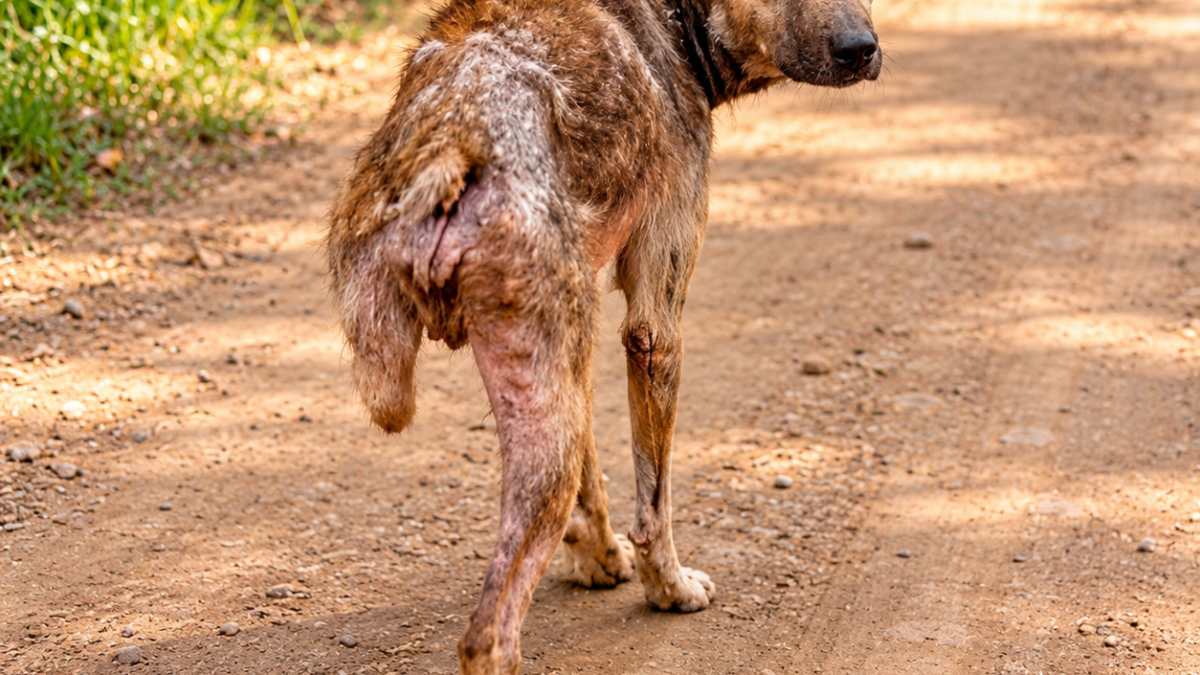
PART 2
I stared at the image even though I had no idea what I was supposed to be seeing.
The veterinarian traced the damaged area with one finger.
“The infection isn’t only superficial.”
I looked at him.
“It’s deeper?”
“Yes.”
“How deep?”
He hesitated just long enough to make my stomach tighten.
“The remaining tissue is badly compromised. We’re concerned about the structures underneath as well.”
I turned toward Canarinho.
He was lying on the examination table wrapped loosely in a towel. Someone had placed a small padded support beneath his chest because he was too exhausted to hold himself comfortably for long.
He looked impossibly small.
“What happens now?”
“We stabilize him first.”
“And then?”
“We see how he responds to treatment.”
That wasn’t the answer I wanted.
I wanted someone to tell me we could clean the wound, give him antibiotics, wrap the leg, feed him for a few weeks, and send him running into a new life.
But rescue rarely works according to the ending you want.
“What if the antibiotics work?”
“They’ll help with the systemic infection.”
“And the leg?”
The veterinarian looked back at the image.
“That may be a separate decision.”
I understood what he meant before he said it.
“You think he could lose the rest.”
“I think we need to prepare for that possibility.”
I looked down at Canarinho.
Part of his leg was already gone.
I didn’t know how.
The source of the original injury would remain one of the missing pieces of his story.
Maybe an accident.
Maybe trauma from something sharp.
Maybe an untreated wound that became worse.
I didn’t know, and I wasn’t going to invent an answer simply because the truth was painful to leave blank.
What mattered was what sat in front of me.
A puppy with infected tissue.
A body weakened by hunger and dehydration.
Skin damaged by disease and parasites.
And eyes that looked as though disappointment had become normal.
I crouched so my face was close to his.
“Canarinho.”
His eyes shifted toward me.
“We’re not deciding anything tonight except that you’re staying.”
His ear moved slightly.
The technician smiled.
“I think that’s enough for today.”
It became our first agreement.
He stayed.
The initial treatment focused on the things we could address immediately.
Fluids.
Nutrition.
Antibiotics.
Pain control.
Parasite treatment.
Careful cleaning of his skin.
The veterinarian wanted to improve his overall condition before making any major surgical decision unless the leg deteriorated faster.
His immune system needed help.
His body had been surviving without adequate food.
You couldn’t ask a body like that to heal quickly.
The first medicated bath nearly broke my heart.
We had to soften the thick crusts without tearing the damaged skin underneath.
A technician prepared warm water.
I carried Canarinho in.
The moment his paws touched the bottom of the basin, his body stiffened.
“Easy.”
He tried to turn away.
“I know.”
The technician wet one section at a time.
Some crusting loosened naturally.
Other areas needed to be left alone.
We worked slowly.
His skin was so sensitive that even careful handling made him tremble.
At one point, he looked up at me.
Those tired eyes.
I wanted to apologize for every human being who had walked past him.
Instead, I said the only thing that mattered.
“This is going to feel better eventually.”
He had no reason to believe me.
That hurt.
Trust sounds beautiful when you talk about it after the fact.
In the beginning, trust is often ugly.
An animal doesn’t know whether the hand reaching toward him is bringing medicine or pain.
He doesn’t know whether a bath means relief or another frightening experience.
He doesn’t understand that an injection is designed to help.
He only knows what his life has taught him.
Canarinho’s life had apparently taught him not to expect much.
He tolerated us.
That was all.
When the bath ended, I wrapped him in a soft towel.
His head rested against my chest.
For several minutes, he didn’t move.
“You did good.”
Nothing.
“You hated every second.”
One ear twitched.
“But you did good.”
I carried him back to his bed.
He curled carefully, protecting the injured side.
Then he slept.
The next morning, he ate like he had never seen food before.
I had to slow him down.
“Easy.”
He swallowed.
I moved the bowl.
Canarinho stared at it.
“You’re getting more.”
He tried to stand.
“Sit.”
He did not know the word.
He only knew the bowl was farther away.
He limped toward me.
“Okay, okay.”
I returned a smaller portion.
He ate.
That appetite became the first piece of his personality we discovered.
Food mattered.
Of course it did.
A puppy who had lived by searching for scraps had no reason to believe the next meal was guaranteed.
For the first several days, he watched every bowl as if it might disappear forever.
If someone walked near his food, his body became tense.
He never attacked.
Never growled.
He simply ate faster.
I began sitting nearby without touching anything.
“Take your time.”
Canarinho ignored me.
“There’s more tomorrow.”
He ate.
“And the day after that.”
Nothing.
“You don’t believe me.”
Of course he didn’t.
Promises mean nothing to an animal until routine proves them true.
So we made food boring.
Breakfast appeared.
Lunch appeared when medically appropriate.
Dinner appeared.
The next day, the same thing happened.
And again.
Slowly, the desperate speed eased.
Not much.
But enough.
His skin treatment was more complicated.
Tests helped guide the veterinarians toward the infections and parasites involved, and treatment was adjusted accordingly.
Medicated baths continued.
Topical care continued.
Antibiotics continued for the infections that required them.
Nutrition became part of the medicine too.
Skin cannot rebuild itself without resources.
Neither can muscle.
Neither can an immune system.
Canarinho had been asking his body to survive on almost nothing.
Now we asked it to heal.
That required patience.
The first week produced tiny changes.
His hydration improved.
His gums looked healthier.
He became more alert.
He started lifting his head whenever footsteps approached.
The scabs remained dramatic.
The missing patches of fur remained.
The leg still worried everyone.
But his eyes changed first.
Not completely.
The exhaustion stayed.
But now there was curiosity beneath it.
One morning, I entered carrying his meal.
Canarinho’s head rose immediately.
“Good morning.”
He stared at the bowl.
“Nice to see you too.”
His tail moved.
I stopped.
It happened once.
A tiny movement against the blanket.
“Did you just wag?”
Canarinho watched the food.
Another tap.
I laughed.
A volunteer leaned through the doorway.
“What?”
“He wagged.”
“For you?”
“For breakfast.”
She smiled.
“Still counts.”
It did.
Everything counted.
The first tail wag.
The first time he stood without immediately lying down.
The first time he walked toward a person instead of food.
The first night he slept on his side instead of curled protectively around himself.
Progress was not cinematic.
It was made of details.
Canarinho was beginning to behave less like a body in survival mode and more like a puppy.
But the leg refused to follow the rest of him.
At first, antibiotics reduced some inflammation.
We hoped.
The veterinarian reassessed the wound.
The swelling improved slightly.
Then plateaued.
Deep tissue remained unhealthy.
Drainage returned.
The infection had been given too much time before rescue.
One afternoon, the veterinarian asked me to come into the treatment room.
I knew before he spoke.
“How bad?”
He removed his gloves.
“We’re reaching the point where trying to preserve the remaining limb is creating more risk than benefit.”
I looked at Canarinho.
He was eating from a small dish while a technician supported him.
“He’s stronger now.”
“Yes.”
“Strong enough for surgery?”
“I believe so.”
I knew what came next.
I asked anyway.
“What surgery?”
“Amputation.”
The word landed heavily even though part of the leg was already gone.
“What exactly would you remove?”
“The remaining damaged portion. We need to remove infected and nonviable tissue and create a healthy surgical closure.”
“And that gives him the best chance?”
“In my opinion, yes.”
I looked down.
“Could the infection kill him if we leave it?”
“If it continues or spreads, absolutely.”
That made the decision both easier and harder.
Easier because there was a clear medical reason.
Harder because Canarinho had already lost so much.
People tend to think of amputation as defeat.
I had too, once.
But looking at Canarinho, I began understanding something different.
The leg was no longer giving him mobility.
It was giving him pain.
It was harboring infection.
It was asking his body to spend energy fighting something it could not repair.
Removing it was not taking away his future.
It might be the only way to give him one.
“When?”
“As soon as we complete the preoperative work and are satisfied he’s stable.”
I sat beside Canarinho’s bed later that day.
He chewed at the edge of a soft toy someone had given him.
He wasn’t playing exactly.
Just testing it.
I touched his back.
“So.”
Canarinho kept chewing.
“We have another bad day coming.”
He paused.
“You’re going to wake up with less leg than you have now.”
His ears shifted.
“I know that sounds terrible.”
He returned to the toy.
“But I think you’ve been carrying the worst part long enough.”
I stayed with him for a while.
There was no dramatic decision to make anymore.
The infection had made it for us.
The night before surgery, Canarinho seemed unusually active.
Maybe I noticed because I knew what was coming.
He tried to walk farther than usual.
Sniffed the edge of his bedding.
Investigated a plastic bowl.
When I sat on the floor, he limped toward me.
Not toward food.
Toward me.
I held still.
Canarinho stopped between my knees.
Then leaned against my leg.
I placed one hand gently along his back.
“You know me now.”
He lowered his head.
I felt a strange mix of joy and sadness.
Trust had arrived before we could offer comfort.
He trusted me enough to lean against me.
Tomorrow, I would hand him over for another painful experience.
That is one of the contradictions of rescue.
Sometimes the people an animal learns to trust are the same people who authorize the surgery.
We do it because love cannot mean preserving every damaged piece at any cost.
Love sometimes means choosing the wound that can heal over the wound that never will.
The next morning, Canarinho was fasted for anesthesia.
He was furious.
I arrived.
He stood immediately.
Looked at my hands.
“No breakfast.”
His eyes moved toward the usual food area.
“I know.”
He limped toward it.
“Nothing.”
He looked back at me.
It was the first time I saw genuine betrayal in his face.
I almost laughed.
“You can hate me.”
He stared.
“You’re going to hate the surgeon more.”
A technician came for him.
Canarinho backed toward me.
My chest tightened.
I crouched.
“It’s okay.”
He pressed against my leg.
I put both hands around his shoulders.
“You’re coming back.”
Those words came out more confidently than I felt.
Anesthesia always carries risk.
His body was stronger, but he was still recovering from malnutrition and infection.
I handed him over.
The technician carried him through the doors.
And once again, all I could do was wait.
I hated waiting.
The mind becomes cruel when there is nothing practical to do.
It invents endings.
What if his blood pressure dropped?
What if the infection was worse than imaging showed?
What if there was a complication?
What if we had waited too long?
What if we hadn’t waited long enough?
I walked outside.
Returned.
Checked my phone.
Sat.
Stood.
Drank half a cup of coffee.
Forgot the rest.
A volunteer tried to distract me.
“He’s going to be okay.”
“You don’t know that.”
“No.”
She sat beside me.
“But neither do you know the opposite.”
Fair.
I nodded.
We waited.
Eventually, the veterinarian appeared.
I stood before he reached me.
“He’s out.”
“Out of surgery?”
“Yes.”
“How did it go?”
“Well.”
I released a breath I didn’t know I had been holding.
“The infection?”
“We removed the compromised tissue. The surgical field looks much healthier than what he was carrying before.”
“He’s awake?”
“Starting to wake.”
“Can I see him?”
“In a little while.”
I sat down.
My hands were shaking.
The volunteer beside me touched my shoulder.
“See?”
I laughed weakly.
“Don’t get confident. We’re still getting through recovery.”
But something enormous had shifted.
Canarinho no longer had an infected, dying piece of limb attached to his body.
The thing that threatened his life was gone.
When I finally saw him, he was wrapped in blankets.
His eyes were heavy from anesthesia.
The shape of his body looked different.
Of course it did.
But what surprised me most was not sadness.
It was relief.
The wound looked clean.
Controlled.
Intentional.
For weeks, the injured leg had represented chaos.
This looked like the beginning of healing.
I touched his forehead.
“Hey.”
His eyes opened slightly.
“You made it.”
He closed them again.
I smiled.
“I’ll take that.”
The first twenty-four hours after surgery were quiet.
Pain management.
Monitoring.
Rest.
Canarinho slept deeply.
When he woke, he seemed confused.
He tried to reposition himself using a leg that was no longer there.
His body tilted.
A technician supported him.
That part hurt to watch.
Muscle memory takes time to understand loss.
He tried again.
Failed.
Stopped.
His breathing quickened.
“Easy.”
I placed one hand against his chest.
“You don’t have to figure it out today.”
His eyes moved toward my voice.
“Just rest.”
He did.
The next day, he was hungry.
Of course.
Food remained his argument with death.
The technician gave him a small approved portion.
Canarinho devoured it.
Then looked for more.
I laughed.
“There you are.”
He ate a second portion more slowly.
His tail moved.
Surgery had not taken that.
By the third day, he tried standing.
This time, we were ready.
I supported his chest.
His remaining legs pushed.
His weight shifted.
He wobbled.
Stopped.
Tried again.
“Good.”
Canarinho took one awkward hop.
Then another.
He sat down abruptly.
I smiled.
“That was terrible.”
His ears lifted.
“And absolutely perfect.”
The technician laughed.
“You’re a harsh coach.”
“He needs honesty.”
Canarinho stared at the food in her hand.
He tried standing again.
Food turned out to be our most effective physical therapist.
We used it carefully.
One step.
Reward.
Two steps.
Reward.
Rest.
Never force.
Never exhaust him.
His body needed to build a completely new sense of balance.
Three-legged dogs can adapt beautifully, but adaptation still requires muscle, coordination, and confidence.
Canarinho had another disadvantage.
His remaining body was still healing from skin disease and malnutrition.
We could not rush.
That became difficult for everyone because his spirit began recovering faster than his body.
Within days, he wanted to move.
Within a couple of weeks, he wanted to explore.
His muscles disagreed.
One morning, he saw a volunteer carrying his breakfast.
He stood too quickly.
Tried to hop forward.
Lost balance.
Rolled onto his side.
I jumped.
Canarinho scrambled back up before I reached him.
Then continued toward the bowl.
I stopped.
The volunteer looked at me.
“He doesn’t care.”
“No.”
“Maybe we should learn from him.”
I smiled.
“Maybe.”
The medicated baths continued after his surgery once the veterinary team cleared the appropriate areas.
His skin still looked terrible.
That was frustrating.
We had saved his life.
We had removed the infected limb.
Some part of me wanted the rest to become easy.
It didn’t.
Skin disease takes time.
Fur takes even longer.
Canarinho could feel better before he looked better.
That was important.
Visitors sometimes saw him and reacted with pity.
“Oh, poor baby.”
Canarinho would immediately walk toward their shoelaces.
“Careful.”
He would tug.
“Poor baby is eating your shoe.”
That usually changed the atmosphere.
I liked that.
Canarinho didn’t know he was supposed to be tragic.
As the pain decreased, puppy behavior arrived with frightening speed.
Chewing.
Investigating.
Pulling towels.
Trying to climb onto things.
Following people.
Begging.
Finding objects we thought were out of reach.
His missing leg became less interesting to him every day.
The skin treatment annoyed him far more.
The moment he saw—or rather recognized—the preparation for another bath, he tried to leave.
“Canarinho.”
He moved away.
“Come here.”
Faster.
“You have three legs and you’re still making me chase you.”
A volunteer laughed.
“He’s learning.”
“He’s learning all the wrong things.”
I eventually caught him.
Canarinho looked deeply offended as I carried him toward the bath area.
“Your skin has to heal.”
He turned his face away.
“Very mature.”
Baths that once made him tremble now made him complain.
I preferred complaining.
Fear had been replaced by opinion.
That was healing too.
The sores began shrinking.
Inflammation eased.
Thick crusts loosened and disappeared.
Smooth new skin appeared beneath.
Then came something I had almost forgotten to expect.
Fur.
At first, tiny areas.
Fine.
Soft.
Barely visible.
I noticed one patch near his shoulder.
“Is that hair?”
A technician leaned closer.
“It is.”
I stared.
“You’re growing fur.”
Canarinho tried to chew my sleeve.
“Could you appreciate the moment?”
He chewed harder.
More fur appeared over the following weeks.
His body changed color as the healthy coat returned.
Every patch felt like nature reclaiming territory that neglect had stolen.
He gained weight too.
The sharp ribs softened.
His face filled out.
His legs developed muscle.
His remaining paws grew larger.
One day, I looked at him and realized he no longer looked like the puppy I had found.
The eyes were the same.
But even those had changed.
They weren’t tired anymore.
They were busy.
Canarinho watched everything.
A door opened?
He wanted to know why.
Someone moved a bowl?
He investigated.
Another dog barked?
Canarinho answered.
A toy squeaked?
Emergency.
A person sat down?
Potential lap.
He had gone from expecting nothing to believing the entire world might contain something interesting.
That transformation affected me more than his fur.
Bodies can heal without trust.
Canarinho was learning something harder.
People could be safe.
At first, he tolerated petting.
Then he sought it.
One afternoon, I sat reading treatment notes while Canarinho wandered nearby.
He approached.
Sniffed my knee.
I touched the side of his neck.
He stepped closer.
Then climbed awkwardly against me.
“What are you doing?”
Canarinho pushed forward until half his body rested across my lap.
I laughed.
“You’re not small enough for this anymore.”
He stayed.
I put the notes aside.
For several minutes, Canarinho simply rested.
No food.
No treatment.
No medical purpose.
Just contact.
I thought about the road.
The people walking past.
The puppy standing alone.
Maybe some of those people had not really noticed.
Maybe they were distracted.
Maybe they thought someone else would help.
Maybe they feared disease.
Maybe they didn’t know what to do.
I would never know.
For a while, I was angry at all of them.
I imagined confronting every person who had passed him.
How could you not stop?
How could you see a puppy like that and continue walking?
But anger eventually became less useful.
Canarinho didn’t need revenge on strangers.
He needed a future.
And as weeks passed, I began to realize that his future might become a better answer than anything I could say to the people who ignored him.
The puppy nobody stopped for was now learning to walk toward people voluntarily.
The puppy who ate garbage scraps now expected a bowl.
The puppy who stood in the sun with diseased skin now slept on clean blankets.
The puppy who had lost part of a leg and nearly lost his life was practicing how to run.
That felt like a kind of revenge the world couldn’t argue with.
Not punishment.
Proof.
Canarinho’s first attempt to run was a disaster.
He had become comfortable walking quickly on three legs.
Too comfortable.
One morning, another young dog passed his exercise area.
Canarinho saw him.
The other dog bounced.
Canarinho’s tail went wild.
“No.”
I knew exactly what was coming.
The other puppy ran.
Canarinho launched.
Three steps.
Too fast.
His front end dropped.
He rolled.
“Canarinho!”
I reached him.
He was already standing.
I checked him.
Paws.
Chest.
Surgical site.
Everything.
“You scared me.”
Canarinho looked past me toward the other dog.
Then tried to go again.
I blocked him.
“No.”
He moved right.
I moved right.
Left.
I blocked left.
He stared at me.
“You’re done.”
He barked.
I stared.
“You did not just argue with me.”
Bark.
A volunteer laughed so hard she had to turn away.
“Whose side are you on?”
“His.”
“Traitor.”
Canarinho wagged.
That was the moment I knew keeping him quiet was about to become much harder.
The rehabilitation plan expanded gradually.
Controlled walking.
Weight distribution.
Strength-building.
Safe play.
Rest.
Always rest.
Canarinho hated that last part.
He wanted to move.
His body needed recovery.
We compromised badly.
He would walk.
Then be confined to rest.
He complained.
Then slept.
One afternoon, after a rehabilitation session, he fell asleep so deeply that his tongue stuck out slightly.
I photographed him.
When I compared the picture with his first photograph, I barely recognized him.
The first puppy looked hollow.
This puppy looked ridiculous.
That felt like victory.
His interactions with other dogs became another turning point.
We chose calm companions first.
Canarinho was excited but uncertain.
He had likely spent much of his young life surviving rather than socializing normally.
When the first dog approached, Canarinho froze.
The dog sniffed.
Canarinho sniffed back.
The dog walked away.
Canarinho followed.
The dog turned.
Canarinho stopped.
Then both tails moved.
I sat nearby.
“Easy.”
They ignored me.
Soon they were circling.
Canarinho tried bouncing.
Three-legged bouncing was not yet elegant.
He fell sideways.
The other dog paused.
Canarinho got up.
Continued.
Nobody explained disability to him.
Nobody needed to.
The other dog accepted his movement as Canarinho’s movement.
That became one of the beautiful things about watching animals together.
Humans notice the missing leg immediately.
Dogs usually notice the dog.
Within days, Canarinho had a playmate.
Within weeks, he had several.
He learned how to turn without losing balance.
How to stop.
How to brace.
How to wrestle from positions that worked for him.
He became faster.
One day, he chased another puppy across the yard.
Not hopped quickly.
Chased.
I stood completely still.
Canarinho pushed with his rear legs, landed on his front paw, lifted, repeated.
His gait had a strange rhythm.
But it was running.
He crossed half the yard.
Turned.
Came back.
His tongue hung out.
His eyes were bright.
I crouched.
“Come here.”
Canarinho ran directly into me.
I caught him against my chest.
“You did it.”
He licked my face.
“You ran.”
He twisted around, desperate to return to the others.
I laughed.
“You don’t care.”
No.
Canarinho did not care about milestones.
He cared about play.
That was even better.
The medical team continued monitoring his skin and remaining limbs.
A three-legged dog has to protect what remains.
Weight management matters.
Muscle matters.
Joint health matters.
Good footing matters.
We couldn’t simply celebrate his running and forget that his body needed long-term care.
I became the annoying person constantly saying, “Enough.”
Canarinho disagreed with the concept of enough.
Ten minutes outside?
More.
Play session?
More.
Food?
Definitely more.
Affection?
Depends.
Bath?
Never.
His personality was large enough that visitors stopped beginning with pity.
Instead, they laughed.
“He’s trouble.”
“Yes.”
“He’s fast.”
“Yes.”
“He stole my towel.”
“Yes.”
“He’s chewing the leash.”
“I see that.”
“Was he really the same puppy?”
That question came often.
I understood why.
The before-and-after difference was enormous.
But I disliked the idea that the sick puppy had somehow vanished.
He was the same Canarinho.
The body changed.
The environment changed.
His expectations changed.
But the determined little creature who kept searching for food on a ruined leg was still there.
We could see that stubbornness now in happier forms.
He fought the bath.
He fought nap time.
He fought being excluded from games.
That same refusal to quit had probably kept him alive outside.
Now it made him exhausting.
I loved it.
Finding a permanent home eventually became the next question.
By then, Canarinho was medically stable enough that we could think beyond survival and rehabilitation.
But adoption carried responsibility.
His new family needed to understand three-legged mobility.
Skin monitoring.
Nutrition.
The importance of maintaining healthy weight.
Potential future joint issues.
Regular veterinary care.
He didn’t need pity.
He needed commitment.
People expressed interest.
His transformation made him easy to love in photographs.
That worried me.
A photograph lasts one second.
A dog can live fifteen years.
I wanted someone who loved the work too.
Someone who would care when the novelty of the rescue story disappeared.
One prospective adopter visited.
She crouched.
Canarinho immediately climbed onto her shoes.
She laughed.
“Oh my goodness.”
He pulled her shoelace.
“Canarinho.”
She looked at his missing leg.
“Does he need to be carried a lot?”
“No.”
“He can walk normally?”
“He walks the way you just saw.”
“Can he run?”
I smiled.
“Too much.”
She watched him.
“What special care does he need?”
That was the right question.
Not “What happened to him?”
Not “Isn’t he sad?”
What care does he need?
We talked.
Skin.
Weight.
Exercise.
Surfaces.
Veterinary checks.
How he handled stairs.
How to recognize fatigue.
She listened.
Asked more questions.
Canarinho climbed into her lap without permission.
The woman looked at me.
“Well.”
I laughed.
“He doesn’t usually wait for paperwork.”
She stroked his back.
Canarinho settled.
Something in my chest shifted.
I had been deeply involved in his recovery.
Letting go was always the hardest part of fostering and rescue.
You spend nights worrying about whether an animal will live.
You clean wounds.
Measure food.
Administer medicine.
Celebrate bowel movements like national holidays.
Teach them that hands are safe.
Then one day, the goal succeeds.
Someone comes to take them home.
You should be happy.
You are happy.
And sometimes it hurts.
I watched Canarinho resting against her.
His tail moved slowly.
The woman didn’t fuss over the missing leg.
She rubbed his ears.
Talked to him normally.
That mattered.
After she left, I sat with Canarinho.
“So.”
He chewed a toy.
“She liked you.”
Chew.
“You liked her.”
More chewing.
“I noticed.”
He pulled harder at the toy.
“You could pretend this is emotionally difficult for you.”
Nothing.
I laughed.
“You’re ready.”
Maybe I was trying to convince myself.
The adoption process took time.
Home assessment.
Conversations.
Planning.
Veterinary information.
We made sure everyone understood that Canarinho was not a decoration for a rescue story.
He was a young dog.
Young dogs chew.
Young dogs make messes.
Young dogs test rules.
Canarinho happened to do all of that on three legs.
The potential family remained committed.
Then came the day.
I packed his things.
Food.
Medical information.
Favorite toy.
Blanket.
A few supplies.
Canarinho watched with interest.
He had no idea.
His adopter arrived.
Canarinho recognized her and immediately moved toward her.
That helped.
And hurt.
She knelt.
“Hi, buddy.”
His tail became a blur.
I looked away for a moment.
She noticed.
“You okay?”
“Yes.”
I smiled.
“No.”
She understood.
“You can visit.”
I nodded.
“That makes it worse.”
She laughed gently.
I crouched beside Canarinho.
He turned toward me.
I touched the fur along his neck.
So much fur.
The first day, there had been painful exposed skin there.
Now my fingers disappeared into a healthy coat.
“Do you remember me picking you up?”
Canarinho licked my hand.
“Probably not.”
His adopter waited.
I looked at the little dog in front of me.
He was still young.
That was easy to forget because his story had been so heavy.
He had survived more than many old dogs.
But he had most of his life ahead of him.
That was the point.
“You don’t owe me anything,” I whispered.
Canarinho’s tail moved.
“You already did your part.”
I kissed the top of his head.
“Go be somebody’s spoiled problem.”
His adopter laughed.
“I can manage that.”
Canarinho walked out beside her.
Not carried.
Not dragged.
Walked.
Three legs moving confidently over the ground.
At the doorway, he stopped and looked back.
My heart nearly broke.
“Go.”
His tail moved.
Then he turned and left.
The room felt enormous afterward.
His bed was still there.
One toy remained under a chair.
His water bowl sat where it always had.
For several minutes, I couldn’t move anything.
A volunteer walked in.
“He gone?”
I nodded.
“How are you?”
“Terrible.”
She smiled.
“So it went well.”
“Exactly.”
That is rescue.
Success sometimes looks like an empty bed.
The first update came that evening.
Canarinho had explored the house.
Found his water.
Investigated every room he was allowed into.
Tried to steal food.
Claimed a soft bed.
Ignored the expensive toy and played with something ridiculous.
I laughed while reading the message.
The next day, another photo arrived.
Canarinho asleep upside down.
Three legs in the air.
Completely relaxed.
No protective curl.
No vigilance.
Just sleep.
I stared at that photograph for a long time.
The puppy I found had slept as though the world might hurt him even while he rested.
This dog slept as if he owned the place.
Maybe he did.
The family sent regular updates.
Canarinho learned their routines.
He followed them around.
He loved the yard.
He developed favorite places to nap.
He made friends.
He continued running.
His missing leg became less and less relevant to daily conversation.
That was the outcome I wanted.
Not that anyone forgot his needs.
They didn’t.
But he wasn’t introduced every morning as “the disabled rescue.”
He was Canarinho.
The dog who stole socks.
The dog who knew the sound of his food container.
The dog who wanted to play when everyone else wanted sleep.
The dog who sprawled across the bed.
The dog who could somehow occupy an unreasonable amount of space with one fewer leg.
Months later, I visited.
I wondered whether he would remember me.
I knocked.
The door opened.
Canarinho appeared behind his adopter.
He stared at me.
I crouched.
“Hey.”
His ears lifted.
For one second, nothing happened.
Then he launched forward.
I barely had time to brace.
Canarinho hit me in the chest.
I laughed.
“Okay!”
He licked my face.
His entire body wriggled.
His adopter laughed.
“I think he remembers.”
I wrapped my arms around him.
“You got heavier.”
Canarinho continued celebrating.
I looked at his skin.
Healthy.
Coat full.
Eyes bright.
Muscles strong.
The missing leg remained missing.
Of course.
But it no longer looked like a wound.
It was simply the shape of him.
We went into the yard.
Canarinho grabbed a toy.
His adopter threw it.
He took off.
Fast.
Faster than I remembered.
He reached the toy.
Turned.
Ran back.
I stood with my hands on my hips.
“You’re kidding.”
His adopter smiled.
“He does this all day.”
“His joints?”
“We monitor everything like you told us. He gets breaks.”
“Does he agree to the breaks?”
“No.”
“Good. Same dog.”
Canarinho dropped the toy.
I threw it.
He ran again.
That was when the anger I had once felt toward the people who walked past him finally lost its hold.
I had imagined revenge.
Not literal violence.
Nothing like that.
But I had wanted the world to somehow be forced to acknowledge what it had ignored.
I wanted every person who saw that sick puppy and kept moving to see him now.
I wanted them to understand what had nearly been lost.
Look at him.
Look what was inside the body you dismissed.
Look at the joy.
Look at the stubbornness.
Look at the dog who runs.
Look at the family who cannot imagine life without him.
But standing in that yard, I realized something.
Canarinho did not need those strangers to regret anything.
His happiness wasn’t improved by their guilt.
His future did not depend on whether they ever learned his name.
The most satisfying revenge was that their indifference had become irrelevant.
They had walked past.
He lived anyway.
Neglect had tried to reduce him to a sick body beside a road.
He became somebody’s entire world.
Pain had made every step difficult.
He learned to run.
Hunger had taught him food could disappear.
Now he occasionally refused dinner because he was too busy playing.
That one still amused me.
The first time his adopter told me, I almost didn’t believe her.
“He refused food?”
“For five minutes.”
“That doesn’t count.”
“Fair.”
Canarinho raced past us again.
He skidded near the edge of the grass.
Recovered.
Kept going.
His adopter called, “Easy!”
I smiled.
“Good luck.”
“You created this.”
“No. He came that way.”
That was true.
We hadn’t given Canarinho his determination.
We had only given it somewhere safer to go.
The fight had always belonged to him.
It was there on the road when he limped between pieces of trash looking for food.
It was there during painful baths.
It was there when he woke from amputation and tried to stand on a body that had changed.
It was there when he fell.
When he got up.
When he followed another dog.
When he ran.
People sometimes called him brave.
I understood why.
But I wondered whether bravery was the right word.
Canarinho had never been given a choice between courage and fear.
He simply kept moving because life was still in front of him.
Maybe survival is less glamorous than we make it sound.
Maybe sometimes it is just one hungry puppy taking another painful step because there might be food ahead.
That step carried him farther than anyone could have known.
Over the following months, Canarinho became completely settled.
His family sent photos that had nothing to do with rescue.
That was my favorite kind.
Canarinho asleep beside the couch.
Canarinho looking guilty near a destroyed toy.
Canarinho wearing a towel after getting wet.
Canarinho lying in sunlight.
Canarinho beside another dog.
Canarinho waiting near the kitchen.
Ordinary photographs.
No medical equipment.
No dramatic wound.
No sad captions needed.
Ordinary life was the ending.
I still kept his original photograph.
Sometimes I looked at it.
Not often.
In it, Canarinho stood beneath the harsh sun.
Skin raw.
Fur missing.
Body thin.
Eyes tired.
The injured leg was impossible not to notice.
But after knowing him, I began seeing something else in that photograph.
He was standing.
That fact had disappeared beneath everything frightening.
He was sick.
He was injured.
He was hungry.
He was in pain.
And he was still standing.
Perhaps that should have told me everything from the beginning.
One year after his rescue, I visited again.
Canarinho met me at the door.
No hesitation this time.
He recognized the voice immediately.
He pushed against my legs.
“Hi, trouble.”
His adopter appeared.
“He’s been waiting to go outside.”
“Of course.”
We walked into the yard.
Canarinho shot ahead.
I laughed.
“You know, the first day I met you, five steps looked painful.”
He ignored me.
His adopter tossed a toy.
Canarinho chased it.
The afternoon was warm.
Not as brutal as the day I found him.
Still, sunlight covered the yard.
I watched him cross it.
Something about that image caught me.
Sunlight had been part of his suffering before.
He had stood exposed beneath it with nowhere safe to go.
Now the same sun fell across healthy fur while he ran home.
Home.
That word mattered.
He brought the toy back.
His adopter bent and scratched his chest.
“You tired?”
Canarinho bounced away.
“That’s a no.”
We sat beneath the shade while he explored.
His adopter looked at me.
“I still can’t understand how anyone walked past him.”
I was quiet for a moment.
“I used to think about that all the time.”
“And now?”
I watched Canarinho sniffing the grass.
“Now I think about the person who stopped.”
She smiled.
“You.”
“No.”
I shook my head.
“Anybody can be the person who stops. That’s the point.”
Canarinho returned and lay beside us.
His breathing slowed.
His adopter rested a hand on his back.
“He’s changed our house.”
“How?”
“Everything revolves around him.”
I laughed.
“Sounds right.”
“No, really. We planned where he would sleep. We bought rugs because we wanted better traction. We changed where some furniture sits. We schedule things around his appointments.”
She looked down at him.
“And now I can’t remember what the place felt like without him.”
That sentence stayed with me.
On the road, Canarinho had looked unwanted.
Now somebody could not imagine a home without him.
I touched the fur behind his ear.
“The little puppy nobody wanted.”
His adopter looked at me.
“Somebody wanted him.”
I knew what she meant.
Canarinho had simply needed his people to find him.
He lifted his head.
Then placed it across her foot.
She smiled.
“There.”
I looked at them.
That was the ending.
Not surgery.
Not the first run.
Not even adoption.
This.
A dog resting his head on the foot of a person who expected him to be there tomorrow.
Safety is partly the expectation of tomorrow.
Canarinho had once eaten as though tomorrow’s meal might never exist.
Now he left food in his bowl sometimes.
He once slept curled tightly.
Now he stretched across beds.
He once watched people pass without expecting them to stop.
Now he walked toward the door when he heard his family return.
Expectations had changed.
That may have been the deepest healing of all.
Bodies heal with medication, surgery, nutrition, and time.
Trust heals through repetition.
A bowl appears every day.
A hand touches gently every day.
A bed remains available every night.
Someone comes back.
Again.
Again.
Again.
Eventually, the animal stops asking whether safety is temporary.
Canarinho had stopped asking.
He belonged.
I left their house near sunset.
Canarinho followed me toward the gate.
I crouched.
“You stay.”
He tried to continue.
“No.”
His adopter called him.
Canarinho looked between us.
For one ridiculous second, I wanted him to choose me.
Then I felt ashamed of that thought.
His adopter called again.
Canarinho turned.
Ran back to her.
I smiled.
Perfect.
That was exactly how it should be.
“Good boy.”
He stood beside his person.
I opened the gate.
Before leaving, I looked back.
Canarinho was already distracted by something in the grass.
No tragic goodbye.
No meaningful stare.
No acknowledgment of the enormous emotional symbolism I had assigned to the moment.
Just a dog being a dog.
I drove away laughing.
Later that night, I opened the first photograph again.
The contrast was almost violent.
People often like transformation stories because they compress suffering.
One image terrible.
One image beautiful.
Swipe.
Finished.
But Canarinho’s real story existed between those pictures.
The hours cleaning infected skin.
The medication.
The baths.
The meals.
The surgery.
The night after surgery.
The first failed attempts at standing.
The falls.
The frustration.
The exercises.
The cautious introductions.
The adoption conversations.
The fear of letting him go.
The ordinary messages afterward.
Recovery had been thousands of quiet actions.
None impressive alone.
Together, they changed a life.
That is why I stopped thinking of rescue as one heroic moment.
Stopping mattered.
Absolutely.
Without that first decision, Canarinho might have died beside the road.
But rescue was not finished when I lifted him.
It was just transferred.
From the road to my arms.
From my arms to a veterinarian.
From a veterinarian to technicians.
From technicians to caregivers.
From rehabilitation into a home.
Every person held one part of the bridge.
Canarinho crossed it.
Years from now, his missing leg may require us to make new adjustments.
His remaining joints will deserve careful attention.
His weight will matter.
Age will change how he moves.
That is part of loving him realistically.
A happy ending does not mean no future difficulties.
It means he will not face them alone.
That difference is everything.
If his remaining legs become sore, someone will notice.
If his skin ever flares again, someone will call the vet.
If he needs a softer bed, he will get one.
If one day he cannot run as fast, he will still have a yard.
If he needs help, help will come before he has to stand beside a road hoping a stranger notices.
That is what home means.
Not a guarantee against pain.
A guarantee that pain will matter to someone.
Canarinho finally had that.
The last time I saw him, he was racing another dog across the yard.
His gait was unmistakable.
Three legs.
A quick rolling rhythm.
Power from the back.
One front paw landing perfectly.
Lift.
Run.
Turn.
Go again.
The other dog passed him.
Canarinho accelerated.
I laughed.
“Competitive now?”
His adopter smiled.
“He hates losing.”
Canarinho changed direction and cut across the yard.
For one moment, he moved so quickly that the missing leg disappeared from my attention completely.
All I saw was a young dog running.
Then he stopped near the fence.
Looked back.
His mouth open.
Tongue out.
Eyes bright.
Those eyes.
They were what I remembered most from the road.
Not angry.
Not frightened.
Just tired.
The eyes in front of me now belonged to the same dog, but there was nothing tired about them.
They demanded another game.
Another meal.
Another day.
Another tomorrow.
Canarinho ran toward us.
His adopter crouched.
He passed me and went straight to her.
She caught him.
He nearly knocked her over.
She laughed.
“Canarinho!”
He covered her face with kisses.
I stood a few feet away.
Once, dozens of people had walked past this dog without seeing a future.
Now I was watching somebody hold him as if he were one of the best things that had ever entered her life.
Maybe that was justice.
Not the loud kind.
No confrontation.
No punishment.
No stranger dragged back to the road and forced to apologize.
Something better.
The world had treated Canarinho as disposable.
He had become irreplaceable.
Neglect had left his skin raw.
Love grew a healthy coat over the scars.
Infection took what remained of his damaged leg.
He learned to run without it.
Hunger had taught him to search garbage for food.
Now a family worried when he was three minutes late for dinner.
People once walked past him.
Now someone waited at the door for him to come inside.
That was his revenge.
He lived so fully that the cruelty and indifference of his beginning became too small to define the rest of his life.
As the afternoon faded, Canarinho slipped from his adopter’s arms and ran toward his friend again.
She called after him.
“Not too far!”
He ignored her.
I smiled.
The first day, I had whispered for him not to run because I was afraid every painful step might be one too many.
Now we were trying to convince him to slow down.
He crossed the yard in seconds.
Turned beneath the warm sunlight.
And kept going.
For once, nobody was walking past him.
Nobody was looking away.
Nobody was leaving him behind.
The little puppy who once stood alone under a scorching sun was exactly where he belonged—running on three legs toward the people who would never let him face the world alone again.
[END OF STORY]