PART 2: A Veterinarian Hit Him, Dragged Him Off the Road, and Left Him to Di3—469 Days Later, Tito Got the Ending No One Expected
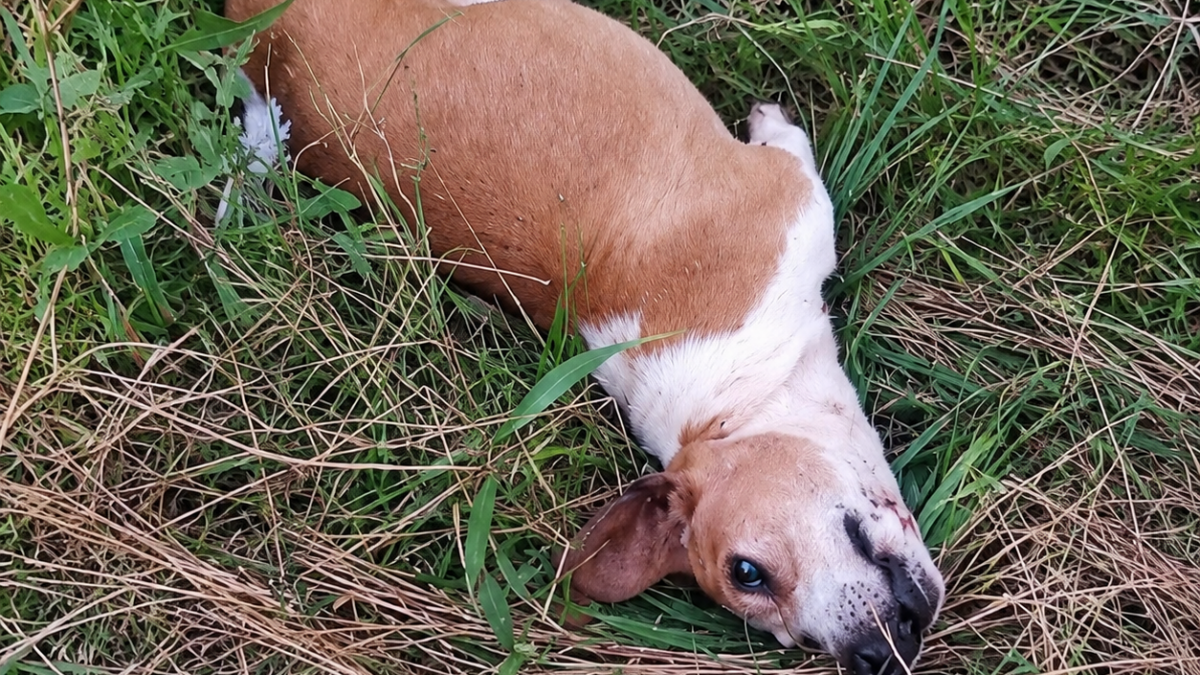
The man who should have understood suffering better than almost anyone was the one who left Tito broken beside the road.
When I first looked into that tiny dog’s eyes, I couldn’t tell whether he knew we were there to save him or whether he had simply become too weak to be afraid anymore.
And before this story was over, the two people who witnessed what happened that night would have to decide whether staying silent was easier than standing against someone everyone else was expected to trust.
The call came after dark.
Two people had been driving along a quiet road when they saw a small dog near the edge of the pavement.
Then a vehicle struck him.
They expected the driver to stop.
He did.
For a moment, they thought they were about to witness someone doing the right thing.
Instead, the driver stepped out, walked toward the little dog, grabbed his injured body and dragged him away from the road.
Then he left him there.
The witnesses were stunned.
One of them later told me, “I thought he was moving him somewhere safe.”
But the man returned to his vehicle.
Started the engine.
And drove away.
The two witnesses stopped immediately.
By the time they reached Tito, he was almost completely motionless.
They called for help.
When I arrived, I found a tiny dog lying on the ground beneath the darkness of the roadside.
At first, I thought he was dead.
Then his eyes moved.
That was all.
No cry.
No attempt to lift his head.
No movement from his legs.
His breathing was shallow, and blood darkened the fur around his mouth and neck.
I knelt beside him.
“Hey, little one.”
His eyes shifted toward my voice.
I could see terror inside them, but his body couldn’t respond.
“Don’t move.”
It was an absurd thing to say.
He couldn’t.
One of the witnesses stood several feet away, shaking.
“You need to know something,” she said.
I looked up.
“The man who hit him…”
Her voice broke.
“He’s a veterinarian.”
For a moment, I thought I had misunderstood.
“What?”
“We know him. He works nearby.”
I looked down at the little dog.
A veterinarian.
Someone trained to recognize shock.
Internal injuries.
Head trauma.
Someone who knew exactly what could happen to an animal after being struck by a vehicle.
And according to the people standing beside me, that man had dragged this dog away from the road and driven away.
My anger came so fast that I almost couldn’t speak.
But Tito needed us more than my anger did.
“We handle that later.”
I slid a rigid board beneath his body as carefully as possible.
The moment we moved him, his breathing changed.
“Easy.”
One witness covered her mouth.
“Is he going to survive?”
“I don’t know.”
That was the only honest answer.
We rushed him to the emergency clinic.
The team was waiting when we arrived.
Within minutes, three veterinarians and several nurses were working around him.
His blood pressure was dangerously low.
He was in severe shock.
His pupils responded abnormally.
There were signs of significant neurological trauma.
Blood continued seeping from his mouth.
One veterinarian looked at me.
“We need imaging as soon as he’s stable enough.”
“Do whatever you have to do.”
They placed oxygen.
Started IV access.
Controlled the bleeding they could reach.
Administered pain medication.
Monitored his brain function.
One nurse kept her hand against his tiny chest.
I stood near the wall because there was nothing else I could do.
Then the first scans came back.
Fractured jaw.
A torn palate.
Compression injuries to the spine.
Severe trauma around his neck.
Brain injury.
The veterinarian stopped before giving me the final finding.
“What?”
She looked at Tito.
“We’re concerned he may have lost his vision.”
I stared at her.
“Temporarily?”
“We don’t know yet.”
I looked toward the table.
Tito’s eyes were open.
But now I understood something I hadn’t noticed before.
He wasn’t looking at us.
He was looking through us.
The room became strangely quiet inside my head.
Someone had hit this dog.
Someone trained in medicine had seen what happened.
And Tito had still been left beside the road.
The veterinarian touched my arm.
“We need to talk about prognosis.”
I knew what that meant.
I hated those words before she even said them.
“His injuries are extremely severe.”
“Is he dying?”
“He may.”
I swallowed.
She continued carefully.
“And even if he survives, we don’t know what kind of function he’ll recover.”
I looked at Tito.
His body couldn’t move.
His jaw was broken.
His neck was twisted.
His world had gone dark.
Many people would have called that enough.
But then the monitor beside him continued its steady rhythm.
Beat.
Beat.
Beat.
I stepped closer.
“He’s still here.”
The veterinarian nodded.
“Yes.”
“Then we’re still here too.”
I placed my hand beside his paw without touching the injured limb.
His eyes did not find me.
But his heart kept beating.
And that was where Tito’s fight began.
PART 2
The first night became a collection of numbers.
Blood pressure.
Oxygen saturation.
Heart rate.
Temperature.
Neurological response.
Urine output.
Every few minutes, someone checked something.
Every few minutes, I searched the faces around the table for clues.
Was he improving?
Was he slipping?
Was this the moment someone would look at me and say there was nothing left to do?
Nobody did.
Not yet.
Tito remained heavily sedated because his brain needed rest, and because waking into that amount of pain would have been cruel.
The swelling inside his skull was one of our greatest fears.
Head trauma can change without warning.
A dog can seem stable and deteriorate quickly.
So we watched.
And waited.
And adjusted.
One nurse stayed beyond the end of her shift.
“You can go home,” I told her.
She shook her head.
“I will.”
She looked at Tito.
“Just not yet.”
That happened often during those first three days.
People found excuses to stay.
Someone checked a drip that had already been checked.
Someone adjusted a blanket that didn’t need adjusting.
Someone walked past the kennel and paused.
Tito didn’t know any of this.
Maybe that was merciful.
### The Morning After
At sunrise, one of the witnesses returned.
Her name was Elena.
She stood outside the treatment area holding a paper cup of coffee she had not touched.
“How is he?”
“Alive.”
She nodded slowly.
“That sounds terrible as good news.”
“It is good news.”
She looked through the glass.
Tito lay motionless beneath warming blankets.
Elena started crying.
“I keep seeing it.”
“The accident?”
“The part after.”
She wiped her face.
“He stopped. He got out. He walked over to him.”
I said nothing.
“He knew Tito was alive.”
My stomach tightened.
“You’re sure?”
“Yes.”
“He checked him?”
“He bent down. I don’t know what he did, but he knew.”
“And then dragged him away?”
Elena nodded.
“By one of his legs at first.”
I closed my eyes.
Tito’s neck.
His spine.
His jaw.
Dragging an animal with suspected trauma could worsen everything.
“Did you record anything?”
“No. It happened too fast.”
“The other witness?”
“My brother.”
“Will he give a statement?”
She hesitated.
That hesitation told me there was more.
“What?”
“He knows the veterinarian.”
“How?”
“Everyone does.”
I waited.
“He owns a clinic. People trust him.”
I looked through the glass again.
“So did Tito.”
### The Name
Until then, the hospital had been calling him “roadside dog” on the temporary intake sheet.
That bothered me.
A dog fighting this hard needed a name.
One of the nurses suggested several.
Nothing felt right.
Then an older technician entered carrying medication.
“What about Tito?”
I looked at her.
“Why Tito?”
She shrugged.
“He looks like a Tito.”
That was somehow enough.
I walked to the kennel.
“Tito.”
Nothing.
Of course.
He was sedated.
Still, saying the name changed something.
Roadside dog was an incident.
Tito was someone.
### The Choice Nobody Wanted
On the second day, a senior veterinarian asked me to speak privately.
I knew what was coming.
“We need to revisit quality of life.”
“I know.”
“His neurological injuries are severe.”
“I know.”
“His spine—”
“I know.”
She stopped.
I took a breath.
“Tell me what you would do if he were yours.”
She did not answer immediately.
That mattered.
Finally she said, “I would give him more time.”
Relief and fear arrived together.
“How much?”
“A few days. Enough to see whether the brain swelling improves and whether we get purposeful movement.”
“And if we don’t?”
Her expression softened.
“Then we make the kind decision.”
I nodded.
I could do that.
I could fight for Tito.
I could also promise not to make him suffer for my need to save him.
That distinction mattered.
### Day Three
The third day was worse.
His temperature dropped.
His blood pressure became unstable.
He developed swelling around the face.
The damage inside his mouth made infection a serious concern.
His palate had been torn open, and feeding safely was impossible.
Every route seemed to create another problem.
He needed nutrition.
He could not eat normally.
He needed rest.
He could not lie in one position too long.
He needed neurological stimulation eventually.
His brain first needed swelling to decrease.
We worked in contradictions.
At two in the morning, I sat beside his kennel.
“I don’t know if you can hear me.”
His breathing remained slow.
“But if you can…”
I stopped.
What was I supposed to say?
Fight?
Stay?
Don’t leave?
Humans say these things because helplessness needs language.
I finally whispered, “You don’t owe us anything.”
That felt more honest.
“If you’re done, I understand.”
My throat tightened.
“But if you’re not…”
I placed one finger against the blanket near his paw.
“We’re not either.”
### The Veterinarian Who Drove Away
While Tito fought inside the hospital, Elena and her brother gave formal statements.
The veterinarian who had allegedly struck Tito was identified.
His name was Dr. Adrian Mercer.
He ran a small but respected clinic several miles away.
I had heard of him.
That made everything worse.
People had trusted him with elderly pets.
Sick animals.
Emergency visits.
Vaccinations.
Surgeries.
The same profession that was fighting to save Tito’s life was also connected to the man accused of leaving him beside the road.
I refused to let that become an excuse to hate veterinarians.
Three of them were working around Tito right then.
One man’s decision was not an entire profession.
But one man’s decision still mattered.
We submitted photographs.
Medical records.
The timeline.
Witness information.
Tito’s injuries.
And the account of what happened after impact.
An investigation began.
### The First Movement
On the fourth day, I was standing with a nurse when she suddenly said, “Wait.”
I froze.
“What?”
“His foot.”
I looked.
Nothing.
“Which one?”
“Back left.”
We waited.
Then—
a twitch.
Tiny.
Almost nothing.
The nurse’s eyes widened.
“Do that again.”
Tito did not.
We stood there like fools staring at one paw.
Thirty seconds.
A minute.
Then another small movement.
The nurse called the veterinarian.
I started crying.
“Don’t celebrate too much yet,” the veterinarian warned gently.
“I know.”
“It could be reflex.”
“I know.”
But I celebrated anyway.
Because hope does not need certainty to exist.
### The Eighth Day
By the eighth day, Tito had survived longer than some initially believed possible.
He still could not eat normally.
His jaw remained unstable.
The torn palate made oral feeding dangerous.
The team decided he was finally stable enough for a feeding tube.
It sounds like a medical procedure.
To us, it felt like a doorway.
For the first time, we could give his body meaningful nutrition without forcing his broken mouth to do work it could not do.
Calories.
Protein.
Medication.
Water.
Everything measured.
Everything slow.
His body had spent more than a week using every resource simply to remain alive.
Now we could begin giving some back.
### The Witnesses Start Getting Calls
Elena called me that evening.
“He contacted us.”
“Dr. Mercer?”
“Yes.”
“What did he say?”
“He said we misunderstood what happened.”
I sat up.
“Did he ask about Tito?”
Silence.
“Elena?”
“No.”
That answer told me almost everything.
“What did he ask?”
“If we’d spoken to anyone.”
I felt heat rise in my face.
“Do not meet him alone.”
“I won’t.”
“Save every message.”
“I am.”
“He may be scared.”
“So am I.”
I softened.
“You’re doing the right thing.”
She laughed without humor.
“Doesn’t feel like it.”
Most right things don’t when they cost something.
### The First Lick
Two days after the feeding tube was placed, Tito became more awake.
Still heavily medicated.
Still weak.
But present.
The team began testing his responses carefully.
Sound.
Smell.
Gentle touch.
His eyes did not track movement.
The blindness was becoming more likely permanent.
But when a nurse opened a container of wet food nearby, Tito’s nose moved.
Everyone stopped.
“Again.”
She brought it closer.
His nose moved faster.
I almost laughed.
“Of course.”
Food.
Of all the things that could reach him through darkness and pain, food found the path.
Because his jaw and palate were still damaged, we couldn’t let him eat freely.
The veterinarian placed a tiny amount where Tito could taste without chewing.
He licked.
Once.
Then again.
The room erupted.
“Good boy.”
“Tito!”
“There you go.”
The nurse who had stayed beyond her shift on the first night covered her mouth.
I remembered the monitor.
The silent body.
The conversation about euthanasia.
And now this dog was licking wet food.
Healing is sometimes ridiculous.
A teaspoon becomes a celebration.
### The Permanent Injuries
Three weeks after the accident, Tito underwent advanced imaging.
The CT scan showed what the team had suspected.
His neck had been permanently altered by the spinal compression and trauma.
The alignment would never fully normalize.
His head would remain tilted.
His vision loss appeared irreversible.
The neurologist explained everything carefully.
“He may improve function.”
“But not become normal.”
The neurologist looked at me.
“Define normal.”
I blinked.
He continued.
“He may never hold his head straight. He may never see. But neither automatically means poor quality of life.”
That sentence changed how I looked at Tito.
We had spent weeks asking what he had lost.
Sight.
Alignment.
Mobility.
Ability.
Maybe it was time to ask what remained.
Hearing.
Smell.
Touch.
Appetite.
Trust.
Personality.
Desire.
Life.
### He Stood
The day Tito stood, nobody expected it.
He had been placed on a padded mat for physical assessment.
Two technicians supported his chest and hips.
His legs shook.
They lowered support slightly.
Tito collapsed.
They tried again.
Same result.
The therapist said, “That’s enough.”
Then Tito pushed.
Front paws first.
One hind leg.
Then the other.
His entire body trembled.
His head hung permanently to one side.
But he was upright.
Nobody moved.
“Don’t touch him,” the therapist whispered.
We didn’t.
Tito stood for perhaps four seconds.
Then sat.
Four seconds.
That was all.
We acted like he had climbed a mountain.
### A Lower Kennel
Once he could control more of his body, we moved him into a larger kennel positioned at floor level.
No dangerous drop.
No table height.
Thick padding.
Open area.
Sound markers.
A water bowl always in the same place.
Tito had to relearn geography without sight.
At first, he bumped into everything.
The padded wall.
The bowl.
My leg.
Then he began remembering.
Two steps from bed to water.
Turn left.
Smell blanket.
Follow voice.
Touch became a map.
Sound became distance.
Scent became direction.
Blindness did not remove his world.
It reorganized it.
### The First Tail Wag
Someone said his name.
Just that.
“Tito.”
His tail moved.
One slow wag.
The room went silent.
“Again.”
“Tito.”
Two wags.
I laughed.
There are moments when the body reveals something the mouth cannot.
Tito did not understand prognosis.
He did not know he would always be blind.
He did not know his neck would remain crooked.
But his tail told us he still recognized joy.
That was enough.
### Dr. Mercer’s Version
The investigator eventually interviewed Dr. Mercer.
According to what we were told, he admitted his vehicle had struck Tito.
He denied intentional cruelty.
He claimed he believed Tito was already dying.
That sentence made me angrier than a denial would have.
A veterinarian believed an injured dog was dying.
And left.
He argued that he had moved Tito out of traffic to prevent another collision.
That might have sounded compassionate if he had then called emergency services.
Or another clinic.
Or animal control.
Or anyone.
He had a phone.
Medical knowledge.
A vehicle.
Professional training.
Tito had none of those things.
Dr. Mercer had every advantage.
Tito had only two strangers who refused to keep driving.
### The Brother Nearly Backs Out
Elena’s brother, Daniel, called me one afternoon.
“I don’t know if I can do this.”
“Testify?”
“Yes.”
“What happened?”
“People are talking.”
“About you?”
“About us ruining his career.”
I stayed quiet.
That phrase had been circulating.
Ruining his career.
Not Tito’s broken spine.
Not permanent blindness.
Not the choice to drive away.
The witnesses.
I asked Daniel one question.
“Did you make him leave Tito?”
“No.”
“Did you make him drive away?”
“No.”
“Did you make him contact you afterward?”
“No.”
“Then you aren’t creating consequences. You’re describing what you saw.”
Daniel exhaled.
“He treated my mother’s dog once.”
That complicated everything emotionally.
“I know.”
“He was good to her.”
“Both things can be true.”
Silence.
“He could have been good before and still done something terrible that night.”
Daniel said nothing.
Then quietly:
“I’ll testify.”
### Leaving the Hospital
Tito spent weeks in intensive care and step-down treatment.
By the time we prepared to discharge him, he had become the hospital’s unofficial mascot.
Staff members took breaks beside his kennel.
Technicians brought him squeaky toys.
He had learned three favorite voices.
Mine.
Nurse Rachel.
And one of the physical therapists, Marcus.
Whenever Marcus entered, Tito’s tail started.
“Traitor,” I said once.
Marcus grinned.
“He prefers professionals.”
“You smell like treats.”
“That is professionalism.”
Tito was strong enough to leave.
Not cured.
Not finished.
Strong enough.
There is a difference.
### Foster Home
We chose a foster home experienced with disabled dogs.
The house had no open staircases.
Furniture was arranged to create clear pathways.
Rugs marked important locations.
One textured mat meant water.
Another meant the back door.
Scent cues helped him identify rooms.
His foster mother, Grace, spoke before touching him.
Always.
“Tito, hand.”
Then contact.
“Tito, up.”
Then lift.
“Tito, left.”
Then guide.
Predictability became safety.
The first night, he slept almost twelve hours.
Grace sent me a picture.
Tito was curled beneath a blanket with his head tilted at the angle we had all stopped noticing.
His mouth was slightly open.
He looked ridiculous.
And peaceful.
### Hydrotherapy
Rehabilitation began almost immediately.
Hydrotherapy frightened him at first.
A blind dog cannot see where water begins.
The change beneath his feet felt sudden.
Grace carried him into the warm therapy pool while Marcus supported his body.
Tito panicked.
Paws scrambling.
Breathing fast.
“Easy.”
Grace held his chest.
Marcus supported the hindquarters.
“No one is letting go.”
Slowly, Tito stopped fighting the water.
His legs moved.
Instinct took over.
Paddle.
Paddle.
Paddle.
The water allowed movement without forcing full weight onto his damaged spine.
The first session lasted only minutes.
The next was longer.
Weeks later, Tito actually became excited when he heard the hydrotherapy room.
Sound became anticipation.
He associated echoing tiles and water splashes with exercise.
And treats.
Mostly treats.
### Acupuncture
I was skeptical the first time acupuncture was suggested.
The rehabilitation veterinarian explained how it might support pain management and muscle function as part of a broader therapy plan.
Tito, naturally, had no opinion.
He simply wanted someone to scratch his chest.
During the first session, he relaxed so completely that he snored.
I stared.
“You’re supposed to be receiving treatment.”
Snore.
Grace whispered, “He’s deeply committed.”
### Learning the Yard
Grace’s fenced yard became Tito’s first real territory.
At the beginning, we walked him on leash along the perimeter.
He mapped it with his nose.
Fence.
Tree.
Step.
Grass.
Patio.
Door.
Again.
Same route.
Again.
Eventually, leash off.
Tito moved slowly.
His head tilted.
Nose down.
One step.
Two.
He bumped the tree.
Stopped.
Sniffed.
Adjusted.
Kept going.
A week later, he no longer hit the tree.
A month later, he trotted around it.
Blindness becomes less visible once memory takes over.
### The Squeaky Toy
The first toy Tito truly loved was a small rubber pig.
It made an obnoxious squeal.
I hated it.
Tito adored it.
Grace would squeak the toy from across the room.
Tito’s ears lifted.
He turned.
Followed the sound.
Bumped into a chair once.
Adjusted.
Reached the toy.
Victory.
Soon, he learned to chase moving sound.
Grace rolled squeaky balls across the floor.
Tito followed by listening.
Sometimes he lost them.
Then his nose took over.
The dog who could not see had turned play into a combination of hearing and scent.
Watching him, you stopped thinking blind.
You thought Tito.
### Children
Nobody expected Tito to love children as much as he did.
Grace’s niece visited one afternoon.
She was six.
We worried the noise might overwhelm him.
Instead, Tito followed her voice everywhere.
She sat on the floor.
He approached.
She asked permission before touching him.
“Can I pet him?”
“Say his name first.”
“Tito.”
Tail wag.
She placed one hand gently on his back.
Tito leaned into her.
That was it.
From then on, children became some of his favorite people.
They tended to sit lower.
Speak with excitement.
Drop food.
All excellent qualities, according to Tito.
### The Investigation Becomes Public
Months after the accident, news of Dr. Mercer’s case became public locally.
I hated the attention.
Some people wanted a monster.
Others wanted to defend him at all costs.
Reality was more uncomfortable.
He had been respected.
He had helped animals before.
And that night, according to witnesses and the evidence, he had made a choice completely incompatible with the duty people trusted him to carry.
The veterinary board opened a professional review.
Authorities considered animal cruelty and abandonment-related violations.
Dr. Mercer hired representation.
His attorney argued that public anger had distorted the facts.
Maybe some anger had.
That was why the witnesses mattered.
Not rumors.
Not posts.
Not my feelings.
Elena.
Daniel.
Two people who had seen the same thing.
### Tito Didn’t Care
While adults argued about law and ethics, Tito discovered grass.
Really discovered it.
One afternoon, Grace let him outside after rain.
The grass was wet.
Tito stepped onto it.
Stopped.
Sniffed.
Then dropped.
He rolled onto his back.
Kicked his legs.
Twisted side to side.
His crooked neck made the movement hilariously uneven.
Grace recorded him.
I watched the video twice.
Then again.
The dog once lying motionless beside a road was rolling in wet grass because he could.
That was the first time I understood something important.
His story did not need to remain tragic just because it began in cruelty.
### Adoption Event One
Several months into recovery, Tito was medically cleared to attend adoption events.
We knew finding the right family might take time.
We were not prepared for how difficult it would feel.
At the first event, Tito wore a little harness with a tag explaining:
**BLIND — PLEASE SPEAK BEFORE TOUCHING**
People noticed him.
Many asked questions.
Then they learned about his needs.
Blind.
Permanent neck deformity.
History of spinal trauma.
Ongoing monitoring.
Some smiled politely.
Then moved toward another dog.
I understood.
Special-needs adoption is not right for everyone.
But understanding does not make rejection painless.
Tito greeted each person the same way.
Tail wag.
Nose forward.
Hopeful.
He had no idea people were deciding whether his body was too complicated.
### Adoption Event Two
A family with two children spent nearly twenty minutes with him.
Tito adored the kids.
One boy squeaked his toy.
Tito followed.
Everyone laughed.
I thought:
This could be it.
Then the father asked, “Will he ever see again?”
“No.”
His expression changed.
“Never?”
“His blindness is permanent.”
They spoke privately.
Then left.
Tito waited near the direction of their voices for several minutes.
Grace knelt beside him.
“They’re gone, buddy.”
Tail wag.
Still hopeful.
### Adoption Event Seven
Eventually, I stopped counting families and started counting events.
Three.
Seven.
Twelve.
Tito became familiar with the routine.
Car ride.
New smells.
New voices.
People petting him.
Treats.
Home.
Every time, he seemed happy.
Every time, I wondered whether he understood nobody was taking him.
Dogs probably do not interpret adoption the way we do.
Still, I could not escape the feeling that he kept offering himself.
Here I am.
Here I am.
Here I am.
### Dr. Mercer Sees Tito
The first time Dr. Mercer saw Tito after the accident happened by coincidence.
We were leaving a rehabilitation clinic after therapy.
His vehicle was parked across the street.
I recognized him immediately.
He recognized Tito.
For several seconds, no one moved.
Dr. Mercer looked different from the photograph circulating online.
Older.
Tired.
Human.
That made anger harder in a strange way.
Monsters are convenient.
People are complicated.
He walked toward us.
Grace stepped slightly in front of Tito.
“Don’t.”
He stopped.
“I just want to see him.”
“You have.”
His eyes moved toward Tito’s crooked neck.
“He survived.”
It was the first thing he said.
Not I’m sorry.
Not how is he.
He survived.
“Yes.”
Tito heard the unfamiliar voice.
His ears moved.
Dr. Mercer whispered, “Hey.”
Tito’s tail did not wag.
Not because he remembered.
Maybe he did.
Maybe he didn’t.
We could never know.
He simply stood close to Grace.
Dr. Mercer stared.
“I didn’t think he would.”
I felt anger rise.
“You didn’t give him the chance to.”
His face tightened.
“I panicked.”
“You’re a veterinarian.”
“I know what I am.”
“Then you knew exactly what he needed.”
Silence.
Grace spoke quietly.
“He needed you to call someone.”
Dr. Mercer looked at Tito.
“I made a mistake.”
“No,” I said.
He looked at me.
“Missing an exit is a mistake. Forgetting an appointment is a mistake.”
My voice remained calm.
“You made a decision.”
He said nothing.
That was the first time I saw shame in his face.
It did not undo anything.
But it existed.
### The Hearing
Months later, the professional hearing took place.
Elena testified first.
She described the impact.
The stop.
The dragging.
The departure.
Daniel followed.
His testimony matched.
Dr. Mercer’s attorney questioned visibility.
Distance.
Stress.
Memory.
Daniel became frustrated.
“You’re asking if I could see clearly?”
“Yes.”
“I could see clearly enough to stop.”
Silence.
That sentence stayed with everyone.
The medical records were presented.
Traumatic brain injury.
Jaw fracture.
Palatal tear.
Spinal compression.
Permanent neck deformity.
Permanent blindness.
The reviewing panel asked one of Tito’s treating veterinarians a simple question.
“What would the appropriate response have been after striking this animal?”
“Immediate emergency assessment or transfer to an emergency facility.”
“And if the driver could not provide care personally?”
“Contact emergency services, animal control, another veterinarian, or a rescue. At minimum, remain with the injured animal and seek help.”
“Would leaving be appropriate?”
“No.”
One word.
No.
### His Defense
Dr. Mercer eventually spoke.
He said he had been exhausted.
He had worked a long shift.
The accident happened quickly.
He panicked.
He believed the dog might already have suffered unsurvivable injuries.
He feared being blamed.
He made a terrible decision.
I believed some of that.
Fear can make people cowardly.
Exhaustion can damage judgment.
But neither explains away responsibility.
Then he said something I did not expect.
“I knew better.”
The room became quiet.
His attorney looked toward him.
Dr. Mercer continued.
“I knew better.”
For the first time, there was no excuse inside the sentence.
That mattered.
Not enough.
But something.
### The Consequences
The professional board’s decision came weeks later.
Dr. Mercer faced disciplinary action connected to his conduct after the accident.
His license was suspended pending required review, ethics conditions, and other corrective measures determined through the professional process.
The local case also resulted in penalties related to leaving an injured animal without assistance.
Some people celebrated.
I didn’t.
I felt relief.
Accountability is not revenge.
It is a boundary.
A profession built around care cannot ignore a moment when care was deliberately abandoned.
### But Tito Was Still Waiting
By then, Tito had spent nearly a year in foster care.
That truth hurt more than the legal victory satisfied me.
He was alive.
Healthy within his limitations.
Playful.
Loving.
But still not chosen permanently.
Adoption event after adoption event passed.
People admired him.
Shared his story.
Cried over his photographs.
Then adopted someone else.
That is the lonely reality of many special-needs animals.
People love the idea of survival.
Living with survival’s consequences is harder.
### Day 300
On day 300, Grace bought Tito a new blanket.
“Why?”
“Because he reached 300 days.”
“That is not something we’re celebrating.”
“We’re celebrating him.”
Fair.
Tito buried himself underneath it immediately.
Only his crooked little nose remained visible.
I took a picture.
Sometimes waiting needs rituals too.
### The Woman Who Almost Adopted Him
A retired teacher named Marianne nearly took him home around day 340.
She had experience with blind dogs.
Her house was quiet.
Perfect yard.
Excellent references.
Everything looked right.
Then her own health changed unexpectedly.
She called crying.
“I can’t promise him the stability he deserves.”
That was a kind decision.
It still hurt.
Tito never knew how close he came.
He spent that afternoon chasing the pig toy.
Maybe ignorance protected him.
### Day 400
Four hundred days.
The number felt cruel.
I posted no dramatic message.
No countdown.
No guilt.
We simply kept bringing him.
Tito had become recognizable at events.
Volunteers knew him.
Children asked for him.
One little girl ran in once shouting, “Crooked Tito!”
Grace laughed.
I wanted to be offended.
Tito wagged.
The name stuck for the afternoon.
### His Personality Became Bigger Than His Injuries
Somewhere around that time, people stopped introducing him as:
“The blind dog with the neck injury.”
They started saying:
“Tito steals socks.”
“Tito snores.”
“Tito loves kids.”
“Tito will fight you for cheese.”
“Tito hates rain.”
“Tito knows where every squeaky toy is.”
That was progress.
Disability remained part of him.
It stopped being the headline.
### Day 469
It happened on an ordinary adoption day.
No dramatic weather.
No crowd.
No television.
Just folding tables.
Volunteers.
Dogs.
Families walking through.
Tito was lying on a blanket beneath Grace’s chair.
He was tired.
He had already met several people.
Then a couple approached with their teenage daughter.
The girl crouched.
“Tito?”
His head lifted.
Tail wag.
She spoke before touching him.
Someone had read his card.
Good sign.
“Hi, Tito.”
Tail faster.
Her mother sat beside her.
Not standing above him.
Another good sign.
The father asked practical questions.
“How does he navigate stairs?”
“We avoid open stairs.”
“Does he need medication?”
“Some supportive care, regular monitoring.”
“What happens when you move furniture?”
“We guide him and give him time to remap.”
The mother asked, “Does he get anxious when he’s alone?”
“Sometimes in unfamiliar spaces.”
“We’re home a lot.”
The daughter squeaked the pig toy.
Tito stood immediately.
Followed.
Found her.
She laughed.
Not pity.
Joy.
That mattered.
### They Saw Tito
They stayed for over an hour.
Nobody asked whether his neck could be fixed.
Nobody asked whether he’d ever see.
They asked:
Where does he sleep?
What food does he like?
What sounds frighten him?
Can he live with another dog?
Does he like car rides?
How do we help him map a new house?
They were not interviewing his injuries.
They were learning him.
I felt something shift.
Grace did too.
We did not allow ourselves to hope.
We had hoped before.
### Home Visit
Their home was almost perfect.
Single level.
Fenced yard.
Few sharp furniture corners.
Another calm dog named Rosie.
Rosie met Tito outside.
Sniff.
Pause.
Tito wag.
Rosie walked away.
Tito followed.
Good.
Inside, the daughter had already placed textured mats near water and doors after researching blind-dog navigation.
I stared at them.
“You did this already?”
She nodded.
“We wanted to see if it could work.”
Her father added, “Even if Tito doesn’t come here, we figured it’s useful to understand.”
That answer finished me.
### The Test Night
We arranged an overnight trial.
Grace packed Tito’s things like he was leaving for war.
Food.
Medication.
Pig toy.
Two blankets.
Three more toys.
His usual bowl.
A worn shirt carrying familiar scent.
I removed one blanket.
She put it back.
“He may need options.”
“He is blind, not a hotel critic.”
“He has preferences.”
Tito left with the family.
Grace cried before their car reached the corner.
### The Message
At 8:42 p.m.:
**He ate everything.**
At 9:15:
**He found the water by himself.**
At 10:03:
A video.
Tito walking carefully through the living room.
Rosie beside him.
The daughter calling from the couch.
“Tito.”
He turned.
Walked toward her voice.
Tail wagging.
At 11:27:
A photograph.
Tito asleep beneath a blanket.
Rosie curled nearby.
Caption:
**We think he’s home.**
Grace cried again.
So did I.
### Adoption Day
Day 469 became the last day Tito belonged to rescue.
We signed paperwork.
Reviewed medical history.
Went over every emergency plan.
Discussed his spine.
His blindness.
His pain signals.
His routines.
His needs.
Then there was nothing left except goodbye.
Grace knelt.
“Tito.”
He walked toward her voice.
She held him.
The woman who had taught him a house from darkness.
Who had stayed through hydrotherapy.
Who had cleaned accidents.
Who had counted steps.
Who had brought him to adoption event after adoption event.
Her voice broke.
“You go be somebody else’s problem.”
Tito licked her face.
Everyone laughed through tears.
His new daughter attached his leash.
“Ready?”
Tito’s ears lifted.
They walked toward the car.
He did not look back.
He could not.
Somehow that made it easier and harder at the same time.
### The First Week
His family sent updates constantly.
Tito discovered the yard.
Bumped the fence twice.
Then memorized it.
He learned Rosie’s footsteps.
He learned the daughter’s bedroom.
He learned where the kitchen was faster than anywhere else.
Of course.
He developed a habit of standing near the refrigerator whenever anyone opened it.
His father sent a video.
“Tito, nothing for you.”
Tail wag.
“Tito.”
Tail wag.
“No.”
Tito sat.
More tail wag.
The video ended with Tito receiving a tiny approved treat.
Weak household.
Perfect.
### Running Blind
A month later, they sent a video that I still watch sometimes.
Tito was running.
Not stumbling.
Running.
Across his yard.
The family had created a safe, open path.
He knew every corner.
Every fence line.
Every tree.
He ran by memory.
Rosie ran beside him.
Tito’s crooked neck tilted permanently.
His eyes saw nothing.
His body looked imperfect by every conventional standard.
He was completely free.
### The Man Who Left Him Watches the Video
I learned later that Dr. Mercer saw the video.
Someone had shared it publicly through the rescue page.
He contacted me.
Only once.
His message said:
**I’m glad he lived. I know that doesn’t change what I did.**
I stared at it for a long time.
Months earlier, I would have wanted more.
An apology.
Explanation.
Punishment.
Pain.
Now Tito was running through a yard.
I replied with one sentence.
**You’re right. It doesn’t.**
Then I added:
**But what you do next still matters.**
That was all.
### What He Did Next
Dr. Mercer eventually completed the requirements imposed through the professional process.
He did not return immediately to ordinary practice.
Part of his rehabilitation included supervised work and formal ethics review.
According to people who later spoke with him, he began volunteering time with an emergency animal transport program once he was permitted.
I had mixed feelings.
People wanted me to say he did not deserve redemption.
Others wanted me to say one good act erased the bad.
Neither felt true.
Tito had scars.
Dr. Mercer had consequences.
And afterward, Dr. Mercer still had choices.
Accountability without the possibility of change becomes something else.
I wanted the world safer for animals.
If he actually became someone who stopped instead of leaving, that mattered.
It did not rewrite Tito’s night.
Nothing could.
### The Real Revenge
For a long time, I thought Tito’s satisfying ending would be Dr. Mercer losing everything.
Career.
Reputation.
Respect.
I imagined that would feel like justice.
Then I watched Tito run.
That changed me.
The man who left him had once made a decision about his future.
He looked at Tito’s broken body and decided there was nothing worth staying for.
Tito disproved him every day.
That was revenge.
Every meal.
Every squeaky toy.
Every hydrotherapy session.
Every child’s hand resting gently on his back.
Every adoption event he survived without understanding rejection.
Every night beneath a warm blanket.
Every lap around the yard.
Every ridiculous snore.
Life answered the man who abandoned him.
You were wrong.
### One Year Home
On the first anniversary of his adoption, we visited.
Tito heard our car before we reached the gate.
He barked.
That alone made me laugh because the original Tito could not even lift a paw.
His daughter opened the gate.
“Tito, guess who’s here?”
I called his name.
“Tito.”
He froze.
Then ran toward my voice.
He hit my legs harder than expected.
I crouched.
“There you are.”
He licked my face.
Grace was behind me.
“Tito.”
His entire body changed.
Tail wild.
He moved toward her.
She sat on the grass.
Tito climbed into her lap as if 469 days had disappeared.
Grace buried her face in his coat.
“You remember me.”
Of course he did.
Blind dogs remember entire worlds through things humans overlook.
Voice.
Scent.
Touch.
### His New Life
Tito slept under blankets.
Always.
His family eventually gave up buying expensive dog beds because he preferred stealing human pillows.
He collected squeaky toys.
The pig remained his favorite until Rosie destroyed it.
Tito spent three days searching for it by smell.
His family bought four replacements.
None sounded exactly right.
He accepted them reluctantly.
He developed a loud snore.
His crooked neck meant he slept in positions that looked medically impossible.
Veterinarians assured us he was comfortable.
He loved children.
Hated thunderstorms.
Enjoyed sunbathing.
Could locate dropped food faster than sighted dogs.
Blindness did not make him helpless.
It made him specialized.
### People Still Stared
On walks, strangers noticed.
“What happened to his neck?”
“Is he blind?”
“Oh, poor thing.”
His family learned to answer calmly.
“He was injured.”
“Yes, he’s blind.”
“No, he doesn’t think he’s poor.”
Sometimes Tito would immediately prove the point by trying to steal someone’s sandwich.
### The School Visit
His daughter eventually asked whether Tito could visit her school during a presentation about animals with disabilities.
With permission and proper planning, he did.
A room full of children sat in a circle.
Tito walked in.
At first, everyone became quiet.
Then questions.
“Can he see shadows?”
“No.”
“Does he get scared?”
“Sometimes.”
“How does he know where you are?”
“My voice and smell.”
“Does his neck hurt?”
“Not most of the time. We monitor him.”
“Is he sad?”
His daughter paused.
Then looked at Tito.
He was currently trying to find the source of someone opening a snack bag.
She laughed.
“No.”
The children laughed too.
That day, Tito did something his rescuer had not planned.
He became a teacher.
### The Difference Between Pity and Love
Pity looks at Tito and sees everything missing.
Sight.
Straight posture.
Normal gait.
Perfect anatomy.
Love sees what is present.
Trust.
Humor.
Appetite.
Curiosity.
Affection.
Adaptation.
Courage.
That distinction became the heart of his story.
### The Second Legal Update
Years later, I received notice that Dr. Mercer’s professional status had been reviewed again.
He had completed required programs.
Provided evidence of supervised work.
No further complaints had been recorded.
Some people remained angry.
I understood.
Others believed he deserved a path forward.
I understood that too.
My focus had changed.
The system had responded.
The witnesses had been heard.
Tito had been protected.
The next chapter belonged to choices none of us controlled.
### Elena Visits
Elena met Tito again two years after the accident.
She had avoided seeing him for a long time.
“I don’t know if I can.”
“You saved him.”
“No. You did.”
“You stopped.”
That sentence mattered.
She eventually agreed.
When she entered Tito’s home, she began crying before he even reached her.
She sat on the floor.
“Tito.”
He walked toward the unfamiliar voice.
Sniffed.
She held out her hand.
He touched it with his nose.
Then licked her.
Elena broke.
“I thought you were dead.”
Tito wagged.
“I thought you died that night.”
His family stood quietly.
Elena touched the side of his face.
“I almost kept driving.”
I looked at her.
“But you didn’t.”
Sometimes heroism begins with braking.
### Daniel
Daniel visited later.
He had struggled with the public attention more than Elena.
When Tito approached him, Daniel laughed nervously.
“He doesn’t know me.”
“Maybe scent.”
“From that night?”
“Possibly.”
Tito sniffed his shoes.
Then sat on Daniel’s foot.
Daniel looked down.
“Well.”
I smiled.
“You belong to him now.”
### The Crooked Neck
As Tito aged, we monitored his spine carefully.
A body compensating for permanent deformity can develop secondary strain.
Physical therapy continued.
Exercise was adapted.
His family learned massage techniques.
Ramps replaced jumping.
Regular checkups caught problems early.
Once, a new veterinarian entered the exam room and stopped.
“This is Tito?”
His family smiled.
“You’ve heard of him?”
“Everyone has.”
Tito had no idea he was famous.
He only cared that this veterinarian had treats.
### His Blindness Became Invisible
Visitors often forgot Tito could not see.
That happened because he moved confidently at home.
He knew the furniture.
The hallway.
The yard.
The sound of doors.
The texture of flooring.
He could move from bedroom to kitchen faster than guests.
Then someone would move a chair.
Tito would bump it gently.
Everyone would remember.
“Oh.”
Blind.
He would sniff.
Remap.
Continue.
Adaptation looked ordinary after enough repetition.
### A New Puppy
Years later, the family adopted a puppy.
We were worried.
Too much energy.
Too unpredictable.
The introduction was careful.
Tito heard the puppy before meeting him.
Ears up.
Tail uncertain.
The puppy approached.
Tito sniffed.
The puppy licked Tito’s face.
Tito stepped back.
Then sneezed.
Everyone laughed.
Within weeks, Tito became the puppy’s guide in a strange reversal.
The blind dog knew the house better.
The puppy followed Tito to the back door.
To the kitchen.
To the sleeping spots.
Tito had once needed another dog to help him understand the world.
Now he was teaching one.
### The Night Everything Came Back
One evening, years after the accident, a car backfired near the house.
The sound was sharp.
Tito froze.
His body dropped low.
His family noticed immediately.
His breathing changed.
Old trauma.
Maybe.
We could not know what he remembered.
His daughter sat several feet away.
“Tito.”
He turned toward her voice.
“Come here.”
Slowly, he walked.
She placed a blanket around him.
Rosie—or by then the younger dog—settled nearby.
Within minutes, Tito relaxed.
Trauma does not always disappear.
Sometimes safety simply becomes stronger than the trigger.
### The Road
I eventually returned to the place where Tito had been found.
I did not bring him.
He did not need that.
The road looked ordinary.
That bothered me.
Terrible things happen in ordinary places.
Cars passed.
Streetlights.
Grass.
Nothing marked the location.
I stood where Elena said Tito had been dragged.
I imagined the tiny body.
The open eyes.
The shallow breath.
Then I pictured the video of him running.
Two images.
Same dog.
Different ending.
### Why Tito Survived
People often wanted one reason.
Was it the emergency team?
The transfusions?
Medication?
Feeding tube?
Rehabilitation?
Foster care?
Witnesses?
Luck?
The answer was all of it.
Survival is rarely one heroic moment.
It is a chain.
Elena and Daniel stopped.
A rescue team came.
Veterinarians treated.
Nurses stayed.
A feeding tube delivered nutrition.
Therapists rebuilt movement.
Grace taught him a home without sight.
Volunteers carried him to adoption events.
A family finally chose him.
Remove one link and the story changes.
### The Myth of the Unwanted Dog
Tito waited 469 days.
People sometimes hear that and think nobody wanted him.
That isn’t true.
Many people loved Tito.
They simply were not prepared to take responsibility for his needs.
There is a difference.
He did not need a person who wanted a rescue story.
He needed a person who wanted Tito.
Blindness.
Crooked neck.
Medical history.
Everything.
It took 469 days to find that.
Long?
Yes.
Worth it?
Completely.
### The Family’s Promise
On adoption day, Tito’s new mother had whispered something I barely heard.
“We’re not giving you back.”
Years later, I reminded her.
“Remember what you said?”
She smiled.
“Every day.”
There had been difficult days.
Veterinary bills.
Medication changes.
Accidents in unfamiliar places.
Pain flares.
Emergency visits.
Aging.
They stayed.
That was the promise Tito had needed from the beginning.
### A Letter From Dr. Mercer
Nearly four years after the accident, a letter arrived through the rescue.
Dr. Mercer had written it.
I almost threw it away.
Then I read it.
He did not ask forgiveness.
That helped.
He wrote about the night.
The fear.
The shame.
The consequences.
The fact that seeing Tito’s recovery had forced him to confront what he had done.
One sentence stood out:
**I built my identity around caring for animals, and in the worst moment of one animal’s life, I chose self-protection instead.**
That was accurate.
He wrote that he now stopped for injured animals whenever safe.
He kept emergency transport supplies in his vehicle.
He trained clinic staff to document and respond to road trauma.
I did not know whether that was redemption.
I wasn’t responsible for deciding.
I sent one photograph back.
Tito running in the yard.
No message.
The photograph was enough.
### The Daughter Who Saw Him
Tito’s teenage daughter became an adult.
She eventually studied animal behavior.
When someone asked why, she always mentioned Tito.
Not his injuries.
His adaptation.
“How can a dog lose sight, change his entire way of navigating the world, and still be joyful?”
That question led her into study.
Tito’s influence moved into another life.
He had been left as if his existence no longer mattered.
Years later, his existence was shaping careers.
### Aging
Tito’s muzzle turned gray.
His hearing softened slightly.
That frightened us because sound was so important to his navigation.
His family adapted again.
Stronger scent markers.
Gentle floor vibrations.
Touch cues.
Nothing dramatic.
Just change.
When eyesight was gone, hearing mattered.
When hearing faded, smell and touch grew more important.
He kept adjusting.
Humans like to call disabled animals inspiring.
Sometimes I think they are simply practical.
This sense doesn’t work?
Use another.
This path hurts?
Take another.
Humans often mourn the original map.
Dogs start walking the new one.
### The Final Adoption Event Visit
Years after being adopted, Tito returned to the same venue where he had once waited week after week.
Not as an adoptable dog.
As a guest.
People who remembered him gathered around.
Grace came.
Volunteers.
Old photographs were displayed.
One showed Tito in the hospital.
Another in hydrotherapy.
Another at event number who-knows-what.
Then one of him at home.
A volunteer laughed.
“He waited forever.”
Tito was asleep under a table.
His daughter said, “He was waiting for us.”
That sentence gave every difficult adoption event a new meaning.
### The Pig Toy Memorial
The original squeaky pig never survived Tito’s enthusiasm.
But the family kept one of the replacement pigs for years.
Eventually, it stopped squeaking.
Tito still carried it.
Blind.
Older.
Hearing fading.
The squeak no longer mattered.
The smell did.
Memory lived inside rubber.
### The Difference Between Broken and Changed
People had called Tito broken.
They meant injured.
Different.
Complicated.
But broken implies no function.
No purpose.
No wholeness.
Tito was whole.
His wholeness simply did not resemble what it had before the accident.
That distinction became more important as he aged.
### The Final Time He Met Elena
Elena visited again when Tito was old.
She sat beside him.
“He saved me too.”
I looked at her.
“How?”
“I used to think if something was difficult and frightening, someone else would handle it.”
She stroked Tito’s back.
“That night taught me to stop.”
Tito slept through the confession.
Heroes often do.
### The Question of Forgiveness
People asked whether I forgave Dr. Mercer.
For years, I answered differently depending on the day.
Eventually, I settled on this:
Forgiveness is not the same as forgetting.
It is not the same as excusing.
It is not the same as restoring trust.
Tito’s injuries were permanent.
His blindness did not disappear because someone later regretted leaving.
His crooked neck remained.
Accountability mattered.
But anger also stopped being useful after a while.
Tito wasn’t spending his life thinking about the man who hit him.
Why should I give that man more space in Tito’s story than Tito did?
### The Ending Dr. Mercer Feared
Dr. Mercer had once driven away, perhaps believing the injured dog would die quietly and the night would disappear.
The opposite happened.
Tito lived.
The witnesses spoke.
The medical records existed.
The case became known.
Consequences followed.
The truth survived longer than secrecy.
That was one form of justice.
### The Ending Tito Deserved
But Tito’s ending was not a disciplinary hearing.
It was a yard.
Sun.
Grass.
Blankets.
Food.
Toys.
Children.
Family.
That was the real conclusion.
### The Last Great Run
As Tito grew older, running became less frequent.
Then one spring afternoon, during a family gathering, someone squeaked a toy at the far side of the yard.
Tito’s ears lifted.
His body changed.
For a second, he looked young.
The toy squeaked again.
Tito ran.
Not fast by ordinary standards.
Fast for him.
His family cheered.
His daughter ran beside him, guiding with her voice.
“This way, Tito!”
He followed.
Crooked neck.
Clouded, sightless eyes.
Gray muzzle.
Tail high.
He reached the toy.
Grabbed it.
And refused to give it back.
Everyone laughed.
I stood at the edge of the yard crying.
Not because he was old.
Because he had gotten old.
That is a privilege many rescued animals are denied.
Tito had once been expected not to survive the night.
Now age was slowing him.
What a victory.
### His Favorite Sound
Near the end of his life, Tito’s hearing faded enough that squeaky toys no longer worked from a distance.
His favorite sound became his daughter’s voice close to his ear.
“Tito.”
Tail.
Always.
Even when sleepy.
Even when stiff.
Even when tired.
“Tito.”
Tail.
A name given after strangers saved him had become the sound of home.
### The Promise We Kept
The first night, I had placed my finger beside his paw and told him:
If you’re not done, we’re not either.
Years later, sitting beside him beneath a blanket, I remembered.
Tito had done his part.
He had stayed.
We had done ours.
We stayed too.
### The Satisfaction People Wanted
You asked for revenge that feels satisfying.
Here it is.
A veterinarian struck Tito and drove away.
Two witnesses stopped.
The truth did not disappear.
Those witnesses spoke when silence would have been easier.
The case reached investigators.
The professional board heard evidence.
Consequences followed.
Dr. Mercer had to face the contradiction between the healer he believed himself to be and the choice he made when no one was supposed to be watching.
He lost the ability to hide from that moment.
But Tito’s greatest revenge was even simpler.
He survived the ending someone else had chosen for him.
The man who left him believed he would die beside a road.
Tito lived long enough to become gray.
Long enough to be adopted.
Long enough to teach a child compassion.
Long enough to run blind through a yard he knew by heart.
Long enough to sleep beneath so many blankets his family joked that he owned the house.
Long enough for his story to become bigger than the worst thing anyone had ever done to him.
That is revenge no punishment can match.
### One Last Evening
The last evening I remember most clearly was quiet.
Tito was old by then.
He lay beneath a blanket on the porch.
His family was inside preparing dinner.
A younger dog slept nearby.
The air was warm.
I sat beside him.
His breathing was calm.
I said his name.
“Tito.”
His tail moved.
Slowly.
Once.
I touched his shoulder.
“Good boy.”
Two words.
The same words we had said when he first licked food.
When he first stood.
When he first navigated a room.
When he first followed a squeaky toy.
When he first ran.
Good boy.
Tito lifted his nose.
Maybe smelling dinner.
Probably smelling dinner.
I laughed.
“You haven’t changed.”
He stood carefully.
Walked toward the door.
No hesitation.
He knew the way.
### Epilogue
There was a time when Tito lay beside a road unable to move anything except his eyes.
The person who hit him had every reason to understand how serious his injuries were.
He left anyway.
But two strangers stopped.
That is where the story changed.
Three veterinarians worked through the night.
Nurses turned his body.
Medication reduced swelling.
A feeding tube gave him strength.
Therapists taught him movement.
Hydrotherapy returned function.
Acupuncture and rehabilitation helped manage pain.
A foster mother taught a blind dog how to map a house.
Volunteers carried him through 469 days of waiting.
And finally, one family looked past the crooked neck and sightless eyes.
They did not say:
What is wrong with him?
They asked:
What does he need?
That difference gave Tito a life.
He never regained his sight.
His neck never became straight.
He never became the dog he might have been before the car hit him.
But survival is not about returning to who you were.
Sometimes survival means becoming someone new and discovering that new does not mean less.
Tito learned the world through sound.
Through scent.
Through touch.
Through memory.
Through people who announced themselves before reaching for him.
He learned that footsteps could mean family.
A squeak could mean play.
A blanket could mean sleep.
A hand could mean comfort.
A voice saying his name could mean:
You are safe.
### The Man Who Left
Years after everything happened, I stopped thinking of Tito as the dog a veterinarian abandoned.
That description gave Dr. Mercer too much ownership over his identity.
Tito was the dog who survived.
The dog who stood.
The dog who learned.
The dog who waited 469 days.
The dog who was chosen.
The man who left him became one chapter.
Tito became the whole book.
### Why the Witnesses Matter
Without Elena and Daniel, the accident might have become another unknown roadside tragedy.
They could have driven on.
They could have convinced themselves someone else would stop.
They could have avoided becoming involved against a respected professional.
They didn’t.
Their choice reminds me that rescue does not always begin with medical knowledge.
Sometimes it begins with refusing to look away.
### Why the Veterinarians Matter
The irony of Tito’s story could easily make people cynical about veterinary medicine.
Don’t let it.
One veterinarian failed him.
Others fought through the night to save him.
That contrast matters.
Professions are made of choices.
The same knowledge one person ignored became the knowledge others used to keep Tito alive.
### Why the 469 Days Matter
Those 469 days were not empty.
Tito learned.
He healed.
He played.
He loved Grace.
He met children.
He built strength.
He became ready for the family that eventually found him.
Waiting did not mean life had stopped.
It meant home had not arrived yet.
### The Family Who Saw Him
The phrase that stays with me most is this:
They saw him.
Not the blindness.
Not the neck.
Not the records.
Tito.
That may be the greatest thing anyone can offer a disabled animal.
Not pity.
Recognition.
### What Tito Proved
Tito proved that sight is not the same thing as vision.
He could not see his yard.
He knew it.
He could not see his family.
He recognized them.
He could not see toys.
He found them.
He could not see children smiling at him.
He felt their hands.
He could not see the life he had built.
He lived it anyway.
### The Final Image
If I could erase one image, it would be Tito beside the road.
But I can’t.
So I place another image beside it.
Tito running through his yard.
Same little body.
Different years.
Same tilted neck.
Blind eyes.
Tail flying behind him.
Someone calls:
“Tito!”
He changes direction immediately.
Runs toward the voice.
Toward home.
Toward the people who stayed.
That is the image I choose.
### And the Road Lost
That night, the road almost kept Tito.
Trauma almost kept him.
Blindness could have become the only thing people saw.
Rejection could have kept him waiting forever.
None of them won.
The road lost.
The injuries lost.
The people who walked past him at adoption events were not villains, but their fear did not decide his future.
Even the man who left him lost the power to define his ending.
Tito won.
Not because his body became perfect.
Because perfection stopped being required.
### Home
Today, when people hear Tito’s story, they often begin with horror.
A veterinarian hit him.
Dragged him away.
Left him.
I understand why.
It is shocking.
But that is not where I want the story to remain.
I want people to remember what came after.
The eyes moving beside the road.
The monitor beating through the night.
The first twitch.
The feeding tube.
The wet food.
The first stand.
The first tail wag.
The floor-level kennel.
The sound cues.
The foster home.
The water therapy.
The squeaky pig.
The children.
The adoption events.
Four hundred sixty-nine days.
Then a family.
A yard.
A home.
A lifetime.
### If Tito Could Have Seen It
Sometimes I wondered what Tito would have thought if, during that first night, he could have seen the life waiting ahead.
The nurses.
Grace.
Rosie.
His daughter.
The yard.
The blankets.
The pig toy.
The schoolchildren.
The birthdays.
The gray fur.
Maybe he would have fought harder.
Maybe he fought exactly as hard as he could without knowing.
That is what makes survival so extraordinary.
You do not get to see the ending before choosing whether to continue.
You simply keep breathing.
One more hour.
One more day.
One more step.
Tito did.
### His World Was Dark, but It Was Never Empty
Blindness meant Tito lived without light.
But darkness was not loneliness.
He had voices.
Hands.
Smells.
Warmth.
Footsteps.
Heartbeat against heartbeat when someone held him.
He had everything the roadside lacked.
Presence.
That became his real sight.
### The Satisfaction of Consequences
Dr. Mercer eventually had to stand in a room and hear professionals describe what should have happened.
Stay.
Call.
Help.
Transfer.
Do not leave.
Simple instructions.
He had to hear witnesses repeat what they saw.
He had to look at Tito’s medical records.
Permanent blindness.
Permanent deformity.
He had to live knowing a dog he believed would die had instead become known, loved, and protected.
That was enough punishment for me once the formal consequences had been imposed.
Truth had caught him.
Tito did not need vengeance beyond that.
### The Satisfaction of Love
A cruel ending would have made this story memorable.
A loving ending made it worth telling.
Tito was never restored to perfect health.
That is important.
People sometimes want rescue stories to end with complete physical transformation.
Tito’s transformation was deeper.
The injuries stayed.
Fear did not.
Blindness stayed.
Isolation did not.
His crooked neck stayed.
His loneliness disappeared.
### The Last Lesson
Tito taught me that healing is not always repair.
Sometimes healing is adaptation without shame.
A body can remain changed and still be worthy of joy.
A scar can remain and still stop hurting.
A dog can be blind and still run.
A neck can be crooked and still rest comfortably against someone’s chest.
A life can look nothing like the original plan and still be beautiful.
### The End
The man who left Tito beside the road probably believed the story would end there.
Darkness.
Blood.
Silence.
A tiny dog no one would remember.
He was wrong.
Two witnesses remembered.
The hospital remembered.
Grace remembered.
Every volunteer who carried Tito into another adoption event remembered.
The family who eventually chose him would never forget.
And Tito?
Tito did something better than remember.
He moved forward.
He learned every inch of his yard without seeing it.
He learned the sound of his family’s footsteps.
He learned which cabinet held treats.
He learned that a hand reaching toward him could mean love instead of pain.
He learned that being different did not make him unwanted.
And four hundred sixty-nine days after someone left him to die, Tito finally entered a house where nobody would ever again decide his life was too difficult to save.
The little dog who once couldn’t lift a paw eventually ran.
The dog who could not see eventually found his way home.
The dog someone dragged off a road became the dog a family rearranged their entire world to protect.
And the man who had left him discovered the one thing he could never take back:
Tito survived long enough to prove him wrong.
Completely.
Beautifully.
Forever.