A Truck Crushed Her Legs and Never Stopped—Then Matilda Did the One Thing Doctors Were Afraid to Promise
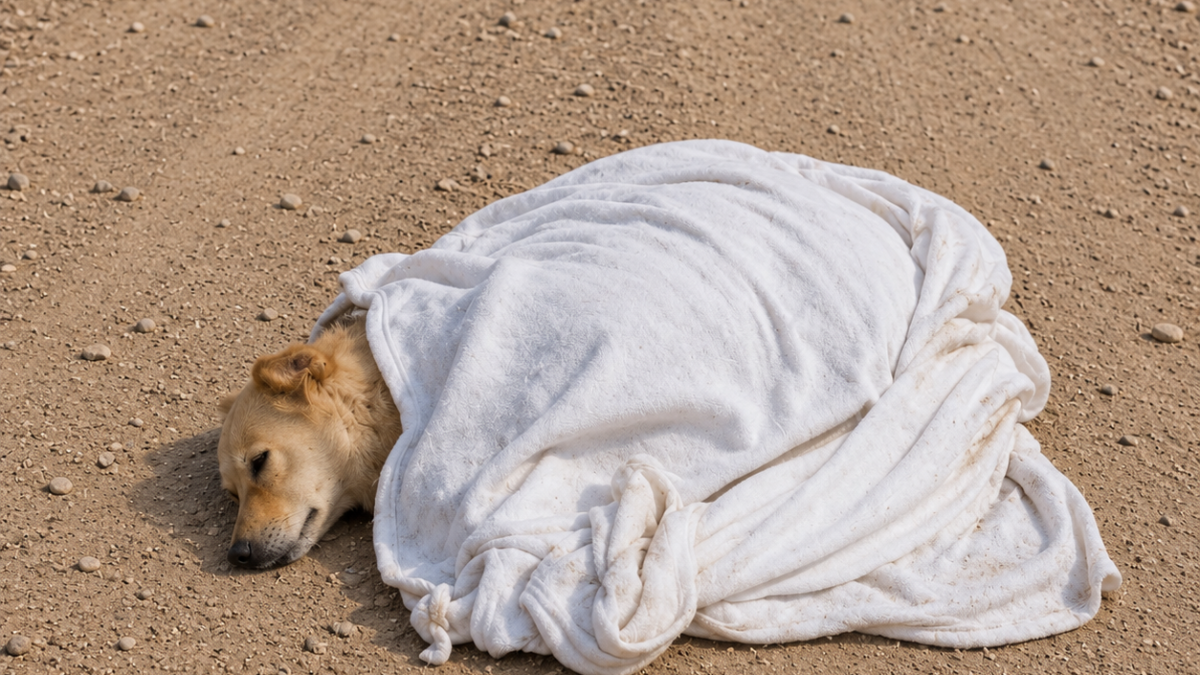
—
PART 2
—
The first twenty-four hours were not about walking.
They were about breathing.
Blood pressure.
Internal bleeding.
Pain.
Shock.
The things that can kill an animal long before anyone has time to worry about whether a leg will heal straight.
Matilda remained heavily medicated.
Every few hours, the medical team repeated examinations.
One technician stayed close enough to touch her shoulder whenever she startled awake.
“She looks for people,” the technician told me.
“What do you mean?”
“When she opens her eyes, she checks the room.”
I stood beside the kennel.
Matilda was sleeping.
“She was lying in the road alone.”
“I know.”
“Maybe she wants to make sure she’s not alone again.”
Neither of us said anything after that.
### THE FIRST NIGHT
I slept in a chair in the hallway.
Or pretended to.
Every door opening woke me.
Every beep from a machine made me look up.
At 2:17 in the morning, one of the veterinarians came out.
My heart jumped.
“She okay?”
“Still stable.”
That word became beautiful.
Stable.
Not healed.
Not safe.
Stable.
“What changed?”
“Nothing dramatic.”
I laughed weakly.
“That’s good?”
“Tonight? Yes.”
She sat across from me.
“We need to talk about the fractures tomorrow.”
I nodded.
“How many surgeries?”
“Potentially several.”
“Potentially?”
“We need to see tissue viability.”
I understood the phrase.
I hated it.
Some parts of Matilda’s legs had been crushed so badly that circulation itself was uncertain.
Saving a limb is not only about reconnecting bone.
Muscles need blood.
Skin needs blood.
Nerves matter.
Infection matters.
A leg can look present and still be dying.
### MORNING
At sunrise, Matilda ate nothing.
Nobody expected her to.
She barely lifted her head.
But when I said her name, one ear moved.
“Matilda.”
The technician smiled.
“She knows it already.”
“She doesn’t.”
“Say it again.”
“Matilda.”
Ear.
Tiny movement.
I laughed.
“All right.”
She needed a name because “hit-by-car dog” was unbearable.
The nurse who suggested Matilda said the name sounded strong.
I agreed.
### THE SURGICAL DECISION
By afternoon, the orthopedic team had reviewed every image.
The right hind leg was severely fractured but potentially reconstructable.
The left was worse.
The pelvis had multiple trauma points.
One front leg had sustained fractures and deep soft-tissue damage but remained perfused.
The surgeon drew diagrams while explaining.
Pins.
Plates.
External fixation.
Weeks of strict management.
Risk of infection.
Possibility of nerve deficit.
Possibility that one limb might still fail despite surgery.
I asked one question.
“If she were your dog?”
The surgeon leaned back.
“I’d try.”
“Then try.”
### SURGERY ONE
The first procedure lasted hours.
We repaired what could be stabilized immediately.
Matilda’s tiny body tolerated anesthesia better than everyone feared.
When the surgeon came out, his mask hung around his neck.
“She made it.”
I exhaled.
“How did it go?”
“Better than it could have.”
That wasn’t the same as good.
But it was enough.
Her right hind leg had been reconstructed.
The front limb stabilized.
The left hind leg remained the biggest question.
“We bought it time.”
The surgeon said.
Time.
Again.
Everything in rescue seems to come down to that.
Buy another hour.
Another day.
Another week.
Give the body long enough to tell you what it can do.
### THE TRUCK
While Matilda was in surgery, someone sent me a message.
A business near the accident site had a security camera.
My pulse jumped.
“Can we see it?”
The owner agreed.
The footage was grainy.
Wide angle.
No sound.
At 11:42 a.m., Matilda appeared along the roadside.
She hesitated near traffic.
A truck approached.
Too fast.
Impact.
I looked away.
Then forced myself to look back.
The truck never stopped.
But the camera captured something useful.
Color.
Company markings.
Partial plate.
The business owner paused the footage.
“That’s enough to identify the fleet.”
Maybe.
We sent the footage to the proper authorities.
I did not post it.
I did not want a mob.
I wanted a name.
A statement.
Consequences.
Matilda deserved facts, not internet speculation.
### DAY THREE
Pain management kept her quiet.
She tolerated touch around her head.
Not her feet.
Understandably.
When technicians changed bedding, she trembled.
We learned to move slowly.
One hand under chest.
Another supporting pelvis.
No twisting.
No sudden lifting.
Someone always spoke.
“Matilda, we’re moving.”
“Matilda, almost done.”
“Matilda, good girl.”
Did she understand the words?
Probably not.
Tone mattered.
Consistency mattered.
### DAY FOUR
The left hind leg began showing concerning swelling.
The skin remained warm.
That was good.
But circulation at the paw was weaker than we wanted.
The surgeon checked again.
Then again.
I stood nearby.
“Tell me.”
“We’re watching it.”
“That means you’re worried.”
“Yes.”
“Could she lose it?”
“Yes.”
I looked at Matilda.
Her eyes were open.
She was listening to our voices.
I lowered mine.
“What would amputation mean?”
“If the limb becomes nonviable, removing it could save her life.”
“Would she walk on three legs with the other injuries?”
The surgeon exhaled.
“That would be the challenge.”
Her other three limbs had been injured too.
Losing one would place more demand on everything else.
No choice looked easy.
### THE DRIVER
Two days later, investigators traced the truck.
Commercial vehicle.
Local delivery company.
The driver admitted he had been on the road.
At first, he claimed he hadn’t realized he hit a dog.
Then the camera footage showed the truck swerving slightly after impact.
His story changed.
He said he felt something.
Thought it was debris.
Then he admitted seeing an animal in the mirror.
That sentence made me put my phone down.
He had seen her.
He had kept driving.
The company representative contacted us indirectly.
They wanted information about veterinary bills.
I didn’t know whether it came from genuine concern, legal advice, or public relations.
I didn’t care.
“Send everything through the formal channel.”
That was my answer.
### DAY SIX
Matilda licked food.
One teaspoon of soft food.
Nothing dramatic.
Everyone celebrated anyway.
A nurse sent me the video.
Matilda’s tongue moved.
Once.
Twice.
I watched it eleven times.
### DAY SEVEN
She ate a little more.
Then slept.
The left paw remained warm.
Circulation improved slightly.
The surgeon smiled for the first time.
“She’s keeping it.”
“For now?”
“For now.”
I hated qualifiers.
But I was learning to love them too.
“For now” meant not lost today.
### THE FIRST ATTEMPT TO SIT
Two weeks after the accident, Matilda tried to push her chest up.
The physical therapist caught her gently.
“Easy.”
Matilda resisted.
She wanted upright.
Her front legs shook.
Her pelvis remained supported.
Then she collapsed.
I started to help.
The therapist stopped me.
“She has to try.”
“But she’s hurting.”
“We’re within safe limits.”
Matilda tried again.
This time she held herself for two seconds.
Then three.
I whispered, “Come on.”
The therapist looked at me.
“No pressure.”
I shut up.
Matilda sat.
Crooked.
Supported.
But sitting.
That was the first time she had been upright since the truck.
### REHAB BEGINS
Rehabilitation was not dramatic.
No music.
No magical montage.
Just repetition.
Passive range of motion.
Gentle weight shifting.
Massage.
Assisted standing.
Neuromuscular stimulation.
Short sessions.
Rest.
Again.
Again.
Again.
Progress measured in degrees.
Seconds.
Millimeters.
Some days Matilda improved.
Other days pain increased and we backed off.
Healing does not care about human impatience.
### WEEK THREE
The first major setback came on a Tuesday.
Matilda developed a fever.
One surgical site looked inflamed.
Cultures.
Bloodwork.
Antibiotics.
The word infection entered the conversation.
I felt sick.
Bone infections can destroy weeks of progress.
The surgeon said:
“We caught it early.”
“Are you sure?”
“No.”
At least he was honest.
### THE DRIVER’S LAWYER
Around the same time, the driver’s representative contacted the rescue.
Not the driver.
A lawyer.
They wanted to know whether we intended to pursue damages.
I almost laughed.
Matilda was in a hospital fighting an infection in a crushed leg.
They wanted to discuss damages.
“We intend to provide all evidence to the authorities and seek reimbursement for her care through the appropriate process.”
Formal.
Calm.
Useful.
Anger would not pay for rehabilitation.
Documentation might.
### THE PHOTOGRAPH
The photograph that changed everything happened on day twenty-six.
I wasn’t there when it was taken.
That matters.
Sometimes the biggest moments happen after you go home.
A rehabilitation technician was changing Matilda’s support sling.
Usually, two people assisted.
That morning, Matilda seemed restless.
The technician loosened the sling for a second.
Matilda’s paws touched the mat.
All four.
The technician kept hands close but did not lift.
Matilda pushed.
Front legs first.
Then hind legs.
Her knees shook.
Her back curved.
Her body trembled violently.
But she stood.
Not hanging in a sling.
Not being held upright.
Standing.
By herself.
Three seconds.
Maybe four.
Then she collapsed safely onto the mat.
The technician took one photograph during those seconds.
When it reached my phone, I stared.
The hardest photo was not the road.
It was this one.
Matilda standing.
Because suddenly I understood how badly she had wanted her body back.
Everyone had been measuring fractures.
Nerves.
Pain.
Muscle.
But there had been something inside her we could not put on an X-ray.
Determination.
### I DROVE TO THE CLINIC
When I arrived, Matilda was asleep.
“You stood.”
She opened one eye.
“You stood.”
Tail.
One tiny tap.
I sat beside her.
“You’re showing off now.”
Another tap.
I cried anyway.
### THE SURGEON’S WARNING
He was happy.
But careful.
“Standing is not walking.”
“I know.”
“Four seconds doesn’t predict full recovery.”
“I know.”
“She may always limp.”
“I know.”
“She may need future surgery.”
“I know.”
He looked at me.
“You’re not listening.”
“I am.”
I smiled.
“She stood.”
He gave up.
### THE DRIVER IS CHARGED
The investigation eventually resulted in penalties related to leaving the scene after striking an animal, along with other applicable traffic consequences.
The trucking company agreed through the formal process to cover a substantial portion of Matilda’s medical expenses.
The driver claimed fear had made him continue.
Fear of trouble.
Fear of losing his job.
Fear of being blamed.
I believed he was afraid.
I also believed Matilda had been afraid.
Only one of them was trapped in the road unable to move.
### HIS FIRST APOLOGY
He sent a written apology through his attorney.
I almost didn’t read it.
Then I did.
He wrote:
**I saw the dog in my mirror. I told myself someone else would stop.**
That sentence was the whole tragedy.
Someone else.
The most dangerous person in the world is sometimes “someone else.”
Someone else will stop.
Someone else will call.
Someone else will help.
Someone else almost became nobody.
### WEEK FIVE
Matilda stood more consistently.
Five seconds.
Ten.
Twenty.
With support.
Without support.
Then we began asking for movement.
Not walking.
Weight transfer.
Lean left.
Lean right.
Shift forward.
Move paw.
One inch.
Reward.
Rest.
Her injured limbs had forgotten confidence.
Muscles atrophied.
Nerves sent imperfect information.
The brain had to trust that placing weight would not produce the same catastrophic pain.
Physical healing and fear healing were happening together.
### THE FIRST STEP
It came without warning.
Matilda was standing during a therapy session.
A treat was held just beyond her nose.
She leaned.
Her front paw moved.
Then one hind paw dragged forward.
One step.
Ugly.
Unbalanced.
Beautiful.
The therapist immediately supported her.
I laughed.
“That’s walking.”
“One step.”
“Walking starts somewhere.”
Matilda took another.
### HYDROTHERAPY
Water changed everything.
Once her surgical sites were fully healed enough, we introduced underwater treadmill therapy.
The buoyancy reduced weight on the damaged limbs.
At first, Matilda panicked when the water rose.
She tried to climb out.
We stopped.
Next session:
Less water.
More time.
No treadmill.
Treats.
Third:
Water.
Slow belt.
One step.
Another.
The movement looked smoother underwater.
Her legs remembered rhythm before they could fully bear weight on land.
### THE DOG IN THE MIRROR
The clinic had a reflective glass door near rehabilitation.
One day, Matilda saw herself.
She froze.
Stared.
Tail low.
Then approached.
Sniffed the glass.
The dog in the reflection had shaved patches.
Scars.
External hardware.
One leg still wrapped.
She didn’t care.
She licked the glass.
Everyone laughed.
Dogs are kinder critics than humans.
### WEEK SEVEN
Matilda walked twelve steps with a sling.
Then twenty.
Then across the room.
She had a limp.
Her pelvis shifted awkwardly.
One hind leg lagged.
Nobody cared.
Walking is walking.
### THE DRIVER ASKS TO SEE HER
I said no.
Not then.
His attorney asked whether the driver could visit after expressing remorse.
Matilda was not a prop for someone else’s redemption.
She was still in treatment.
Still vulnerable.
He could apologize without demanding access.
That boundary mattered.
### HOME FOSTER
After nearly two months, Matilda was medically stable enough to leave the hospital for specialized foster care.
The foster home had:
Non-slip floors.
Ramps.
No stairs.
Orthopedic bedding.
A small enclosed yard.
A rehabilitation schedule taped to the refrigerator.
Her foster mom, Claire, had experience with orthopedic dogs.
The first night, Matilda slept twelve hours.
Claire sent a picture.
Matilda on a bed.
Legs supported.
Blanket.
No machines.
I stared at it almost as long as the standing photo.
### THE FIRST MORNING OUTSIDE
Claire carried her to the yard.
Set her down on grass.
Matilda sniffed.
Then tried to walk too fast.
“Absolutely not.”
Claire shortened the leash.
Matilda looked offended.
That was another milestone.
Attitude.
The dog who had once lain silent in a road now had opinions about leash length.
### A NEW PROBLEM
Confidence returned faster than strength.
Dangerous combination.
Matilda wanted to run.
Her body was not ready.
She tried once.
Three awkward fast steps.
Claire caught her.
“No.”
Matilda barked.
Her first real bark after rescue.
Claire called me laughing.
“She yelled at me.”
“Good.”
“No, not good.”
“Emotionally, excellent.”
### THE COMPANY LETTER
The trucking company sent a second letter.
They had changed internal reporting procedures.
Drivers were now required to report animal collisions immediately when safe.
Supervisors reviewed response expectations.
Emergency contact numbers were distributed.
Was it enough?
No.
Would I have preferred the driver stop in the first place?
Of course.
But if Matilda’s suffering changed what happened to the next animal, that mattered.
### THE DRIVER’S CONSEQUENCES
The driver lost his route for a period of time.
Underwent disciplinary review.
Paid traffic-related penalties.
Completed required safety retraining.
He did not lose everything.
Some people thought he should.
Others thought it was enough.
I stopped trying to decide what amount of suffering from him would somehow balance Matilda’s.
It wouldn’t.
Pain is not arithmetic.
Accountability mattered.
Matilda’s life mattered more.
### THE FIRST WALK WITHOUT A SLING
Ninety-one days after the accident, Matilda walked across Claire’s living room without physical support.
Eight steps.
Stop.
Six more.
She sat.
Claire was crying behind the camera.
“Come on, baby.”
Matilda stood again.
Walked toward her.
The video shook because Claire couldn’t hold the phone steady.
I watched it before breakfast.
Then again at lunch.
Then before bed.
### HER LEGS
Not perfect.
Never perfect.
One hind leg remained slightly rotated.
The other had reduced flexion.
The front leg carried a small permanent scar.
Her gait was unusual.
But her body had found a way.
Survival is often compensation.
Not restoration.
### MEETING OTHER DOGS
Matilda was nervous around large dogs.
Understandable.
Her body had learned vulnerability.
Claire introduced a calm senior spaniel named Moose.
Moose sniffed once.
Walked away.
Matilda followed.
Good.
They eventually slept in the same room.
Moose never bumped her.
Never played rough.
He seemed to understand fragility without being told.
### RUNNING
The veterinarian said:
“No uncontrolled running yet.”
Claire followed instructions.
Matilda did not.
One morning, a bird landed near the fence.
Matilda forgot every orthopedic recommendation ever made.
She ran.
Four or five strides.
Claire screamed.
Matilda stopped.
Looked delighted.
The vet was not delighted.
But after examining her, he admitted:
“She handled it.”
I smiled.
“She ran.”
He glared.
“Don’t encourage this.”
### THE ROAD PHOTO
People who followed her recovery kept comparing two images.
Photo one:
Matilda in the road.
Photo two:
Matilda standing.
Later there was a third.
Matilda walking in grass.
Then a fourth.
Matilda asleep on a couch.
I began preferring the later photos.
Before-and-after stories sometimes trap an animal forever in the worst day of their life.
Matilda deserved an identity beyond impact.
### HER PERSONALITY
She loved cheese.
Hated rain.
Stole socks.
Preferred women at first.
Learned men could be safe.
Growled at vacuum cleaners.
Snored.
Refused to sleep on dog beds if a human couch was available.
Barked at delivery trucks.
That last habit made everyone uncomfortable for a while.
Then we laughed.
Maybe she had opinions about trucks.
She’d earned them.
### THE DRIVER’S SECOND LETTER
Months passed.
He wrote again.
This time directly to the rescue.
No lawyer wording.
He said:
**I know I don’t deserve to meet her. I only want you to know that I stop now. Every time.**
He described finding an injured cat on another road.
He stopped.
Called.
Waited.
The cat survived.
I read the sentence twice.
Then forwarded the letter to Claire.
She replied:
**Good. Matilda doesn’t need him. Maybe the next animal does.**
Exactly.
### ADOPTION
Matilda became available after doctors were confident her condition could be managed long term.
We expected many applications.
We got them.
Everyone loved the transformation.
But we screened carefully.
Matilda needed owners willing to continue:
Joint monitoring.
Weight control.
Possible future orthopedic care.
Non-slip flooring.
Appropriate exercise.
No reckless jumping.
The first few families loved her story more than her requirements.
One asked:
“When will she walk normally?”
That application ended.
Normal was no longer the goal.
Comfortable was.
Happy was.
Matilda was already both.
### THE FAMILY
A couple named Erin and Josh applied.
No dramatic rescue speech.
No promises to “fix” her.
They asked:
“What does pain look like in her?”
“Which leg fatigues first?”
“What flooring works best?”
“Does she need ramps forever?”
“What weight should she stay under?”
Good questions.
Their house was single-level.
Small fenced yard.
Area rugs.
No other dogs initially.
One teenage son, Noah.
When they met Matilda, Noah sat on the floor.
Matilda approached.
Sniffed his shoe.
Then climbed halfway into his lap.
He laughed.
“She’s heavier than she looks.”
Claire whispered, “That’s basically a yes.”
### THE TEST WEEKEND
Matilda explored slowly.
Kitchen.
Living room.
Back door.
Yard.
By day two, she had chosen Noah’s bedroom rug as one favorite place.
By day three, the family sent a photo of Josh sleeping on the couch with Matilda lying across his legs.
Claire looked at me.
“I hate them.”
“No.”
“I love them. That’s worse.”
### THE ADOPTION DAY
Claire cried.
Erin cried.
Noah cried.
Josh pretended there was dust in his eye.
Matilda wagged at everyone.
Paperwork signed.
Medical files transferred.
Emergency instructions reviewed.
Then Matilda walked to the car.
Walked.
No board.
No stretcher.
No sling.
Four legs.
Uneven.
Strong enough.
The sound of her nails against the pavement made me stop.
I remembered the road.
Same paws.
Different day.
### HER FIRST NIGHT HOME
Photo at 10:03 p.m.
Matilda beneath a blanket.
Head on Noah’s pillow.
Caption:
**She has taken over.**
Perfect.
### HER FIRST YEAR
Matilda continued therapy.
Not because she was still broken.
Because maintenance matters.
Strength training.
Controlled walking.
Hydrotherapy.
Weight checks.
Occasional imaging.
Her gait improved.
Not perfect.
Never needed to be.
### THE TRUCK DRIVER’S FINAL HEARING
The legal process eventually concluded.
He received the final penalties and conditions connected to the hit-and-run.
He spoke briefly.
He admitted he should have stopped.
No excuses this time.
He said:
“I was afraid of what would happen to me, so I drove away from what was happening to her.”
That sentence stayed with me.
Fear can shrink a person’s world until only self-preservation remains.
Matilda had been physically unable to move.
He had been morally unable.
One condition healed better than the other.
### THE REQUEST
After everything ended, the driver asked one last time if he could see Matilda from a distance.
I told the family.
Their decision.
Josh said no first.
Erin hesitated.
Noah asked something unexpected.
“Would it help another dog?”
Maybe.
We arranged no private emotional reunion.
No touch.
No apology demanded from Matilda.
He could stand at a public charity event where Matilda would already be present.
Nothing more.
### THE MEETING
Months later, the driver came.
He stood at the edge of the event.
Matilda was walking beside Noah.
Harness.
Happy.
Her gait still uneven.
He watched.
Didn’t approach.
Didn’t call her.
Good.
When Matilda passed nearby, he lowered his eyes.
She did not recognize him.
At least not visibly.
No fear.
No reaction.
She kept walking.
The man started crying.
Quietly.
That was the only “revenge” scene anyone ever wanted.
But the most powerful part was that Matilda did not participate.
She didn’t need to.
The worst day of her life remained huge in his memory.
In hers, it had become one day among hundreds of safer ones.
### WHAT PUNISHMENT LOOKED LIKE
People wanted him destroyed.
Fired forever.
Publicly shamed.
I understood the anger.
But the outcome that satisfied me more was this:
He stopped after the next animal was injured.
Then again.
The company changed procedure.
Other drivers were trained.
Matilda lived.
That did not erase the original abandonment.
Nothing could.
But punishment that prevents repetition matters more to me than punishment that only hurts.
### MATILDA LEARNS STAIRS
Technically, one step.
Her family had a small threshold to the patio.
At first, they used a ramp.
Eventually, physical therapy approved limited step practice.
Matilda approached.
Paused.
Lifted front paws.
Shifted weight.
Brought the hind legs through.
No stumble.
No panic.
No help.
Noah cheered.
Matilda immediately repeated it because cheering apparently meant treats.
### HER SCARS
Her fur grew over most surgical areas.
Some scars remained visible.
Children asked about them.
Noah would say:
“She got hit by a truck.”
Then immediately:
“But she can run now.”
He never led with tragedy alone.
I liked that.
### HER BIRTHDAY
Nobody knew Matilda’s real birthday.
They celebrated rescue day.
The anniversary of the accident could have become a sad date.
The family changed it.
Cake approved by the vet.
New toy.
Controlled walk.
Photos.
No roadside pictures.
Only now.
### ONE YEAR AFTER THE ACCIDENT
I returned to the road.
Not with Matilda.
Never with Matilda.
The spot looked ordinary.
Faded paint.
Traffic.
No memorial.
I stood at the shoulder.
Cars passed.
The world had no idea.
I thought about how long she lay there.
Minutes can become years inside trauma.
Then I left.
No ceremony.
The important place was her house.
### HOME
When I arrived, Matilda barked from inside.
Noah opened the door.
She ran toward me.
Yes.
Ran.
Not far.
Not perfectly.
But fast enough that I laughed.
I crouched.
She pushed into my chest.
“You’re ridiculous.”
Tail.
I scratched her neck.
“I went back to the road.”
She had no idea.
Better that way.
### THE FAMILY’S RULE
They had one strict rule.
Never say “poor Matilda.”
Visitors learned quickly.
Not because her suffering wasn’t real.
Because pity had become irrelevant.
Matilda was not living a poor life.
She had orthopedic beds in two rooms.
Three humans competing to give her attention.
A basket full of toys.
Veterinary care.
A yard.
Routine.
Food.
Safety.
She was fine.
More than fine.
### HER SECOND DOG
Eventually, the family adopted another dog.
A young mixed breed named Benny.
We worried he would play too hard.
Introductions were slow.
Benny seemed to understand after one correction.
No body slamming.
No crashing.
They developed a strange chase game where Benny ran full speed and Matilda took shortcuts.
She always won because she cheated intelligently.
### THE PHOTO THAT CHANGED EVERYTHING
People assumed the famous photo was the one where she stood for the first time.
For me, another photograph became more important later.
Matilda asleep on her side.
All four legs stretched out.
No guarding.
No tension.
No brace.
No person supporting her.
Just sleep.
Deep sleep.
A dog in pain curls around pain.
A dog afraid of vulnerability protects the body.
Matilda lay open.
That photograph told me something medical imaging never could.
She felt safe.
### THE DRIVER’S LIFE
Years later, someone told me he had become involved in road-safety training for commercial drivers.
He spoke about stopping after collisions.
Animal or human.
His own case was apparently used privately as an example of what panic can lead to.
I did not attend.
I didn’t need to.
If shame became prevention, fine.
Matilda had already moved on.
### THREE YEARS LATER
Arthritis arrived early.
Expected.
Multiple severe fractures change joints.
Her family noticed a shorter stride.
Vet visit.
Medication.
Therapy adjustment.
Swimming.
She improved.
What struck me was how fast they acted.
No waiting.
No “let’s see if it gets worse.”
She had spent enough time waiting in pain for one lifetime.
### NOAH LEAVES FOR COLLEGE
This hit Matilda harder than anyone expected.
She waited outside his room.
Looked for him.
Slept on his rug.
Video calls confused her.
Then he returned for a weekend.
Matilda lost her mind.
Barking.
Running.
Crying.
Noah sat on the floor and hugged her.
“I’m coming back.”
She didn’t understand the sentence.
But over time she learned the pattern.
Leave.
Return.
Leave.
Return.
Not every departure is abandonment.
Another wound quietly healed.
### HER LEGS BECOME A WEATHER FORECAST
On cold mornings, Matilda moved stiffly.
The family joked they knew rain was coming because of her gait.
Not medically ideal.
Still funny.
They warmed her bedding.
Shortened early walks.
Used prescribed support.
She became a spoiled meteorological instrument.
### THE WORD “CRUSHED”
For years, people described her legs as crushed.
Accurate initially.
Eventually I stopped using it.
Words freeze moments.
Her legs were once crushed.
Later they were rebuilt.
Then strengthened.
Then arthritic.
Then old.
Bodies move through states.
Matilda deserved verbs after the injury.
Walked.
Ran.
Jumped when she wasn’t supposed to.
Chased.
Rested.
A body is more than what happened to it.
### HER FAVORITE TRUCK
Ironically, Matilda eventually loved riding in Josh’s pickup.
The first time, she refused.
Backed away.
Noah sat inside with treats.
No force.
Ten minutes.
Twenty.
She climbed in.
Short drive.
Home.
Again days later.
Eventually, engine sound stopped predicting danger.
The truck became:
Park.
Vet.
Grandma’s house.
Ice cream parking lot where she received a dog-safe treat.
Trauma associations can be rewritten.
Slowly.
### THE MOST BEAUTIFUL REVENGE
If you insist on calling something revenge, maybe it was that.
A truck had once changed Matilda’s life through violence.
Years later, another truck carried her toward things she loved.
Same sound.
Different meaning.
The past did not own every engine forever.
### THE STRAY DOG ON THE ROAD
One evening, Josh was driving home when he saw a dog limping near traffic.
He stopped.
Of course he did.
Hazards on.
Called animal services.
Waited.
The dog was rescued.
When he told me, I laughed.
“Matilda trained you.”
“Yes.”
One injured dog had created another person who stopped.
That is how good consequences spread too.
### THE DRIVER HEARS
Somehow, the original driver learned about it.
He sent a message through the rescue:
**I’m glad her family stopped.**
Nothing else.
That was enough.
### MATILDA GETS GRAY
Time.
The gift nobody promised.
Gray around the muzzle.
Slower rise in the morning.
Longer naps.
Shorter walks.
No tragedy.
Age was a victory.
The dog people thought might die on pavement lived long enough to become old.
### HER BODY AT EIGHT YEARS
One leg permanently angled.
Pelvis slightly asymmetrical.
Arthritic changes.
Scars under fur.
She still walked.
The orthopedic surgeon who treated her early saw her years later.
He stared.
“She shouldn’t look this good.”
I smiled.
“Don’t tell her.”
Matilda stole a treat from his pocket.
He laughed.
“Still rude.”
### THE TECHNICIAN WHO TOOK THE PHOTO
The rehabilitation technician who photographed Matilda standing met her again.
She knelt.
Matilda walked over.
The technician cried.
“I have that picture framed.”
I said, “So do half of us.”
She touched Matilda’s shoulder.
“Four seconds.”
“What?”
“First stand. Four seconds.”
She remembered exactly.
Professionals remember certain patients forever.
Matilda was one.
### THE PAST BECOMES A STORY
Eventually, new people met Matilda without knowing anything.
They saw an older dog with an unusual gait.
That’s all.
Her family sometimes told the story.
Sometimes didn’t.
That was another victory.
She could enter a room without tragedy arriving first.
### THE FINAL DRIVER UPDATE
Many years later, I received one last note.
The original truck driver had left commercial driving.
No scandal.
No dramatic collapse.
Different career.
He had continued volunteering occasionally with road-animal response groups.
I did not verify every detail.
I didn’t need to.
His story was no longer part of Matilda’s daily life.
That was enough.
### WHAT I LEARNED ABOUT REVENGE
At first, I wanted him to lose.
Matilda was broken because he did not stop.
Anger is natural.
But somewhere during rehabilitation, I realized Matilda’s healing did not require his destruction.
It required our persistence.
Justice:
Accountability.
Costs.
Rules.
Admission.
Change.
Revenge:
Matilda living.
The second proved more satisfying.
### THE DAY SHE COULDN’T GET UP
Old age eventually brought a morning when Matilda struggled badly.
Her family panicked.
This time, the cause was an arthritis flare.
Medication adjustment.
Rest.
Hydrotherapy.
She improved.
But seeing her unable to rise brought everyone back to the road.
Trauma echoes.
Even years later.
Noah sat beside her.
“Come on, girl.”
Matilda looked at him.
Tail.
That same signal.
Still here.
### THE FIRST STEP AND THE LAST THOUSAND
We celebrated the first step.
We never counted the thousands that followed.
Walk to breakfast.
Walk to yard.
Walk to couch.
Walk to Noah.
Walk to vet.
Walk to bed.
The extraordinary became routine.
That’s what rehabilitation tries to achieve.
Not one heroic movement.
Ordinary movement repeated so often nobody thinks about it anymore.
### HER FAVORITE PLACE
Sun patch near the patio door.
Orthopedic bed.
Afternoon.
Benny nearby.
Noah’s old sweatshirt sometimes under her head.
She would sleep there for hours.
The dog who once waited on hot asphalt now chose where to lie.
Choice.
Again.
A theme in every good rescue ending.
### THE ROAD NEVER APOLOGIZED
Roads don’t apologize.
Trucks don’t feel regret.
Concrete doesn’t care.
Human beings do.
That is why stopping matters.
Matilda’s story was never about an accident alone.
Accidents happen.
It was about what happened after.
One person left.
Another person called.
One driver decided not to stop.
Several strangers stopped traffic.
One event.
Different choices.
Life often turns on what happens immediately after something goes wrong.
### THE BIGGEST LIE
People say:
“I wouldn’t know what to do.”
You don’t need to know everything.
Don’t step into unsafe traffic.
Call emergency services or animal rescue.
Document location.
Create visibility.
Get professional help.
Doing something useful is different from performing a rescue yourself.
The person who called for Matilda did enough.
Enough can save a life.
### HER NAME BECOMES ORDINARY
Years after the viral posts stopped, “Matilda” was no longer associated with the accident inside her home.
It meant:
Move over.
Dinner.
Vet appointment.
Who stole the sock?
Get off the couch.
Want to go outside?
That is what a name deserves.
Ordinary usage.
### THE FINAL REUNION
One year, everyone from the early treatment team gathered informally.
Surgeon.
Technicians.
Therapists.
Claire.
Family.
Matilda arrived slowly.
Everybody cheered.
She hated the noise.
Perfect.
The surgeon crouched.
“You gave us trouble.”
Matilda sniffed him.
Then searched for treats.
He had some.
Medical professionalism restored.
### NOAH’S SPEECH
Noah said something that stayed with me.
“People call her lucky.”
He looked at Matilda.
“She wasn’t lucky when the truck hit her.”
True.
“She wasn’t lucky when the driver left.”
True.
“She survived because people did things.”
That was better.
Luck gets too much credit sometimes.
Care is action.
### THE PHOTO ON THEIR WALL
The family kept one framed photo.
Not road.
Not surgery.
Not first stand.
Matilda and Noah in the yard.
She was mid-stride.
One front paw lifted.
Back legs supporting.
Mouth open.
Happy.
Under the frame, no words.
None needed.
### THE END OF THE LEGACY
Or maybe the beginning.
Josh stopped for an injured dog.
Noah volunteered at an animal shelter in college.
Erin donated to emergency veterinary funds.
Claire continued fostering orthopedic cases.
The clinic created a small assistance program named after several major recovery patients, including Matilda.
One dog.
Many ripples.
### WHAT HAPPENED TO THE BILL?
The trucking company’s contribution, donations, rescue funds, and private support eventually covered most of Matilda’s enormous care costs.
People sent five dollars.
Ten.
Fifty.
Someone sent a note:
**For the dog who stood up.**
I kept that one.
### WHAT HAPPENED TO THE DRIVER?
He faced consequences.
He admitted what he did.
He changed some things afterward.
Whether he forgave himself was never my concern.
The important question was whether he would ever leave another injured animal again.
From everything we later heard, he did not.
### WHAT HAPPENED TO MATILDA?
She became boring.
Beautifully boring.
Breakfast.
Walk.
Nap.
Benny.
Family.
Medication.
Sun.
No headlines.
No emergency.
That’s the ending.
### THE PHOTO THAT HIT ME HARDEST
I once said the standing photo hit harder than seeing her on the road.
Years later, another photo replaced it.
Matilda was old.
Noah was home from college.
He was asleep on the floor beside her bed.
Matilda’s paw rested across his wrist.
Both sleeping.
She had once looked into human faces waiting for someone to stop.
Now she slept deeply enough to trust that the person beside her would still be there when she woke.
That is what rescue is trying to reach.
Not survival alone.
Security.
### THE LAST BIG WALK
When Matilda was older, the family took her to a quiet field she loved.
No long distance.
Soft grass.
Slow pace.
She walked.
Stopped.
Sniffed.
Walked again.
Her body was no longer young.
But every step carried history.
Bone that had been shattered.
Muscle rebuilt.
Nerves retrained.
Fear replaced.
Noah walked at her speed.
Not ahead.
Not pulling.
Beside.
### I REMEMBERED THE ROAD
Same dog.
Then:
Flat against asphalt.
Now:
Walking through grass.
Then:
Eyes searching traffic.
Now:
Eyes checking family.
Then:
No control.
Now:
Choice.
That contrast never stopped hurting.
Or healing.
### THE LAST TIME I SAW HER RUN
A squirrel.
Of course.
Ancient orthopedic rules disappeared instantly.
Matilda lurched into a short run.
Noah shouted.
“Matilda!”
She ignored him.
Benny joined.
Both reached the fence.
Squirrel escaped.
Matilda stood proudly.
Noah looked furious.
I laughed.
“She still has it.”
“She has arthritis.”
“She has spirit.”
“She has no common sense.”
All true.
### THE MOST SATISFYING ENDING
People want the driver punished.
He was.
People want Matilda healed.
She was, as much as her body allowed.
People want her to walk.
She did.
People want her loved.
Completely.
People want the story to prove something.
Maybe it does.
A terrible event can become the first chapter without being allowed to write the last one.
### EPILOGUE
BAM.
That was how Matilda’s story began for most people.
Impact.
Truck.
Road.
Broken legs.
Driver disappearing.
But that sound became less important with time.
Other sounds replaced it.
The beep of hospital monitors.
The soft encouragement of therapists.
The splash of hydrotherapy.
The click of toenails taking a first independent step.
Claire laughing when Matilda barked.
Noah calling her name.
The rattle of a leash.
A food bowl touching the floor.
Her snoring beneath blankets.
Those sounds became her real story.
### THE DRIVER’S WORST DECISION
The collision may have been an accident.
Leaving was not.
That distinction mattered from the beginning.
One moment caused injury.
The next choice caused abandonment.
He could never undo it.
But because witnesses spoke, video existed, investigators followed the evidence, and the formal process held him accountable, he also could not pretend it never happened.
Truth stayed.
Matilda stayed too.
### THE PEOPLE WHO DROVE BY
I used to be angry at everyone who passed.
Then I learned some did not understand what they saw.
Some thought help had already been called.
Some were frightened to stop in traffic.
Not every failure is cruelty.
But one person eventually made the call.
That one action mattered more than all the people who didn’t.
### THE WAY MATILDA LOOKED AT PEOPLE
Her eyes had been searching on the road.
I kept thinking about that.
Why?
Fear?
Help?
Confusion?
Probably all three.
Years later, her eyes searched rooms for different reasons.
Where is Noah?
Where is dinner?
Who has the toy?
Better questions.
### HEALING IS NOT ERASURE
Her gait never became perfectly symmetrical.
Some scars stayed.
Arthritis arrived early.
Certain truck sounds made her tense for years.
Healing did not erase.
Healing added.
Safe drive after safe drive.
Step after step.
Human after human.
Good memory after good memory.
Eventually the original trauma became one layer instead of the whole structure.
### THE ROAD TO HOME
Matilda had once lain in a road waiting.
Later she walked down a path toward a house where people were waiting for her.
That reversal still feels impossible.
### IF SHE COULD UNDERSTAND
If Matilda could understand everything humans said about her, I doubt she would care about the truck driver’s hearing.
Or penalties.
Or viral posts.
She would care about whether Noah came home.
Whether dinner was late.
Whether Benny stole her bed.
Whether the sun reached the patio.
Maybe that simplicity is why dogs survive us so beautifully.
### THE FINAL REVENGE
You asked for a satisfying revenge.
Here it is.
The driver left Matilda because he was afraid of what stopping might cost him.
Eventually, stopping became exactly what his life was forced to teach him.
He faced penalties.
Lost work privileges for a period.
Underwent review.
Paid a financial price.
Had to admit he saw her and kept going.
Most importantly, he had to live knowing the animal he left behind survived.
He saw photographs of Matilda standing.
Walking.
Running.
Growing older.
He could never tell himself she was “probably already dead.”
She wasn’t.
His excuse had a face.
And that face lived.
But Matilda’s revenge was better than guilt.
She didn’t become the dog who ruined his life.
She became the dog who built her own.
### THE DOG WHO COULDN’T MOVE
Moved.
### THE DOG WHO COULDN’T STAND
Stood.
### THE DOG WHOSE LEGS WERE CRUSHED
Walked.
### THE DOG LEFT ALONE
Found a family.
That is all the revenge I need.
### HOME
The last update I received from Matilda’s family was painfully ordinary.
She had eaten breakfast.
Taken her medication.
Walked slowly around the yard.
Barked at a delivery truck.
Stolen Benny’s blanket.
Then slept beside Noah while he worked from home.
No emergency.
No miracle.
Just life.
I read the message and smiled.
Because once, Matilda had been a dog lying in the middle of a road while people wondered whether she would survive another hour.
Now nobody in that house measured her life in hours.
They measured it in years.
Birthdays.
Vet checkups.
Cold mornings.
Summer naps.
Family routines.
The accident no longer controlled the calendar.
### THE ONE THING DOCTORS COULDN’T PROMISE
Could Matilda survive?
Maybe.
Could the fractures heal?
Possibly.
Could the limbs be saved?
We’d see.
Would she walk?
No one promised.
That was the thing everyone wanted to know.
The doctors were careful.
They should have been.
Bodies do not owe us hopeful endings.
But Matilda eventually answered the question herself.
Not in one miracle.
One push.
One stand.
One step.
Then another.
And another.
Until walking stopped being a medical milestone and became simply how she crossed the room to reach the people she loved.
### THE PHOTO
I still have the photo.
Matilda standing for those few seconds.
Her legs shaking.
Head low.
Technician’s hands ready but not touching.
If you didn’t know the story, you might think it was an ordinary bad photograph.
Blurred.
Awkward.
Poor composition.
To me, it is one of the most beautiful images I have ever seen.
Because I know what happened one second before.
Her body was on the mat.
And I know what happened one second after.
She fell.
The photograph captured the tiny space between those moments.
The exact second Matilda discovered gravity no longer completely owned her.
### WHY IT HIT HARDER THAN THE ROAD
The road showed what had been done to her.
The standing photo showed what she was doing back.
That difference matters.
Trauma makes animals look passive in photographs.
Victims.
Matilda standing was active.
She was participating in her own recovery.
Pushing.
Balancing.
Trying.
Her body had been crushed by force.
She answered with effort.
### THE LAST THING I WANT PEOPLE TO REMEMBER
Not BAM.
Not the blood.
Not the truck disappearing.
Remember the paws.
Four paws on a rehabilitation mat.
Shaking.
Trying.
Holding.
Then years later, those same paws moving across grass.
One foot slightly crooked.
One stride imperfect.
All of it enough.
### FINAL ENDING
A truck nearly killed Matilda and left her unable to move in the middle of a road.
A driver kept going.
Strangers stopped.
Veterinarians rebuilt what they could.
Therapists taught damaged legs how to carry weight again.
A foster home gave her somewhere safe to practice.
A family gave her a reason to keep using every step she fought to recover.
The driver eventually faced the consequences of leaving.
The company changed its procedures.
Other people learned to stop.
Matilda learned something more important.
She learned that not every vehicle disappears after hurting you.
Some take you to the veterinarian.
Some take you home.
Not every human keeps walking.
Some kneel beside you.
Some lift you carefully.
Some sit beside your bed.
Some learn your medication schedule.
Some place rugs on slippery floors.
Some slow their own walking pace because yours is uneven.
And some love you so completely that the day you were almost killed becomes smaller and smaller compared with all the ordinary days that come after it.
That was Matilda’s victory.
Her legs were never perfect.
Her life didn’t need to be.
The dog who once lay helpless in the road eventually reached a place where she could walk wherever she wanted.
And every path inside that home led to someone who would never leave her there alone again.
Years passed, and the strangest thing happened.
The accident slowly stopped being the first thing people talked about when they met Matilda.
At the beginning, every conversation started the same way.
“Is this the dog who was hit by the truck?”
“Are those the legs that were crushed?”
“Is she the one who couldn’t stand?”
People looked at her scars before they looked at her face.
They watched the uneven rhythm of her back legs.
They noticed the slight turn in her pelvis.
They heard the story before they really met the dog.
But time changed that.
Eventually, visitors came to the house and saw only Matilda.
The dog who pushed her nose under someone’s hand when she wanted attention.
The dog who refused to go outside in heavy rain.
The dog who somehow knew exactly when cheese was being opened in the kitchen.
The dog who barked at every delivery truck but slept peacefully through thunderstorms if Noah was nearby.
The accident became history.
Important history.
But history.
That was what I had always wanted for her.
I didn’t want the worst day of Matilda’s life to become the only reason anyone remembered her.
She deserved ordinary days too.
Thousands of them.
And she got them.
On cold mornings, Erin would warm a blanket in the dryer before putting it over Matilda’s bed.
Josh installed a second ramp beside the porch after deciding the first one was too steep.
Noah learned how to massage the muscles around her hips the way the rehabilitation therapist had taught him.
Nobody treated these things as heroic.
They were routine.
That’s what love looks like after the dramatic rescue ends.
Not applause.
Maintenance.
One morning, several years after the accident, Erin called me.
Her voice was calm, but I knew immediately something was wrong.
“She’s not putting weight on the left side.”
My stomach tightened.
“Since when?”
“She was fine last night.”
“Did she fall?”
“No.”
“Eat breakfast?”
“Yes.”
That helped.
But not enough.
They took her to the clinic.
I met them there.
Matilda recognized my voice before I reached the exam room.
Her tail thumped twice against the blanket.
I crouched.
“You’re supposed to stop scaring us.”
She licked my wrist.
The veterinarian examined every joint carefully.
No new fracture.
No implant failure.
No acute injury.
An arthritis flare.
Painful, but manageable.
Medication adjustment.
Reduced activity.
Warmth.
Therapy.
Rest.
I almost laughed when we received the diagnosis.
Not because arthritis was funny.
Because there had been a time when Matilda’s entire body had been an emergency.
Now she was an older dog having an older-dog problem.
It felt almost luxurious.
That afternoon, she lay in the back seat while Noah sat beside her.
He rested one hand on her shoulder.
“She looks tired.”
“She is.”
“Do you think she remembers?”
“The accident?”
He nodded.
I thought about it.
Maybe she remembered pieces.
Sound.
Pain.
A large moving shape.
The sensation of pavement.
Dogs don’t replay memories the way humans do, at least not in words.
But bodies remember.
Her fear of certain engines had proved that.
Her initial refusal to enter trucks had proved that.
The way she froze when tires screeched somewhere nearby had proved that.
Still, memory was no longer the same thing as captivity.
Matilda had built new associations over the old ones.
Vehicles took her to parks.
To hydrotherapy.
To the veterinarian who helped her.
To Noah’s grandmother’s house.
To quiet trails where she walked slowly and sniffed everything.
One terrible experience had not been allowed to own every machine with an engine forever.
That mattered.
A few months later, we learned that the driver who had hit her had been volunteering occasionally with a roadside animal-response group.
The news reached us through someone connected to the rescue.
I didn’t know what to feel.
Part of me remained angry.
Maybe always would.
Another part understood that genuine change rarely looks dramatic.
It is not one apology.
It is repetition.
Stopping next time.
Helping the next animal.
Doing what you failed to do before.
I asked whether he had spoken publicly about Matilda.
“No.”
Good.
Her story did not need to become a platform for his redemption.
If he changed, he could prove it quietly.
Matilda did not owe him absolution.
One evening, Josh came home and found her standing near the front door.
Not unusual.
Except she was staring at his truck.
He opened the passenger door.
“You want to go?”
Tail.
He laughed.
“Seriously?”
Tail again.
Years before, it had taken treats, patience, and nearly half an hour to coax her into a vehicle.
Now she was asking.
Josh lifted her carefully because the jump was too high.
Matilda settled into the seat.
They drove around the block.
Nothing special.
No destination.
When they returned, Josh sent me a photo.
Matilda sitting proudly beside the window.
Caption:
Look who’s demanding truck rides now.
I saved it.
Some victories arrive so quietly that nobody else would know what they’re looking at.
To me, that photo was enormous.
The machine connected to her worst trauma had become associated with safety.
Not because the past disappeared.
Because the present became stronger.
Another year passed.
Noah graduated.
The family held a small celebration in the backyard.
Matilda wore a bandana with tiny graduation caps printed on it.
She hated it.
You could tell from her face.
Everyone took pictures anyway.
Noah knelt beside her.
“You were supposed to be my emotional support.”
Matilda sneezed.
People laughed.
Later, after guests left, Noah sat on the porch with her.
He was leaving for college soon.
That was becoming another transition nobody felt ready for.
Matilda had grown up beside him during some of the most important years of his life.
He had learned responsibility through her medications.
Patience through her recovery.
Compassion through her limitations.
He had watched her fail at walking and try again.
What better education in persistence could anyone receive?
The night before he left, Noah slept on the living-room floor beside her bed.
Erin found them there in the morning.
Matilda’s head rested against his shoulder.
Noah had one hand over her back.
Nobody woke them.
When he left for school, Matilda waited outside his room for several days.
Not constantly.
But enough.
She would walk down the hallway.
Pause.
Sniff.
Then return to the living room.
Erin video-called Noah.
He spoke.
“Matilda.”
The dog’s ears lifted immediately.
She searched the room.
That hurt.
But Noah came home.
Then left.
Then came home again.
Over time, Matilda learned something she had once never been allowed to learn.
A person can leave without abandoning you.
Departure does not always mean loss.
Sometimes it means waiting.
That may have been one of the deepest repairs of all.
At one follow-up examination, the orthopedic surgeon who had operated on Matilda years earlier happened to be in the clinic.
He stepped into the room.
“Is that really her?”
Erin laughed.
“Unfortunately.”
Matilda walked toward him with her uneven but confident gait.
He crouched.
The surgeon touched one leg gently.
Then another.
His eyes moved over the old surgical scars hidden beneath fur.
“I remember these X-rays.”
“So do we.”
He looked at Matilda.
“I really didn’t know if you’d ever use these legs.”
Matilda sniffed his coat.
Found a treat pocket.
He laughed.
“Apparently she disagreed.”
I thought about the first conversation.
Can she walk again?
We save her life first.
That had been the answer.
No promises.
No false hope.
Just effort.
Now Matilda stood in front of the man who had rebuilt pieces of her body.
Old enough to have arthritis.
Strong enough to steal his treat.
That felt almost impossible.
The surgeon rubbed her neck.
“Good girl.”
She leaned against his hand.
Years had turned emergency medicine into memory.
One day, Noah called from college with a strange request.
His class was doing a project about resilience and adaptation.
He wanted to talk about Matilda.
“Not as inspiration porn,” he said quickly.
I laughed.
“You’ve been studying.”
“I’m serious.”
“I know.”
He wanted to describe how people often misunderstand recovery.
They imagine a straight line.
Injury.
Treatment.
Healing.
Finished.
Matilda had taught him something different.
Recovery loops.
Pain returns.
Fear returns.
Strength changes.
Old injuries create new problems.
Adaptation continues.
A survivor isn’t someone who reaches an ending and becomes untouched.
A survivor is someone who keeps building life around what remains.
That was a better lesson than the simple version.
Matilda never returned to the body she had before the truck.
She built a functional life with the body she had afterward.
That distinction mattered.
Noah presented the project.
His professor later emailed him and asked whether Matilda was still alive.
He replied:
Very much so, and still stealing food.
Perfect.
The years became gentler.
Matilda no longer attended public events often.
Crowds tired her.
The family stopped asking her body to do things simply because people wanted to meet her.
That was part of loving an older rescue dog too.
You do not owe the public access to the animal they once followed online.
Her life belonged to her.
Not the story.
She spent more time at home.
Morning medication hidden in food.
Short walk.
Nap.
Second walk.
Dinner.
Couch.
Routine became sacred.
One winter, her arthritis worsened significantly.
She began slipping occasionally on smooth floors.
The family responded before she injured herself.
More rugs.
Rubber-backed mats.
Another ramp.
Baby gates blocking areas where she could fall.
The house gradually transformed around Matilda.
Visitors sometimes laughed.
“This place is basically designed for the dog.”
Josh answered:
“Correct.”
No embarrassment.
Why should there be?
Years earlier, Matilda had been forced to survive an environment that did not care about her body.
Now an entire home adapted itself to what her body needed.
That reversal meant something.
One afternoon, a delivery truck pulled into the driveway.
Matilda barked.
Deep.
Offended.
Erin laughed.
“You still haven’t forgiven trucks?”
Maybe not.
The driver stepped out carrying a box.
Matilda stood behind the glass.
Bark.
Bark.
Bark.
The delivery driver smiled.
“Guard dog?”
Erin looked at Matilda’s crooked gait.
“Something like that.”
He had no idea.
One day, Benny—the younger dog the family adopted later—came inside limping.
Matilda immediately followed him.
Sniffed the injured paw.
Stayed close.
The injury was minor.
Small cut.
Nothing serious.
But Matilda refused to leave Benny alone until Erin cleaned and wrapped it.
Maybe that was coincidence.
Maybe not.
We like to tell ourselves animals understand pain because they have experienced it.
Sometimes they probably do in ways we cannot measure.
That evening, Matilda slept beside Benny.
Two dogs.
One old survivor.
One temporary patient.
The symmetry was almost too perfect.
Another year passed.
Her hearing began fading.
That frightened the family more than they expected.
Sound was important.
She relied on voices.
Footsteps.
The opening of doors.
Suddenly she startled more easily.
So everyone adjusted.
Touching the floor lightly before approaching.
Using stronger visual cues.
Waiting until she saw them.
Noah, home from college, joked:
“We’re all being retrained.”
Exactly.
Rescue never stopped being adaptation.
Not for Matilda.
Not for the people who loved her.
Then came the first day she couldn’t climb the ramp by herself.
Josh stood behind her.
She put both front paws up.
Paused.
Tried.
Back legs trembled.
He supported her gently with a sling.
She made it.
At the top, she looked back as if offended by assistance.
“You’re welcome,” Josh said.
Matilda walked away.
Dignity intact.
The family began using the sling more often.
Nobody treated that as defeat.
It was a tool.
Just like the sling used years earlier in rehabilitation.
At the beginning, it had helped teach her legs to work.
Now it helped aging legs continue doing what they could.
Same tool.
Different chapter.
One night, the family found the original first-standing photograph.
They had printed it years before.
Matilda in rehab.
Body trembling.
Four paws on the mat.
Noah placed it beside a recent photograph.
Matilda old.
Gray muzzle.
Standing in the yard with assistance from a sling.
At first, he felt sad.
Then he said something that changed the way I saw it.
“Look how much life happened between these two pictures.”
Exactly.
We obsess over beginnings and endings.
We forget the middle.
The thousands of mornings between them.
The birthdays.
The stolen socks.
The college goodbyes.
The truck rides.
The arguments over medication.
The naps.
The walks.
The rain.
The summer evenings.
The old age.
That was the victory.
Not standing once.
Living afterward.
People still occasionally contacted the rescue asking about Matilda.
Some remembered the viral image.
Others had donated toward surgery years ago.
They wanted updates.
We shared only what the family was comfortable sharing.
One woman wrote:
I sent ten dollars because it was all I had at the time. I always wondered if she walked again.
We sent her a photo of Matilda in the yard.
Gray.
Standing.
The woman replied:
That was enough for me.
I thought about all the small donations.
Five dollars.
Ten.
Twenty.
No single person had “saved” Matilda.
Hundreds of tiny choices had accumulated.
A caller stopped.
People blocked traffic.
Rescuers lifted.
Surgeons operated.
Technicians rehabilitated.
Donors contributed.
Claire fostered.
Family adopted.
Noah walked at her pace.
Josh built ramps.
Erin noticed pain quickly.
Survival is rarely one miracle.
It is a structure built from many hands.
One summer morning, Matilda walked outside and lay in the sun.
She remained there longer than usual.
Erin sat beside her.
Matilda’s breathing was slower now.
Not alarming.
Old.
Peaceful.
Erin sent me a picture.
Sun across her face.
White hairs around her muzzle.
Eyes half closed.
Caption:
She still loves mornings.
I stared at it.
The accident had happened around midday.
Hot road.
Traffic.
Fear.
Now the warmth of pavement no longer meant danger.
Sunlight meant rest.
Healing rewrites sensations.
Sometimes.
Not always.
Enough.
The last time I saw Matilda before her final decline, she walked to me by herself.
Slowly.
One back leg dragged slightly more than before.
I knelt.
She pressed her forehead against my chest.
That had become her greeting.
I held her carefully.
“You know how much trouble you’ve caused?”
Tail.
“You cost everybody a fortune.”
Tail.
“You ignored every reasonable prognosis.”
Tail.
I laughed.
“Good.”
She stayed against me.
There was something deeply satisfying about feeling the weight of an animal who had once been too injured to move.
Weight means presence.
Pressure.
Life.
Her body against mine said something no speech could.
Still here.
Later that year, her pain became harder to control.
Not suddenly.
Gradually.
The family adjusted medication.
Added therapies.
Shortened walks.
Used the sling.
Changed sleeping positions.
Some days were good.
Others weren’t.
Then came a week when Matilda stopped enjoying the things that had always mattered.
Food became less interesting.
She stopped asking for truck rides.
The sun patch did not tempt her.
Standing took more effort than pleasure.
Her veterinarian spoke with the family.
The conversation every animal lover fears.
Quality of life.
We had discussed it once before, on the first night, when survival itself was uncertain.
Now we were discussing it after years.
That made the pain different.
Back then, letting go would have felt like losing a future we had barely begun to imagine.
Now the future had happened.
Beautifully.
Completely.
The veterinarian said:
“We can continue adjusting treatment, but I need you to watch what Matilda is telling you.”
Noah came home.
Immediately.
He sat beside her bed.
Matilda lifted her head when she heard his voice.
Tail.
Weak.
But there.
He cried.
“I don’t want her to stay for us.”
That sentence told me he had learned the hardest lesson.
Love is not keeping someone at any cost.
Love is noticing when the cost belongs entirely to them.
They gave Matilda several more good days.
Not because they were delaying the inevitable.
Because she still had moments she clearly enjoyed.
Chicken.
Sun.
Noah.
Benny beside her.
A short slow walk through the grass.
One final truck ride.
Josh drove with the windows slightly open.
Matilda rested on the back seat beside Noah.
No destination.
Just movement.
The engine hummed.
Matilda slept.
Imagine that.
The sound of a truck engine becoming the soundtrack to peace.
If you wanted a symbol of healing, there it was.
When the final day came, it was quiet.
No emergency clinic.
No flashing lights.
No road.
Her own bed.
Her family.
Benny nearby.
Hands she knew.
Voices she trusted.
Noah kept one hand beneath her chin.
Erin stroked her side.
Josh sat on the floor.
I stood close enough for her to smell me.
The veterinarian explained every step.
Nobody rushed.
Matilda was already tired.
Her breathing slowed.
Her body relaxed.
For the first time since I had known her, there was nothing left to ask her to fight.
And that mattered.
We had asked so much.
Survive shock.
Survive surgery.
Fight infection.
Stand.
Step.
Walk.
Trust.
Adapt.
Age.
Now we could finally say:
You don’t have to do anything else.
Noah whispered:
“You did enough.”
Matilda’s tail moved once.
Or maybe I imagined it.
I choose to believe I didn’t.
She passed surrounded by the people who had spent years making sure she would never again be left alone in pain.
Afterward, nobody spoke for a while.
The house felt different immediately.
Too quiet.
The ramp still stood outside.
Her orthopedic bed remained by the window.
Medication schedule still hung on the refrigerator.
Water bowl.
Leash.
Blanket.
Evidence of routine everywhere.
Grief is cruel because objects do not understand that the person using them is gone.
A week later, Josh removed the ramp.
Then put it back.
He couldn’t do it yet.
Nobody made him.
Noah took the original standing photo back to college.
Not the last photo.
The first stand.
Four shaking legs.
He placed it on his desk.
Someone asked him once why he kept a picture of a dog looking uncomfortable.
He answered:
“Because you don’t know what happened next.”
That may be the best description of hope I have ever heard.
You don’t know what happens next.
On the road, nobody knew.
In surgery, nobody knew.
During infection, nobody knew.
During rehab, nobody knew.
At every point, the ending remained unwritten.
Until it wasn’t.
Months after Matilda died, the rescue received a call about another dog hit by a vehicle.
Different road.
Different dog.
Broken pelvis.
Driver stopped.
Waited.
Called for help.
The driver had recently attended a company road-safety seminar.
I asked which company.
Same one connected to Matilda’s accident years earlier.
I sat very still when I heard.
The new driver stayed.
The dog survived.
Maybe policies mattered.
Maybe training mattered.
Maybe Matilda mattered again in a way she would never know.
That was the final piece I needed.
The original driver had once told himself:
Someone else will stop.
Years later, someone did stop.
Immediately.
Not someone else.
The person who was there.
That is how change looks when it becomes real.
Matilda’s family eventually donated her ramps, slings, and unused rehabilitation equipment to another rescue dog.
The orthopedic bed went too.
Erin cried packing it.
Josh nearly changed his mind.
But they did it.
A few weeks later, they received a photo.
A young dog recovering from pelvic surgery was asleep on Matilda’s old bed.
Erin stared for a long time.
Then smiled.
Nothing disappears completely when care gets passed forward.
Noah later volunteered with road-injury cases during college breaks.
He always told people one thing.
“Don’t promise walking.”
That surprised them.
“Why?”
“Promise effort. Promise pain control. Promise you’ll keep reassessing. But don’t make the animal responsible for giving you a miracle.”
Matilda had taught him that too.
Her value had never depended on whether she walked again.
We wanted her to walk.
We celebrated when she did.
But even if she hadn’t, she would still have deserved care.
That distinction matters.
Rescue stories become dangerous when survival is treated as something animals must earn through extraordinary recovery.
They don’t.
Matilda’s first right was not to inspire us.
It was to receive help.
Everything beautiful afterward was bonus.
Years later, I drove that road again.
Traffic moved normally.
The place where Matilda had lain was impossible to identify exactly.
Maybe a few feet left.
Maybe right.
No marker.
No sign.
Good.
The road did not deserve a monument.
Her home had been the monument.
The people she changed were the monument.
The procedures altered because of her were the monument.
The next injured dog whose driver stopped was the monument.
I pulled over safely for a moment.
Not because I wanted to relive the accident.
Because I wanted to remember the distance between that pavement and the life Matilda eventually had.
A crushed body.
Then surgery.
Then standing.
Then walking.
Then running.
Then aging.
Then a peaceful goodbye.
That is an entire lifetime contained between two places.
I thought about the driver.
For a long time, I had imagined the most satisfying ending would be watching him suffer consequences.
He did.
But consequences fade.
Fines get paid.
Suspensions end.
Jobs change.
Shame softens.
What lasted was behavior.
Stopping.
Reporting.
Helping.
If Matilda’s pain helped make one future person stop instead of drive away, then something useful had been built from something terrible.
I would never call the accident “worth it.”
Nothing makes cruelty worth it.
But meaning and worth are not the same thing.
We can build meaning after harm without pretending the harm was necessary.
Matilda taught me that.
The last photo the family gave me sits beside the standing picture.
Not the road.
Never the road.
The last one shows her old and sleeping in sunlight.
No sling.
No therapist.
No dramatic milestone.
Just rest.
When I place those two images together, I see the whole arc.
In the first, her body is shaking because she is trying to stand.
In the second, her body is still because she no longer needs to prove anything.
Between those images are years.
That is the part I wish people understood when they say:
“What an incredible recovery.”
Yes.
But the incredible part was not only walking.
It was living long enough for walking to become ordinary.
Long enough to get bored.
Long enough to become picky.
Long enough to wait for Noah to come home from college.
Long enough to get arthritis.
Long enough to bark at trucks she no longer feared enough to hide from.
Long enough to need ramps because she was old, not because she had just been crushed.
Long enough to say goodbye on her own bed.
That was the miracle.
The truck had taken seconds to destroy her body.
Love spent years proving destruction would not get the final word.
And maybe that is the only revenge that ever mattered.
The driver left Matilda because he was afraid of consequences.
Matilda’s life became a consequence he could never erase.
Every photograph of her standing contradicted his decision to leave.
Every video of her walking contradicted the assumption that nothing could be done.
Every year she survived reminded everyone involved that the injured animal in the road had never been “just a dog.”
She was a future.
A future nobody could see yet.
That is why stopping matters.
When you see a suffering animal, you do not know what life is hidden inside that moment.
The dog lying still may one day run.
The frightened stray may one day sleep beside a child.
The broken body may one day grow old.
You don’t get to see any of that before deciding whether to help.
You only see the need.
Then you choose.
Someone chose Matilda.
Again.
And again.
And again.
That is why she lived.
Not because she was lucky.
Not because fate owed her a better ending.
Because after one person drove away, enough other people stayed.
And when her story finally ended years later, it did not end in the middle of a road beneath the fading sound of a truck.
It ended in a home.
With familiar voices.
With warm hands.
With the family she had fought so hard to reach.
That was Matilda’s complete victory.
The road got one terrible afternoon.
Her family got the rest of her life.