𝗙𝗨𝗟𝗟 𝗦𝗧𝗢𝗥𝗬: My Husband Drugged My Tea for Weeks—He Never Expected Me to Stay Awake
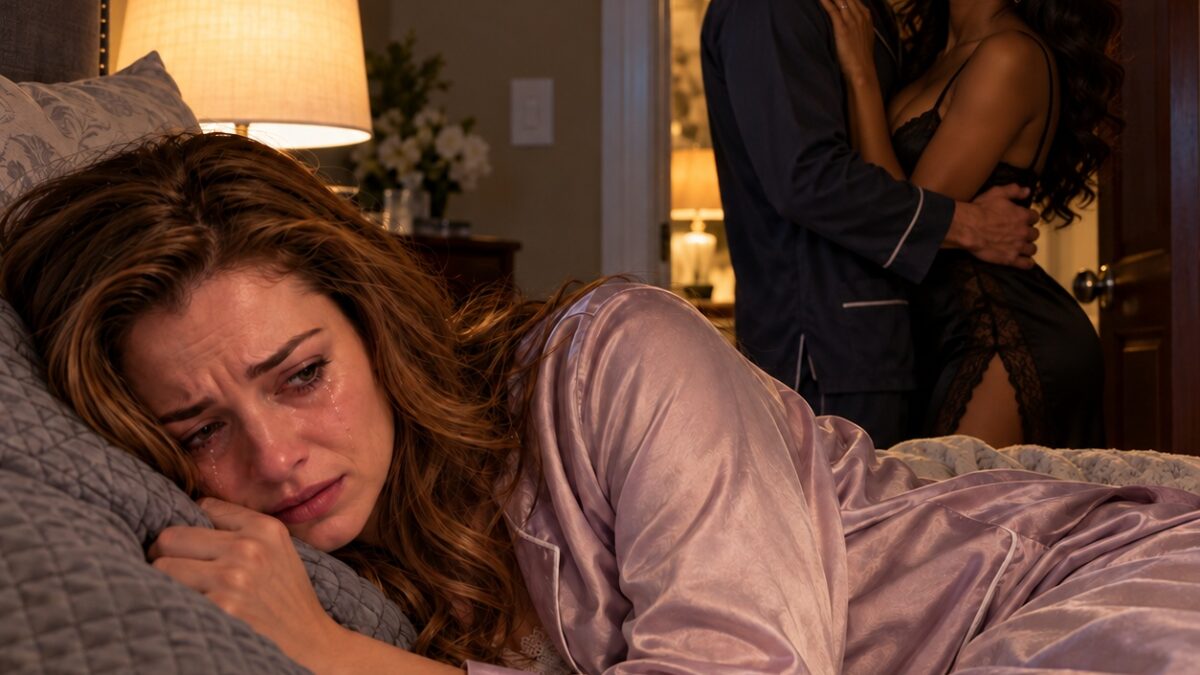
PART 2 and FULL ENDING  Thank you

Dr. Hendricks recommended monitoring.
Sleep evaluation.
Neurological testing.
Then he said the phrase:
“Possible early cognitive decline.”
Possible.
Not diagnosis.
But once spoken, it became a shadow over everything.
Mark brought it home.
If I forgot why I entered a room:
“See?”
If I asked him the same question twice:
“Eleanor.”
If I misplaced my phone:
“Baby, this is what Dr. Hendricks meant.”
Normal human mistakes became evidence.
I started writing things down.
Then Mark said my constant note-taking showed “anxiety.”
So I stopped.
I started secretly recording myself.
Then one morning, my phone was gone.
Mark found it in the freezer.
“I don’t remember putting it there.”
His expression was almost unbearable.
“I know.”
By week five, I stopped trusting myself.
That is the truth.
People imagine they would instantly know if someone was gaslighting them.
They imagine reality is solid.
It is not.
Reality depends partly on memory.
If someone controls the evidence around your memory, they can make certainty rot.
I began checking doors twice.
Then three times.
Taking photographs of the stove.
Sending myself emails before bed.
Stove off.
Doors locked.
Keys on dresser.
I would wake with the messages deleted.
Mark said I must have deleted them during a spell.
I believed him for almost thirty seconds.
Then something inside me shifted.
Not proof.
Instinct.
The oldest part of me.
The part that existed before marriage, before money, before grief, before doctors.
Something is wrong.
Not with your mind.
With him.
My suspicion focused on the tea.
Every night around ten-thirty, Mark made it.
Chamomile.
Honey.
Sometimes lemon.
He had started the ritual after my father died eighteen months earlier.
“Helps you sleep.”
At first, it was thoughtful.
Then after the blackouts began, he became strangely insistent.
“Finish it.”
“Don’t let it get cold.”
“Drink all of it.”
If I left half the cup:
“You barely slept last night. Finish it.”
I began noticing the taste.
Chamomile.
Honey.
And beneath it, something synthetic.
Metallic.
Not every night equally strong.
But there.
The night everything changed, rain tapped against our bedroom windows.
The house was dark except for the lamps beside our bed.
Mark entered carrying the blue ceramic mug.
I knew the mug well.
Wedding gift.
Handmade.
Deep cobalt glaze.
A pale crack near the handle.
Steam curled upward.
“Here.”
I looked at him.
My husband of seventeen years.
Mark Vance.
Forty-two.
Partner at a wealth management firm.
Beloved in our neighborhood.
Beloved by his clients.
Beloved by almost everyone.
He had held my hand through fertility treatments we eventually abandoned.
He had slept on the hospital floor when my appendix ruptured.
He had stood beside me at my father’s grave eighteen months earlier, one arm around my waist while I shook.
He had cried.
Real tears.
At least I believed they were real.
“Drink it all, sweetheart.”
I looked at the cup.
Then his face.
“You’re staring at me.”
He smiled.
“Because you look exhausted.”
“I am.”
“Then drink.”
I took the mug.
It smelled normal.
Almost.
I forced myself to smile.
“Too hot.”
“Let it cool.”
“I need my vitamins.”
He watched me.
That was new.
He usually handed me the mug and walked away.
Tonight, he sat on the edge of the mattress.
Waiting.
My pulse increased.
I lifted the cup.
Took one sip.
Held the liquid in my mouth.
The metallic taste hit immediately.
Strong.
I swallowed almost none of it.
Let enough touch my throat to make the performance believable.
Mark watched.
“All of it.”
I laughed weakly.
“You sound like my mother.”
“Your mother wanted you alive.”
“So dramatic.”
“Drink.”
I took another sip.
Held it.
Stood.
“Bathroom.”
His hand closed around my wrist.
Not hard.
Still, the movement stopped me.
“Why?”
“I have to pee, Mark.”
He released me.
“Take the cup.”
I stared.
“For the bathroom?”
“You said it’s hot. It can cool.”
My entire body went cold.
“Okay.”
I carried it with me.
Closed the master bathroom door.
Locked it.
Did not turn on the light.
I stood over the sink in darkness.
Then opened my mouth.
The tea spilled out.
I nearly gagged.
Not from taste.
Fear.
My hands shook so violently the mug clicked against the porcelain.
I had prepared for this.
Three days earlier, I bought sterile sample bottles from a medical supply shop forty minutes away.
Cash.
No loyalty account.
No credit card.
One bottle was hidden inside an empty box of bath salts.
I retrieved it.
Filled it halfway.
Sealed it.
Wrapped it in plastic.
Placed it back.
Then poured most of the remaining tea down the drain.
I ran the faucet barely enough to wash away residue.
Filled the mug partly with warm tap water.
Same approximate level.
Wiped the rim.
Then looked at myself in the mirror.
Moonlight through the window gave me a ghost’s face.
Pale.
Eyes huge.
“Do not panic.”
My lips moved without sound.
I opened the door.
Mark remained on the bed.
Watching.
“All gone?”
I deliberately leaned against the frame.
Slurred slightly.
“Mostly.”
He stood.
“Come here.”
I made my knees soft.
My steps uneven.
“My head feels heavy.”
A flash crossed his expression.
Relief.
I saw it.
So fast I might once have missed it.
Not concern.
Success.
He helped me into bed.
“Told you.”
“What?”
“You need sleep.”
His hands tucked the duvet around me.
Gentle.
Tender.
My stomach turned.
He kissed my temple.
“Rest.”
I let my eyes close.
“Mark?”
“Yes?”
“I love you.”
The words nearly broke me.
There was a pause.
Then:
“I love you too.”
He remained beside the bed.
One minute.
Two.
Three.
I slowed my breathing.
Made my jaw slack.
Let one hand lie open.
Heavy.
Helpless.
I had researched sedated breathing patterns online.
Not deeply.
Enough.
Mark touched my cheek.
No response.
Lifted my wrist.
Let it drop.
I allowed it to hit the mattress.
Then footsteps.
Door.
Click.
I opened my eyes.
Darkness.
My heart hammered.
Downstairs, the grandfather clock struck eleven-thirty.
I waited.
11:36.
11:41.
11:44.
At 11:47, the front deadbolt turned.
No doorbell.
No alarm chime.
Whoever entered had a key.
And our security code.
I slid from bed.
Barefoot.
No robe.
The hallway floor was hardwood.
I knew every board that creaked.
Seventeen years in one house teaches you where silence lives.
I moved along the wall.
Reached the mezzanine.
Lowered myself slowly.
Then crawled.
The foyer below glowed beneath one lamp.
Mark stood near the front door.
“Keep your voice down.”
A woman entered.
Dark jeans.
Black cashmere turtleneck.
Leather boots.
She laughed.
My body froze.
I knew that laugh.
Nicole Harper.
Senior operations manager at Mark’s firm.
Five years of galas.
Holiday dinners.
Corporate charity auctions.
She sent flowers on our anniversary.
Once, while Dad was dying, she hugged me and whispered:
“If you need anything, call me.”
Now she stepped into my home at midnight.
Mark whispered:
“She’s completely out cold.”
Nicole placed a leather bag on the console.
“Good.”
Then she laughed again.
Not seduction.
Not affair.
Something colder.
Professional.
I had prepared myself for infidelity.
Strange, but true.
Part of me had even hoped for it.
An affair would hurt.
But an affair would make sense.
This did not.
Nicole looked toward the kitchen.
“Did you increase the concentration?”
My breath stopped.
Mark poured bourbon.
“Two extra drops.”
“How long?”
“She won’t twitch until noon.”
Nicole nodded.
“And the residual confusion?”
“Weekend.”
“Perfect.”
I pressed myself against the floor.
My husband had not been making me tea.
He had been dosing me.
And I was about to discover why.
Chapter 2: The Architecture of Erasure
Nicole moved into the kitchen like she belonged there.
No hesitation.
No looking around.
That told me she had been in my house before.
Maybe many times.
She unzipped the leather bag.
Placed a thick folio on our marble island.
Then a small black device.
Rectangular.
Glass surface.
Optical scanner.
Mark poured bourbon.
His hand did not shake.
I watched him from between the railing spindles.
For seventeen years, I had known his hands.
I knew how he held a pen.
How he tightened a jar lid.
How his fingers moved across my back when he thought I was asleep.
The same hands now moved calmly while another woman prepared to steal my identity.
Nicole opened several files.
“Dr. Hendricks filed the preliminary neurological assessment this afternoon.”
I nearly made a sound.
I covered my mouth.
Mark took a drink.
“What exactly?”
“Early-onset cognitive decline with paranoid ideation, acute disorientation, episodes of aggression, and impaired capacity.”
“That’s enough?”
“For expedited review, yes.”
Mark stared into his bourbon.
“And the psychosis?”
“Documented.”
“He hasn’t seen psychosis.”
“He documented your reports.”
Mark nodded.
My reports.
No.
Mark’s reports about me.
Nicole continued.
“Once the emergency petition hits probate, the court can appoint temporary conservatorship authority before she gets meaningful independent review.”
Mark’s voice lowered.
“And Friday?”
“Full hearing.”
“Assuming she can’t appear.”
Nicole looked at him.
“She won’t.”
The casual certainty terrified me.
My fingers dug into the wood floor.
Nicole turned on her tablet.
“And the trust access is still the real obstacle.”
There.
My father.
Arthur Vance.
My family trust.
Dad had been a private equity attorney before becoming an investor.
Old-school.
Paranoid about asset protection.
He believed signatures mattered.
Control mattered.
He built structures no spouse could casually access.
At twenty-five, I had found it excessive.
At thirty-nine, lying on a floor while my husband plotted around it, I understood.
Mark said:
“I thought marriage gave me spousal authority.”
“Not over the Vance trust.”
“Then why the hell did Arthur structure it like that?”
Nicole smiled.
“Probably because he didn’t trust you.”
Mark’s jaw tightened.
Even after Dad’s death, those words wounded his pride.
Nicole continued.
“She is primary beneficiary and active control party. There are hardware authentication layers.”
“You said the biometric override works.”
“It does if we obtain a live thumbprint.”
“And signature?”
“We already have enough samples to replicate the digital certificate.”
My stomach turned.
Nicole tapped the scanner.
“This captures live biometric authentication.”
Mark looked toward the stairs.
“Can’t we just use her thumb while she’s asleep?”
“That’s exactly what we’re doing.”
He said nothing.
Nicole leaned closer.
“Mark, do not get sentimental now.”
“I’m not.”
“You are.”
“I’ve been married to her seventeen years.”
Nicole’s face remained blank.
“And you have been waiting eighteen months for Arthur’s estate restrictions to loosen.”
My skin went cold.
Eighteen months.
My father died eighteen months ago.
The timeline aligned too perfectly.
Mark looked away.
Nicole continued.
“Once the biometric signature transfers administrative authority and the durable power of attorney is accepted, the judge sees a medically compromised woman who voluntarily authorized her husband to manage her finances.”
“She won’t remember.”
“That is the point.”
“What about challenge?”
“She will be under conservatorship.”
The words felt unreal.
Like hearing your own funeral arrangements.
Nicole flipped to another page.
“Then mutual funds.”
Mark nodded.
“Liquid first.”
“Private placements after.”
“Real estate?”
“Later.”
“And insurance?”
Nicole paused.
“The secondary life policy remains inside the trust.”
“How much?”
“You know how much.”
“I want to hear it.”
“Eleven million.”
My heart slammed.
Mark took another drink.
Nicole looked annoyed.
“If the conservatorship is granted, you assume trustee authority.”
“Then?”
“Then if Eleanor’s condition deteriorates—”
She stopped.
Mark stared.
Nicole smiled slightly.
“Say she falls.”
Silence.
“Down those stairs.”
I stopped breathing.
“No one questions a tragic accident involving a heavily medicated woman with documented cognitive decline.”
Mark did not protest.
Did not say no.
Did not call her insane.
He nodded.
Slowly.
Like she had suggested refinancing.
Something inside me broke.
Not loudly.
Not dramatically.
Seventeen years of memory fractured along one line.
Every anniversary.
Every apology.
Every morning.
Every night.
The person I loved and the person below me could no longer occupy the same body.
But they did.
That was the horror.
Nicole picked up the scanner.
“Did you get the print already?”
“No.”
“Then let’s do it.”
Mark looked toward the stairs.
“Now?”
“Yes. Server backup locks the transfer window at midnight.”
“Fine.”
Nicole turned.
Then said the sentence that almost got me killed.
“Is she completely out?”
Mark answered:
“She wouldn’t wake if the house burned down.”
His shoe hit the first stair.
Thump.
My body reacted before thought.
I pushed backward.
Mark climbed.
Thump.
Second step.
I could not run.
Running meant noise.
I crawled.
Fast.
Hands.
Knees.
My shoulder hit the wall.
I stopped the impact from making sound.
Third step.
Thump.
I crossed the mezzanine.
Bedroom door ahead.
Fourth.
Fifth.
My knee struck a side table.
I caught the vase before it fell.
Held it.
Placed it back.
My hands were slick with sweat.
Mark’s shadow climbed the stairwell wall.
I reached the bedroom.
Slipped inside.
The duvet was folded back.
My empty bed looked enormous.
I dove beneath the covers.
Turned onto my side.
Pulled the duvet to my shoulder.
Closed my eyes.
Slack jaw.
Heavy breathing.
My heart was moving so violently I was certain they would see my chest shaking.
Footsteps in hallway.
Closer.
Door.
The handle turned.
I made my breathing slower.
Deep inhale.
Long exhale.
Bedroom door opened.
Mark entered.
Nicole behind him.
Her perfume reached me first.
Gardenia.
I would hate that smell for years.
The mattress dipped beside my hips.
Mark’s hand hovered near my face.
I felt air move.
Then fingertips brushed my cheek.
Nothing from me.
He touched my eyelid.
I nearly flinched.
Did not.
“See?”
Nicole whispered.
“Take her hand.”
Mark hesitated.
Nicole sounded impatient.
“Stop acting like this is romantic tragedy.”
“Shut up.”
“You wanted control.”
“I said shut up.”
“Then hold her hand.”
His fingers wrapped around my wrist.
Cold.
My skin wanted to recoil.
I forced every muscle loose.
He lifted my arm.
I let it hang.
My hand swung slightly.
Nicole moved closer.
The scanner beeped once as it powered on.
“Thumb.”
Mark held my hand.
His thumb pressed against mine.
I could feel the familiar callus near his index finger.
A man I had slept beside thousands of nights.
“Straighten it.”
He adjusted my thumb.
Nicole pressed the glass surface against the pad.
“More pressure.”
Mark pushed.
Hard.
The edge bit into my skin.
My body screamed:
MOVE.
Fight.
Open your eyes.
Hit him.
Run.
But if I moved now, there were two of them.
No phone.
No police.
A doctor already documenting psychosis.
A husband prepared to tell everyone I attacked him.
So I became dead weight.
“Press harder.”
Mark pressed until pain shot into my joint.
Electronic tone.
Beep.
Nicole whispered:
“Captured.”
A second tone.
“Encryption token opening.”
Pause.
Then:
“Got it.”
Mark’s grip loosened.
“Transfer?”
“Uploading.”
I lay still.
Nicole tapped something.
“Done.”
My right hand fell onto the bed.
Mark released it.
I deliberately let it land awkwardly.
Nicole said:
“Power of attorney next.”
“You said biometric was enough.”
“It validates the signature.”
“How long?”
“Two minutes.”
I heard paper.
Tablet.
Typing.
Then Nicole:
“Finished.”
Mark exhaled.
“Let’s go.”
He stood.
For one second, his hand touched my hair.
Tenderly.
I nearly vomited.
Then they left.
Door clicked.
I did not move.
Not when footsteps descended.
Not when voices returned downstairs.
Not when a cabinet opened.
Not when the front door finally shut forty-five minutes later.
I waited until 1:03 a.m.
Then opened my eyes.
My hand hurt.
A small bruise already formed near my thumb.
I sat up.
The room tilted slightly.
Not drugs.
Adrenaline.
I went to the bathroom.
Retrieved the tea sample.
Held it in my hand.
Evidence.
Then I looked at myself.
For six weeks, Mark had convinced me my mind was disappearing.
Tonight, for the first time, I knew the opposite.
My mind was the only thing keeping me alive.
Chapter 3: The Art of the Living Corpse
I did not confront Mark the next morning.
That required more discipline than anything I had ever done.
He entered the bedroom at 7:10 carrying coffee.
I was awake.
Pretended not to be.
He touched my shoulder.
“Eleanor?”
I opened my eyes slowly.
“Hmm?”
“How do you feel?”
I let confusion enter my face.
“Heavy.”
His relief was almost beautiful.
“Do you remember last night?”
I frowned.
“What happened?”
He sat beside me.
“Nothing major.”
That meant something major had happened.
“You were restless.”
“I was?”
“You kept asking where your father was.”
My heart twisted.
Dad.
He used Dad because grief made any confusion believable.
“I did?”
“Yes.”
He stroked my hair.
“Then you cried.”
I looked away.
“Sorry.”
“You never have to apologize.”
Liar.
“Coffee?”
I accepted it.
Did not drink until he left.
Then poured it into the sink.
I could no longer assume only the tea was drugged.
For the next forty-eight hours, I became exactly the woman Mark expected me to be.
Confused.
Slow.
Ashamed.
I stared blankly when he spoke.
Asked him to repeat things.
Walked into rooms and pretended to forget why.
Once, I stood beside the refrigerator for almost a minute.
Mark watched.
“What are you looking for?”
I blinked.
“My purse?”
Dark triumph passed through his eyes.
“You buried it in the backyard yesterday.”
I almost laughed.
Instead I stared at him.
“Did I?”
“Yes.”
“Oh.”
He kissed my forehead.
“Don’t worry.”
Every tender gesture became evidence of his cruelty.
He was enjoying the success of his experiment.
That frightened me more than anger would have.
The next night, he brought tea.
Same blue mug.
“Drink.”
I did.
Or pretended.
I kept folded paper towels inside my robe sleeve.
Each sip went into my mouth.
I turned slightly.
Coughed.
Spat into the towel.
Then bathroom.
More sample.
Drain.
Warm water replacement.
Mark never noticed.
Why would he?
Predators become careless when prey behaves correctly.
Wednesday morning, he left for work at 8:05.
I waited until 8:40.
Then walked out through the side service door wearing workout clothes.
No purse.
No personal phone.
I walked four blocks.
Entered a coffee shop.
Used cash for a taxi booked through a prepaid burner device.
The toxicology laboratory sat in an industrial district thirty miles away.
No glass towers.
No corporate reception.
Just a small forensic facility behind an unremarkable door.
I had called from the burner phone the previous afternoon.
The technician, Dr. Samuel Reeves, accepted the sample.
“Chain of custody?”
I signed.
“Anything else?”
I handed him an envelope.
Three strands of my hair, roots intact.
He looked at me.
“Possible chronic exposure?”
“I think so.”
“To what?”
“I don’t know.”
He studied my face.
“Have you contacted police?”
“Not yet.”
“You may need to.”
“I know.”
“When was your last exposure?”
“Last night.”
His expression changed.
“You’re going back?”
“For now.”
“I don’t recommend that.”
“Neither do I.”
I paid cash.
Left.
By 2:30, I was home.
I placed the burner phone inside an old winter boot in the basement storage closet.
At 5:20, Mark returned.
Kissed me.
Asked what I did all day.
I smiled vaguely.
“Took a nap.”
“Good.”
He looked pleased.
That night, I lay beside the man plotting my financial erasure while pretending the world made less and less sense.
The toxicology email arrived at 6:12 the next morning.
I was in a grocery store parking lot.
Alone.
The subject line:
CONFIDENTIAL LABORATORY RESULT.
My fingers shook as I opened it.
Compound identified:
Liquid lorazepam.
Schedule IV benzodiazepine.
Additional compound:
Synthetic scopolamine.
Concentration elevated.
Hair analysis suggested repeated exposure.
The report noted significant risks including profound sedation, confusion, amnesia, impaired judgment, disorientation, and potentially life-threatening toxicity at high concentrations.
I read it three times.
Not dementia.
Not psychosis.
Not cognitive decline.
Poison.
My husband had been drugging me.
The relief was almost as violent as the fear.
That sounds strange.
But for weeks, I had feared my mind was dying.
Now I knew someone was attacking it.
Attack can be fought.
Degeneration cannot.
I called the attorney Dad once used for criminal exposure related to a portfolio company.
Jonathan Price.
He practiced outside our county.
No connection to Mark.
He answered through his office.
I gave his assistant one sentence:
“Tell him Arthur Vance’s daughter needs immediate confidential counsel regarding poisoning and conservatorship fraud.”
He called me in seven minutes.
“Eleanor?”
“Yes.”
“Where are you?”
“Public parking lot.”
“Safe?”
“For now.”
“Talk.”
I did.
Tea.
Blackouts.
Hendricks.
Nicole.
Scanner.
Trust.
Life insurance.
Stairs.
Silence after.
When I finished, Jonathan said nothing for several seconds.
Then:
“Do not go home.”
“I need evidence.”
“You already have enough.”
“No.”
“Eleanor.”
“They’re going to file.”
“How do you know?”
“I heard them.”
“When?”
“Friday.”
“What day is today?”
“Wednesday.”
Jonathan exhaled.
“I’m calling someone.”
“Who?”
“Financial Crimes.”
“My father knew—”
“Yes.”
A deputy district attorney named Melissa Grant joined the call.
Dad had served on a nonprofit board with her years earlier.
She remembered me.
“Eleanor, listen carefully.”
“I’m listening.”
“You need a safe location.”
“I need them to expose the fraud in court.”
“We can prosecute without performance art.”
“This isn’t performance.”
“What is it?”
“Proof.”
She paused.
“Explain.”
“If they file the false conservatorship petition, present the forged biometric transfer, and submit Hendricks’s fabricated diagnosis, it ties all three together.”
Jonathan muttered:
“She’s right.”
Melissa did not sound pleased.
“She may be right and still be dead if this goes wrong.”
I stared through the windshield.
Rain clouds forming.
“I’ve been sleeping beside him.”
Silence.
“For six weeks.”
Another pause.
“I know what happens if I confront him too early.”
Melissa’s voice softened.
“What do you want?”
“Friday morning.”
“A controlled court response?”
“Yes.”
“Police nearby.”
“Yes.”
“Independent medical exam before?”
“Yes.”
“More samples.”
“Yes.”
“Covert recording if legally permissible.”
Jonathan said:
“I’ll handle that.”
The plan began.
I bought micro-cameras through an investigator.
Installed one facing the kitchen island.
One in the hallway.
One near the bedroom.
Tiny.
Motion-activated.
Encrypted remote storage.
For two nights, the cameras recorded Mark making tea.
Adding liquid from a dropper.
Stirring.
Bringing it upstairs.
The second recording nearly ended me emotionally.
Not because of the drug.
Because he hummed.
A song Dad used to play.
My husband stood in our kitchen poisoning me while humming a song from my childhood.
That was the moment hatred finally arrived.
Not rage.
Hatred.
I hated him.
Then Thursday afternoon, everything changed.
I was in the car behind a grocery store when the burner phone rang.
Jonathan.
His voice was sharp.
“Eleanor, where are you?”
“Parking lot.”
“Do not go home.”
“What happened?”
“They moved early.”
My stomach dropped.
“Who?”
“Mark and Nicole.”
“What did they do?”
“Emergency psychiatric petition.”
I stopped breathing.
Jonathan continued.
“They filed an affidavit claiming you attacked Mark with a kitchen knife last night.”
“I wasn’t even in the kitchen with him last night.”
“I know.”
“They have video?”
“No.”
“Witness?”
“Nicole.”
Of course.
“Judge?”
“Signed involuntary transport order pending psychiatric assessment.”
My hand tightened around the phone.
“When?”
“Forty minutes ago.”
“What happens?”
“A private medical transport service is already on the way to your house.”
My vision narrowed.
“If they take me—”
“They place you in a locked facility.”
“Who controls medication?”
“Attending psychiatrist.”
“Who selected the facility?”
Pause.
“Mark.”
I nearly dropped the phone.
“Hendricks?”
“Affiliated.”
There it was.
The trap closing.
If I entered a facility under Mark’s fabricated diagnosis, any panic would become evidence.
Any protest.
Paranoia.
Any claim of poisoning.
Delusion.
If they sedated me again, I might never get access to outside counsel.
And if Nicole was right about a future “accident”—
Jonathan said:
“Drive to the district attorney’s office.”
I stared at the rain beginning to fall.
“No.”
“Eleanor.”
“They expect me to run.”
“That doesn’t matter.”
“It will matter in the petition.”
“Your safety matters more.”
“I know.”
Then an idea formed.
Not brave.
Not clever.
Necessary.
“They’re coming to the house?”
“Yes.”
“Mark too?”
“Likely.”
“Nicole?”
“We don’t know.”
“Then bring detectives there.”
Jonathan went silent.
“What?”
“Use the transport order against them.”
Melissa joined.
“I’m listening.”
I spoke slowly.
“They expect a terrified, drugged, unstable woman upstairs.”
“Yes.”
“Give them one.”
“No.”
“Not literally.”
I looked toward the grocery store.
People walking under umbrellas.
Ordinary lives.
“I go home first. Cameras stay running. Detectives wait inside.”
Melissa said:
“Eleanor—”
“They enter with the order. Mark prepares the tea. Nicole participates. Transport staff hear what he says.”
Jonathan understood.
“You want him caught administering it.”
“Yes.”
Melissa cursed softly.
Then:
“Get to a secure location. We will plan the rest.”
Three hours later, the ambush was ready.
Chapter 4: The Inversion
At 6:45 p.m., the sky over Maplewood turned purple-black.
Rain lashed the windows.
Lightning moved beyond the trees.
Inside my house, everything looked normal.
That was intentional.
Kitchen clean.
Lights low.
Fireplace burning.
Blue mug in the cabinet.
I stood upstairs in front of the mirror.
For six weeks, Mark had turned appearance into evidence.
Disheveled hair meant decline.
Tired eyes meant instability.
Confusion meant incapacity.
Tonight I chose every detail.
Navy suit.
White silk blouse.
Hair swept back.
Minimal makeup.
Dad’s watch.
No jewelry beyond my wedding ring.
I looked at the ring.
Then removed it.
Placed it in the top drawer.
Not yet.
Legal marriage remained.
Emotional marriage ended days earlier.
Downstairs, Detective Rafael Martinez waited near the fireplace.
Fifty-three.
Major Crimes.
Broad shoulders.
Gray at the temples.
His partner, Detective Anna Cole, stood behind the dining-room arch.
Two additional officers waited outside.
Melissa Grant remained in a command vehicle with the warrant package.
The forensic search warrants had been accelerated based on toxicology, video, fraudulent filings, and the psychiatric transport petition.
A tactical team simultaneously prepared to search Nicole’s apartment.
Martinez looked at me.
“You understand the plan?”
“Yes.”
“If he moves toward you aggressively?”
“I step behind you.”
“If he has a weapon?”
“I move.”
“If Nicole runs?”
“I do nothing.”
“If transport personnel attempt to restrain you?”
“You intervene.”
He nodded.
“You are not bait.”
I almost laughed.
“Feels like bait.”
“You are a witness inside a controlled arrest.”
“Better wording.”
He did not smile.
Rain struck harder.
At 7:02, tires crunched on gravel.
Every nerve in my body activated.
Martinez touched his earpiece.
“Vehicle one.”
I looked through the edge of the curtain.
Dark transport van.
Then Mark’s BMW.
A third car.
Nicole.
The front door opened.
Mark entered first.
He had his own key.
Of course.
He called:
“Eleanor?”
I stood in the shadowed living room where he could not yet see me.
Nicole followed.
Two large orderlies in black medical scrubs entered behind her.
One carried a folded transport chair.
The other had leather wrist restraints attached to his belt.
My stomach turned.
Real restraints.
Real van.
Real plan.
Mark spoke softly to them.
“She may scream.”
One orderly nodded.
“She’s been violent?”
“Yes.”
Nicole added:
“Paranoid.”
Mark continued:
“She thinks people are poisoning her.”
I almost smiled.
The orderly looked uncomfortable.
“That in the paperwork?”
“Yes.”
“Any weapons?”
“She used a kitchen knife yesterday.”
Lie layered onto lie.
“Don’t let her talk you into delaying.”
The second orderly frowned.
“We still assess responsiveness.”
Nicole said sharply:
“You have a court order.”
He looked at her.
“We’re medical transport, not kidnappers.”
That man may never know how important that sentence felt.
Mark moved to the kitchen.
Opened refrigerator.
Retrieved a small dropper bottle from behind a jar.
Camera captured everything.
He chose the blue mug.
Poured hot water.
Tea bag.
Honey.
Then drops.
One.
Two.
Three.
Four.
More than usual.
I watched from the living room.
My skin prickled.
Nicole whispered:
“That much?”
“She needs to stay manageable.”
One orderly heard.
“What is that?”
Mark did not turn.
“Prescription sleep aid.”
“Her prescription?”
“Yes.”
Lie.
Nicole’s face tightened.
Mark stirred the tea.
Silver spoon against ceramic.
Clink.
Clink.
Clink.
For weeks, that sound meant fear.
Tonight it sounded like evidence.
Mark picked up the mug.
Turned toward the stairs.
Then saw me.
The spoon slipped from his fingers.
It hit the marble.
Clang.
His face emptied.
I stepped fully into the firelight.
Navy suit.
Straight spine.
Clear eyes.
Alive.
Awake.
“Evening, Mark.”
His mouth opened.
Nothing came.
Nicole stopped breathing.
The orderlies stared.
Mark looked upstairs.
Then at me.
Then at Martinez, who stepped into view.
Badge visible.
Detective Cole appeared from the dining room.
Mark whispered:
“Eleanor?”
“Yes.”
“What are you doing?”
I looked at the mug.
“You’re late with my tea.”
His hand started shaking.
“No.”
I raised an eyebrow.
“No?”
“You’re having an episode.”
There it was.
Automatic.
His last weapon.
He turned toward Martinez.
“Officer, my wife is seriously ill.”
Martinez said nothing.
“We have a court order.”
Still nothing.
“She’s been hallucinating.”
Mark pointed at me.
“She thinks I’m trying to hurt her.”
I looked at the mug.
Martinez followed my eyes.
“Set it down.”
Mark froze.
“What?”
“The mug.”
Mark’s voice rose.
“You don’t understand.”
“Set it down.”
Nicole stepped backward.
Detective Cole moved.
Nicole stopped.
Mark tried one final performance.
He softened his face.
“Sweetheart.”
I almost laughed.
“Don’t.”
His expression changed.
“Eleanor, you’re confused.”
“No.”
“You’re sick.”
“No.”
“Hendricks diagnosed—”
“No.”
“Your memory—”
“You drugged me.”
Silence.
The orderlies looked at Mark.
He stared at me.
I continued.
“Lorazepam.”
His face twitched.
“Scopolamine.”
Nicole looked toward the door.
Detective Cole noticed.
I continued.
“Repeated exposure documented through hair analysis.”
Mark’s hand tightened around the mug.
“You went to a lab?”
“Yes.”
Nicole whispered:
“Mark.”
I looked at her.
“And I heard you.”
Her face drained.
“Eleven forty-seven.”
Nicole stopped moving.
“Every word.”
Mark shook his head.
“No.”
“The conservatorship.”
“No.”
“The biometric scanner.”
“You were unconscious.”
He said it.
Out loud.
Everyone heard.
Martinez tilted his head.
Mark realized too late.
I spoke quietly.
“I wasn’t.”
Nicole backed up.
Detective Cole blocked her.
Mark looked at the cameras.
He found one above the kitchen trim.
Tiny.
Black.
His face changed again.
“You recorded us?”
“For three days.”
Martinez walked toward the island.
Pulled a thick folder from beneath his jacket.
Dropped it beside the cutting board.
“Mark Vance.”
Mark stared.
“What?”
“Search warrant.”
Another page.
“Arrest warrant.”
“No.”
“Attempted murder.”
Mark stepped back.
“Conspiracy to commit fraud.”
“No.”
“Unauthorized administration of controlled substances.”
“You can’t—”
“Wire fraud.”
Nicole gasped.
Martinez looked toward her.
“Nicole Harper, we have a warrant for your apartment as well.”
She dropped her leather folio.
Papers scattered.
“No.”
Detective Cole moved closer.
Nicole’s composure vanished.
“Mark told me she consented to financial management.”
I laughed.
The sound shocked even me.
Mark spun toward her.
“Shut up.”
Nicole backed toward the front door.
Martinez said:
“Don’t.”
She ran.
Three steps.
That was all.
She yanked the door open.
Two officers waited under the porch roof.
Nicole collided with them.
One caught her arm.
She screamed.
Twisted.
The other forced her hands behind her.
Handcuffs closed.
“Mark!”
She shouted his name like he could save her.
He could not save himself.
The orderlies stood frozen.
One slowly removed the leather restraints from his belt and placed them on the floor.
Good man.
Mark watched Nicole being arrested.
Then looked at me.
Everything polished disappeared.
The husband.
Advisor.
Executive.
Neighborhood golden boy.
Gone.
What remained was rage.
Raw.
Humiliated.
He lowered the mug.
“You bitch.”
There.
Truth.
I stepped behind Martinez.
Mark saw the movement.
Something in him snapped.
He threw the mug.
Not at me.
At the floor.
Blue ceramic exploded.
Tea spread across white tile.
Then he lunged toward the butcher block.
I saw his hand close around the carving knife.
Eight-inch blade.
Martinez moved before Mark fully pulled it free.
His shoulder hit Mark’s chest.
Hard.
Mark slammed backward into the refrigerator.
The knife fell.
Detective Cole kicked it away.
Mark swung.
Missed.
Martinez drove him down.
Face-first.
Tile.
Arm behind back.
Mark screamed.
The second cuff clicked.
Five seconds.
Maybe less.
I stood ten feet away.
Shaking.
Not outwardly.
Inside.
Mark twisted on the floor.
“You planned this!”
Martinez tightened his grip.
“Stop moving.”
“You set me up!”
I looked down.
“No.”
His face turned toward me.
“You poisoned yourself for evidence!”
Martinez stared at him.
Mark realized how insane that sounded.
He screamed again.
“You parasite!”
That word.
It echoed.
“You would be nothing without your father!”
My breathing steadied.
“You hear me?” he shouted. “Nothing!”
Officers pulled him upright.
Tea soaked his shirt.
Hair wild.
Cheek red from the floor.
“You lived off Arthur’s money!”
I walked closer.
Not too close.
Martinez watched.
“Everything you have was handed to you!”
I looked at the man I had loved.
Seventeen years.
Then said:
“You didn’t build anything, Mark.”
He stopped.
“You just tried to steal what was already built.”
They took him outside.
Blue and red lights flashed across the rain.
Neighbors stood beneath umbrellas and porch roofs.
Watching.
Mark had spent six weeks constructing the image of a mentally unstable wife.
Now the entire street watched police put him into a squad car.
I did not feel victorious.
I felt empty.
Then the front door closed.
And for the first time in six weeks, nobody inside the house wanted to drug me.
Chapter 5: The Exorcism
The hospital kept me for three days.
My blood still contained sedative metabolites.
My hydration was poor.
Blood pressure unstable.
I had lost nine pounds without noticing.
Doctors said repeated exposure explained nearly everything.
The three a.m. awakenings.
Memory gaps.
Metallic taste.
Weakness.
Confusion.
Headaches.
Emotional instability.
For six weeks, I had been told my brain was failing.
Instead, my brain had been surviving chemical assault.
That knowledge made me furious.
Then grateful.
Then furious again.
Recovery did not feel triumphant.
The first night in the hospital, I woke at 3:02.
No alarm.
No nurse.
My body simply knew.
I opened my eyes.
Dark room.
IV pump glowing.
My heart started racing.
For one moment, I expected Mark beside me.
Then remembered.
Gone.
I pressed the call button.
A nurse entered.
“You okay?”
“No.”
She sat.
Did not ask me to explain.
That kindness nearly destroyed me.
“I’m awake.”
“Yes.”
“At three.”
She looked at the clock.
“Three-oh-four.”
“I always wake at three.”
“Then tonight you woke here.”
I nodded.
“Safe.”
She smiled.
“Safe.”
Detective Martinez visited the next afternoon.
Two coffees.
Black.
He handed me one.
I smelled it before drinking.
He noticed.
“Want sealed water instead?”
I looked at him.
“No.”
I took a sip.
Bitter.
Clean.
Mine.
“Nicole talked,” he said.
“How long?”
“Four hours.”
“That’s all?”
“She likes herself more than she likes Mark.”
I almost smiled.
“What did she give you?”
“Everything.”
He opened a folder.
“Shell companies.”
I listened.
“Offshore accounts.”
My stomach tightened.
“Draft trust transfers.”
“Anything executed?”
“Some preliminary movements.”
“Can they be reversed?”
“Yes.”
“Dad’s estate?”
“Frozen under federal order.”
I closed my eyes.
“Recovered?”
“Expected.”
“How much?”
“Most, possibly all.”
I exhaled.
Not relief exactly.
Money felt secondary now.
“What about Mark?”
Martinez leaned back.
“Poisoning alone is serious.”
“How serious?”
“Very.”
“Conspiracy?”
“Serious.”
“Financial fraud?”
“Serious.”
“Attempted knife attack?”
He raised an eyebrow.
“Also not helping.”
I looked toward the window.
“Will he get out?”
“Not soon.”
“That isn’t an answer.”
“It’s the answer I can legally give.”
I nodded.
“And Hendricks?”
His face hardened.
“Under investigation.”
“He knew.”
“We’re determining how much.”
“He filed false neurological findings.”
“Yes.”
“He never tested me properly.”
“We know.”
I stared into the coffee.
“People trusted him.”
“That will matter.”
I thought about how close the plan came to working.
If I had kept drinking.
If I had believed the diagnosis.
If I had not noticed the tea.
If I had been transported.
If Mark had obtained conservatorship.
If one fall down the stairs happened later.
My life could have become a tragedy everyone understood incorrectly.
Poor Eleanor.
Early dementia.
Paranoia.
Accident.
Devoted husband.
That was the part I could not stop thinking about.
Not death.
Narrative.
He planned to kill me and control the story after.
Three days later, I went home.
Alone.
I stood outside for almost five minutes before unlocking the door.
Same house.
Different planet.
The foyer smelled faintly of police powder and rain.
Evidence markers were gone.
Kitchen cleaned.
One corner of tile still showed a faint mark where the blue mug shattered.
The silence felt huge.
But clean.
No footsteps.
No tea.
No Mark.
I walked upstairs.
Entered our bedroom.
Stopped.
The bed looked obscene.
Seventeen years.
Love.
Arguments.
Sex.
Illness.
Laughter.
Plans.
Lies.
I called a removal company.
Then another.
By Saturday, the room was empty.
Mattress gone.
Bed frame.
Rugs.
Curtains.
Nightstands.
Photographs.
His suits.
Shoes.
Books.
Everything.
I did not throw away legally disputed property.
Attorneys handled that.
But emotionally, I gutted the room.
Painters came.
New floors.
New walls.
No memory-colored beige.
White.
Clean.
I replaced every lock in the house.
Then replaced the alarm system.
Commercial-grade biometric security.
Voice.
Retina.
Pulse confirmation for high-level access.
The installer asked:
“Any other authorized users?”
“No.”
“Family?”
“No.”
“Spouse?”
I looked at him.
“No.”
Sunday evening, I entered the kitchen.
Something blue sat in the drying rack.
I froze.
Another ceramic mug.
Same set.
Not the one Mark dropped.
Its twin.
I picked it up.
My hand shook.
For six weeks, blue ceramic meant surrender.
Sleep.
Missing time.
I walked outside.
Opened the garbage bin.
Then stopped.
No.
Too quiet.
I carried it to the concrete utility area.
Raised it.
Threw it down.
Shatter.
Pieces everywhere.
I stood breathing hard.
Then swept them up myself.
Inside, I poured cold water into a clear glass.
Watched it.
Smelled it.
Drank.
Nothing happened.
I laughed.
Then cried.
Then the burner phone buzzed.
One final encrypted alert.
District attorney secure server.
FILE DECRYPTION COMPLETE.
Nicole’s seized cloud archive.
One audio recording flagged with my name.
Timestamp:
Eighteen months earlier.
Two weeks before Dad died.
My skin prickled.
I sat at the kitchen island.
Pressed play.
Static.
Then Nicole.
Laughing softly.
“Clear enough?”
Mark’s voice.
“What?”
“The signature.”
Pause.
“Which signature?”
“Arthur’s revised DNR.”
My blood stopped.
Nicole continued.
“I cleaned the scan.”
Mark said:
“The hospital board won’t question it?”
“No.”
“His attorney?”
“Not if they believe he signed before the stroke.”
I could not breathe.
My father.
Dad’s “stroke.”
Sudden.
Severe.
He collapsed at home.
By the time he reached the hospital, neurologically devastated.
I had sat beside him.
Held his hand.
Doctors told me his directive prohibited extraordinary resuscitation.
I had accepted it because Dad had always been careful about legal documents.
Nicole’s voice continued.
“And the dosage?”
Mark.
“Same class.”
My hands began shaking.
Nicole:
“Not enough to look obvious.”
Then laughter.
“What if Eleanor pushes for autopsy?”
Mark answered:
“She won’t.”
Silence.
“She trusts me.”
The recording ended.
I remained at the island.
Completely still.
For the first time since Mark’s arrest, I screamed.
Not words.
Sound.
Grief tearing through a body.
I had thought he tried to steal Dad’s estate after death.
Now I understood something far worse.
Mark had not waited for my father to die.
Chapter 6: Sovereign Ground
Two years later, I woke before dawn to the sound of the Pacific.
No clock.
No panic.
No metallic taste.
No missing hours.
Waves crashed against black rock below the cliff.
The house stood high above the water.
Glass.
Steel.
Cedar.
Open sky.
I had not moved there to hide.
I moved because the ocean was louder than memory.
At first, that mattered.
Every sound inside the Maplewood house carried Mark.
The stairs.
Kitchen.
Grandfather clock.
Bedroom door.
Even silence.
The coastal house contained none of him.
I built it later.
After the trials.
After Dad.
After the exhumation.
That word still hurts.
Exhumation.
When prosecutors heard the audio, they obtained an order.
Dad’s grave was opened.
Forensic pathologists tested preserved tissue.
The wait lasted six weeks.
Six weeks.
The same length of time Mark had drugged me.
When Melissa called, I already knew from her silence.
“They found compounds.”
I sat down.
“The same?”
“Related synthetic compounds.”
“Lethal?”
“Yes.”
I closed my eyes.
“Cause?”
“The medical examiner is revising the death classification.”
“Murder?”
Pause.
“Yes.”
I cried for my father all over again.
But differently.
The first time, I grieved the man.
The second, I grieved the truth.
His final hours had been stolen.
My goodbye contaminated.
My trust in doctors manipulated.
Mark had stood beside me at the funeral knowing exactly what happened.
He held my waist while I shook.
He accepted condolences.
He kissed my forehead.
He helped choose flowers.
Sometimes betrayal is so large your mind refuses to picture it.
I still cannot fully picture him at Dad’s funeral.
Not the real him.
Maybe there was no real Mark.
Maybe people contain versions.
The husband.
The ambitious advisor.
The resentful son-in-law.
The man who wanted access.
The man willing to murder.
Prosecutors added first-degree murder.
The financial case expanded.
Conservatorship fraud.
Wire fraud.
Controlled substances.
Attempted murder.
Murder.
Mark’s lawyers negotiated what they could.
Some counts went to trial.
Some were resolved.
By the end, he would never walk free again.
He entered a high-security federal penitentiary in Indiana under a sentence structure that effectively guaranteed old age behind walls, while the state murder conviction ensured no realistic release even if other sentences changed.
Nicole received fourteen years as an accessory and conspirator after cooperation reduced her exposure.
Dr. Hendricks lost his license.
Then faced criminal prosecution for falsified medical records and conspiracy-related conduct.
I attended only the proceedings necessary for me.
People expected me to watch every sentencing.
I did not.
Justice did not require my presence in every room.
My life had already spent too much time orbiting theirs.
The trust returned fully to my control.
Most assets recovered.
Some funds required litigation.
Some offshore structures took months to unwind.
My father’s lawyers helped.
Robert Hayes, his longtime trustee, cried when the final order arrived.
“I failed him.”
I looked at him.
“No.”
“We should have seen the access attempts.”
“No.”
“Arthur trusted us.”
“Mark deceived everyone.”
Robert shook his head.
I placed one hand over his.
“My father trusted me too.”
He looked up.
“And I trusted Mark.”
That was the point.
Fraud survives because trust exists.
The answer cannot be to trust no one.
The answer is accountability.
I used the restored trust to create the Vance Foundation for Elder and Domestic Protection.
At first, the name felt too formal.
Then I remembered how formal paperwork had nearly erased me.
Conservatorship orders.
Medical evaluations.
Power of attorney forms.
Biometric authorizations.
Fraud often hides behind documents people assume must be legitimate because they look official.
The foundation funded:
Independent legal representation for contested conservatorships.
Forensic medical review.
Emergency toxicology.
Financial audits.
Protective relocation.
Elder abuse investigations.
Training for judges.
Training for hospital staff.
Education about medical gaslighting.
Support for domestic abuse survivors whose partners used diagnoses, medication, disability, or financial control to discredit them.
The first woman we helped was sixty-eight.
Her nephew had convinced a physician she could not manage money after she missed two utility payments following surgery.
He gained temporary control.
Then began selling assets.
She called from a library computer.
Our attorneys stopped the sale.
Restored access.
Removed the conservatorship.
When she thanked me, I said:
“You did the hard part.”
“What?”
“You asked someone outside the system your nephew controlled.”
That was what saved me too.
Outside evidence.
Outside doctor.
Outside lawyer.
Outside prosecutor.
Control depends on isolation.
The foundation’s investigative unit adopted a simple rule:
No single narrative gets to own a vulnerable person.
One doctor can be wrong.
One spouse can lie.
One relative can manipulate.
One institution can miss evidence.
So we build redundancy.
Second opinions.
Independent advocates.
Financial reviews.
Recorded consent.
Protected communication.
Dad would have loved the architecture of it.
He loved systems that assumed humans could fail.
Two years after the night Nicole entered my house, I sat barefoot at a cedar table overlooking the Pacific.
Morning fog lifted.
Pines moved in wind.
Before me sat a mug.
Jasmine green tea.
White ceramic.
Simple.
I made it myself.
Filtered spring water.
Loose leaves.
No honey.
No blue glaze.
No one standing over me.
I lifted it.
Smelled it.
That habit never completely left.
Maybe it never will.
I do not shame myself for it.
Trauma leaves rituals.
Some shrink.
Some remain.
I took one sip.
Warm.
Floral.
Clean.
Then another.
For two years, I had not bolted awake at three a.m.
Not once.
Sometimes I woke to weather.
Sometimes dreams.
Sometimes nothing.
But no lost hours.
No paralysis.
No metallic taste.
My memory remained sharp.
The first neurologist I saw after Mark’s arrest performed a full evaluation.
At the end, she smiled.
“Your cognition is excellent.”
I cried.
She looked alarmed.
I laughed through it.
“Sorry.”
“Good tears?”
“Yes.”
Then:
“I just needed someone to say that.”
She handed me tissues.
“Your mind is yours.”
I kept that sentence.
Your mind is yours.
Mark had tried to steal more than money.
More than Dad’s trust.
He tried to steal my authority over my own perception.
That is why recovery took longer than the legal case.
For months after, if I misplaced something, fear returned.
Keys.
Phone.
Document.
A normal mistake became:
Is it happening again?
Then I would stop.
Breathe.
Check.
Find the keys.
Laugh.
If I forgot a name:
Is my brain failing?
Then remember five minutes later.
Normal.
Human.
Mine.
Therapy helped.
Good therapy.
Not diagnosis used as control.
Support.
One therapist asked me:
“What do you fear most?”
“Being wrong about reality.”
“Because Mark weaponized uncertainty.”
“Yes.”
“What would happen if you were wrong about something ordinary?”
I stared.
“Nothing.”
“Exactly.”
It took months to relearn the right to be imperfect without being declared incompetent.
That may be the cruelest thing Mark did before the murder evidence surfaced.
He turned ordinary humanity into pathology.
I reclaimed it.
I lose keys sometimes.
I misremember dates.
I forget why I walked into rooms.
I laugh about it.
My mind does not have to be perfect to belong to me.
The foundation expanded.
Hundreds of cases.
Then thousands of consultations.
Not all were abuse.
That mattered.
Sometimes family members were genuinely concerned.
Sometimes cognitive decline was real.
Sometimes conservatorship was necessary.
The point was not to treat every diagnosis as conspiracy.
The point was process.
Evidence.
Independent review.
Dignity.
We created emergency grants so people could obtain second medical opinions without asking the person controlling their money.
We funded toxicology testing in suspected poisoning cases.
That program existed because of a little sterile bottle hidden in a bath-salt box.
One sample.
One decision.
One night.
Whenever staff asked how aggressive the foundation should be, I said:
“Strong enough that nobody has to fake unconsciousness alone.”
They knew what I meant.
My story became public eventually.
Not every detail.
Enough.
Reporters wanted interviews.
Documentary producers called.
True-crime podcasts.
Television.
I declined most.
I was not interested in becoming famous for being poisoned.
The foundation’s work mattered more.
But once a year, I spoke to judges and medical professionals.
I showed them the timeline.
Six weeks of symptoms.
Partner reports.
Doctor documentation.
Medication exposure.
False psychiatric filing.
Conservatorship attempt.
Trust transfer.
The room always became quiet when I showed the phrase:
Patient presents with paranoid belief that husband is poisoning her.
Because I had been right.
That was the lesson.
A belief that sounds paranoid may still be true.
Evidence decides.
Not tone.
Not gender.
Not marital status.
Not the confidence of the person describing you.
At one conference, a neurologist approached me afterward.
“I’m sorry.”
“For?”
“We’re trained to listen to family.”
“You should.”
He looked surprised.
“Family observations matter.”
“Yes.”
“So does the patient.”
He nodded.
“That balance is difficult.”
“I know.”
I thought of Hendricks.
“Difficulty is why ethics exist.”
He shook my hand.
Good people can learn.
That matters too.
I refused to let Mark turn everyone into an enemy.
Not husbands.
Not doctors.
Not financial advisors.
Not courts.
Systems can be abused.
They can also protect.
Martinez became a friend.
Not close in the ordinary sense.
But permanent.
Once a year, he visited the coast.
He retired eighteen months after the trial.
The first time he came, I made coffee.
He stared at the cup.
“You trust me?”
“No.”
He laughed.
“Fair.”
I handed him a sealed bottle of water.
“Better.”
We sat outside.
He looked toward the sea.
“You built all this?”
“Trust money.”
“Your dad?”
“Yes.”
“He’d like it?”
“The house?”
“The foundation.”
I looked at the horizon.
“Yes.”
We sat quietly.
Then he said:
“You know what I remember?”
“What?”
“The mug.”
I waited.
“You standing there. Mark holding it.”
I felt the old tension.
Martinez continued.
“You had every right to be terrified.”
“I was.”
“You didn’t look it.”
“That was acting.”
“Good acting.”
“I had practice.”
He nodded.
“Living corpse.”
I looked at him.
“What?”
“That’s what Cole called it afterward.”
I laughed.
“The art of the living corpse.”
“Exactly.”
The phrase stayed.
Not because I wanted to remember pretending to be unconscious.
Because survival sometimes means withholding your reaction until truth has witnesses.
That is a hard lesson.
It can become dangerous if romanticized.
I tell people:
Do not imitate me.
Call professionals.
Leave if you can.
My situation worked because police eventually controlled the scene.
I had resources.
Legal help.
A forensic lab.
Security.
Many victims do not.
The foundation exists because I know that difference.
Courage without support can become another trap.
My father knew something about systems.
I understand him better now.
When I was young, I thought his obsession with trusts and signatures came from wealth.
It came from childhood.
Dad’s mother lost property after his father died because relatives manipulated paperwork she did not understand.
He never forgot.
That was why he made me learn every document I signed.
At eighteen:
“Read.”
“Dad, it’s a bank account.”
“Read.”
At twenty-two:
“Read.”
“It’s a lease.”
“Read.”
At twenty-eight, when the dynasty trust was updated:
“Read.”
“It’s eighty pages.”
“Then eighty pages.”
I complained.
He smiled.
“One day, paperwork will be standing between you and someone who wants what you have.”
I thought he meant taxes.
He meant life.
Mark underestimated Dad’s structure.
That bought me time.
Biometric authentication meant they needed my living body.
Terrifying.
But it also created proof.
Their greed forced contact.
Their contact created evidence.
Dad’s architecture slowed the theft enough for me to wake up.
That realization made me cry the first time I understood it.
Even dead, my father had built a door Mark could not simply walk through.
I sometimes imagine what Dad would say if he knew.
Not about Mark.
About me.
He would not tell me I was brave.
Dad distrusted adjectives.
He would ask:
“You preserve the chain of custody?”
“Yes.”
“Independent lab?”
“Yes.”
“Copies stored offsite?”
“Yes.”
Then maybe:
“Good.”
That was affection in Arthur Vance language.
The hardest anniversary is not Mark’s arrest.
It is Dad’s death.
Every year, I walk alone along the cliff.
No phone.
No staff.
Wind.
Ocean.
I allow myself anger.
Not because I need to forgive.
I do not believe forgiveness is mandatory.
Peace does not require pretending evil became acceptable.
I simply refuse to let Mark own the memory of my father.
Dad’s life was sixty-eight years.
Mark took the end.
Not the whole.
He taught me to ride a bicycle.
Taught me contracts.
Burned pancakes.
Hated jazz.
Loved old Westerns.
Cried secretly when my mother died.
Bought terrible Christmas gifts and wrapped them beautifully.
Those things remain.
Murder does not retroactively own a life.
That took me years to understand.
Nicole wrote once from prison.
I almost returned the envelope unopened.
Then read it.
She apologized.
Not well.
Explained ambition.
Debt.
Resentment.
Mark promised partnership.
Promised money.
Said Arthur treated them like servants.
That sentence angered me.
Dad had invested in Mark’s firm early.
Mentored him.
Opened doors.
Nicole wrote:
We convinced ourselves the estate should belong to people who knew how to use it.
There it was.
Entitlement dressed as logic.
She claimed she never intended Dad to die.
That Mark escalated dosage.
That she only forged documents.
Only.
I put the letter away.
Did not respond.
Years later, I donated it to the prosecution training archive with permission.
People should study how perpetrators minimize.
Language matters.
Only.
Just.
Temporary.
For her own good.
Emergency.
Concern.
The words used to make control sound reasonable.
Mark never wrote.
Not directly.
His attorneys did.
Appeals.
Motions.
Requests.
At one point, he asked through counsel for permission to send a personal apology.
I declined.
Some doors are allowed to remain closed.
That is not cruelty.
Boundaries are not vengeance.
Two years after the arrest, the Maplewood house sold.
I did not keep it as a monument.
A young family bought it.
Before closing, I walked through one final time.
Empty rooms.
Sunlight.
No furniture.
The kitchen island remained.
I touched the marble where Nicole laid the scanner.
Then the tile where Mark fell.
Then left.
At the front door, the realtor asked:
“Want a picture?”
“No.”
I handed over the keys.
My life did not remain inside.
That surprised me.
For months, I thought trauma made places permanently haunted.
Sometimes ghosts stay only because you keep visiting.
The coast became home.
Not hiding.
Home.
The foundation headquarters operated in San Francisco, but I worked partly remotely.
My mornings became simple.
Wake.
Walk.
Tea.
Documents.
Calls.
Some days court.
Some days nothing.
Silence without threat became luxurious.
One morning, I realized I had left my bedroom door unlocked all night.
I stood staring at it.
Then laughed.
That small moment felt larger than any verdict.
Mark trained me to sleep inside fear.
I trained myself out.
Slowly.
One unguarded night at a time.
There are still scars.
Gardenia perfume can make my stomach turn.
Blue ceramic mugs remain impossible.
If someone says:
“Finish your drink,”
even jokingly, my body reacts.
I tell people.
No shame.
“Please don’t phrase it that way.”
Good people adjust.
That is another lesson.
You do not have to hide triggers to prove they no longer control you.
Control is being able to name them.
My tea ritual changed.
I boil water myself.
Measure leaves.
Watch color spread.
Sometimes guests offer to make it.
I say no.
Not forever maybe.
For now.
The act is mine.
Water.
Leaves.
Cup.
Choice.
At dawn, the coastal house fills with silver light.
I carry the mug outside.
The ocean is violent below.
Beautiful because it is not pretending to be gentle.
I appreciate that now.
Truth does not need softness.
Wind pushes my hair.
I drink.
Jasmine.
Clean.
For two years, not one lost hour.
Not one chemically stolen night.
My mind sharp.
Mine.
People sometimes ask what moment saved me.
They expect:
Calling the lawyer.
Toxicology.
Police.
The ambush.
I tell them no.
The moment was earlier.
Bathroom.
Darkness.
Blue mug.
I had no proof yet.
Only instinct.
I opened my mouth and let the tea fall into the sink.
That was the first act.
Tiny.
Private.
No witnesses.
My husband thought I swallowed.
I did not.
That difference became everything.
I often think about the woman I was ten minutes before that.
Still hoping Mark had an explanation.
Still divided by seventeen years of love.
Still terrified that doubting him made me disloyal.
I wish I could reach back and tell her:
Trust does not require self-betrayal.
Love does not require you to ignore your body.
A doctor can be wrong.
A spouse can lie.
Fear can be information.
And asking for independent proof is not paranoia.
It is autonomy.
Mark spent six weeks trying to dull my senses.
He mistook sedation for surrender.
He mistook confusion for stupidity.
He mistook marriage for ownership.
He mistook my father’s death for access.
He mistook my trust for blindness.
And in the end, every drugged night taught me something he never intended.
How to listen in darkness.
How to move quietly.
How to separate fear from panic.
How to document.
How to wait.
How to survive long enough for truth to arrive with witnesses.
The monster thought he was training me to disappear.
He was training me to hunt the shadows he needed to hide in.
I set the empty jasmine cup on the cedar table.
No residue.
No bitterness.
No missing time waiting behind it.
Then I walk to the edge of the terrace.
Below me, waves strike stone.
Again.
Again.
Again.
They do not ask permission.
They do not apologize for force.
They simply remain themselves.
I rest both hands on the railing.
Dad’s foundation papers wait inside.
Cases.
People.
Lives that may still be changed because one night I trusted the part of myself Mark had spent weeks teaching me to doubt.
The morning sun reaches the water.
For years, I thought safety meant having someone strong beside you.
A husband.
A doctor.
An advisor.
A system.
Now I understand it differently.
Safety begins when nobody else has unquestioned authority over your reality.
Not a spouse.
Not money.
Not medicine.
Not fear.
My life belongs to me.
My mind belongs to me.
My father’s legacy is back where he intended it.
And the tea in my hands contains exactly what I put there.
Nothing more.
Nothing hidden.
Nothing stolen.
For the first time in my adult life, that simple truth feels like sovereignty.