Category Report

News

Featured

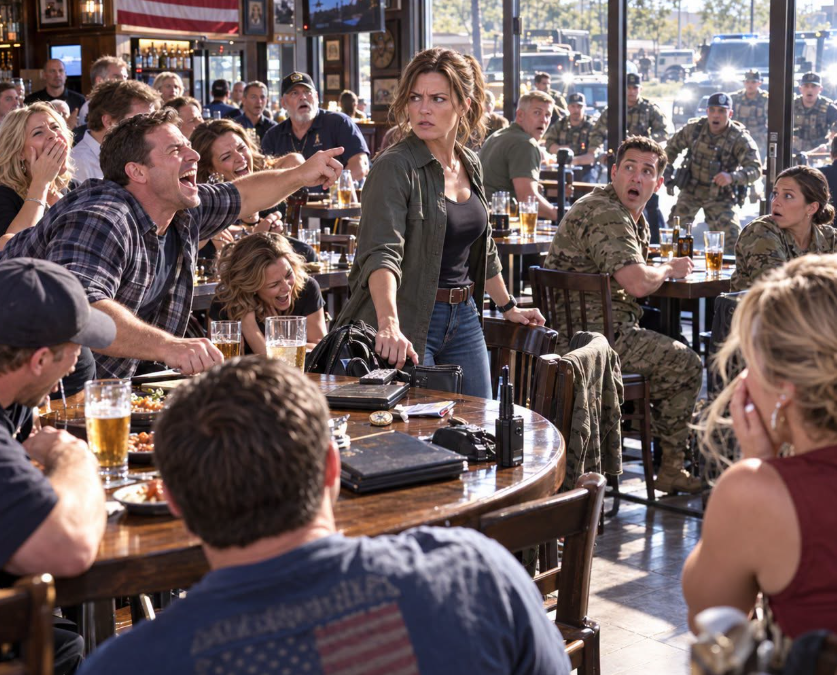
Base Bar, Friday Night, Packed. “She’s A Liar,” My Brother-In-Law Announced To His Buddies. “Ask Her For One Real Story. She’s Got None.” I Didn’t Defend Myself. But the Old Veteran Behind the Bar Suddenly Went Still, Reached Under the Counter, and Picked Up a Handset Without Saying a Word. Six Minutes Later, Headlights Swept Across the Windows From the Direction of the Main Gate…

I was forty-two years old when I finally learned that silence can be dignity right up until the moment someone…

BY leo3 29/09/2026
Latest in News

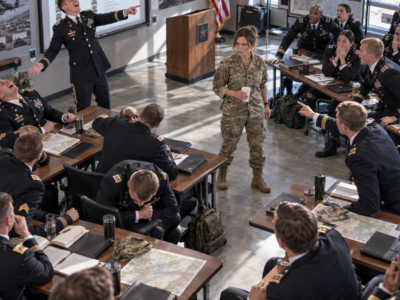
The first thing I noticed about Lieutenant Evan Mercer was how easily other people laughed around him. It was 6:20 on a damp Tuesday morning at a Marine Corps leadership school in Virginia, and I was standing near the end of a fluorescent-lit passageway holding coffee that tasted like scorched cardboard. Evan had three newly commissioned second lieutenants gathered around him while he teased a fourth about failing a land-navigation screening, and every time Evan smiled, the others smiled half a second later. The lieutenant being mocked tried to laugh too, which told me more about the situation than Evan’s words did. I had been on base since 4:30. Old habits wake earlier than alarm clocks. Eighteen years as a combat engineer had taught me to walk unfamiliar ground before other people filled it, so before sunrise I had driven the perimeter roads, checked the training lanes, inspected the obstacle course, and found a drainage ditch behind the eastern classroom wing deep enough to swallow an ankle after rain. Nobody had ordered me to do any of that, but nobody had needed to. The ground never cared about your rank. That lesson had followed me from Afghanistan to company command, from route-clearance operations to staff assignments, and finally to this schoolhouse, where I had been assigned as the incoming course director for an advanced leadership program. On paper I was Major Claire Benton, forty years old, two deployments, eighteen years in uniform, and responsible for deciding whether twenty-two young officers were ready to lead Marines. That morning, however, I wore jeans, a gray T-shirt, old boots, and no visible rank. I wanted to see the school before the school knew I mattered. Inspections rarely show you an organization. They show you what an organization looks like when it knows someone important is coming, which is about as useful as judging a family by the living room five minutes before company arrives. I wanted the dirty coffee pot, the whispered complaints, the tired staff, the shortcuts, and especially the way instructors treated students when they believed nobody senior was watching. Evan Mercer provided an answer quickly. He was twenty-six, athletic, sharp, and handsome in the uncomplicated way that made people assume confidence and competence belonged together. According to the personnel file I had reviewed the night before, he had graduated near the top of every formal course he had attended, had never received less than glowing evaluations, and had somehow made it through nearly four years as an officer without a single written sentence suggesting he had meaningful weaknesses. That worried me more than a bad evaluation would have. Nobody reaches twenty-six without weaknesses. A spotless record usually means either a miracle occurred or the people responsible for developing someone decided praise was easier than honesty. “Twice?” Evan said to the nervous lieutenant in the passageway. “You failed land nav twice?” The young man nodded. Evan grinned at the others. “My aunt gets lost driving to the grocery store, and I’d still bet on her.” Everyone laughed. I kept walking. I wanted to stop him immediately, but there are corrections you make in public and corrections you save until you understand what you are correcting. A careless joke can be evidence of arrogance, nervousness, immaturity, or simply a culture that rewards instructors for entertaining a room rather than developing it. I had seen enough careers damaged by commanders who confused first impressions with complete diagnoses. Unfortunately, I was about to make the same mistake in the opposite direction. Inside the classroom, a young second lieutenant sat alone with a field manual open beside a notebook filled with tiny handwriting. She looked up as I entered, gave me a polite nod, and returned to the same page she had apparently been reading for several minutes. Her name, according to the roster on the desk, was Leah Moreno. She was so quiet I nearly classified her as weak without realizing I was doing it. It happened in seconds. Evan was loud, so I marked him mentally as the obvious problem. Leah was hesitant, so some old reflex in me labeled her the officer who would disappear once the training became difficult. I hated realizing that later. At that moment, though, the judgment passed through my mind so smoothly that I barely noticed it. That is what makes assumptions dangerous. The obvious ones embarrass us; the comfortable ones become part of the furniture. . I carried my bag into the staff office and met Captain Mara Ellison, one of the senior instructors, before seven. Mara looked exhausted but alert, with a pencil stuck through her bun and three folders under one arm, and because she thought I was another instructor checking in rather than her new course director, she spoke with unusual honesty. “Watch Mercer,” she said while pouring coffee. “What about him?” “He’s good.” “That sounds terrible.” Mara gave me a tired smile. “That’s why he’s dangerous.” She explained that Evan knew the curriculum better than instructors ten years older than he was. He could command a room, brief without notes, improvise examples, and turn dry material into something students remembered, but he also humiliated anyone who slowed him down. Nobody corrected him because his class averages were excellent, his previous commander adored him, and arguing with him took more energy than letting him perform. “Who tells him no?” I asked. Mara’s smile disappeared. “Nobody.” There it was. I thought of Gunnery Sergeant Samuel Reed. In 2011, I had been the young officer nobody told no. I was twenty-five, commanding a route-clearance platoon in Afghanistan, convinced that rapid decisions were the same thing as decisive leadership. I talked over experienced Marines because silence made me feel uncertain, and I corrected men publicly because I thought authority weakened if anyone watched me reconsider something. Gunny Reed could have destroyed me. . Instead, he let me fail safely. He allowed me to be wrong when being wrong cost pride, then stepped in brutally fast when being wrong might cost blood. After one terrible night when an armored vehicle was destroyed and everyone escaped by margins I still did not like remembering, I stood beside a cleared lane at sunrise trying not to shake. Reed handed me his canteen. “You talk too much, ma’am,” he said. I stared at him. Then he added, “But when it counted, you stayed with them. Keep that part. Fix the rest.” He could have reduced me to every mistake I had made. Instead, he separated the officer worth keeping from the habits that needed to die. For fifteen years I had told myself I remembered that lesson. Then I opened Leah Moreno’s personnel file. She had one of the highest navigation scores in her commissioning class. Her physical fitness results were excellent, her peer evaluations repeatedly described her as steady under stress, and one instructor had written, “Moreno observes longer than most, then acts with unusual precision.” I sat back. The quiet lieutenant I had nearly dismissed before breakfast might have been exactly the kind of officer I claimed to value. A few minutes later I opened Evan Mercer’s file again. The loud lieutenant I disliked might still be exactly the kind of officer somebody once believed I could become. By 7:55, all twenty-two students were seated. I entered last carrying my coffee and seabag, still wearing civilian clothes because I had spent the previous hour inspecting the outdoor lanes. Evan stood near the instructor podium with a clipboard, speaking loudly enough to hold the room without a microphone. He saw me. His eyes moved from my old boots to my plain shirt, then to the coffee in my hand. I watched him decide who I was. The frightening part was how familiar the process looked. It was the same thing I had done to Leah. “Wrong room,” he said. Several students smiled. I kept walking toward the podium. Evan stepped slightly into my path. “Ma’am, this is an officer leadership course.” “I’m aware.” Something in my tone should have slowed him down. Instead, the attention from the students encouraged him. “You here for maintenance?” A few people laughed. I set my coffee down. “No.” He tilted his head, enjoying himself now. “Then enlighten me.” Behind him, Master Sergeant Julian Cross walked toward the printer as a fresh sheet slid onto the tray. Evan looked at my worn boots again. Then he smiled for his audience and said the sentence that would follow both of us for years. “You couldn’t lead a fire team.” I did not answer immediately. Master Sergeant Cross picked up the printed roster. His eyes moved to the first line. Then his expression changed. The laughter stopped before anyone understood why. And Evan Mercer, still smiling at me, was the last person in the classroom to realize the ground beneath him had just disappeared. ### Part 2 Master Sergeant Cross did not rescue Evan. That mattered. A less experienced senior enlisted Marine might have snapped the class to attention dramatically, announced my rank like a courtroom verdict, and allowed the room to enjoy Evan’s humiliation. Cross had spent twenty-two years learning that authority becomes weaker when it needs theater, so he simply straightened, held the roster in one hand, and said, “Good morning, ma’am. Course director is present.” Twenty-two chairs scraped backward. Evan turned toward Cross. I watched his face change as the meaning caught up with him. The confident expression disappeared first. Then his shoulders tightened, his jaw stopped moving, and his eyes flicked toward the sheet of paper before returning to me. “Major Benton,” Cross added quietly. That completed the arithmetic. Everyone stood. “Seats,” I said. They sat immediately. Evan remained standing for half a second longer before sitting in the back row, his clipboard abandoned on the podium like evidence. I could have humiliated him then. Part of me wanted to. Anyone who claims rank permanently cures pride is either lying or has never had twenty-two people watch someone insult them publicly. I remembered the laughter. I remembered “sweetheart” in his voice. I remembered the certainty with which he had examined a stranger and decided she belonged beneath him. But I also remembered Leah Moreno’s file. If I punished Evan while congratulating myself for superior judgment, I would be ignoring the fact that I had made the same kind of assumption less than two hours earlier. Mine had stayed inside my head instead of becoming a joke in front of a classroom, which made it less damaging, but not more intelligent. “My name is Major Claire Benton,” I told them. “I’ll be directing this course.” No résumé. No deployments. No decorations. The point had already been made, and pressing it harder would have transformed a professional correction into revenge. “We begin in ten minutes. Coffee now if you need it.” Nobody moved. “I wasn’t making a suggestion.” That broke the room. Half the students headed for the hallway, while the others suddenly became fascinated by notebooks, water bottles, and anything that prevented accidental eye contact with Evan. Leah stayed seated near the front and closed her manual. Our eyes met briefly. There was no satisfaction on her face. That interested me. The first lesson that morning covered troop-leading procedures, and the irony was almost irritating. I taught for ninety minutes without using Evan as an example once, because turning the entire block into punishment would have trained the students to watch a personal feud rather than study leadership. Evan did not speak. That was probably the longest he had remained silent inside a classroom since arriving at the school. Afterward, Mara Ellison followed me into the staff office and closed the door. “You could have him removed today.” “I know.” “I’m serious.” “So am I.” She crossed her arms. “He publicly disrespected the incoming course director in front of the entire class. Colonel Whitaker would sign the relief paperwork before lunch.” I opened Evan’s personnel file again. “That’s what worries me.” Mara stared at me. “His behavior worries you?” “No. How easy the answer is.” She waited. I told her about Samuel Reed. Not everything. Some memories belong partly to the people who stood inside them with you, and I have never believed military experience becomes public property simply because enough years pass. I told her enough. I explained how Reed had dealt with an arrogant twenty-five-year-old lieutenant who talked too much, listened too little, and mistook rank for proof. He corrected me privately when he could, publicly when safety demanded it, and never once converted my ignorance into entertainment. “He could have made me a story,” I said. “Instead, he made me better.” Mara leaned against the desk. “And you think Mercer is you?” “No.” That answer surprised her. “I think believing he’s me would be another shortcut. I don’t know what he is yet.” I looked toward the classroom through the narrow glass window in the office door. “And I don’t know what I am in this situation yet either.” Later that afternoon, I observed Evan teach. I wanted evidence beyond the insult. For twenty-five minutes, he was excellent. He explained mission analysis clearly, moved through complex material without losing the students, asked questions that forced them to think, and used the whiteboard better than instructors twice his age. I understood immediately why commanders had praised him. Then Second Lieutenant Aaron Bell raised his hand. Bell was the same student Evan had mocked about land navigation. “Sir, what happens if the timeline changes before the subordinate units finish planning?” It was a fair question, but Bell asked it slowly. Evan smiled. “Well, Lieutenant, ideally you develop the ability to think faster than continental drift.” The class laughed. Aaron smiled weakly. Then he lowered his hand. He never raised it again. That was the moment I stopped wondering whether the first morning had been an isolated lapse. Evan’s problem was not arrogance by itself. His problem was that he confused attention with influence. He believed a room responding to him meant a room learning from him. Those are not the same thing. At 17:30, I found Colonel Daniel Whitaker in his office. He was fifty-three and had served long enough to understand why I was there before I started speaking. “Mercer?” “Yes, sir.” “He’s yours to keep or remove.” “I want to keep him.” Whitaker took off his glasses. “That isn’t what I expected.” “I don’t want him forgiven.” “I didn’t say forgiven.” “I know. I’m saying I don’t want that either.” I explained what I had seen. Talent, cruelty disguised as humor, a record inflated by constant praise, and no evidence anyone had forced him to confront failure honestly. Whitaker listened. “You realize,” he said, “if he embarrasses the school again, people will ask why you left him in place.” “Yes, sir.” “And they’ll be right.” “Yes, sir.” “So what exactly are you proposing?” “A fair problem he cannot talk his way through.” Whitaker’s mouth moved slightly. “A field evaluation.” “The hardest one.” That evening, I called Evan into my office. The door remained closed. He entered rigidly, stood at attention, and looked like a man expecting execution. “At ease.” He relaxed by approximately one inch. “Sir—ma’am, about this morning—” “Not yet.” His mouth closed. “You are remaining on the instructor cadre.” He blinked. That was not the sentence he had rehearsed for. “You will participate in the advanced night-leadership evaluation next week.” “Ma’am?” “You’ll command a mixed team of twelve. No students you select. No special preparation beyond the standard brief. I will evaluate you personally.” His expression hardened. “So this is punishment.” “No.” “It sounds like punishment.” “Punishment would be treating you differently because you embarrassed me. I’m doing the opposite.” I slid the exercise packet across the desk. “You’ve spent several years being told you’re exceptional. For one night, Lieutenant, you’re going to receive the same terrain, the same darkness, the same uncertainty, and the same standard everyone else receives.” He stared at the packet. “And if I fail?” “Then the record will say you failed.” He looked at me. No smirk now. “And if I pass?” “The record will say you passed.” “That’s it?” “That’s it.” He gave a humorless laugh. “You’re giving me enough rope.” “No, Lieutenant.” I leaned back. “I’m removing the rope entirely. No audience. No special treatment. No commander protecting you. No major punishing you. Just the problem.” He looked down at the packet again. “What are you trying to prove?” “Nothing.” That finally unsettled him. “I’m trying to find out who you are when there’s nobody left to impress.” Evan left without another word. Through the office window, I watched him walk past Leah Moreno, who was studying a terrain model alone. He never looked at her. She watched him for three seconds. Then she went back to studying the ground. The following night, I reviewed the field problem and realized something else that bothered me. Evan Mercer was not the only person about to be evaluated. So was I. ### Part 3 The next seven days changed the classroom before the field exercise even began. People stopped orbiting Evan. It was subtle at first. A student who normally lingered near his desk went directly to lunch, then another began asking Captain Ellison questions instead of him, and by Friday Evan ate alone at a corner table in the mess facility while two lieutenants who had previously laughed at everything he said sat thirty feet away discussing navigation with Aaron Bell. I did not enjoy watching that. If I had, I would have been using isolation as revenge. Instead, I watched Evan carefully to see what he did when applause disappeared. He became quieter. Not humbler yet. Quiet and humble are not synonyms. Sometimes silence is reflection; sometimes it is simply wounded pride waiting for another opportunity to speak. Leah Moreno, meanwhile, began making herself impossible for me to overlook. During a logistics discussion, another student proposed carrying extra supplies through a narrow route that appeared faster on the map. Leah waited through three louder opinions before raising her hand. “What happens after twelve hours of rain?” The room paused. She pointed to a contour line. “That drainage channel becomes the route.” Captain Ellison looked at the terrain map again. Leah was right. Two days later she noticed a timing conflict buried in an operations order that everyone else, including me, had read twice. She never announced her corrections triumphantly. She simply placed them on the table like useful tools. Every time she did, I remembered my first impression of her. I began to understand that the course was doing exactly what I wanted it to do, just not in the direction I had expected. I had arrived prepared to teach twenty-two officers. Instead, one quiet lieutenant was exposing a flaw in the way I had started judging them. On Monday evening, the temperature dropped sharply. By 20:00, Evan stood at the edge of a wooded training area with twelve officers, helmets secured, red-filtered lights clipped to their gear, and a mission brief in his hand. Their objective was simple on paper: move through several kilometers of rough terrain, establish security around a simulated communications site, recover critical equipment, and reach an extraction point before the exercise window closed. Nothing about it was designed to be clever. The difficulty came from tired people, poor visibility, incomplete information, and the way every small mistake grows when twelve people must absorb it together. I stood fifty yards away with Master Sergeant Cross. “Think he knows what tonight is?” Cross asked quietly. “He thinks it’s about proving he can lead.” “And what is it actually about?” “Finding out whether anyone wants to follow him.” Cross nodded. “That’ll preach.” The first thirty minutes went well. Evan issued a solid initial plan. His route made sense, his timelines were reasonable, and his task organization showed he had studied the problem instead of assuming talent would rescue him. Then one fire team missed a control point. The delay was five minutes. Evan reacted as if five minutes were a betrayal. “Move faster.” Two minutes later: “Why are you still there?” Then: “Team Two, push left. No, farther. Bell, not that trail. Moreno, get him off that trail.” Orders began piling on top of one another. His people stopped solving problems because Evan solved them again before they had time to execute his previous solution. By the first hour, he had become a radio station nobody could turn off. At 21:17, Aaron Bell asked for confirmation on a direction. Evan answered sharply enough that everyone on the radio heard it. “We covered this in the brief, Lieutenant.” Bell went silent. Ten minutes later a different team made almost the same mistake because the clarification Bell had tried to request would have helped everyone. I wrote the time down. At 21:46, Leah quietly suggested adjusting the route to avoid a flooded low area. Evan rejected it without asking why. The team lost another fourteen minutes. At 22:20, the objective changed. A simulated casualty forced them to reorganize. That was when Evan finally lost the exercise. He began blaming individuals. Not screaming. That would have been easier to identify. He used precise, cutting sentences that sounded professional enough to survive on paper. “You were briefed.” “You should have anticipated that.” “I can’t compensate for everyone.” Each sentence moved responsibility downhill. The team responded exactly as teams usually do when blame becomes the leader’s primary tool. They stopped taking initiative. People waited for instructions because initiative had become dangerous. The exercise stalled. Cross shifted beside me. “You going to stop it?” “No.” “They’re done.” “I know.” He looked at me. I hated what I was about to say because I remembered being the young officer inside exactly this kind of failure. “Let him reach the bottom.” So we watched. At 23:38, Evan’s team arrived at the final control point thirty-one minutes late. Nobody spoke. They were cold, irritated, and exhausted in the safe artificial way training allows you to experience emotions that become much more expensive later. Evan stood several yards from them. His first words were, “We had multiple execution failures.” I walked forward. “No.” He stopped. I laid my notebook on the hood of a utility vehicle. “We had one leadership problem expressed twelve different ways.” His jaw tightened. I motioned everyone closer. I did not lecture. I went through the timeline. 21:17, Bell asked for clarification. 21:32, the same misunderstanding affected another team. 21:46, Moreno warned about terrain. 22:02, the route became impassable. 22:20, the mission changed. 22:24, Evan issued four orders in less than a minute, two contradicting the previous two. I gave no opinion. I only read what had happened. Facts can be merciless when you stop decorating them. Finally I looked at Evan. “How many people did you command tonight?” “Twelve.” “No.” He frowned. “Ma’am?” “How many people trusted you?” His eyes moved toward the team. Nobody looked away. “Twelve,” he said more carefully. “A fire team is four Marines who trust one leader enough to move when that leader says move.” I pointed toward the group. “You had three fire teams’ worth of trust tonight.” He said nothing. “Count how many times you spent that trust because protecting your authority mattered more than solving the problem.” He looked angry. Good. Anger often arrives before understanding because understanding hurts more. “Ma’am, with respect—” “Count.” He glanced at my notebook. “I don’t know what number you want.” “I don’t want a number.” That silenced him. “I want yours.” For almost a minute, nothing happened except wind moving through wet branches. Then Evan looked toward Aaron Bell. Bell’s face was expressionless. Evan looked at Leah. Then the others. His shoulders changed. Not collapsed. Changed. “Too many,” he said. “That isn’t a number.” He swallowed. “Seven.” I waited. “Seven times I shut someone down when they were trying to help.” Nobody moved. Then Aaron Bell spoke. “The first plan was good, sir.” Evan turned toward him. Bell continued. “I would’ve followed it. I think everybody would’ve followed it.” Evan looked almost relieved. Then Bell finished. “You just kept giving us new versions until none of us knew which one you actually trusted.” That sentence landed harder than anything I had said. Evan nodded once. For the first time since I had met him, he accepted correction without defending himself. The group was dismissed twenty minutes later. As everyone moved toward the transport vehicles, I found Leah tightening the strap on her pack. “You saw the drainage issue early.” “Yes, ma’am.” “Why didn’t you push harder?” She considered the question. “Because he wasn’t listening yet.” The answer bothered me. “You knew that?” “I watched him all week.” Something about the way she said it reminded me of myself walking the schoolhouse grounds before sunrise. “You always watch first?” “Usually.” “Why?” She shrugged slightly. “I don’t like leading until I understand the terrain.” For several seconds, all I heard was the idling truck behind us. That was my sentence. Not literally, but close enough. The quality I had valued most in myself was standing in front of me wearing lieutenant bars, and I had almost mistaken it for weakness because it arrived quietly. Leah walked toward the truck. I remained in the darkness thinking about two mistakes. One Evan had made loudly. One I had made without saying a word. The second one frightened me more. ### Part 4 Evan reported to my office at 06:45 the next morning. He looked as though he had slept badly, which meant either he had spent the night replaying the exercise or someone had finally introduced him to the coffee in the enlisted dining facility. He remained standing until I motioned toward the chair. “Ma’am, I want to rerun it.” I expected an apology. That was not what I got. “The exercise?” “Yes.” “For the grade?” “No, ma’am.” That got my attention. “My evaluation stands,” I said. “I know.” “I’m not changing your score.” “I know.” “Then why?” He looked uncomfortable. It was the first useful discomfort I had seen in him. “Because I didn’t know how bad it felt from their side.” I waited. He continued. “I thought I was keeping control.” “And now?” “I think I was keeping everyone dependent on me.” That was a better answer than anything I could have assigned him. “You can rerun it Thursday,” I said. He looked surprised. “Same standard?” “Harder.” He almost smiled. Almost. “Yes, ma’am.” Before he left, I stopped him. “Lieutenant.” He turned. “Do not apologize to me yet.” His eyebrows lifted. “You think I shouldn’t?” “I think you want the discomfort gone.” He said nothing. “An apology offered to make yourself feel better is just another way of making the moment about you. Figure out who you actually harmed first.” He nodded and left. Two days later, Master Sergeant Cross mentioned casually that Evan had approached Aaron Bell after dinner. “Public apology?” I asked. “Nope.” “Good.” Cross grinned. “Thought you’d say that.” Evan had found Aaron alone near the navigation lab and apologized without gathering witnesses. Then, instead of telling Aaron to improve, he asked where the problem began. Aaron admitted contour interpretation kept slowing him down. Evan spent the next three evenings helping him. Nobody received credit for it. No report mentioned it. I did not learn about it from Evan. That mattered. The second field exercise belonged to Leah. I assigned her a leadership role intentionally, partly because her record justified it and partly because I needed to test my corrected judgment instead of congratulating myself for having one. A leader who realizes an assumption is wrong but never changes behavior has only upgraded from prejudice to awareness. Leah received eight officers and a problem involving movement through restrictive terrain, establishing a temporary position, and adapting to two unexpected changes. She briefed for seven minutes. Evan’s comparable briefing had lasted nineteen. She gave three priorities. “Stay oriented. Protect the timeline. Tell me early when something stops making sense.” Then she let her team work. I placed Evan in a support role. He noticed. Of course he noticed. But for once he did not treat an assignment outside the center as an insult. The exercise began at dusk. Within forty minutes, Leah’s team encountered a blocked crossing. She asked her lead team for options. One lieutenant proposed reversing course. Another recommended moving farther north. Leah listened to both. Then she chose the northern route. No speech. No effort to prove the solution originated with her. They moved. Twenty minutes later the northern path narrowed badly, forcing the team to reorganize. Leah moved forward, helped manage the bottleneck, and changed her own plan without treating the change as humiliation. I glanced toward Evan. He was watching her. So was everyone else. That was when I saw the class beginning to reorder itself. At the start of the course, attention had belonged to Evan because he generated the most energy. Now the students watched Leah because her decisions worked. Popularity and trust often look identical from across a room. Pressure tells you which one you are actually seeing. Leah completed the mission inside the standard. No celebration. She gathered her team for the debrief and asked, “Where did I make your job harder?” Evan looked down briefly. He heard it. Later that evening, while we waited for transport, he approached me. “She doesn’t talk much.” “No.” “But everyone moved when she talked.” “Yes.” He stared toward Leah, who was helping another student repack equipment. “How?” “That’s your assignment.” He looked at me. “No written response?” “No.” “What do you want?” “I want you to figure out why eight people followed three sentences more effectively than twelve people followed fifty.” For once, he did not immediately answer. The rerun happened Thursday. Evan took a fresh team through a similar but not identical problem. The first hour tested him almost immediately. A team leader misunderstood a route change. I saw Evan’s jaw tighten. His old reflex appeared physically before he acted on it; his shoulders moved forward, he inhaled sharply, and his hand lifted toward the radio. Then he stopped. One breath. “Team One, give me your picture.” The lieutenant explained. Evan listened until he finished. “All right. Use your route. Update me at the crossing.” That was all. Master Sergeant Cross stood beside me. “Well,” he whispered. “Don’t say anything.” “I didn’t.” “You were thinking loudly.” He suppressed a smile. The mission continued. Later, equipment failed. Evan asked his team leaders for recommendations before choosing a workaround. When the final movement slowed, he moved forward rather than standing behind the formation criticizing people. He was not transformed. He still interrupted twice. He still issued one unnecessary correction over the radio. He still visibly wanted to take back control whenever uncertainty appeared. But wanting to do the wrong thing and choosing not to is where change usually begins. Afterward, I graded the rerun privately. “Better.” He waited. That single word disappointed him for perhaps half a second. Then he understood why I was not giving him more. “Thank you, ma’am.” We sat on an equipment case near the edge of the training lane while the others loaded vehicles. The ground was cold enough that I could feel it through my boots. I told him about Samuel Reed. Not the polished version. I told him how arrogant I had been at twenty-five. How Reed had watched me speak too fast and listen too slowly. How he let me make mistakes that bruised pride while preventing the ones that would have damaged Marines. I told Evan about the night our vehicle was destroyed, and about sunrise, and the canteen. “You talk too much, ma’am. But you carried them.” Evan stared into the darkness. “He said that?” “Exactly.” “Why didn’t he crush you?” “Maybe he was smarter than I was.” “That isn’t what I mean.” “I know.” I rubbed my hands together against the cold. “He understood something I didn’t.” “What?” “That correcting someone and defeating someone are different missions.” Evan was quiet. “Everyone told me I could remove you after the first morning.” “I assumed.” “I thought about it.” He nodded. “Why didn’t you?” There it was. The question I had been asking myself since day one. “Because someone once decided I was worth more developed than destroyed.” He turned toward me. “That doesn’t mean I forgive what you did.” “I know.” “Second chances aren’t forgiveness anyway. They’re debt.” He frowned slightly. “You owe the opportunity forward. Someday you’re going to meet your version of you.” He almost laughed. “That sounds terrible.” “It will be.” Then I looked directly at him. “And you will get to decide whether the story ends with you proving you were better than that person or making that person better than they were.” The trucks arrived. We stood. Before Evan walked away, I added one final sentence. “Don’t waste what people carried for you.” He nodded. Three days later, I saw him do something I had not expected. And nobody who mattered to his career was watching. ### Part 5 It happened in the navigation lab on a Sunday evening. I had returned to the building to retrieve a folder and expected the classrooms to be empty, but voices came from behind a partially open door. When I looked through the narrow glass pane, I saw Evan and Aaron Bell leaning over a terrain board. Evan was not lecturing. Aaron moved a marker across the map while Evan asked questions. “Where are you now?” Aaron pointed. “What tells you that?” “The draw here.” “What if you miss it?” Aaron studied the board. “Road becomes my backstop.” Evan nodded. “Good. Again.” I left before either of them saw me. That moment mattered more than his successful rerun. Performance under evaluation can change because consequences changed. Behavior in an empty building changes because the person changed. The next morning Aaron passed a difficult navigation lane on his first attempt. Evan did not mention helping him. Aaron did. That distinction mattered too. As the course moved into its final month, Evan became less entertaining. His teaching evaluations initially dropped. That surprised him. “You told me to stop turning people into jokes.” “I did.” “My student satisfaction score went down.” I looked at the report. “Because you’re less funny.” “So I got worse?” “No.” He waited. “You’re confusing applause with effectiveness again.” He exhaled through his nose. “I walked into that one.” “Yes.” I handed the evaluation back. “Your questions improved. Student participation increased. Fewer students leave confused. Which score are you here for?” He looked at the paper again. “The one that matters after they leave.” “Now you’re learning.” Leah continued performing with the same quiet consistency. She was not perfect. During one planning exercise, she waited too long to intervene while two team leaders argued over priorities, costing her group nearly ten minutes. During the debrief I asked why. “I wanted them to solve it themselves.” “When did that stop being useful?” “About five minutes before I stepped in.” “Why didn’t you?” She considered it. “I didn’t want to seem controlling.” There it was. Every strength casts a shadow. Evan’s decisiveness became domination. Leah’s restraint could become absence. A leadership course fails if it teaches loud people to become quiet and quiet people to become loud. The point is not personality replacement; the point is knowing what the moment requires. “Your team doesn’t need you to avoid control,” I told her. “They need you to use it at the correct time.” She wrote that down. Evan, sitting two chairs away, also wrote it down. I noticed. We reached the final major field exercise during a week of miserable weather. Cold rain turned the training area into slick mud, and everything smelled like wet nylon, diesel exhaust, and pine needles crushed beneath boots. For the exercise, students rotated through leadership positions while instructors observed from a distance. Leah performed first. She made one bad route decision, admitted it quickly, corrected it, and kept moving. Evan performed later. His team encountered an equipment malfunction that delayed communication. I watched him reach for the radio before remembering it was useless. For several seconds, he stood in the rain considering options. The old Evan would have filled those seconds with noise. The new one turned to his nearest team leader. “What do you see?” The lieutenant answered. Evan listened. They adjusted. No drama. No brilliant speech. Just twelve people solving a problem together. That evening, Captain Ellison found me sitting beneath an awning outside the staff building, cleaning mud from my boots. “You were right about him.” I shook my head. “Too early.” “He’s different.” “Yes.” “That’s usually what being right looks like.” I looked at her. “And I was wrong about Moreno.” Mara sat beside me. “You corrected that.” “Eventually.” “Claire, everybody misreads people.” “Everybody also says that right before doing it again.” Rain hammered the metal roof above us. I scraped mud from one boot. “When I met Mercer, I saw the lieutenant I used to be and decided I understood him. When I met Moreno, I saw someone unlike the lieutenant I used to be and decided she was weaker.” Mara considered that. “You think the course changed you.” “It reminded me how easy it is to turn experience into arrogance.” “That sounds cheerful.” “Military education is a festival of joy.” She laughed. Then her expression became serious. “What happens after graduation?” “They leave.” “That isn’t what I mean.” I knew. “You’re worried he’ll become old Mercer again when nobody here is watching.” “Yes.” “So am I.” That was the limit of instruction. You can build conditions. You can expose habits. You can make someone experience the cost of behavior in controlled environments. Then eventually you have to release them into places where mistakes stop being academic. I understood why Samuel Reed had seemed older than thirty-eight during Afghanistan. He had probably watched me leave on missions carrying lessons he could no longer enforce and wondered whether I would remember them when fear became louder than his voice. I had never asked him. The thought followed me into graduation week. Final rankings were prepared on Tuesday. Leah Moreno earned the highest leadership evaluation in the class. Not because she dominated every category, but because she adapted faster than anyone else once weaknesses were identified. I read the recommendation twice before approving her as Distinguished Honor Graduate. Then I found Evan’s result. Eleventh. Exactly the middle. Captain Ellison stood behind me. “He’ll hate that.” “He should.” “After everything?” “Especially after everything.” She looked at me. “You don’t think he deserves higher for improvement?” “No.” “Why?” “Improvement isn’t bonus credit for spending the first third of the course learning something everyone else already understood.” Mara smiled faintly. “You really don’t play favorites.” “I’m trying not to start.” I signed the list. Evan arrived for his final counseling that afternoon. I placed his evaluation on the desk. He read the ranking. For a moment, I saw the old reaction flicker across his face. Then it disappeared. “Middle.” “Yes.” He read the comments. No inflation. No revenge. His strengths were listed clearly. So were the failures. Finally he looked up. “Fair.” That one word meant more to me than an apology would have on day one. “You understand why?” “I spent half the course catching up emotionally.” “That isn’t the phrase I used.” “It’s the phrase I’m using.” I almost smiled. “Then yes.” He stood to leave, then stopped. “Ma’am, about that first morning.” I waited. “I was wrong.” “Yes.” “I don’t mean because of your rank.” That mattered. “I know.” He looked uncomfortable again. Good discomfort. “I had already decided what you were before you spoke. Then I used the class to prove my decision.” I said nothing. “I’ve been thinking about Bell.” “And?” “And how many times I probably did that before somebody had enough rank to make me notice.” There was no useful answer to that. Regret cannot repair people retroactively. It can only change who gets hurt next. “You can’t fix every room you were careless in,” I said. “You can change the next one.” He nodded. At the door, he turned back. “Did you ever apologize to your gunny?” “For being difficult?” “Yes.” “No.” His eyebrows lifted. “I thanked him eventually, but I never told him I understood.” “Why not?” I looked toward the window. Because time lies. It convinces us important conversations can wait simply because they have already waited this long. “I assumed I still had time.” Evan left. That evening, I searched Samuel Reed’s name for the first time in years. What I found made the room feel suddenly too quiet. ### Part 6 Samuel Reed had died five months earlier. I stared at the veterans’ association notice on my laptop while the office ventilation system hummed above me. The obituary was short. Samuel Patrick Reed, fifty-three. Husband, father, grandfather, retired Marine. It mentioned deployments, community volunteer work, and the fact that he coached youth baseball badly but enthusiastically. Nothing about me. Of course there was nothing about me. I had been one lieutenant among dozens whose lives crossed his. Still, grief can be selfish before it becomes generous. My first thought was that I had missed my chance. For fifteen years, whenever Reed entered my mind, I imagined there would eventually be a phone call. I would tell him I finally understood why he had not destroyed me when destruction would have been easier. I would tell him about young Marines I had tried to develop using lessons he probably never realized he had taught. Now the conversation existed only in my imagination. I closed the laptop. For several minutes, I was twenty-five again in Afghanistan with dust in my teeth and sunrise hitting the side of a damaged vehicle. Reed handing me a canteen. “You talk too much, ma’am.” I had been furious when he said it. Then he added, “But you carried them.” At twenty-five, I heard praise. At forty, I finally understood the warning. Keep the courage. Lose the ego. That was what he had been saying. The following morning was graduation rehearsal. Twenty-two officers stood in formation while staff checked names, seating, awards, and timing. Leah learned she had been selected as Distinguished Honor Graduate when Captain Ellison called her forward. Her reaction was perfectly Leah. One blink. “Thank you, ma’am.” Then she stepped back. Afterward I found her near the auditorium entrance. “You seem surprised.” “I am.” “Why?” “There are louder people in the class.” The sentence made me laugh unexpectedly. She looked confused. “That,” I said, “is exactly why this award matters.” She studied me. “I thought I was too quiet when I started.” “So did I.” Her eyebrows rose slightly. There was no reason to hide it. “I underestimated you.” She waited. “I saw you alone with a manual on the first morning and decided you might disappear under pressure.” “What changed your mind?” “You did.” A smile appeared. Small, but real. “I’m glad you were wrong, ma’am.” “So am I.” I could have told her I had recognized her talent immediately. Instructors are tempted to rewrite history once a student succeeds. We remember seeing potential earlier than we actually did because hindsight makes us want credit. I refused myself that comfort. I had almost missed her. Remembering the mistake was more useful than erasing it. Evan’s rehearsal was uneventful. He crossed the stage, accepted the mock certificate, and returned to his seat without attempting to make anyone laugh. Afterward he shook my hand. “Thank you, ma’am.” “For what?” He considered that. “For not making the worst thing I did the only thing you saw.” That hurt more than he intended. Because Samuel Reed had done exactly that for me. I tightened my grip briefly before releasing his hand. “Do it for someone else.” “Yes, ma’am.” The actual ceremony took place Friday morning. Families filled the auditorium, children fidgeted in dress clothes, parents aimed phones at the stage, and somebody’s baby began crying halfway through the opening remarks. I prefer ceremonies when they contain imperfect human noises. Otherwise they become too easy to confuse with mythology. Leah crossed the stage to sustained applause. Her parents stood near the back, both crying. I watched her shake Colonel Whitaker’s hand and accept the leadership award. Then I remembered the young woman rereading the same page alone before dawn. Quiet is not weakness. I had known that before meeting her. Somehow I had needed her to teach it back to me. Evan graduated eleventh. When his name was called, he walked across the stage exactly like everyone else. No special mention of improvement. No public story about redemption. I wanted it that way. If I had announced how far he had come, his growth would have become another performance centered on him. After the ceremony, families and students crowded into the reception area. I stood near the edge of the room speaking with Colonel Whitaker when I noticed Evan across the hall with Aaron Bell. Aaron’s parents had arrived. His father looked like a man trying unsuccessfully not to cry. Aaron introduced Evan. I could not hear the first words. Then Evan said something. Aaron’s father looked toward his son with sudden pride. I moved a little closer without making my presence obvious. “He worked harder than anybody here,” Evan was telling them. “You should know that.” No mention of tutoring. No mention that Evan had helped. Nothing that redirected the father’s pride toward himself. Just a sentence lifting someone he had once cut down for amusement. Nobody from the chain of command was standing close enough to reward him. He did not know I heard. That was the moment I believed the lesson might survive us. Later, Master Sergeant Cross and I stepped outside. Fog hung low over the parade deck, almost identical to the morning I arrived. Cross held an unlit cigar. “You know what bothers young instructors?” he asked. “Everything?” He grinned. “Students forget us.” “That bothers you?” “Used to.” We watched families move toward the parking lot. “Then I figured out that’s the deal.” “What is?” “They forget the instructor. They keep the standard.” He rolled the cigar between his fingers. “We trade our names for habits.” I looked at him. “That sounds like something you rehearsed.” “It sounded better in my head.” “It’s still good.” “Don’t tell anyone.” The fog softened the far edge of the parade deck. I thought of Reed again. Maybe Cross was right. Maybe Reed never needed me to call. Maybe the point had never been remembering his name. Maybe the only thanks that mattered was whether something he gave me survived after neither of us was in the room. Colonel Whitaker found me before I left. “Benton.” “Sir.” “You could have relieved Mercer on day two.” “Yes, sir.” “Most people would have.” “Probably.” “I offered.” “I remember.” He placed his hands in his pockets. “Tell me why you didn’t.” I thought about the easy answer. Mercy. Patience. Leadership. All true and all incomplete. “Because relieving him would have solved my humiliation, sir.” Whitaker waited. “The Corps didn’t send me here to win arguments with lieutenants. It sent me here to build them.” “And if he hadn’t changed?” “I would have documented it honestly and removed him.” “So this wasn’t forgiveness.” “No, sir.” He nodded. “Good.” Then he looked toward the building. “The next instructor who wants to destroy a student because the student embarrassed him—I’m stealing that answer.” “You can have it.” I left the schoolhouse that afternoon believing the story was finished. Evan had learned. Leah had taught me something. The class graduated. Samuel Reed was gone. Four months later, a message arrived from a unit hundreds of miles away. When I read the first paragraph, I realized none of us had seen the ending yet. ### Part 7 The message came through official channels but had not been intended for me originally. A staff sergeant had written an after-action note after a difficult overnight field operation involving equipment failure, worsening weather, and a team forced to reorganize under pressure. Nobody was seriously hurt, which was the first thing I checked, but the note praised a young officer for staying calm while everything around him became less cooperative. His name was First Lieutenant Evan Mercer. I read the line twice. The report described poor visibility, communications problems, and a delayed support element. Old Evan would have increased the volume. Instead, according to the staff sergeant, Evan gathered his team leaders, listened to each in turn, issued a small number of clear instructions, and placed himself where the most uncertainty existed. My heart beat a little faster as I continued. Afterward, during the debrief, one Marine asked why Evan had refused to micromanage when the situation became confused. The report quoted his answer. “A fire team is people trusting you to spend their effort wisely. Count the people before you spend them.” It was not exactly my sentence. That made it better. He had carried the idea forward in his own language. I sat alone in my office with the message open and thought about a cold training lane, twelve frustrated lieutenants, and a young officer reluctantly counting seven moments when his pride had cost trust. Then I thought about Samuel Reed. I opened my desk drawer. A month earlier, after finding his obituary, I had written him a letter I could never send. I had not known what else to do with the things I should have said. Gunny, I finally understand what you did. That was how it began. The rest filled two pages. I told him I remembered the canteen. I told him I remembered how often he corrected me without making me small. I told him there had been another lieutenant, loud and talented and careless, who reminded me of things about myself I would rather have forgotten. I told him I almost punished that lieutenant because punishing him would have felt clean. I told him I chose the harder version because Reed once chose it for me. Then I wrote the sentence I wished I could have said while he was alive. You carried me until I could carry somebody else. I read the letter again after receiving Evan’s field report. For the first time, it no longer felt unfinished. A debt like that cannot be paid backward. That was what I had misunderstood for fifteen years. I had imagined gratitude as a line running from me to Reed, as though one perfect phone call could close the account. But what Reed had given me had never been meant to return to him. It was supposed to keep moving. A week later, Leah Moreno emailed me. Her message was shorter. Ma’am, first platoon assignment is going well. I still watch longer than people expect. I’m learning when not to. I smiled. Below that she had added another sentence. Also, one of my squad leaders told me yesterday that I need to make decisions faster when I already know enough. Apparently leadership continues after graduation. I replied. That is unfortunate but true. Then I stared at the screen for a while before adding: Keep listening. Just remember silence is a tool, not a hiding place. She responded ten minutes later. Roger that. The class was gone, but its lessons were still moving in directions I could not control. That made me think differently about teaching. When I first became an instructor, I believed success meant transferring knowledge accurately. Then I believed success meant changing behavior. Now I think success is stranger. You place something useful in another person and accept that you may never know what they do with it. Sometimes you receive a report four months later. Usually you receive nothing. Master Sergeant Cross had been right. We trade our names for standards. I called him after reading Evan’s field report. He answered on the fourth ring. “Cross.” “You busy?” “Always.” “I got something about Mercer.” There was a pause. “Good something or career-ending something?” “Good.” “Shame. Career-ending stories are easier to tell at reunions.” I read him the relevant paragraph. Cross remained quiet for several seconds. Then he said, “Guess it stuck.” “Looks that way.” “You sound surprised.” “I am.” “You’re impossible to satisfy, ma’am.” “I learned from excellent people.” Cross laughed. Before hanging up, he said something that stayed with me. “You know the funny part?” “What?” “Mercer probably thinks the lesson was about him.” I frowned. “What was it about?” “All of you.” He disconnected before I could answer. I hated when master sergeants did that. The problem was that he was right. Evan had learned not to confuse authority with performance. Leah had learned that restraint becomes failure if it lasts past the moment action is needed. I had learned that experience can become a shortcut just as easily as arrogance can. We were different versions of the same danger. We saw a person. We saw one behavior. Then we built an entire human being around it. Evan had looked at civilian clothes and old boots and decided I could not lead. I had looked at Leah’s silence and decided she might not lead. I had looked at Evan’s arrogance and almost decided he was not worth leading. Same mechanism. Different targets. That realization bothered me more than the original insult ever had. At forty, after eighteen years of service, two deployments, command, mistakes, funerals, promotions, and more professional military education than I cared to calculate, I still had not graduated from being human. There was something comforting about that. Also irritating. Several months after Evan’s report, I visited the cemetery where Samuel Reed had been buried. His family had moved to another state, and I had never met them, so I went alone. The day was bright and cold. I found his marker after walking the wrong row twice. For a man who had occupied so much space in my memory, the physical place containing his name was remarkably small. I stood there holding the unsent letter. I did not read it aloud. That would have felt theatrical. Reed hated theater. Instead, I folded it once more and placed it briefly against the top of the marker before putting it back into my coat. “You were right,” I said. That was all. On the walk back to my car, I realized I did not feel the closure people always promise in stories about graves. I missed him. I regretted waiting. Nothing fixed that. But regret and gratitude could occupy the same body without canceling each other. The important thing was that his work had continued. Through me. Then through Evan. Maybe through Aaron. Maybe through Marines whose names none of us would ever learn. I reached the parking lot and stopped before opening my car door. My phone buzzed. A message from an unfamiliar number. Ma’am, this is Evan Mercer. I hope you don’t mind me reaching out. Something happened today, and I think you should know. I opened the rest. What he wrote made me understand that the debt had already moved farther than I thought. ### Part 8 Evan’s message was about a second lieutenant named Nolan Pierce. Pierce had joined Evan’s unit three weeks earlier. According to Evan, the young officer was smart, aggressive, physically capable, and completely exhausting. I laughed when I read that. Some patterns do not even bother changing clothes. Pierce interrupted senior Marines, corrected subordinates publicly, and treated every disagreement as an opportunity to prove he understood more than everyone else. After a disastrous planning session, several experienced leaders recommended documenting the pattern immediately and moving him out of a key position before he caused larger problems. Evan almost agreed. Then, he wrote, he remembered a classroom. I kept reading. I wanted to crush him because he reminded me of myself. That sentence stopped me. Evan described taking Pierce aside privately. No audience. No humiliation. He explained exactly which behavior was damaging the team. Pierce argued. Evan let him. Then Evan assigned him a difficult but fair problem and observed him without interference. Pierce failed. Instead of lecturing him afterward, Evan walked him through the timeline decision by decision and made him identify where trust had been lost. The method sounded familiar. At the end of the message, Evan wrote: I don’t know whether he’ll change. I understand now that isn’t the part I control. My job was making sure he had a fair chance to see himself before I decided he was finished. I think that’s what you meant about paying it forward. I read the message three times. Then I cried. Not dramatically. No collapse. No grand release. I simply sat at my kitchen table in a quiet house and felt tears reach my jaw while morning light moved across the hardwood floor. For years, I had believed Samuel Reed’s influence survived because I remembered him. I was wrong. His influence survived because eventually I behaved like him. Now Evan was doing the same. That was the proof. Not a salute. Not a graduation. Not an apology. Replication. A standard surviving inside someone who no longer needed you in the room. I replied to Evan. You understood it. Then I deleted the sentence and tried again. You’re doing the work. Keep going. That felt more like Reed. Months passed. I received occasional updates from former students. Leah earned a reputation for running unusually calm training. Aaron Bell qualified near the top of his unit during a navigation evaluation and apparently became intolerable about teaching contour lines to anyone who would listen. Evan never became quiet by personality. I was glad. The goal had never been to turn him into Leah. He was still energetic, funny, fast-thinking, and capable of owning a room. He simply stopped believing ownership was the purpose. Those are different things. As for me, I began changing how I opened new courses. I stopped reviewing personnel photographs before meeting students when I could avoid it. I spent more time watching who asked questions after class, who checked on classmates, who admitted mistakes before being cornered, and who stayed functional after the easy plan collapsed. I also started telling instructors something on the first morning. “Your first impression is data. It is not a verdict.” Somebody eventually asked where I learned that. I told him a lieutenant once insulted me in front of an entire classroom. The instructor laughed. “That taught you?” “No.” I looked toward a row of students entering the room. “What I almost did afterward taught me.” Years later, people who heard pieces of the story usually focused on the roster. They loved that part. The young lieutenant makes fun of the anonymous woman. The printer produces the official staff list. The master sergeant looks down. The room realizes she is the major. It has the shape people like. Arrogance. Reveal. Instant humiliation. Justice. But that is the least interesting part to me now. Evan being wrong about my identity cost him thirty seconds of embarrassment. If I had responded badly, I could have turned those thirty seconds into the defining event of his career. I had enough rank to do it. That is what power actually tests. Not whether you can punish someone who deserves consequences. Most people can do that. Power tests whether you can separate what repairs the institution from what satisfies the wounded part of yourself. Sometimes those things overlap. Sometimes removal is necessary. Sometimes the dangerous officer has been coached repeatedly, knows the harm, refuses to change, and must be moved before someone else pays for that refusal. I have done that too. Mercy without standards is negligence. But punishment without development is laziness dressed as strength. Evan had talent. He had also been protected from honest failure for too long. What he needed was not praise. Not humiliation. Not forgiveness. He needed consequences that taught something. Leah taught me the mirror image of that lesson. We talk constantly about difficult people because difficult people demand attention. Quiet talent asks for almost nothing, which makes it easier to neglect. Leah could have completed the entire course competently while remaining invisible if nobody placed her where leadership became observable. That would have been our failure, not hers. The loud student and the quiet student both needed instructors to look longer than two seconds. So did I. That may be the lesson I carried longest. We all want to believe experience makes judgment faster. Sometimes it does. A combat engineer learns to notice disturbed earth, unnatural patterns, drainage, exposed wires, the tiny signals that say the ground is not what it appears to be. Those instincts save lives. But people are not roads. A shortcut in terrain analysis might save time. A shortcut in human judgment can erase someone before they ever had a chance to show you who they were. I still wake early. Even after leaving that schoolhouse assignment, I remained the person who preferred empty roads before sunrise. Some mornings the smell of wet pavement still brings me back to Afghanistan. Some mornings coffee in a paper cup takes me back to that classroom. I can still see Evan smiling. “You couldn’t lead a fire team.” Then Master Sergeant Cross looking at the printed roster. Then the students going silent one by one. For a long time I thought the sentence was ironic because Evan had underestimated me. Now I think the irony is deeper. He was questioning whether I could lead four people. The real test was whether I could lead one. Him. And leading him did not mean defeating him. It meant refusing to become careless with his future simply because he had been careless with my dignity. Samuel Reed did that for me. I did it

There were two ways to measure a human being in my family, and I learned both before I was old…

The first thing I tasted when I stepped into my mother’s house was menthol smoke. It hung beneath the ceiling fan in a pale gray layer, mixed with Old Spice, bourbon, and the damp wool smell coming off my rain jacket after four hours on I-64. My mother had hated cigarette smoke for as long as I could remember, yet a half-finished cigarette rested in a ceramic saucer on my father’s old coffee table. The man occupying my father’s recliner did not stand when I entered. His polished brown shoes were planted on the coffee table, one ankle crossed over the other, while a college football game shouted from the television loud enough to make the picture frames tremble. He looked me over from wet hair to plain black travel shoes and said, “You must be Caroline.” “Audrey,” I corrected. “Audrey Mercer.” He smiled as though getting my name wrong had somehow been my mistake. “Right. Audrey. Your mother told me you were coming.” My mother appeared from the kitchen carrying a dish towel she kept twisting between her fingers. Elaine Mercer looked smaller than she had six months earlier, though nothing about her actual height had changed. She hugged me quickly, and when I asked if everything was okay, her eyes slid toward the man in the recliner before she said, “Of course it is.” That was when he finally introduced himself. “Grant Maddox. Colonel, United States Air Force, retired. Twenty-six years.” He said each piece like a medal being placed on a table, then added, “Your mother tells me you did some time in the Navy.” Some time. I set my leather travel bag beside the hall cabinet. Inside were two uniforms, a laptop, several classified-work reminders I would never open in that house, and a small velvet case I had carried because I was expected at a formal command event later that week. Grant saw an unremarkable black bag and returned his attention to football. “I’m still serving,” I said. “What do you do?” “A little of everything.” He laughed. “That usually means staff work.” I heard my mother inhale softly from beside me. I could have corrected him in three sentences, but twenty-five years in uniform had taught me that correcting someone too early sometimes cost you information. So I only smiled, picked up my bag, and asked my mother which room she wanted me to use. My hometown was Millhaven, Kentucky, a place small enough that people still identified houses by the families who had owned them twenty years earlier. We had one grocery store, a Baptist church with a cracked bell, a diner where the coffee tasted burned by eight in the morning, and a high school roof that leaked every spring. I grew up two streets from Main Street believing that success was something other families celebrated. When I was eleven, I won the county science fair with a homemade water-filtration system built from gravel, charcoal, sand, and equipment my science teacher let me borrow. I carried the blue ribbon home and placed it beside my father’s dinner plate. He moved it to reach the salt and spent the meal talking about my older brother Owen scoring two touchdowns the previous Friday. At sixteen, I brought home a report card with five A’s and one B. My father tapped the B with his index finger and said, “This is the one we need to discuss.” That was how praise worked in our house: five good things could be erased by one imperfect thing before dessert. The Naval Academy acceptance envelope arrived when I was seventeen. I tore it open beside the mailbox, read the first sentence three times, then ran into the kitchen so quickly the screen door slammed behind me. My father read half the page, folded it once, and said, “Somebody’s got big ideas.” My mother said nothing until the night before I left. She came into my bedroom holding an old shoebox filled with camp postcards, elementary-school photographs, pressed flowers, and every ridiculous letter I had ever written her. Sitting beside me on the bed, she said, “I kept these because sometimes I needed proof that there was a bigger version of you waiting to get out of this town.” She never drove to Annapolis. Neither did my father. A card arrived three days after induction, stained along one corner by rain, with six words in my mother’s handwriting: I know you can do this. For years, I treated those six words like emergency rations. Dinner on my first night back felt painfully familiar. Grant dominated the conversation while my mother served chicken casserole, interrupting her twice to complain that she had used too little salt and once to ask why she had bought the “cheap” green beans. Whenever she reached for anything, she glanced toward him first. He asked what kind of ships I had served on. I mentioned carriers and joint operations without giving him the career summary he clearly expected me to provide for inspection. When I referred to coordinating operations during a severe Pacific storm years earlier, he waved his fork dismissively. “Logistics,” he said. “Traffic control with uniforms.” “Sometimes.” “Real command is different.” I looked across the table. “I imagine it is.” . His expression brightened because he thought I had agreed with him. My mother’s fork stopped halfway to her mouth. After dinner, Grant poured bourbon without offering anyone else a drink. He launched into a twenty-minute story about Cold War alert exercises that had apparently grown more dangerous in his memory than in recorded history. I listened, asked two questions, and watched him become more comfortable every time I refused to compete. Eventually he leaned back and said, “Elaine worries about you, you know.” My mother looked up sharply. “Grant.” “What?” He shrugged. “She does. Woman your age, bouncing around from assignment to assignment. No husband. No permanent home. At some point you have to stop drifting and build something.” I almost laughed. Instead, I looked at my mother. Her face had gone pale. “What exactly did Mom tell you about my work?” I asked. Grant answered for her. “Enough. Career Navy. Administrative side, mostly. Still moving every few years. Sounds exhausting.” My mother opened her mouth, but I gave her the smallest shake of my head. “That’s one description.” He raised his glass toward me. “You seem smart. You’ll figure out your direction eventually.” At forty-nine years old, after more than two decades of service, I was being offered career counseling by a man wearing socks with tiny golf clubs on them. But it was not his arrogance that bothered me. It was my mother’s silence. . At two in the morning, I woke thirsty and walked downstairs. A lamp glowed in the kitchen, and I heard paper sliding across the granite island. When I stepped around the doorway, Grant was sitting alone with my mother’s bank statements spread in front of him and a calculator in his hand. He covered the pages immediately. “You always go through other people’s finances at two in the morning?” I asked. His eyes narrowed. “Your mother asked me to manage some things.” From behind me came the faint creak of a floorboard. My mother was standing halfway down the stairs. She wasn’t looking at Grant. She was looking at the papers beneath his hand, and for the first time since I arrived, I saw something stronger than embarrassment in her face. I saw fear. ### Part 2 Grant gathered the bank statements too quickly, shoving them into a blue folder as if speed could erase what I had already seen. “Elaine gets overwhelmed by finances,” he said. “I handle the complicated things.” My mother remained on the stairs, one hand gripping the railing hard enough that her knuckles had turned white. “Do you?” I asked. He leaned back in the kitchen chair. “Is there some reason you’re interrogating me in my own home?” The phrase landed exactly where he intended it to. My mother flinched before I did. “This is Mom’s house,” I said. “Our home,” he corrected. I looked at my mother. She lowered her eyes. There are moments in command when the worst thing you can do is react to the first piece of information. You wait, not because you are uncertain, but because incomplete information invites bad decisions. So I got a glass of water, wished them both good night, and returned upstairs while Grant watched me with the satisfied expression of a man who thought I had retreated. At breakfast, he acted as though nothing had happened. He fried eggs, left grease across the stovetop, and complained that my mother had bought the wrong coffee. Then he announced that he needed to run errands and asked her for “the card.” My mother took a debit card from her wallet. I saw hesitation before she handed it over. “How much are you spending?” I asked. Grant slipped the card into his pocket. “None of your concern.” “Grant,” Mom murmured. He kissed the top of her head as though rewarding a compliant child. “I’ll bring it back.” The front door closed behind him, and we heard his truck start in the driveway. It was a new dark-blue pickup with chrome trim, oversized tires, and temporary dealer plates that had been replaced recently enough for me to remember noticing them through the rain. I waited until the engine disappeared down the street. “Mom, why does he have your debit card?” She began wiping a counter that was already clean. “His pension paperwork got complicated.” “How complicated?” “He had some trouble moving accounts after he relocated.” I let three seconds pass. “How long ago did he relocate?” She rubbed the same spot harder. “About four months.” That answer bothered me more than I showed. Military retirement pay did not simply vanish for months because someone moved across state lines, and a retired colonel had spent enough years dealing with bureaucracy to know how to resolve an account problem. Even if his explanation was technically possible, his behavior was wrong. I asked whether he contributed to household expenses. She said he did “when he could.” I asked whether his name was on the deed. She said no. I asked whether they had combined accounts, and that was when she stopped cleaning. “Why are you doing this?” “Because you sounded scared on the phone last week.” “I was tired.” “You called me at 1:20 in the morning and asked whether I remembered where Dad kept the property documents.” Her face tightened. She had apparently forgotten saying that. Mom turned toward the window. “Grant wants us to be organized before the wedding.” Wedding. That was new. “When?” “We haven’t set a date.” “How long have you been engaged?” She looked at me then. “Three weeks.” I had spoken to her twice in those three weeks. She had never mentioned it. Before I could ask anything else, Grant’s truck returned. My mother reacted to the sound before the vehicle even reached the driveway, moving quickly to gather the breakfast plates as though she had been caught doing something wrong. That reaction told me more than any answer she had given. Grant came through the door carrying an expensive power-tool set and two shopping bags. “Sale,” he announced. My mother glanced at the boxes. “Grant, we talked about—” “It was forty percent off.” “You said you were getting groceries.” “I did.” He placed one bag on the counter. Inside were coffee, chips, bacon, and a bottle of bourbon. No milk. No vegetables. Nothing my mother had written on the small list beside the refrigerator. That afternoon, I offered to drive Mom to the pharmacy and grocery store. Grant volunteered to come. When I said I wanted time alone with her, he smiled without humor and asked, “Why? Planning an intervention?” “Do I need one?” He stared at me long enough for the joke to die. Mom quickly said we could all go later. We never did. Around five, while taking kitchen trash outside, I noticed a crumpled dealership receipt wedged beneath a paper towel. I unfolded it because the amount visible through the crease was large enough to catch my eye. Monthly payment: $872. Purchaser: Elaine Mercer. Vehicle: 2026 Ford F-150. I read it twice. The truck Grant called his was financed in my mother’s name. When I brought the receipt inside, she closed her eyes. Grant had gone to shower. Water thudded through the pipes upstairs while I placed the paper on the table between us. “Did you buy him that truck?” “He needed transportation.” “That isn’t what I asked.” Her voice dropped. “The dealership wouldn’t approve him alone.” “Why?” “He said there was an error on his credit report.” “Did you verify that?” She looked toward the stairs. That was answer enough. My mother had inherited the house outright when my father died. She had savings, a modest pension, and years of careful habits. She clipped grocery coupons even when she didn’t need to and once drove back twelve miles because a cashier had accidentally given her ten dollars too much change. Now she was making an $872 truck payment for a man who complained about the coffee she bought. “How much else?” I asked. “Audrey.” “How much?” “I don’t know.” The shower stopped. Mom grabbed my wrist. “Please don’t confront him.” There was urgency in her voice that had nothing to do with protecting Grant’s feelings. “What happens when someone confronts him?” “Nothing.” “Mom.” “Nothing physical.” The qualification chilled me. Footsteps sounded upstairs. She leaned closer. “He gets loud. He tells me I’m confused. Then eventually I start wondering whether I am.” I covered her hand with mine. “You’re not confused.” Tears appeared in her eyes, but she blinked them back before Grant entered the room. He noticed the receipt immediately. His face changed. Not dramatically. That was what made it worse. The easy charm disappeared, leaving something cold and calculating underneath. “You digging through our trash now?” he asked. “I was taking it outside.” “That paper has nothing to do with you.” “It has Mom’s name on it.” He walked toward me, close enough that bourbon and toothpaste mixed unpleasantly on his breath. “You show up after being gone for years and suddenly you’re an expert on our life.” “I didn’t say that.” “No, you just walk around judging everything.” My mother stood between us. “Grant, stop.” He looked past her at my leather bag near the wall. Then, smiling directly at me, he kicked it hard enough to send it sliding across the hardwood. My mother gasped. Grant stepped backward, deliberately caught his heel against the leg of a chair, and went down with a crash. For one second, nobody moved. Then he grabbed his hip and shouted, “What the hell did you do?” I stared at him. My mother stared at him. And Grant stared back at us, already building the lie before he had even finished falling. ### Part 3 Grant’s performance became more convincing once he had an audience. He groaned loudly, accused me of leaving my bag where someone could trip, and insisted I had refused to move it after being warned. None of those things had happened, but he delivered each sentence with the confidence of a man accustomed to winning through volume. My mother rushed for ice. Grant rejected it, then accepted it five minutes later after realizing that injured men should probably appear interested in treatment. He limped dramatically until he forgot which leg was supposed to hurt and switched sides near the hallway. I said nothing. That irritated him more than an argument would have. “An apology would be appropriate,” he said. I looked at the chair he had deliberately hooked with his heel, then at my bag nearly ten feet away. “For what?” “You’re really going to do this?” Mom returned holding a dish towel wrapped around an ice pack. “Audrey, please.” Her voice broke on the final word. She was not asking because she believed him. She was asking because she knew what the rest of the evening would become if I refused. I understood then how much of her life had been reorganized around preventing Grant’s reactions. She anticipated his moods the way sailors watch weather systems—not because storms are reasonable, but because failing to prepare for one does not stop it from arriving. “I’m sorry your evening became unpleasant,” I said. Grant accepted that as victory. Later, Mom came to my room. She closed the door gently behind her and sat on the edge of the guest bed. “I hate that I asked you to do that.” “I know.” “He wasn’t always like this.” That sentence has probably kept more bad relationships alive than love ever has. She told me they had met at a veterans’ charity luncheon eight months earlier. Grant had been charming, attentive, full of stories about duty and sacrifice. He fixed a broken porch railing without being asked, drove her to medical appointments, and called every evening precisely at seven. After moving in, the rhythm changed. First he criticized how she spent money. Then he insisted he should handle repairs, accounts, insurance paperwork, and anything else he described as “complicated.” He disliked several of her friends and always had a reason they were supposedly taking advantage of her. “Why didn’t you tell me?” She gave me a tired smile. “You command people for a living, sweetheart. I was embarrassed that I couldn’t command my own kitchen.” My throat tightened. She still believed I held a senior Navy position, but years earlier I had stopped explaining every promotion because talking about my career with family had always felt like asking permission to be proud. She knew I worked at high levels and traveled constantly. She did not know exactly how high I had gone. Neither did Grant. “Mom, manipulation isn’t something you defeat by outranking it.” She laughed once, sadly. “He would disagree.” That night, I opened my laptop and helped her pull a credit report. We sat shoulder to shoulder at the small desk while rain tapped against the windows. Three accounts immediately stood out. One was the truck. Another was a home-improvement credit line opened two months earlier. The third was a personal loan for $34,000. My mother stopped breathing for a second. “I didn’t sign that.” I turned toward her. “Are you certain?” “Yes.” The loan had been issued electronically. The money was mostly gone. I closed the laptop before fear could turn her into a spectator of her own life. “Tomorrow we contact the bank, freeze your credit, and speak to an attorney.” “He’ll know.” “Eventually.” “What if he gets angry?” “Then he gets angry somewhere else.” She looked toward the closed bedroom door. “I’m not sure I can make him leave.” “I am.” She studied my face. “That sounded very Navy.” “It probably was.” The following morning, Grant left early for what he called a retirees’ breakfast. My mother and I drove forty minutes to meet a banking officer in person. We took copies of identification, account statements, and the loan documents. The banker, a woman named Denise, listened without interrupting. She froze several transfers, flagged the disputed loan, and recommended an immediate identity-theft report because the electronic signature and originating device required investigation. Mom looked sick. “I don’t want him arrested,” she whispered once we were back in the parking lot. “This isn’t about punishment yet. It’s about protecting you.” “But what if there’s an explanation?” “There may be.” I did not tell her what I believed. Not yet. We spent the afternoon with an attorney. By four o’clock, my mother had changed the passwords on her major accounts, placed credit freezes, and signed paperwork revoking any informal financial authorization Grant might claim she had given him. For the first time all day, her shoulders lowered. Then her phone rang. Grant. She stared at his name until the call stopped. Ten seconds later, he called again. Then again. On the fourth call, she answered. “Where are you?” His voice was loud enough that I heard every word from the driver’s seat. “Out.” “With Audrey?” “Yes.” “What have you done?” Mom looked at me. I shook my head slightly. She said, “We’ll talk at home.” “You froze the card.” Silence. That confirmed the bank had already blocked whatever he had tried to purchase. Grant’s voice changed. “Elaine, listen to me. Your daughter is putting things in your head. She doesn’t understand our arrangement.” My mother’s fingers tightened around the phone. “She understands enough.” I turned to look at her. Grant went silent. It was the first time I had heard her openly oppose him. Then he said, quietly, “You need to come home without her.” Mom disconnected the call. Her hands were shaking, but her voice was not. “No.” I started the car. For almost an hour, neither of us spoke. We stopped for groceries, bought everything on her list, and even stood in the bakery aisle debating whether we needed a chocolate cake. We bought it. When we reached the house, Grant’s truck was gone. Inside, nothing looked disturbed. Then Mom walked into the bedroom and screamed my name. I reached her in seconds. Her jewelry box was open. The small fireproof safe beneath her closet shelf had been dragged onto the carpet. And the folder containing the deed to her house was missing. ### Part 4 The missing deed did not mean Grant owned anything. A property deed is not a bearer bond, and stealing paper does not magically transfer a house, but that distinction offered my mother very little comfort while she stood in her bedroom staring at the empty space in her safe. To her, the missing folder meant Grant had been planning something while sleeping beside her. We called the attorney first. Then we contacted local police and documented what was gone. Along with the property records, Mom noticed several pieces of identification paperwork missing from a folder she rarely opened. Her Social Security card was still there, but copies of tax returns, an old passport, and insurance documents were gone. The officer taking the report asked whether Grant had access to the house. “He lives here,” Mom said. “Did,” I corrected. She looked at me. Then she nodded. “Did.” That single syllable cost her more than anything else she said that afternoon. We arranged for a locksmith before sunset. Grant did not return that night. Instead, he sent my mother a stream of messages, beginning with concern, moving into accusation, then switching to apology. By midnight, he was claiming the missing documents had been moved “for safekeeping” because Audrey was “creating instability.” My name appeared fourteen times. He had decided I was the enemy because blaming me allowed him to keep pretending Mom had no agency of her own. The next morning, I found her sitting in my father’s old chair with untouched coffee cooling between her hands. The room smelled different without Grant’s cigarettes. I could finally detect the lavender sachets she still kept in a side cabinet. “He says you’ll leave,” she said. “I will eventually.” Her eyes lifted. “I have a job, Mom. I can’t stay forever. But leaving for work and abandoning you are not the same thing.” “He says you people become like that.” “What people?” “Career officers. He says the service teaches you that relationships are temporary.” I sat across from her. “Grant says many things that benefit Grant.” That earned a faint smile. I had a formal event in Norfolk scheduled for Friday evening. My office had already rearranged enough around my emergency trip home, and I could not disappear indefinitely without creating questions I did not want reaching my mother. I told her I would need to attend. “What kind of event?” “Change-of-command related.” “Will you wear your uniform?” “Yes.” Her expression softened. “I always liked you in dress whites.” “You haven’t seen me in them for years.” “That doesn’t mean I stopped liking them.” I almost told her then. Instead, I decided I wanted her to hear it properly, not during a crisis while discussing stolen documents and frozen bank accounts. The following afternoon, Mom went to her volunteer shift at a military veterans’ resource center near Virginia Beach. She had been working there twice a week for three years, helping older veterans schedule transportation and navigate benefit paperwork. I drove her because she did not want to be alone in the parking lot. Grant knew her schedule. I should have anticipated what came next. At 1:17 p.m., while I was answering emails in a nearby coffee shop, Mom texted a single sentence. Grant is here. I was standing before I finished reading it. By the time I reached the federal complex, two security officers were already near the entrance. Grant stood inside the lobby wearing retired-service identification around his neck and an old Air Force service coat over civilian trousers. He had brought flowers. Of course he had. A dozen supermarket roses drooped in plastic wrapping while he loudly explained to anyone listening that his fiancée had been “taken advantage of by an unstable daughter.” Several elderly veterans sat nearby, trapped in the performance. Mom stood behind the reception desk. Her face was colorless. Grant saw me enter and pointed. “There she is.” Every head turned. He marched toward me. “You’re done.” “No.” “You have interfered in a private relationship, frozen accounts you don’t own, and isolated Elaine from me.” “Mom froze her own accounts.” “She doesn’t understand finances.” From behind the desk, my mother said, “I understand them better every day.” Grant ignored her. That told me everything. He turned toward a security officer. “I’m Colonel Grant Maddox, retired Air Force. I want this woman removed.” The officer said, “Sir, lower your voice.” Grant straightened. “Did you hear me?” “Yes, sir. I also heard you being told twice not to approach the reception area.” “I have every right to speak to my fiancée.” Mom’s voice came from behind him. “I’m not your fiancée anymore.” The lobby went silent. Grant turned slowly. My mother stepped out from behind the desk. She was wearing her volunteer badge and a pale-blue cardigan, with one silver strand of hair falling loose beside her cheek. “We are finished,” she said. “Do not come back to my house. Do not use my cards. Do not contact my friends. My attorney will arrange for you to collect whatever property is actually yours.” Grant stared at her as if a lamp had started talking. Then he looked at me. “You did this.” “No,” I said. “She did.” His face reddened. “You’ve filled her head with garbage because you’re jealous she has somebody. You roll into town once every few years with your little Navy job and suddenly think you’re in command.” One security officer stepped closer. “Sir, that’s enough.” Grant turned on him. “Don’t tell me what’s enough. I wore eagles before you were out of grade school.” The officer did not react. Grant slapped his retired ID card against his chest. “Colonel. O-six.” I saw several veterans exchange looks. Rank impresses people far less when you have to announce it repeatedly. “Sir,” the security officer said, “you need to leave voluntarily or you’ll be escorted out.” Grant gave a humorless laugh. “You have no idea who you’re speaking to.” A familiar voice behind me answered. “I do.” I turned. Rear Admiral Daniel Shaw, an old colleague and the installation’s senior Navy representative for the joint command that hosted the center, had entered with two members of his staff after receiving word about the disturbance. I had texted him only to ask whether local security was available because Grant was creating a scene on federal property. Dan saw me. His entire posture changed. Grant noticed. Dan walked directly toward us, stopped two paces away, and snapped a salute. “Admiral Mercer.” The room seemed to contract around those two words. I returned the salute automatically. Behind Grant, one of the older veterans whispered, “Well, damn.” Grant did not move. His eyes went from Dan’s uniform to my face and back again. “You’re an admiral?” he said. I met his stare. “Yes.” And judging by the way the blood drained from his face, Grant Maddox had just realized the woman he had spent days calling directionless had never been the junior person in the room. ### Part 5 People imagine revelations as satisfying. In movies, the arrogant man discovers who you are, music swells, everybody watches him collapse, and years of disrespect suddenly feel repaid. Real life is quieter and less convenient. Grant simply stared at me. The roses sagged in his hand. Rear Admiral Shaw looked from him to the security officers and asked, “Is the situation under control?” “Yes, Admiral,” one officer said. “We’re asking the gentleman to leave.” Grant found his voice. “This is ridiculous.” Dan’s expression remained professionally empty. “Then leaving should be easy.” “I’m retired Air Force.” “I heard.” “I served twenty-six years.” “That also appears to have been mentioned several times.” One elderly veteran coughed into his fist to hide a laugh. Grant glared at me. “You set this up.” “No.” “You called him.” “I asked whether security was available because you were confronting my mother at her workplace.” “You knew he’d come down here and put on a show.” Dan said calmly, “Colonel, nobody required assistance making this a show.” Grant’s jaw tightened. The security officers moved toward him. When he refused their first direction, they informed him that remaining after being ordered to leave could result in detention for trespassing and disorderly conduct. That finally moved him. He thrust the flowers onto a side table hard enough to scatter several petals. “You think stars make you something?” I said nothing. “You think because she has two stars, she’s better than everyone?” he demanded, looking toward my mother as though recruiting her for his humiliation. Mom surprised both of us. “No,” she said. “But she never needed them to make me afraid.” Grant’s face changed. That sentence hurt him. He left under escort, shoulders rigid, still talking as the automatic doors closed behind him. I did not feel victorious. I felt tired. After the lobby settled, Dan approached my mother and introduced himself. She shook his hand politely, then looked at me with an expression I could not immediately read. “Two stars?” she asked. “Mom—” “Two?” “Yes.” “How long?” “Four months.” Her mouth fell open slightly. “You were promoted four months ago?” “Yes.” “And you didn’t tell me?” “I was going to.” “When?” “Friday.” “Why Friday?” “There’s a formal event.” She stared at me another few seconds. Then she laughed. Not politely. Not delicately. She laughed until tears filled her eyes and she had to sit in one of the lobby chairs. I crouched beside her. “Are you okay?” “No.” She wiped her cheeks. “I’m furious with you.” “Fair.” “And proud of you.” That one hurt more than I expected. I looked down at the floor. She touched the side of my face. “Audrey, look at me.” I did. “I’m sorry I made you believe achievements had to be hidden to make everyone else comfortable.” For a moment I was seventeen again, standing in our kitchen with an academy acceptance letter folded in my father’s hand. The difference was that this time my mother finished the sentence. We drove home with the windows cracked because the rain had finally stopped. Pine trees blurred past beneath a bright, washed-blue sky while Mom asked questions about the promotion. I told her the ceremony had been small because operational commitments had scattered half the people I cared about. I told her how strange it felt the first time a captain older than me called me Admiral without hesitation. I told her I still occasionally looked over my shoulder when someone said it. “What did your father always say?” she asked. I smiled without humor. “‘Somebody’s got big ideas.’” She looked out the window. “He was wrong about many things.” “He wasn’t entirely wrong. I did have big ideas.” That made her smile. At home, the locksmith had already replaced the exterior locks. Mom stood in the doorway turning the new key back and forth, testing it several times. “He’ll be angry.” “Yes.” “I keep thinking I should warn him.” “About being unable to enter a house that isn’t his?” “I know how it sounds.” “I know how fear works.” That evening, we ate leftover chocolate cake before dinner. At seven, Grant began calling. Mom silenced her phone. At seven-fifteen, he emailed. At seven-thirty, he called from a different number. By eight, a mutual acquaintance had messaged Mom saying Grant claimed I was abusing my “military influence” to steal her house and isolate her. Mom read it twice. Then she deleted it. “Progress,” I said. “Don’t patronize me, Admiral.” I laughed so hard I nearly spilled my coffee. At ten, I went downstairs to answer an urgent message from my office. The kitchen was dark except for the laptop screen. Mom was asleep. The house finally felt still. Then headlights swept across the windows. A truck door slammed. Grant’s key scraped against the new lock. Once. Twice. Then the front door shook violently. “Elaine!” I closed my laptop. He pounded again. “Elaine, open this door!” My mother appeared at the top of the stairs in her robe, frozen. Grant shouted my name next. “Admiral!” He dragged the word into an insult. “You want to pull rank? Come out here!” I walked toward the door but did not open it. “You need to leave,” I said through the wood. “This is my house!” “No, it isn’t.” “I live here!” “You were formally notified today that Mom ended the relationship. Arrangements will be made for your property.” He kicked the lower part of the door. Mom flinched behind me. I dialed 911. Grant heard me speaking to the dispatcher and changed immediately. His voice dropped. “Elaine, honey, I’m sorry. Open the door. Audrey has turned this into something it isn’t.” My mother descended the stairs. I held up one hand, but she kept walking. She stopped beside me. “Grant,” she said through the door. Instant softness entered his voice. “Elaine. Thank God. Just open up.” “No.” Silence. “I said I’m sorry.” “No.” “You’re emotional.” “No.” “You don’t mean this.” My mother closed her eyes. Then she said the sentence that ended whatever power he still imagined he had. “I would rather be alone for the rest of my life than spend another day feeling small in my own kitchen.” The porch went quiet. Police arrived seven minutes later. Grant drove away before they reached the street. The following morning, however, our attorney called with news that made changing the locks feel almost meaningless. Someone had filed paperwork at the county clerk’s office connected to my mother’s property. And Grant’s name was on it. ### Part 6 The filing turned out not to be a valid transfer of ownership. Grant had attempted to record documents suggesting he held a financial interest in the house because of supposed improvements and money he claimed to have invested. Our attorney described the paperwork as legally weak but strategically ugly. “He may be trying to create confusion,” she explained. “Sometimes the threat of a dispute is the point.” My mother sat across from her in a conference room smelling faintly of printer toner and peppermint tea. “Can he take my house?” “Not based on what I’m looking at.” Mom breathed again. The attorney pointed to two signatures. “More importantly, Elaine, did you sign either of these?” “No.” I studied her face. She did not hesitate this time. The attorney nodded. “Then we document everything and let the appropriate authorities determine what happened.” Over the next two weeks, my mother’s life became paperwork. She signed affidavits, disputed accounts, replaced identification documents, changed beneficiaries, canceled authorized users, and learned more about credit reporting than she had ever wanted to know. Grant alternated tactics. Some days he threatened lawsuits. Other days he apologized. Once he mailed a six-page handwritten letter explaining that stress from retirement had made him “overprotective,” while somehow spending four of those pages describing all the things my mother had supposedly done wrong. She read two pages and threw it away. “I used to think long letters meant somebody cared deeply,” she told me. “Sometimes they just mean someone had too much ink.” She smiled. “That sounded like your father.” “I’m sorry.” “No. He could be funny.” That became part of our repair work too: learning we did not have to rewrite my father as entirely good or entirely terrible. He had loved us, provided for us, and still made his daughter feel invisible. He had given my brother effortless approval and made me earn scraps of it. Both things could be true. My brother Owen called after hearing from a cousin that Grant was gone. We had not spoken in nearly a year. “What happened?” he asked. “Mom ended the engagement.” “I heard you had him escorted off a military installation.” “Security escorted him out after he caused a disturbance.” “So you did use your rank.” There it was. The old family instinct. If something uncomfortable happened, somehow I had probably been too much. “I didn’t need rank to call security.” “He says you humiliated him.” “He humiliated himself.” Owen exhaled. “Audrey, I’m not defending him.” “You’re about to.” “I’m saying maybe everyone could cool down.” “Our mother discovered accounts she didn’t authorize.” Silence. “What?” “He financed his truck in her name. There’s a disputed personal loan. Property paperwork appeared with signatures she says aren’t hers.” Another silence. This one was different. “I didn’t know.” “No.” “Why didn’t Mom tell me?” I almost laughed. “Maybe for the same reason she didn’t tell me until I drove four hours to see it.” He came to Virginia three days later. For the first time since childhood, I watched my brother enter our mother’s kitchen and truly see what had happened there. He saw the stack of fraud paperwork, the locksmith invoice, the certified letters from attorneys, and the bare rectangle on the wall where Grant had removed a framed squadron photograph after police supervised him collecting his property. Owen sat down slowly. “I should’ve been here.” Mom looked at him. “Yes.” His face tightened. I loved her for not comforting him. He turned toward me. “I should’ve been there for you too, when we were kids.” I said nothing. “I knew Dad treated you differently.” “Yes.” “I thought staying quiet meant I wasn’t participating.” “It didn’t.” “I know.” He apologized without asking me to rescue him from the apology. That mattered. I did not forgive twenty years in a single afternoon, and he did not ask me to. He simply started showing up. A week later, I attended the formal command event in Norfolk. Mom came with Owen. For the first time in my career, both of them sat in the audience. I wore dress whites. Two silver stars rested on each shoulder. The room was filled with people who knew exactly what they meant and, more importantly, knew the years behind them. During the reception, Mom stood near a window watching sailors approach me with reports, questions, jokes, and quiet words about old deployments. Nobody treated me as important because I demanded it. They simply knew me. A chief petty officer with thirty years of service shook my hand and told Mom, “Your daughter once kept my entire group sane during the worst weather I’ve ever seen.” Mom glanced at me. “The typhoon?” I groaned. “Please don’t encourage him.” The chief grinned. “Oh, ma’am, I have stories.” She listened to all of them. Driving home that night, she was quiet for nearly twenty minutes. Finally she said, “Your father should have seen that.” I looked out the passenger window. “Yes.” “I wish he had.” “So do I.” That was all. I did not need to pretend the wish meant forgiveness. The criminal investigation involving Grant moved slowly, as investigations do. We learned that several signatures on financial documents were under review and that the missing property papers had eventually been recovered from a storage box among his belongings. Then the investigator called me with a question I had not expected. “Do you know a woman named Patricia Cole?” “No.” “She lives in North Carolina.” “What does she have to do with Grant?” There was a pause. “We’re still determining that.” I looked across the kitchen at my mother, who was repainting an old wooden chair beside the window. The investigator continued. “But Mrs. Cole says Colonel Maddox was engaged to her three years ago.” My grip tightened around the phone. “And she says the relationship ended after money disappeared.” ### Part 7 Patricia Cole did not become part of our lives in any dramatic way. There was no secret meeting in a dark restaurant, no instant friendship built from shared damage, and no cinematic exchange of evidence across a polished table. Investigators spoke with her, our attorney confirmed enough details to advise caution, and my mother eventually received permission to contact her. They talked once. For forty-three minutes. I was in the backyard replacing a rusted hinge on the shed door when Mom stepped outside afterward. She carried two glasses of iced tea and lowered herself into the patio chair beside me. “Well?” I asked. “She liked gardening.” “Patricia?” Mom nodded. “Roses mostly.” I waited. “She met Grant at a military charity event.” Exactly where Mom had. “He moved quickly?” “Very.” “Financial trouble?” She nodded again. There was no satisfaction in discovering the pattern. Only grief. Predators rarely make victims feel unique in retrospect. Their methods are often painfully repetitive, which means the affection you thought belonged specifically to you turns out to have been a script practiced elsewhere. Mom stared into her tea. “She thought she was stupid too.” “You weren’t.” “Neither was she.” “No.” “She said that was the hardest part to understand.” “What?” “That being intelligent didn’t protect her.” I set the screwdriver down. “Manipulation works because it uses normal human things against you. Trust. Hope. Embarrassment. Wanting companionship. None of those are stupidity.” Mom looked at me sideways. “Did the Navy teach you that?” “No. You did.” She smiled faintly. By early winter, the financial damage had become clearer. Some disputed charges were reversed. The truck was repossessed after ownership and financing issues were resolved through attorneys and the lender. The questionable property filing was withdrawn while authorities continued reviewing the signatures involved. Grant no longer contacted Mom directly because a protective order barred him from doing so. We heard occasional updates through lawyers. I stopped asking for details I did not need. My deployment schedule intensified, and I returned to work full time. For the first month after leaving Mom’s house, I called every night even when that meant stepping away from meetings at inconvenient hours. Then something changed. She began missing my calls. The first time, I panicked. She returned it forty minutes later laughing. “I was at painting class.” “Painting?” “Landscapes.” “You hate painting.” “I hated painting with your father because he corrected everything I did.” I sat down in my cabin. “That is an important distinction.” The next missed call happened because she was at dinner with two women from the veterans’ center. Then a weekend antique market. Then a road trip through the Blue Ridge Mountains. Eventually I realized the best evidence of her recovery was becoming harder to reach. Six months after Grant left, she called me through a secured satellite connection while my ship was operating far from home. The signal had a slight delay, making both of us accidentally interrupt each other. “I cut my hair,” she announced. “How short?” “Short enough that the salon lady asked three times whether I was sure.” “You’re dangerous.” “I also painted the living room.” “What color?” “Blue.” “Specific.” “Harbor blue.” I laughed. “Of course.” She turned the phone camera briefly, though the connection pixelated the image into blocks. I could still tell the cold gray Grant had chosen was gone. Mom had painted the room herself. She had also moved my father’s recliner beside the window instead of facing the television. “I can see the maple tree now,” she said. That sentence stayed with me. Sometimes freedom is nothing more dramatic than turning a chair. Before ending the call, she mentioned that Grant had apparently tried contacting another widow in Florida after the protective order went into effect. Whatever happened afterward resulted in another legal warning. “Are you surprised?” I asked. “No.” “Angry?” “Not really.” That surprised me. She considered it. “I think anger requires me to keep giving him space in my day.” I leaned back against the bulkhead. “That might be the healthiest thing anyone in this family has ever said.” “Don’t tell your brother.” Owen and I were speaking more regularly by then. He had not transformed into a different person, nor had I suddenly forgotten decades of resentment. We simply stopped pretending history could be fixed by pretending it had not happened. One evening, he called while I was working through briefing papers. “Do you remember your science-fair ribbon?” he asked. “Yes.” “I found it.” I stopped reading. “Where?” “Dad’s garage. There’s a box with your name on it.” My heart did something strange. Owen continued. “There are newspaper clippings too. Academy stuff. Promotions. Some articles.” “That doesn’t sound like Dad.” “I know.” “Did Mom make the box?” “No idea.” A week later, he mailed it to her house for safekeeping. Months passed before I could return. When I finally did, the maple tree had turned orange. Mom placed the box on the kitchen table. Inside was my blue science-fair ribbon. The gold letters were faded. Underneath were newspaper clippings, academy photographs, commissioning announcements, and copies of articles mentioning units I had commanded. At the bottom was a sealed envelope. My name was written across it in my mother’s handwriting. “What’s this?” She frowned. “I don’t know.” “You wrote it.” “I write many things.” The paper had yellowed slightly at the corners. The postmark area was blank. Mom sat down beside me while I opened it. The first line was dated one week after my father’s funeral. Audrey, I have spent my whole marriage being proud of you quietly, and I am beginning to understand that quiet pride may have hurt you almost as much as his silence did. I stopped reading. Mom covered her mouth. She remembered the letter now. She had written it. But she had never sent it. ### Part 8 I read the letter slowly. My mother had written four pages after my father’s funeral and hidden them inside a book when grief made mailing them feel impossible. She wrote that she had watched me spend childhood bringing achievements to a table where praise was rationed according to rules I had never created. She admitted something I had never expected to hear. She had been afraid of challenging my father. Not afraid that he would hit her. Afraid that he would withdraw affection, sulk for days, turn every disagreement into proof that she was disloyal, and make the house so emotionally exhausting that surrender felt easier than resistance. Grant had not created that reflex. He had recognized it. “I’m sorry,” Mom said when I finished. I folded the pages carefully. “For the letter?” “For not sending it. For all the times I watched and told myself keeping peace was helping.” I looked around the kitchen. The walls had fresh paint. The bank statements no longer sat hidden beneath someone else’s hand. A ridiculous ceramic bowl Owen had given her held bright yellow lemons in the center of the table. “Do you know what I learned about peace?” I asked. “What?” “Sometimes people call something peaceful because only one person is allowed to make noise.” She nodded slowly. “I think I knew that by the time I wrote the letter.” “You weren’t ready to act on it.” “No.” “You are now.” That mattered more to me than an apology repeated forever. My father’s box presented another problem. The clippings suggested he had followed my career more closely than he ever admitted. My first instinct was anger. Why save evidence of pride and refuse to express it? Why keep my academy photograph in a box if saying “I’m proud of you” had been too difficult? For years, part of me had wanted to discover that my father secretly understood me. Now that evidence sat in my hands, I realized secret pride was not the same thing as given love. He may have admired me. He also made me feel small. Both were true. I did not turn the box into a late reconciliation with a dead man who could no longer answer questions. I simply kept the ribbon. The rest stayed with Mom. Grant eventually pleaded guilty to charges related to financial fraud involving documents connected to my mother. Other allegations were resolved separately, and I deliberately learned only enough to know she was protected and restitution procedures had begun. I never attended a hearing. Neither did she after her testimony was no longer needed. When someone asked if she wanted an apology from him, she said, “No. I wanted my life back. Those are different things.” That became the sentence I remembered. My own career continued. The stars stopped feeling new. Eventually I could hear “Admiral Mercer” without instinctively believing someone meant another person. I commanded large organizations, briefed rooms filled with people whose names appeared in newspapers, and made decisions affecting thousands of sailors. Yet the moment that stayed clearest from that year happened in my mother’s kitchen. I was home for a short visit before another long stretch at sea. She had ordered pizza, opened the windows because the weather was warm, and spread travel brochures across the counter. “Savannah,” she said. “Or Santa Fe.” “Those are completely different.” “That’s why choosing is interesting.” “You’re asking my opinion?” “No.” I laughed. She pointed at me with a slice of pizza. “I’m informing you that I am considering both.” “That sounds healthy.” “I thought so.” Owen arrived an hour later carrying beer and a pie. We ate until too late, argued over music, and never once mentioned Grant. That absence was not avoidance. It was victory of a different kind. He had finally become irrelevant. Before bed, Mom stopped me near the stairs. “You know something funny?” “What?” “When Grant first met you, he told me later that he felt sorry for you.” I raised an eyebrow. “He said you seemed directionless.” “I remember.” “He thought the way you dressed meant you weren’t successful.” “I was wearing a rain jacket.” “He considered himself very perceptive.” “That was his first mistake.” Mom smiled. “He said women who accomplish something always make sure people know.” I thought about the velvet case that had sat unnoticed inside my leather bag. Two stars. A rank Grant worshipped because he believed hierarchy made people worthy. He had spent three days ordering me around, correcting my posture, explaining leadership, dismissing naval operations as traffic control, and treating my silence as proof of inferiority. When he finally learned my rank, he believed that was the moment he discovered who I was. He was wrong. My rank explained my job. It did not explain me. The Navy had taught me to make decisions under pressure, but rank itself had never made me brave. I had learned endurance long before Annapolis, sitting at childhood dinner tables where I understood that nobody was coming to defend my ambitions. The service simply gave that endurance somewhere useful to go. Years earlier, during a violent Pacific storm, thousands of sailors had depended on my staff and me to remain calm while an entire carrier group moved through seas high enough to bury the horizon. A chief who had served under commanders far more decorated than I was at the time approached me afterward. “Ma’am,” he said, “you get quieter when things get worse.” I had taken it as a compliment. Now I understood why. As a child, silence had been survival. As an officer, I learned to turn it into discipline. But silence only becomes strength when you choose it. The silence my mother had lived in was different. Hers had been purchased with pieces of herself. The day she ended that bargain mattered more to me than the afternoon Grant saw two stars on my shoulders. A year after everything happened, I visited home again. The house smelled like coffee, lemon cleaner, and whatever experimental bread Mom had burned in the oven. No smoke. No bourbon. No Old Spice. Her landscape paintings covered one wall. Most were mediocre, and one mountain looked suspiciously like a blue potato. I told her so. She threatened to disinherit me. “From what?” “My excellent paintings.” “Then I withdraw the criticism immediately.” We carried coffee onto the porch. A car moved slowly past the maple trees. Somewhere down the street, someone was mowing a lawn. Mom leaned back in her chair and said, “You know, I used to think being alone was the worst thing that could happen to me.” “And now?” “The worst thing is disappearing while somebody sits beside you.” I looked at her. She was seventy-one, sunburned from a weekend gardening, wearing paint-spattered jeans, planning a trip to New Mexico with friends she had once allowed Grant to push away. She did not look lonely. She looked present. My phone buzzed with a message from my staff. I glanced at it and stood. “Duty?” “Always.” Mom hugged me at the porch steps. “Be careful.” “I will.” “And Audrey?” I turned. She smiled. “I’m proud of you.” No stars. No ceremony. No audience. Just my mother standing in bright afternoon light outside the house where both of us had once learned to make ourselves smaller. For most of my life, I had believed respect came when you finally accomplished enough that nobody could dismiss you. I know better now. People determined to diminish you can look directly at everything you have built and still refuse to see it. You do not defeat them by becoming more impressive. You defeat them by refusing to let their blindness become your mirror. Grant Maddox had called me directionless because I did not announce myself loudly enough for him. Then he learned I was a rear admiral. But the stars were never the lesson. The lesson was that by the time he saw them, I no longer needed him to understand what they meant.

The first thing that bothered me about Vault Four wasn’t the cold. Underground military facilities are always cold, especially the…